
A couple standing in a South San Francisco showroom often reaches the same crossroads. One walnut dining table looks almost jewel-like under a hand-rubbed oil, while a second table, built from the same species and cut to the same shape, wears a harder, clearer film that changes how the surface will live for years. That choice usually matters more than the stain color, because the finish governs how the piece handles moisture, abrasion, heat, repair, and daily cleanup.
For families furnishing a home for the long haul, the question isn't just which surface looks richest on delivery day. It's which one still fits the life of the room after years of dinners, homework, guests, and the ordinary spills that come with real use. A good finish turns furniture into an investment piece, and a bad match can make otherwise beautiful wood feel high-maintenance very quickly.
| Finish family | How it protects | Repairability | Best fit |
|---|---|---|---|
| Film finishes | Build a surface layer that resists wear | Harder to spot-repair once breached | Dining tables, desks, case goods |
| Penetrating finishes | Soak into the wood and slow moisture exchange | Easier to refresh locally | Bedroom pieces, accent furniture, hidden surfaces |
| Oil-and-wax blends | Add light protection with a soft hand feel | Usually simple to renew | Light-use furniture and tactile pieces |
| Conversion and catalyzed systems | Chemically cure into a tougher film | Strong protection, more involved repair | High-use custom furniture |
Why the Finish on Your Furniture Matters More Than the Wood
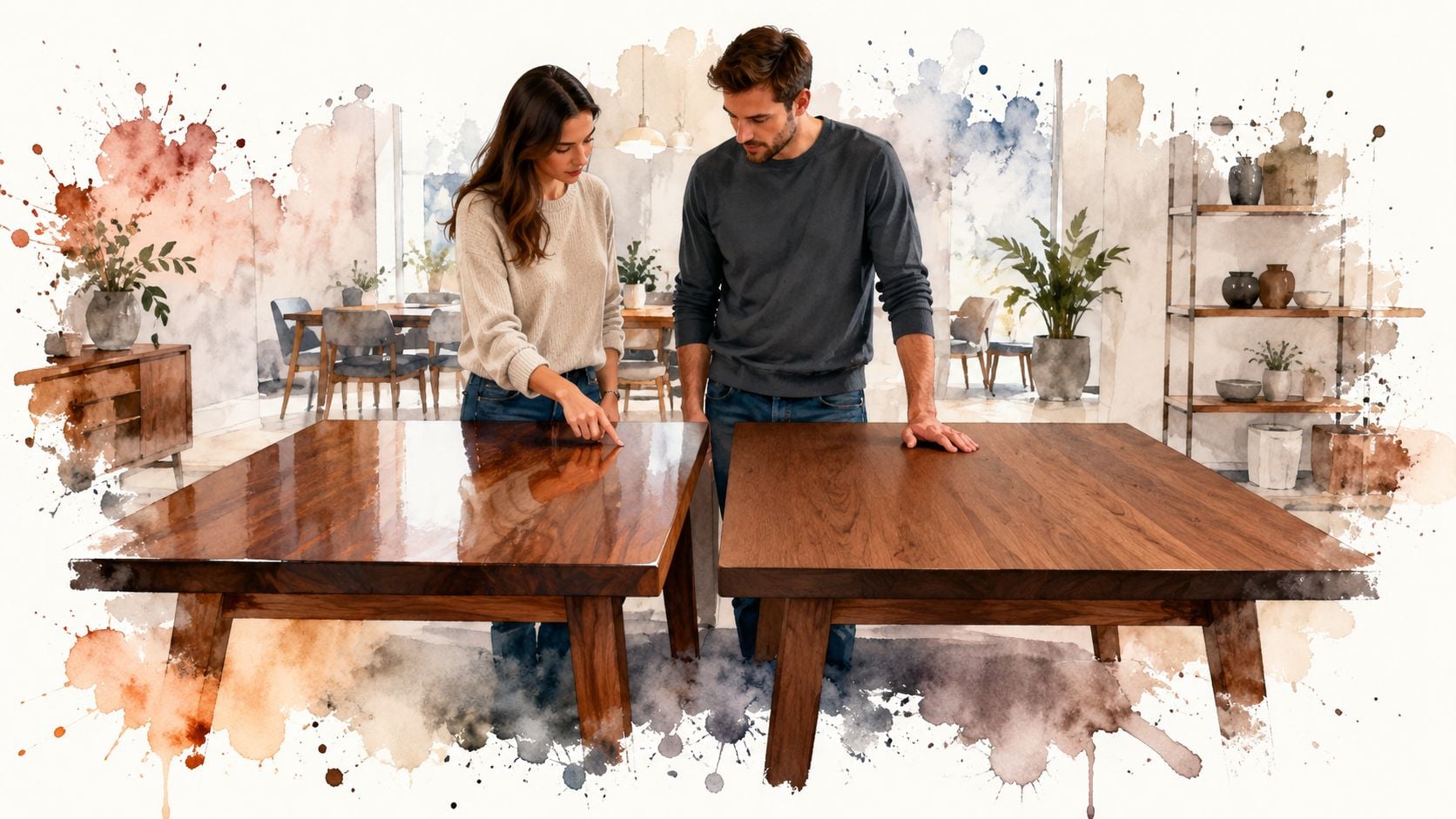
A furniture finish does more than set sheen. It acts as the final protective system that helps control what the wood absorbs and releases, which is why two tables built from the same lumber can age in very different ways. In controlled testing from the U.S. Forest Products Laboratory, the strongest moisture-exclusion performance came from pigmented, nonaqueous finishes, and two-component epoxy paint systems reached greater than 85% moisture-excluding effectiveness after 14 days when applied in three coats. That kind of result shows why finish chemistry matters as much as appearance for furniture that lives in a changing home climate. U.S. Forest Products Laboratory finish effectiveness report
The finish is the part people live with
Wood moves when it gains or loses moisture, and that movement affects fit, flatness, and long-term stability. A dining table might look identical in a showroom, but the one with the better moisture barrier is better positioned to stay stable through heating season, summer humidity, and the swings that happen in real homes. That is especially relevant for Bay Area Interior Design projects, where one room can stay cool and another can run warmer and drier.
A finish also changes the daily experience of ownership. Some surfaces shrug off spills and cleaning. Others invite gentle use and more frequent care. For buyers choosing Custom Furniture, the right call is usually the one that matches how the piece will be used, not just how it photographs on delivery day.
Practical rule: if the piece will be wiped, bumped, and used hard, the finish deserves as much attention as the wood species.
In a family-owned showroom environment, that conversation should happen before the order is placed, not after the first water ring appears. That's where no-pressure guidance matters. The goal is simple, choose a finish that helps the piece last long enough to become familiar, not fragile.
The Four Families of Wood Finish Explained
A client standing in a showroom usually asks the same practical question. Which finish will hold up, which one can be repaired later, and which one will still suit the room after the first signs of wear. That is the test for the best wood finishes for furniture, because the finish has to match how the piece will live, not just how it looks on day one.
The easiest way to sort the best wood finishes for furniture is by how they protect and how they age. Some finishes stay on the surface and form a film. Others soak in and leave the wood feeling more open. A third group blends those traits, while catalyzed systems harden through a chemical reaction and create a tougher coating that is chosen for performance more than easy touch-up.
Film finishes, penetrating finishes, and hybrids
Film finishes build a clear layer on top of the wood, so they usually give better resistance to abrasion and moisture. For furniture that gets daily handling, that is why a water-based choice such as Minwax Polycrylic or a tougher oil-based option such as Arm-R-Seal often comes up first. The trade-off is repair. Once the film is scratched through or chipped, spot fixes can be visible unless the whole surface is worked back.
Penetrating finishes behave differently. They soak into the fibers and leave more of the wood's feel exposed, which is why they appeal on bedroom pieces, accent tables, and furniture where a hand-rubbed look matters more than maximum protection. These finishes are usually easier to refresh in a small area, but they do not build the same barrier against spills, heat marks, or repeated cleaning. For a piece that will see light use, that can be a fair trade.
Oil-and-wax hybrids sit between those two approaches. They warm the color, soften the sheen, and leave a familiar hand feel that many homeowners like on casual furniture. The protection is lighter than a true film finish, though, so the owner has to accept more frequent care and a shorter path between touch-ups. On pieces that are handled often but not abused, that balance can be practical.
Conversion and catalyzed systems cure into a harder coating and are usually chosen for custom furniture that needs stronger day-to-day performance. They make sense when the goal is to resist wear and keep the surface looking composed for a longer stretch, but repairs are not as forgiving. Once the coating is damaged, refinishing often takes more work than it would with a simpler finish.
A simple way to place any finish
A buyer does not need to sort through chemistry terms to make a sound decision. The useful question is whether the finish is meant to protect first, decorate first, or do both at once. If the furniture will face constant contact, a film finish usually makes more sense. If the piece is more decorative or should be easy to renew, a penetrating finish may fit better.
| Finish family | How It Protects | Repairability | Best Fit |
|---|---|---|---|
| Film finishes | Forms a surface barrier that blocks wear and moisture better | Moderate to low, depending on scratches and chips | Tables, cabinets, desks |
| Penetrating finishes | Soaks into wood fibers and leaves a softer surface | High for local refreshes | Bedroom pieces, accent items |
| Oil-and-wax hybrids | Light surface support with a natural feel | Usually straightforward | Lower-wear furniture |
| Conversion and catalyzed systems | Chemically hardens into a stronger coating | Strong protection, more complex repair | High-use custom pieces |
A showroom sample board makes this easier to judge than a label on a can. Ask how the finish behaves after years of use, not only how it looks under fresh light. A practical guide to [wood furniture protection]https://www.giorgibros.com/wood-furniture-protection/ can help frame that discussion before a finish is chosen. Once the finish family is clear, buyers can talk more precisely about whether they want the piece to be refreshed often or left alone for years.
Comparing the Most Common Wood Finishes Side by Side
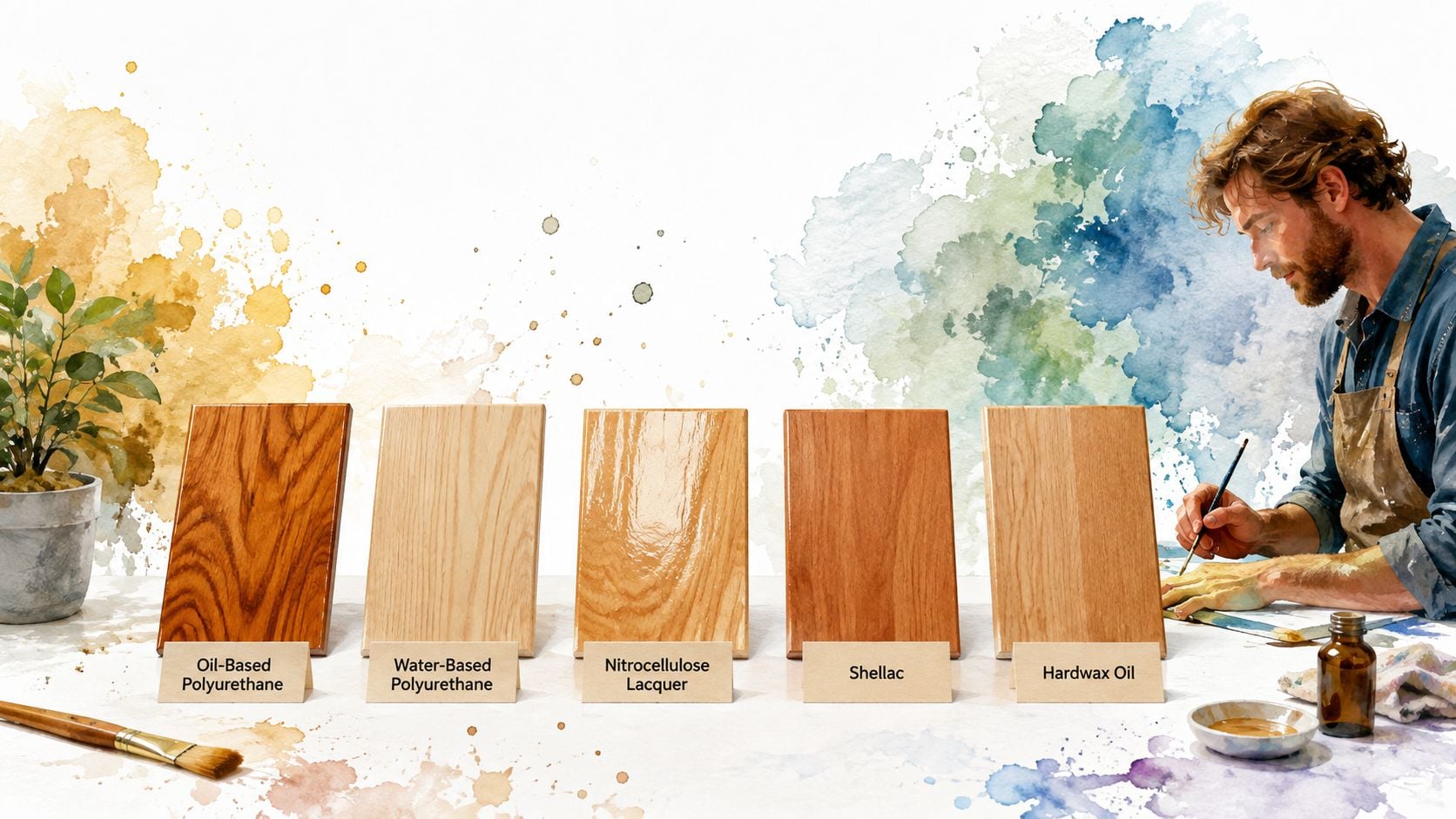
For furniture that gets daily use, the comparison usually narrows fast. Reported durability ranges put oil-based polyurethane at 8 to 10 years and conversion varnish at 7 to 12 years under normal furniture use, while shellac is commonly listed at only 1 to 3 years. That gap explains why a dining table or desk often benefits from a tougher film finish instead of a purely decorative one. Durability ranges for common wood finishes
Wood furniture protection guide
What holds up, and what stays easy to live with
2K waterborne polyurethane is a useful benchmark for harder-working furniture because it is reported to withstand more than 2,000 Taber abrasion cycles before exposing the substrate, while traditional nitrocellulose lacquer may fail at around 300 cycles under the same wear testing. That difference is one reason lacquer often makes sense for lighter-duty or highly polished work, while tougher film systems are used where wear is constant. Wear benchmark for furniture finishes
A separate comparison reported that water-based polyurethane reaches about 12,000 abrasion cycles to 50% film loss, oil-modified varnish about 6,000 cycles, and two-part catalyzed polyurethane about 18,000 cycles. It also showed water-stain resistance moving from about 24 hours for oil-modified varnish to 48 hours for water-based polyurethane and 72 hours for two-part catalyzed polyurethane, which is a useful way to think about dining surfaces that see spills as part of normal life. Durability test data for wood finishes
Which finish families usually fit the job
- Oil-based polyurethane: Strong for high-use tables and desks, with a reputation for durability over time.
- Water-based polyurethane: Good when a buyer wants a tougher film with a cleaner look and solid wear performance.
- Conversion varnish: Suited to custom case goods and dining furniture when a harder, more demanding system is appropriate.
- Shellac: Best kept for decorative or low-wear items where easy beauty matters more than long service.
- Natural oils and waxes: Better for pieces that can be refreshed without heavy refinishing.
The strongest finish is not always the easiest finish to live with, and the easiest finish is rarely the toughest one.
For readers comparing options at home, a practical reference point can help. The Arsh Art Cabinet Refinishing guide offers a useful way to think about how finish behavior affects real cabinets and other wood surfaces, especially when a room needs both appearance and serviceability. Arsh Art Cabinet Refinishing guide
Matching the Right Finish to Each Piece of Furniture
A dining table and a bedroom chest do not ask for the same thing from a finish. One needs resistance to spills, heat, and repeated wiping. The other may need a softer appearance and easier future refreshing. The best finish depends on how the furniture lives in the house, not just on the sheen sample that looks nicest under showroom lights.
Use intensity should drive the choice
High-contact pieces usually benefit from a film finish. That is why oil-based polyurethane, waterborne polyurethane, and conversion varnish keep showing up on hard-working tops and case goods. Lower-wear pieces can often use penetrating oils, wax blends, or hand-rubbed systems that are simpler to renew later.
Bedroom case goods are a good example. A dresser or nightstand often gets touched daily, but it doesn't face the same abuse as a dining table. In that setting, a finish that is easier to refresh can be more valuable than one that chases maximum abrasion resistance.
Match finish to function, not just style
- Dining tables: Favor a tougher film finish because spills and repeated wiping are part of normal use.
- Bedroom chests and nightstands: A finish that is easier to refresh can be a smart long-term choice.
- Upholstery frames and hidden surfaces: Penetrating finishes can make practical sense where the wood is less exposed.
- Antique or heirloom pieces: Traditional, more reversible finishes help preserve character and future serviceability.
For homeowners comparing wood furniture in the Furniture South San Francisco market, it helps to look at the piece as a whole system. The finish has to suit the room, the user, and the future repair path. For a related example of how material and shape affect living-room use, the oak end tables for living room page can help frame the conversation around everyday wear.
A finish choice should answer one question clearly, how will this piece be used ten years from now?
The most useful comparison is not the prettiest surface today. It is the finish that still makes sense when a household has already lived with the piece long enough to stop noticing it.
Durability Is Not the Whole Story
A hard finish is helpful, but toughness alone doesn't settle the question. Buyers who want buy for life furniture also need to think about how a finish handles small repairs, odor, and indoor comfort. A coating that resists abrasion yet becomes a headache to fix can be the wrong answer for a piece that's meant to stay in the house for decades.
Repairability changes the ownership experience
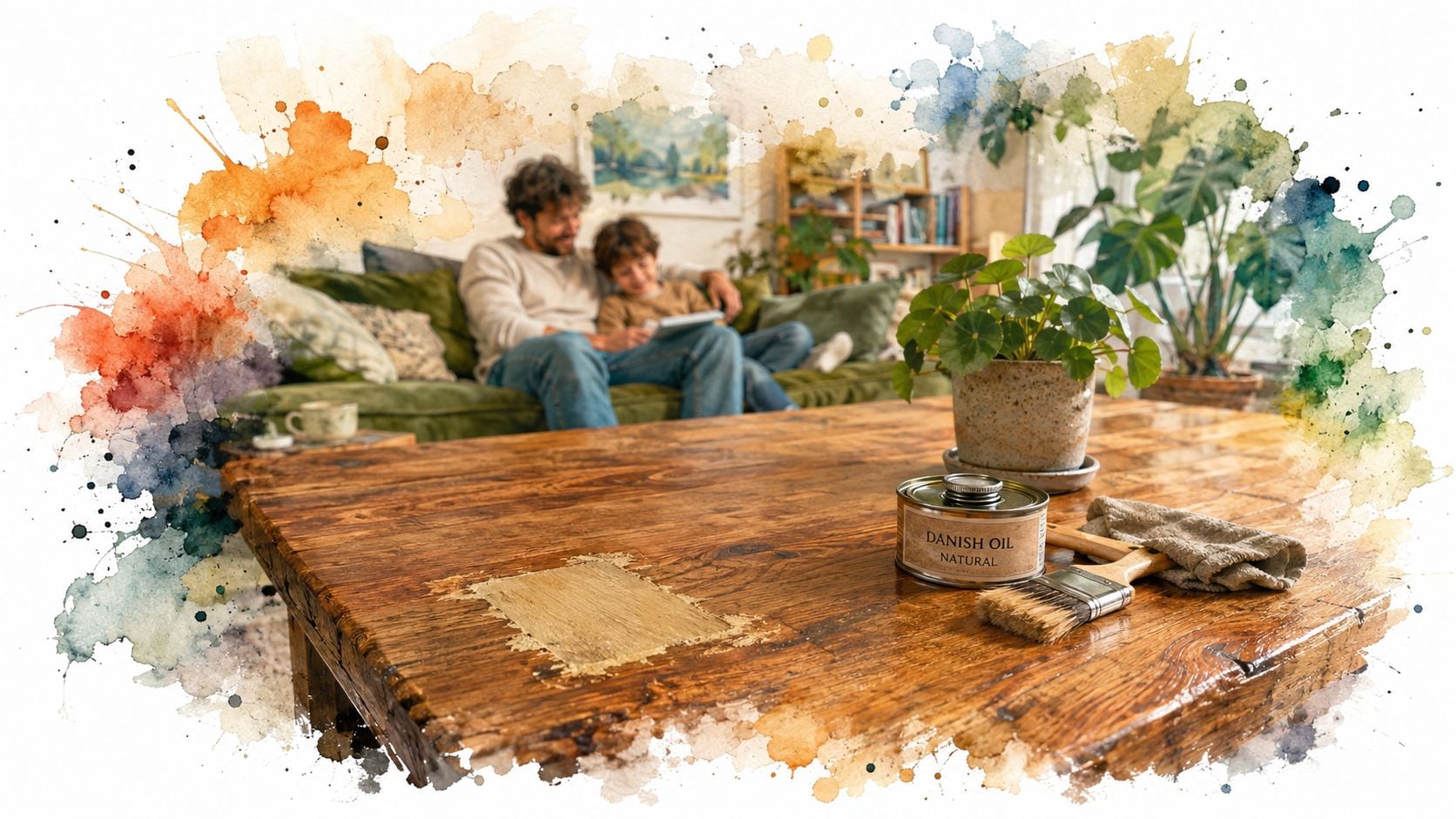
Industry references consistently note that penetrating oils and oil and varnish blends are easier to refresh locally, while polyurethane and conversion varnish usually offer better abrasion and moisture resistance but are harder to repair invisibly once damaged. That difference matters when a table gets scratched, a chair rail gets nicked, or a water mark shows up years after the purchase. Repairability and finish trade-offs
For buyers who value serviceability, that means the “strongest” finish may not be the most forgiving. A surface that can be renewed with a modest touch-up often fits family life better than a film that needs more aggressive repair work once the coating breaks.
Indoor air quality deserves a real seat at the table
Wood finishes can emit volatile organic compounds, and low-VOC products still vary in solvent content, cure time, and odor. That makes the question less about a universal “best” finish and more about the right finish for a specific room, household sensitivity, and curing timeline. A nursery, an occupied remodel, and a formal dining room all call for different tolerance levels. EPA guidance on VOC exposure in wood finishes
A useful internal reference for this topic is the low-VOC furniture page, especially for households balancing durability with comfort during the first days after installation. The right finish should support the room, not complicate it.
The better question isn't which finish is strongest. It's which finish a household can live with, repair, and refinish without regret.
That lens usually changes the answer. A finish that works on paper can fail in real life if it's unpleasant to maintain, difficult to spot-fix, or too aggressive for the room it lives in.
Application Tips That Separate a Good Finish from a Great One
The difference between a good finish and a great one often shows up before the first coat goes on. Moisture content, sanding order, and dust control decide whether the finish bonds cleanly and holds up in use. One industry guide recommends checking the wood's moisture content three times, before beginning the project, during the build, and again before applying the finish, because moisture content affects how well a finish bonds and how durable the final result will be. Moisture-content guidance for wood finishing
Preparation is where failures usually begin
A strong shop process starts with careful sanding, a finish schedule that matches the substrate, and a clean application area. Dust control matters because tiny particles can land in the coat and weaken both the appearance and the feel of the surface. Thin, even coats are usually safer than one heavy application, since thick builds can trap solvent or create surface defects later.
Before restoration or refinishing work begins, the old coating has to come off cleanly enough for the new system to perform. For that step, a guide to choosing the right furniture stripper can help narrow down the method that fits the existing finish and the piece itself.
Dry to the touch and fully cured are different stages. A piece may seem ready quickly and still need time to harden enough for regular use. That gap is one reason a seasoned custom shop should explain not only how the finish will look, but also how long it needs before a table, chair, or cabinet can go back into service.
Good process also respects the finish type
- Moisture checks: Verify the wood before the build, during the build, and before finishing.
- Sanding sequence: Work progressively so the surface is smooth without being overly polished.
- Compatibility: Make sure stain, sealer, and topcoat are designed to work together.
- Coat strategy: Favor multiple thin coats over one thick one.
- Cure window: Plan for hardness, not just dry-to-the-touch time.
For buyers who want a more durable or lower-toxicity approach on visible grain, the Yakisugi timber protection options discussion offers a useful reference point for thinking about protective systems and visual results.
A finish can be chosen well and still fail if the wood is too wet, the surface is rushed, or the shop air is dusty. Good craftsmanship shows up in the steps before the sheen does.
Choosing a Custom Finish at the Giorgi Bros. Showroom
A finish choice gets easier once you stop judging it from a small can label and compare full sample boards under actual showroom light. In South San Francisco, the showroom gives buyers a chance to feel oil, wax, lacquer, and conversion samples, then compare how each one changes the look and feel of the same wood species. That matters for Custom Furniture, because the finish, the wood, and the room all have to work together.
Why custom sampling matters
A sample board can look convincing on its own and still read differently on a full table top or case piece. Grain pattern, edge detail, board width, and room lighting all change the result. A consultant can walk through wood species, sheen level, stain color, and topcoat performance without steering the choice toward one product line, which keeps the conversation focused on fit rather than promotion.
That in-person review also helps buyers think past day-one appearance. A well-finished piece should still be serviceable years later, not just attractive when it leaves the shop. For families choosing Amish Furniture, custom wood species, or a finish matched to a room, in-person sampling gives a clearer answer than a catalog photo or a small swatch ever will.
What to look for during the consultation
- Use case: dining, living, bedroom, or office.
- Maintenance plan: easy refresh, full refinishing, or low-touch ownership.
- Indoor comfort: odor sensitivity, occupancy, and curing timeline.
- Design goals: grain visibility, sheen level, and character.
- Long-term service: whether the piece can be repaired or refinished later.
A useful showroom conversation also includes how the finish will behave on real wood, not just in theory. On exploring custom wood finish options, buyers can compare sample boards across species such as oak, walnut, and maple, then see how stain depth and topcoat sheen change the look of each one. That kind of side-by-side comparison makes it easier to choose a finish that suits the piece, the room, and the amount of upkeep a household is willing to accept.
For buyers balancing finishes with room planning, the showroom setting also fits a broader Bay Area Interior Design process. Giorgi Bros. Furniture has been family-owned since 1933, and that long view shows in the way the conversation is handled, with non-commission sales staff, custom order services, and a showroom built for comparison rather than pressure. The selection also covers whole-home furnishing needs, including premium mattresses, which keeps the visit efficient when more than one room is being planned.
A finish is easier to live with when the choice is made in person. Bring the project, compare the samples under the same light the piece will live in, and let the wood show you which direction makes sense.