
A dining table that looked perfect in August can look tired by February. A sideboard near a west-facing window can fade, dry out, and start opening joints long before anyone thinks about polish. That is the trap most homeowners fall into, they treat wood furniture protection like a surface job when it's really a room job, and the room usually wins.
The better approach is plain and practical. Control the air first. Choose the right finish second. Maintain the piece third. That is how quality furniture keeps its value, and it's how an investment piece stays in the family instead of ending up on the curb. In a family-owned showroom that has served South San Francisco since 1933, that mindset matters because no-pressure guidance should always lead to furniture that lasts, not furniture that looks good only on day one.
Why Wood Furniture Protection Starts Long Before the Polish
A homeowner on the Bay shoreline can wipe, dust, and polish with care and still lose the fight. The table clouds near the windows, the leaves stop lining up, and the joints feel loose when the seasons turn. That is wood responding to the room. If you want furniture that holds its value, you start with the air, not the polish.

Wood is hygroscopic, which means it takes in and gives off moisture as the air changes. That is the whole game. Conservation guidance treats stable humidity as the first line of protection because wood movement, joint stress, and finish failure usually begin there. For readers who want a practical home standard, the guide to humidity for GTA homeowners is a useful starting point for understanding why indoor moisture control matters, especially around wood. That same logic belongs in any buy-it-for-life plan for furniture. Museum Conservation Institute guidance on furniture preservation
Practical rule: if the room is unstable, the furniture will be unstable.
Sun-faded tops under a west window usually have more going on than light damage. Heat and moisture swings work together, and the finish takes the blame because it is what you can see. The core issue sits in the air around the piece, where daily expansion and contraction slowly weaken the structure.
Treat the room like the primary protection, then choose the piece with the same mindset. Pull furniture away from direct sun, fireplaces, vents, and radiators. Pick materials with care, because the wood itself matters for long-term stability. For a useful reference on material choice, see this guide to selecting hardwood for lasting furniture.
Controlling Humidity and Temperature Like a Conservator
A polished tabletop can look fine while the room damages the piece. Relative humidity does the damage, so protect the air first and the finish second. For finished wood furniture, conservation guidance keeps RH around 45% to 55%, with RH never above 65%, because moisture swings drive cracking, veneer cleavage, and mold risk. The National Park Service also notes that 68°F (20°C) or below helps retard mold growth. National Park Service wood objects guidance
Set the room before you touch the finish
Put a simple hygrometer where the furniture lives. Don't hide it behind a sofa or near a vent. Leave it in the same air that surrounds the table, chest, or desk, then watch the readings for a few days. Stability is the goal, not one good number.
If the room runs dry, use a small humidifier. If the room swings damp, use a dehumidifier. Keep the target steady either way. Wood fails when the room lurches between extremes, because repeated expansion and contraction stress the material year after year.
Wood that lives near radiators, heat vents, fireplaces, or direct sun will age faster than wood kept in a stable room. That remains true even when the finish is excellent.
Bay Area homes make this harder because the air can change fast from morning to evening. Marine layer mornings can feel damp. Dry interior heat can pull moisture out of a room by night. Rattan pieces and other mixed-material furniture react even faster, so a house full of wood and woven pieces, including living room rattan furniture, needs climate control planned from the start, not after the first split or warp.
For homeowners who want a broader home humidity reference, the guide to humidity for GTA homeowners is a useful plain-language resource. The rule stays the same in every city, stable indoor air protects wood better than repeated refinishing ever will.
Keep furniture out of attics, basements, and garages for long-term storage. Those spaces swing too hard. If a table leaf, cabinet, or chair frame has to sit there, the piece is already in the wrong environment. Move it to a stable room first. That is the first repair, and the one that saves the investment.
Choosing the Right Finish for Your Lifestyle
The wrong finish usually gets blamed for a piece that is failing. More often, the problem is a mismatch between the finish and the way the furniture is used. A formal accent cabinet does not need the same surface treatment as a dining table that takes homework, spills, keys, and constant handling. A library desk has different demands again. Treat the finish as a match to the room, the traffic, and the investment you expect the piece to hold over time.
Match the finish to the job
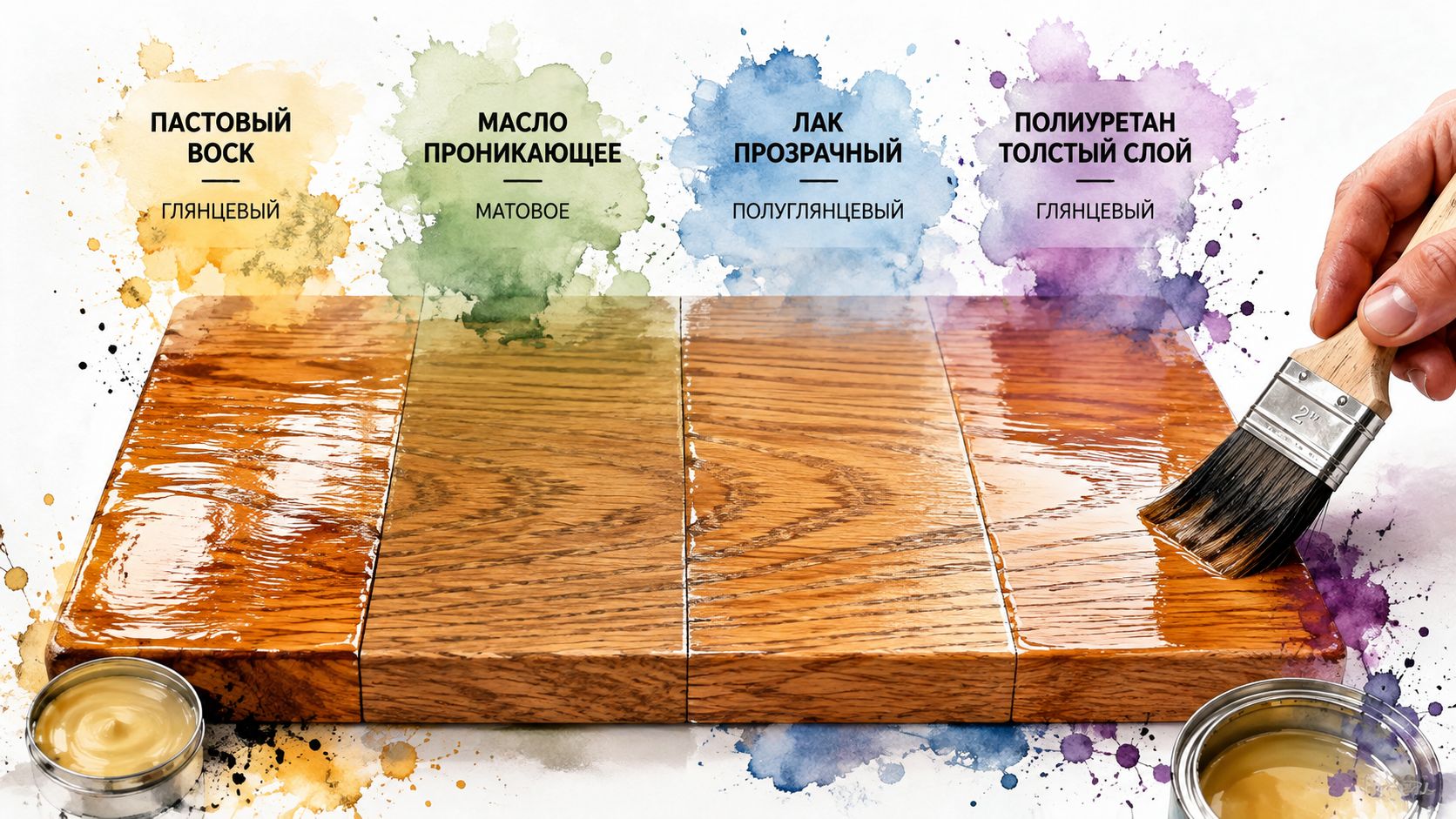
Paste wax belongs on pieces where character matters more than hard wear. It brings out figure on antique and custom Amish furniture, and conservation guidance supports wax made only of wax and solvent when it is applied sparingly. On those pieces, the goal is a soft hand and a warm surface, not a shell built to take daily abuse. Museum Conservation Institute guidance on wax care
Penetrating oil behaves differently. It refreshes the surface and keeps the look natural, but it asks for more upkeep than a tougher film finish. Use it on a desk or case piece that should read quiet and organic, not glossy or formal.
Lacquer or shellac gives a refined surface that suits display pieces. It is repairable and visually clean, which is why it works well where presentation matters more than brute toughness.
Conversion varnish or polyurethane belongs on tables that get handled hard. These coatings make sense for families who want easier cleanup and better resistance to the mess of daily life.
| Finish family | Best use | What to expect |
|---|---|---|
| Paste wax | Antiques, heirloom pieces | Soft glow, occasional renewal |
| Penetrating oil | Desks, natural-looking furniture | Easy refresh, more upkeep |
| Lacquer or shellac | Display furniture | Refined surface, careful repair |
| Conversion varnish or polyurethane | Dining tables, heavy-use surfaces | Stronger everyday durability |
Finish choice also ties directly to customization. A good showroom lets the buyer specify wood species, sheen, and coating instead of settling for a one-size-fits-all compromise. That matters because protection starts with the right surface from day one, not a rescue job after the piece is already wearing badly. For a closer look at that decision, review custom wood finishes.
A Realistic Care Routine You Will Actually Follow
A protection routine only works if a busy household can keep it going. That means the habits need to be small, obvious, and easy to repeat. The goal is not a showroom ritual. The goal is a piece that still looks right after years of family use.
Daily habits that prevent the most damage
Use coasters for drinks. Put felt pads under lamps, décor, and anything that slides. Wipe dust with a soft dry cloth before it settles into corners and carvings. Those three habits stop the most common surface problems before they start.
Weekly and seasonal care that keeps pace with the room
A lightly damp microfiber pass works for most finished pieces when the cloth is only barely wet and the surface is dried right away. Rotate decorative objects so one side of the table or cabinet doesn't age faster than the other. Then, with the seasons, check the joints and the humidity again.
- Weekly dusting: Use a soft cloth and a light touch so grit doesn't scratch the finish.
- Accessory rotation: Move lamps, bowls, books, and décor a little at a time to even out sun exposure.
- Seasonal inspection: Look at joints, edges, and corners when the weather changes.
Unfinished and lightly finished wood needs a different approach. The Canada Conservation Institute says unfinished wood should be dusted only, not wet-cleaned, and that wax on such pieces should be used cautiously to avoid build-up. That is the right call for raw surfaces, because water and over-cleaning do more harm than one might expect. Canada Conservation Institute guidance on unfinished wood care
Plain truth: if a routine feels fussy, it won't survive the real world. Keep it simple enough to do without thinking.
If a piece lives in strong daylight, use blinds or UV filtering where appropriate and keep moving décor around the surface. If the room changes with the seasons, the routine should change with it. That is how a table stays honest-looking instead of patchy, dried out, and overworked.
Diagnosing and Repairing the Damage You Already Have
Most homeowners don't ask about protection until a mark shows up. That's fine. The important thing is to read the mark correctly before reaching for sandpaper, stain, or a full refinish that may be unnecessary.
What the most common problems usually mean
A white water ring usually means moisture is trapped in the finish, not that the wood itself has failed. In many cases, gentle heat or a small amount of wax can help, but aggressive refinishing is often the wrong first move. If the ring is shallow, patience beats force.
Sun fade is different. Once a finish or top layer has changed color from light exposure, that surface change is largely permanent. The smart response is to blend, condition, and rearrange the room so the difference doesn't keep spreading.
Minor scratches are usually cosmetic. A matching wax stick or touch-up material can hide them well enough for everyday life. Deeper marks deserve restraint, because overworking them can make a small problem look worse than the original damage.
Loose joints and slight veneer lift usually point back to humidity swings. Those are not just cosmetic issues, they are clues that the room has been asking the furniture to move too much. As covered earlier, stable indoor air matters more than surface rescue work.
If a crack, joint opening, or veneer lift keeps returning, the room is still the problem.
A practical caution also belongs here. Some damage that looks like a simple blemish may be evidence of insects or structural decay. For anyone seeing sawdust-like material, hollow sounding wood, or uneven tunneling, the Crown Point termite warning signs are worth reviewing before assuming the issue is only cosmetic.
When the finish is beyond a local touch-up, a proper stripping and refinish can be the right move, but only when the underlying wood is sound. For that kind of repair planning, see best furniture stripper. Even then, the room still needs to be corrected, or the same damage will come back.
Why Buying Custom Is the Strongest Form of Protection
The strongest protection starts before delivery, sometimes before the order is even placed. A custom piece lets the buyer choose the right wood species, finish, and construction for the actual home instead of trying to force a standard piece to behave in the wrong environment.
Protection works better when the piece is built for the room
A dining table that will see daily family use can be ordered with a tougher finish and a wood choice that suits the life it's going to live. A library desk can lean toward a more natural finish and a quieter look. A cabinet can be specified to fit the room's scale and light, which matters because big, sunlit rooms punish wood differently than shaded ones.
That is the buy-it-for-life argument in plain English. Better construction and a better match to the room mean fewer repairs, fewer replacements, and less waste over time. A single well-made table that stays in use for decades does more for sustainability than cycling through multiple short-lived substitutes.
Good furniture is protected twice, first by design, then by care.
That is where a full-service showroom earns its keep. Giorgi Bros. Furniture, for example, offers custom order options in wood species and finishes, which helps a homeowner choose a piece that fits the room from the start. For shoppers considering that route, this custom made wood furniture approach is the cleanest way to build protection into the purchase.
The same logic applies to Amish furniture and other carefully built pieces. When the construction is right, the finish becomes easier to maintain. When the finish is chosen for the use case, the furniture holds up better in everyday life. That is the point. Protection is not just what happens after the truck leaves, it is what gets specified at the showroom.
Your Wood Furniture Protection Checklist and Next Step
The simplest protection plan is the one a household can repeat without debate.
- Keep indoor RH stable: Aim for the 45% to 55% range and never let it climb above 65%.
- Keep pieces out of harsh exposure: Move wood away from direct sun, radiators, vents, and fireplaces.
- Choose the right finish: Match the coating to how the piece will be used.
- Dust weekly: Use a soft dry cloth so grit doesn't become abrasion.
- Refresh wax or oil on the proper cadence: Only on pieces that are meant to take that treatment.
- Address damage early: Small rings, scratches, and loose joints are easier to handle when they're fresh.
- Rotate décor and accessories: That reduces uneven fading and wear.
The room matters more than the polish bottle. That is the part most homeowners miss, and it's the reason good furniture sometimes ages badly while lesser pieces survive by accident. A stable environment, the right finish, and a sensible care routine will always outperform panic cleaning after the fact.
Visit the South San Francisco showroom, touch the materials, and test the build before you buy. Or book a Design Consultation with a non-commission Design Expert who can walk through wood species, finishes, and protection strategies for the rooms that matter most.
Giorgi Bros. Furniture helps Bay Area homeowners choose Custom Furniture that fits the room, the climate, and the way they live. Visit Giorgi Bros. Furniture to see how thoughtful construction, custom order options, and no-pressure guidance can turn a furniture purchase into a long-term investment.