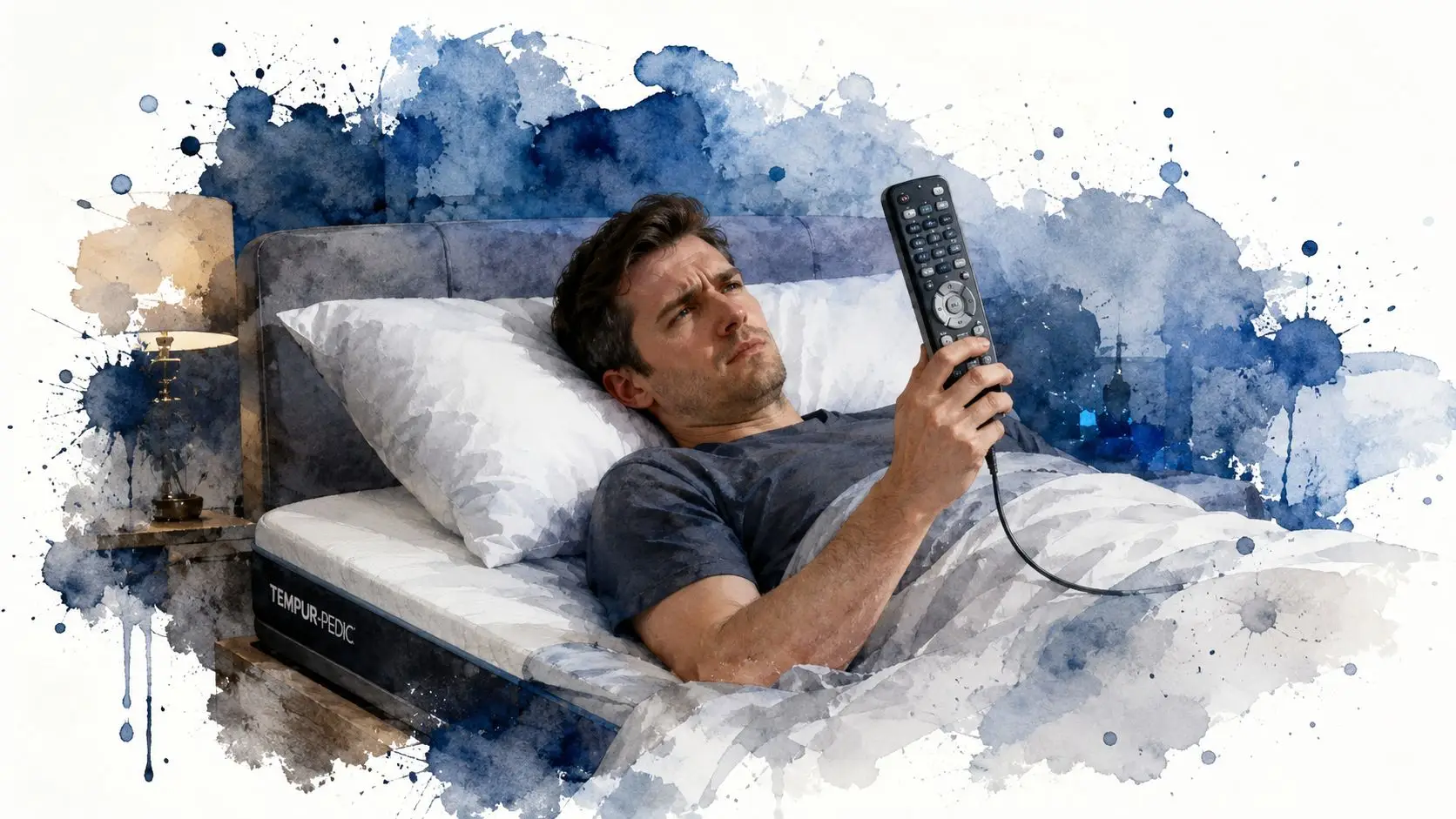
Most shoppers first meet the zero gravity position the same way they meet a lot of good furniture features, by accident. The remote has a button nobody's pressed, the back still aches after a long day, and the question becomes simple, what does that setting do, and is it worth caring about?
That's the right place to start. The phrase sounds dramatic, but the idea is practical. It came out of NASA's astronaut posture research, then moved into everyday sleep and seating because people wanted a more neutral, less pressured way to rest, not a gimmick. For a first-time adjustable-bed shopper, that matters. A good setup should feel understandable in the showroom, comfortable at home, and worth living with for years.
At Giorgi Bros., that's also where the conversation usually begins, with no-pressure guidance, not a pitch. The family has been helping Bay Area homes since 1933 in South San Francisco, and the point has always been the same, guide people toward investment pieces that fit real life, not just a floor display. If someone wants a broader look at how adjustable beds support everyday comfort, the article on improve sleep quality with adjustable beds is a useful starting point before narrowing in on angles and feel.
Why the Zero Gravity Position Has Earned So Much Attention
A restless sleeper usually doesn't wake up asking for aerospace ergonomics. They wake up stiff, or they notice the bed remote has a button that promises something called Zero Gravity, and that's when curiosity kicks in. The name grabs attention because it sounds technical, but the appeal is simple, people want a position that feels lighter on the body and easier to settle into.
From astronaut posture to everyday comfort
The posture traces back to NASA's work on a neutral body position, designed to reduce pressure points and spread weight more evenly during spaceflight and launch. In consumer furniture, that idea landed in adjustable beds and recliners, where the same basic posture is used to improve comfort and spinal alignment. One clear consumer-friendly explanation is outlined in Giorgi Bros.’ adjustable bed health benefits guide, which helps place the posture in a home setting rather than a lab.
That's why the feature shows up so often on premium bases. It's not just a label, it's a shape that many people can feel right away.
Practical rule: if a posture feels better in the first minute, it still deserves a proper trial. Comfort that fades after ten minutes usually needs a different angle.
The smart next step is to treat zero gravity as something to test, not something to assume. A quality adjustable base gives the body a chance to settle into that shape without forcing a single hard angle.
What the Zero Gravity Position Actually Is
The clearest way to think about zero gravity position is as a reclined posture that borrows from astronaut seating ideas and brings them into the bedroom. NASA's research focused on a neutral body position that reduces pressure points and spreads body weight more evenly, and that same logic is what makes the setting useful in beds and recliners. The term is tied more closely to microgravity than to literal zero gravity, because space isn't gravity-free, the forces are just balanced so astronauts experience apparent weightlessness.
A simple furniture definition
On a bed or recliner, the body is raised so the torso and thighs meet at roughly a 120-degree angle, though some chair and bed designs use a 125–130 degree recline instead. The result is a posture where the head and knees sit slightly above the heart, which helps distribute weight more evenly and ease pressure along the lower back. In plain language, it's a little like giving the skeleton its own hammock.
That picture matters because it explains the value without overselling it. The posture isn't about floating. It's about taking load off the parts of the body that usually carry too much of it when someone lies flat.
Why the exact shape changes by product
The exact angle depends on the chair or base design, the mattress on top, and the user's own body proportions. A tall sleeper, a side sleeper, and a back sleeper won't all land in the same sweet spot. That's why one person can call a preset perfect while another needs a small adjustment to get the neck and lower back to relax.
Good test: if the shoulders soften, the lower back feels less pinched, and the neck doesn't crane, the posture is probably close enough to keep exploring.
The useful part is not memorizing a single number. It's learning what the body should feel like when the posture is working.
The Exact Angles That Matter and Where Sources Disagree
Most confusion around zero gravity position comes from the numbers, because not every source measures the posture the same way. Some describe the full body shape, some focus on joint geometry, and some translate it into the settings an adjustable base can create. The good news is that the ranges are close enough to be useful.
The main angle ranges in plain English
A common rule of thumb says the torso and thighs form about a 120-degree angle. More technical neutral-body-posture guidance describes roughly a 128° torso-to-thigh angle and a 133° upper-to-lower-leg angle, aiming to minimize muscular effort and spinal loading by keeping the head and legs slightly above the heart. On an adjustable base, that often translates into 20–30° head elevation and 25–35° knee elevation, which creates the gentle V-shape many shoppers recognize.
For side sleepers, the setup usually needs to stay shallower, around 10–15° head elevation with minimal knee lift, so the neck stays lined up and the hips don't take extra strain. That's the piece many generic guides skip, and it's why side sleepers sometimes think the posture “doesn't work” when the issue is that the angle is too aggressive.
| Angle Reference | Head / Torso Elevation | Knee / Leg Elevation | Best Suited For |
|---|---|---|---|
| 120-degree rule of thumb | Moderate recline | Elevated | General comfort and simple explanations |
| 128° and 133° neutral-body posture | More technical body geometry | More technical leg geometry | Fine-tuning and precision-minded shoppers |
| 20–30° head, 25–35° knee setup | Practical adjustable-bed setting | Practical adjustable-bed setting | Most back sleepers on adjustable bases |
| 10–15° shallow side-sleeper setup | Gentle incline | Minimal lift | Side sleepers protecting neck and hip alignment |
Why the numbers don't match perfectly
The disagreement is mostly about purpose. Marketing language tends to simplify. Technical language tends to measure joint position. Real people need something they can feel at home. That's why a showroom test matters more than chasing one exact degree on paper.
For a fuller consumer comparison of the preset and the variations around it, the adjustable bed base reviews page is a helpful companion to this angle breakdown.
How to Set the Zero Gravity Position on an Adjustable Bed
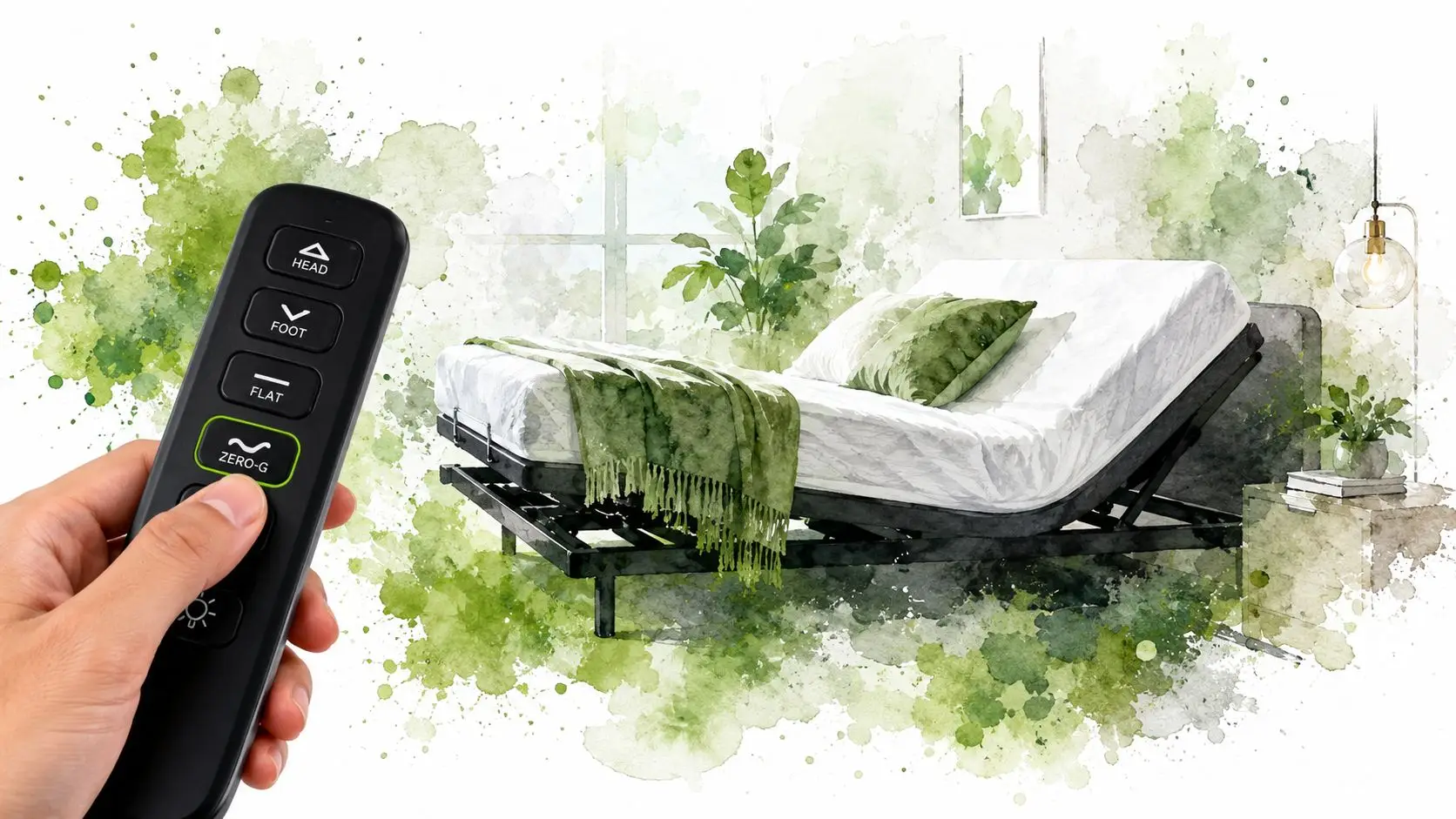
The easiest way to get there is to use the Zero Gravity or Zero-G preset found on many adjustable bases. Press the button, let the base move, and the bed usually lands in that gentle V-shape where the head section rises and the foot section lifts at the same time. The practical target is often a 20–30° head elevation and a 25–35° knee elevation, which lines up with the balancing effect people are usually after.
Manual setup when there's no preset
If the base doesn't have a preset, the position can still be built by raising the head section first, then lifting the knees until the body feels evenly supported. Small changes matter more than big jumps. A slight tilt can be enough to change neck geometry, shoulder tension, or how much the lower back presses into the mattress.
Useful habit: adjust one section at a time, then lie still for a few minutes before changing anything else.
That kind of patient tuning helps many find a better match within a few nights instead of deciding too quickly that the posture isn't for them.
Mattress choice changes the result
The mattress on top matters as much as the base underneath. Memory foam and latex usually flex more easily, so they follow the frame without much resistance. Traditional innerspring mattresses can fight the articulation, and hybrid models usually sit somewhere in the middle.
Pillow loft matters too. A thicker pillow can push the neck into a different angle, which means the same base setting can feel right with one pillow and off with another. That's why a proper trial should include the pillow someone sleeps on, not a showroom stand-in.
For shoppers comparing compatible setups, the best adjustable base for mattress guide helps frame the pairing question before anyone commits.
Recreating the Posture Without an Adjustable Base
A recliner can approximate the feeling, but only if the geometry is right. A chair marketed as “zero gravity” isn't automatically delivering the posture. The leg rest needs to lift the knees above the hips, and the backrest needs to stop around a 120-degree shape rather than sinking into a flat lounge angle. If the knees stay low, the body gets a reclined seat, not the pressure redistribution that makes the posture useful.
Two practical ways to test it tonight
For a bed without a motorized base, the quickest test uses pillows or wedges. A wedge under the upper back can create roughly 20–30° of torso lift, and a pillow or wedge under the knees can add about 25–35° of leg elevation. That creates a close approximation of the shape many adjustable beds are trying to produce.
- Upper-body support: use a wedge or stacked pillow setup under the upper back, not just the head, so the torso lifts.
- Knee support: place a pillow under the knees or lower legs so the hips stop carrying so much load.
- Side-sleeper caution: keep the incline shallower if the shoulder or hip starts to feel compressed.
- Stability check: if the body slides or twists, the setup is too loose for real use.
The limits are real. Pillow setups shift during the night, and they're harder to manage for side sleepers because the spine needs more careful alignment. Still, they're a smart test run.
If the posture feels promising after a week of pillow testing, that's a strong sign an adjustable base may be worth the investment. A practical guide to pillow selection can help with that trial, and this pillow guide is a sensible place to compare loft and support before making a bigger decision.
What the Evidence Actually Says About the Benefits
The safest way to talk about the zero gravity position is as a comfort posture, not a cure. The consistent claim across reputable explanations is that it places the head and knees slightly above the heart and helps distribute body weight more evenly. That setup can reduce pressure points and lower-back strain, and some sleepers also find that the mild head elevation makes breathing feel easier.
What seems plausible versus what sounds like hype
Pressure redistribution makes sense mechanically. If the spine stays more neutral and the body is not dumping all its weight into one flat surface, many people feel less pinched in the lower back and shoulders. That part is easy to understand even without medical jargon.
Other claims deserve more caution. Circulation, sleep depth, and broader wellness effects are often repeated, but they're not the same as a guaranteed clinical outcome for every sleeper. The posture can be helpful, but it shouldn't be sold as a medical fix.
The most honest description is often the simplest one, a more balanced recline that can feel easier to rest in than a flat bed.
How it compares with other positions
Flat sleeping gives the body no lift at all. Standard incline raises the torso, but not always the knees, so pressure can still concentrate in the lower back. A Trendelenburg position does the opposite of zero gravity, with the head lower than the feet, so it belongs in a different category entirely.
For broader sleep-quality context, the sleep quality guide helps place positioning within a wider routine, rather than treating it as the only variable that matters.
The takeaway is steady and fair. Zero gravity is meaningfully different from flat rest or a random recline, but the exact angle matters less than whether the body relaxes in it. That's why in-person testing beats guesswork.
Buying and Trial Advice for the Right Setup
A good showroom trial should answer four questions, not one. Does the base have a usable Zero-G preset, does the mattress follow the frame cleanly, does the posture hold when the base moves through its range, and does the setup still feel right when the shopper uses their own pillow? Those details tell the truth fast.
What to test in the showroom
Start by lying in the posture long enough for the body to settle. Then check whether the lower back feels supported, whether the shoulders relax, and whether the neck stays neutral with the pillow already in use. If a partner shares the bed, both sleepers should test their side of the setup, because body shape changes the result.
A non-commission consultation helps here because the goal is fit, not upselling. That's also where custom order services matter. A shopper can pair premium mattresses and adjustable bases in a way that suits body type and sleep style, and can also explore Amish Furniture, custom fabrics, leathers, wood species, and finishes when the purchase extends beyond the sleep room. Aspen Falls Wellness' air bed guide is another useful reference for thinking about how different supportive surfaces change the feel of reclined sleep.
What to bring and what to ask
Bring the pillow used at home. Bring a list of the partner's sleep concerns if the bed is shared. Ask how the mattress responds to articulation, how the base handles fine adjustments, and whether the position still feels natural after a few minutes, not just after the first press of the remote.
Financing options are available, but the bigger question is value over time. A quality adjustable base and mattress are investment pieces, not disposable upgrades, and a well-chosen setup can pay back in years of better sleep and less frustration.
Giorgi Bros. keeps that decision process straightforward with Furniture South San Francisco shoppers can try in person, plus Bay Area Interior Design support when the sleep room is part of a larger home update. The showroom also gives shoppers room to compare Premium Mattresses side by side before they commit.
Frequently Asked Questions and How to Experience It Yourself
Side sleepers can use the zero gravity position, but the setup has to stay gentler than a back-sleeper version. The neck and hips need enough alignment to avoid twist, which is why a shallow incline often works better than a dramatic lift. If the shoulder feels jammed or the hip feels compressed, the angle is too aggressive.
Couples can each set their own side if the base is a split design. That matters because one partner may want more knee elevation while the other prefers a flatter feel. Shared beds don't have to force one body into the other person's comfort zone.
Some people should ask a clinician before trying the posture, especially those with certain spinal conditions, late-stage pregnancy, or severe reflux. That's not because the posture is automatically unsafe, it's because individual medical needs can change what counts as a helpful angle.
Adaptation is usually a process, not a one-night verdict. A new position can feel unusual at first, then become easier once the body gets used to it. That's another reason a showroom test followed by a real home trial is more useful than guessing from a product name alone.
A few quick questions help separate curiosity from a real buying plan. Is the goal better comfort, a calmer back, or a more flexible bedtime routine? Does the current mattress bend well enough to follow the frame? Does the pillow still support the neck once the base moves?
For Bay Area homeowners who want to test those answers the practical way, the Giorgi Bros. 50,000-square-foot South San Francisco showroom makes it easy to touch, feel, and compare bases and mattresses side by side. The store has served the community since 1933, and the tone is still the same as it was then, friendly guidance, careful listening, and no pressure to buy the wrong thing.
Visit Giorgi Bros. Furniture in South San Francisco to try the zero gravity position on adjustable bases, compare premium mattresses, and book a Design Consultation with a non-commission Consultant who can help match the right setup to your sleep style and your home.