Hardwood floors change the way a home feels. They add warmth, character, and that quiet sense of permanence that makes a room feel finished.
They also make people nervous.
You set down a chair, slide a coffee table an inch, or watch the afternoon sun hit the same stretch of floor every day, and suddenly a rug stops feeling like a decorative extra. It becomes protection. It becomes comfort. It becomes part of how you preserve the home you worked hard to create.
That is especially true if you are trying to choose the best area rugs for hardwood floors and keep running into advice that focuses only on color or pattern. Good looks matter, but they are only part of the decision. Material matters. Rug pad choice matters. Size matters. Even indoor air quality can matter.
Families have been making these same decisions for generations. Since opening our doors in South San Francisco in 1933, Giorgi Bros. has helped generations of Bay Area families select investment pieces that last a lifetime, observing firsthand how quality materials stand the test of time on local hardwood floors.
Your Hardwood Floors Are Beautiful Let's Keep Them That Way
A common scene goes like this. A homeowner finishes a remodel, stands back, and admires rich wood flooring that finally gives the room the polished look it needed. Then the practical questions start.
Will the sofa legs leave marks?
Will the dining chairs scratch the finish?
Will an area rug help, or could it create a different problem underneath?
Those are smart questions. Hardwood floors are durable, but they are not indestructible. Daily life wears on them in small ways. Foot traffic shows up first in walk paths. Chair movement leaves fine scratches. Sun exposure can create uneven color over time. A well-chosen rug helps absorb that everyday stress before your floor does.
The key is to think of the rug as a working layer, not just a finishing touch. In a living room, it softens the path between seating. In a bedroom, it gives your feet a gentler landing in the morning. In a dining room, it protects the floor from repeated chair movement while helping the whole space feel anchored.
If you are also comparing broader flooring options, the guidance at https://www.giorgibros.com/flooring-carpeting/ can help you think through how rugs and floor surfaces work together.
A smart rug choice does two things at once. It preserves the floor below and improves the room above.
More Than Decor A Rug Is An Investment In Your Home
A quality rug earns its place every day. It protects, softens, and visually organizes a room in a way few other furnishings can.
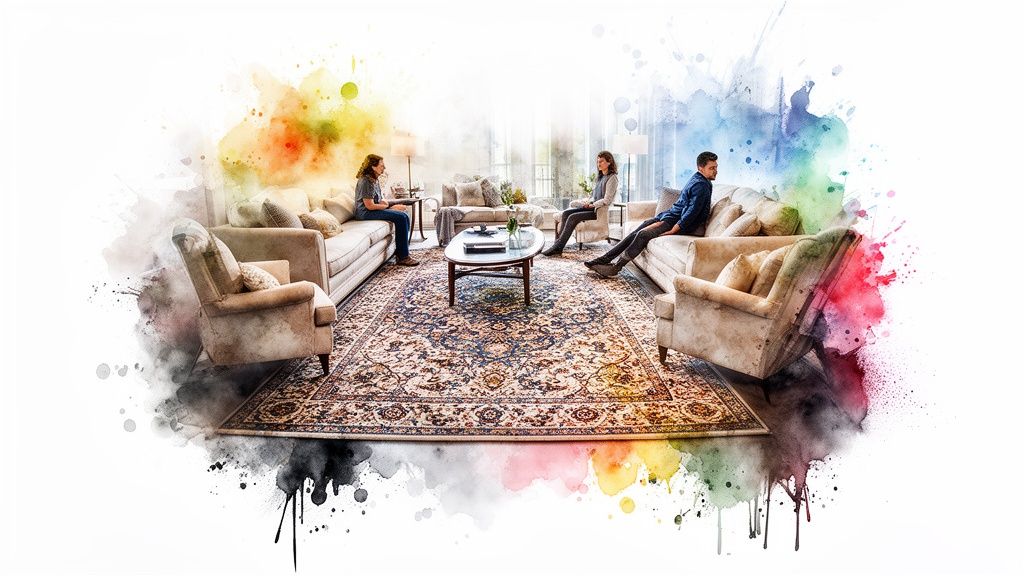
People sometimes shop for rugs as though they were seasonal accessories. That approach usually leads to disappointment. A thin, low-grade rug may look acceptable on day one, but over time it can flatten, shift, fray, or make the room feel temporary.
A better mindset is to treat the rug the same way you would treat a solid wood dining table or a well-made upholstered sofa. Buy for durability first. Style follows more easily when the piece has substance.
What a good rug does for your floor
The first job is straightforward. A rug creates a buffer between daily use and the hardwood surface.
That matters in places like:
- Living rooms: Foot traffic concentrates around coffee tables, sofas, and media areas.
- Dining rooms: Chairs move back and forth constantly.
- Bedrooms: Rugs soften repeated wear around the bed and at room entries.
- Hallways and transitions: These areas often take the hardest use.
A rug also shields parts of the floor from direct light. If one section of hardwood gets strong sun and the surrounding floor does not, uneven aging can become more noticeable. Rugs help moderate that effect, especially when you rotate them periodically.
Comfort matters more than people expect
Hardwood floors can look beautiful and still feel a little sharp acoustically. Rugs reduce that echo and make a room feel calmer.
They also add physical comfort. Under a seating group, a rug helps the room feel settled. In a bedroom, it reduces the cold, bare feel of open floor. In family homes, it often becomes the place where people sit, play, read, or gather.
Practical takeaway: The best area rugs for hardwood floors should protect the surface, improve comfort, and support the way you live in the room. If a rug only looks good but performs poorly, it is not the right investment.
Why quality often costs less over time
Cheap rugs often create a cycle. They wear out quickly, lose shape, and get replaced long before the hardwood beneath them needs attention. That repeat purchasing adds up.
A better rug can stay useful for years because it is built to recover from regular use, hold its form, and continue looking appropriate even as other furnishings evolve. That is the heart of a buy-it-for-life mindset. It is also a more sustainable choice. Fewer replacements mean less waste and fewer compromises.
This is one of those home decisions where short-term savings can become long-term expense. A quality rug protects the floor you already paid for and helps prevent the kind of wear that can make a room look tired before its time.
Decoding Rug Materials For Lasting Quality
Material is where many rug decisions go right or wrong. Two rugs can look similar in a photo and perform very differently on hardwood floors.
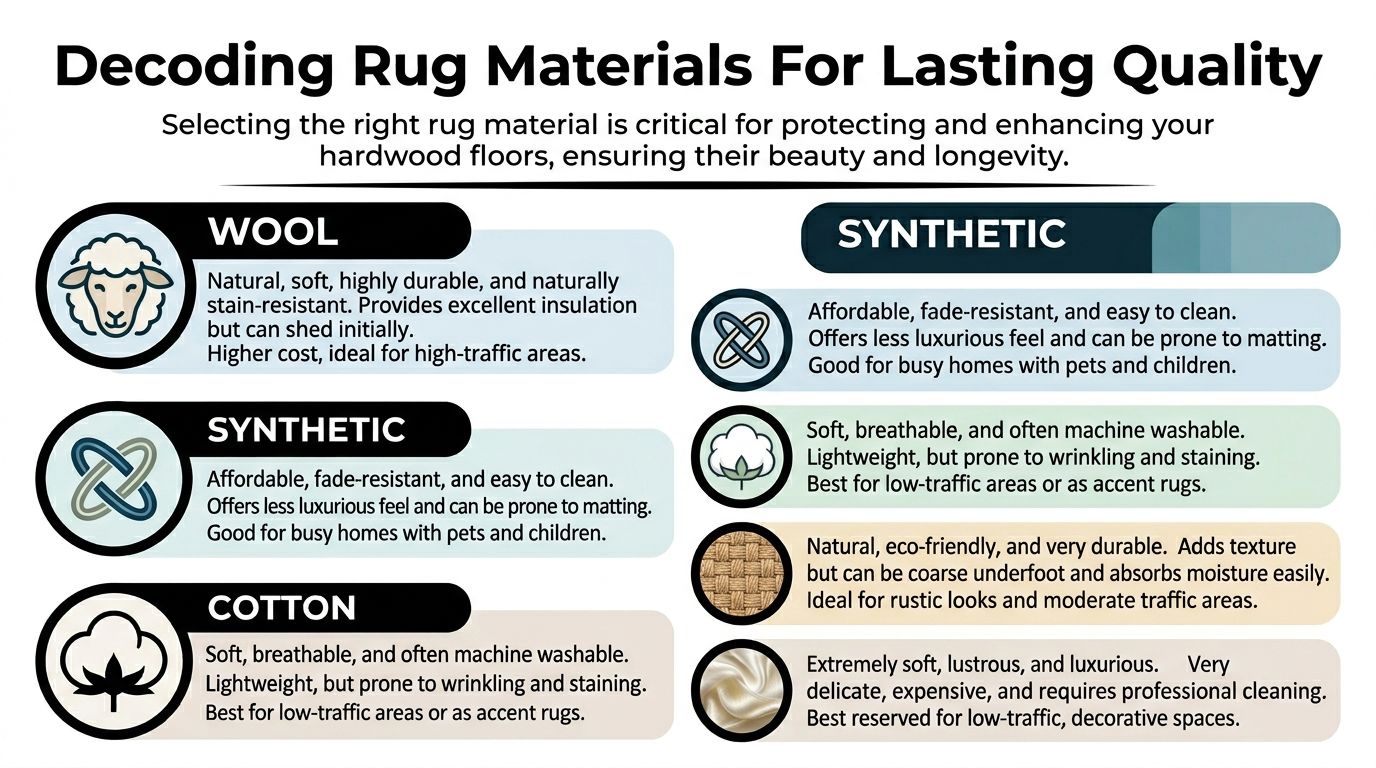
Some fibers spring back after pressure. Others crush. Some breathe well. Others trap moisture more easily. Some feel luxurious but demand a gentle environment. Others handle family life better but sacrifice richness underfoot.
Wool sets the standard
If you want one material that consistently performs well on hardwood, wool is the benchmark.
According to Luxe Weavers' guide to rugs for hardwood floors, wool fibers exhibit a natural crimp that allows them to recover up to 97% of their original thickness after compression, which helps prevent matting and reduces the kind of wear transfer that can affect the floor beneath. The same source notes that wool’s breathability allows vapor transmission, which helps mitigate moisture buildup that can damage wood.
That sounds technical, but the practical takeaway is simple. Wool bounces back. It stays attractive longer in active rooms. It also tends to feel substantial underfoot without feeling stiff.
Wool is often the best fit for:
- Main living spaces
- Rooms with steady daily foot traffic
- Homes where long-term durability matters more than chasing trends
- Spaces where comfort underfoot is part of the goal
Its drawbacks are manageable. Wool can cost more upfront, and some rugs shed early on. That initial shedding usually calms down with normal care.
If you are comparing options in person, collections at https://www.giorgibros.com/cyprus-carpets-rugs/ can help you get a feel for how different constructions and fibers perform visually and physically.
Cotton, silk, natural fibers, and synthetics
Not every room needs the same material. A quiet bedroom asks for something different than a busy family room.
Here is how the common categories compare.
| Material | Strengths | Watch-outs | Best use |
|---|---|---|---|
| Wool | Durable, resilient, comfortable, naturally substantial | Higher upfront investment, may shed at first | Living rooms, bedrooms, high-use spaces |
| Cotton | Soft, casual, often lighter in feel | Can wrinkle, wear faster, and show use sooner | Low-traffic rooms, layered looks, informal spaces |
| Silk | Lustrous, elegant, refined pattern detail | Delicate, high maintenance, better for display than wear | Formal or low-traffic rooms |
| Jute or sisal | Textural, natural look, strong visual character | Can feel coarse, less forgiving with moisture | Offices, sitting rooms, layered design schemes |
| Synthetic fibers | Budget-friendly, easy to clean, often practical for busy households | Can mat down, feel less rich, and age less gracefully | Casual rooms, temporary needs, some pet-friendly settings |
How to think through the tradeoffs
A material does not need to be perfect. It needs to suit the room.
A few examples make this easier:
- A formal sitting room: Silk accents may make sense because the space sees lighter use.
- A family room with constant movement: Wool usually gives better long-term value because it recovers well.
- A beachy or relaxed interior: Jute can add beautiful texture, but you may want softness layered on top.
- A guest room: Cotton can be enough if the room is used occasionally.
Expert tip: Touch matters. Fiber content changes the feel, flexibility, and density of a rug more than most labels or online descriptions suggest. When possible, put your hand on the rug and bend a corner before deciding.
The material should match the room, not the trend
A mistake people make is buying the rug that photographs best instead of the rug that lives best. A pale, delicate fiber in a high-use room may look wonderful for a short period and frustrating after that.
Think in terms of pressure, movement, and maintenance. Ask who will use the room, how often chairs move, whether pets like to claim that spot, and whether the room gets strong light. Those questions usually point you toward the right material faster than color alone.
For homeowners who want the best area rugs for hardwood floors, wool remains the strongest all-around answer. Other materials can work beautifully, but they tend to perform best when matched carefully to the right room and expectations.
The Unsung Hero Protecting Your Floors The Rug Pad
Many people spend time choosing the rug and almost no time choosing the pad. That is a mistake.
The rug pad is the layer that grips, cushions, and separates the rug from the hardwood finish. If the pad is poor quality, it can create problems you do not notice until damage is already there.
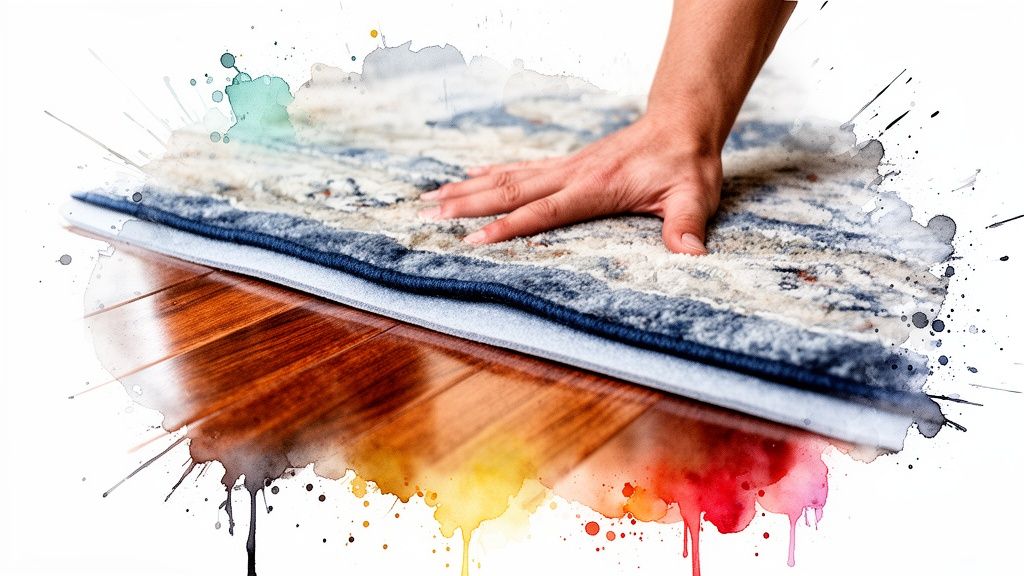
Why cheap pads can do real harm
A low-grade pad may seem harmless because you do not see it. But this hidden layer has direct contact with your floor finish for long periods of time.
The most common problems include:
- Surface discoloration: Some low-quality materials can react poorly with floor finishes.
- Trapped moisture: Pads that do not breathe well can hold dampness where you least want it.
- Crumbing and residue: Inferior pads can break down and leave a mess stuck to the floor.
- Excess movement: If the pad does not grip properly, the rug shifts and creates friction.
That last issue matters more than people think. A rug that slides even slightly gets adjusted constantly by foot pressure, furniture legs, and daily use. Over time, that repeated motion can contribute to wear.
For more ways to reduce everyday floor stress from furnishings, https://www.giorgibros.com/how-to-protect-your-floors-from-your-furniture/ offers practical guidance.
The health issue people often miss
Floor protection is only part of the story. Indoor air quality belongs in this conversation too.
According to Lifecore Flooring’s article on rugs for hardwood floors, a 2023 EPA study notes that volatile organic compounds, or VOCs, from synthetic home goods contribute to some home irritants. The same source warns that cheap rug pads are a primary source, affecting indoor air quality and aggravating allergies.
That changes the question from “Will this stop slipping?” to “What is sitting in my home for years, directly against my floor, while my family breathes around it?”
If someone in your household is sensitive to odors, chemicals, or airborne irritants, the pad deserves careful attention.
What to choose instead
The best rug pads for hardwood floors are usually simple, stable materials chosen for a specific purpose.
Felt
Dense felt pads work well when you want cushioning, sound absorption, and a little softness underfoot. They are often a good fit under larger rugs anchored by furniture.
Natural rubber
Natural rubber helps with grip. This matters in entries, under smaller rugs, or anywhere movement is a concern. It should be selected specifically for hardwood-safe use.
Felt and rubber combinations
Many homeowners do best with a dual-surface pad that combines comfort and hold. It gives the rug some body while helping keep it in place.
Key rule: Match the pad to both the rug and the room. A heavy wool rug in a formal living room may need a different pad than a hallway runner or a bedroom accent rug.
A small hidden layer with big consequences
People often notice rug texture before they notice what is beneath it. Your hardwood floor notices the opposite.
If you buy one thing carefully after the rug itself, make it the pad. It protects the finish, helps the rug wear better, and can support a healthier home environment at the same time.
A Practical Guide To Rug Size And Placement
A beautiful rug in the wrong size can make a well-furnished room feel awkward. This is one of the most common mistakes homeowners make.

The rug is supposed to connect the furniture, not float in the middle like an island. In most rooms, people benefit from going larger than they first planned.
Living room placement that feels grounded
In a living room, the rug should relate directly to the seating arrangement.
A good rule is to place at least the front legs of the sofa and chairs on the rug. That creates a connected conversation area. If the room is large enough, placing all major furniture on the rug can feel even more integrated.
If the rug is too small, the room starts to look pieced together. The furniture appears to drift apart visually, even when the layout is correct.
Use this quick check:
- Small seating group: Front legs on the rug is often enough.
- Larger room: Try to fit all key seating pieces on the rug.
- Open concept space: Let the rug define the living zone clearly.
Dining room sizing that works in real life
Dining rooms need a different test. Pull the chair back as though someone is getting up from the table.
If the back legs of the chair leave the rug when pulled out, the rug is too small.
That is why the rug should extend beyond the table on all sides. The point is not just visual framing. It is smooth chair movement and better floor protection where repeated scraping tends to happen.
Bedroom layouts that feel intentional
Bedroom rugs work best when they give you a soft landing where you step.
You have a few workable options:
- Large rug under the bed: The rug extends beyond the sides and foot of the bed, creating a broad frame.
- Medium rug under the lower portion: The bed sits partly on the rug, with coverage focused where your feet land.
- Runners at the sides: Useful when you want softness without covering as much floor.
If you are planning bedroom flooring and soft-surface layering together, https://www.giorgibros.com/how-to-pick-carpet-for-bedroom/ can help clarify how comfort, material, and room use intersect.
Helpful rule of thumb: Buy the largest rug your layout can support comfortably. A slightly larger rug usually makes the room feel calmer and more complete. A too-small rug almost always does the opposite.
Placement mistakes worth avoiding
Some missteps show up again and again:
| Common mistake | What happens |
|---|---|
| Rug only under the coffee table | The seating feels disconnected |
| Dining rug too tight to the table | Chairs catch at the edge |
| Bedroom rug hidden almost entirely under the bed | You pay for coverage you rarely enjoy |
| Runner with no pad in a busy path | It shifts and wears unevenly |
The best placement feels natural because it supports the room’s use. You should not have to think about it every time you sit down, walk through, or pull out a chair. When the size is right, the room functions well.
Weaving Style And Color Into Your Home
Once the practical decisions are in place, the rug gets to do its most visible job. It shapes the mood of the room.
Color, pattern, and texture all interact with your hardwood floor. A dark walnut floor creates a different backdrop than pale oak. A clean-lined room asks for something different than a traditional space full of carved wood, layered textiles, and collected pieces.
Start with the wood tone
A rug does not need to match the floor. In many rooms, it should not.
If your hardwood is deep and rich, a lighter rug can create contrast and keep the room from feeling heavy. If the floor is pale and airy, a tonal rug can preserve that calm, seamless look. Pattern can also help bridge wood tones and upholstery colors when the room has several finishes in play.
Here are a few useful pairings:
- Dark floors with lighter rugs: Creates definition and brightens the room.
- Mid-tone floors with patterned rugs: Balances warmth and visual interest.
- Light floors with warm neutrals: Keeps the room relaxed and cohesive.
- Strong wood grain with quieter rugs: Prevents visual competition.
Let the rug connect the furniture
The rug should relate to the room’s largest pieces. If you have a leather sofa, the rug can soften it. If you have upholstered seating in a subtle fabric, the rug can carry more pattern. If your wood furniture has visible grain and character, the rug can either echo that warmth or provide contrast. Many people get stuck here. They shop for the rug in isolation.
Rooms feel more finished when the rug is chosen as part of the full composition. That includes upholstery, wood finish, wall color, and lighting. In Bay Area Interior Design, that layered coordination often matters more than buying the boldest single piece in the room.
A good example is a home furnished with Custom Furniture or Amish Furniture. Those pieces usually carry a sense of craftsmanship and permanence. A flimsy, trend-driven rug can look out of place beside them. A more grounded rug, whether traditional, textured, or softly patterned, tends to support the integrity of the room better.
At Giorgi Bros., over 60% of our clients utilize our custom order services to achieve a perfectly coordinated space, where the area rug is selected in tandem with custom upholstery and wood finishes to ensure a harmonious design from the ground up. You can see one example of how color and pattern can shape a room by exploring https://www.giorgibros.com/karastan-rugs-spice-market/.
When custom is the better answer
Sometimes the right rug is not the one hanging on a rack. It is the one that fits your exact room, palette, and furniture plan.
Custom options make sense when:
- the room has unusual dimensions
- you need a very specific color relationship
- you are coordinating with a custom sofa or dining set
- you want the rug to feel integrated, not approximate
That approach usually leads to a calmer room. Nothing feels “close enough.” Everything feels considered.
Caring For Your Rug And Floor Investment
A good rug does not stay good by accident. Routine care protects both the fibers and the hardwood beneath.
The goal is not perfection. The goal is consistency.
Regular habits that make a difference
Vacuuming matters, but technique matters too. Use the suction and attachment that suit the rug’s construction. Delicate rugs and fringes need a gentler approach than dense, durable wool rugs in active rooms.
A few habits help most rugs last longer:
- Vacuum consistently: Dirt acts like grit underfoot and wears fibers down.
- Rotate the rug: This helps distribute wear and light exposure more evenly.
- Check underneath occasionally: Lift a corner and make sure no moisture or residue is building up.
- Address spills quickly: Blot first. Do not scrub aggressively.
If a spill happens, use a clean cloth and press down to absorb as much liquid as possible. Work from the outside of the spill inward so it does not spread. Avoid soaking the area, especially on hardwood floors where excess moisture can create a second problem.
Match cleaning to the material
Not all rugs should be treated the same way.
| Rug type | Best everyday approach |
|---|---|
| Wool | Regular vacuuming, prompt blotting of spills, periodic professional care |
| Cotton | Light vacuuming and careful spot cleaning |
| Silk | Gentle maintenance and professional cleaning for most issues |
| Jute or sisal | Keep dry, vacuum carefully, avoid over-wetting |
| Synthetic | Vacuum regularly and follow maker guidance for spot cleaning |
Care tip: If you are unsure whether a cleaning product is safe, test it in a hidden area first or skip it and call a professional. A rushed cleaning fix can cause more visible damage than the original spill.
Know when to call a professional
Some situations are worth handing off.
Bring in a professional cleaner when:
- the stain is large or set deep
- the rug is silk or otherwise delicate
- pet accidents have reached the pad
- odors remain after basic cleaning
- the rug has not had a deep cleaning in a long time
Professional care also helps preserve the rug’s shape and finish when home methods are too harsh. That matters if you bought a piece for long-term use rather than short-term convenience.
A rug and a hardwood floor can age beautifully together. They just need steady care and a little restraint when something goes wrong.
Your Trusted Partner In Quality Furnishings Since 1933
Choosing the best area rugs for hardwood floors comes down to a few steady principles. Pick a material that suits the way the room is used. Do not treat the rug pad as an afterthought. Size the rug to support the furniture, not just fill empty floor. Choose style in a way that respects the architecture of the room and the character of the wood beneath it.
That approach takes a little more thought up front, but it usually leads to fewer regrets. It also leads to rooms that feel settled, comfortable, and built to last.
For homeowners shopping in Furniture South San Francisco, that kind of decision-making is easier when you can see materials in person, compare textures, and talk with experienced Consultants in a no-pressure setting. It also helps to work with Non-Commission Sales Staff, especially when you are weighing custom options, long-term durability, and how a rug should relate to other investment pieces in the home.
And if you are furnishing beyond the floor, the same mindset applies to Custom Furniture, Amish Furniture, and even Premium Mattresses. Quality pays you back through comfort, longevity, and fewer replacements over time. If flexibility matters, financing options are available too.
Frequently Asked Questions About Area Rugs
Some of the most useful rug questions are the small ones people ask after they have already narrowed down style and size. Those details often determine whether you stay happy with the rug long term.
Common Rug Questions Answered
| Question | Expert Answer |
|---|---|
| Do wool rugs always shed? | Many wool rugs shed at first, especially when new. Early shedding is often normal and tends to improve with regular vacuuming and use. |
| Can I put a rug directly on hardwood without a pad? | You can, but it is usually not the best choice. A pad helps reduce shifting, adds cushioning, and creates a more protective layer between rug and floor. |
| Are natural fiber rugs good for every room? | Not always. Jute and sisal can look beautiful, but they are not the softest choice and may not be ideal where moisture or frequent spills are common. |
| Should the rug match the floor color? | Usually no. Coordination works better than exact matching. Contrast or gentle tonal variation often gives the room more depth. |
| Is pattern mixing okay? | Yes, if the scale is balanced. If your upholstery is busy, a calmer rug often works best. If the furniture is quiet, the rug can carry more visual interest. |
| What is the biggest rug-buying mistake? | Buying too small. A rug that is undersized can make the whole room feel disconnected, even if the furniture itself is well chosen. |
A final note on confidence. If you are stuck between two rugs, choose the one with better material quality and better construction. You can often make almost any good rug work stylistically. It is much harder to make a poor-quality rug perform well over time.
If you are ready for personal, no-pressure help, visit Giorgi Bros. Furniture in South San Francisco or book a Design Consultation. Our family has been helping Bay Area homeowners choose lasting investment pieces since 1933, and our non-commission Design Experts are here to help you compare rugs, coordinate custom furnishings, and make a smart choice for the way you live.