
You’re probably looking at one of two frustrations right now. The first is a bulky media console that makes the room feel heavy. The second is the opposite problem, a flimsy stand that looks fine online but doesn’t inspire confidence once you imagine a large TV, a soundbar, a game console, and daily life landing on it.
That’s why so many Bay Area homeowners end up drawn to scandinavian tv stands. The style brings order without feeling stark. It looks light, but when it’s done well, it works hard. Clean lines, useful storage, natural wood tones, and a low profile can calm a busy room.
Our family has helped people furnish homes in South San Francisco since 1933, and one lesson hasn’t changed. a TV stand shouldn’t be chosen as a filler piece. It’s part storage, part architecture, part technology hub. If you choose well, it can anchor the room for years.
Finding Harmony in Your Living Room
A common Bay Area scenario goes like this. The sofa is right. The rug is right. The wall color works. Then the TV stand arrives and throws everything off. It’s too dark, too deep, too shiny, or too generic.
That’s where Scandinavian style earns its place. It doesn’t fight the room. It settles it.
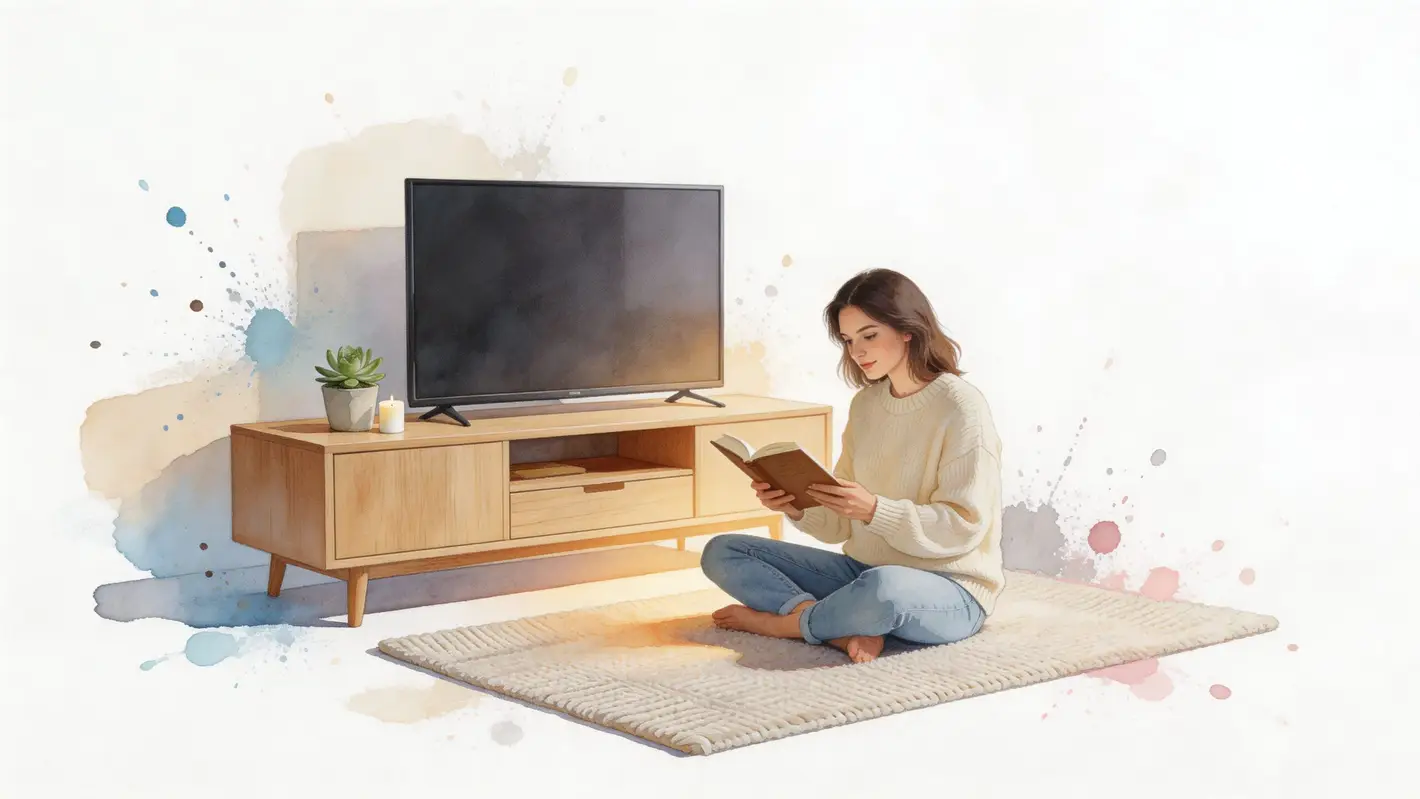
In practice, the best scandinavian tv stands make the whole living area feel more intentional. They pair especially well with open layouts, lighter flooring, and homes where people want fewer visual interruptions. If you’re also thinking about floors, color flow, and furniture placement together, this guide to achieving home design harmony is a useful companion read.
A good stand also has to live with the rest of your seating, lighting, and traffic flow. That’s why room planning matters as much as style. If you’re building the space from the ground up, this living room furniture planning resource is worth bookmarking: https://www.giorgibros.com/how-to-choose-living-room-furniture/
A peaceful room isn’t empty. It’s edited.
What Defines a Scandinavian TV Stand
A lot of furniture gets labeled Scandinavian when it’s just pale wood and a simple silhouette. Authentic style runs deeper than that.
Scandinavian design began in the early 20th century across the Nordic countries and gained broad recognition in the U.S. after the 'Design in Scandinavia' exhibition toured the United States from 1954 to 1957, introducing Americans to clean-lined wooden furniture focused on natural materials and function, according to the Design Index overview of Scandinavian design.
The visual cues that matter
When a piece reads as authentically Scandinavian, you’ll notice a few things right away:
- Clean profiles with little visual noise
- Light or natural wood tones such as oak and birch
- Minimal hardware or hardware that disappears into the form
- Raised legs, often tapered, that keep the piece from feeling blocky
- Useful simplicity, where every drawer, shelf, and door has a job
That last point matters most. Scandinavian furniture isn’t minimal for show. It’s minimal so daily life feels easier.
Why the style works so well in real homes
In the Bay Area, many living rooms have to do several jobs. They’re movie rooms, reading rooms, work-from-home spillover spaces, and gathering spots. Scandinavian forms hold up because they don’t demand constant styling to look composed.
They also mix well with nearby styles. If you enjoy Mid Century Modern design principles, you’ll notice the family resemblance. Both styles value clean lines and thoughtful proportions. Scandinavian pieces feel softer, lighter, and quieter.
What to avoid
Not every minimalist console qualifies. Be cautious of pieces that look Scandinavian from ten feet away but miss the point up close.
A few tells:
- Overly glossy finishes that feel synthetic
- Chunky proportions that defeat the airy look
- Decorative details that serve no function
- Thin materials disguised as quality construction
If your goal is a room that feels calm rather than cold, restraint matters. So does personality. Minimal rooms go wrong by removing too much. If you want a clean look that still feels lived in, this guide to personalizing a pared-down room is helpful: https://www.giorgibros.com/mastering-minimalism-how-to-personalize-your-space-without-feeling-cluttered/
Choosing the Right Size for Your Space and Tech
A family can bring home a beautiful new 75 inch TV, set it on a console that looked right in the showroom, and realize by the first movie that something is off. The screen sits too high, the feet barely fit, the soundbar blocks the lower edge, and cords spill out the back. That problem usually starts with buying by width alone.

For Scandinavian styling, proportion matters as much as storage. The stand should keep the screen at a comfortable height, leave room for the equipment you use, and still hold the light, horizontal look that makes the room feel settled instead of crowded. The Society of Motion Picture and Television Engineers recommends a viewing angle that keeps the screen within a comfortable field of vision, which is a helpful starting point when planning TV height and placement, as outlined in this SMPTE home theater viewing guidance.
Start with height, not width
In real homes, height is usually the first place mistakes show up.
A lower profile stand often works better because it keeps the center of the screen closer to eye level when you are seated. It also supports the long, understated shape associated with Scandinavian furniture. In rooms with windows, art, or open shelving nearby, that lower line helps the wall breathe.
Use your seat, not just a tape measure. Sit where you normally watch, then check whether the TV feels natural without lifting your chin. For a more exact setup, this guide to optimal TV positioning and sight lines is worth using before you order.
Measure the TV like a piece of equipment
Screen size alone does not tell you what the stand has to handle. The full footprint matters.
Before you buy, check these points:
Overall TV width and stand placement
Many newer televisions have wide-set feet. The stand top needs enough usable surface for those feet, not just enough space for the screen itself.Depth for the base and accessories
Slim consoles can look great online and fail quickly in person if the TV feet sit too close to the edge or the soundbar hangs forward.Weight capacity
Larger screens are heavier than many shoppers expect. Ask for a real weight rating, especially if the stand will support the TV rather than sit under a wall-mounted screen.Ventilation and cable access
Streaming boxes, receivers, game consoles, and routers all generate heat. A good stand gives those components room to breathe and lets you reach connections without pulling everything apart.
That last point separates furniture made for photos from furniture made for daily use.
Size for the room, then size for the tech
A stand can fit the TV and still feel wrong in the room. Good proportion solves both problems at once.
| Room concern | What usually works | What usually fails |
|---|---|---|
| Large TV in a modest room | Long, low stand with open visual space underneath or around it | Tall unit that pushes the screen too high |
| Open-concept layout | Clean front, controlled cable routing, moderate depth | Bulky cabinet that projects too far into the room |
| Shared family room | Durable construction, rounded or softened edges, flexible storage | Delicate piece with limited support and no room for devices |
| Tech-heavy setup | Adjustable shelves, venting, access panels, wire management | Minimal shell with nowhere to hide or cool components |
In the showroom, I often tell clients to picture the stand on an ordinary Tuesday night, not on delivery day. The right piece needs to hold the TV, the soundbar, the console, the modem, and the mess that comes with real family use, while still looking calm.
Plan for the next five years
Technology changes faster than furniture should. A well-built Scandinavian TV stand needs enough flexibility to handle the equipment you own now and the upgrades that usually follow.
That is where higher-quality, American-made furniture earns its keep. Custom sizing can solve common problems imported pieces ignore, such as extra depth for oversized TV feet, better back-panel access for cable boxes and routers, or reinforced tops for heavier screens. The look stays clean, but the function is grounded in how people live.
A TV stand should never force you to choose between design and practicality. The best ones handle both, and they keep doing it long after the packaging is gone.
Materials and Finishes That Are Built for Life
A TV stand earns its keep after the first few years. The finish has to handle hands, remotes, sunlight, dusting, and the occasional spill without looking tired before the room does.
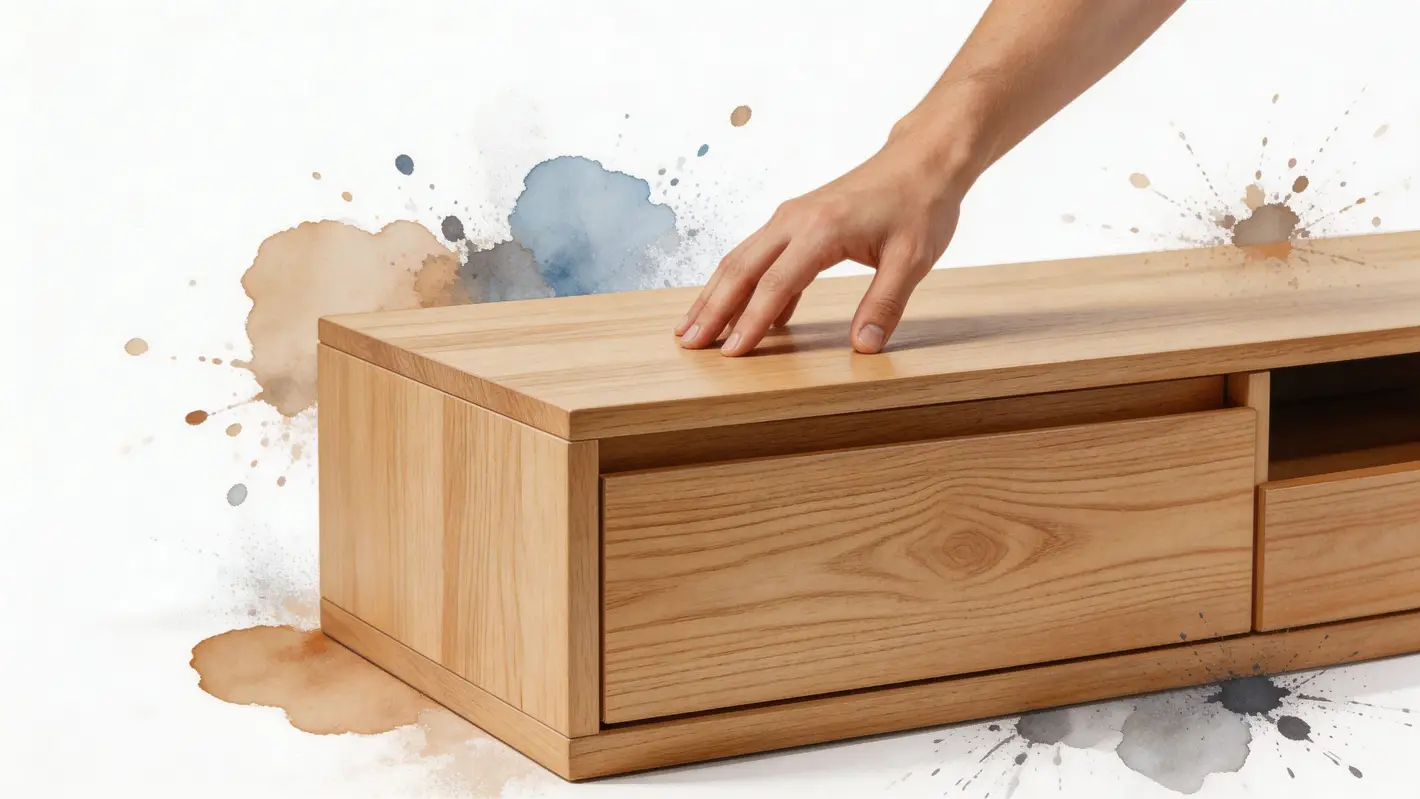
In our experience, Scandinavian style holds up best when the materials are honest and the construction is disciplined. A clean oak front, a properly matched veneer, or a solid wood edge can all age well. The difference comes down to how the piece is built and whether it can be maintained, repaired, or refinished instead of replaced.
What holds up and what doesn’t
Families often ask whether they should buy solid wood or a veneered piece. The better answer is to look at where each material is used.
A well-made stand usually combines materials with purpose:
- Solid wood on edges, legs, face frames, and other high-contact areas where dents and wear show first
- Furniture-grade veneer on larger panels where stability matters and a consistent grain keeps the look calm
- Engineered core materials in the right places to help doors align, drawers glide properly, and wide spans stay flat
That approach is common in quality American-made furniture, and for good reason. Wide solid panels can move with seasonal humidity. Well-built veneered panels can stay straighter over time. Cheap imports cut corners in the substrate, edging, and joinery, and that is usually where failure starts.
The weak point is rarely the style. It is the thin laminate, the fragile edge banding, or the low-grade core underneath.
The finish matters as much as the material
Finish determines how the piece will look after daily use, not just on delivery day.
A low-sheen finish fits the Scandinavian look because it shows the grain without a plastic-looking glare. In a busy family room, a stronger protective topcoat often makes more sense than an ultra-natural finish that marks easily. There is always a trade-off. The more natural the finish looks, the more care it may ask from the household.
Here is the practical breakdown:
| Material or finish choice | Good fit for | Watch-outs |
|---|---|---|
| Solid oak or ash | Long-term ownership, repairability, refinishing later on | Higher upfront cost, more weight |
| Quality oak veneer over a furniture-grade core | Clean Scandinavian lines, better panel stability, consistent grain | Quality depends on the core, adhesive, and edge detailing |
| Thin laminate over low-grade board | Short-term budget use | Chips easily, swells if moisture gets in, hard to repair |
| Natural matte wood finish | Warm, understated appearance | Shows wear faster in high-traffic homes |
| Durable protective topcoat | Family rooms, kids, pets, frequent cleaning | Can mute some of the wood’s natural character if overapplied |
For households that plan to stay with a piece for a decade or longer, customization usually pays off. A customized TV stand built for your room and technology gives you better control over wood species, sheen level, edge profile, and the kind of surface protection your family will need.
Why buy-it-for-life thinking matters
Bay Area clients tell us the same thing every year. They are tired of buying media furniture twice.
That frustration makes sense. TV stands take a surprising amount of abuse, and disposable pieces rarely improve with age. A better-built stand costs more at the start, but it has a future. Scratches can be touched up. Wood can be refinished. Hardware can be adjusted or replaced. That is how Scandinavian design stays true to itself. Simple, useful, and made to live with for a long time.
Functional Features for a Clutter-Free Home
The best scandinavian tv stands not only hide clutter, but also make it less likely to happen.
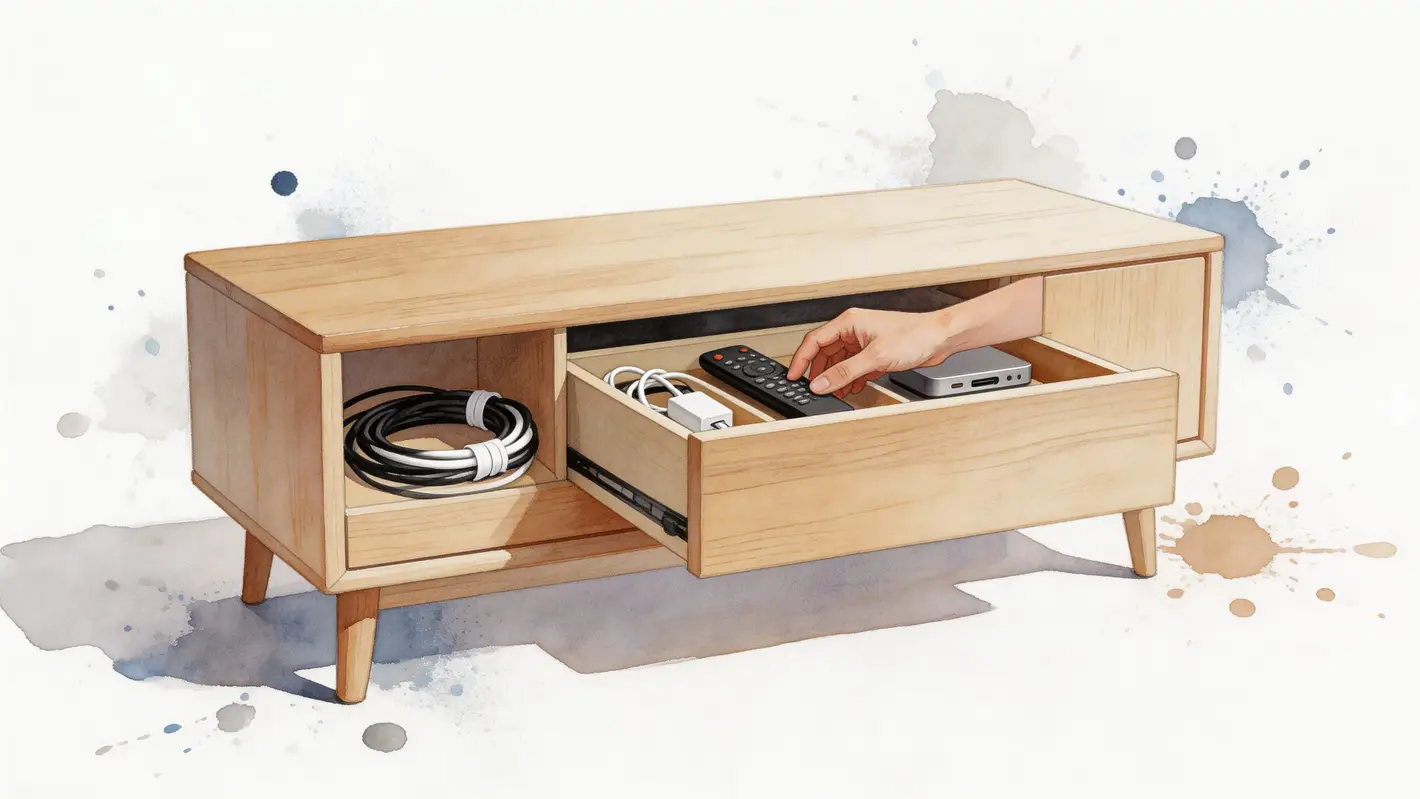
Well-designed TV stands with interior shelves and ventilated backs can reduce signal interference by up to 25dB and lower gaming console operating temperature by 8-12°C, helping prevent thermal throttling and protect electronics, based on this Lakiq overview of Scandinavian-style TV stand functionality.
Cable management is not a small detail
People notice cable management only after they don’t have it.
A well-planned media console should include some combination of:
- Rear access openings so cords don’t bunch up behind the unit
- Shelf-level pass-throughs for routing devices cleanly
- Closed storage zones that hide visual clutter without trapping heat
Messy wiring looks bad, and it makes cleaning harder, device swaps more annoying, and troubleshooting far more frustrating.
Storage should match how you live
Not everyone needs the same mix of drawers, cubbies, and doors.
Consider your household pattern:
- If you use a soundbar, streaming box, and one console, open central shelving can work well.
- If you have kids, remotes, charging cables, and game accessories, drawers become much more useful.
- If you want the room to stay visually quiet, reeded or flat-front doors do a lot of work.
A good media console doesn’t force perfect habits. It supports real ones.
Ventilation protects the gear you already paid for
Modern electronics run warm. When they’re tucked inside a beautiful cabinet with no airflow, looks stop mattering.
Here’s what works better than a fully sealed box:
| Feature | Why it helps |
|---|---|
| Ventilated back panel | Lets heat escape behind consoles and receivers |
| Open shelf section | Improves airflow around frequently used devices |
| Balanced mix of open and closed storage | Hides clutter without suffocating equipment |
| Easy rear access | Makes resets, updates, and cable changes less disruptive |
If a stand hides everything but cooks the console, it’s not well designed.
In Bay Area Interior Design projects, this is one of the easiest details to overlook because it isn’t visible from the front. But it has a direct effect on daily use. Functional furniture should lower friction, not create it.
Customizing the Look for Your Unique Style
Many shoppers encounter a challenge at this stage. They like the Scandinavian look, but every ready-made option asks them to accept one wrong detail. The wood tone is off. The size is close, not right. The storage mix doesn’t fit the equipment. The quality feels temporary.
That gap matters because a 2025 report showed a 25% increase in demand for furniture customization in the U.S., while most retailers still focus on pre-made Scandinavian styles, as noted on this Scandinavian Designs collection page discussing the category and customization gap.
Imported look, local fit
You don’t have to choose between Scandinavian style and American-made craftsmanship. This is a detail many shoppers miss.
A custom order lets you keep the visual language you want:
- light oak or ash tones
- a low horizontal profile
- clean drawer fronts
- minimal hardware
- a quieter, architectural presence
Then you can adapt the piece to your real home.
What customization changes in practical terms
Custom Furniture becomes useful, not decorative, in this context.
You can adjust details such as:
Wood species
Light oak gives you the classic Nordic feel. Walnut brings in more warmth. Other American hardwoods can bridge Scandinavian simplicity with a richer interior palette.Finish tone
Some homes need a pale, matte look. Others need a finish with more depth to connect with existing floors or nearby case goods.Storage layout
More drawers for hidden remotes and accessories. More open shelves for consoles and sound systems. Door panels if you want visual calm.Scale
This is the biggest win. A piece can be made to better suit the wall, the television, and the room circulation.
One practical option for shoppers comparing layouts and configurations is https://www.giorgibros.com/customized-tv-stands/
Why this approach ages better
Pre-made furniture asks you to compromise in several places at once. That catches up with you. The stand feels slightly too small. The finish never quite works with the floor. The storage is wrong, so clutter ends up outside the cabinet instead of inside it.
A customized piece solves those problems prior to placing the order.
American-made and Amish Furniture options also make sense for buyers who want investment pieces rather than trend pieces. You get the Scandinavian restraint, but with construction intended for long-term ownership. In a no-pressure showroom setting, shoppers can compare those choices against standard retail pieces and decide where quality matters most for their household.
Styling Your Stand in a Bay Area Home
A Scandinavian TV stand is straightforward to place because it doesn’t insist on one kind of house. The same piece can feel right in a downtown condo, an East Bay bungalow, or a mid-century home with strong architectural lines.
In a modern San Francisco condo, the stand works best with restraint. A ceramic vessel, a short stack of art books, and one low plant are enough. Too many objects erase the clean effect that drew you to the piece in the first place.
Three room stories that work
In an Eichler or other mid-century setting
A Scandinavian stand can soften all the glass, geometry, and strong horizontal lines. Choose wood tones that echo, rather than exactly match, nearby finishes. If you want a companion piece with a related spirit, this Scandinavian coffee table collection shows how the language carries across the room: https://www.giorgibros.com/scandinavian-design-coffee-table/
In a classic Craftsman or older Bay Area home
The stand becomes a quiet counterpoint to trim, built-ins, and more traditional details. It doesn’t need to mimic the architecture. Its job is to keep the media wall from becoming heavy.
In a family room with mixed styles
This is often the most realistic setup. Maybe there’s a well-fitted sofa, a vintage side chair, and a newer rug. Scandinavian forms are forgiving in that kind of mix because they act as visual glue.
Keep the top surface disciplined
What belongs on top of the stand?
- A soundbar if needed, centered and scaled properly
- One sculptural object with some height
- A small plant if the light is good
- Very little else
What doesn't help:
- scattered remotes
- tall decor that competes with the screen
- too many framed photos
- baskets or bins crowding the sides
The TV is the focal point. The stand should support it, not start a second conversation.
The homes that feel calm follow that rule. They use furniture to create structure, then let a few carefully chosen details bring warmth.
Experience True Quality at Giorgi Bros
Furniture shopping should feel informative, not pressured. That’s especially true for a piece like a TV stand, where style, scale, storage, and construction all have to line up.
For over 90 years, our family has served the Bay Area from South San Francisco with a no-pressure approach. Our Non-Commission Sales Staff model means you can ask practical questions, compare materials, and think through trade-offs without feeling rushed. That matters when you’re choosing investment pieces for daily life.
Seeing furniture in person makes a difference. You can open the drawers, look at the finish in real light, test proportions, and judge the craftsmanship for yourself. If you’re furnishing beyond the media wall, many homeowners appreciate being able to coordinate living room pieces, dining furniture, and even Premium Mattresses in one place. And if timing matters, financing options are available.
Visit Giorgi Bros. Furniture in South San Francisco to explore scandinavian tv stands, custom furniture options, and buy-it-for-life pieces with guidance from our design consultants. If you’d like a more personalized starting point, book a Design Consultation and bring your room measurements, photos, and wish list.