Blankets have a way of collecting where life happens. One ends up over the sofa arm, another stays folded at the foot of the bed, and a heavier quilt waits on a chair for the next cold evening. Add extra pillows, seasonal throws, and guest linens, and a tidy room starts to feel crowded.
That’s where blanket storage trunks earn their place. They solve a simple problem, but they do it in a way few pieces can. A good trunk stores bulky textiles, gives you another surface or seat, and adds real character to a room instead of looking like a temporary fix.
For Bay Area homeowners, that matters. Space often has to work harder, and every piece should justify its footprint. The best trunks do exactly that. They’re practical enough for everyday living and handsome enough to keep for decades.
More Than Storage A Timeless Home Essential
A blanket trunk isn’t a new invention dressed up for modern marketing. It’s one of the oldest useful furniture forms still at home in a current interior.
Blanket storage trunks originated in Europe during the late 17th century, where they served two jobs at once: storage and seating. Their popularity peaked during the 17th, 18th, and 19th centuries, and early American settlers relied on them because built-in closets weren’t part of daily life. Well-preserved antique examples can bring tens of thousands of dollars, which says a great deal about their lasting significance and appeal (history reference).

Why the form has lasted
The reason is straightforward. A trunk answers several household needs without asking for much room.
- It hides visual clutter so blankets, throws, and spare pillows don’t pile up in plain sight.
- It adds function because the lid can serve as a bench, a landing spot, or even a coffee-table-style surface.
- It ages well since a classic chest shape doesn’t go out of style the way trend-driven storage pieces often do.
People sometimes confuse a blanket trunk with a purely decorative chest. There’s overlap, of course, and if you enjoy accent pieces, these decorative storage solutions can offer ideas for styling. But a true blanket trunk is usually designed to carry a heavier load and handle regular use.
What makes it relevant today
In a modern home, a trunk can live almost anywhere. At the foot of the bed, it corrals extra bedding. In the living room, it keeps throws within reach. In an entry, it gives you a place to sit while taking off shoes.
Practical rule: If a piece has to earn its square footage, choose one that stores, supports, and still looks settled in the room.
If you need more hidden storage in the bedroom, under-bed options can work alongside a trunk rather than replace one. This guide to https://www.giorgibros.com/under-bed-wooden-storage/ is useful for understanding how the two can complement each other.
A well-made trunk isn’t just a box with a lid. It’s a small heirloom in waiting. Families have held onto these pieces for generations because they continue to do their job long after cheaper furniture has been hauled away.
Choosing Materials for Lifelong Durability
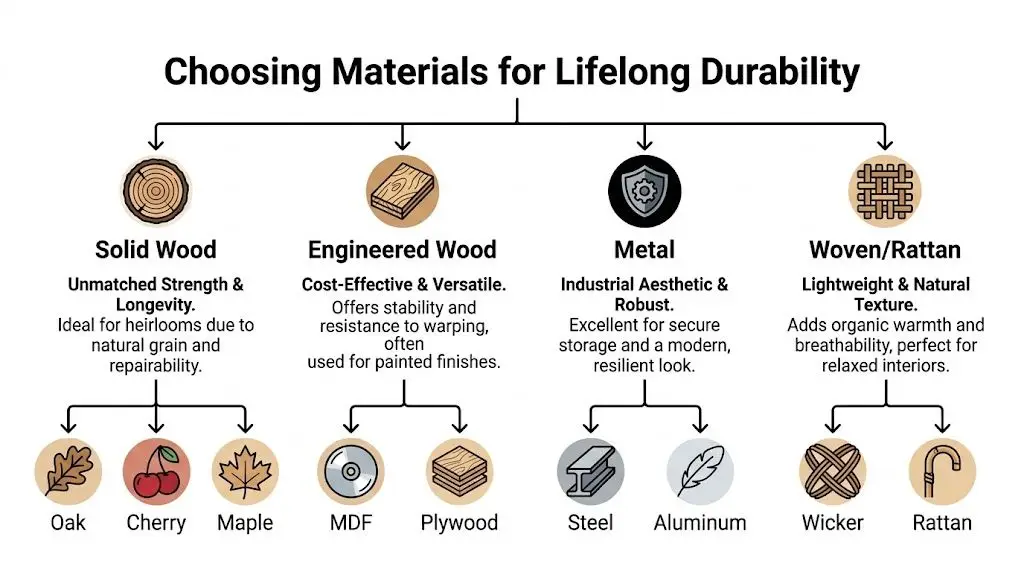
Material choice separates a future heirloom from a piece that only looks good on delivery day. If you want a trunk that can handle blankets, daily opening and closing, and occasional seating, construction matters more than surface appearance.
Many shoppers find this aspect challenging. Two trunks can look similar online, but the construction beneath the finish often reveals its true nature.
Solid hardwood versus mass-market panels
High-quality Amish-crafted trunks often use 1-inch thick solid hardwood tops with cedar-lined bottoms. That matters because the lid often becomes a working surface or a seat. In one cited comparison, solid oak has a compressive strength of around 6,700 psi, while MDF is around 1,500 psi, a gap that helps explain why solid wood holds up better under pressure and repeated use (construction reference).
Here’s the practical difference:
| Material | What it does well | Where it falls short |
|---|---|---|
| Solid oak or cherry | Strong, repairable, ages gracefully | Higher initial investment |
| MDF | Lower upfront cost, smooth for some finishes | Less durable under load |
| Veneer over composite core | Can look attractive at first | More vulnerable to wear at edges |
| Woven materials | Light look, casual texture | Less suited to heavy-duty storage and seating |
A family buying for life usually does better with solid wood. Scratches can be touched up. Hardware can be replaced. The piece can keep serving even as tastes evolve.
Why cedar lining matters
Not every trunk needs a cedar interior, but many homes benefit from it. Cedar-lined bottoms are valued because cedar helps repel pests naturally, which is especially useful for wool blankets, quilts, and seasonal linens. That’s a quiet feature, but it’s one that protects what you store rather than only improving how the trunk looks.
If you store specialty textiles, custom throws, or printed gift blankets, it also helps to understand what those fabrics need before you tuck them away. This overview of sublimation blanket blanks is a good example of how blanket material affects care and storage choices.
Good storage furniture should protect the contents, not just hide them.
Tops, interiors, and daily use
A solid wood top is usually the safer choice for a trunk that will double as furniture. It handles trays, books, folded laundry, and everyday contact more comfortably than lighter panel construction.
An upholstered top can work beautifully in a bedroom or dressing area, especially if you want a softer bench feel. But it changes the role of the piece. You’re choosing comfort over a hard working surface, and that’s fine as long as it’s intentional.
Look closely at these details when comparing blanket storage trunks:
- Lid construction that feels substantial when lifted.
- Interior lining suited to textiles, especially cedar for stored woolens.
- Wood species that fit both your room and your expectations for wear.
- Repairability so the piece can be maintained instead of replaced.
The most sustainable furniture purchase is often the one you make once. Solid hardwood asks more at the beginning, but it usually asks less from you over the long run.
Finding the Right Size and Capacity
A blanket trunk can be beautifully made and still feel wrong if the scale is off. Too small, and it won’t hold much. Too large, and it starts to dominate the room. The trick is to measure for both the space around the trunk and the space inside it.
That second part gets missed all the time.

Start with placement
Think about where the trunk will live before you think about what goes in it.
At the foot of a bed, you want enough room to walk comfortably around it and open the lid without crowding the mattress. In an entry, you need clearance for doors, shoes, and traffic flow. In a living room, the trunk should feel connected to the seating group rather than stranded in the middle.
A few simple checks help:
- Mark the footprint on the floor with painter’s tape.
- Test the lid swing so you know it can open freely.
- Sit at the spot if the trunk will be used as a bench.
- Picture the room in motion, not just in a still photo.
Pay attention to seat height and usable storage
Quality design proves its value in this context. Ergonomic seating standards recommend a height of 16 to 20 inches, and a trunk with a 19-inch lid height sits comfortably within that range. That height can support better seating posture, and some trunk designs can provide up to 15 to 20% greater interior storage clearance than other chests with the same exterior footprint (ergonomic reference).
That means you’re not only buying a box. You’re buying a bench-height piece that can work harder without necessarily looking larger.
If you're using a trunk in an entry or bedroom, bench height matters almost as much as storage volume.
A quick sizing guide
| Placement | Best question to ask | What to prioritize |
|---|---|---|
| Foot of bed | Can you walk around it easily? | Length and lid access |
| Entryway | Can someone sit and stand comfortably? | Height and daily durability |
| Living room | Will it feel like furniture, not overflow storage? | Proportion and style |
| Guest room | Will guests know what it’s for? | Easy opening and flexible capacity |
Some homeowners decide they need a trunk, then realize a softer piece makes more sense in the same spot. If that’s your situation, a lift-top design can be a strong alternative. You can compare the idea here: https://www.giorgibros.com/lift-top-ottoman/
The best size is the one that fits your room, your body, and your real storage habits. If you have to force the blankets in or squeeze past the trunk every day, it’s the wrong size no matter how attractive it is.
Matching Style with Your Home Décor
A blanket trunk should look settled, not accidental. It doesn’t need to match every other piece in the room, but it should feel like it belongs there.
That’s why style is more than a finish color. Shape, base design, panel detail, and hardware all change the personality of the trunk.
Three rooms, three very different trunks
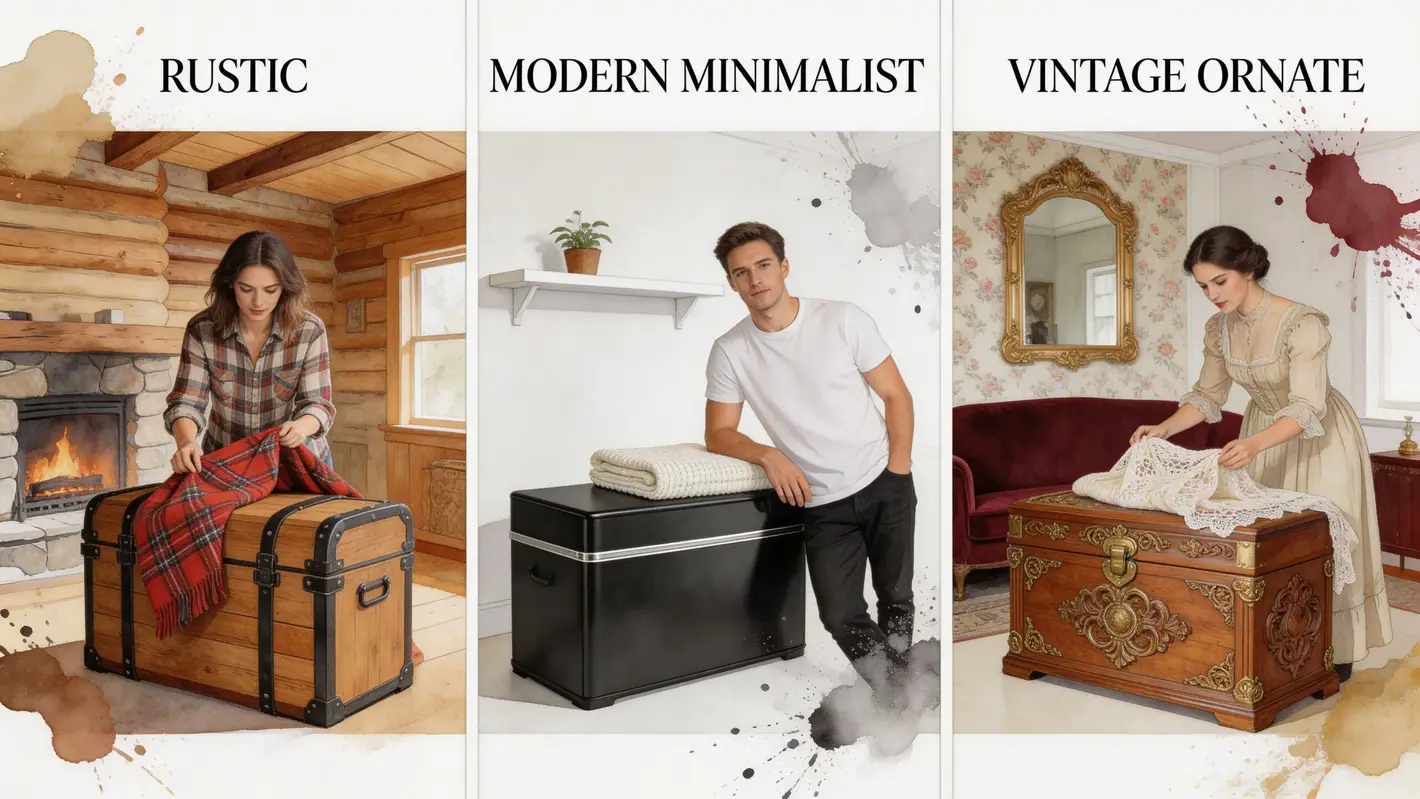
In a Mission-style bedroom, a trunk with straight lines and visible wood grain feels grounded and calm. It works especially well with oak, simple hardware, and other pieces that value proportion over ornament.
In a softer traditional room, a trunk with a shaped base, warmer finish, or slightly more formal detailing can bring balance to upholstered furniture and layered bedding. It reads less like utility and more like a finishing piece.
In a relaxed family room, a rustic trunk can add warmth and texture. The appeal comes from character, not perfection. A few natural variations in the wood often make the room feel more lived-in.
How to choose the right visual weight
Readers often ask whether a trunk should blend in or stand out. The answer depends on what the room already has.
- If the room has many soft shapes, a more structured trunk can anchor the space.
- If the room already has heavy wood furniture, a cleaner-lined chest may keep things from feeling too dense.
- If the room lacks a focal point, the trunk can provide one with the right finish or silhouette.
A trunk also changes depending on how you style the top. Leave it mostly clear and it feels architectural. Add a tray, a folded throw, or a few books, and it becomes part of daily living.
A good trunk doesn't shout for attention. It gives the room a center of gravity.
If you want to compare silhouettes and see how chest styles play with sofas, occasional tables, and media pieces, browsing https://www.giorgibros.com/living-room-chests/ can help you notice the differences more clearly.
The smartest style choice is usually the one that still feels right when the rest of the room changes. Paint colors come and go. Rugs get replaced. A classic trunk keeps its footing.
Beyond the Basics Security and Functionality
The details that matter most often stay hidden until you live with the piece. A trunk may look handsome on the outside, but the hardware decides how pleasant and safe it is to use every day.
Lid action is the first thing I’d check. A heavy lid without a proper support mechanism can feel awkward at best and unsafe at worst. Soft-close or safety-stay hardware helps the lid move with control, which matters in busy households and in any room where children may be nearby.
Features worth asking about
- Soft-close hinges help prevent abrupt slamming.
- Quality handles and pulls make moving and using the trunk easier.
- Interior compartments can separate blankets from smaller linens.
- Ventilation or moisture awareness matters if you’re storing delicate textiles for longer stretches.
There’s also a newer layer to this category. Emerging trends show a 30% rise in sales of multi-use storage furniture in the last year, and data from premium brands indicates that custom trunks with features such as adjustable compartments or embedded humidity sensors can reduce fabric degradation by 50% compared with standard off-the-shelf options (trend reference).
That doesn’t mean every trunk needs technology. It means thoughtful design can do more than provide a cavity with a lid.
Function should match what you store
If you rotate everyday throws in and out, simple access matters more than extra compartments. If you store heirloom quilts, wool blankets, or guest linens for months at a time, interior protection matters more.
For a deeper look at storage-minded bedroom furniture features, https://www.giorgibros.com/features-know-bedroom-furniture-storage/ is a helpful reference.
A functional heirloom earns trust slowly. It opens easily. It closes safely. It protects what’s inside. After a few years, those details matter more than whatever looked flashy in the showroom.
The Giorgi Bros Custom Furniture Advantage
Off-the-floor furniture can be convenient, but it often asks you to settle. The size is close, not right. The finish is acceptable, not ideal. The style almost works, but not with the other wood tones already in the room.
Custom furniture fixes that problem by starting with your home instead of a standard template.
For Bay Area homes, that matters for more than appearance. In humid climates like the Bay Area, customization can protect the life of the piece itself. One cited source notes that standard pine trunks can fail 40% faster in high-humidity areas, while selecting appropriate wood species and specific finishes can help reduce issues like mold and warping (Bay Area climate reference.com/blogs/blogs/bulk-blanket-buying-guide-from-hotels-to-hospitals-to-emergency-services)).
Why custom makes sense in real homes
A custom trunk lets you solve practical problems that standard furniture often ignores.
Maybe your bedroom needs an exact width at the foot of the bed. Maybe your entry gets damp coastal air and needs a more suitable finish. Maybe you want the grain character of oak, the warmth of cherry, or an upholstered top in a fabric that ties into the rest of the home.
Those aren’t fussy preferences. They’re the difference between a piece you tolerate and one you keep.
What thoughtful customization can change
A well-guided custom order can help you choose:
| Element | Why it matters |
|---|---|
| Wood species | Influences strength, grain, and the way the piece ages |
| Finish | Affects color, mood, and how the trunk lives with existing furniture |
| Interior options | Can support textile protection and better organization |
| Top style | Changes whether the trunk acts more like a bench or a table |
| Hardware | Shapes both the look and daily feel of the piece |
In a family business with a long memory, experience proves most helpful. A non-commission consultant can ask better questions because there’s no pressure to push the nearest available model. The conversation shifts from “What can we sell today?” to “What will still serve you years from now?”
Custom furniture works best when the guidance is calm, informed, and centered on fit rather than urgency.
If you want to see how that process can be simplified, https://www.giorgibros.com/custom-furniture-made-simple/ lays out the basics in a clear way.
A buy-it-for-life mindset is also a sustainability mindset. When you choose materials, dimensions, and finishes carefully, you’re less likely to replace the piece because of wear, poor fit, or changing taste. That saves frustration, and it saves resources.
An Investment in Your Home and Future
The strongest case for blanket storage trunks isn’t nostalgia. It’s usefulness over time.
A well-made trunk stores what needs storing, supports the way you live, and keeps contributing year after year. It can warm up a bedroom, tidy a living room, or make an entry more welcoming. If you choose solid materials, the right scale, and details that fit your household, you end up with furniture that outlasts trends and avoids the replace-and-repeat cycle.
That’s where long-term value lives. Not in the lowest upfront price, but in a piece that keeps doing its job beautifully. Buy-it-for-life furniture is often the more sustainable choice because it stays in use, can be maintained, and doesn’t need to be swapped out every few years when a hinge fails or a surface gives way.
For Bay Area homeowners, this way of buying also respects the constraints of limited space. Each piece has to carry its weight. A blanket trunk that offers storage, seating, and style does exactly that.
A family business that has served South San Francisco since 1933 learns something important over time. The furniture people remember most isn’t always the newest. It’s the piece that stayed, adapted, and became part of the home.
If you’re ready to choose a blanket trunk that’s built for the long haul, visit Giorgi Bros. Furniture in South San Francisco. Our family has offered no-pressure guidance since 1933, with non-commission consultants who help you compare materials, finishes, and Custom Furniture options with clarity. You can explore 50,000 square feet of inspiration, see Amish Furniture and other investment pieces in person, and ask about Design Consultation support for whole-home projects. Financing options are available, and if you’re furnishing beyond storage, you’ll also find living room, bedroom, dining, and Premium Mattresses to complete the home thoughtfully.