
You know the feeling. You went to bed at a reasonable hour, but sleep never settled in. You woke up more than once, kicked the blanket off, pulled it back on, shifted your pillow, checked the clock, and started the day already behind.
Individuals often try to solve that with one small change. A new pillow. Earlier bedtime. Less coffee. Sometimes that helps. Often it doesn’t, because sleep quality rarely improves from a single fix.
A better approach is to treat the bedroom as a sleep system. Your mattress, pillow, room temperature, sound, light, layout, and evening habits all work together. When one part is off, the whole system suffers. When those parts support each other, sleep gets deeper, steadier, and more restorative.
That’s the mindset we’ve seen matter most for Bay Area families creating bedrooms that feel calm, supportive, and built for the long haul. Good sleep isn’t a luxury. It’s part of living well.
Beyond Counting Sheep Why Quality Sleep Is Your Greatest Asset
A lot of people still think sleep is mostly about hours. If you stayed in bed long enough, you should feel better in the morning. Real life says otherwise.
You can spend a full night in bed and still wake up foggy, sore, and short-tempered. That usually means the issue isn’t only sleep duration. It’s sleep quality. Restful sleep is easier to fall into, easier to stay in, and more likely to leave you feeling restored.

Better sleep affects more than your mornings
The biggest mistake I see in bedroom planning is treating sleep as a comfort issue only. Comfort matters, but quality sleep touches far more than that. It shapes how you think, move, recover, and handle stress the next day.
A 2023 study on sleep quality and longevity found that individuals with optimal sleep quality habits experienced significantly extended life expectancy, including an additional 4.7 years for men and 2.4 years for women, compared with those with poor sleep habits.
That finding changes the conversation. Sleep stops being a soft goal and starts looking like a major health priority.
Practical rule: If your bedroom makes it harder to stay asleep, cool down, or wake without pain, it’s not supporting your health the way it should.
Quality sleep is a whole-room issue
People often focus on the mattress first, and that makes sense. But the mattress is only one part of the picture. A room that’s too warm, too bright, noisy, cluttered, or poorly arranged can undo a good mattress quickly.
That’s why the bedroom should function like a sanctuary, not a storage zone that happens to contain a bed.
A strong sleep setup usually includes these elements working together:
- Consistent support: Your mattress and pillow should hold your body in a neutral, comfortable position.
- Sensory control: The room should feel dark, quiet, and cool enough for uninterrupted sleep.
- Ease and routine: The layout should make winding down simple, not stimulating.
- Durability: Materials and construction should hold up over time so you’re not chasing quick fixes every year.
If you’d like a deeper look at sleep stages and why they matter to recovery and focus, this guide on what REM sleep is and why it matters is a useful companion.
Why this matters in a buy-for-life home
A quality bedroom doesn’t need to follow trends. It needs to support your body and your routines night after night. That’s where long-term thinking pays off.
Since 1933, families in South San Francisco have come to us looking for pieces that last because they’re tired of replacing furniture that looked fine in a photo but didn’t hold up in real life. Sleep furniture belongs in that same category. When you invest in better support, better materials, and a calmer room, you’re not just upgrading a space. You’re protecting your energy and well-being for years to come.
The Foundation of Rest Selecting Your Perfect Sleep Surface
The bed does the heaviest lifting in your sleep system. If the surface under you isn’t right, every other improvement has to work harder.
People sometimes try to solve poor sleep by changing habits while staying on a mattress that sags, pushes the spine out of alignment, traps heat, or creates pressure points. That usually leads to partial improvement at best. If you want to know how to improve sleep quality, start with the place your body spends the night.
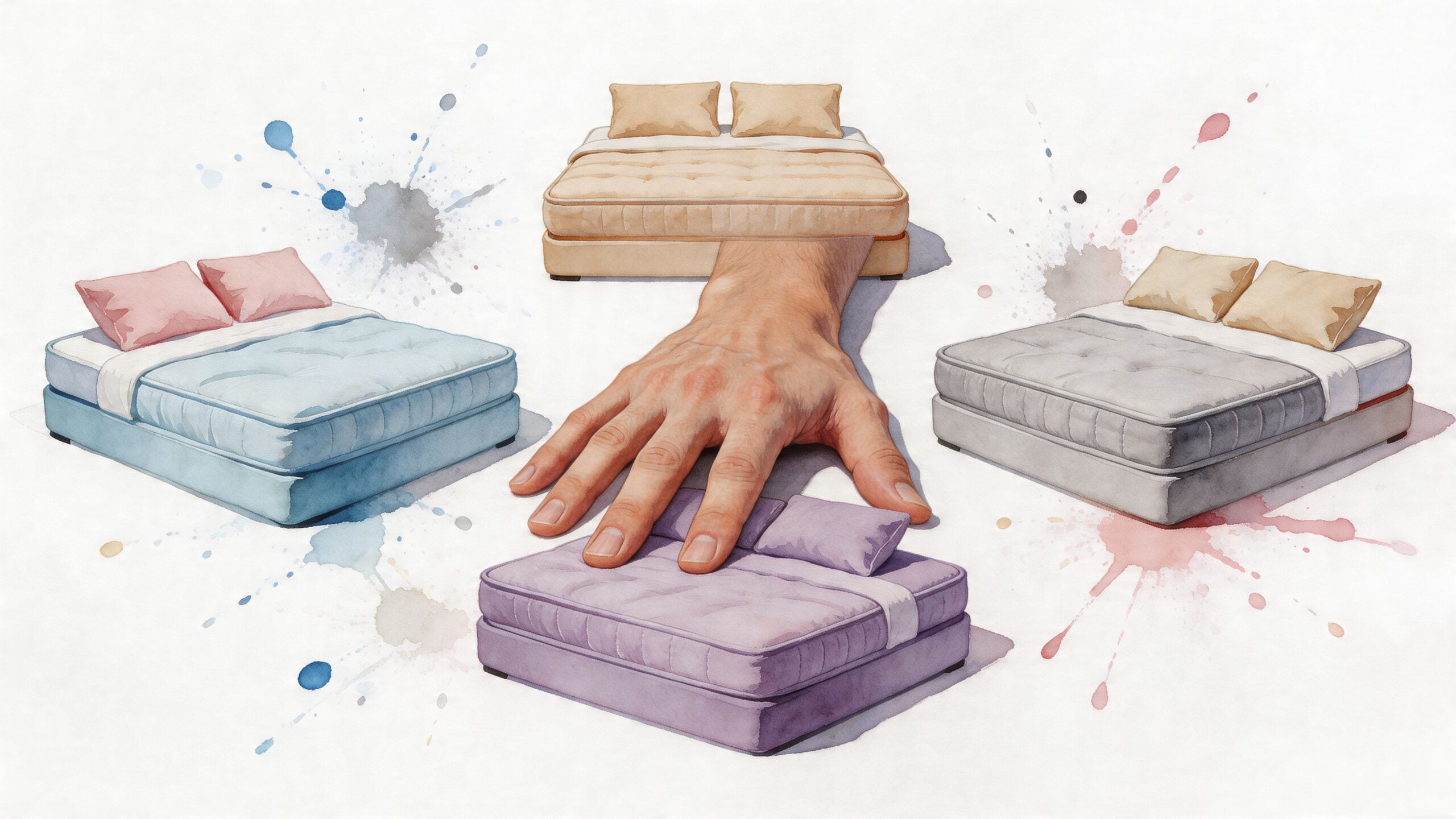
What the right mattress should actually do
A good mattress isn’t just soft or firm. It should do three things well:
- Support your spine in a neutral position
- Relieve pressure at the shoulders, hips, and lower back
- Maintain comfort through the night without excess heat or motion disturbance
That’s why mattress shopping can’t be reduced to label language. “Plush,” “firm,” and “luxury” don’t tell you whether a mattress fits your body, your sleep position, or any pain issues you’re managing.
Here’s a simple way to evaluate what matters.
| Sleep need | What to look for |
|---|---|
| Side sleeping | Pressure relief at shoulders and hips, plus stable support underneath |
| Back sleeping | Even lumbar support and a surface that doesn’t let the hips sink too far |
| Combination sleeping | Responsive comfort that makes changing positions easy |
| Heat sensitivity | Breathable materials and construction that don’t trap warmth |
| Partner disturbance | Better motion isolation and edge stability |
Pain changes the equation
For people with ongoing back pain, arthritis, or other musculoskeletal issues, mattress choice becomes less about preference and more about function.
According to Hospital for Special Surgery, chronic pain affects roughly 20% of adults, and the right sleep ergonomics matter. Their guidance notes that an adjustable base can help achieve therapeutic positions, while a mattress with proper lumbar support can improve sleep quality for people with musculoskeletal conditions: HSS sleep and pain guidance.
That means the “best” mattress isn’t the most cushioned one. It’s the one that lets your body rest without fighting the surface all night.
If you wake up stiff in the same places every morning, your body is giving you usable information. Listen to it before buying another decorative layer for the bed.
Don’t overlook the pillow and base
A mattress gets most of the attention, but two other pieces shape comfort more than many shoppers expect.
Pillow fit matters more than pillow hype
The right pillow fills the gap between your head, neck, and mattress. Too high, and your neck stays tilted. Too flat, and your head drops out of alignment. Side sleepers usually need more loft than back sleepers. Stomach sleepers generally do better with very low loft, or with changing sleep position if neck strain is persistent.
Pillows should be tested with the mattress, not in isolation. A pillow that works on one surface may feel completely wrong on another.
Adjustable bases solve real problems
Adjustable bases aren’t only for convenience. They can help people who need more customized positioning for pressure relief, comfort, or easier entry and exit from bed.
For some sleepers, a gentle incline supports better rest than stacking pillows. For others, slight elevation at the knees or upper body reduces strain and helps them settle more naturally.
Why testing in person still matters
Online mattress shopping made people comfortable with buying sleep products from a spec sheet. That works for some categories. It’s a poor method for something this personal.
A mattress can sound perfect on paper and still feel wrong after five minutes. The opposite is also true. That’s why in-person testing is so valuable. You learn how a surface responds to your actual body, not to marketing language.
At a showroom, pay attention to these signals:
- Initial comfort: Do you relax into the mattress, or brace against it?
- Lower back feel: Does the lumbar area feel supported without being pushed up?
- Shoulder pressure: If you sleep on your side, does the shoulder settle comfortably?
- Movement: Can you roll and reposition without effort?
- Temperature: Does the surface feel breathable or stuffy?
If you want a framework before you visit, this mattress guide on how to choose a mattress gives a solid starting point.
Clean sleep surfaces help too
Support is the first job. Cleanliness matters right behind it.
If allergies, congestion, or nighttime irritation are part of the problem, it helps to keep the bed and surrounding space as clean as possible. Dust and allergens can interfere with otherwise solid sleep habits. For practical housekeeping steps, this guide on how to remove dust mites from your home is worth bookmarking.
Buy for life, not for a quick fix
A mattress is one of the clearest examples of where short-term savings can cost more later. When support breaks down early, people compensate with toppers, extra pillows, or constant replacements. That cycle gets expensive and rarely solves the root issue.
A better path is to choose a sleep surface built for lasting support, then pair it with the right pillow and, when needed, an adjustable base. That’s the difference between buying bedding and building a foundation for better sleep.
Engineer Your Ideal Sleep Environment
Once the sleep surface is right, the room itself becomes the next lever. A well-designed bedroom should help your body settle down, stay asleep, and wake comfortably. It shouldn’t ask your nervous system to keep adapting all night.
The three environmental factors I’d address first are temperature, light, and noise. They affect nearly every sleeper, and they often explain why someone says, “My bed is comfortable, but I still don’t sleep well.”
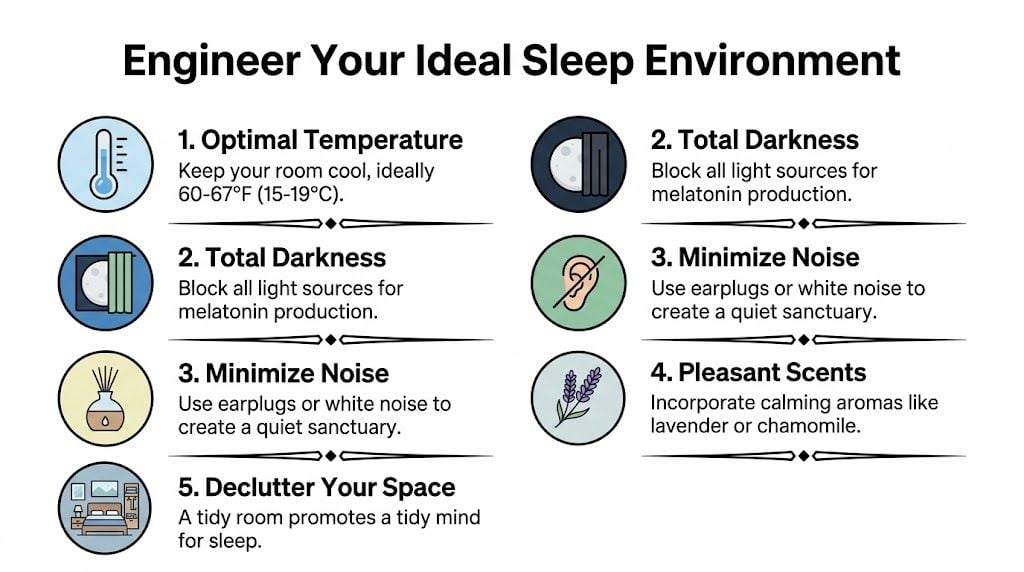
Start with temperature
Many bedrooms are too warm. That can keep you from falling asleep easily and can also increase nighttime waking.
Research based on wearable consumer data found that maintaining a consistent bedroom temperature between 18°C and 20°C (64.4°F to 68°F) is one of the highest-impact predictive factors for sleep quality because it supports the body’s natural drop in core temperature needed for sleep onset and maintenance: wearable-data sleep personalization research.
That doesn’t mean every sleeper wants the room to feel cold. It means the room should be cool and stable.
A few practical adjustments help:
- Use breathable bedding: Heavy, heat-trapping layers can work against a well-set thermostat.
- Leave space around the bed: Tight furniture placement can reduce airflow.
- Choose materials wisely: Upholstered pieces and layered textiles can soften a room, but too many dense layers can also hold warmth.
- Add quiet air movement: If still air is part of the issue, guides to quiet ceiling fans for silent, blissful sleep can help you find options that cool the room without adding a distracting hum.
Light control should be deliberate
Light tells the body it’s time to be alert. That’s useful in the morning and unhelpful at night.
Bedrooms often collect stray light from hallways, chargers, street exposure, and adjacent spaces. Even if you’ve adapted to it, your sleep may still be lighter and more fragmented than it needs to be.
A calmer layout can help. Consider the role furniture plays:
Use placement to reduce visual stimulation
A substantial headboard against the right wall can create a stronger visual anchor. Tall case pieces can help shield sightlines so the room feels more enclosed and restful. In a larger primary bedroom, orienting the bed away from direct spill light can make a surprising difference.
Keep surfaces quieter
Nightstands piled with paperwork, screens, and cables turn the bedside area into a task zone. The mind notices that, even when you’re trying to wind down.
A restful room usually looks resolved. Not empty, just settled.
Noise needs both softness and strategy
Some sleep disruption comes from obvious noise. Traffic, neighbors, household activity. Some comes from small repeated sounds that keep the brain half-alert.
A bedroom doesn’t have to be silent, but it should feel acoustically softer than the rest of the house.
Here’s where furnishing choices matter:
| Problem | Design response |
|---|---|
| Echo or hard sound bounce | Add rugs, upholstered seating, and padded headboards |
| Noise from shared walls | Place larger case pieces on the loudest wall when layout allows |
| Sharp footstep sound | Use soft flooring layers near the bed |
| General restlessness | Reduce visual clutter so the room feels calmer overall |
If allergens are part of the equation, a cleaner room usually sleeps better too. This resource on maintaining a dust and allergen-free bedroom offers practical upkeep habits that support the environment you’re trying to create.
Shift workers need a different standard
Most sleep advice assumes you sleep at night. Many Bay Area households don’t.
If you work evening or overnight schedules, the room has to work harder during daylight hours. In those cases, layout matters even more. You want the bed positioned in the calmest part of the room, away from the brightest exposure and away from activity paths if other family members are awake.
The larger point is simple. A bedroom should be designed around when and how you sleep, not around an idealized routine you don’t live.
Build Restful Routines and Lifestyle Habits
A strong bedroom supports sleep. Your daytime and evening habits decide how much that support can do.
That’s the part many people miss when they ask how to improve sleep quality. The room sets the conditions. Your routines tell the body whether to use them.

Exercise is one of the clearest levers
A lot of sleep advice gets fuzzy. This point doesn’t.
Engaging in 150 minutes of moderate-intensity aerobic exercise per week has been shown to be as effective as some therapies for insomnia, while also boosting the deep, slow-wave sleep that supports physical recovery and memory consolidation: exercise and sleep review.
That doesn’t mean you need an intense training plan. Walking, cycling, and other moderate movement count. What matters is consistency.
The best evening routine is the one you’ll repeat
People don’t need a complicated ritual. They need a predictable one.
A useful wind-down routine should lower stimulation, reduce decision-making, and make the bedroom feel separate from the demands of the day. That might mean reading, stretching, light journaling, or sitting somewhere comfortable for a few minutes before bed.
A well-chosen bedroom chair or nearby lounge chair can help here because it gives you a place to transition out of work mode and screen mode. That’s especially useful in homes where the bed has gradually become a second office.
A simple rhythm that works for many sleepers
- Dim the room earlier: Bright light late in the evening keeps the brain on task.
- Move screens away from the bed: If you can’t avoid screens entirely, at least separate them from where you sleep.
- Create a cue for rest: Reading a few pages, gentle stretching, or quiet conversation can become a repeatable signal.
- Keep wake time steady: Morning consistency often matters as much as bedtime intentions.
Morning habits matter too
People often focus only on what happens before bed. The first hour after waking also influences the next night’s sleep.
Getting up at a consistent time, opening the room to daylight, and moving your body even a little can help your internal clock stay steady. Bedrooms that make mornings easier tend to support better nights as well. Clear pathways, practical storage, and a chair or bench for dressing all reduce friction.
You don’t need a perfect schedule. You need one your body can recognize.
Make the room support the routine
Design and behavior are interconnected. If you want to read before bed, make sure the room has a comfortable reading spot and proper lighting for that task. If clutter raises stress, use bedroom storage that keeps the floor and bedside surfaces clear. If mornings feel rushed, arrange the room so dressing and movement flow naturally.
You can find more practical guidance in these sleep hygiene tips for a better night’s sleep.
The main takeaway is simple. Good routines aren’t separate from good design. The right room makes healthy habits easier to keep.
The Giorgi Bros Difference A Holistic Approach to Your Bedroom
Most bedroom shopping still happens in pieces. Someone starts with a mattress, then looks at a bed frame later, then chooses storage based on whatever fits the wall, then adds bedding that may or may not help with temperature. The result can look finished while still sleeping poorly.
A more effective approach is to plan the room as one connected system.
Good sleep comes from fit, not guesswork
That’s where a design consultation makes a difference. Instead of asking, “Which bed is popular?” the better questions are more personal.
How do you sleep. Where do you feel pressure. Does the room run warm. Do you need better access around the bed. Are you furnishing for one sleeper, a couple, or a guest room that needs flexibility. Do you need storage that reduces visual clutter. Are you trying to create a quieter room with more soft surfaces and better layout choices.
Those are practical design questions, not sales questions.
Customization makes the room work harder
A bedroom feels better when the pieces fit the way you live. Customization helps with that.
That might mean choosing a wood finish that brings warmth without making the room feel heavy. It might mean selecting leather or fabric that suits the climate and use of the room. It could mean tailoring scale so a bed, nightstands, and case goods feel balanced rather than crowded.
This is also where Custom Furniture earns its place. Customization isn’t about making a room fancier. It’s about making it more functional, more cohesive, and more likely to last.
For readers exploring options for a customized setup, this guide to custom made bedroom furnishings shows how personalized choices can support both comfort and longevity.
Why heritage and process still matter
In Furniture South San Francisco, longevity still means something. Families want investment pieces that hold up, and they want guidance without pressure.
Since 1933, the value of a family-owned showroom hasn’t been novelty. It’s continuity. People can compare materials in person, test comfort directly, and talk with Non-Commission Sales Staff style consultants whose job is to help them make a sound decision, not to push the fastest one.
That matters in sleep planning because rushed choices often turn into replacements.
One example is the dedicated sleep gallery at Giorgi Bros. Furniture, where shoppers can compare Premium Mattresses, support levels, and adjustable-base options in person while also considering how the rest of the bedroom should function.
Buy-for-life thinking is practical, not romantic
Well-made furniture costs more upfront than disposable furniture. That’s true. It can also cost less over time because it lasts, adapts better to your home, and doesn’t send you back into the market every few years.
That same logic applies to the bedroom. Durable construction, timeless forms, and thoughtful customization create a room that keeps serving you well. It’s also a more sustainable way to furnish a home because fewer poorly made pieces end up replaced and discarded.
For many Bay Area households, that’s the right balance. Better craftsmanship. Better fit. Less waste. More restful living.
When to Look Beyond Your Bedroom for Better Sleep
A better bedroom can do a lot. It can improve comfort, reduce overheating, limit irritation, support better alignment, and make healthy routines easier to maintain.
But it can’t solve every sleep problem.
If you’ve improved the environment and your sleep is still consistently poor, it may be time to look beyond furniture and layout. Persistent insomnia, repeated nighttime waking, heavy anxiety about sleep, or ongoing daytime exhaustion can point to issues that need clinical support.
Know where design helps and where it stops
The honest answer is that some sleep struggles are environmental, and some are behavioral or medical.
Environmental changes often help when the problem sounds like this:
- I wake up sore
- The room feels too hot
- Light or noise keeps interrupting me
- I can’t get comfortable
- My bedroom never feels calming
Professional treatment may be the better next step when the problem sounds more like this:
- I dread bedtime because I’m afraid I won’t sleep
- My mind races every night
- I lie awake even when I feel physically comfortable
- Poor sleep has become a long-term pattern
CBT-I is the standard for chronic insomnia
For chronic insomnia, Cognitive Behavioral Therapy for Insomnia (CBT-I) is considered the gold standard non-pharmacological treatment, with evidence showing it is more effective long-term than prescription sleeping pills because it addresses the root cognitive and behavioral patterns that disrupt sleep: Hopkins Medicine on healthier sleep and CBT-I.
That matters because it sets realistic expectations. A mattress can support sleep. A calmer room can support sleep. Neither one can replace treatment when the problem is persistent insomnia.
The best sleep advice is honest about limits. Your bedroom should remove obstacles to rest. It shouldn’t pretend to be medical care.
The most useful approach is often combined
In practice, the strongest outcomes usually come from both sides working together. A person gets help for the underlying insomnia pattern while also improving the room’s support, comfort, and consistency.
That combination makes sense. Behavioral change is easier in a room that feels calm. A better mattress is more effective when the sleeper isn’t fighting anxious habits at bedtime. Good design and good care aren’t competing ideas. They reinforce each other.
If you’re ready to improve the part your environment can control, start there. Build a room that’s cooler, quieter, more supportive, and easier to live in. Then, if sleep problems remain stubborn, involve a healthcare professional who specializes in sleep.
If you’re ready to create a bedroom that supports better rest for the long term, visit Giorgi Bros. Furniture in South San Francisco or book a Design Consultation. You can explore 50,000 square feet of inspiration, compare materials in person, and work with no-pressure consultants who focus on fit, comfort, and buy-for-life quality. Custom options are available in fabrics, leathers, wood species, and finishes, and financing options are available for projects that call for investment pieces done right.