Choosing the right flooring is one of the biggest decisions you'll make for your home. It's the foundation of every room, and when you're trying to find that sweet spot between beautiful design, real-world durability, and a comfortable budget, it's easy to get overwhelmed. As a family-owned business serving South San Francisco since 1933, we've helped generations of families make this exact choice, and our approach is always the same: no-pressure guidance you can trust.
Many homeowners land on luxury vinyl plank (LVP), and for good reason. Simply put, LVP delivers incredible water resistance and stunning design options at a price that’s hard to beat. The trade-off? It doesn't quite have the long-term resale value or the ability to be refinished like a classic hardwood floor.
Is Luxury Vinyl Plank the Right Choice for You?
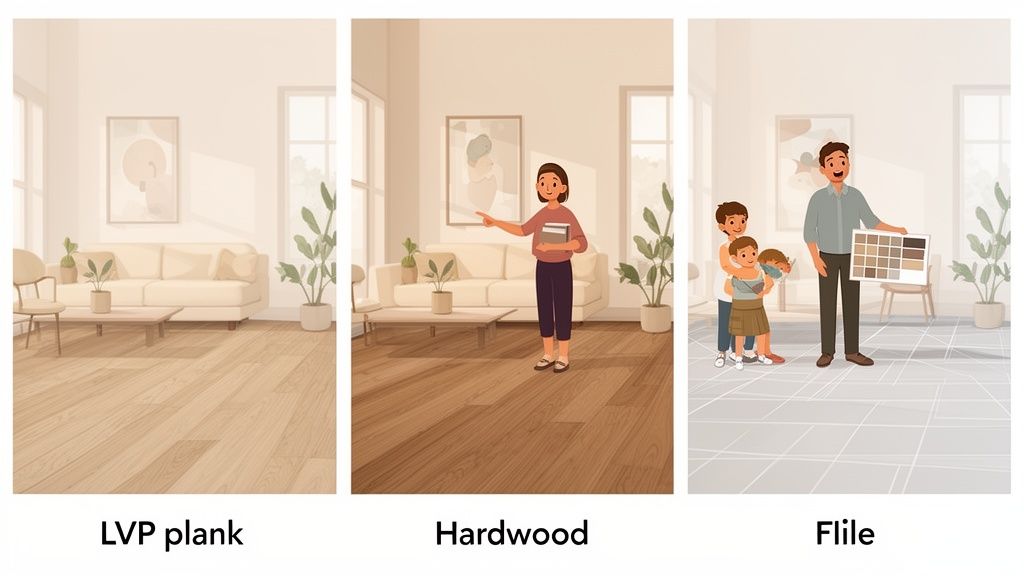
The best floor for your home isn't just about what looks good—it's about finding a material that truly fits your family’s lifestyle and your vision for the space. As a family-owned business serving the Bay Area since 1933, we've seen trends come and go, but our approach has always been the same: offer honest, expert advice without the pressure of a sales pitch. It’s what our non-commission Design Experts do every day.
Luxury vinyl plank has become a go-to choice because it brilliantly captures the look of natural materials while offering the resilience of modern flooring technology. But let's figure out if it's the right fit for your home.
Key Differences at a Glance
The easiest way to decide is to see how LVP stacks up against the other big players. Your final choice will probably come down to what matters most to you, whether that's a waterproof floor for a busy kitchen or the timeless character of real wood in the living room.
| Feature | Luxury Vinyl Plank (LVP) | Solid Hardwood | Ceramic & Porcelain Tile |
|---|---|---|---|
| Water Resistance | Excellent (Waterproof options available) | Poor (Prone to warping and damage) | Excellent (Ideal for wet areas) |
| Durability | High (Resists scratches and dents) | Good (Can scratch but is refinishable) | Very High (Can chip or crack) |
| Comfort Underfoot | Good (Softer and warmer) | Good (Natural feel) | Poor (Hard and cold) |
| Cost | $$ (Affordable) | $$$$ (Premium Investment) | $$$ (Varies widely) |
As you can see, LVP really holds its own as a fantastic all-arounder. It gives you those high-end looks without the high-end maintenance or price tag. For a deeper dive into what makes this material so popular, this homeowner's guide to LVP flooring is a great resource.
At Giorgi Bros., we believe in a full-service interior solution. Your flooring is the foundation that ties everything together, from our custom furniture to area rugs.
Our goal is to give you guidance, not a hard sell. We want to help you find the perfect foundation for your home, whether that's LVP, hardwood, or something from our Elegant Flooring department. This guide is built on the same expertise we've been sharing with Bay Area families for over 90 years.
The Advantages of Choosing LVP Flooring
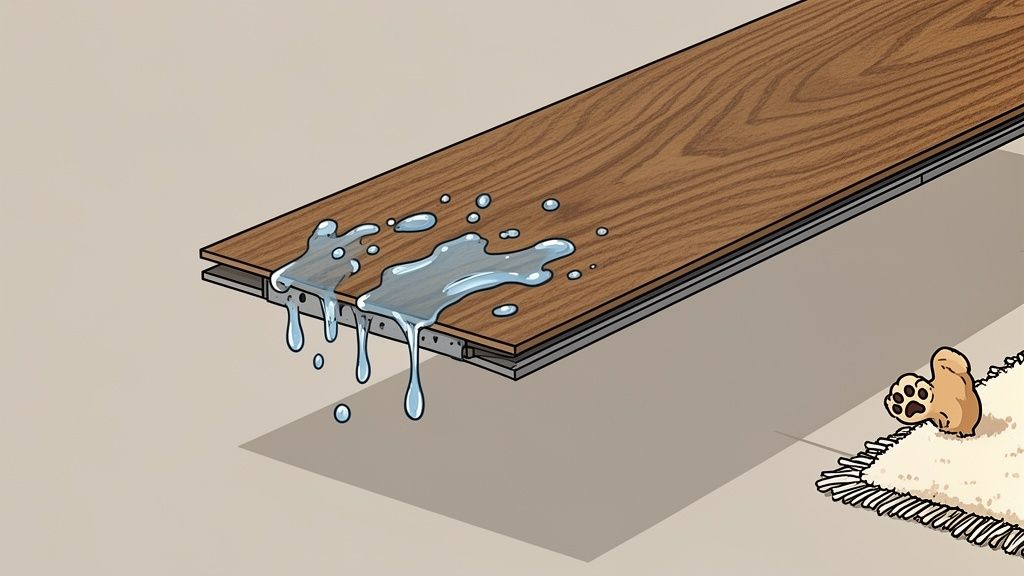
When we talk with clients about flooring, the conversation often turns to luxury vinyl plank (LVP). And for good reason. People are consistently drawn to its striking good looks, but it’s the practical, real-world performance that truly makes it a standout. LVP is a material that was engineered to solve many of the everyday dilemmas homeowners face, which is why we’re so proud to feature it in our Elegant Flooring department.
The benefits of LVP go far deeper than the surface. These floors are built from the inside out to handle the chaos of a busy home, offering a mix of resilience and style that’s hard to find anywhere else. Let's look at the key advantages that make LVP such a smart investment.
Unmatched Water Resistance
This is the big one. Perhaps the most celebrated benefit of LVP is how incredibly well it handles moisture. Unlike real hardwood that can warp and stain or laminate whose core will swell, a high-quality LVP with a rigid core is 100% waterproof. This means the planks themselves won’t be damaged by spills, humidity, or pet accidents.
This incredible water resistance makes LVP the perfect choice for rooms where moisture is a given:
- Kitchens: Easily handles inevitable spills from cooking, sinks, or the dishwasher.
- Bathrooms: Stands up to the high humidity from daily showers and baths without issue.
- Basements: An ideal solution for below-grade spaces that can be prone to dampness.
- Laundry Rooms: Protects against splashes or potential leaks from appliances.
This single feature offers tremendous peace of mind. For families with kids or pets, knowing that a spilled glass of juice or an overturned water bowl won't spell disaster for your floors is a game-changer. It finally allows you to get that warm, beautiful wood look in spaces where you’d never dream of putting the real thing.
Impressive Durability for Active Homes
Beyond just being waterproof, LVP is built tough. Its smart, multi-layer construction includes a robust wear layer specifically designed to fend off the daily wear and tear of a lively household. This top layer is the floor's bodyguard, protecting the beautiful design underneath from scratches, scuffs, and dents.
For busy Bay Area households, the benefit of having a floor that can take dropped toys, pet claws, and constant foot traffic in stride is a major victory. This durability also pairs perfectly with other investment pieces in your home; you won't have to stress about a dining chair scratching the floor.
Stunning Design Versatility and Comfort
One of the most exciting aspects of LVP is its incredible design potential. Thanks to advanced, high-definition 3D printing, today’s LVP can convincingly mimic the subtle colors, textures, and grain patterns of natural materials.
Whether you're dreaming of the rustic charm of reclaimed oak to go with your custom Amish furniture or a sleek, modern stone look for a contemporary space, there’s an LVP style to match. At Giorgi Bros., our custom order services mean we can help you find the perfect floor to harmonize with any fabric, leather, or wood finish you have in mind. This is part of our full-service interior solution approach—helping you build a home from the ground up.
Finally, there’s the element of comfort. LVP offers a noticeably softer and warmer feel underfoot compared to hard surfaces like ceramic or porcelain tile. The benefit is that living rooms feel more inviting and bedrooms cozier, helping you build a beautiful and truly functional home.
Understanding the Limitations and Considerations of LVP
To make a truly informed choice, you need an honest look at a material’s potential drawbacks. At Giorgi Bros., our promise of no-pressure guidance means we give you the complete picture—and that includes being upfront about the cons of luxury vinyl plank flooring. While LVP has some incredible benefits, it’s crucial to understand where it falls short to be sure it’s the right fit for your home.
Just like any material, from solid hardwood to fine leather, there are always trade-offs. A frank assessment of these factors helps you land on a choice you’ll be happy with for years to come. It’s the cornerstone of the trust we’ve built here in the Bay Area since 1933.
Susceptibility to Heat and Sunlight
One of the biggest things to keep in mind with LVP is its sensitivity to extreme heat and direct, prolonged sunlight. The components in LVP can react to intense temperatures, which can cause a couple of potential issues.
- Fading: The benefit of large windows is lots of natural light, but if a room gets blasted with direct sun all afternoon, the UV rays can cause the floor's vibrant color to fade over time. Using blinds or curtains during peak sun hours can make a huge difference.
- Warping or Buckling: Think of a floor-to-ceiling window acting like a magnifying glass on a hot day. That kind of intense heat can cause the planks to soften, expand, and sometimes even warp or buckle. This is exactly why a professional installation, which leaves the right amount of room for expansion, is so important.
It's not just about the flooring material itself; it’s about how that material will live in your specific environment. This is where an experienced design consultant becomes so valuable—they can point you toward products with stronger UV coatings or suggest strategies to protect your investment.
Environmental Factors and Indoor Air Quality
As we all become more mindful of the products we bring into our homes, questions about environmental impact and air quality are completely normal. LVP is a synthetic product, which naturally brings a couple of key topics to the table.
The first is the presence of Volatile Organic Compounds (VOCs). These are chemicals that can be released into the air from all sorts of manufactured goods. While some early or low-quality vinyl products were known for this, the industry has made massive improvements. Today, reputable manufacturers produce low-VOC or even zero-VOC LVP, often certified by third-party programs like FloorScore®.
At Giorgi Bros., we make it a priority to source from brands that meet these strict indoor air quality standards. The products you'll find in our Elegant Flooring department are ones we know are safer for your family, and our Design Experts can guide you directly to those certified options for total peace of mind.
Repairability and Long-Term Value
LVP is incredibly tough, but it's not indestructible. Here’s a key difference from hardwood: while solid wood can be sanded and refinished multiple times to erase years of scratches and wear, LVP simply can't be resurfaced. If a plank gets a deep gouge or is otherwise damaged, the only real fix is to replace that single plank.
While replacing an individual plank is a straightforward job for a professional, it doesn't offer that whole-floor refresh you get from refinishing wood. That’s why protecting your LVP floors from the start is always the best strategy. You can check out our guide on how to protect your floors from your furniture for some practical tips on using felt pads and other simple safeguards.
Finally, while LVP offers fantastic day-to-day performance, it typically doesn't add the same long-term resale value to a home as natural materials like solid hardwood or high-end tile. It is a wonderful, functional, and beautiful choice for living in your home, but it’s not generally seen as the same kind of structural investment as its natural counterparts.
How LVP Compares to Hardwood, Laminate, and Tile
Choosing the right floor is one of the biggest decisions you’ll make for your home. It’s the surface you’ll walk on, live on, and build memories on every single day. When it comes to luxury vinyl plank (LVP), it’s easy to get lost in the hype, so how does it really stack up against classic choices like hardwood, laminate, and tile, especially for a busy Bay Area home?
As a family business that’s been helping our neighbors in South San Francisco make these exact choices since 1933, we’ve seen every flooring trend come and go. Our non-commission Design Experts are here to give you honest advice, focusing on what works for your lifestyle, not just what’s popular. Let’s break down where LVP truly shines and where a more traditional material might be the better fit for you.
LVP vs. Solid Hardwood
There’s no denying it: solid hardwood is the gold standard. It has an authentic warmth and character that can elevate any space and adds serious resale value. Best of all, it can be sanded and refinished over and over again, giving it a lifespan that can span generations.
But here’s the reality check: hardwood’s greatest enemy is water. A leaky dishwasher, a pet accident, or even just being installed in a damp part of the house can lead to warping, cupping, and stains that are impossible to fix. The benefit of LVP is that its completely waterproof core makes it a far more practical choice for kitchens, bathrooms, laundry rooms, and basements.
While LVP doesn’t have the same refinishing potential as wood, it delivers a stunningly realistic wood look without the constant anxiety about spills and moisture.
LVP vs. Laminate Flooring
Laminate and LVP are often compared because they’re both budget-friendly alternatives to hardwood. Laminate is made with a rigid fiberboard core, which gives it a very firm and solid feel underfoot. It uses a high-definition photo layer to mimic wood or stone, sealed under a tough wear layer.
The game-changing difference is what’s on the inside. While you’ll see many laminates advertised as "water-resistant," that fiberboard core can still swell and bubble if water finds its way into the seams. Once that happens, the damage is permanent. On the other hand, rigid core LVP is 100% waterproof. The planks themselves simply won't be harmed by water, period.
This isn't just a small detail; it’s the key differentiator for any room where moisture is a possibility. The benefit of LVP is the peace of mind that even the best water-resistant laminate just can't match in a kitchen where splashes are inevitable or a bathroom with steamy showers.
Diving deeper into side-by-side comparisons, like this breakdown of vinyl vs laminate vs hardwood floors, can offer another great perspective on these trade-offs.
This chart gives you a quick visual on how LVP stacks up in the key areas people care about most: water, cost, and durability.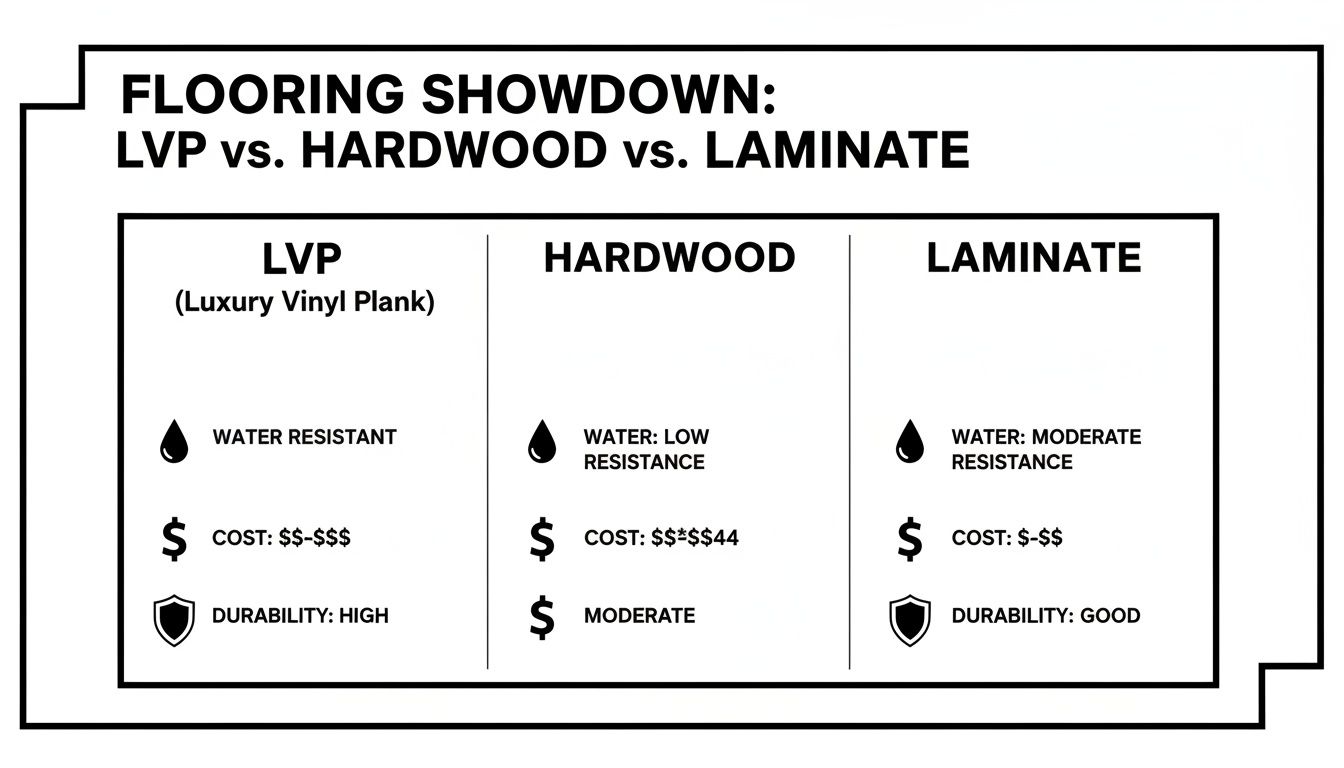
As you can see, LVP hits a sweet spot, delivering top-tier water resistance and durability at a price point that's much more approachable than hardwood.
LVP vs. Porcelain and Ceramic Tile
For pure toughness and water resistance, tile has long been the champion, making it the default choice for bathrooms and kitchens for decades. It's incredibly hard-wearing and a breeze to clean. But those strengths come with a few notable trade-offs when you put it next to LVP.
First, tile is hard, cold, and unforgiving underfoot. This can be a real drawback in living rooms or bedrooms where you want a sense of warmth and comfort. Second, while the tiles are easy to maintain, the grout lines are another story. They can stain over time and require regular sealing and deep scrubbing to keep them looking fresh.
- Comfort: LVP is much softer and warmer to the touch. It’s a more comfortable surface to stand on for long periods, which makes a big difference in a kitchen.
- Installation: Laying tile is a messy, labor-intensive job that involves mortar, grout, and specialized tools. Most LVP floors feature click-lock systems that are far faster and cleaner to install.
- Durability Nuance: Tile is tough, but it can crack or chip if you drop something heavy on it. Trying to replace a single cracked tile is a difficult, dusty job that’s hard to get just right.
This side-by-side view helps clarify where each material excels.
Luxury Vinyl Plank (LVP) vs. Hardwood, Laminate, and Tile
A direct comparison of key features across popular flooring types to help guide your decision-making process.
| Feature | Luxury Vinyl Plank (LVP) | Solid Hardwood | Laminate | Porcelain Tile |
|---|---|---|---|---|
| Water Resistance | 100% Waterproof | Poor – very susceptible | Good (water-resistant core) | Excellent |
| Durability & Scratches | Very Good – resists scratches & dents | Fair – scratches & dents easily | Good – very scratch resistant | Excellent – very hard to scratch |
| Comfort Underfoot | Good – softer & warmer | Good – natural feel | Fair – can be hard & noisy | Poor – very hard & cold |
| Installation | Easiest (DIY-friendly) | Difficult (professional only) | Easy (DIY-friendly) | Difficult (professional) |
| Maintenance | Low – easy to clean | High – requires refinishing | Low – easy to clean | Medium – grout needs sealing |
| Average Cost | $$ | $$$$ | $ | $$$ |
Ultimately, LVP presents a fantastic middle ground. It gives you the waterproof performance of tile but with a much warmer, more comfortable feel underfoot and a far simpler installation. It’s this versatility that makes it a key part of our full-service interior solutions. From our Elegant Flooring department to our custom reupholstery, we love helping you pull all the elements together for a home that’s both beautiful and built for real life.
Budgeting for Your LVP Flooring Project
Let's talk about one of the most important parts of any flooring project: the budget. Getting a handle on the complete cost is the first step to a successful renovation, and as a family-owned business, we believe in being completely transparent about value. Our goal is to give you all the information you need—with zero pressure—so you feel confident in your choice. Budgeting for luxury vinyl plank isn't just about the price tag on the material; it's about understanding the total cost of ownership and the incredible value it provides.
One of the biggest benefits of luxury vinyl plank is its surprising affordability, especially given its high-end looks and straightforward installation. LVP gives you a path to a luxury look for less, with professional installations often costing significantly less than traditional hardwood.
Breaking Down the Costs
When you start mapping out your budget, it helps to know what goes into the price of LVP. Several factors can influence the final cost, and our non-commission Design Experts are always here to walk you through these variables in our showroom.
Here are the key cost drivers:
- Wear Layer Thickness: This is the clear, protective top coat. The benefit of a thicker wear layer (measured in mils) is far better resistance to scratches and scuffs, though it will cost a bit more. For busy homes with kids or pets, we often recommend investing in a 20 mil wear layer or higher—it’s a smart choice for longevity.
- Core Construction: You'll run into terms like WPC (wood-plastic composite) and SPC (stone-plastic composite). SPC is the denser, more rigid of the two, making it incredibly durable and a bit more of an investment. WPC, on the other hand, offers a little more give and comfort underfoot.
- Brand and Design: As with anything, premium brands that use advanced printing technologies to achieve those hyper-realistic wood and stone visuals will naturally sit at a higher price point.
Installation and Long-Term Value
A huge win for your budget comes during installation. Modern click-lock systems have made laying LVP so much faster and cleaner, which can dramatically lower labor costs compared to more involved flooring like tile or nail-down hardwood.
At Giorgi Bros., we see flooring as a foundational element of your home's design. It’s not just a surface; it’s an investment piece that should deliver value for years to come. Our Elegant Flooring department helps you connect the dots between your floor and your other furnishings.
This is where LVP really proves its worth over time. It requires no sanding, refinishing, or special treatments throughout its entire lifespan, which can easily be 15-25 years or more. For homeowners looking for smart ways to update their space, those long-term savings are a game-changer. For more inspiration, check out our guide to budget-friendly furniture refresh ideas that will look beautiful with your new floors.
Since we first opened our doors back in 1933, our mission has always been to provide full-service interior solutions. That means helping you see the bigger picture—how a flooring choice can transform your entire home, from coordinating with custom reupholstery to finding the perfect wood finish on a new piece of Amish furniture.
Begin Your Flooring Journey with Giorgi Bros.
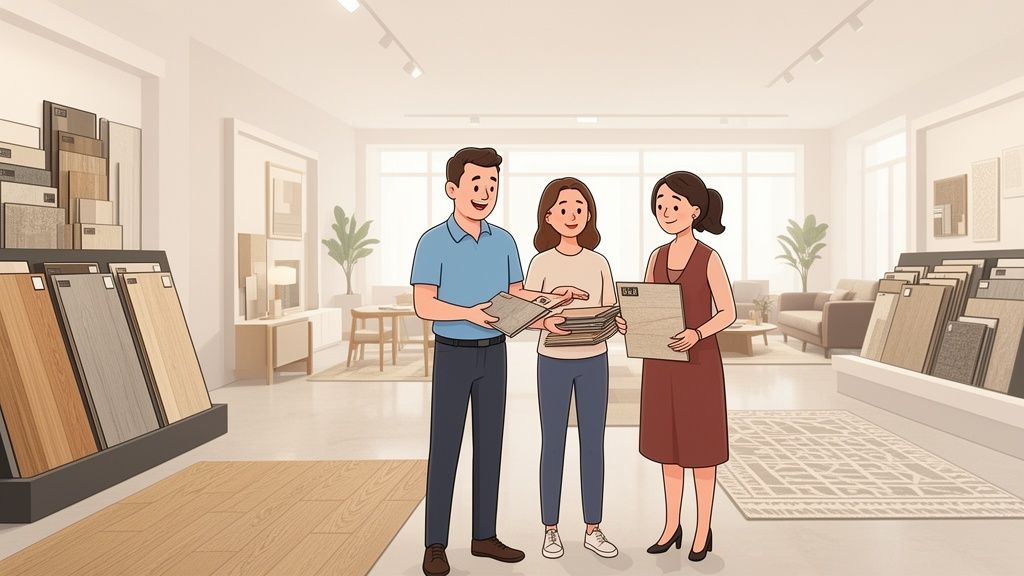
Choosing the right floor is the very first step in creating a home that feels truly yours. Now that you’ve explored the detailed luxury vinyl plank flooring pros and cons, the next move is to see how these materials feel in your own hands. Reading about durability and style is one thing, but feeling the quality for yourself is what really builds confidence.
At Giorgi Bros., we’ve always believed that a home comes together from the ground up. We invite you to come see what we mean at our 50,000-square-foot showroom in South San Francisco. It’s a place built for inspiration, where you can explore 50,000 square feet of inspiration where you can touch, feel, and test the quality before you buy.
Experience Guidance, Not Pressure
When we first opened our doors back in 1933, we set out with a simple goal: help families make the best choices for their homes, without any sales pressure. That principle still guides us today. Our friendly Design Experts are non-commissioned, which means their only goal is to offer you genuine advice rooted in decades of hands-on experience.
They can help you see the bigger picture, coordinating your new flooring with all the other elements of your home. Just imagine seeing how different LVP finishes work with:
- The rich textures of our custom reupholstery fabrics.
- The warm, unique grains from our custom Amish furniture.
- A hand-picked area rug that pulls the entire room together.
This holistic approach is what sets us apart. We don’t just sell flooring; we help you build a harmonious living space where every piece works together. It’s our commitment to being a complete interior design resource for the Bay Area.
Let Us Help You Build Your Vision
Your home is your sanctuary, and every detail should feel right. With over 90+ years of history, we’ve learned a thing or two about helping families create spaces that are not only beautiful but also perfectly suited to their lifestyle. We’re here to help you make a confident, lasting choice for your home’s foundation.
Ready to take the next step? We encourage you to visit our South San Francisco showroom or book a complimentary Design Consultation with one of our experts. Let's build your vision from the ground up, together.
Frequently Asked Questions About LVP Flooring
Over the years, our team has heard just about every question you can imagine when it comes to flooring. As a family business serving the Bay Area since 1933, we're here to give you straight answers without any sales pressure. Think of us as your friendly, non-commissioned Design Experts.
Here are a few of the most common questions we get from homeowners just like you.
How Does LVP Hold Up to Pets and Kids?
This is probably the number one question we hear, and for good reason! The short answer is: beautifully. The benefit of luxury vinyl plank is that it's an absolute workhorse for busy households with kids and pets.
Its secret is a tough, multi-layered construction that’s designed to handle the daily chaos of scratches, spills, and scuffs. For homes with a lot of foot (and paw) traffic, we always recommend looking for a plank with a thicker wear layer of 20 mil or more for maximum peace of mind.
Plus, LVP is much softer and warmer underfoot than something hard like ceramic tile, making it a far more comfortable and forgiving surface for little ones playing on the floor.
Can I Install LVP Over My Existing Floor?
In many cases, yes you can! This is one of LVP’s biggest perks. It can often be installed directly over existing hard surfaces like old tile, sheet vinyl, or even a concrete slab. The only real requirement is that the original floor must be flat, level, and in good shape.
The benefit here is that you can save a significant amount of time, money, and mess by skipping the demolition process. It's a huge advantage that can really streamline a renovation.
The one major exception is that LVP should never be installed over other "floating" floors, like laminate, or any kind of carpet. Our professional installers can always take a look at your subfloor to make sure you have the right foundation for a perfect, long-lasting installation.
Does LVP Look and Feel Cheap Compared to Real Wood?
It’s a fair question, especially if you're used to older vinyl products. But modern, high-quality LVP is a completely different world. The technology has come so far.
Today’s best LVP uses high-definition printing and sophisticated texturing techniques like embossed-in-register (EIR). This means the texture you feel on the surface lines up perfectly with the printed wood grain underneath, creating an incredibly realistic look that mimics the actual knots and patterns of natural hardwood.
While it won’t have the exact solid-plank feel of a thick piece of oak, the visual authenticity is so good it surprises almost everyone who comes into our showroom. We always tell our clients to come see and feel the samples for themselves—the quality really does speak for itself.
Is All LVP Flooring 100% Waterproof?
This is a critical point to understand. While LVP is known for being water-resistant, not every product is 100% waterproof.
Only LVP flooring built with a waterproof core—like WPC (wood-plastic composite) or SPC (stone-plastic composite)—can make that claim. This means the planks themselves won't swell, warp, or break down, even if they're exposed to standing water.
The benefit is that WPC and SPC core LVP is the go-to choice for rooms that see a lot of moisture, like bathrooms, kitchens, laundry rooms, and basements. Always double-check the product’s specs to be sure you’re getting a truly waterproof floor for those critical areas.
At Giorgi Bros., we believe in providing a full-service interior solution, from elegant flooring and custom furniture to professional reupholstery. Visit our South San Francisco showroom or book a Design Consultation today to begin your project with confidence. Learn more at GiorgiBros.com.