Before we dive in, let’s clear up one of the most common questions we hear: What’s really the difference between shades and blinds? It all comes down to their basic construction.
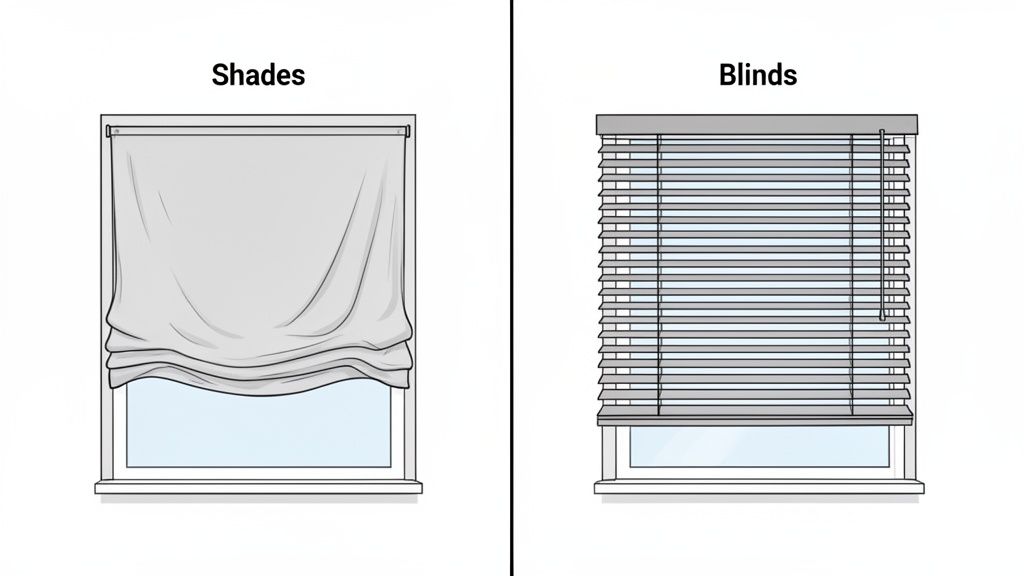
Shades are made from a single, continuous piece of fabric. Think of a soft, uninterrupted sheet of material that rolls or folds up and down. Blinds, on the other hand, are built with individual hard slats or vanes made of materials like wood, vinyl, or metal.
This one structural difference is the key—it influences everything from light control and privacy to your home's style and even your energy bills.
The Essential Differences
Since 1933, our family at Giorgi Bros. has helped Bay Area homeowners navigate countless design choices, and window treatments are always a hot topic. While people often use the terms interchangeably, understanding this core difference is the first step to finding the perfect fit for your home. You can even see how this distinction plays out in different settings by looking at professional takes on shades vs blinds.
This choice goes far beyond just looks; it impacts your home's comfort, privacy, and monthly energy costs. Market trends reflect this, with the global blinds and shades market valued at USD 14.82 billion and projected to grow significantly by 2026.
Interestingly, shades are forecasted to grow faster than blinds. We see this firsthand in our South San Francisco showroom—homeowners are increasingly drawn to their minimalist designs and superior insulation. Cellular shades, for example, can reduce a home's HVAC energy use by up to 30%, a major plus for our varied Bay Area climate.
To give you a clearer picture, here’s a quick overview of how these two window coverings stack up.
Quick Comparison: Shades vs. Blinds At a Glance
| Attribute | Shades | Blinds |
|---|---|---|
| Construction | A single, continuous piece of soft material (fabric). | Individual hard slats (vanes) made of wood, vinyl, or metal. |
| Light Control | Offers diffused or total light blocking (binary). | Provides precise, adjustable light control by tilting slats. |
| Privacy | Excellent privacy when closed; often requires top-down/bottom-up for versatility. | Privacy can be adjusted with slat angle, but may have light gaps. |
| Primary Style | Creates a soft, streamlined, and modern aesthetic. | Delivers a classic, structured, and traditional look. |
| Insulation | Superior, especially cellular (honeycomb) designs that trap air. | Minimal insulation due to gaps between the individual slats. |
Ultimately, choosing the right window treatment comes down to what you need for each specific room. For more inspiration, you might find some great ideas in our guide on the best window treatments for a living room.
Comparing Construction and Material Options
When you’re visiting our showroom, the first thing you’ll notice is the most basic difference between shades and blinds: shades are made from a single, continuous piece of fabric, while blinds are built from individual, hard slats. This one distinction is the starting point for everything that follows—from the look and feel to how they function in your home.
Shades are all about textiles, offering a soft, seamless look that can feel anything from light and airy to rich and structured. This is where you can really get creative and find the perfect fabric to set the mood for any room.
The World of Shade Materials
The real beauty of shades lies in their fabric versatility. You can find a material for just about any purpose you can think of.
- Sheer Fabrics: These are perfect for living rooms or sunrooms where you want to cut the glare and gently filter sunlight without losing your view. They add an elegant, soft touch while keeping the room bright.
- Light-Filtering Fabrics: A step up in privacy from sheers, these materials blur the view into your home but still let in a soft, welcoming glow. They’re a great choice for spaces where you want privacy but not total darkness.
- Blackout Materials: If you need a room to be truly dark, blackout fabrics are the answer. For bedrooms, home theaters, or nurseries, these materials block nearly 100% of outside light, creating a perfectly restful atmosphere.
We have to give a special nod to cellular shades, like the brilliant Hunter Douglas Duette® Honeycomb Shades. Their unique honeycomb-shaped pockets trap air, creating a layer of insulation that helps keep your home cooler in the summer and warmer in the winter. It’s an incredibly smart investment piece, especially with the Bay Area’s mixed climate.
The Durability of Blind Materials
If shades offer softness, blinds bring the structure. They’re the workhorses of the window treatment world, known for their durable, hard-slatted construction that makes them a go-to for high-traffic areas. This resilience is a big reason why blinds have remained so popular for so long—in fact, recent market analysis shows that North America makes up 40% of the USD 6.215 billion global market, and the window blinds segment alone was valued at USD 5.03 billion in 2024.
The right material for your blinds really depends on the room they’re going in:
- Genuine Wood: Nothing beats the timeless warmth and classic, upscale look of real wood. It adds a natural, organic beauty that’s perfect for studies, dining rooms, and formal living spaces.
- Faux Wood: You get the handsome look of real wood, but with the added benefit of moisture resistance. This makes faux wood blinds the ideal choice for humid spots like kitchens, bathrooms, and laundry rooms.
- Aluminum & Vinyl: These are your practical, budget-friendly options. They are incredibly durable, easy to clean, and hold up well in busy households with kids or pets.
At Giorgi Bros., we don’t just stick to what’s on the floor. Our non-commission Design Experts can walk you through our extensive custom order services to find the exact material, finish, and style to match the look you already have in your home.
Evaluating Light Control and Privacy
How much sunlight you let into your home and how much privacy you want are two of the biggest factors when choosing window treatments. This is where the functional difference between blinds and shades really shines—it’s all about a solid piece of fabric versus a set of adjustable slats.
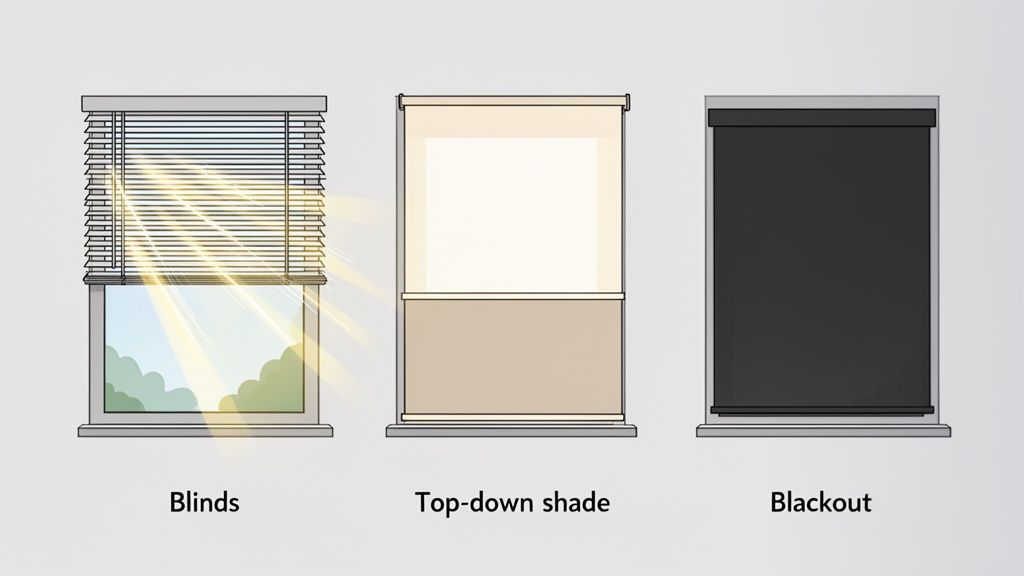
Blinds are the clear winner if you want to micromanage sunlight. With a quick twist of a wand or press of a button, you can tilt the slats to redirect that intense afternoon glare off your TV, protect your wood floors from fading, or just angle them enough to see outside without letting everyone see in. It's a simple, effective way to control light direction.
The Versatility of Shade Opacity
Shades operate a bit differently. At their most basic, they’re either up or down. But don’t let that fool you—the real magic is in the fabric itself, which gives you a surprising amount of control over the room's atmosphere.
Your choice of fabric opacity dictates exactly how a shade performs:
- Sheer: Think of these as a soft filter for your windows. They cut down on harsh glare while keeping the room feeling airy and bright. They offer very little privacy, so they’re perfect for living rooms or sunrooms where you want to preserve a beautiful view.
- Light-Filtering: This is the ideal middle-ground for most homes. Light-filtering fabrics let a beautiful, soft glow into the room but obscure the view from the outside, giving you the privacy you need day and night.
- Blackout: For bedrooms, nurseries, or home theaters, nothing beats a blackout shade. These are engineered to block up to 99% of incoming light, creating the complete darkness needed for deep sleep or the perfect movie-watching experience.
A Smart Compromise with Top-Down/Bottom-Up Shades
What if you want both natural light and privacy? This is a common dilemma, and the top-down/bottom-up feature is a brilliant solution. Available on many shades, including popular Hunter Douglas styles, this system lets you lower the shade from the top of the window.
This means you can let sunlight pour in through the top half while keeping the bottom half covered. You get a bright, cheerful room without feeling like you're on display.
This functionality is perfect for street-facing rooms or homes in the Bay Area where neighbors are close by. You can enjoy the natural light without feeling exposed, a common challenge our Design Experts help solve with no-pressure guidance.
Ultimately, you don’t have to sacrifice light for privacy. It’s all about understanding how you live in each room, and our team of non-commission consultants can walk you through every option at our South San Francisco showroom. For more ideas on getting the lighting just right, check out our guide on how to put your living room in the best light.
Insulation & Energy Performance
For anyone living in the Bay Area, keeping a home comfortable without running the AC or heater full-blast is a year-round challenge. Your window treatments play a much bigger part in this than you might think, acting as the first line of defense against the elements. It’s here that the difference between shades and blinds really comes into focus.
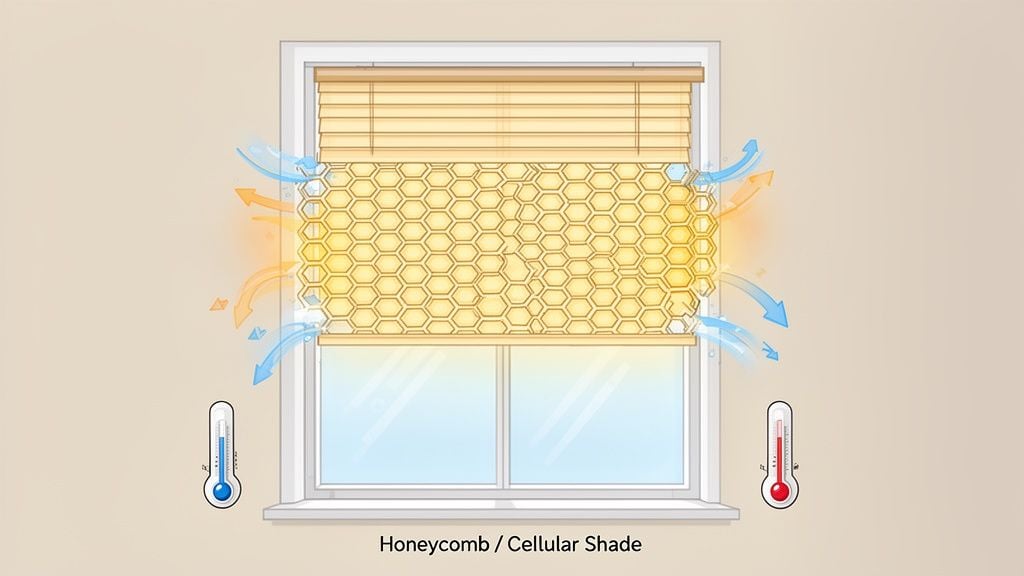
Because shades are made from a single, continuous panel of fabric, they form a solid barrier over your window. They don't have the slats and gaps that are a natural part of any blind, which means they do a far better job of stopping air from passing through.
This simple design principle is perfected in cellular shades.
The Power of Honeycomb Construction
Cellular shades, often called honeycomb shades, are the undisputed champions of energy-efficient window treatments. Their design is a brilliant bit of simple physics.
- Air-Trapping Pockets: They’re built with unique, honeycomb-shaped cells that trap a layer of air.
- A Natural Barrier: This trapped air acts as a powerful buffer, slowing the transfer of heat. In the summer, it helps keep your rooms cool, and in the winter, it holds onto your home’s warmth.
This is a prime example of function-first design. Investing in a high-quality cellular shade, like the Hunter Douglas Duette® Honeycomb Shades, is one of the smartest things a homeowner in our variable climate can do. It directly translates to a more comfortable home and can lead to real savings on your energy bills.
Since windows can be responsible for up to 25% of a home’s heating and cooling loss, choosing an insulating window treatment isn’t just about style—it’s a practical, long-term financial decision.
Why Blinds Don't Measure Up on Insulation
In contrast, blinds offer very little insulation. While their slats are fantastic for directing light, the very gaps that make them so flexible also allow air to flow freely right through them.
This makes blinds far less effective at preventing heat gain on a hot summer day or heat loss on a cold winter night. Blinds have many great qualities, but if energy efficiency is at the top of your list, shades are the clear winner.
At Giorgi Bros., our non-commission Design Experts can show you the tangible difference in our South San Francisco showroom. We can guide you to the perfect Hunter Douglas Window Treatments that will not only look beautiful but also work hard for your home.
Choosing Your Operating System and Smart Home Integration
How you operate your window treatments has come a long, long way from the days of wrestling with a tangled pull cord. Today, the choice of an operating system is just as important as the style itself, adding a layer of convenience, safety, and modern luxury to your home. This is another area where shades and blinds really start to diverge.
Of course, traditional cords are still around, but many homeowners—especially those with kids or pets—are moving away from them due to potential safety hazards. This has made cordless lift systems incredibly popular. You just give the shade a gentle push or pull, and it glides smoothly into place. It’s clean, simple, and safe.
For the ultimate in ease, however, nothing beats automation. This is where modern window treatments truly shine.
The Rise of Smart Home Automation
Motorization is more than just a cool feature; it's about making your home work smarter for you. The demand for this convenience is huge—the global blinds and shades market sits at USD 3.62 billion, with the automated segment alone expected to hit USD 4.07 billion by 2031. Why the boom? It comes down to two things we all want more of: convenience and energy savings.
Innovations from brands like Hunter Douglas, for example, have shown that motorized shades can cut your home's energy use by a staggering 20-40% just by using smart app controls to manage sunlight.
When you start thinking about integrating your window treatments into a larger setup, dedicated home automation blinds, shades, and curtains control solutions can tie everything together seamlessly. This isn’t just tech for tech's sake; it’s about making your daily routines simpler and your home more efficient.
At Giorgi Bros., we proudly offer Hunter Douglas PowerView® Automation, a brilliant system that lets you control your window treatments with a remote, an app on your phone, or even just your voice. Imagine scheduling your shades to open with the morning sun and close as evening falls, boosting your home's security and energy efficiency without you lifting a finger.
This commitment to smart, practical technology is a core part of what we do. Our non-commission Design Experts can walk you through how these systems work in our South San Francisco showroom and help you find the perfect fit for your lifestyle. We take care of it all, from the first conversation to the final professional installation, ensuring your new Hunter Douglas Window Treatments work flawlessly in your home. It’s the kind of helpful, no-pressure guidance our family has been known for since 1933.
The Giorgi Bros. Difference: Your Partner in Home Design
After weighing all the details on materials, light control, and energy performance, you might feel a little overwhelmed. It’s one thing to understand the difference between shades and blinds, but it’s another thing entirely to choose the perfect one for your home. This is where we come in, with a simple promise of “no-pressure guidance.”
Since 1933, our family has been helping Bay Area residents find beautiful, lasting investment pieces for their homes. Our Design Experts don’t work on commission, which means their only goal is to be your helpful guide. They’re here to listen to what you need and offer honest, practical advice—never to push a product.
Experience the Quality Firsthand
We think you should be able to see and feel the difference for yourself before making a big decision. Explore our 50,000 sq. ft. showroom in South San Francisco where you can touch, feel, and test the quality before you buy. It’s one thing to read about how a Hunter Douglas shade operates, but it’s another to feel its smooth glide in your own hands and compare it to the classic feel of a genuine wood blind.
For instance, one of the biggest decisions today is choosing an operating system. This flowchart can help you think through whether a hands-on manual control or a modern smart-home integration is the right fit for your lifestyle.
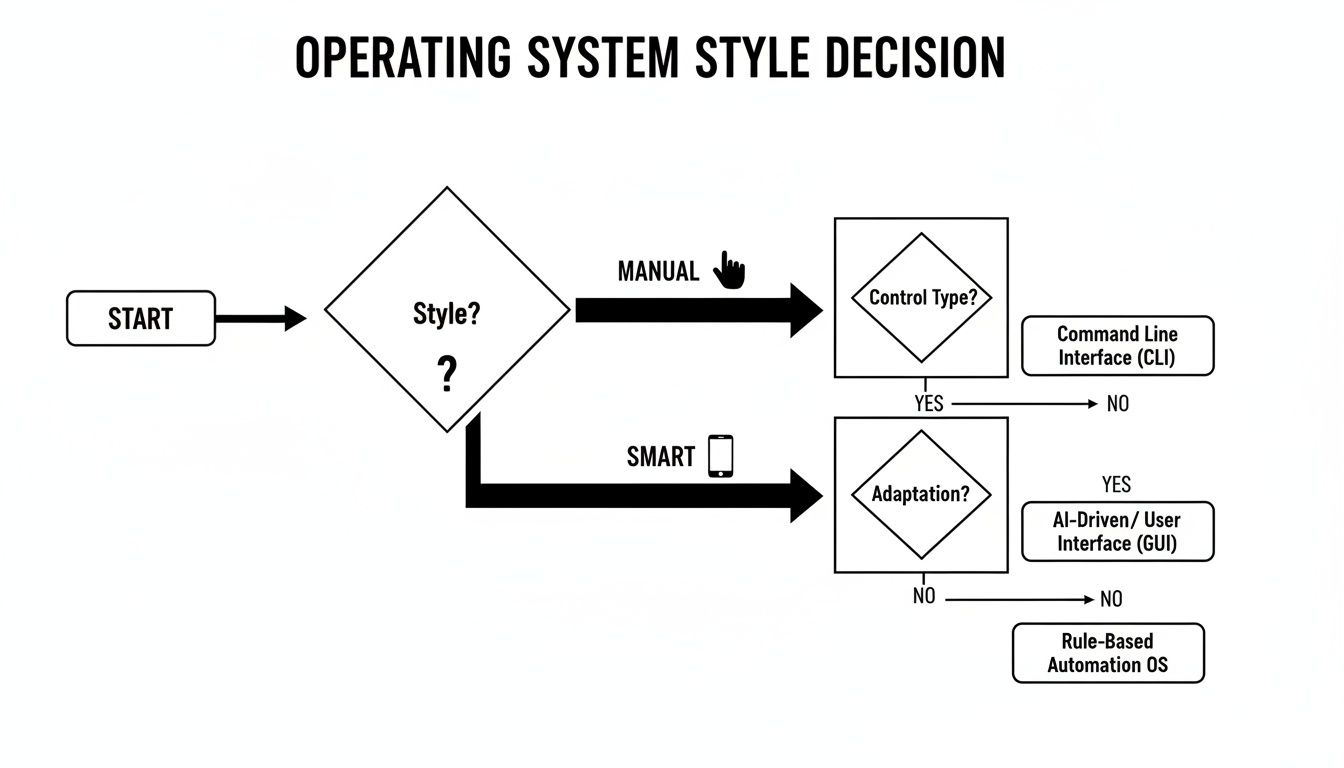
It’s a great starting point for a conversation about how you live in your space and what will make your daily routine easier.
A Full-Service Solution for Your Home
Choosing the right window treatment is just one piece of the puzzle. We’re a Full-Service Solution, which means we handle the whole home and take care of every last detail so you don't have to.
- Initial Design Consultation: We’ll sit down with you to match fabrics and materials to your existing decor, ensuring a cohesive look.
- Professional Measurement: Our team will visit your home to get precise measurements, guaranteeing a perfect, custom fit for every window.
- Final Installation: We handle the complete setup from start to finish. You just get to enjoy the flawless, finished result.
This end-to-end approach extends to our entire selection, from Elegant Flooring and Custom Reupholstery to our curated furniture collections. If you need a little more help tying the whole room together, take a look at our guide on how to choose living room furniture.
We invite you to stop by our South San Francisco showroom or book a Design Consultation to experience the heritage and service that have defined Giorgi Bros. for generations.
Frequently Asked Questions About Window Treatments
Even with all the details laid out, a few questions always seem to pop up. That's perfectly normal—choosing the right window treatment is a big decision for your home. Since we first opened our doors back in 1933, we've heard just about every question you can imagine in our South San Francisco showroom. Here are a few of the most common ones we answer for homeowners just like you.
Which Is Better for a Bedroom: Shades or Blinds?
When it comes to the bedroom, we almost always recommend shades. The main goal in a bedroom is to create a dark, quiet sanctuary for sleep, and that’s where shades really shine.
Blackout cellular shades or a simple roller shade do a phenomenal job of blocking light, keeping that early morning sun or pesky streetlights from waking you up. They also add a nice layer of insulation and can even help muffle outside noise. While blinds are great in many rooms, those tiny gaps between the slats will always let in slivers of light—a real dealbreaker for anyone who is a light sleeper.
Are Custom Window Treatments a Worthwhile Investment?
We believe so, absolutely. Off-the-shelf options from big-box stores might seem like a quick fix, but a custom window treatment is a genuine investment in your home's comfort and value. They’re made to the exact dimensions of your windows, which means a flawless fit that gets rid of light gaps and gives you the best possible insulation and privacy.
With our custom solutions like those from Hunter Douglas, you also get access to a far wider world of high-quality materials, exclusive fabrics, and sophisticated operating systems. It’s how you get a window treatment that truly feels like it belongs in your home, matching your style and functioning just the way you need it to.
How Do I Clean Shades Versus Blinds?
The cleaning method really comes down to the material. Blinds are usually the easiest to care for because of their hard surfaces—wood, faux wood, or vinyl. A quick pass with a duster or a wipe-down with a damp cloth is typically all you need to keep them looking fresh.
Fabric shades, on the other hand, need a bit of a lighter touch. For most, a gentle dusting or going over them with your vacuum’s brush attachment is perfect. When you work with Giorgi Bros., our Design Experts will always give you specific care instructions for your chosen product, so you can keep your investment pieces looking beautiful for years.
Can I Layer Shades and Blinds with Curtains?
Yes, and we encourage it! Layering window treatments is a fantastic design move that delivers both beauty and function. It allows you to pair a hardworking shade for light control with decorative drapery panels that add a splash of color, texture, and softness to the room.
For instance, you could place an energy-efficient honeycomb shade right against the window and frame it with elegant curtains. This gives you a complete solution for light, privacy, insulation, and style. This layered approach is a cornerstone of the full-service solution and "whole home" design philosophy we practice at Giorgi Bros.
Ready to see the difference for yourself? Visit the Giorgi Bros. Furniture showroom in South San Francisco to explore our complete collection of Hunter Douglas window treatments, or book a complimentary Design Consultation with one of our non-commission experts today. Learn more at https://www.giorgibros.com.