A lot of Bay Area homes ask one room to do several jobs. Breakfast spot, homework station, holiday table, quiet place for coffee. When that space feels crowded or visually busy, people stop using it the way they hoped they would.
A well-planned scandinavian dining area solves that problem by doing less, better. It leans on light, honest materials, comfortable proportions, and furniture that earns its place. The result isn’t cold minimalism. It’s a dining space that feels calm, usable, and welcoming day after day.
Embracing Simplicity and Connection
Scandinavian design has lasting power because it was never about decoration first. It grew in the mid-20th century as a response to post-war needs for practical, affordable furniture, and designers such as Hans Wegner helped define the look through clean lines, skilled craftsmanship, and natural woods in light-filled spaces, as noted in this history of Scandinavian design. In a dining room, that philosophy still holds up beautifully.
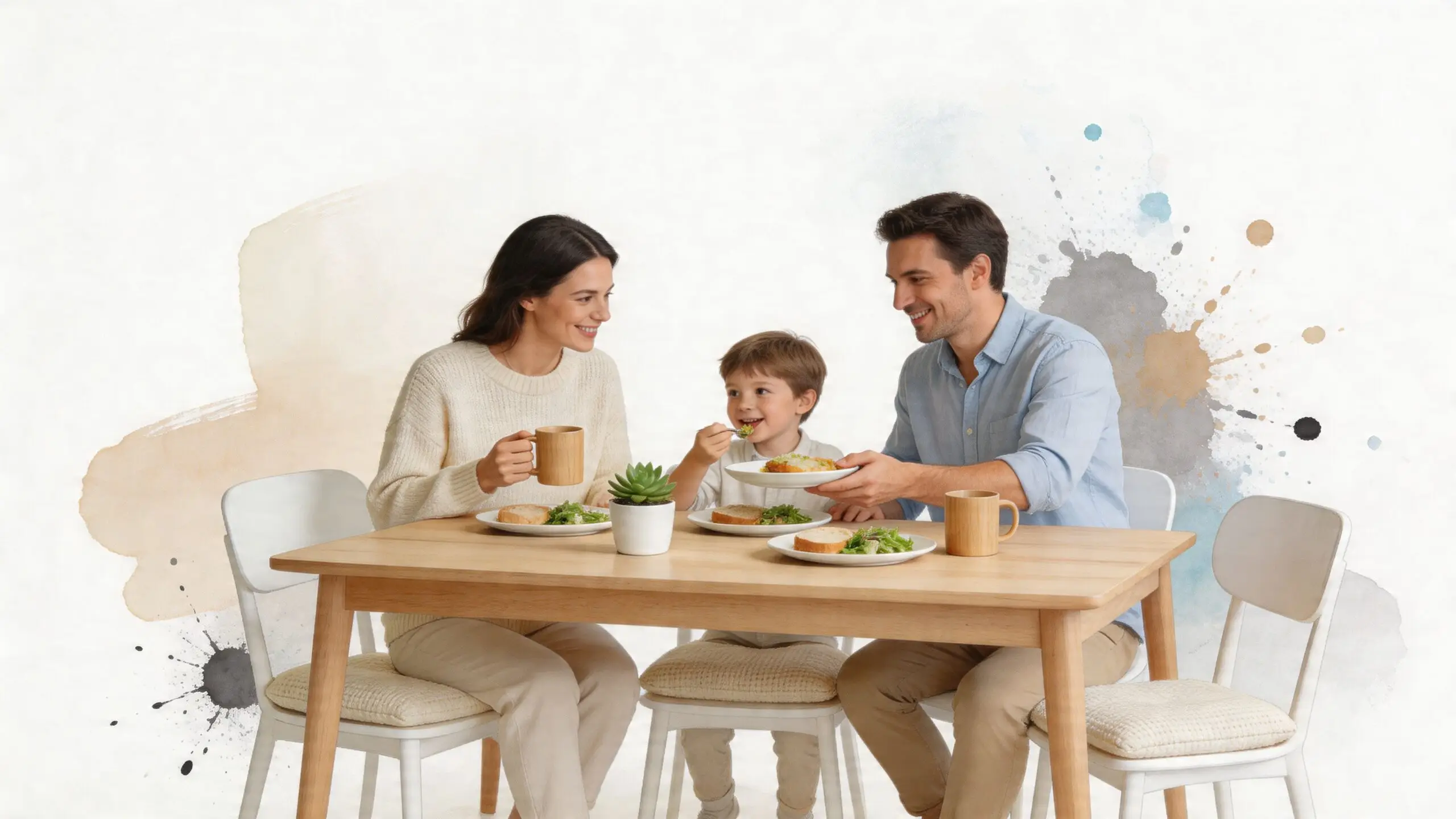
What works in real homes is the combination of restraint and warmth. Pale wood. Open sightlines. Chairs that feel light but sit comfortably. Surfaces that don’t ask for constant fuss. When a dining area is edited this way, the room starts to support connection instead of competing for attention.
That’s one reason the style fits so naturally with the values we’ve carried in South San Francisco since 1933. Families rarely come in looking for a “trend.” They want a dining space that feels good now and still makes sense years from now. Scandinavian design answers that need because it values function, longevity, and everyday comfort.
A quiet room still needs personality
Minimal doesn’t mean anonymous. The strongest rooms usually have one or two personal notes that soften the discipline of the furniture. Art is one of the easiest ways to do that. If you want to incorporate the concept of Hygge with an art print, a small piece with a restrained palette can add feeling without cluttering the room.
A good scandinavian dining area also benefits from a little contrast. A woven seat, a matte ceramic bowl, a linen runner, or a darker wood accent can keep the room from feeling flat. If you’re trying to find that balance between minimal and lived-in, our guide on personalizing your space without feeling cluttered is a useful starting point.
Practical rule: If every item in the room is there for a reason and at least a few of them invite touch, the space will feel warmer than a room filled with decorative extras.
Laying the Foundation with Space Scale and Flow
Most dining room problems start before anyone picks a table. The issue is usually layout. A scandinavian dining area works best when the furniture respects the architecture, the traffic path, and the light.

Start with how the room is used
Measure the dining zone, but don’t stop there. Look at how people move through it. In open-plan homes, the best layouts don’t just fit the table. They preserve easy movement to the kitchen, patio, or family room.
Use this quick planning sequence:
Map the boundaries
Note walls, openings, and windows first. The usable footprint is what matters, not just the room’s full dimensions.Name the daily function
Some dining spaces are formal. Most aren’t. If the table doubles as a work surface or family gathering point, that affects shape, seating, and storage choices.Protect the walkways
Chairs should be easy to pull out without pinching circulation. If every meal requires people to shuffle sideways, the room is too tight.Plan around light
Scandinavian rooms depend on brightness. Place the dining zone where it can benefit from natural light instead of blocking it.
Create comfort through enclosure
One of the most useful ideas from Nordic interiors is mys, a feeling of coziness created by making a space feel gently held rather than exposed. Architects recommend giving the dining spot at least two sides of perceived enclosure, such as a wall on one side and a banquette on the other, and this approach improved user comfort by 25 to 30 percent in the referenced case study. The same source also notes that round tables with a 120 to 150 cm diameter can reduce footprint by 20 to 30 percent compared with rectangular tables while still seating 6 to 8 people, according to this architectural case study on Scandinavian enclosure and table sizing.
That enclosure doesn’t have to mean building walls. A bench tucked into a corner, a rug that defines the zone, or a sideboard placed with intention can all make the area feel settled.
A dining area feels better when it’s connected to the room but not floating in the middle of it.
Small spaces need shape discipline
In tighter Bay Area homes, a round or softly contoured table often performs better than a rectangular one. Corners disappear, movement improves, and the room usually looks calmer. If you entertain often but don’t need full size every day, an expandable round table gives you flexibility without asking the room to carry visual bulk all week.
A few layout decisions help immediately:
Choose a round table for narrow paths
It softens movement around the room and usually makes tight circulation easier.Use a banquette where one side is fixed
It saves space and reinforces that sense of enclosure that Scandinavian rooms do so well.Keep secondary furniture low and simple
Tall, heavy pieces make a dining zone feel compressed.
For a deeper comparison of shapes and seating plans, our guide to maximizing your dining space with the right table shape and seating arrangement can help narrow the options.
The Heart of the Room Selecting Investment Furniture
A scandinavian dining area stands or falls on three pieces. The table. The chairs. The storage. Get those right, and the room usually needs very little else.
The dining table sets the tone
The Scandinavian preference for generous, practical dining tables comes from a long tradition of communal eating. In 18th- and 19th-century Nordic farmhouses, long wooden tables seating 8 to 12 family members sat at the center of daily life, and that heritage still informs today’s preference for durable, extendable tables in woods such as oak that can last over 100 years, as described in this overview of Swedish dining traditions and table use.
That history matters because it explains why the right table never feels like a decorative afterthought. It’s the working center of the room. For many households, an extendable table is the smartest answer. Closed, it keeps the room open. Open, it handles holidays, birthdays, and extra guests without borrowing furniture from another room.
When choosing a table, pay attention to these trade-offs:
Solid wood vs. highly processed surfaces
Solid wood develops character and can often be maintained over time. More synthetic-looking surfaces may be easier in the short term, but they rarely age with the same grace.Pedestal base vs. four legs
Pedestals often improve seating flexibility. Four-leg tables can feel more grounded, but leg placement matters if you host often.Round vs. rectangular
Round tables encourage conversation and suit tighter footprints. Rectangular tables read more architectural and can better suit long rooms.
Wood choice affects look and feel
The wood species changes more than color. It changes how the room reads.
| Wood Type | Appearance | Durability | Best For |
|---|---|---|---|
| Oak | Visible grain, warm and grounded | Highly durable | Everyday family dining tables and long-term investment pieces |
| Birch | Lighter, cleaner visual texture | Durable for regular use | Bright, airy rooms with a softer Scandinavian look |
| Ash | Strong grain with a refined feel | Durable | Homes that want a slightly more contemporary edge |
| Beech | Smooth, understated appearance | Durable | Simpler silhouettes and clean-lined seating |
Oak often wins because it has enough texture to feel warm without looking rustic. Birch works well when you want the room to stay especially light. Ash can add a little energy through grain without becoming busy.
Chairs need comfort before icon status
Scandinavian dining chairs are famous for good reason. The best ones combine a sculptural line with a seat people want to use through a full meal. That’s harder to find than many shoppers expect.
Look for a chair that supports the body without adding visual heaviness. A shaped wood back, woven seat, or slim upholstered pad can all work. What usually does not work is choosing a chair only because it photographs well. Dining chairs live hard lives. If the edge cuts into the back of the leg or the seat feels too shallow, you’ll know quickly.
If you want to compare wood seating styles in person or use them as a reference point, these maple dining room chairs show how material and profile can change the mood of a dining set.
What lasts: Chairs with honest joinery, supportive backs, and materials that look better with use.
Storage should quiet the room
A Scandinavian dining room rarely needs a large hutch or ornate cabinet. What it does need is one calm storage piece that hides the visual noise of daily life. Think sideboard, credenza, or low cabinet.
The best storage pieces do three jobs well:
Conceal the practical items
Table linens, serving pieces, candles, and extra dishes don’t need to stay visible.Support the layout
A low sideboard can anchor one wall and help define the dining zone.Leave breathing room
Closed storage keeps the room aligned with the Scandinavian preference for clean surfaces and visual ease.
Well-made Amish Furniture is often a sensible option. The lines can stay simple, but the build quality is there where it counts. Drawers operate better, wood movement is respected, and the piece is built to stay in service rather than be replaced in a few years.
The Art of Subtlety with Color Light and Texture
The difference between a room that feels crisp and one that feels sterile usually comes down to layering. A good scandinavian dining area keeps the palette controlled, then adds life through texture and light.

Keep the palette soft and architectural
White walls, pale woods, soft gray, muted clay, and warm beige all support the Scandinavian look because they reflect light rather than trap it. That doesn’t mean every surface should match. It means the room should feel tonally related.
If you already have hardwood floors and you’re trying to make them work with a lighter dining scheme, understanding undertones matters. This guide on how to choose hardwood floor stain color is helpful for thinking through how stain depth and wood character affect the room.
A restrained palette also gives your furniture more presence. The table becomes the feature. The chair silhouette matters more. The room feels collected instead of decorated.
Texture is where warmth enters
Scandinavian rooms depend on touchable materials. Without them, the clean lines can feel too strict.
A few combinations work especially well:
Linen with wood
A simple runner or napkin softens the table without hiding it.Wool with woven seating
A throw over a nearby bench or a textured seat adds comfort without visual clutter.Ceramic with matte finishes
Handmade-looking tableware adds variation and keeps the room from feeling overly polished.
For more direction on balancing soft neutrals and wood tones, our expert guide to the perfect color palette can help you build a room that feels layered but still disciplined.
Light colors make a room feel larger. Texture keeps it from feeling empty.
Lighting should gather people in
Overhead lighting is one of the most overlooked parts of a dining room. In a Scandinavian setting, the pendant should do more than illuminate. It should create intimacy. A fixture with a soft profile in metal, glass, paper, or natural fiber often works better than something heavily ornate.
Hang the light so it visually belongs to the table, not the whole room. That simple move makes the dining zone feel deliberate. Then add one secondary source, such as a small lamp on a sideboard, to keep the room gentle in the evening.
The goal isn’t drama. It’s calm focus. You want people to notice the meal and each other before they notice the lighting.
The Giorgi Bros Difference Customization and Lifetime Value
Most advice on Scandinavian style stops at the look. Light wood, neutral colors, clean lines. That’s useful, but it misses the deeper point. A Scandinavian dining area works best when the furniture is chosen for longevity, not just appearance.
A documented gap in mainstream design coverage is that it rarely explains how custom ordering supports the buy-for-life mindset. Selecting wood species, finish, and dimensions turns the decision from a style purchase into a craftsmanship decision, which helps the piece remain relevant for decades, as discussed in this article on lessons from Scandinavian interior designers.
Why custom matters in this style
Scandinavian rooms are unforgiving in one way. Because the spaces are visually restrained, every proportion becomes more important. A table that’s a little too dark, too wide, or too heavy can throw off the whole room.
Custom ordering solves practical problems that off-the-floor pieces often can’t:
Right scale
You can fit the room instead of forcing the room to fit the furniture.Right wood species
Oak, birch, ash, and other woods each shift the mood of the room.Right finish
Matte and low-sheen finishes usually support the Scandinavian look better than glossy ones.Right seating mix
End chairs, side chairs, and bench seating can be suited to how your family dines.
One practical option for shoppers considering Custom Furniture is custom furniture made simple, which outlines how choosing dimensions, finishes, and materials can turn a good-looking piece into one that fits your home and habits more precisely.
No-pressure guidance leads to better decisions
A family-owned showroom still has an advantage. In a non-commission environment, the conversation changes. The focus moves from quick turnover to long-term fit.
That matters with Scandinavian furniture because subtle differences are everything. Two oak tables may look similar in a photo, yet one has cleaner proportions, a better extension mechanism, or a finish that will age more gracefully. Those are easier choices to make when you can touch the wood, sit in the chairs, and compare them without pressure.
Accessible planning matters too. Financing options are available, and for many households that’s what makes it possible to choose investment pieces now instead of settling for furniture that needs replacement much sooner. Done well, that’s not indulgence. It’s measured buying.
Your Invitation to Create Timeless Style
A successful scandinavian dining area doesn’t depend on chasing a look from social media. It comes from a few durable decisions. Keep the room simple. Choose natural materials. Make sure the layout supports daily life. Invest in furniture that can stay with you.
That approach is good design, and it’s also a practical form of sustainability. When a table is built to last, when chairs remain comfortable year after year, and when storage continues to serve the room without visual noise, you buy less often and live better with what you own.
Bay Area homes benefit from that kind of thinking. Space is valuable. Quality matters. Rooms need to work hard without feeling hard. Scandinavian design does that especially well because it respects function and leaves room for calm.
For families furnishing a remodel, replacing a worn-out dining set, or building a more intentional home, it helps to see materials in person. Wood tone, finish depth, seat comfort, and scale are hard to judge on a screen. In a showroom setting, those decisions get easier and more confident.
If you’re comparing options for Furniture South San Francisco, looking for thoughtful Bay Area Interior Design guidance, or weighing custom details for a dining space that’s meant to last, the right conversation can save you from costly compromises.
Visit Giorgi Bros. Furniture in South San Francisco to explore 50,000 square feet of inspiration, compare materials firsthand, and work with non-commission Design Consultants who offer no-pressure guidance. If you’re ready to create a scandinavian dining area with lasting value, book a Design Consultation or stop by the showroom to discuss custom sizing, wood species, finishes, and seating options for your home.