A lot of people start shopping for dining chairs after a familiar moment. The table is already there. The room is coming together. Maybe the kitchen remodel is almost done, or maybe the old chairs have finally reached the point where every dinner includes one seat that wobbles and one that nobody wants. You’re not just looking for something that fills space. You’re trying to choose chairs your family will use for weeknight meals, holidays, homework, and long conversations after dessert.
That’s why maple deserves a careful look.
Good dining chairs live hard lives. They get pulled across floors, leaned back on, climbed on by kids, and used far more often than generally realized. Maple has a long record in exactly that kind of everyday setting. During 1725 to 1760, Boston’s furniture trade included about 38 dedicated chairmakers, and many used maple because of its clean look and strength for busy households, according to the Colonial Society of Massachusetts record on Boston furniture trades.
When you think about maple dining room chairs as future heirlooms instead of temporary seating, the decision gets clearer. You stop asking, “Will these work for now?” and start asking better questions. How will they age? Can they handle daily family use? Will they still feel right if your style changes over time? Can they be refinished, reupholstered, or passed along?
That long-view mindset is how quality furniture stores have guided families for generations. In South San Francisco, that kind of thinking has been part of the conversation since 1933, and it still matters. A good chair should earn its place year after year.
An Introduction to Choosing Your Forever Chairs
On a Sunday evening in a Bay Area home, the dining chairs do far more than fill the space around a table. They hold a quick breakfast before school, a laptop during late work hours, a grandparent through a long holiday meal, and a child who is still learning not to rock back on two legs. Over time, you feel the difference between a chair that merely looks good and one that is built to stay part of the family.
That is the right starting point for choosing forever chairs.
A lasting chair has to meet three standards at once. It should feel comfortable in daily use, suit the room you live in now, and have enough substance to remain worth caring for years from now. For Bay Area homeowners, there is another layer to consider. Our homes move through dry summers, damp coastal air, bright sun, and changing floorplans. Furniture that becomes a true heirloom has to handle all of that with grace.
Why the material matters so much
Wood species shapes the whole experience of ownership. Some woods dent easily, some show wear faster than expected, and some can look handsome at first while offering less long-term stability in a hard-working dining chair. Maple has remained a favorite because it balances durability, a refined grain, and a clean appearance that can suit many styles over time.
That flexibility matters more than it may seem on the showroom floor.
A dining chair is a lot like a pair of everyday shoes made by a skilled craftsperson. If the material is right and the structure is sound, it grows into your life instead of wearing out just as you have gotten used to it. If the material is wrong, you keep noticing its limits. For a closer look at how wood choice affects longevity and appearance, our guide to choosing the right hardwood for longevity and style can help put the differences in plain language.
Think in decades, not seasons
Families often shop for the room they see today. The better question is how the chair will live with you over the next twenty years.
Maple dining room chairs reward that longer view. Their look is steady, which gives them an advantage in homes that change paint colors, tables, rugs, or even architectural style over time. They can feel at home in a traditional dining room in Burlingame, a warmer modern interior in Walnut Creek, or a compact San Francisco breakfast area where every piece has to earn its footprint.
The smartest way to judge a chair is to picture it in stages of family life:
- Right now, it needs to feel comfortable and fit your table, traffic flow, and everyday routines.
- A few years from now, it should still make sense if children grow, guests visit more often, or the room gets updated.
- Much later, it should still be worth repairing, refinishing, or passing down because the frame and craftsmanship justify the care.
That is how heirlooms begin. Not with something flashy, but with something honest, well made, and adaptable enough to stay useful through ordinary family life.
In a quality furniture store, that is usually the clearest sign of value. A forever chair is one you will still be glad to own after trends, paint colors, and houses have changed.
Why Choose Maple Wood for Your Dining Chairs
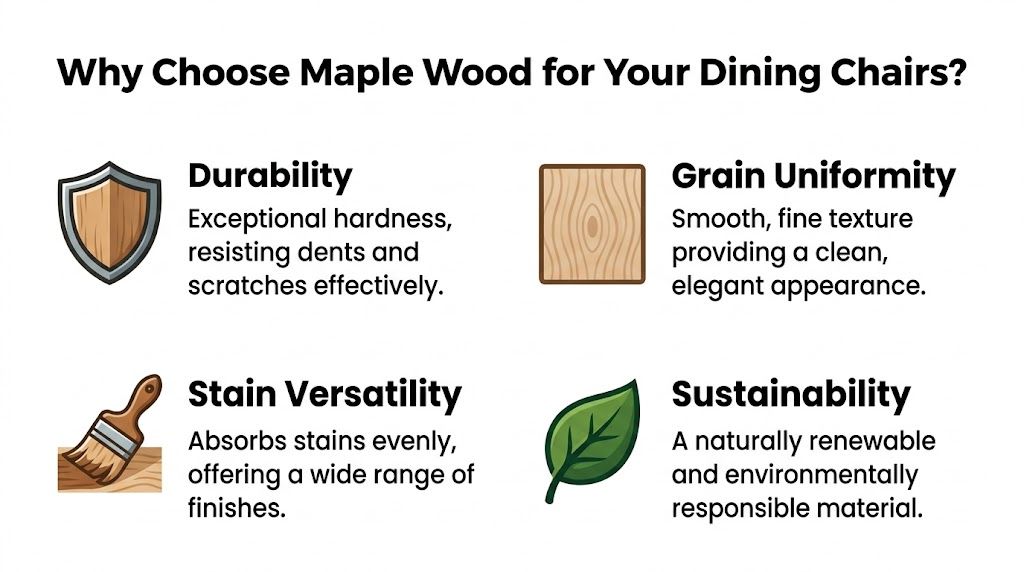
Maple works so well for dining chairs because it solves several problems at once. It’s strong enough for daily use, refined enough for formal rooms, and adaptable enough to suit both traditional and modern homes.
That combination is unusual.
The practical case for maple
When people hear wood hardness ratings, their eyes sometimes glaze over. Fair enough. What matters is what the number means in real life.
Sugar maple has a Janka hardness rating of 1450 lbf, and premium solid maple chairs can support static loads up to 500 lbs, according to the Morgan performance fabric side chair specifications. That same source contrasts maple with pine at 380 lbf. In plain language, maple is far better suited to a chair that gets used every day.
If you have kids who tip chairs back, guests who shift around during long dinners, or a household where dining chairs also become laptop chairs, game-night chairs, and extra seating in a pinch, that matters.
Practical rule: The dining chair sees more motion than the dining table. Choose a wood that handles movement, not just weight.
What maple looks like in a room
Maple’s appearance is one of its biggest strengths, especially for homeowners who don’t want their dining set to feel locked into one style forever.
Its grain is usually fine and even. That gives it a clean, calm surface. In a lighter finish, maple can feel bright and contemporary. In a medium or darker stain, it can feel warm, grounded, and more traditional. Figured varieties such as curly maple add visual interest without becoming busy.
Homeowners often get confused here because they assume “durable” woods must look heavy or rustic. Maple doesn’t. It can be understated, which is often a benefit in a dining room where the table, rug, lighting, and artwork all share attention.
Maple compared with other hardwoods
A quick comparison helps show where maple fits.
| Feature | Maple | Oak | Cherry | Walnut |
|---|---|---|---|---|
| Everyday durability | Very strong for repeated dining use | Strong and dependable | Better for gentler wear and a softer visual feel | Strong, with a richer darker look |
| Grain appearance | Fine and uniform | More pronounced grain | Smooth with a warmer character | Bold and expressive |
| Style flexibility | Works in modern, transitional, and classic rooms | Often reads traditional or rustic | Often feels classic and elegant | Often feels formal or statement-making |
| Finish personality | Can suit light, medium, or dark looks | Usually emphasizes grain | Often prized for natural warmth | Often chosen for natural depth |
If you’d like a broader look at how wood species behave in furniture, this guide on choosing the right hardwood for longevity and style is a useful companion.
Why maple often makes sense as an investment piece
Furniture shoppers sometimes separate beauty from durability, as if they have to choose one or the other. Maple is one of the woods that refuses that tradeoff.
Its strength supports the buy-it-for-life mindset. Its appearance keeps it versatile. Its classic history gives it staying power. And because maple dining room chairs can be ordered in many finishes, seat styles, and silhouettes, you can often get a piece that feels customized instead of generic.
That’s the sweet spot for long-term furniture. It’s not just tough. It’s livable.
Understanding Chair Construction and Classic Styles
A beautiful chair can still be a poor chair.
You can’t judge quality by finish color alone, and you definitely can’t judge it by a nice photo online. The strength of a dining chair depends heavily on what’s happening where the rails, legs, and seat supports come together.
Why mortise and tenon still matters
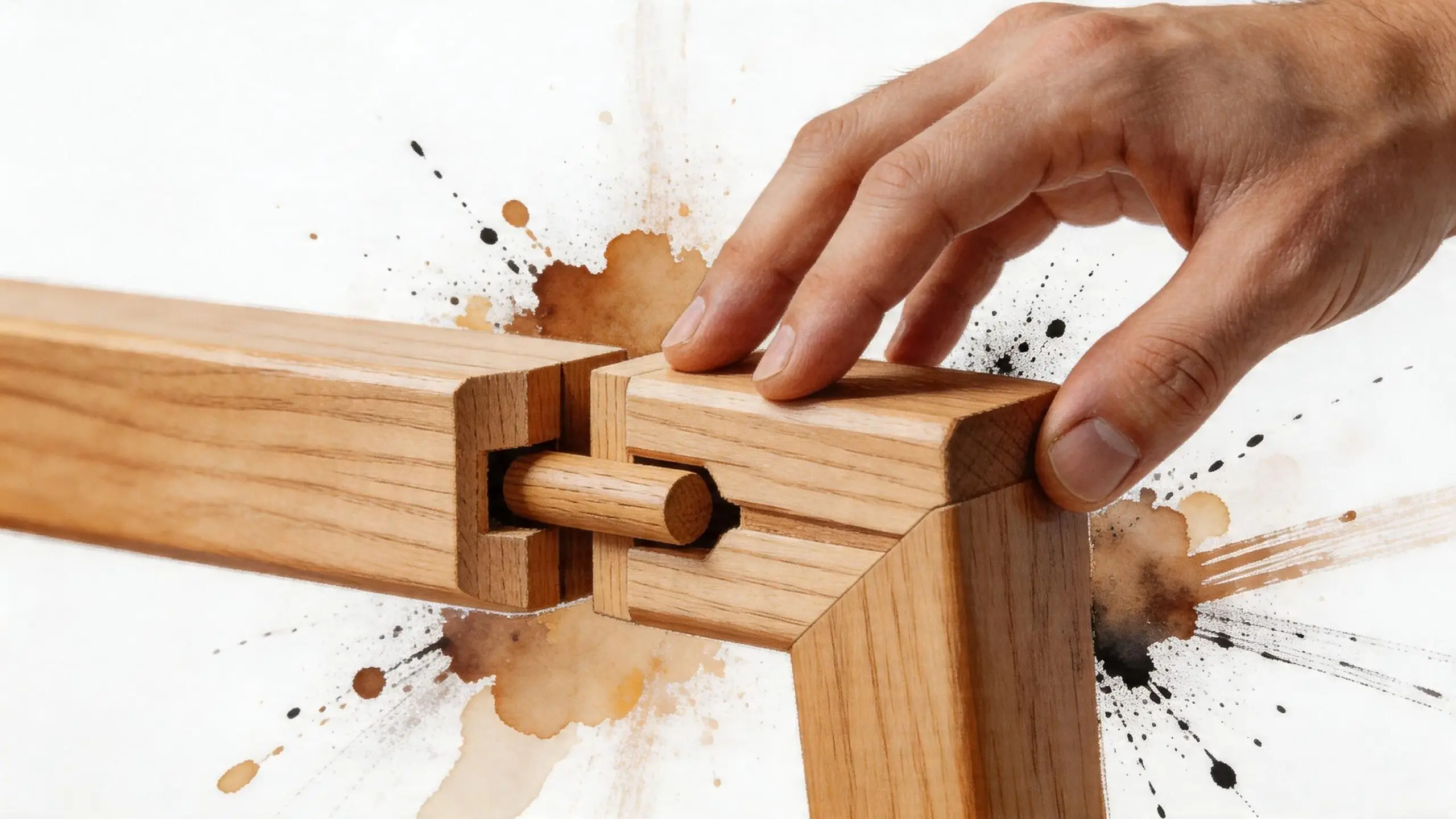
The term mortise and tenon joinery sounds technical, but the idea is simple. One piece of wood has a shaped projection, called the tenon. Another piece has a matching slot, called the mortise. They fit together to create a strong mechanical joint.
This method has stayed relevant for a reason. According to this solid maple chair construction reference, engineering tests found that these joints retained 85 to 95% of their original strength after 10,000 fatigue cycles simulating daily seating stress.
That kind of detail tells you something important. A quality chair isn’t only built to hold a person sitting still. It’s built to handle the repeated pushes, pulls, twists, and shifts that happen every day.
Here’s where shoppers often get mixed up:
- A tight chair in the showroom isn’t always a durable chair.
- A lightweight chair isn’t automatically low quality, but weak joinery is a problem.
- Visible screws or simple fasteners may be fine in temporary furniture, but they’re not what is typically desired in heirloom dining seating.
What to look for when you inspect a chair
When you sit in a chair, pay attention to the frame before you think about cushion softness. Ask yourself:
- Does the chair stay quiet when you shift side to side?
- Do the back posts feel integrated with the seat frame, or do they feel attached as an afterthought?
- Is there any wobble when weight moves unevenly?
- Do the stretchers and rails look purposeful rather than decorative only?
If a chair flexes too much on day one, it usually won’t improve with age.
For style inspiration rooted in enduring design language, this overview of modern furniture classics can help you compare timeless forms.
How classic chair styles change the feel of a room
Construction gives you longevity. Style gives you personality.
Three families of dining chair design show up often in maple:
Shaker
Shaker chairs are restrained, functional, and subtly elegant. They tend to use clean lines, slat backs, and honest construction. In maple, this style feels especially natural because the wood’s fine grain supports that simple look.
Mission
Mission chairs usually have stronger verticals, broader rails, and a more architectural presence. They feel grounded and substantial. If your dining room needs visual weight, Mission styling can do that without looking fussy.
Contemporary
Contemporary maple chairs often soften the profile with curved backs, slimmer members, or mixed materials. They work well in open Bay Area homes where the dining space connects to the kitchen and living room, and where the furniture needs to feel visually light.
The trick is to match style to the mood you want at the table. Shaker feels calm. Mission feels anchored. Contemporary feels lighter and more edited.
Sizing Ergonomics and Custom Seat Options
Sunday dinner starts in twenty minutes. The roast is resting, someone is setting out plates, and one guest pulls out a chair only to find the seat sits too high, the back bumps the table apron, and the whole place setting feels tighter than it looked in the showroom. That is usually not a style problem. It is a fit problem.
For a chair you hope to keep for decades, fit comes first. In Bay Area homes, where dining rooms often connect to kitchens, family rooms, or narrower transitional spaces, a chair has to do two jobs at once. It needs to feel good during a long meal and move easily through the room day after day.
Start with the table, not the chair
The table sets the rules. Once you know its height, apron clearance, and the space around it, you can choose a chair that tucks in properly and gives people enough room to sit comfortably.
A simple measuring routine prevents expensive mistakes:
- Measure from the floor to the underside of the tabletop or apron.
- Check the chair seat height, not just the top of a soft cushion that may compress over time.
- Measure the chair back and arm height if the chair needs to slide under the table.
- Account for pull-out space, especially near a wall, island, or sideboard.
If you want help with the basics, this furniture measurement guide gives a practical checklist for working with an existing room. For planning circulation around the table, this guide to ergonomic room design is useful for visualizing spacing and traffic flow before you commit.
Why proportion changes the whole experience
A chair can fit under a table and still feel wrong.
Proportion works like tailoring. A slim chair beside a heavy trestle table can look undersized, even if the measurements are technically fine. A broad chair around a delicate pedestal table can crowd knees, elbows, and sightlines. Good proportion creates visual ease first, then physical comfort follows.
That matters even more if you are choosing maple as a long-term investment piece. Well-scaled maple chairs age gracefully because they continue to look right as the room evolves around them. In many Bay Area homes, that flexibility matters. A formal dining room may become a homework station, a holiday gathering spot, or the place where three generations linger over coffee.
Choosing between wood seats and upholstered seats
This decision should reflect how your household lives.
A solid wood seat offers easy care, a lighter look, and the honest feel many people want from handcrafted maple. A shaped or scooped seat can make a surprising difference, especially for everyday use. It is often the right choice for families who want durability, simple upkeep, and a chair that still looks appropriate twenty years from now.
An upholstered seat changes the experience in a different way. It softens the chair visually, adds comfort for longer meals, and gives you another layer of customization through fabric or leather. That can be especially helpful if you are tying the dining area to nearby living spaces in an open Bay Area floor plan. Upholstery also needs a little more foresight in our local climate. Fog, sun exposure, and shifting indoor moisture levels can affect how fabrics wear, so it pays to choose materials with the same care you give the wood itself.
The right seat option depends on how your family uses the room, not how the room looks in a catalog.
The small details people feel right away
Some comfort features sound minor on paper and matter a great deal in daily use:
- Back shape affects whether the chair feels upright and formal or gently supportive during a long meal.
- Seat width and depth influence whether people settle in comfortably or shift around halfway through dinner.
- Arms add support but also require more clearance and reduce how many chairs fit around the table.
- Seat material changes maintenance, warmth, and the overall tone of the room.
Custom options are often worth the extra thought. A slightly lower seat, a gentler back curve, or a performance fabric can turn a good chair into your family’s forever chair. That is how heirloom furniture is chosen. Not by chasing a catalog look, but by matching craftsmanship to rhythms of your home.
Matching Chairs with Your Room and Table
One of the most common questions in any dining room project is whether the chairs need to match the table exactly.
They don’t.
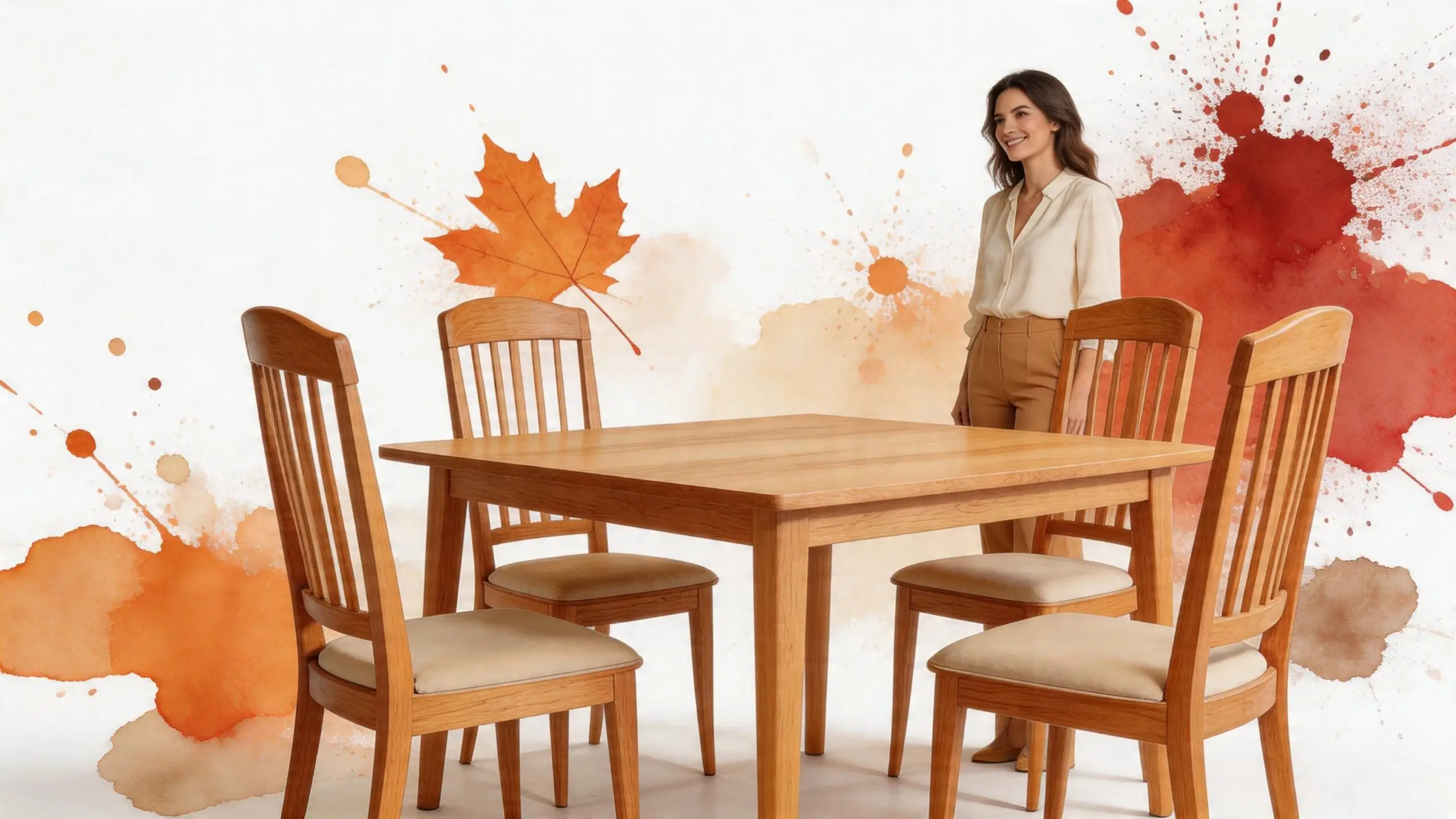
That surprises a lot of people, especially if they grew up thinking a dining set had to arrive as one coordinated package. Today, many of the best rooms feel more collected than matched. Maple helps because it’s visually steady. It can support a full matching set, or it can act as the bridge wood in a more layered room.
When a matching set works best
A matched table and chair set usually feels orderly and calm. That’s often a smart move when the room already has a lot going on, such as patterned tile, strong lighting, open shelving, or bold art.
Choose matching chairs if you want:
- A quiet visual rhythm around the table
- An easier decision process with fewer variables
- A more formal or classic look that won’t date quickly
This approach also makes sense when the dining area is part of a larger open plan and you want the room to feel settled rather than busy.
When contrast creates a better room
Sometimes contrast is what gives the dining space life. A maple chair can soften a darker table. A darker stained maple chair can anchor a lighter room. Upholstered maple host chairs at the ends can make a rectangular table feel more welcoming without overwhelming it.
A few pairings that often work well:
| Room direction | Maple chair approach |
|---|---|
| Minimal and bright | Natural or light-finished maple with simple lines |
| Warm transitional | Medium-stained maple with an upholstered seat |
| Formal but approachable | Darker stained maple with shaped backs |
| Eclectic and layered | Maple side chairs mixed with different host chairs |
For table-and-chair proportion questions, this guide to dining table heights can help you avoid combinations that look right in theory but feel awkward in use.
Use finish to connect the whole room
The finish on maple dining room chairs can do a lot of design work. It can echo flooring, relate to nearby cabinetry, or give the room contrast where it needs it.
If the room already has pale floors and light walls, a natural maple chair can feel airy and cohesive. If the room feels washed out, a richer finish can add grounding warmth. If your kitchen cabinetry has a strong wood tone, you don’t need to match it exactly. You just want the relationship to look intentional.
No-pressure design help matters. Bay Area homes often combine older architecture with newer remodel choices, and the dining room has to speak to both. Good guidance helps you mix wood tones without making the room feel accidental.
Care and Maintenance for Lifelong Beauty in the Bay Area
Maple is durable, but durable doesn’t mean maintenance-free.
That point matters even more in the Bay Area, where changing humidity and coastal influence can affect wood over time. A chair that looks perfectly stable in one home can behave differently in another if the finish is weak or the care routine is inconsistent.

Why Bay Area conditions deserve extra attention
In humid climates like the Bay Area, maple can absorb 8 to 12% more moisture than oak, which can increase wood movement. The same source notes that a high-quality finish such as catalyzed lacquer can help boost lifespan by an estimated 25%, according to this maple dining chair care guide.
That doesn’t mean maple is a poor choice here. It means finish quality and basic upkeep matter more than many buyers realize.
A simple routine that protects your investment
You don’t need a complicated schedule. You need a consistent one.
- Dust with a soft dry cloth so grit doesn’t act like sandpaper on the finish.
- Wipe spills promptly because dining chairs catch more drips and hand contact than people expect.
- Keep chairs away from direct heat sources such as heating vents or intense sun exposure when possible.
- Use a quality finish from the start if you’re ordering custom chairs, especially in homes with fluctuating indoor conditions.
If you want a broader overview of prevention, this article on protecting wood furniture from scratches and stains is a useful reference.
Good wood care is mostly about avoiding extremes. Extreme moisture, extreme dryness, extreme heat, and harsh cleaners all shorten the life of the finish.
What owners often misunderstand
The biggest mistake is assuming all wood finishes offer the same protection. They don’t. A professionally applied finish built for long-term use gives maple a much better chance of staying stable and attractive.
The second mistake is waiting until a problem appears. Once a chair starts showing finish wear around the crest rail, seat edge, or top of the back, it’s already asking for attention.
Watch those touch points:
- Top rails and back posts where hands often grip
- Front seat edges where clothing and daily contact create wear
- Lower legs and stretchers where shoes and vacuum bumps happen
A little steady care is what turns a good chair into a piece the next generation still wants.
Your Lifetime Investment at Giorgi Bros Furniture
If you’ve read this far, you already know the right dining chair isn’t a small decision.
Maple dining room chairs make sense for families who want substance behind the style. You’re choosing a wood with a long history in North American furniture, a surface that suits many finishes, and the kind of strength people appreciate more with every year of daily use. Pair that with sound construction and the right fit, and you get a chair that can stay in the family instead of ending up at the curb after a few seasons.
That buy-it-for-life mindset has guided Giorgi Bros. Furniture since 1933 in South San Francisco. Families across the Bay Area come in looking for a dining chair, but what they often need is help sorting through the bigger questions. Should the chairs match the table? Which finish works with existing cabinetry? Is a wood seat better for easy cleanup, or does upholstery make more sense for long dinners and entertaining?
Why seeing quality in person still matters
Photos can show style. They can’t show weight balance, frame solidity, hand feel, or how a backrest supports you after an hour at the table.
That’s why a showroom visit matters, especially when you’re considering Custom Furniture or handcrafted Amish Furniture. At Giorgi Bros., you can explore 50,000 square feet of furnishings, compare woods and finishes side by side, and sit in chairs long enough to tell the difference between something that only looks good and something that feels built for real life.
Custom options make the chair yours
One of the biggest advantages of buying quality furniture is that you don’t have to settle for the floor sample look. Custom order programs open up choices in:
- Wood species and finishes so the chair works with your table and room
- Designer fabrics and high-grade leathers for a seat that fits your family’s lifestyle
- Style details that help bridge classic, transitional, and more current interiors
That matters in real homes. Bay Area remodeling projects often mix old and new, and a custom order can help your dining room feel intentional instead of pieced together.
No-pressure guidance makes better decisions possible
Furniture shopping goes better when the advice isn’t tied to a commission. Giorgi Bros. is known for its Non-Commission Sales Staff, which means you can work with consultants and design experts who focus on fit, quality, and long-term value rather than pushing the quickest close.
That kind of guidance is especially useful when you’re making an investment purchase. A well-chosen dining chair can save money over time because you’re replacing less, repairing less, and living with something that continues to earn its place. It’s also a more sustainable way to furnish a home. Keeping a well-built chair for decades is better than cycling through disposable furniture.
Practical support for the full-home shopper
Many customers who come in for dining furniture are also thinking about the bigger picture. A dining project often connects to living room updates, bedroom changes, or a full refresh guided by Bay Area Interior Design goals. Giorgi Bros. can support that wider vision, from dining and upholstery to Premium Mattresses, all within one trusted South San Francisco showroom.
And if timing or budgeting is part of the decision, Financing options are available, which can make it easier to choose the better-built piece now rather than settling for a short-term option you’ll replace later.
The best dining chairs don’t just match your table. They support your routines, your room, and your standards for years to come.
If you’re ready to compare maple dining room chairs in person, explore custom finishes, or get no-pressure guidance from experienced consultants, visit Giorgi Bros. Furniture in South San Francisco or book a Design Consultation. It’s a welcoming place to test comfort, see craftsmanship up close, and choose investment pieces that fit your home for the long haul.