
You know the feeling. You finally get a quiet moment when the day is done, lower yourself into your favorite chair, and instead of relief, your back tightens. Your hips slide forward, your shoulders round, and ten minutes later you’re shifting around trying to get comfortable.
That’s often the moment people start looking for the best recliners for back support. Not because they want a fancier chair, but because they’re tired of furniture that asks their body to do all the work.
At our family business in South San Francisco, we’ve been helping Bay Area households furnish their homes since 1933. Over those decades, one lesson keeps proving itself. The right chair can change how a room feels, but the right supportive chair can change how a day feels. It can make evenings easier, reading more comfortable, recovery gentler, and daily living less taxing.
A good recliner isn’t just about leaning back. It’s about giving your spine somewhere stable to rest, your muscles permission to relax, and your joints better alignment than a flat sofa cushion can usually provide. That’s why many shoppers who once thought of recliners as a luxury now see them as a practical part of living well at home.
Finding Relief and Reclaiming Comfort at Home
A customer once described his old chair to me in a way I’ve never forgotten. He said, “It’s soft for five minutes and punishing after that.” That sums up the problem better than any technical diagram. Many chairs feel pleasant at first contact, but they don’t support the body over time.
Back discomfort often builds in small, ordinary moments. You answer a few emails after dinner. You watch half a movie. You sit with a book. If the chair lets your pelvis roll backward and your lower back collapse, your body pays for it in muscle tension and fatigue. By bedtime, you feel worn out from sitting.
That’s where a supportive recliner changes the conversation. Instead of forcing your body to adapt to the furniture, the chair starts adapting to you. It helps hold the natural curves of your back, supports your legs, and gives you more than one fixed posture.
A recliner should do more than feel soft. It should help your body settle into a position it can maintain comfortably.
For many people, that shift is emotional as much as physical. They stop dreading the chair they use every day. Home starts feeling restorative again.
In a non-commission showroom, that difference matters even more. People can slow down, ask questions, and compare how different recliners feel without anyone trying to hurry the process. That’s always been part of our way of doing business. Good guidance isn’t pressure. It’s patience, product knowledge, and enough experience to know that comfort can’t be rushed.
The long view matters here. A supportive recliner isn’t disposable furniture. It’s one of those investment pieces that can affect your daily comfort for years. If it’s well built, properly fitted, and thoughtfully chosen, it can deliver value long after the excitement of the purchase fades.
Why a Supportive Recliner Is a Health Investment
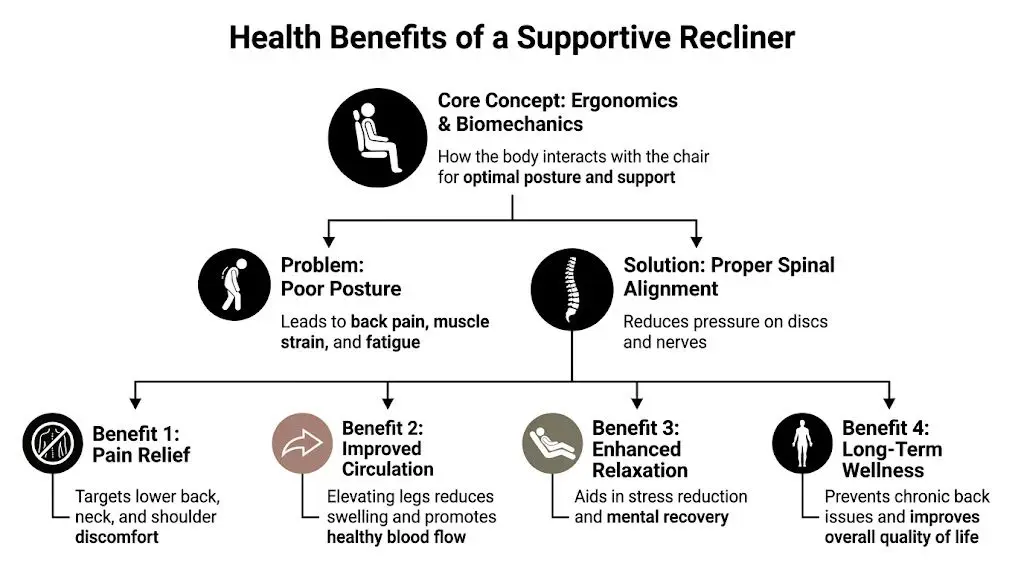
A chair can help your back or work against it. That isn’t marketing language. It’s simple mechanics.
Your spine has a natural S-curve. Imagine a bridge with gentle arches. Those arches are strong when they’re supported in the right places. If the support underneath shifts or disappears, the structure has to strain to hold itself up. Your back works the same way.
A standard sofa or oversized chair often lets the lower back flatten and the shoulders roll forward. That posture may feel harmless for a little while, but over time it asks muscles and spinal discs to carry pressure they weren’t meant to handle for hours on end.
What support really means
Support doesn’t mean stiffness. It means the chair keeps contact with the places your body needs help the most.
A well-designed recliner spreads your weight more evenly than an upright chair. That matters because pressure concentrated in one area, usually the lower back, tailbone, or hips, is what often makes sitting go from restful to draining.
A 2026 consumer survey found that 46% of recliner shoppers prioritize extra back support as their top feature, and top models with multi-position recline angles, typically 120 to 165 degrees, can reduce spinal pressure by up to 30% in zero-gravity positions according to ergonomic studies cited by Willis Furniture’s overview of back-support recliners.
Why posture and pressure are linked
People sometimes hear “good posture” and picture sitting rigidly straight. That’s not the goal. Healthy posture is more about balanced support than perfect stillness.
If you want a simple companion read on this idea, SunnyBay has a useful discussion on the importance of good posture for pain relief. It helps explain why alignment matters long before pain becomes severe.
Here’s what a supportive recliner does that a flat seat often can’t:
- Keeps the lower back engaged: The chair supports the inward curve of the lumbar area instead of letting it collapse.
- Reduces muscle guarding: When the body feels stable, the muscles around the spine don’t have to stay half-contracted.
- Changes pressure through position: Reclining shifts load away from the most stressed points of upright sitting.
- Supports circulation in the legs: Raised legs can make long sitting sessions easier on the body.
Practical rule: If a chair only feels comfortable when you keep readjusting your hips, shoulders, or neck, it probably isn’t supporting you well.
Why this matters in a real home
The best recliners for back support aren’t reserved for people with a diagnosis. They help anyone who spends long stretches seated, anyone recovering from physical strain, and anyone who wants their home to work harder for daily comfort.
That’s also why many homeowners pair seating choices with sleep solutions. If you’re thinking about whole-body support at home, this guide on how adjustable bases can help alleviate 5 health concerns is worth a look. The principle is the same. Better positioning can reduce strain before discomfort becomes routine.
The Anatomy of an Exceptional Back-Support Recliner
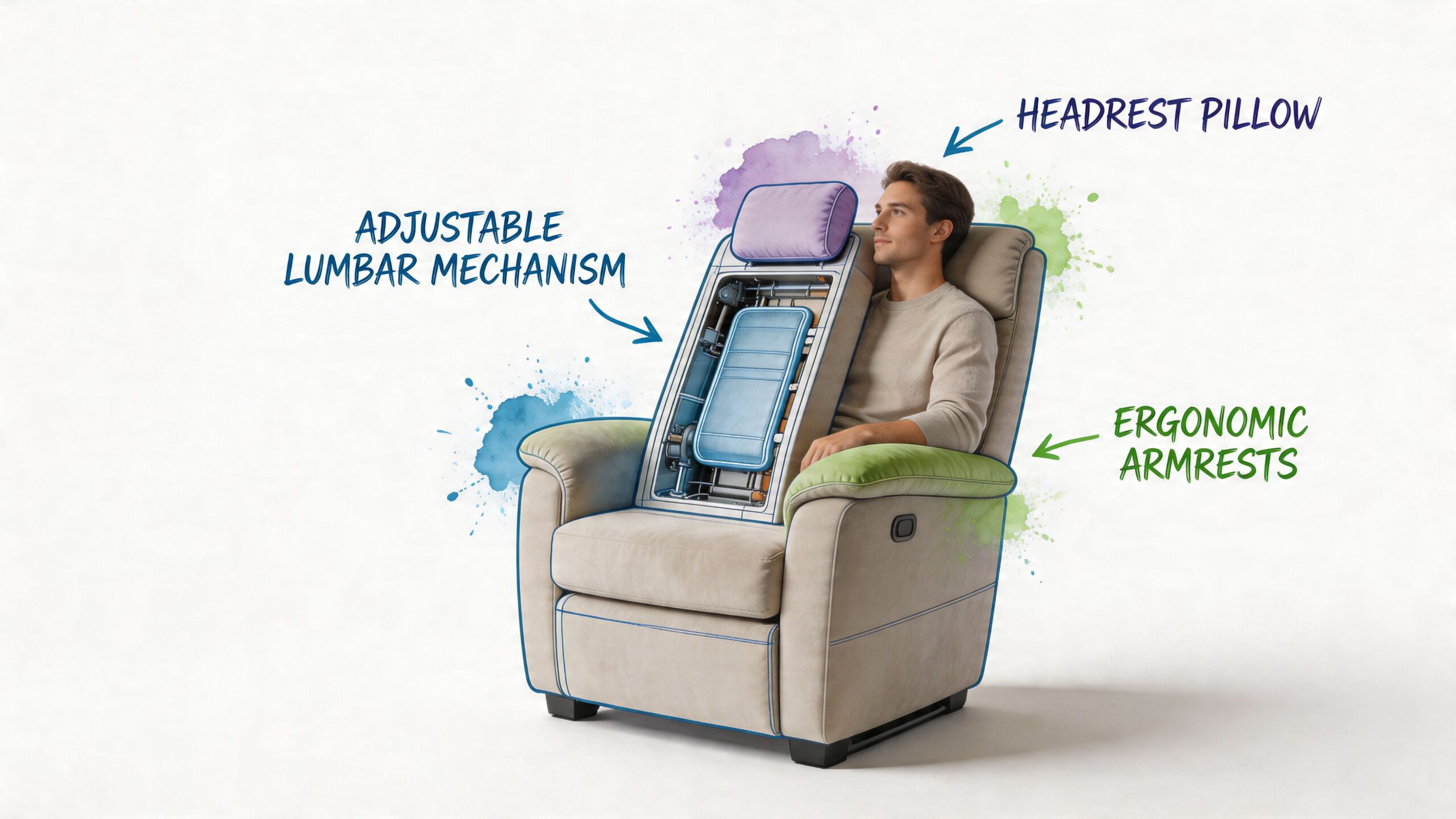
Most shoppers start by looking at the silhouette, the arms, or the upholstery. Those things matter. But for back comfort, the real story is under the surface and inside the mechanism.
The best recliners for back support combine structure, adjustability, and fit. Each part has a job. When one part falls short, the whole chair can feel off.
Recline angle and why precision matters
A recliner isn’t automatically supportive just because it moves. The question is whether it moves into a position that helps your spine.
Chiropractors recommend reclining to approximately 135 degrees as the optimal position for reducing spinal pressure, and they identify adjustable power lumbar support as the single most important feature because it lets users customize fill depth to their own spinal curve while maintaining consistent contact and stability, as explained in this review of back-pain recliner guidance.
That number helps shoppers because it gives them something concrete to test. You don’t have to guess whether a chair reclines enough to be useful. You can ask whether it reaches that supportive middle ground.
A chair that stops too upright may keep pressure concentrated in the lower back. One that drops you too far without support can leave the lumbar area floating.
Power lumbar and the difference it makes
This is the feature that clears up the most confusion in a showroom.
Power lumbar isn’t just extra padding. It’s adjustable support built into the back of the chair. It moves forward to fill the small hollow of your lower back. That matters because the body rarely matches a one-shape-fits-all cushion.
A fixed cushion can miss the right spot by an inch or two. That sounds minor, but it feels major when you sit there every evening.
A good power lumbar system should do three things:
- Meet your lower back where it curves
- Stay supportive as you change recline positions
- Resist flattening under body weight
If you want a plain-language explanation of how adjustable lumbar support works across different types of supportive furniture, that guide is helpful and easy to follow.
If the lumbar support disappears when you recline, the chair is asking your body to take over again.
Headrest support and the neck-to-back connection
People often shop for back relief and overlook the neck. That’s a mistake.
If your head falls too far forward or backward, the muscles in your neck tense up. That tension often travels downward into the shoulders and upper back. A proper headrest helps keep the cervical spine in a neutral position so the rest of the back doesn’t have to compensate.
Look for a recliner that supports your head without forcing your chin toward your chest. You shouldn’t feel like you’re searching for the pillow.
Seat depth and seat height
Fit matters just as much as features. A recliner can have every premium control available and still feel wrong if the dimensions don’t match your body.
To understand it clearly, consider this:
| Fit element | What you want to feel | What happens if it’s wrong |
|---|---|---|
| Seat depth | Your back touches the backrest while there’s still a little room behind your knees | Too deep can make you slouch. Too shallow can leave your thighs unsupported |
| Seat height | Your feet rest comfortably and your hips feel stable | Too high can create dangling legs. Too low can make standing harder |
| Back height | Your shoulders and head feel supported in the right places | Too short can leave the neck unsupported. Too tall can miss your natural resting point |
These details are why trying a chair in person matters so much. Two recliners can look nearly identical online and feel completely different once you sit down.
Cushioning that supports instead of swallowing you
People often say they want a soft chair, but what they usually want is pressure relief without sagging.
The best back-support recliners balance comfort with resilience. You want cushioning that has enough give to feel pleasant, but enough structure to keep your pelvis from tipping backward. If the seat lets you sink too far, the lumbar area often loses contact and the back rounds out.
That’s also where upholstery decisions play a role. Different leathers and fabrics change the surface feel, temperature, grip, and give of the chair. If you’re comparing materials for comfort and durability, this guide to everything you need to know about upholstery materials can help you sort out the practical differences.
Manual versus power mechanisms
A manual recliner can work well for some people. It’s straightforward and familiar. But a power recliner gives finer control, which is especially useful if your comfort depends on small changes in angle.
That precision matters for people whose pain shifts from day to day. One evening your back may want a mild recline. Another day your hips may need more elevation. With power controls, you can make those adjustments gradually instead of dropping into a few preset positions.
One example in the market is the 4Z-Peaceful Pause Power Lift Recliner from Giorgi Bros. Furniture, which includes adjustable lumbar support operated through one-touch controls. That kind of feature is useful for shoppers who want easier position changes and more targeted lower-back support.
Matching Recliner Features to Your Body and Health Needs
The right recliner for one person can be the wrong chair for another. A tall person may need more back height and deeper seating. Someone with mobility concerns may care less about deep lounge posture and more about safe exit. A person with sciatica may need a different style of relief altogether.
That’s why broad “best of” lists often fall short. They name features, but they don’t always help you match those features to your body and your routine.
For lower back pain and daily compression
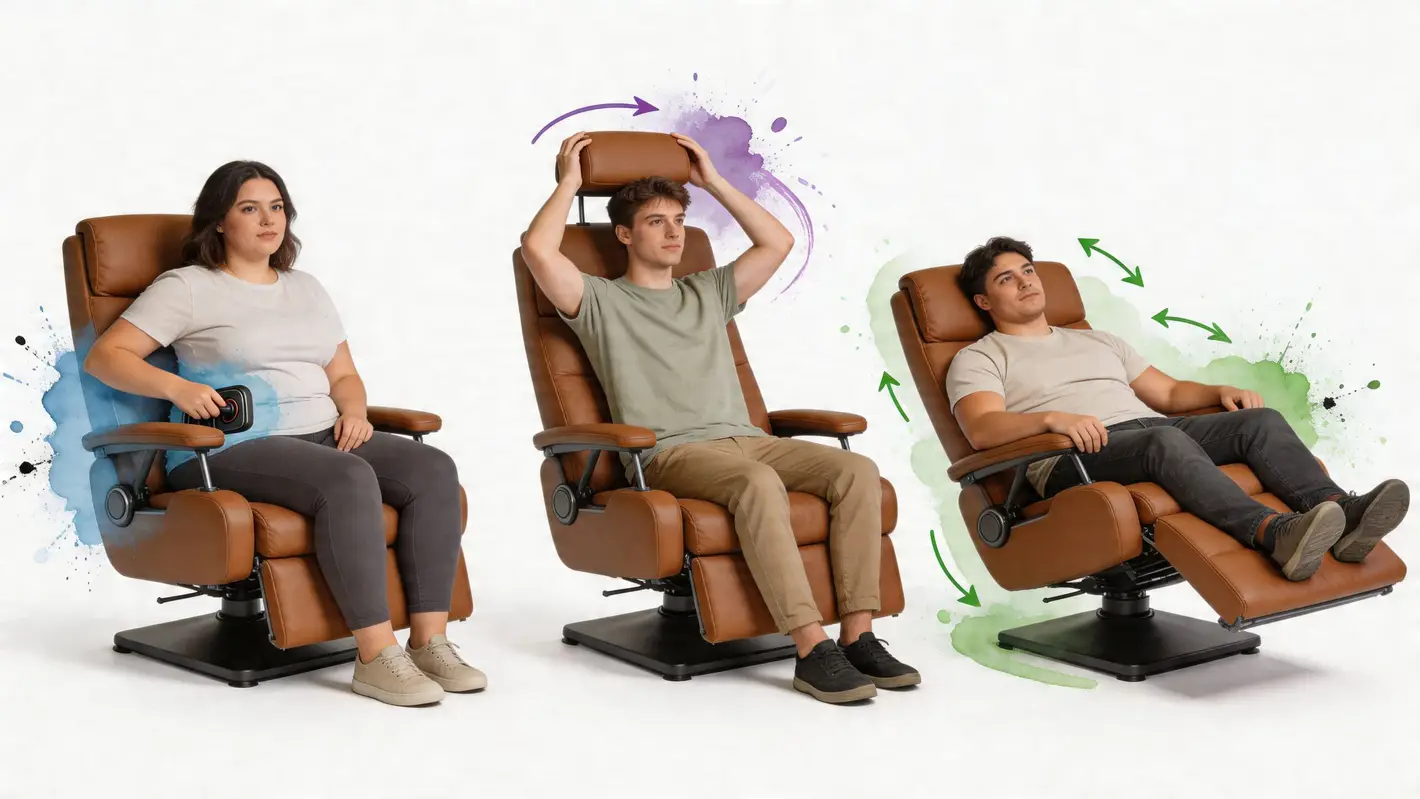
If your back feels tired, especially after desk work or long hours standing, focus on recliners that let you fine-tune the angle and maintain strong lumbar contact through the movement.
In plain terms, your body often needs two things at once. It needs pressure reduced, and it needs shape maintained. A recliner that only leans back without supporting the lower spine may not solve the actual problem.
For sciatica and nerve-related discomfort
Therefore, zero-gravity recliners deserve more attention than they usually get.
For conditions like sciatica, zero-gravity models can be highly effective. Emerging trends show these models surging 18% in sales for pain management because they distribute weight evenly, cutting spinal compression by up to 70%. Brands like Stressless integrate “Plus” systems that reduce sciatica symptoms by 35% in user trials, according to the discussion cited by Mayo Clinic Connect on recliners for sciatica issues.
What confuses many shoppers is that zero-gravity doesn’t mean “reclines a lot.” It means the chair positions the body so weight is distributed more evenly, usually with the legs lifted in a way that takes load off the lower spine. For some people, that feels noticeably different from a standard power recliner.
If your discomfort travels from the lower back into the hip or leg, it’s worth testing a zero-gravity position instead of assuming any recline will feel the same.
For smaller rooms and tighter floor plans
Bay Area homes don’t always offer endless space. That’s where a wall-hugger recliner can make practical sense. It reclines with less clearance behind the chair, so you don’t have to give up support just because the room has limits.
A smaller footprint doesn’t mean you should accept a smaller fit. You still need the right seat depth, back height, and lumbar contact. Space-saving should never come at the expense of alignment.
For mobility and easier standing
Some shoppers need help getting comfortable. Others also need help getting back up.
A power lift recliner can be useful if standing from a seated position puts strain on the knees, hips, or lower back. The key here isn’t luxury. It’s safe movement. The chair assists the transition instead of asking the body to push hard from a deep seat.
That same thinking often applies at night, too. If mobility and body mechanics are part of your broader comfort concerns, it can help to consider how your mattress supports the same goals. This guide on helping back pain with the right mattress takes that broader home-comfort view.
Customization The Path to a Perfect Fit and Lasting Value
A supportive recliner shouldn’t only fit your back. It should fit your home, your habits, and the years ahead.
That’s where customization changes the conversation. Many mass-market chairs ask you to accept whatever size, surface, and feel happens to be in stock. A custom order approach lets you think more carefully about what you’ll be living with every day.
Support and style don’t need to compete
People sometimes assume that once they prioritize ergonomics, they have to give up design. That’s not how better furniture works.
A well-chosen recliner can support the spine and still belong beautifully in a living room, library, or bedroom sitting area. Leather choice, fabric texture, wood finish, arm shape, and scale all affect whether the piece feels integrated or out of place.
For shoppers who want long-term durability with meaningful design choice, Hancock & Moore offers customizable frames with options for 12 wood species and over 200 fabrics, backed by 20-year warranties, and these pieces have earned 4.9/5 ratings for durability, as cited in Consumer Reports’ lift chair coverage.
Why custom can save money over time
Customization isn’t only about aesthetics. It often protects your investment.
If a chair is built with better materials and selected with care, you’re less likely to replace it because the cushion failed, the covering wore poorly, or the look stopped working in your room. Buy-it-for-life thinking tends to be more sustainable because it reduces the cycle of buying, discarding, and replacing.
That matters to many Bay Area households. People want Custom Furniture that lasts, not furniture that merely fills a space for a few seasons.
What to customize thoughtfully
Not every option carries the same weight. Start with the choices that affect daily use the most:
- Upholstery material: Leather and fabric each have a different feel, maintenance profile, and aging pattern.
- Color and finish: These shape how the chair lives with the rest of the room.
- Scale and silhouette: A chair should fit both the room and the person using it.
- Construction quality: The visible finish matters, but the hidden durability matters longer.
A recliner becomes an investment piece when it fits your body today and still belongs in your home years from now.
That’s why custom order services matter in a serious furniture showroom. You’re not limited to what happens to be on the floor that afternoon. You can build toward the right answer. If you’d like to see how that process works, our guide to custom order furniture is a helpful starting point.
How to Properly Test a Recliner in Our Showroom
The showroom test should be more than a quick sit and a quick decision. A recliner can feel pleasant in the first minute and disappointing after ten. Your job is to stay with it long enough to notice the difference.
That’s one advantage of working with Non-Commission Sales Staff. There’s room to slow down. You can compare, recline, adjust, stand up, sit again, and ask practical questions without feeling like someone is waiting for you to say yes.
A simple in-showroom checklist
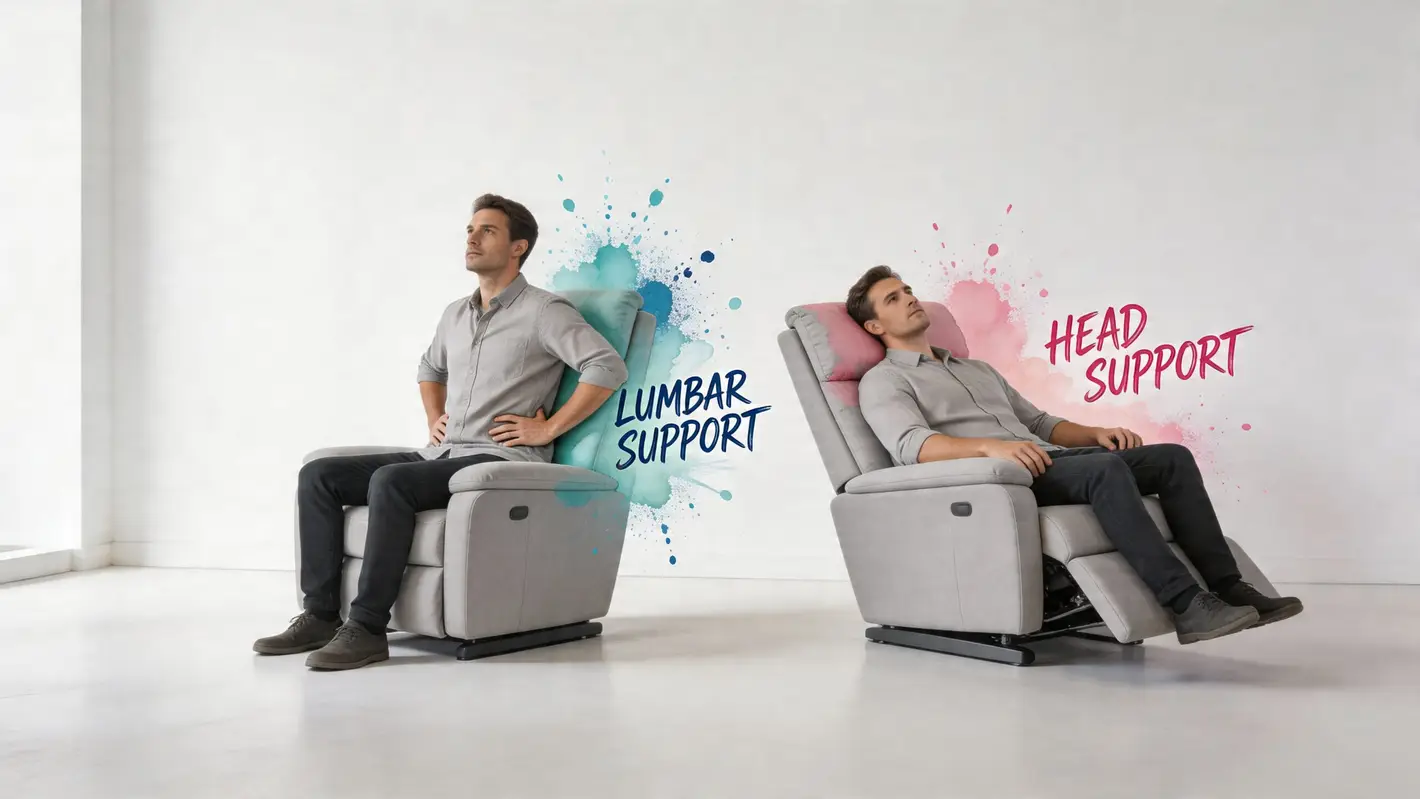
Start in the upright position, not fully reclined. That’s where fit becomes obvious.
- Check your feet first: They should rest comfortably, and your lower body should feel stable rather than perched or cramped.
- Sit all the way back: Your lower back should meet the support naturally. You shouldn’t have to scoot, slouch, or brace.
- Notice the headrest: Your neck should feel supported without your head being pushed awkwardly forward.
- Run the full mechanism: Test every position you’re likely to use, not just the deepest recline.
- Pay attention during exit: Standing up should feel controlled, not like a struggle.
Stay in the chair longer than feels polite
Shoppers don’t sit long enough in a showroom.
Give it real time. Let your body settle. Read something on your phone. Fold your hands the way you would at home. If a pressure point or posture problem is going to show up, it often appears after the novelty wears off.
A useful comparison is to test two recliners back to back and ask one very plain question: “Which chair lets me stop thinking about my body?” The better supportive recliner usually wins on that point.
What to ask a consultant
Good questions can save you from a poor match. Ask about the lumbar adjustment range, how the headrest changes position, whether the seat comes in different scales, and how the upholstery may change the feel of the chair.
If you want a broader framework before you visit, this ultimate recliner buying guide can help you organize what to compare.
The best showroom test is unhurried. Comfort tends to tell the truth when you give it time.
Your Invitation to Find Lasting Comfort in South San Francisco
The search for the best recliners for back support gets easier once you stop chasing buzzwords and start looking at biomechanics, fit, and long-term construction.
A supportive recliner should help your body hold better alignment. It should reduce pressure instead of shifting it around. It should match your size, your comfort needs, and the way you live at home. And if it’s made well, it should keep doing that for years.
That’s the difference between buying for the moment and buying with intention. In a home furnished with care, the recliner isn’t just another seat. It’s part of your daily routine, your recovery, your reading corner, your evening reset. The better it fits, the more value it gives back.
For Bay Area homeowners exploring Furniture South San Francisco, thoughtful comfort often starts with seeing and testing the options in person. In a large showroom, you can compare motion, support, scale, upholstery, and customization in a way that no product listing can replicate. That’s especially helpful if you’re also working through a broader Bay Area Interior Design project, furnishing a family room, planning around Premium Mattresses, or considering how several rooms in the home should work together.
Our family has been serving South San Francisco since 1933, and we still believe the best furniture decisions happen through conversation, careful testing, and no-pressure guidance. That’s why our consultants focus on fit, materials, and long-term value first. If financing helps you make the right investment now instead of settling for the wrong chair, financing options are available.
If you’re ready to feel the difference for yourself, visit the showroom, sit in a range of recliners, and take your time. Touch the leathers. Compare fabrics. Ask about custom orders. See how supportive seating fits into a home built for comfort and longevity.
Visit Giorgi Bros. Furniture in South San Francisco to explore supportive recliners, Custom Furniture, and personalized guidance from our non-commission consultants. If you’d like a more personalized starting point, book a Design Consultation and let our team help you find an investment piece that fits your body, your room, and the way you live.