
Individuals don’t typically begin by dreaming about flooring. They start with a problem.
The front hall is scuffed. The kitchen floor always looks tired. The dog’s nails click across the room. Chairs scrape back from the dining table night after night. Someone drops a grocery bag, and you wince before you even look down. In a busy Bay Area home, the floor takes the first hit and the last one.
After all these years in South San Francisco, I’ve learned that the best flooring for high traffic areas isn’t the one that looks good for a season. It’s the one that still looks respectable after years of life. Kids, pets, guests, muddy shoes, furniture moving, holiday dinners, and everyday living. That’s the true test.
Since 1933, our family has watched homeowners make the same mistake over and over. They buy for the showroom moment instead of the years that follow. Then they replace too soon, spend twice, and live with a floor that never quite felt right. A buy-it-for-life mindset saves money, creates less waste, and gives your home a steadier kind of beauty.
Your Home's First Impression Starts at the Floor
A Bay Area home often starts working hard before breakfast. Someone rushes out with a backpack. The dog races to the door. Wet shoes come in after a foggy morning. By evening, friends arrive for dinner, chairs move, and the same stretch of flooring takes another round of abuse.

That’s why I never treat flooring as background. It sets the tone of the house. It also decides how much maintenance you’ll be doing, how much noise you’ll hear, and how often you’ll think, “I wish we’d chosen differently.”
Floors carry the weight of daily life
Entryways, kitchens, dining rooms, hallways, and family rooms all do the heavy lifting. These aren’t rooms you visit once in a while. You live in them. If the floor can’t handle daily wear, the room starts looking worn before the furniture ever does.
A good floor does three jobs at once:
- Takes abuse without complaint
- Cleans up easily after real life
- Still looks settled and appropriate years later
That’s a better standard than chasing a trend.
Buy flooring the same way you buy lasting furniture. Look past the first impression and ask what it will look like after years of use.
The smart choice is usually the slower choice
Families often rush this decision because they want the remodel moving. I understand that. But flooring touches every room around it. It changes how rugs sit, how chairs slide, how footsteps sound, and how the whole home feels.
If you’ve already invested in quality dining furniture, custom upholstery, or handcrafted wood pieces, a weak floor works against all of it. It cheapens the experience. The room may photograph well, but it won’t wear well.
That’s also why I’m a believer in finishing hard surfaces properly with rugs where they help. If you’re protecting existing wood floors or planning how to soften a space, our guide to area rugs for hardwood floors is worth a look.
Comparing the Top Flooring Contenders for Busy Homes
Some floors are durable. Some are comfortable. Some are forgiving. Very few do everything well. The right answer depends on how the room is used and how long you want the solution to last.
This side-by-side view makes the tradeoffs plain.
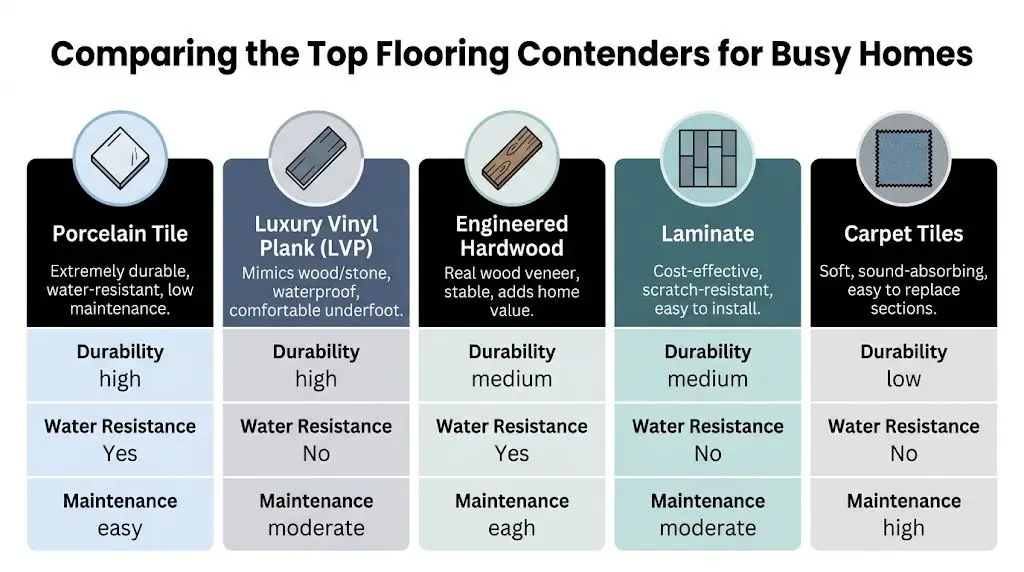
High-Traffic Flooring at a Glance
| Flooring Type | Durability Rating (1-5) | Maintenance Level | Typical Lifespan | Best For… |
|---|---|---|---|---|
| Porcelain Tile | 5 | Low | Long-term use | Entryways, kitchens, dining rooms, mud-prone areas |
| Luxury Vinyl Plank | 4 | Low | Long-term use | Family rooms, kitchens, homes with pets, everyday practicality |
| Engineered Hardwood | 4 | Moderate | Long-term use | Living and dining spaces where warmth and wood character matter |
| Laminate | 3 | Low to Moderate | Moderate | Budget-conscious updates in dry areas |
| Carpet Tiles | 3 | Moderate | Varies by use | Playrooms, offices, rooms where quiet matters |
| Broadloom Carpet | 2 | High | Varies by care | Bedrooms and low-impact comfort zones |
My plainspoken ranking
If you want the shortest version, here it is.
- Porcelain tile wins for hard-wearing performance.
- Luxury vinyl plank is the practical middle ground.
- Engineered hardwood gives you the richest look when you still want durability.
- Laminate can work, but it’s not my first recommendation for a forever floor.
- Carpet belongs in select rooms, not the busiest ones.
The best flooring for high traffic areas changes by room. A smart kitchen choice may be the wrong answer for a dining room or hallway.
Where each option earns its place
Porcelain tile is for homeowners who are done compromising. It stands up to spills, dragged chairs, pet traffic, and constant footfall. It’s a hard surface, so comfort and sound need planning, but as a wear surface it’s hard to argue against.
Luxury vinyl plank has become popular for good reason. It handles everyday life well, asks little from the homeowner, and gives you a broad design range. If you’re just beginning your research, this overview of luxury vinyl plank flooring helps sort the good products from the forgettable ones.
Engineered hardwood works when you want real wood presence without the fussiness of a more temperamental floor. It gives a room dignity. That matters in living rooms and dining rooms where you want warmth, not just toughness.
Laminate has one strong argument. It can be cost-conscious up front. But the floor I’d call a wise long-term purchase is the one you don’t feel the need to replace prematurely. Laminate often falls short there in busy households.
Carpet tiles are a sensible specialty choice when quiet and softer footing matter more than formal appearance. They’re especially useful in rooms where replacing a section is easier than replacing a whole floor.
Don’t ignore installation and prep
A strong material installed poorly won’t age well. Subfloor condition, transitions between rooms, moisture management, and edge details all matter. If you’re comparing local providers or trying to understand what full-service work usually includes, this guide to flooring sales and installation services gives a practical outside reference.
Here’s my standing rule after decades of watching floors succeed or fail:
- Match the floor to the room, not the trend
- Pay attention to sound and comfort, not just color
- Judge lifetime value, not only initial ticket price
- Choose a surface that fits your household’s habits
A hallway for two adults and a cat is one thing. A kitchen used by a large family, a dog, and frequent dinner guests is another story entirely.
A Deeper Look at Today's Most Durable Flooring
When asked about lasting durability, three flooring categories consistently stand out: Porcelain tile, luxury vinyl plank, and engineered hardwood. They are not equal. They are good for different reasons.
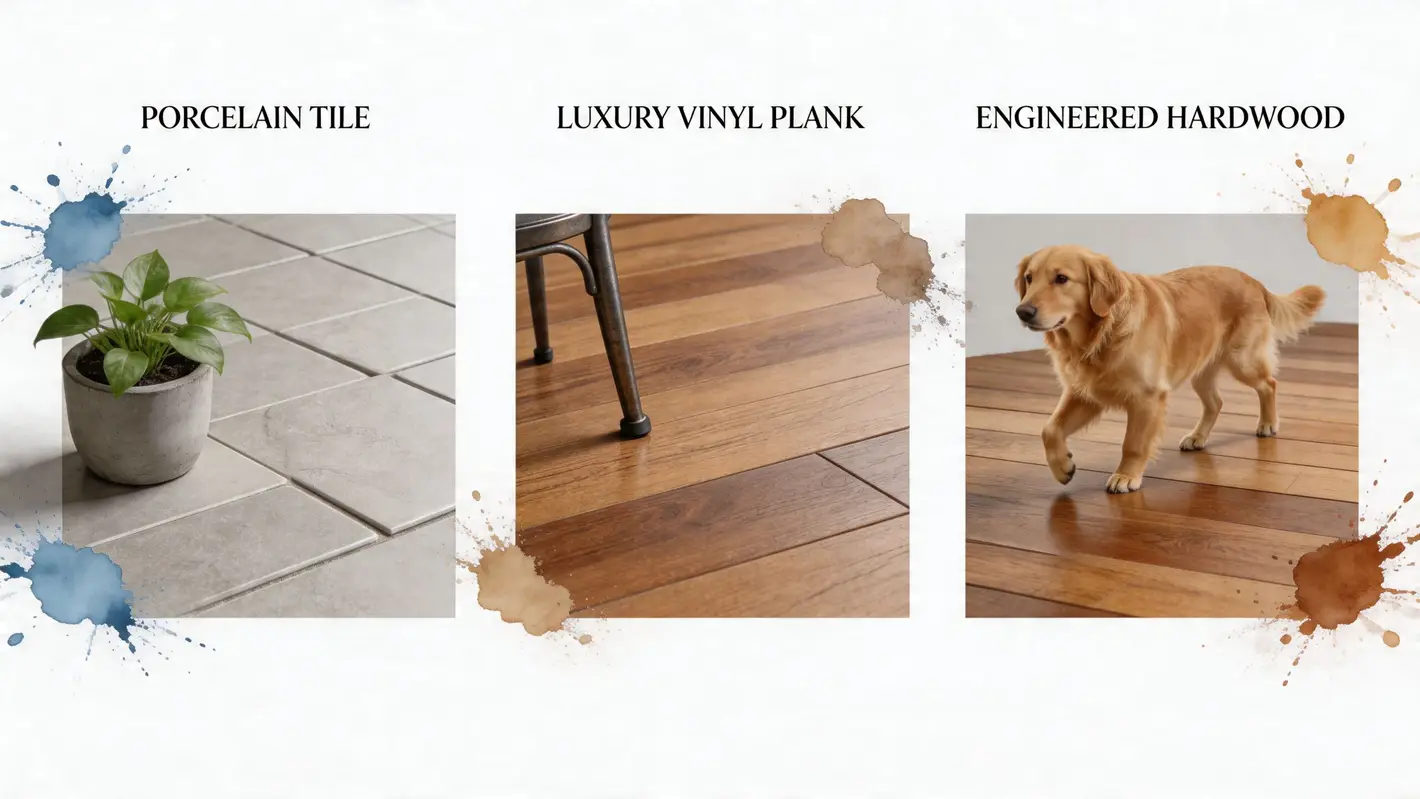
Porcelain tile for the homeowner who wants endurance
If your top priority is resistance to punishment, porcelain tile is my strongest recommendation. Consumer Reports’ flooring tests identified porcelain tile as a top performer for high-traffic areas, with superior resistance to scratches and dents. In those tests, porcelain showed minimal marring even after 100+ abrasion cycles, while laminate showed gouges after 50 cycles.
That lines up with what experienced homeowners already suspect. A well-chosen porcelain floor doesn’t get flustered by dropped groceries, busy entry traffic, or dining chairs moving every day.
What matters in real homes:
- It resists visible wear well
- It handles wet shoes and kitchen spills without drama
- It keeps its face for years if installed and grouted properly
The caution is simple. Tile is hard. That’s its strength and its weakness. If you stand for long stretches while cooking, or if the room opens into quieter living spaces, you need to think through rugs, underlayment, and furniture placement.
Luxury vinyl plank for daily practicality
A good LVP floor is a worker. It doesn’t ask for much praise, and it doesn’t demand much maintenance. That’s why so many homeowners choose it for active kitchens, family rooms, and homes with pets.
I like LVP when the buyer wants a balance of resilience, easier footing, and visual flexibility. It can mimic wood or stone convincingly enough for many homes, and it’s often kinder underfoot than tile.
Still, quality varies. The category is broad, and some products are far better than others. My advice is straightforward:
- Inspect the board, don’t shop by photo alone
- Look for a solid feel underfoot
- Pay attention to edge definition and surface texture
- Ask how it sounds when walked on, not just how it looks
Poor LVP can feel hollow and temporary. Better LVP feels settled. In a busy home, that difference shows up fast.
If you choose LVP, buy the product you won’t be apologizing for in three years.
Engineered hardwood for warmth that still works hard
Some rooms deserve wood. Not fake wood. Not an imitation trying too hard. Real wood presence. That’s where engineered hardwood earns its keep.
A strong engineered floor gives you a real wood veneer over a more stable core. For many Bay Area homeowners, that’s the better choice than solid hardwood in spaces where conditions change over the year. It also allows more flexibility when you want a floor that works with handcrafted dining tables, leather seating, custom finishes, and older homes that need a little grace rather than a stark hard surface.
The details here are often underestimated. Better boards tend to have a more convincing finish, a sturdier feel, and a look that improves the room instead of merely covering it.
If you’re comparing styles, plank widths, and wood looks, our guide on how to choose hardwood flooring is a useful starting point.
Good installation protects a good material
I’ve seen excellent flooring wasted by rushed installation. Expansion planning, surface prep, and transitions all affect longevity. If you want a practical outside reference on the process for wood surfaces, this article on how to install hardwood flooring gives a helpful overview.
Here’s how I’d choose among these three:
| If your priority is… | My recommendation |
|---|---|
| Maximum wear resistance | Porcelain tile |
| Low-fuss family practicality | Luxury vinyl plank |
| Lasting warmth and real wood character | Engineered hardwood |
My buy-it-for-life view
If you’re building a forever home mindset, I’d be blunt about it.
Choose porcelain tile for the hardest-working areas. Choose engineered hardwood where the room needs soul. Choose LVP where convenience matters and the product quality is high enough to avoid that disposable feel.
That’s not flashy advice. It’s the advice that holds up.
Considering Acoustics Comfort and Specialty Materials
Most flooring conversations are too shallow. They focus on color, pattern, and whether the floor can survive muddy shoes. That matters, of course. But people don’t just look at floors. They live on them, hear them, and feel them with every step.
A beautiful floor that makes a room loud, hard, and tiring is only half a success.

Hard floors can make a good room feel worse
The neglected issue is acoustic performance. According to Flooring America’s high-traffic flooring guide, rubber flooring can absorb 20-30dB of impact noise and provides 15-20% more cushioning than LVP or tile. The same source notes that some LVP products can create a hollow echo, amplifying sound by 10-15dB, and that this comes up in 30% of user reviews for certain products.
That’s not a small issue in open-plan homes. Dining chairs scrape. Footsteps carry. The room can sound busy even when it isn’t.
Comfort matters more than people admit
Homeowners often discover this too late. They pick the strongest hard surface they can find, then wonder why the kitchen feels harsh after a long evening of cooking or why the dining area sounds sharper than expected.
Three materials deserve more attention than they usually get:
- Rubber flooring works well in gyms, playrooms, craft rooms, and utility spaces where comfort and impact absorption matter most.
- Cork-backed or softer layered systems can make a hard-surface floor feel more forgiving without changing the overall look of the room.
- Terrazzo and epoxy systems have a place in select interiors where a clean modern finish is wanted, especially when sound treatment is considered from the start.
A floor should support the room’s mood. If the room is meant for gathering, resting, or long meals, noise control belongs in the decision.
How to soften a hard-working floor
You don’t always need to abandon porcelain or wood to fix comfort problems. You need to plan the full room.
A few smart moves make a major difference:
Use rugs where chairs move most often
Dining rooms, bedside zones, and seating groups benefit immediately.Choose underlayment with purpose
Don’t treat it as an afterthought. It affects sound, feel, and long-term performance.Think about furniture with the floor
Recliners, dining chairs, and heavier case pieces all interact with the surface in a different way.
This is one place where a flooring choice and the rest of the interior should never be separated. If you care about comfort in a reading corner, a dining space, or around premium mattresses and seating, the floor under those pieces changes the whole experience.
Choosing the Right Floor for the Bay Area Climate
Bay Area homes have their own rules. Fog, coastal moisture, warmer inland swings, and that constant indoor-outdoor lifestyle all put pressure on flooring choices. A material that behaves well in one region may be fussy here.
That’s why local judgment matters.
Start with location inside the Bay
Homes near the coast often deal with more moisture in the air. Older properties may also have ventilation quirks, uneven subfloors, or conditions that make natural materials less predictable. In those homes, I’m more inclined toward engineered hardwood, porcelain tile, or a well-made resilient floor than a more temperamental option.
If the house opens directly to patios, decks, or garden paths, the traffic pattern matters as much as the climate. Dirt, grit, and damp shoes come inside fast. Entryways and kitchens need a floor that doesn’t sulk about it.
Match the room to the Bay Area lifestyle
People in this region entertain casually. Doors stay open. Family spills from kitchen to dining room to living room. That means the best flooring for high traffic areas has to do more than survive. It has to make movement easy and cleanup simple.
Here’s the practical way I’d sort it:
Entryways and kitchens
Choose porcelain tile or a strong resilient surface. These areas take the mess first.Dining rooms and living spaces
Choose engineered hardwood when you want warmth and a more furnished feel.Multifunction family zones
LVP can make sense if you want easier upkeep and a surface that handles everyday life without much ceremony.
For homeowners comparing options room by room, our flooring and carpeting collection gives a useful look at the kinds of materials that fit different parts of the home.
Don’t forget movement and maintenance
Bay Area houses tend to shift, settle, and move subtly. This necessitates proper preparation and thoughtful transitions for floors. Even a beautiful material can disappoint if its installation disregards the underlying structural realities.
My local rule is simple. Favor stability in materials, honesty in maintenance, and surfaces that welcome real life. In this climate, that approach usually beats romance.
Finding Your Forever Floor at Giorgi Bros
By the time most homeowners reach a final flooring decision, they’re tired. They’ve looked at too many samples, heard too many opinions, and started second-guessing themselves. That’s normal. Flooring affects the whole home, and the wrong choice can nag at you every day.
The answer isn’t more pressure. It’s better judgment.
What lasts is usually not the trendiest option
The forever floor is rarely the one with the loudest marketing. It’s the one that fits the room, the climate, the household, and the way you live. It works with your furniture, your routines, and the amount of maintenance you’re willing to do year after year.
That’s the same principle we’ve believed in since 1933 in South San Francisco. Buy once with care. Choose craftsmanship. Think beyond the first season.
A buy-it-for-life mindset also happens to be the more responsible one. When a floor serves you for years instead of pushing you into an early replacement, you waste less, disrupt your home less, and spend more wisely over time.
Good guidance should feel calm
Many big retailers get it wrong in this area. They turn a thoughtful decision into a rushed transaction. That usually leads customers to compare only color and initial price, which are the two weakest ways to judge a floor.
I believe in a calmer approach:
Look at the room first
How much traffic does it take? What kind of mess comes through it? Does it need quiet, warmth, toughness, or all three?Handle real samples
Photos are a poor substitute for touch, edge detail, and finish quality.Think about the house as a whole
A kitchen floor doesn’t live alone. It connects visually and physically to nearby rooms and furnishings.Plan the full experience
That includes rugs, dining chair movement, comfort underfoot, and how the material will age.
The right floor should make your life easier, not simply give you another surface to maintain.
Custom choices matter more than people expect
One thing I’ve learned over the years is that homeowners often settle too early. They assume what’s on display is all they can get. That’s not how thoughtful home design works.
With custom order options, you can coordinate materials and finishes in a way that makes the entire home feel intentional. That matters when you’re pairing flooring with custom furniture, wood tones, leather seating, or dining pieces you expect to keep for decades.
This is especially important for the whole-home renovator. The floor may be broad and quiet, but it affects everything sitting on top of it. A room feels more resolved when the flooring and furnishings speak the same language.
What I’d recommend for most households
If you want my direct advice, here it is.
For the hardest-working areas, choose porcelain tile if you can live with a firmer surface and plan properly for comfort. For active family living with easier upkeep, choose high-quality LVP and be selective. For living and dining rooms where warmth matters, choose engineered hardwood that feels honest and substantial.
If sound is a concern, don’t wait until after installation to care about it. Address acoustics at the start. If comfort is important, say so early. If the floor must work with investment pieces, plan them together.
That’s also why some homeowners want to see flooring in the context of a full interior, not as an isolated sample rack. Giorgi Bros. Furniture in South San Francisco offers flooring and carpeting alongside furnishings, which helps when you’re trying to coordinate surfaces with the rest of the home rather than making decisions in pieces.
See it in person before you commit
A floor is not a paper decision. You need to see tone, texture, sheen, and scale in person. You need to compare a cooler finish against a warmer wood. You need to feel whether a surface seems substantial or flimsy.
That’s where a full showroom still matters. You can touch, feel, and test the quality instead of guessing from a screen. You can also talk through the decision with Non-Commission Sales Staff, which makes for a much saner experience than the usual retail push.
For many Bay Area homeowners, that no-pressure guidance is what finally clears the fog. Once the noise is gone, the right answer often becomes obvious.
And if the ideal floor is an investment piece for your home, that doesn’t mean you have to force the timing. Financing options are available, which can help you make the lasting choice instead of the rushed one.
If you’re ready to choose a floor that will still make sense years from now, visit Giorgi Bros. Furniture in South San Francisco or book a Design Consultation. Walk the showroom, handle real materials, and talk with consultants who aren’t working on commission. That’s the right way to find a floor, and a home, you’ll be happy to live with for a long time.