
A familiar scene plays out in many homes. The top shelves look lovely, with a few favorite books, a framed photo, and one decorative bowl that finally found the right spot. Then the lower half of the room tells a different story. Charger cords, folders, board games, spare candles, mail, and that small pile of things with no real home start gathering in plain sight.
That tension is exactly why bookshelves with doors and drawers continue to matter. They solve two problems at once. They give beautiful items a place to be seen, and they give daily clutter a place to disappear. For homeowners trying to create calm without stripping personality out of a room, that balance is hard to beat.
Well-made storage also fits a larger idea that deserves more attention. Furniture shouldn't always be treated as temporary. A thoughtfully chosen case piece can serve for decades, adapt to different rooms, and reduce the cycle of replacing short-lived furnishings. That buy-it-for-life approach saves money over time, supports sustainability, and makes everyday living easier.
Beyond Open Shelves An Introduction to Smart Storage
A family room often starts with good intentions. Open shelving goes up. A few art books sit neatly in stacks. A plant softens the corner. Then real life settles in. Remote work papers need a home. Devices need charging. Children need places for puzzles and sketchbooks. Guests still see everything.
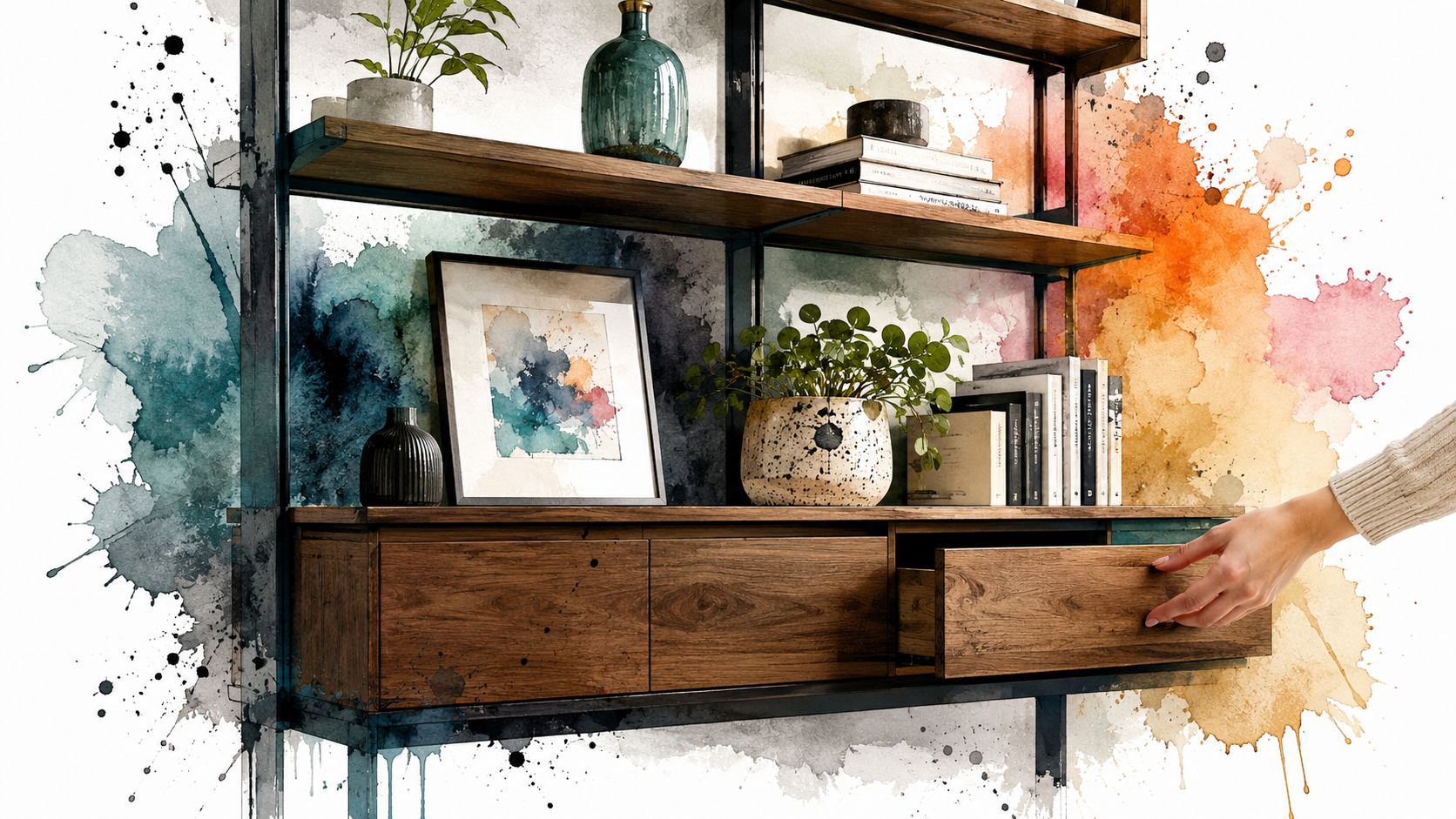
That's where bookshelves with doors and drawers earn their keep. They don't ask a room to be perfect all the time. They let a home look collected and lived-in, not exposed. The shelves can hold the items worth displaying, while the drawers and enclosed sections handle the objects that are useful but not especially beautiful.
Why this mix works so well
Open storage and closed storage do different jobs. When they're combined in one piece, the room becomes easier to manage.
- Upper shelves display personality through books, ceramics, framed art, and collected objects.
- Doors reduce visual noise by concealing office supplies, media accessories, or seasonal items.
- Drawers handle small essentials that would otherwise slide around in baskets or pile up on tables.
A useful companion resource on long-term organization is Colorado Art Services' 2026 guide, which looks at storage choices through the lens of preservation and practical longevity. That perspective pairs well with shelf styling ideas, especially for homeowners refining both function and appearance, such as these ways to decorate shelves in any room.
A good storage piece doesn't just hold more. It asks less of the household every day.
The strongest furniture choices often come from this kind of realism. A home needs beauty, but it also needs relief. Bookshelves with doors and drawers offer both.
The Enduring Appeal of Concealed Storage
Bookshelves with doors and drawers aren't a trend-driven invention. They belong to a long furniture tradition that values order, privacy, and protection. Their appeal lasts because the core need hasn't changed. Most households want some things visible and some things hidden.
What this piece actually does
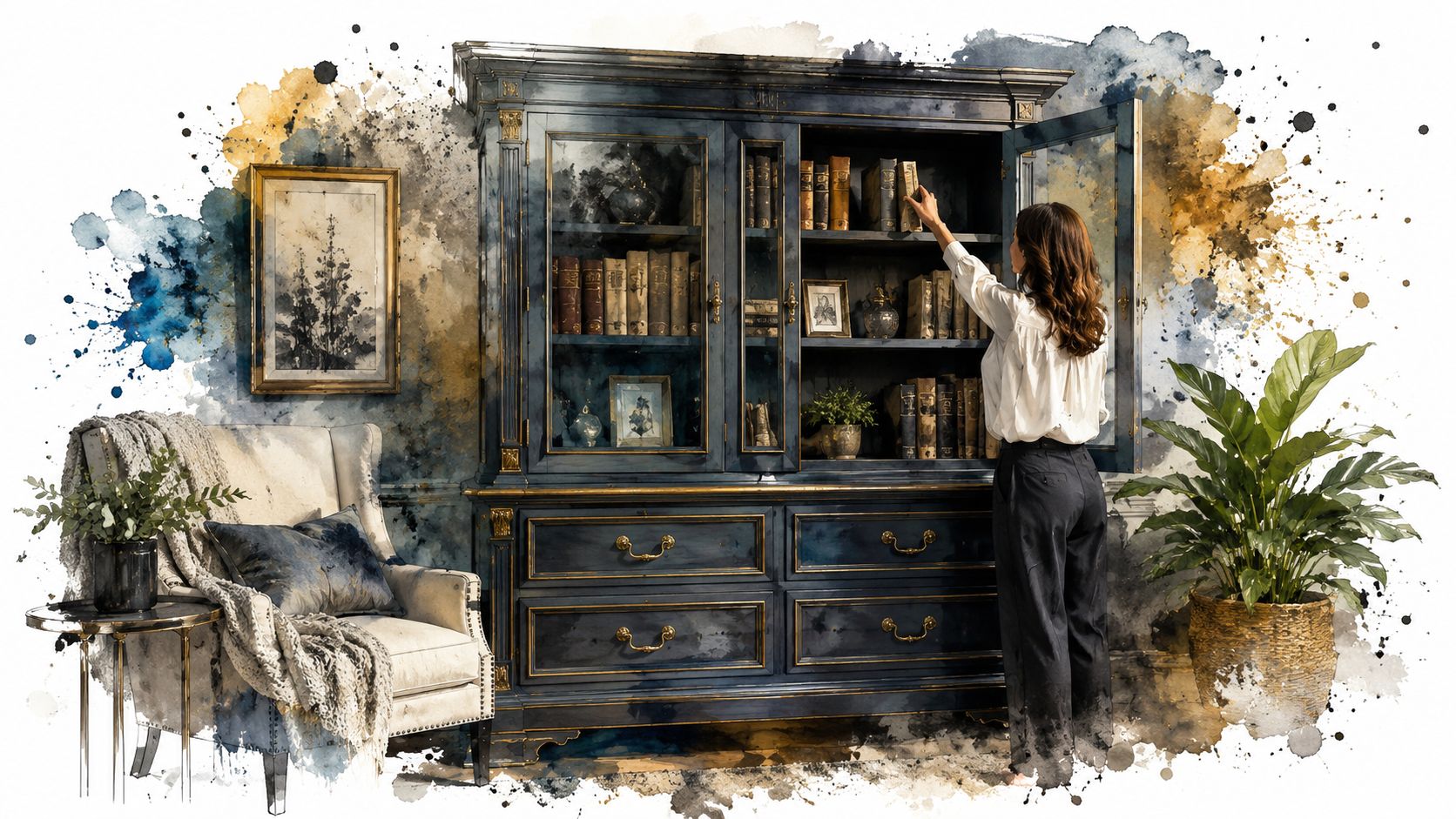
A bookshelf with open shelves alone is mostly a display tool. Add doors and drawers, and it becomes a working piece of furniture.
Three benefits stand out:
- It separates public and private storage. Favorite books and objects stay accessible. Paperwork, cables, and practical supplies stay tucked away.
- It softens visual clutter. A room feels calmer when not every necessary object sits out in the open.
- It adds a layer of protection. Existing guidance notes that glass doors help protect books from dust and moisture, though there isn't public data that quantifies the exact preservation advantage of solid-door units over open shelving in long-term use. That gap matters, especially for households storing valued collections in changing conditions, as noted in guidance on enclosed book storage from 1stDibs.
A design with deep roots
This furniture type also has a proper historical identity. The specific furniture category of bookshelves with doors and drawers is historically identified as a lawyer's bookcase, a design that emerged in the late 18th to early 19th century to serve the professional need for secure, concealed document storage alongside visible book access (historical reference).
That history explains a lot. This wasn't merely decorative furniture. It was purpose-built for people who needed books close at hand and important papers protected from casual view. The form followed function.
Practical rule: If a storage design has remained useful for generations, it usually answers a real household need better than a passing style does.
Why homeowners still choose it
The appeal is easy to understand in everyday rooms:
| Room | What stays visible | What stays concealed |
|---|---|---|
| Home office | Reference books, framed photos | Files, chargers, extra stationery |
| Living room | Art books, pottery, collected pieces | Remotes, games, manuals |
| Bedroom | A few keepsake items, reading stack | Personal items, cords, small linens |
Concealed storage isn't about hiding life. It's about editing what a room asks the eye to process. That's why this format still feels intelligent, settled, and timeless.
Finding Your Perfect Style and Material
A bookshelf with doors and drawers often becomes the piece that sets the tone for the whole room. One version serves well for a few years, then shows wear, loosens at the joints, and starts to feel dated. Another settles into the house as if it belongs there for decades. The difference usually starts with style, wood choice, and the quality of the build.
Style shapes the mood
Style is more than decoration. It affects how heavy a piece feels, how formal the room seems, and whether the bookshelf still looks right after the rest of the furnishings change.
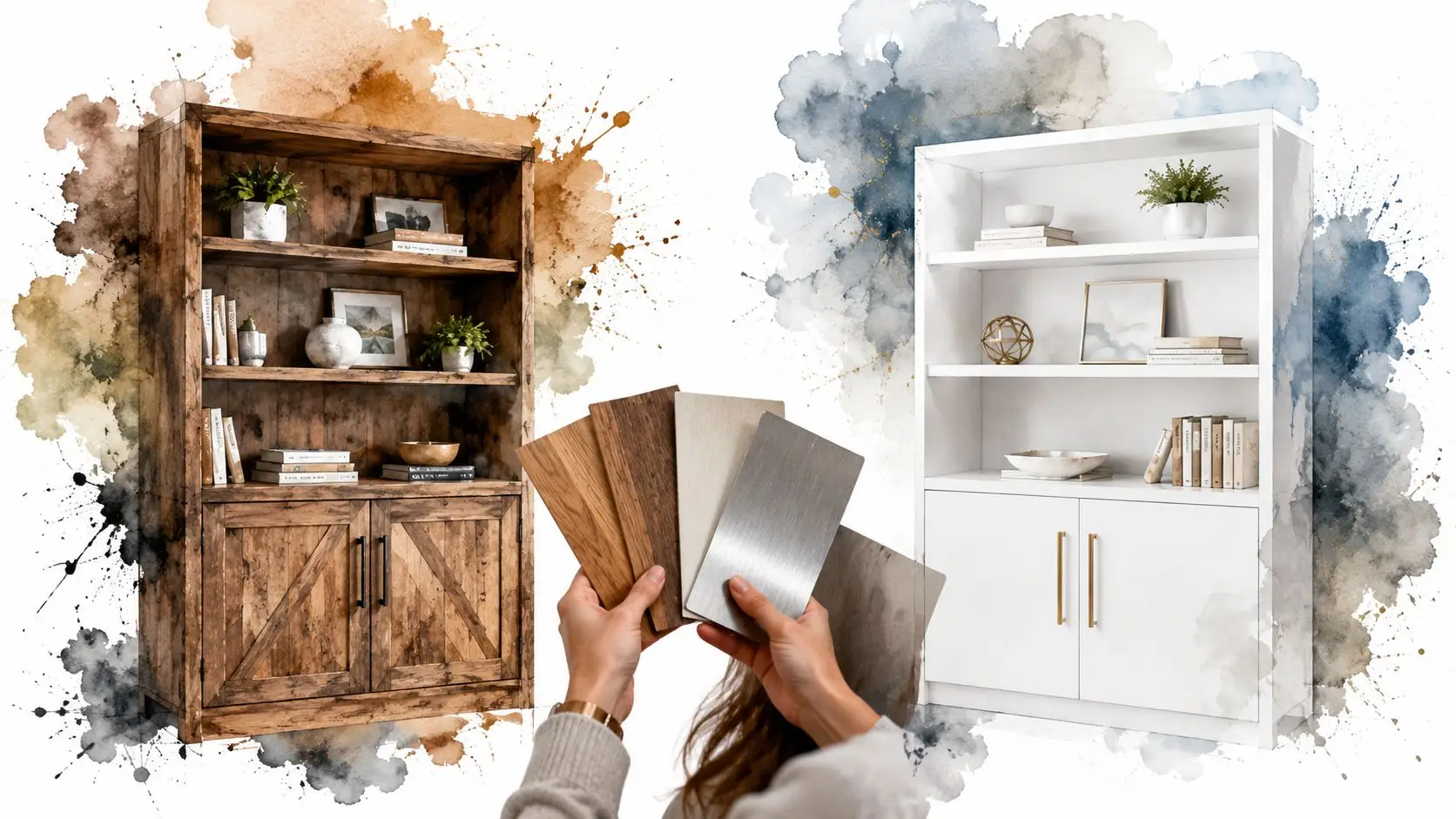
- Modern lines feel clean and architectural. Flat fronts, simple hardware, and quiet proportions suit rooms that depend on calm rather than ornament.
- Traditional forms offer more detail. Raised panels, divided glass doors, and richer finishes often belong comfortably in older homes or rooms with layered textiles and classic trim.
- Rustic and farmhouse looks put texture to work. Visible grain and thicker parts give the piece a settled, grounded presence.
- Mid-century inspired designs keep a clean profile but add warmth. Tapered legs and balanced proportions can make a substantial case feel lighter on the eye.
Finish matters just as much as form. Dark walnut can give a room gravity. Natural oak feels open and steady. Painted finishes can soften a large piece or help it blend with millwork. Homeowners sorting through these decisions often find colour psychology in interior design useful, especially when choosing between a calm neutral and a stronger statement color.
Material decides how the piece ages
Families often shop by appearance first. Experienced furniture makers know the longer story is written by the material.
Solid wood earns its reputation over time. It has depth, repairability, and a natural surface that can mature into patina instead of looking worn out. Veneer and manufactured panels have their place, but a buy-it-for-life piece usually benefits from wood that can be refinished, adjusted, and handed down.
Different species bring different strengths.
| Wood species | What homeowners often notice first | Long-term impression |
|---|---|---|
| Oak | Strong grain and visual texture | Feels sturdy and classic |
| Maple | Smoother, finer appearance | Reads cleaner and more refined |
| Cherry | Richening color over time | Develops a warmer, heirloom feel |
Oak is the reliable work boot. Maple is the crisp dress shoe. Cherry starts subtly, then grows richer with age. That is why material selection should match both the room and the life you expect from the piece, not only the first impression in a showroom. For a closer look at species, grain, and construction choices, this guide to custom shelving wood is a useful place to start.
Craftsmanship shows up in daily use
A bookshelf with doors and drawers asks more of its maker than an open case does. It has to store weight, keep its lines, and operate smoothly year after year.
That means the small construction choices matter. Doors should close squarely. Drawers should feel controlled, not loose or rough. Shelves should look calm under load, not strained. Joinery, hardware, and wood movement all play a part here, and they matter most after the piece has lived through seasons, house moves, and daily use.
This is the heart of the buy-it-for-life approach. You are not only choosing a style. You are choosing how the furniture will behave ten or twenty years from now.
A wiser way to judge value
Price matters, of course. Long-term value matters more.
The better question is whether the bookshelf can adapt as the household changes. Can it move from office to living room without looking out of place. Can it hold heavier books, hide modern clutter, and still feel relevant when paint colors and rugs change around it. Well-made wood furniture earns its keep by staying useful, repairable, and attractive long after cheaper pieces have been replaced.
That is why a fine bookshelf with doors and drawers should be judged like any lasting household investment. By service life, by honest construction, and by how well it grows old in your home.
A Practical Guide to Sizing and Placement
You find a bookshelf you love. The wood tone is right, the doors look handsome, the drawers promise order, and on the showroom floor it feels perfect. Then it comes home and a different set of questions shows up. Will the doors clear the walkway. Will the drawers open without hitting a chair. Will the piece feel settled in the room, or too tall, too deep, or too heavy for the space.
That is why sizing should begin with the room's daily rhythm, not with a product tag. A well-chosen bookshelf does more than fit a wall. It needs to live comfortably with people, light, traffic flow, and the habits of the household.
Start with the room, not the product
A practical measuring process usually works best in this order:
Measure the wall width
Note the full span, then subtract space needed for trim, vents, switches, and neighboring furniture.Check the ceiling height
Tall storage can look elegant, but it also needs visual breathing room. In many homes, a little space above the case keeps the piece from feeling pressed into place.Map the traffic path
Doors and drawers need room to open fully and comfortably. A passage that looks generous on paper can feel tight once handles, door panels, and moving bodies are part of the equation.Think about reach
Upper shelves often become awkward catchalls if they are too high for everyday use. Reserve those areas for seasonal items, keepsakes, or books you do not need every week.
A good furniture plan works like a well-laid kitchen. The measurements matter, but the ultimate test is whether the space feels easy to use every day.
Visual weight matters as much as inches
Two bookshelves can share nearly identical dimensions and still affect a room in very different ways. A dark cabinet with solid wood doors has more visual presence than a lighter finish with glass fronts. A piece raised on legs often feels less imposing than one that runs solidly to the floor. Even the drawer bank changes the impression. Several wide drawers near the base can make a case look grounded and substantial, while smaller drawers read lighter and more refined.
This is often the part buyers miss.
They focus on width and height, then overlook depth and mass. Yet depth changes how close the piece sits to the room's center of activity, and visual mass changes whether the room feels calm or crowded.
A quick room check helps:
- In compact rooms, lighter finishes and some visual openness usually keep the wall from feeling crowded.
- In larger rooms, a more substantial case can help the wall feel furnished with purpose.
- Near windows, placement should respect both natural light and the swing of nearby doors, shutters, or drapery.
For homeowners who want a reliable checklist before ordering, this furniture measuring guide on how to measure furniture can help avoid common fit problems.
Plan for use ten years from now, not just delivery day
Long-term value often comes down to proportions. A bookshelf with doors and drawers should match what it will store, not the open patch of wall available today.
For example, a family room case meant for board games, albums, and chargers usually benefits from different depths than a study case built for hardcovers and reference books. Deep lower drawers are helpful, but only when they match the items inside. Too deep, and things disappear into the back and stop being used. Too shallow, and the drawers become decorative rather than useful. The same logic applies to shelf spacing. If every shelf is fixed for paperbacks, taller art books and binders end up stacked elsewhere, and the piece stops serving the household well.
This is the buy-it-for-life mindset in practice. Good sizing leaves room for a home to change. A case may begin in an office, move to a dining room, and later serve a guest room or living area. Proportions that are balanced, reachable, and useful tend to age better than pieces sized for a single moment or a single trend.
Placement matters after purchase too. Large furniture often needs careful handling through stairwells, entry doors, and tight corners before it ever reaches its final wall. Even homeowners who are not planning full installation can learn from what professionals consider during transport and setup, as shown in this overview of professional delivery service.
The Power of Custom Furniture for Bay Area Homes
Standard sizes work well until they don't. A wall niche is slightly shallow. The trim color sits somewhere between two common finishes. The room needs drawers at the bottom, but not too many, because the piece still needs breathing space. That's where custom furniture stops feeling indulgent and starts feeling practical.
Why custom solves real problems
Bay Area homes ask a lot from furniture. Architectural styles vary widely. One household may need a bookshelf that softens a clean-lined interior. Another may need a more traditional form that belongs with older millwork and established pieces. A standard case can come close, but “close” often remains visible.
Custom choices let the homeowner control the details that shape long-term satisfaction:
- Wood species influences grain, tone, and visual weight.
- Finish selection helps a new piece sit comfortably with flooring, trim, and nearby furniture.
- Hardware choice changes the personality of the whole case.
- Interior configuration determines whether the piece works for books, media, office storage, or mixed use.
A long-term piece should reflect the home
A bookshelf with doors and drawers often occupies a large visual footprint. That means mismatches become obvious. The wrong stain can look disconnected. Oversized hardware can throw off the period of the room. Drawer placement can make a piece feel bottom-heavy.
Custom work improves those details before the furniture ever arrives. It also tends to support the buy-it-for-life mindset better because the homeowner isn't settling for a temporary compromise. The piece is built to belong.
One important point often gets overlooked in broad furniture advice. Some showrooms don't just sell what's on the floor. Custom order services can include extensive options for wood species, finishes, high-grade leathers, and designer fabrics, allowing pieces to be designed for a specific vision. While bookshelves focus on wood, finish, and hardware, that broader custom capability speaks to a design process built around fit rather than approximation. Homeowners curious about how that process usually unfolds can learn more through this overview on getting started with custom order.
Custom furniture earns its value when it removes the small disappointments that people otherwise live with for years.
Custom also supports sustainability
Furniture that fits properly, functions properly, and feels right in the room is more likely to stay. That matters. A lasting piece reduces replacement cycles, waste, and the frustration of buying twice. In that sense, Custom Furniture isn't only about appearance. It's about commitment to a better result from the start.
For homeowners serious about Bay Area Interior Design, that usually leads to smarter decisions. Fewer impulse pieces. More durable choices. Better rooms over time.
Caring for Your Lifetime Furniture Investment
Good furniture rewards steady care, not fussy care. Most bookshelves with doors and drawers don't need complicated maintenance. They need consistency. Dust removed before buildup. Hinges checked before strain develops. Interior conditions kept reasonably stable.
Daily care that protects the finish
A few habits make a real difference:
- Use a soft, dry cloth for routine dusting. Heavy buildup can scratch if it's rubbed aggressively.
- Clean spills promptly so moisture doesn't sit on wood or along joinery lines.
- Avoid harsh cleaners unless the finish specifically calls for them.
For homeowners choosing solid wood, understanding the material helps with maintenance decisions over time. This resource on the solid wood bookshelf offers a useful background on why wood quality affects longevity.
Pay attention to environment and movement
Wood responds to the room around it. In some Bay Area microclimates, seasonal moisture changes can affect fit and movement. Existing guidance confirms that doors can help protect books from dust and moisture, but it also notes a gap in public information about the exact preservation effects of enclosed units and the potential risk of trapped moisture in tightly sealed cases. In practical terms, that means balance matters.
A few sensible habits help:
- Leave some airflow around the piece, especially against exterior walls.
- Don't overpack enclosed compartments if books or paper goods need to breathe.
- Check drawer glides and hinges periodically so minor alignment issues don't become bigger repairs.
Wood furniture lasts longest when the household notices small changes early and responds with small corrections.
That's one of the pleasures of investment pieces. They aren't disposable. They're worth maintaining, and they're built to justify that effort.
Experience True Quality at Giorgi Bros
Furniture shopping feels different when the conversation starts with listening. That's one reason heritage still matters in Furniture South San Francisco. A family-owned business that has served generations tends to understand that a bookshelf isn't just a transaction. It's part of how a home functions every day.
Giorgi Bros. Furniture was founded in 1933, operates a 50,000-square-foot showroom in South San Francisco, and employs a non-commission design team that delivers “no-pressure guidance” (company information). That combination matters for anyone trying to make a careful, long-term choice. The history builds trust. The showroom gives people room to compare construction, finish, and scale in person. The Non-Commission Sales Staff model supports a calmer decision process.
Why the showroom experience still matters
A bookshelf with doors and drawers is tactile furniture. Photos can suggest style, but they can't fully show door weight, drawer action, wood depth, or finish character. A showroom visit lets shoppers do what online browsing can't:
Open the doors and drawers
Movement tells a great deal about build quality.Compare wood species and finishes
Material differences become clearer in person than on a screen.Check scale carefully
A piece that looked compact online may read very differently at full size.Talk through custom options with Design Experts
That's often the best path when a room needs a more exact solution.
A better kind of furniture decision
The best long-term furniture choices rarely come from pressure. They come from good information, enough time, and a setting where questions are welcome. That matters for homeowners buying heirloom-minded storage, for families planning larger room updates, and for shoppers also exploring Premium Mattresses or other whole-home pieces under one roof.
Flexible support also helps. Financing options are available, which can make it easier to choose better construction now instead of settling for a short-term substitute that will need replacing later. For sustainable living and long-term value, that's often the smarter route.
For homeowners ready to invest in lasting quality, Giorgi Bros. Furniture offers a chance to see the difference in person. Visit the South San Francisco showroom to explore 50,000 square feet of inspiration, compare Custom Furniture options, and work with Design Experts in a family-owned, no-pressure environment. A Design Consultation is also available for those who want help selecting bookshelves with doors and drawers that fit the home beautifully and serve for years to come.