A lot of parents start in the same place. They have a due date on the calendar, a room that still looks like a guest room or office, and a long list of nursery decisions that all seem urgent at once. A crib looks simple enough online, then questions pile up. Is a full set smarter than buying a few pieces? Will it still work in two years? Is it safe, or just attractive in the photos?
That's where a calmer approach helps. Bedroom furniture sets for baby should do more than match. They should support safe sleep, fit the room well, handle everyday use, and still make sense when the newborn stage passes. For families who care about long-term value, the right set isn't just nursery furniture. It's the start of a child's bedroom story.
In South San Francisco, families have been making those choices with local furniture guidance since 1933. That long view matters because nursery shopping often goes better when there's no pressure to buy the biggest set on the floor. A thoughtful plan usually leads to fewer regrets, better use of space, and furniture that lasts far longer than the baby stage.
Table of Contents
- Safety First The Non-Negotiable Nursery Furniture Standards
- Building Your Perfect Nursery What to Include in a Set
- Investing in Longevity Furniture That Grows With Your Child
- The Giorgi Bros Difference Custom and Amish Furniture Options
- Planning Your Bay Area Nursery Layout Budgeting and Delivery
- Begin Your Family's Story with Furniture That Lasts a Lifetime
Safety First The Non-Negotiable Nursery Furniture Standards
Safety sits under every good nursery decision. Style, storage, and finish color all matter, but none of them come first. If a piece won't support safe daily use, it doesn't belong in a baby's room.

Start with the crib itself
The clearest place to begin is the crib. According to the CPSC crib safety tips, crib slats must be spaced no more than 2.375 inches (6.03 cm) apart, and the mattress-to-crib-frame gap must be less than 0.5 inches (1.27 cm). That snug fit matters because larger gaps create crush hazards, and the verified guidance notes that gaps beyond that point result in a 35% higher probability of infant suffocation.
Confusion often starts for parents shopping bedroom furniture sets baby retailers promote. A matching collection can look complete, yet the most important question is still very basic. Does the crib meet the standard, and does the mattress fit tightly inside it without visible open space around the edges?
Practical rule: If a crib and mattress don't fit together snugly, the nursery isn't ready, no matter how polished the room looks.
A second layer of safety involves the sleep environment around the crib. The same CPSC guidance recommends avoiding soft bedding and loose items in the sleep space. That means a nursery should be arranged so the crib can stay simple, clear, and easy to monitor.
Families who want a broader room-by-room checklist often appreciate these tips for a safe child's home, especially once the nursery starts turning into a toddler's everyday play space.
Look beyond the crib
The dresser matters almost as much as the crib because it gets used constantly. Drawers open and close all day. A changing topper may be installed and later removed. As the child grows, climbing becomes part of life. That's why tall storage pieces need secure hardware, including anti-tip protection.
A simple shopping checklist helps:
- Check the crib opening: Measure the mattress fit and confirm there's no meaningful gap.
- Inspect the rails: Spacing should follow the crib standard exactly, not approximately.
- Stabilize tall furniture: Dressers and storage units should be secured to the wall.
- Choose healthier finishes: Parents concerned about air quality often look into low-VOC furniture options for the nursery.
A safe nursery usually looks less crowded than a styled showroom display. That's a good sign, not a missing piece.
Many parents expect nursery safety to be complicated. In practice, it comes down to a handful of firm rules followed carefully. Safe sleep, snug fit, stable storage, and uncluttered use beat decorative extras every time.
Building Your Perfect Nursery What to Include in a Set
The phrase bedroom furniture sets baby can sound bigger than it really is. In most stores, it means a coordinated group of nursery pieces sold together. The challenge is deciding whether that bundle fits the room and the family's routine, or whether it adds furniture that won't earn its keep.
What a set usually includes
The nursery furniture market commonly sells bundled collections in 2-piece to 5-piece assortments, and these sets are often positioned for longer use across the 0–14 age range, as described in this nursery furniture sets overview. In plain terms, that usually means a crib or cot paired with a dresser, then expanded with pieces such as a changing unit or added storage.
A useful way to think about common set sizes is this:
| Set size | What it often includes | Who it suits |
|---|---|---|
| 2-piece | Crib and dresser | Families starting simple |
| 3-piece | Crib, dresser, changing piece or storage item | Parents who want a fuller nursery without crowding it |
| 4-piece to 5-piece | Core sleep and storage pieces plus extra case goods | Larger rooms or buyers planning a coordinated look |
That range matters because not every nursery needs a full collection on day one. Some families only need the sleeping piece and one strong storage anchor. Others want a more complete setup because they have the space and plan to keep the pieces in use for years.
How to decide what belongs in the room
The crib is the centerpiece, but the dresser often becomes the workhorse. It stores clothing, blankets, and the items parents reach for half asleep. If a changing surface sits on top, the dresser can handle two jobs without adding another stand-alone piece.
A few pieces are often optional rather than essential:
- A glider or rocker: Helpful for feeding and settling, but only if there's enough clear floor space around it.
- A bookshelf: Better for some rooms than others. It becomes more useful as the child grows.
- A nightstand or accent table: Nice to have, but usually not a priority in a first nursery.
Parents who like organizing before they shop often find a broader complete baby nursery guide helpful because it separates everyday needs from decorative extras.
The most functional nursery usually starts with fewer pieces than expected. Matching furniture is nice. Comfortable movement through the room is better.
For shoppers who want a coordinated look without giving up flexibility, custom bedroom set options can make more sense than buying a fixed package. That approach lets a family build around the pieces they'll use most, instead of forcing the room to accommodate everything in a preset bundle.
Investing in Longevity Furniture That Grows With Your Child
A nursery becomes outdated quickly when every piece is chosen only for the newborn months. That's the trap many families are trying to avoid. The better approach is to buy furniture that can change roles as the child changes routines.
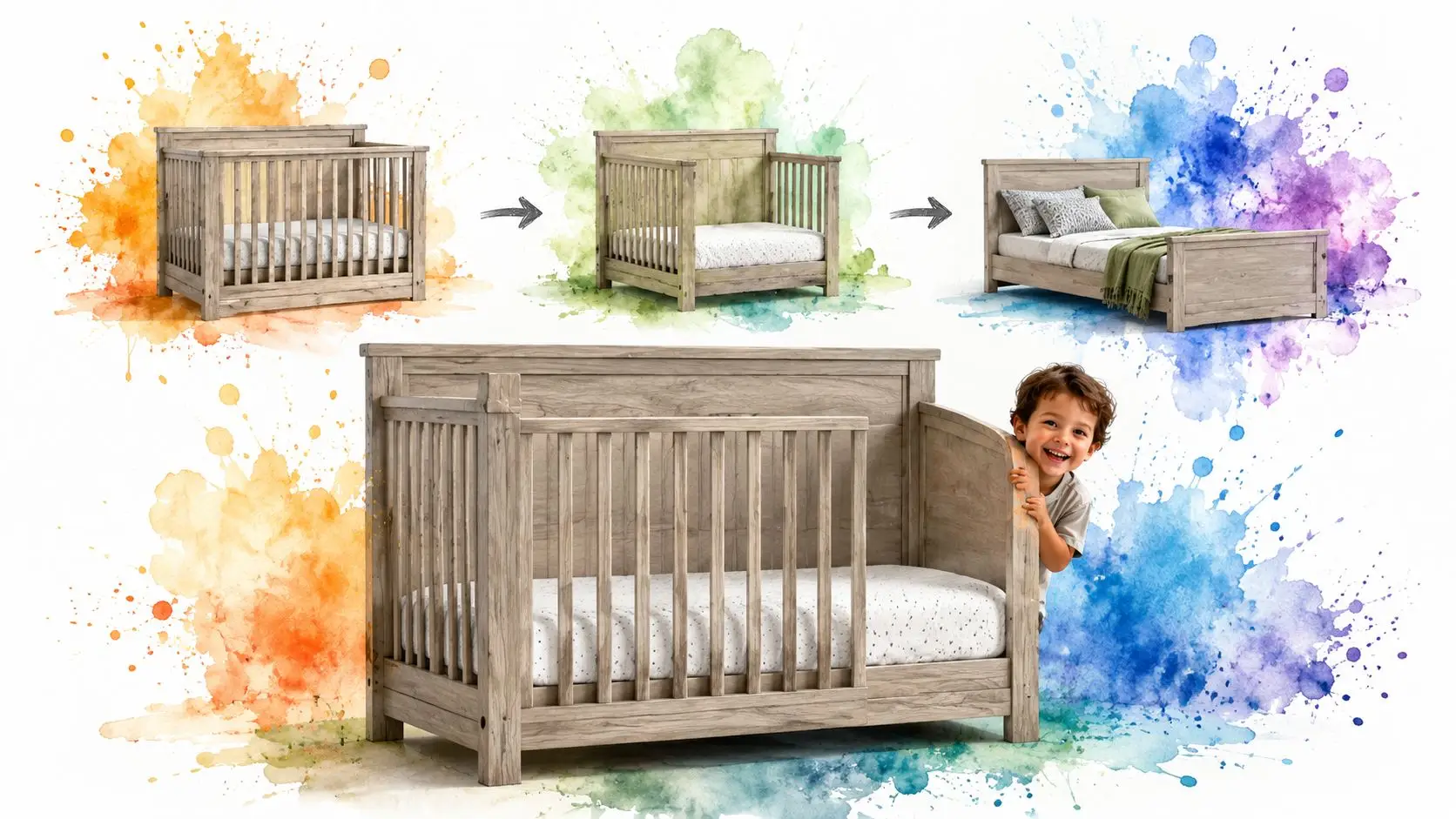
A frequently overlooked part of nursery shopping is what happens after the newborn stage. This guidance on practical baby bedroom pieces points to a real content gap around longevity, conversion hardware, and replacement costs. That's exactly where long-term value shows up.
The case for fewer better pieces
A convertible crib is the most familiar example. In a strong design, it begins as a crib, then moves into the toddler stage with the right hardware, and later fits more naturally into a child's room. The same thinking applies to a dresser. A well-built dresser with a removable changing topper can stay useful long after diapers are gone.
That's why “buy it for life” doesn't have to mean buying a huge set. Often it means buying fewer pieces with better bones.
Consider how this plays out in everyday life:
- A crib with a future role: Better if the family can still use it once the nursery phase ends.
- A dresser with clean lines: Better if it won't look babyish in a child's bedroom later.
- A finish that ages well: Better if it can move with changing paint colors, bedding, and room themes.
A nursery purchase is easier to justify when the piece still makes sense years later in a different room or a different stage of childhood.
What to ask before buying
Parents often focus on color first, then dimensions. Longevity shopping flips that order. It starts with construction, parts, and flexibility.
A short decision list helps keep things grounded:
- Ask about conversion parts. If a crib is meant to evolve, the needed hardware should be clear and available.
- Check the shape, not just the label. A dresser that's called nursery furniture may still be a strong long-term bedroom piece if the design is simple.
- Look hard at materials. Buyers weighing solid wood versus veneer furniture are usually asking the right question. The answer affects repairability, longevity, and how the piece handles years of use.
- Think about replacement cost early. A lower upfront price can lose its appeal fast if the piece needs replacing once the room changes.
Experienced furniture guidance makes a difference. A parent shopping only for a newborn may buy for months. A parent shopping for the next decade buys differently. That second mindset usually leads to fewer throwaway decisions, less waste, and a room that evolves instead of getting redone from scratch.
The Giorgi Bros Difference Custom and Amish Furniture Options
Some nurseries are built from a packaged set. Others come together piece by piece, with more personality and better long-term fit. That second path often appeals to families who want the room to feel connected to the rest of the home rather than styled as a temporary theme.
For Bay Area households, custom furniture can make that possible without turning the process into a design project that feels overwhelming. A family might start with a crib silhouette they like, then look at wood tone, finish, and companion storage that can still work when the child is older.
How customization changes the nursery
Customization sounds complicated until it's broken into simple choices. Most families aren't trying to invent a new furniture style. They're trying to avoid settling for the wrong stain, the wrong scale, or a finish that clashes with the rest of the house.
The choices usually come down to a few practical points:
- Wood species: Some families prefer a cleaner, lighter look. Others want richer grain and more visual warmth.
- Finish: A nursery often feels calmer when the finish matches nearby rooms instead of fighting them.
- Hardware and detailing: Small choices affect whether a piece feels youthful, classic, or versatile enough for later use.
That's where Custom Furniture earns its place. The room can feel personal without becoming overly themed, and the furniture has a better chance of staying relevant as the child grows.
Why Amish Furniture appeals to long-term buyers
Amish Furniture draws interest from buyers who care about craftsmanship, simpler materials, and furniture with a longer life ahead of it. The appeal isn't trend-driven. It's practical. Families looking for investment pieces often want furniture that feels substantial, repairable, and less disposable.
One example available locally is Simply Amish furniture, which fits naturally into conversations about nursery pieces that can later move into a child's room or another bedroom in the home. In that setting, customization helps a family choose a look that feels at home from the start instead of like a short-term nursery-only purchase.
Good nursery furniture doesn't need to announce itself as nursery furniture. The most successful pieces often look like they belong in the home for years.
This is also where a family-owned showroom approach matters. A non-commission conversation tends to produce better nursery decisions because parents can compare wood, finish, scale, and long-term function without feeling pushed toward the largest package. For shoppers interested in Bay Area Interior Design, that slower process often leads to rooms that feel more settled, more useful, and less likely to be replaced.
Planning Your Bay Area Nursery Layout Budgeting and Delivery
A beautiful nursery still has to work on a tired Tuesday night. In many Bay Area homes, that means making smart use of a smaller room, a shared wall, or a layout that doesn't leave much open floor area. The best plan is usually the one that makes movement easy and keeps the room useful long after the first setup.
A practical layout for smaller rooms
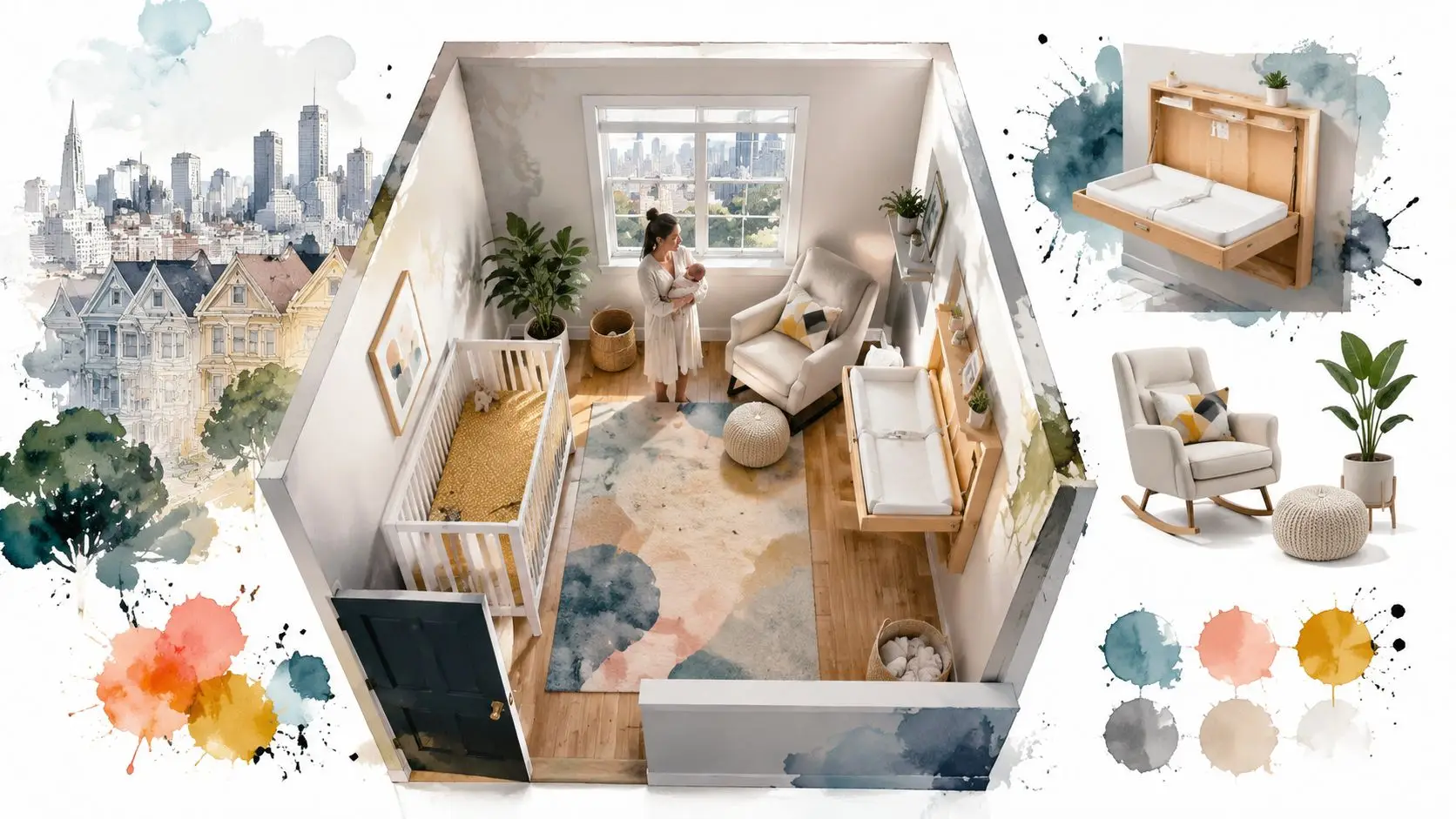
In tighter spaces, placement matters more than quantity. A crib usually works best where there's clear access from at least one side and where drawers or doors from other pieces won't crowd it. A dresser can often do double duty as storage and changing space, which reduces the need for another bulky item.
A simple room plan often works better than a fully packed one:
| Area of room | Best use | Common mistake |
|---|---|---|
| Longest wall | Dresser or main storage | Splitting storage across too many small pieces |
| Quiet corner | Chair or glider | Forcing in oversized seating |
| Open zone | Clear walking path | Filling every gap with décor or bins |
Families organizing for compact living often benefit from ideas that extend beyond furniture. These small space toy storage ideas can help once the nursery starts handling books, toys, and everyday child clutter.
Budget by ownership not just sticker price
Price tags don't tell the whole story. A useful nursery budget looks at how long the furniture will stay useful, whether it can be repurposed, and how likely it is to need replacement when the room changes.
That's why the question isn't just “Is the set discounted?” A more helpful question is whether the complete package is the economical choice. This baby furniture category guidance raises an important point: for many households, a smaller number of higher-quality pieces may outperform a discounted full nursery set when the goal is long-term value, fewer replacements, and less waste.
One practical way to compare options is to look at retail examples. Verified market pricing shows a 3-piece set at £569.99 and another set at £799.99 in UK retail, illustrating that bundled nursery furniture spans mid-range and premium pricing rather than sitting in one simple budget category.
The cheaper room on move-in day isn't always the cheaper room over time.
That's also where financing can help thoughtful buyers make better choices. Financing options are available, and some families use that flexibility to choose stronger investment pieces now rather than replacing lower-grade furniture later.
Delivery and setup matter more than people expect
Nursery furniture doesn't end at checkout. Delivery, placement, and proper assembly all affect safety and day-to-day use. A crib assembled incorrectly or a dresser set in the wrong spot can undo good buying decisions fast.
For that reason, many parents prefer stores that offer white glove furniture delivery. Professional setup can reduce stress, protect the furniture during installation, and help the room start out correctly arranged. In a busy household, that convenience isn't a luxury. It's part of getting the nursery ready with fewer loose ends.
For anyone shopping Furniture South San Francisco, this practical side of the process matters just as much as style. A well-planned nursery should fit the room, support the routine, and arrive in a way that makes the final step feel easier, not more chaotic.
Begin Your Family's Story with Furniture That Lasts a Lifetime
The nursery is one of the few rooms in a home that asks for both tenderness and discipline. It should feel warm, but it also needs rules. Safety comes first. After that, the best choices usually come from thinking farther ahead than the newborn months.
That's why bedroom furniture sets for baby deserve more than a quick style decision. A crib, dresser, or storage piece can either become part of family life for years or become one more short-term purchase that has to be replaced. The difference often comes down to construction, flexibility, and whether the furniture was chosen with future use in mind.
In South San Francisco, families have been turning to a local, family-owned showroom since 1933 for that kind of long view. The value isn't just in selection. It's in having Non-Commission Sales Staff, design consultants, and Design Experts who can help sort through what belongs in the room and what doesn't. That kind of no-pressure guidance is especially helpful during a season when every purchase can feel emotionally loaded.
A well-made nursery doesn't have to be oversized, overdecorated, or rushed. It just has to be safe, functional, and built around pieces worth keeping.
Families ready to see materials in person can visit Giorgi Bros. Furniture in South San Francisco to explore custom options, American-made and Amish Furniture selections, and practical nursery-friendly bedroom pieces with no-pressure guidance. The showroom offers space to touch, feel, and compare quality firsthand, and families who want more personalized help can also book a Design Consultation.