
A lot of people start with color, comfort, and size. Then the questions get more personal. Will this sofa smell when it arrives? What's in the finish? Is a “green” label enough, or is that just packaging language?
Those are sensible questions. Furniture sits inches from where a family reads, sleeps, naps, and gathers. It becomes part of daily life for years, sometimes decades. When a home is meant to feel calm and restorative, indoor air quality belongs in the conversation right alongside style and craftsmanship.
For Bay Area homeowners, that's especially important during remodels, moves, and room updates when several new pieces may arrive at once. The good news is that low VOC furniture doesn't have to feel mysterious. With clear materials information, the right questions, and patient guidance, it becomes much easier to choose investment pieces that support both a home's look and its long-term health.
Table of Contents
- Creating a Healthy Home You Can Cherish for a Lifetime
- What Are VOCs and Why Do They Matter in Furniture
- Common VOC Hotspots in Furniture Manufacturing
- How to Shop Smart for Low VOC Furniture
- The Giorgi Bros Advantage for Custom Low VOC Furniture
- Maintaining a Healthy Space After Your Furniture Arrives
Creating a Healthy Home You Can Cherish for a Lifetime
A healthy home usually doesn't happen by accident. It comes from a series of thoughtful choices about what enters the space, how long it will last, and whether it supports everyday comfort instead of complicating it.
That mindset has become much more common. The global eco-friendly furniture market was valued at USD 53.77 billion in 2025 and is projected to reach USD 113.94 billion by 2033, with a 10.0% CAGR, according to Grand View Research's eco-friendly furniture market analysis. That growth reflects a broader shift. Homeowners aren't only asking whether furniture looks good. They're asking what it's made of, how it's finished, and how it will live in the home over time.

In South San Francisco, families have been making those kinds of furnishing decisions for generations. Since 1933, a family business learns something steady and useful. People rarely regret buying well. They usually regret buying fast, replacing too soon, and living with materials they never had a chance to understand.
The healthy home question is also a longevity question
A dining set, bed, or sofa isn't just another purchase. It becomes part of the house's daily environment. That's why low VOC furniture matters. It connects craftsmanship, comfort, sustainability, and indoor air quality in one decision.
A piece that lasts for years and uses better materials supports the home in two ways. It reduces replacement cycles and limits the need to keep bringing new chemical inputs indoors.
Many homeowners also discover that thoughtful design improves peace of mind, not just appearance. The same home that feels beautiful should also feel easy to breathe in. That's part of what makes a room restorative.
For readers thinking about the emotional side of home, loving your space as a form of self-care is a useful companion idea. Health and beauty don't compete. In a well-designed home, they work together.
Why the term deserves a closer look
“Low VOC” sounds technical at first, and plenty of shoppers aren't sure whether it refers to the wood, the upholstery, or the finish. The answer is usually a mix of all three, plus the glues and coatings hidden from view.
That confusion is normal. Furniture is layered. A single chair can include wood, adhesive, stain, lacquer, fabric, foam, and trim. Understanding which parts matter most makes shopping much easier, especially when the goal is a long-term investment instead of a quick fix.
What Are VOCs and Why Do They Matter in Furniture
VOCs are volatile organic compounds. In plain language, they're chemicals that can evaporate into the air from certain materials and finishes.
Most shoppers already know the idea, even if they don't know the term. The “new car smell” or the scent that comes off a freshly opened boxed chair is often off-gassing. Furniture can do the same thing, especially when it contains certain coatings, adhesives, composite materials, or synthetic components.

A simple way to understand off-gassing
Off-gassing doesn't mean a piece is automatically unsafe. It means materials are releasing compounds into the surrounding air. The key question is how much, from which components, and under what conditions.
That's why low VOC furniture shouldn't be treated as a vague marketing phrase. In a scientific study of upholstered chairs, total VOC emission rates ranged from 310 to 1,090 μg/h, and emissions came primarily from construction materials rather than fire retardants, as reported in this peer-reviewed upholstered chair emissions study. That matters because it shows emissions can be measured, compared, and reduced through material selection.
Why low VOC is more than a label
Many shoppers assume the wood itself is the problem. Often, it isn't. The bigger issue is the chemistry added to the product. Adhesives, sealers, stains, topcoats, foam components, and fabric treatments usually deserve closer attention than the silhouette of the furniture.
The term “low VOC” matters because it shifts the conversation from style language to emissions language. A clean-lined dresser and a traditional dresser can both be high emitting or low emitting depending on what went into their construction.
A few practical signs help people think more clearly:
- Strong odor isn't the full test: Some high-emission products smell obvious. Others don't. Smell can be a clue, but it isn't a complete screening method.
- Bedrooms deserve extra care: A person spends long stretches of time there, often with doors and windows closed.
- The whole room matters: New furniture, fresh paint, rugs, and cleaning products can all add to the air load at once.
For homeowners who want to track conditions at home, guides on ways to improve your home's air quality can be a practical next step, especially when several new furnishings are arriving together.
Practical rule: Low VOC furniture is about reducing emissions at the source, not trusting a comforting label on its own.
Once that idea becomes clear, shopping gets less overwhelming. The focus shifts from broad claims like “natural” or “eco” to the essential questions. What is the substrate? What finish was used? What glue holds it together? Was the final product tested for emissions?
Common VOC Hotspots in Furniture Manufacturing
A piece of furniture can look simple from the outside and still contain a surprising mix of materials inside. That's where confusion starts. A solid-looking cabinet may include composite panels in hidden areas. A sofa may have a hardwood frame but still use adhesives, foam, and fabric treatments that matter just as much.
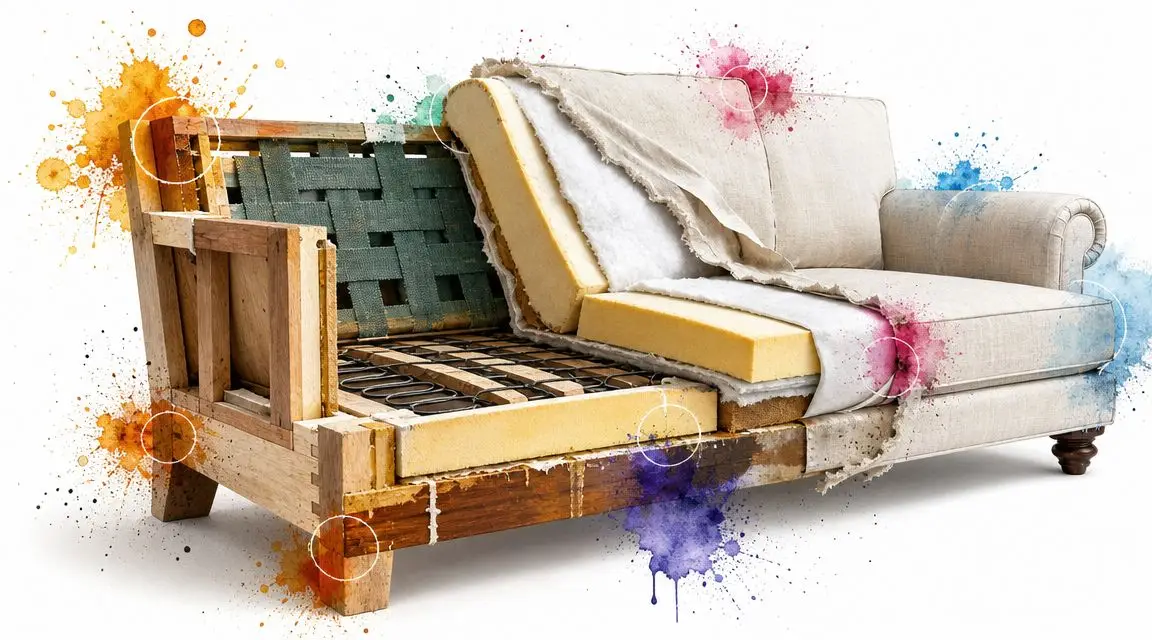
Where emissions usually come from
The main hotspots usually fall into four categories.
- Composite wood products: Particleboard, MDF, and some plywoods can involve formaldehyde-based resins. These are common in more budget-driven construction and in unseen components such as drawer bottoms, backs, and internal panels.
- Finishes and coatings: Solvent-based stains, lacquers, and sealers can add to off-gassing. The final sheen on a table or dresser often matters as much as the species of wood underneath.
- Adhesives: Glue lines are easy to overlook because they're hidden. Yet adhesives hold together veneers, foams, fabric layers, and joinery details in many upholstered and casegoods pieces.
- Foam and upholstery inputs: Cushions, back fills, fabric treatments, and synthetic coverings can introduce additional chemical load, especially in heavily upholstered seating.
A shopper doesn't need to become a chemist to evaluate these layers. It helps to treat furniture like a recipe. The visible material is only part of the ingredient list.
Why source control matters more than style
The Environmental Protection Agency has found that source control is the most effective indoor air quality strategy, and its wood-finishing work showed that switching from solvent-based coatings to waterborne systems can reduce VOC content while cutting hazardous-waste handling costs by 80 to 90% in the documented process, according to the EPA's low-VOC wood finishing guidance. That principle is useful for buyers too. The cleanest room strategy starts with choosing lower-emission materials from the beginning.
That's why the safest-looking shopping shortcut often fails. A buyer may focus on shape or upholstery color while the more important choices sit underneath the surface.
For example, a sofa can include:
- A solid wood frame that's a strong starting point
- Low-emission fabric that supports better indoor air quality
- Foam quality choices that affect both comfort and how long the piece stays supportive
- A finish or adhesive package that either helps or hurts the overall result
For readers comparing comfort construction as part of a long-term purchase, this guide on foam density and durability explained helps separate short-term softness from lasting performance.
A similar material mindset applies to wood furniture. Hidden components matter just as much as visible ones, which is one reason many homeowners spend time learning about solid wood furniture for living room spaces before making a larger investment.
Better indoor air decisions usually happen before the furniture enters the home. They happen when the buyer asks what's under the fabric, behind the finish, and inside the panel.
How to Shop Smart for Low VOC Furniture
Shopping for low VOC furniture gets easier when the process is narrowed down to two questions. First, what materials and finish systems make the most sense? Second, which certifications tell something useful about emissions?
Many people mix those questions together. That's where frustration starts. A piece can be responsibly sourced and still not be low emitting. Another piece can use an engineered component but still perform better on emissions because the final product was tested.
Materials that usually make more sense
For many homes, the lowest-toxicity path is straightforward. Solid wood with natural oil or water-based finishes is often the clearest option. When engineered wood can't be avoided, it helps to ask for low-emission or formaldehyde-conscious specifications and clear material disclosure.
The biggest shopping mistakes usually look like this:
- Trusting the word “natural” without details: Natural-looking wood grain doesn't confirm what finish, adhesive, or substrate was used.
- Ignoring hidden surfaces: Drawer boxes, backs, and interior shelves may use different materials than the visible frame.
- Treating all upholstery the same: Fabric, foam, backing, and coatings all affect the final result.
- Forgetting maintenance products: Harsh cleaners can introduce unwanted chemicals after the furniture is already home.
A good rule is to build from the inside out. Start with the substrate, then the finish, then the textile or leather, then the cushion construction. Buyers who want to get better at reading product language can use this guide on how to read furniture product descriptions with confidence.
Home care matters too. Once healthy materials are in place, it makes sense to maintain them with sustainable, low-waste cleaner options so a room doesn't trade one source of chemical exposure for another.
Understanding Low VOC Furniture Certifications
Buyers often confuse certifications. That's understandable. Some labels speak to forestry practices. Others address textile safety. Others focus on emissions from the finished product. Those aren't interchangeable, a critical point since, as noted in a consumer guide discussing EPA guidance, indoor air can be 2 to 5 times more polluted than outdoor air, and GREENGUARD Gold and FSC address very different issues in the buying process, as explained in this overview of furniture certifications and indoor air concerns.
| Certification | What It Tests For | Where You'll See It |
|---|---|---|
| GREENGUARD Gold | Low chemical emissions from the finished product | Upholstered furniture, casegoods, mattresses, and other completed furnishings |
| FSC | Responsible wood sourcing | Solid wood furniture, wood components, and forestry-related claims |
| OEKO-TEX | Textile-related chemical screening | Fabric, upholstery textiles, bedding-related materials |
| GOTS | Organic textile standards | Certain natural fiber fabrics and textile components |
The table helps with a common real-world question. If a solid wood piece is FSC certified but finished with a solvent-heavy coating, that FSC label alone doesn't settle the indoor air question. On the other hand, a finished product certification aimed at emissions speaks more directly to what enters the room air.
Certification works best as a filter, not a shortcut. It helps narrow the field, but the material list and finish details still matter.
The most useful showroom questions are often the simplest ones. What is the core material? What finish system was used? Is the fabric certified? Does the certification apply to the finished product or only one component? Those questions save time and usually lead to better investment pieces.
The Giorgi Bros Advantage for Custom Low VOC Furniture
Pre-made low VOC furniture can be a good fit, but it doesn't solve every design problem. Many homeowners want a certain scale, a specific wood tone, a performance fabric that suits family life, or a leather that works with the rest of the room. That's where the label alone stops being enough.
Custom ordering gives buyers more control, but it also introduces more variables. A different stain, alternate fabric, upgraded cushion, or substituted wood species can change the material profile of the final piece. That's why no-pressure guidance matters.
Why custom guidance can reduce confusion
The most useful custom process doesn't begin with sales pressure. It begins with narrowing choices intelligently. The main risk in furniture isn't the wood itself, but the chemistry in composite panels, foam, and finishes. Guidance for safer specification consistently points toward solid wood, natural oil or water-based finishes, and certified low-emission fabrics as a lower-toxicity combination, as outlined in this non-toxic furniture material guide.
That's one reason some Bay Area homeowners work with furniture stores that offer free design services. A consultant can help separate what affects the room visually from what affects the room chemically, and those are not always the same decisions.
In a non-commission setting, the conversation can stay focused on fit, materials, and long-term value. That includes questions such as whether a bedroom dresser should be all solid wood, whether a dining chair fabric has a lower-emission certification, or whether a custom finish uses a water-based system.
What to decide before placing a custom order
Custom low VOC furniture works best when the buyer decides a few priorities early.
- Room use first: A primary bedroom, nursery-adjacent guest room, and busy family room may call for different material tradeoffs.
- Visible wood and hidden wood: Ask about both. A beautiful exterior wood species doesn't explain the internal build.
- Finish preference: Water-based and natural-oil approaches are worth discussing before color selection starts.
- Textile standards: Upholstery choices should include questions about fabric certifications and any added treatments.
- Longevity: Buy-it-for-life thinking supports sustainability because durable furniture doesn't need to be replaced as often.
Giorgi Bros. Furniture fits naturally into that kind of process because it offers custom order options in wood species, finishes, fabrics, and leathers in South San Francisco, with non-commission consultants who can guide specification choices without pushing a single predetermined answer.
A healthier home often comes from asking better questions during customization, not from searching for one magic label on the floor sample.
That approach tends to produce rooms that feel more personal too. The piece fits the home's style, scale, and daily habits, while still respecting the buyer's concern for indoor air quality.
Maintaining a Healthy Space After Your Furniture Arrives
Even well-chosen low VOC furniture benefits from a little care after delivery. The first days matter, especially if several items arrive at once or the room stays closed for long stretches.
First steps when new furniture comes home
Ventilation is the simplest habit and still one of the most useful. Open windows when weather allows. Let air move through the room. If possible, avoid stacking multiple new introductions into a small closed bedroom on the same day.
A few practical habits help:
- Give the room air movement: Fresh air helps disperse initial odors and supports a more comfortable settling-in period.
- Unwrap promptly: Packaging can trap odors around the piece.
- Use the room gradually if needed: Sensitive households may prefer to let a new piece air out before long overnight use.
- Keep perspective: Low-emission testing doesn't mean zero emissions. It means lower emissions.
For bedrooms in particular, a few broader housekeeping habits can support the effort. This guide to maintaining a dust and allergen-free bedroom pairs well with thoughtful furniture selection.
Long-term habits that protect the investment
Maintenance products matter just as much as purchase decisions over time. A gentle cleaner is less likely to introduce unnecessary chemical residue onto a dining table, upholstered arm, or bed frame. Refinishing, spot treatments, and aftermarket protectants deserve the same scrutiny as the original order.
That's part of the buy-it-for-life mindset. Quality furniture is an investment piece, not a disposable one. When a household cares for it properly, the reward is more than durability. The room stays steadier, more comfortable, and easier to live in.
A healthy home rarely comes from one heroic purchase. It usually comes from many sensible choices made well, then maintained with the same care.
For homeowners looking for thoughtful guidance on low VOC furniture, custom furniture, Amish Furniture, Bay Area Interior Design, or premium mattresses, Giorgi Bros. Furniture offers a South San Francisco showroom where visitors can see materials up close, compare construction details, and speak with non-commission consultants. A showroom visit or Design Consultation can help narrow wood species, finishes, fabrics, and comfort options so each investment piece supports both the home's style and its long-term health.