
The search usually starts the same way. A homeowner sits down at the end of a long day, expects relief, and instead starts shifting after a few minutes because the sofa looks inviting but doesn't support the body where it counts.
That's why the best sofa for back support can't be chosen by softness alone. A sofa has to fit the body, hold posture without strain, and keep doing that year after year. In a family-owned showroom that has served South San Francisco since 1933, that conversation has never been about chasing trends. It's about helping clients choose investment pieces that support daily life, age well, and reduce the waste and cost of replacing furniture that never fit in the first place.
Table of Contents
- Beyond Comfort Why Your Sofa is an Investment in Your Back Health
- The Seven Key Elements of a Supportive Sofa
- How to Properly Test a Sofa in Our Showroom
- Matching a Sofa to Your Specific Back Health Needs
- Customizing Your Sofa for Perfect Support and Style
- Measuring and Maintenance for a Lifetime of Comfort
- Find Your Perfect Fit at Giorgi Bros
Beyond Comfort Why Your Sofa is an Investment in Your Back Health
A sofa can look beautiful in a room and still be wrong for the body. That usually shows up as fidgeting, perching on the edge, or using throw pillows just to get through an evening movie. Those are signs that the frame, depth, or back support isn't working with the spine.

Back support matters because low back pain is widespread. The 2021 Global Burden of Disease study estimated that 619 million people were living with low back pain globally, and that figure is projected to rise to 843 million by 2050 according to this back pain furniture guide.
A good sofa won't replace medical care, but it can reduce one daily source of strain. Homeowners who spend hours reading, watching television, visiting with family, or working with a laptop from the living room need seating that encourages a neutral posture instead of a collapsed one. That's one reason posture education has become part of the buying process. For readers who want a broader look at the chain reaction poor alignment can create, What PosturaZen says about bad posture is a useful companion read.
A sofa should feel comfortable right away, but it should also feel stable after the body settles in.
That long-view mindset has shaped furniture guidance in South San Francisco for more than 90 years. The strongest purchases are rarely impulse buys. They're measured choices that balance comfort, construction, and longevity.
Sometimes the smartest move isn't replacement at all. Homeowners weighing whether an older, well-built piece is worth saving can review whether reupholstering a sofa makes sense before starting fresh.
A health choice, not just a style choice
Shoppers often hear that “firm is better,” but that's incomplete. A sofa can be firm and still force awkward posture if the seat is too deep or the back is too low. Real support comes from the way the whole piece works together.
A buy-it-for-life approach also supports sustainability. Keeping a strong frame in service, choosing quality materials, and avoiding fast replacement cycles is better for the home and better for the long term budget.
The Seven Key Elements of a Supportive Sofa
A supportive sofa works a lot like a good mattress for seated posture. It doesn't let the body collapse, and it doesn't fight the body either. It holds the spine in a more natural shape so the muscles don't have to brace the whole time.
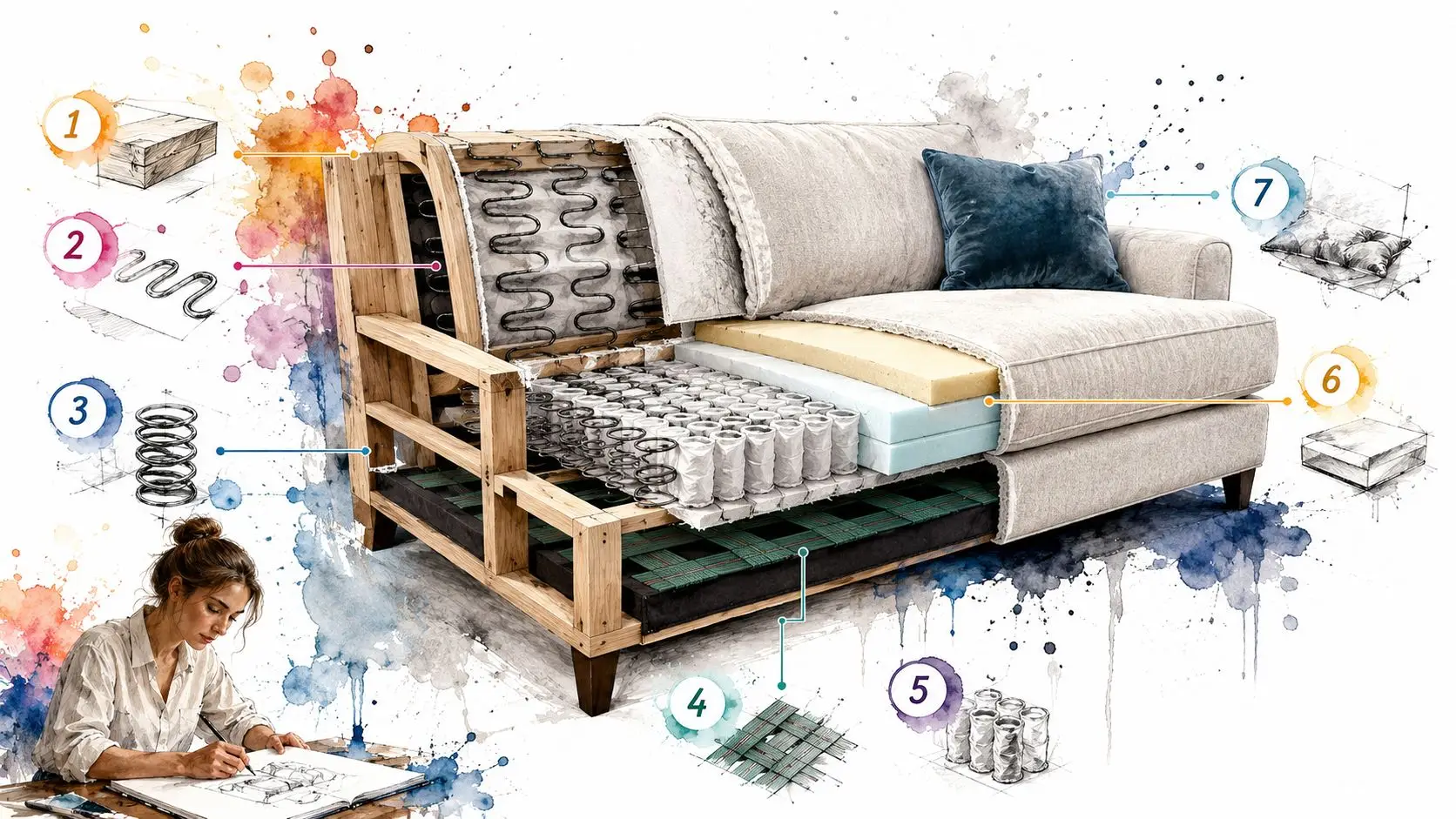
A supportive sofa starts with posture
The central test is simple. Can the sitter place the pelvis back in the seat, keep the feet flat, and rest against the back without slumping? As this ergonomic sofa guide explains, seat depth should allow full contact with the back while feet stay flat on the floor, and seat height should keep the hips from dropping below the knees so the spine can maintain its natural S-curve.
That single idea helps explain why some sofas feel pleasant for five minutes and tiring after half an hour.
The seven elements that matter most
- A stable frame
If the frame flexes, the support changes every time someone sits down. A sturdy frame creates a dependable foundation for the cushions and back. For long-term comfort, that consistency matters as much as the upholstery on the surface.
- Seat depth that matches the body
Depth is one of the biggest deal-breakers in the showroom. If the seat is too deep, many people slide forward, lose contact with the back cushion, and round the lower back. If it's too shallow, taller sitters may feel unsupported in the thighs.
- Seat height that keeps the body grounded
A seat that's too low makes it harder to keep the hips and knees in a comfortable relationship. People often compensate by tucking the pelvis under, which can flatten the lower back and lead to fatigue.
- Cushion firmness with resilience
The best sofa for back support usually has a medium-firm feel rather than an ultra-plush sink. The body should settle in, not disappear into the seat. Supportive cushions help distribute weight while still keeping posture intact.
Practical rule: If a sitter has to push hard with the hands or rock forward to stand up, the seat may be too low, too soft, or both.
- Back height that supports more than the waist
Low-profile sofas are visually light, but they often leave the upper back and shoulders without support. For anyone who sits for long stretches, that can encourage a slow slide into slouching. Higher backs generally do a better job of supporting a fuller range of seated postures.
- Armrests that reduce shoulder tension
Arm height is easy to overlook. When armrests are too high, shoulders creep upward. When they're too low or too far apart, the body leans or twists to find support. The right armrest height lets the upper body relax without distorting posture.
- Adjustability where it counts
Adjustable headrests, lumbar features, and reclining functions can make a major difference for shared households. One person may need upright lumbar reinforcement for reading, while another may want a more open angle for watching television. Good adjustability broadens comfort without sacrificing support.
A quick way to compare pieces is to look at the sofa as a system rather than a style.
| Element | What works | What often fails |
|---|---|---|
| Frame | Stable, consistent feel | Noticeable flex or wobble |
| Seat | Lets the sitter rest back with feet planted | Too deep or too low for easy posture |
| Cushions | Supportive and resilient | Overly soft and sink-prone |
| Back | Supports lumbar and upper torso | Decorative profile with little support |
| Arms | Relaxed shoulder position | Forces shrugging or leaning |
| Motion | Adjusts to real use | Fixed posture that fits only one position |
| Fit | Matches body size and habits | Looks good but fights the sitter |
Homeowners furnishing a living room for daily use should treat this as a working checklist, not a finishing detail. A sofa can be custom, elegant, and well scaled for the room, but if these seven pieces don't line up, comfort won't last.
Clients planning a larger room update often pair this sofa checklist with broader guidance on how to choose living room furniture so the whole space works together rather than one piece carrying all the strain.
How to Properly Test a Sofa in Our Showroom
Online browsing can narrow the field, but it can't tell a homeowner what happens after ten quiet minutes on a cushion. The body does that. That's why testing matters.

A proper showroom test isn't about one quick sit on the edge of the seat. It's about using the sofa the way it will be used at home. In a large South San Francisco showroom, that's easier to do because there's room to compare seat depths, arm heights, backs, and cushion feels side by side without pressure from commission-based selling.
What to do during the sit test
Use a simple routine and stay in each position long enough for the body to react.
- Start upright: Sit all the way back. Check whether the lower back meets the cushion naturally or whether a gap appears.
- Plant the feet: If the feet don't rest comfortably on the floor, the seat height or depth may be off.
- Rest the arms: Let the elbows settle. The shoulders shouldn't lift or twist.
- Try your usual posture: If the household reads, watches long movies, or uses a tablet on the sofa, copy that posture in the showroom.
- Stand up naturally: Rising shouldn't feel like climbing out of a hole.
Sit long enough to notice what changes after the first impression wears off. Initial softness can hide poor support.
What a consultant should help you notice
A skilled consultant watches for the small corrections clients make without realizing it. Sliding forward. Crossing one leg because the seat edge presses awkwardly. Reaching for a pillow behind the back. Leaning toward one arm because the torso doesn't feel centered.
That kind of observation is where non-commission guidance matters. The conversation stays focused on fit, not on closing a sale. If a sofa is close but not right, it's better to keep looking or to custom order a different configuration than to force a decision.
For Bay Area Interior Design projects, this hands-on process often saves time later. The right sofa doesn't just suit the room on delivery day. It continues to work during ordinary evenings, weekend gatherings, and the years that follow.
Matching a Sofa to Your Specific Back Health Needs
Not every back complaint calls for the same sofa. Someone dealing with recurring lumbar soreness usually needs a different setup than someone bothered by pressure through the hips and legs. That's where generic advice breaks down.
Lower back pain and posture support
For many clients, the first priority is keeping the lower spine from collapsing into a rounded seated posture. A sofa with clear lumbar reinforcement, a stable seat, and a back that encourages upright sitting usually performs better than a deep lounge profile.
High-back designs are often the stronger choice here. As this guide to high-back versus low-back sofas notes, high-back sofas support the thoracic region, reduce slouching, and shift less load to the lumbar area during extended sitting. That's why they're frequently recommended for people with back pain.
Sciatica and pressure management
Sciatica complaints often make people think only about softness. In practice, pressure relief and posture control have to work together. If the cushion is too soft, the pelvis may roll backward. If the seat is too deep, the sitter may slide forward and load the lower back anyway.
For this group, a better formula is usually:
- Moderate depth: Enough room to sit back without overreaching for the back cushion.
- Supportive seat feel: Enough give for comfort, but not a hammock effect.
- Reliable lumbar contact: Built-in or adjustable support can help maintain a steadier seated position.
- Easier entry and exit: A seat that doesn't swallow the body can feel noticeably better over repeated daily use.
Some households also compare sofa seating with motion seating before deciding. For readers sorting through those trade-offs, this guide to recliners for back support can help clarify when a reclining mechanism may be the better answer.
The wrong sofa often makes people create their own support with pillows, perching, or constant position changes. The right one reduces that need.
Posture-minded shoppers should also be realistic about style. A low, deep, heavily lounge-oriented silhouette can look refined and still be a poor choice for someone who needs dependable spinal support every evening. The body usually answers that question faster than the eye.
Customizing Your Sofa for Perfect Support and Style
The best outcomes rarely come from accepting a sofa that is “close enough.” They come from adjusting the details that affect fit. That's where Custom Furniture changes the conversation.
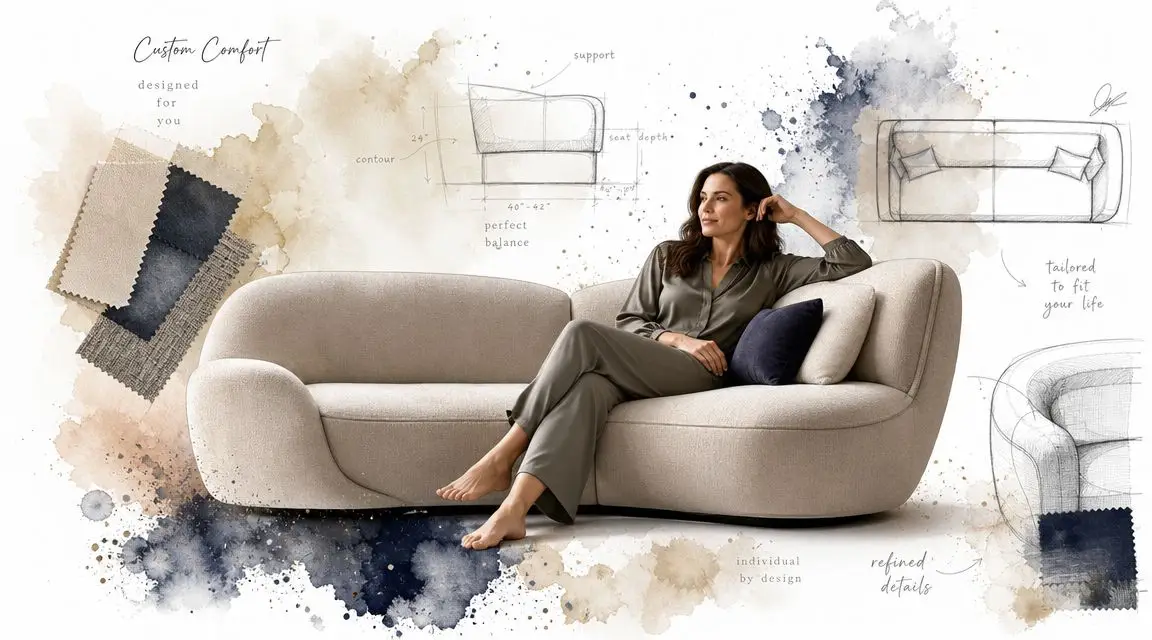
Why custom changes the fit
A custom order lets a homeowner solve several problems at once. The room may need a certain scale. The sitter may need a more supportive cushion. Another family member may prefer a different arm style or back height. Those are not cosmetic details when back support is the priority.
A thoughtful custom build can address:
- Cushion feel: Supportive rather than overly plush.
- Seat proportion: Closer to the body using the sofa most often.
- Back style: Better lumbar and upper-back contact.
- Upholstery choice: Fabric or leather that suits pets, kids, sunlight, and wear patterns.
- Finish details: Wood species and finishes that tie into existing pieces.
That's one of the advantages of working with consultants instead of commission-driven selling. The goal isn't to move the floor sample. The goal is to build the right seating solution.
Support and style should be chosen together
A sofa can support the back and still look refined. That balance matters in Bay Area homes where living rooms often need to function as social space, reading space, and quiet retreat all at once. A structured silhouette, durable upholstery, and better seat construction can coexist.
One factual example from the showroom category is the kind of motion seating that includes adjustable headrest and lumbar features, such as the power sofa options listed by Giorgi Bros. Furniture. For some households, that type of adjustability makes sense because it allows different seated positions without giving up targeted support.
Custom order services also matter for longevity. A well-made frame with the right fabric, leather, wood finish, and cushion construction is more likely to stay in use for years. That buy-it-for-life approach reduces replacement cycles and often makes better financial sense than repeatedly buying furniture that wears out or never feels quite right.
For clients drawn to Amish Furniture or other bench-made styles, customization can be even more valuable. A handcrafted piece with the proper dimensions and upholstery can become one of the room's true investment pieces instead of a compromise that gets replaced early.
Measuring and Maintenance for a Lifetime of Comfort
Even a perfectly chosen sofa can disappoint if it doesn't fit the room properly or if the support breaks down from neglect. The last part of the decision is practical. Measure carefully, then protect what was purchased.
Measure the room and the path in
A common mistake is measuring only the wall where the sofa will sit. The path matters just as much. Entry doors, stair turns, hallway width, elevator clearance, and ceiling height can all affect delivery.
A reliable measuring routine includes:
- Room footprint: Confirm the sofa length and depth work with circulation space.
- Doorways and halls: Measure the narrowest point, not just the front door.
- Turning areas: Watch corners, stair landings, and tight entries.
- Nearby furniture: Leave space for tables, lamps, and walking paths.
Homeowners who want a step-by-step reference can use this guide on how to measure furniture before ordering.
Protect the support you paid for
Maintenance isn't just about appearance. It affects comfort over time. Cushions that aren't rotated or fluffed can wear unevenly. Upholstery that isn't cleaned properly can stiffen, soil, or age faster than necessary.
A few habits go a long way.
- Rotate cushions when appropriate: This helps wear develop more evenly.
- Use the whole seat: Try not to favor the same corner every day.
- Clean by material type: Fabric and leather need different care methods.
- Address spills early: Quick cleanup usually prevents deeper problems.
For readers who want a practical outside resource on fabric protection and upkeep, this article with expert couch cleaning advice for Birmingham offers useful general maintenance pointers.
A quality sofa is an investment piece, not a disposable purchase. Measured correctly and cared for consistently, it's far more likely to deliver the support, appearance, and long-term value that made it worth choosing in the first place.
Find Your Perfect Fit at Giorgi Bros
The best sofa for back support isn't the softest one in the room or the one with the most dramatic profile. It's the one that fits the body, supports daily habits, and keeps doing its job after the novelty wears off.
A good decision feels different over time
For many users, a recline angle of 105° to 110° and a seat depth of 21 to 22 inches are often cited as an ergonomic sweet spot because they can reduce spinal load compared with sitting too upright or slouching too much, as noted in this sofa geometry guide. That doesn't mean one dimension fits every household. It does mean the right measurements matter more than broad claims about softness.
A strong buying decision usually includes several traits at once:
- Correct scale for the body
- Supportive cushion construction
- Back height that matches how the sofa will be used
- A frame and upholstery chosen for long service
- Customization when the floor model isn't the right fit
Why the showroom still matters
That's where a showroom visit earns its value. In South San Francisco, clients can compare construction, test real comfort, review Custom Furniture options, and work with Non-Commission Sales Staff who are there to guide rather than push. The result is a more confident decision and, usually, a better long-term one.
A sofa should support the room, the routine, and the people using it every day. When those pieces line up, the purchase stops being a short-term want and becomes a lasting part of a well-designed home.
Visit Giorgi Bros. Furniture in South San Francisco to test supportive sofas in person, explore custom fabrics, leathers, wood finishes, and motion options, and get no-pressure guidance from a design consultant. Homeowners planning a single-room refresh or a full Bay Area Interior Design project can also book a Design Consultation and choose investment pieces built for lasting comfort, style, and long-term value.