A worn seat cushion, faded arms, and a fabric you’ve stopped noticing can make a good sofa look finished when it isn’t. That’s when most homeowners ask the same question: is it worth reupholstering a sofa, or is it smarter to replace it?
The short answer is that price alone won’t give you the right answer. The decision sits deeper, in the frame, the joinery, the spring system, and whether the piece was built as a disposable purchase or as an investment piece.
At a family business that has helped Bay Area homes since 1933, we’ve seen both outcomes. Some sofas deserve fresh fabric, new cushions, and another long chapter of daily use. Others aren’t worth rebuilding because the structure was never strong enough to begin with. If you want to make a sound decision, start with the bones.
The First Check Assessing Your Sofa's Bones
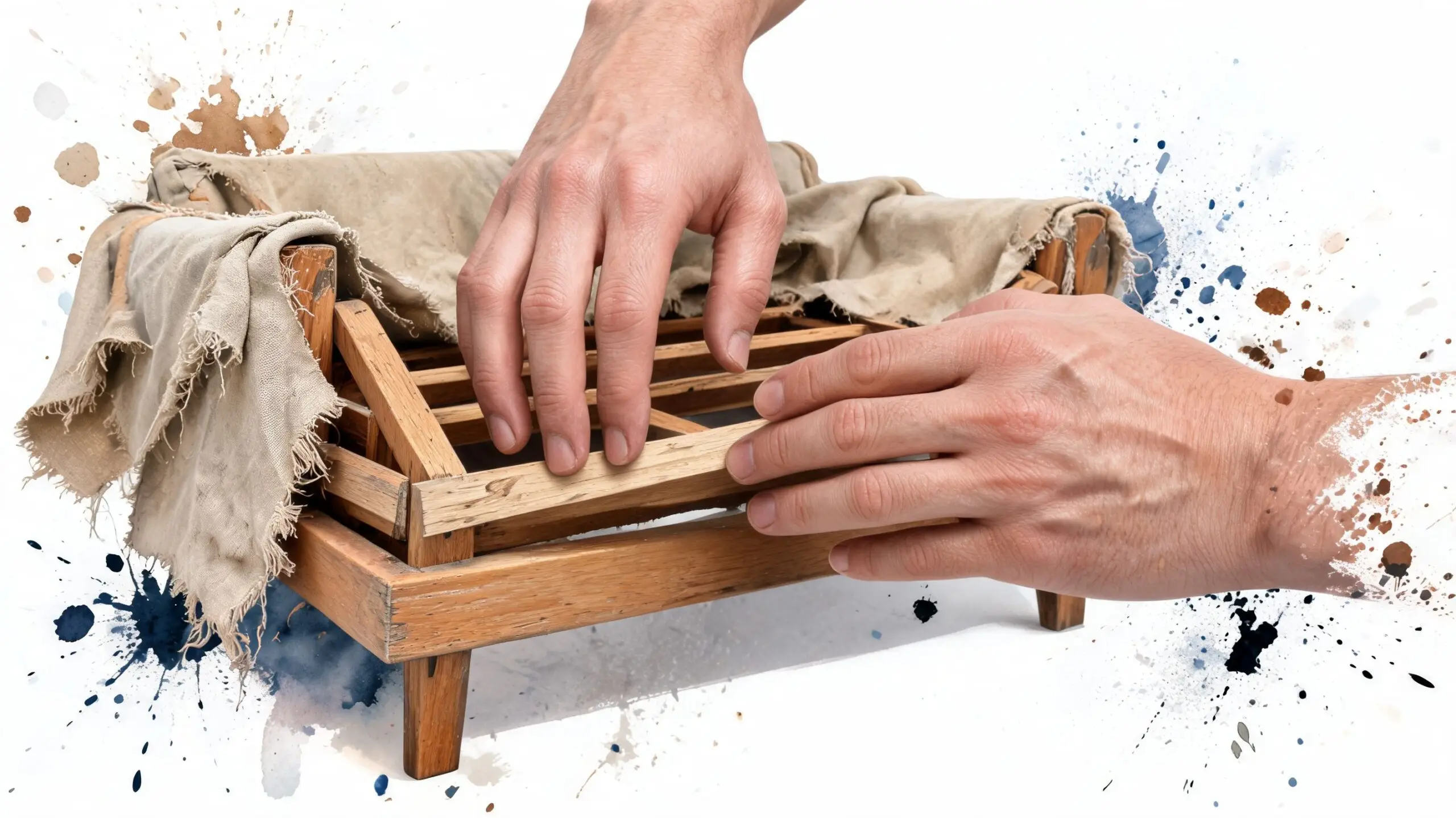
A sofa can have torn fabric and still be worth saving. It can also look decent on the outside and be a poor candidate for reupholstery. The frame is the essential component. Everything else can be improved. If the frame is weak, cracked, or poorly assembled, new upholstery won’t fix the underlying problem.
From a structural standpoint, reupholstery makes the most sense when the sofa has a kiln-dried hardwood frame, such as oak, maple, or birch, with corner blocking, double dowels, and wooden wedges. A well-built hardwood frame can last 20 to 30 years, while a low-end frame with staples and no corner blocks often fails within 7 to 10 years. With a solid frame, reupholstery can extend functional life by another 10 to 15 years, according to SeatUp’s analysis of sofa frame quality and reupholstery value.
What to check before you talk about fabric
Turn the sofa around if you can. Better yet, look underneath it. You’re not trying to become an upholsterer overnight. You’re looking for a few reliable signs of quality.
- Frame material: Hardwood is the standard worth saving. Particle board, MDF, or thin softwood usually isn’t.
- Joinery details: Corner blocks and doweled joints matter. They tell you the frame was built to resist twisting and loosening over time.
- Movement: Sit on one side, then the other. If the whole piece racks, shifts, or gives with a creak, the structure may be compromised.
- Suspension: Springs and webbing can often be repaired or retightened. A broken frame is a different story.
- Leg stability: If the legs wobble because the frame is flexing, that’s a warning sign.
Practical rule: Reupholster the sofa you respect when you flip it over, not just the one you’re attached to when you look at it.
A simple in-home inspection
Homeowners can do a useful first pass without tools. Start by lifting one front corner slightly. A sturdier sofa tends to feel substantial and unified. A flimsy one often twists.
Next, press down on the arms. Good arms should feel anchored, not hollow or loose. Then sit in the middle and near each cushion edge. Listen for clicking, shifting, or a hollow snap. Those sounds often point to loosened joints or broken internal parts.
You can also remove loose cushions and examine the deck beneath them. Sagging fabric, uneven support, or visible dips may mean the suspension needs work. That alone doesn’t rule out reupholstery. In fact, repairs in that area are often part of the job. The concern is whether the frame underneath still deserves the investment.
Signs your sofa is a strong candidate
Some sofas convey their quality. They don’t need a label to tell the story.
Look for these signs:
- The silhouette still works for your room. If you still like the scale, arm height, and seat depth, that matters.
- The frame feels firm. A stable base is the whole case for restoration.
- The proportions are hard to replace. Older sofas often have better depth, nicer lines, or more comfortable sit than many mass-produced alternatives.
- The piece has a build quality you can feel. Better furniture tends to age in a repairable way.
For ongoing care, a seasonal check helps catch issues before they become expensive repairs. A practical place to start is this fall furniture maintenance checklist.
When reupholstery doesn’t make sense
Sometimes the honest answer is no. If the frame is particle board, visibly cracked, or loose at the joints, reupholstery can become an expensive cosmetic fix. You’ll spend money on fabric and labor while the sofa continues to fail underneath.
That’s the furniture version of repainting a house with foundation trouble. It may look better for a while. It won’t hold up the way you want.
Decoding the Cost Reupholstery vs Buying New
A family brings in a sofa that still sits beautifully, but the fabric is tired and the cushions have lost their shape. Then they shop online for replacements and find plenty of lower-priced options. That is usually the moment the comparison goes off track.
Once a sofa has passed the frame test, the question is not merely whether a new one costs less. The better question is whether you are replacing a well-built piece with equal quality, or trading down without meaning to. That difference decides whether reupholstery is a wise investment or an expensive detour.
Typical sofa reupholstery runs from $500 to $4,500, with an average around $1,800, according to Seam Upholstery’s breakdown of couch reupholstery costs. That source also notes that labor usually accounts for 55 to 60 percent of the total, while fabric makes up 40 to 45 percent. It lists common ranges by type as well, including $600 to $2,000 for loveseats, $2,000 to $4,000 for sectionals, and $900 to $1,500 for chaise lounges.
Why the bill lands where it does
Labor drives much of the price because good upholstery work is skilled bench work, not quick cover replacement.
The old fabric has to come off. The inside has to be inspected. Worn padding, webbing, springs, decking, or trim may need attention before the new fabric ever goes on. Then the new material must be cut, sewn, fitted, and finished cleanly around arms, cushions, skirts, curves, and details such as welting or tufting.
That is why two sofas of similar size can price very differently. One may be a simple, square-lined piece. The other may have tight backs, rolled arms, attached pillows, matched patterns, and hand-finished details that take far more time to execute well.
Cost comparison reupholstery vs buying a new sofa
| Option | Average Cost Range | Typical Lifespan | Key Value |
|---|---|---|---|
| Reupholstery | $500 to $4,500 | Depends on the existing frame and rebuild quality | Keeps a strong frame in use, allows full fabric customization |
| New lower-quality replacement | Qualitatively varies | Often shorter if construction is light | Lower upfront entry point, but may not match the durability of an older well-made sofa |
| New high-quality sofa | Qualitatively varies | Strong long-term potential if well built | New construction, warranty path, choice of fresh design and configuration |
The fairest comparison is between a good older sofa and a good new sofa. Comparing reupholstery to the least expensive new piece on the market misses the point. A bargain-priced replacement often uses lighter frames, simpler suspension, thinner cushions, and shorter-lasting fabrics. It may solve the immediate problem while giving up years of comfort and service.
That is where investment value comes in. A sofa is not just a fabric shell with a price tag. The frame, joinery, suspension, and overall build decide whether money put into it will hold its value in daily use.
Price parity is not the same as equal value
I have seen reupholstery bills come close to the price of buying new. I have also seen clients end up ahead because the sofa they kept had better bones than what they could buy at the same number.
Price parity does not mean the two choices are equal. With reupholstery, you already know how the sofa sits, how it fits the room, and whether the frame has earned another decade of use. With a new purchase, some of that value is certain and some of it is a guess until the piece has lived in your home for a few years.
The smarter financial question
Ask a set of questions that gets past sticker price:
- Would a replacement at this budget be built as well as the sofa I have now?
- Am I investing in a frame that deserves it?
- Will a rebuilt version give me longer service than a cheaper new alternative?
- Do I want more control over the finished result than a showroom floor offers?
If you are comparing restoration with replacement, this guide to buying the right sofa for your living room helps clarify what to look for in a new piece.
Financing can help with timing. It does not change the underlying value. A lower upfront price is only a better deal if the sofa holds up, stays comfortable, and does not need replacing again sooner than expected.
The Art of Transformation Fabric and Cushion Upgrades
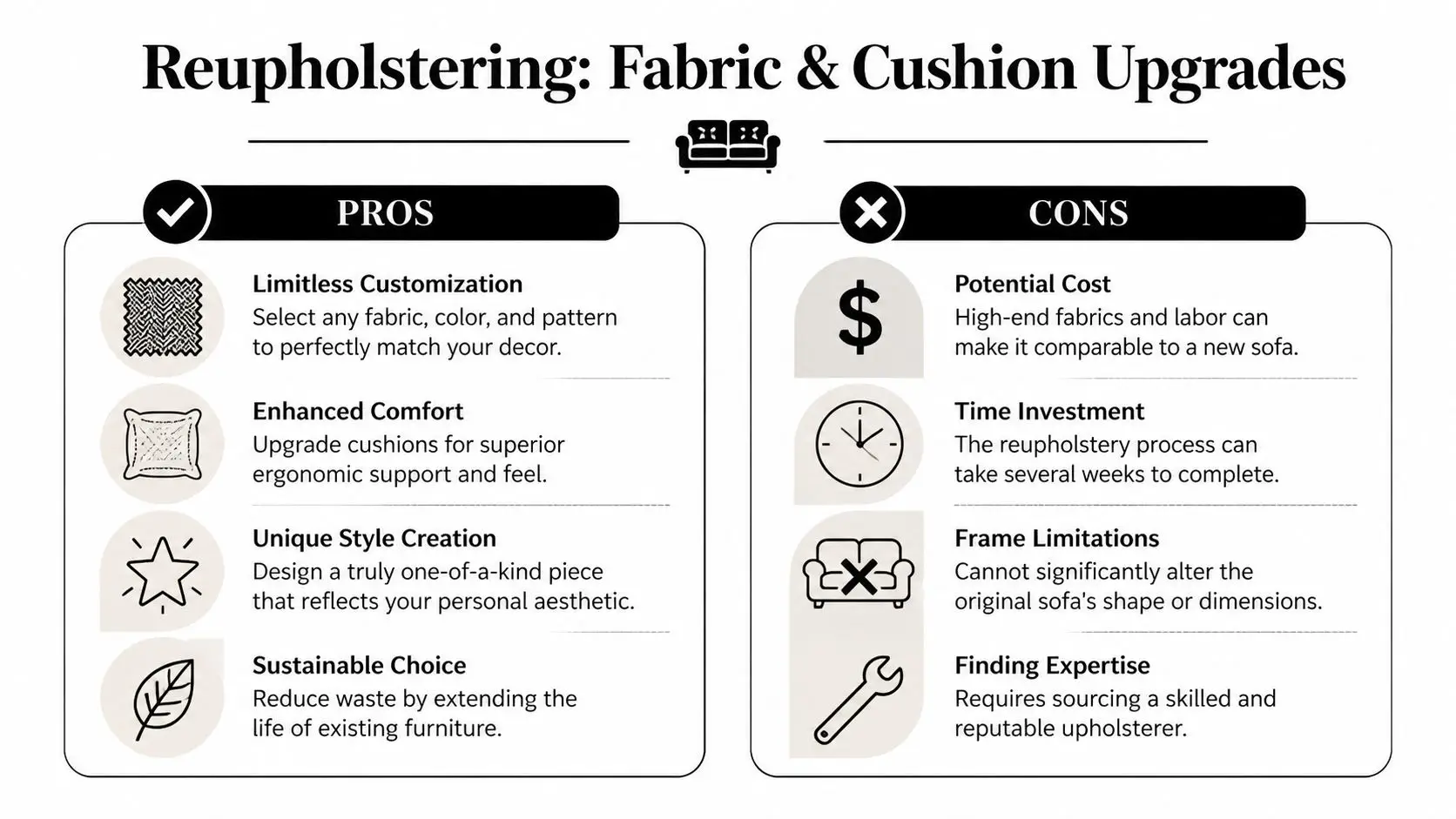
A well-built sofa can look tired long before it is fully spent. The cloth fades, the seat loses its shape, the back cushions slump, and people start shopping for a replacement. In many cases, the main opportunity is not replacement at all. It is using a sound frame as the foundation for a better sofa than the one you started with.
Fabric changes comfort, upkeep, and service life
Fabric selection affects far more than appearance. It determines how the sofa wears, how much maintenance it asks of you, and whether it still looks good after years of daily use.
I usually advise clients to start with the household, not the color card. Children, pets, sunlight, denim transfer, frequent guests, and even the way someone likes to nap on the sofa should influence the fabric choice. A beautiful textile that snags, fades, or shows every spill is a poor investment, even if it looks perfect on day one.
For a closer look at durability, texture, and cleanability, this guide to upholstery materials and how they perform is a useful place to compare options. B-Sew Inn's upholstery essentials guide is also helpful for understanding the supporting materials that affect how an upholstered piece holds together over time.
Choose fabric for the room you actually live in
The right fabric solves problems.
Performance fabrics suit family rooms where spills, pets, and heavy use are part of daily life. Tighter weaves often wear better in busy homes and can make claw marks or surface abrasion less obvious. In formal rooms, clients sometimes choose linen looks, velvets, or richer woven textures because the piece sees lighter use and can carry more visual depth.
Sun exposure matters just as much as style. A sofa that sits near large windows needs a fabric that can handle light without fading unevenly. Pet owners should also pay attention to weave and texture, not just color. Some fabrics collect hair, catch claws, or show pressure marks more than others.
Good reupholstery corrects the weaknesses of the old covering. If the previous fabric wrinkled badly, wore thin on the deck, or made every spot stand out, the replacement should fix that.
Cushion upgrades are often where the value shows up fastest
Many sofas are judged by their cushions. A frame may be solid for decades, while the seat cores and back fills wear out much sooner.
That is why cushion work has such a strong effect on comfort and perceived quality. A reupholstery job can rebuild the seat to feel firmer, softer, taller, flatter, or more supportive. Back cushions can be reshaped for better posture or a more relaxed sit. Wrapping, foam density, crown, and edge definition all change how the sofa feels every evening, not just how it looks in a finished photo.
Investment value clearly emerges. If the frame is worth keeping, rebuilding the cushions often gives the owner the biggest daily return.
Custom details turn a familiar sofa into a better one
Reupholstery also gives you control over the details that factory pieces often simplify. Welting can sharpen the lines. Buttons can be removed for a cleaner profile. Cushion shapes can be updated. Skirts can be shortened, removed, or added to suit the room and the style of the piece.
Those choices matter because fit matters. A sofa that already suits the scale of your room and has proven comfortable in daily use can be refined instead of replaced with something that only looks right in a showroom.
Giorgi Bros. Furniture is one example of a company that handles both reupholstery and custom order furniture. That matters in practice because homeowners often need help weighing textile performance, finish coordination, and cushion feel together, rather than choosing each part in isolation.
The best transformations do not chase novelty. They respect the value already in the frame and improve the parts you see and feel every day.
The Professional Reupholstery Process Explained
Viewers often only see the beginning and the end. They see the sofa in their living room, then later they see it return looking renewed. The work in between is where the value is created and where surprises can enter if the process isn’t explained clearly.
Many online guides skip over labor variability and timeline uncertainty. Homeowners often discover that costs “just add up” without enough early guidance. Clear cost breakdowns, labor estimates, and realistic timelines are what help avoid budget surprises, as noted in this discussion of reupholstery cost variability and planning.
What happens after the sofa leaves your house
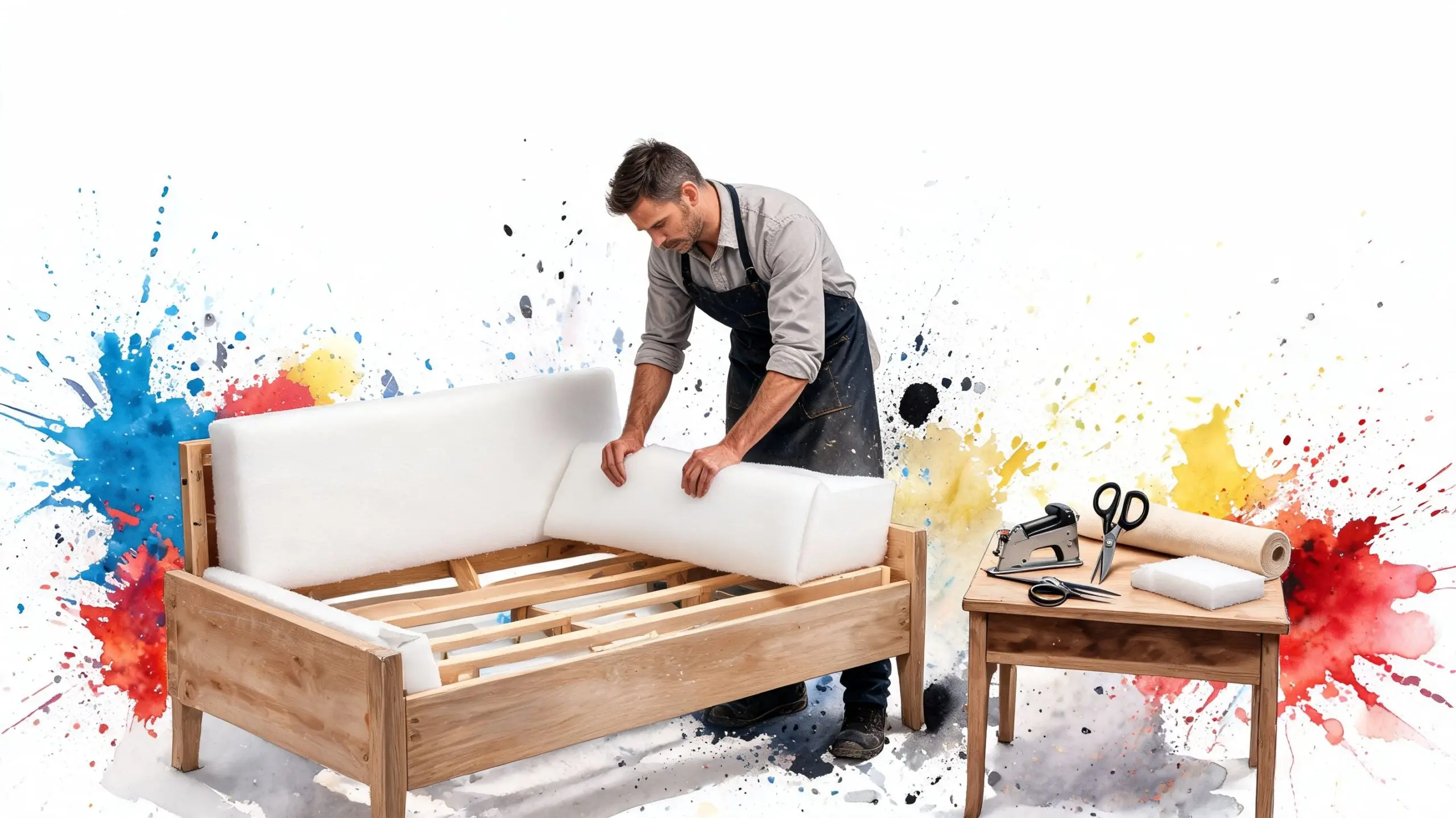
A proper reupholstery job usually starts with a visual review and a discussion of goals. Do you want a faithful restoration, a cleaner custom look, better seat support, or all three?
Once the old fabric is removed, the full inspection begins. That’s when the upholsterer can see the frame, the suspension, the deck, the padding condition, and any hidden wear. If joints need tightening or support layers need replacement, those issues become visible only after the outer covering comes off.
Where projects change course
Good communication is essential. A sofa may arrive looking like a straightforward recover and turn out to need structural tightening, spring work, or cushion rebuilding.
That doesn’t mean something has gone wrong. It means the craft is doing what it’s supposed to do. The problem comes when no one prepared the client for that possibility.
A transparent shop will explain:
- what was expected at intake
- what was found after stripping
- what needs repair versus what is optional
- how those choices affect the finished result
The best reupholstery experience isn’t the one with no surprises. It’s the one where surprises are handled plainly and early.
The hands-on craft work
After repairs, the new upholstery phase begins. Pattern pieces are cut, sewing is done, cushions are rebuilt if needed, and fabric is fitted to the frame with close attention to shape, seams, and tension.
This part is easy to underestimate. Clean outside arms, straight decking, balanced cushion crowns, and smooth corners don’t happen by accident. They come from skill.
If you want to understand how much upholstery quality depends on the right construction materials, B-Sew Inn's upholstery essentials guide is a useful companion read. It gives helpful context on the sewing side of the craft, especially for anyone curious about what separates casual upholstery work from a cleaner professional finish.
What a no-pressure process should feel like
A homeowner should never feel rushed into approving repairs or upgrades they don’t understand. In a family-run business with non-commission Consultants, the conversation tends to be calmer because the goal is fit, not pressure.
That matters in Furniture South San Francisco shopping just as much as it does in a workroom. Whether you’re restoring a current sofa or comparing it against a replacement, the process should leave you clearer than when you started.
The Sustainability and Sentimental Value Equation
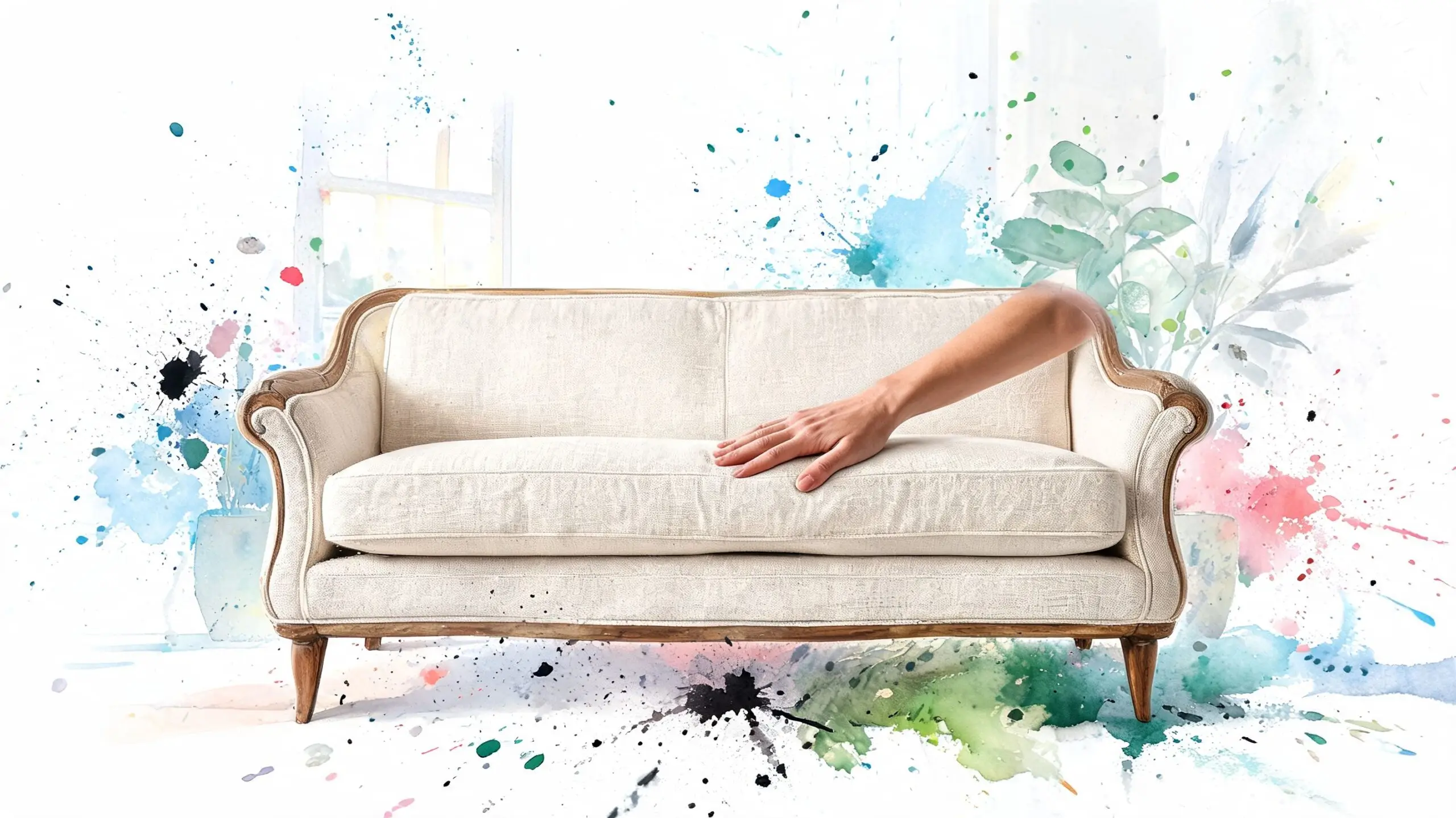
A sofa can become part of a household in a way few other pieces do. It holds the ordinary parts of life, the weeknight conversations, the sick days, the Sunday afternoons, and that history has value. If the frame is sound, reupholstery lets you keep that value in use instead of sending it to the curb and starting over with a piece that may be built to a lower standard.
Why restoration fits a long-view home
The sustainability case only holds up when the sofa is worth saving. Keeping a hardwood frame, quality joinery, and serviceable spring system in circulation avoids waste, but it also protects the original labor and material that went into the piece. That is the part many cost-only articles miss. The essential question is not what you spend today. It is whether you are investing in a sofa with years of honest life left in it.
In our trade, that distinction matters. A well-built older sofa can justify new fabric, new cushions, and careful repair because the underlying structure still deserves the work. A cheaply made sofa with a failing frame usually does not become sustainable just because it is reused once more.
Sentimental value has to earn its place
Sentiment should support the decision, not make it for you.
The best candidates are pieces that carry both memory and workmanship. If a sofa came from family, has lived in your home for decades, or suits the room in a way newer pieces often do not, those are valid reasons to keep it. They matter more when the bones are right. They matter less when reupholstery would only hide weakness for a short time.
That same long-term mindset applies across furniture categories. Good materials, repairable construction, and proper joinery give a piece staying power. The standards are similar whether you are weighing an upholstered sofa or choosing hardwood furniture for long-term durability and style.
Cosmetic updates and true restoration are different jobs
Smaller DIY projects can still have a place. Accent chairs, side tables, and decorative pieces often respond well to paint, refinishing, or light fabric work, and Quote My Wall's DIY tips offer useful ideas for that kind of project at home.
A sofa is a different commitment. Proper restoration protects comfort, structure, and daily use, not just appearance. That is why investment value matters here. If the piece is built well, reupholstery preserves something worth owning for another decade or more.
Making the Final Decision for Your Home
By this point, the answer is usually clearer than people expect. The best decision rarely comes from one dramatic insight. It comes from a handful of honest answers.
Ask yourself these questions
- Is the frame high quality? If the bones aren’t there, stop.
- Do I still like the sofa’s shape and scale? Reupholstery won’t change the core silhouette in a major way.
- Would I be preserving quality or covering up weakness?
- Do I want more control over fabric and comfort than an off-the-floor sofa offers?
- Does this piece deserve long-term investment in my home?
If most of those answers are yes, reupholstery is often worth serious consideration.
When buying new is the better move
Sometimes replacement is the smarter path. That’s especially true if the frame is weak, the proportions no longer suit the room, or your needs have changed enough that a different configuration makes more sense.
In those cases, you’re not giving up on quality. You’re redirecting the investment. A better next step may be learning what to look for in a replacement that will age well from the beginning. This guide on how to choose living room furniture is a good place to sort through that decision.
The goal isn’t to force restoration or replacement. It’s to choose the path that gives your home comfort, durability, and integrity for the long haul.
If you’re weighing whether to restore a sofa or replace it, Giorgi Bros. Furniture welcomes you to visit the South San Francisco showroom or book a Design Consultation. Since 1933, our family business has helped Bay Area homeowners make thoughtful furniture decisions with no-pressure guidance from non-commission Design Experts. Bring photos, measurements, and your questions. We’ll help you decide whether your current piece is worth saving or whether a new custom solution makes better sense for your home.