A lot of living room purchases start the same way. The old coffee table is nicked, the media console sags, or the room finally deserves something better than a quick fix. You begin by looking for something attractive, then realize you're also making a decision about how your home will function for years.
That's why solid wood furniture for living room spaces deserves a slower, more thoughtful look. The living room takes daily use. People put up their feet, slide books across tabletops, set down drinks too hard, move pieces around for guests, and expect everything to keep looking good through it all. Cheap construction can mimic the look of quality for a little while. It rarely delivers the same life span.
In a family business that has served South San Francisco since 1933, one lesson comes up again and again. The furniture people remember most isn't just the furniture they liked on the day it arrived. It's the piece that still looks right after years of holidays, quiet evenings, and constant use. That's the difference between buying furniture and choosing something that becomes part of your home's story.
An Investment in Your Home's Story
Saturday evening is usually when a living room tells the truth. Someone sets a drink down too hard. A child drags a stack of books across the coffee table. Guests shift an ottoman, lean on an arm, and use the room the way real households do. A piece that is only made to look good in a photo starts to show its limits pretty quickly.
That is why solid wood furniture earns its value over years, not under showroom lighting. On the day it arrives, you notice the grain and the finish. Later, you notice that the table still sits level, the console doors still line up, and the surface can handle honest wear without looking spent. In Bay Area homes, that matters even more. Our swings between coastal dampness and dry interior heat ask a lot from furniture, and better materials with proper construction tend to stay stable longer.
Why the living room deserves better materials
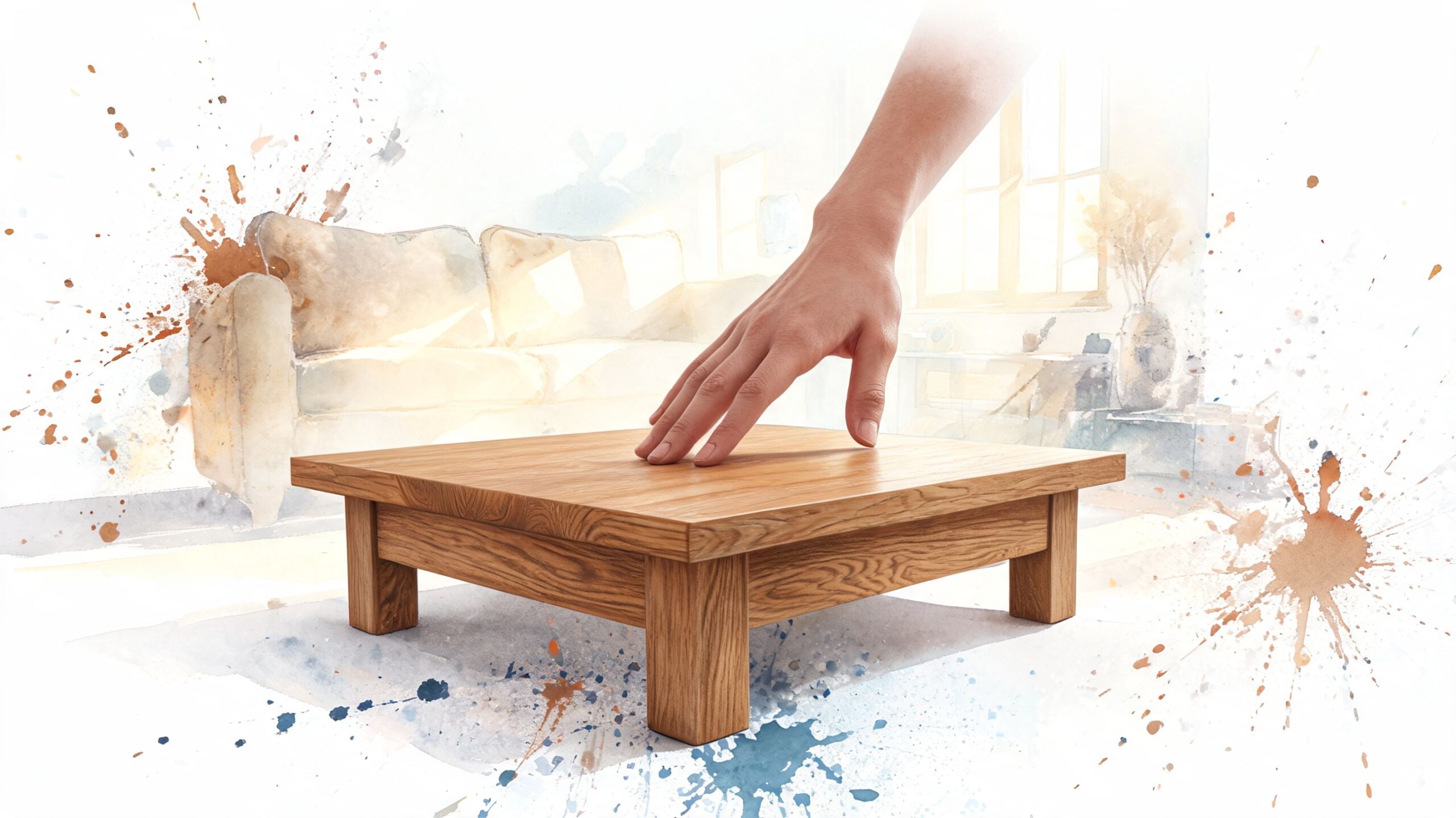
Living room furniture has a harder job than many buyers expect. These pieces are touched every day, moved for guests, loaded with electronics, and exposed to small changes in moisture year round. In the Bay Area, that last point gets overlooked. Wood naturally responds to humidity, so good construction is not just about appearance. It is about joinery, wood selection, and allowing the piece to move as seasons change without loosening up or failing early.
I have seen the same pattern for decades. Buyers who choose only by finish or price often replace the piece far sooner than they planned. Buyers who start with structure usually keep the furniture long enough for it to become part of family life.
Good living room furniture should carry the marks of daily use with dignity and keep doing its job year after year.
A piece you can live with for decades
A buy for life purchase is really a cost question. One well-made solid wood coffee table that can be maintained, repaired, or refinished often costs less over twenty years than two or three cheaper replacements. It also saves you from living with sagging tops, chipped corners, or joints that never quite tighten back up.
Customization belongs in that conversation too. It is not just a luxury upgrade. The right width, depth, height, and storage layout help a piece fit your room properly, which means it gets used well and kept longer. A console that fits the wall, clears the walkway, and supports the weight it was built for has a much better chance of lasting a lifetime, both structurally and stylistically.
That is how furniture starts to earn its place in a home. It works hard, ages well, and still feels right years later.
What Solid Wood Truly Means for Your Living Room
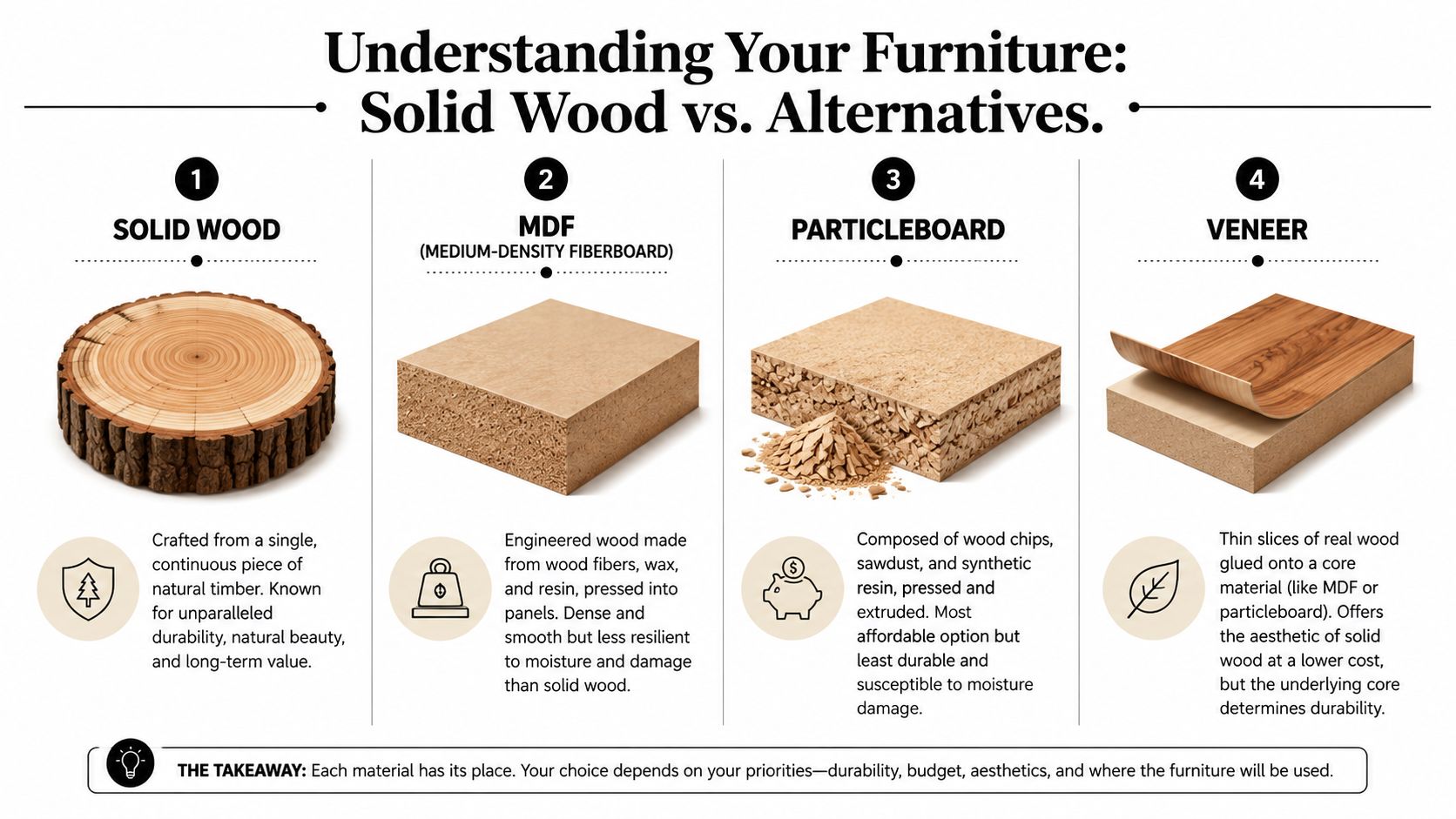
The phrase solid wood gets used loosely, so it helps to define it in plain terms. Solid wood furniture is built from actual lumber, not a printed surface over compressed material. That matters because structure starts below the finish.
A simple comparison works well. Think of a solid wood coffee table the way you'd think of a stone countertop. The material runs through the piece. If the surface takes wear, the material underneath is still the same. Veneer, MDF, and particleboard are closer to layered products. They can look neat at first, but the core determines how they perform when the room gets real use.
What you feel right away
Shoppers usually notice three things first.
- Weight and steadiness. A well-built solid wood table or console tends to sit with more authority.
- Natural variation. Grain, color shifts, and figure aren't defects. They're signs that the material is real.
- Repair potential. Minor scratches and wear are often manageable because the wood isn't just a thin layer over a manufactured core.
Why construction matters in high-use pieces
Coffee tables, end tables, and TV stands absorb daily punishment. Remotes get tossed down. Feet land on rails. Electronics add load. Furniture gets bumped during cleaning or rearranging. That's where material quality stops being abstract.
White oak, for example, has a Janka hardness rating of up to 1,360 lbf, while softer engineered wood cores can rate below 700 lbf, according to this solid wood durability guide. In practical terms, that means oak resists dents and scratches better during everyday living room use.
A solid oak table also has stronger structural behavior than many lighter laminated alternatives. The same guide notes a 30% higher load-bearing capacity, with a 48-inch oak table benchmarked at 500 lbs. You may never test that limit directly, but you will benefit from the stiffness and stability that come with it.
Practical rule: If a living room piece will hold electronics, take foot traffic around it, or get moved more than once a year, prioritize the integrity of the core material over the perfection of the surface.
Where alternatives fit, and where they don't
Veneer isn't automatically bad. It can be useful in certain applications where a controlled look matters. MDF and particleboard can make sense for temporary or low-demand furniture. But for a primary living room, those materials often disappoint first at the edges, corners, joints, and surfaces people touch every day.
That's why the buy-it-for-life approach starts with the simplest question. Is the beauty only on the outside, or is the structure good all the way through?
Choosing Your Wood Species and Finish
Not all hardwoods behave the same way. Some feel traditional and grounded. Others read lighter, cleaner, or more formal. In a living room, the right species should suit both your style and your habits.
For Bay Area homes, movement matters as much as appearance. Coastal air and changing indoor conditions can challenge furniture over time. The natural grain in solid wood, especially in quartersawn oak, can improve stability and reduce warping risk by up to 50% compared to engineered veneers, according to this overview of solid wood characteristics. That's one reason quartersawn material has such a strong reputation in heirloom furniture.
Common hardwood personalities
Here's a practical comparison for living room use.
| Wood Species | Hardness (Janka) | Grain & Color | Best For |
|---|---|---|---|
| White Oak | 1,290 to 1,360 lbf | Visible grain, often with striking ray fleck in quartersawn cuts, warm medium tone | Coffee tables, consoles, TV stands, high-traffic family rooms |
| Red Oak | 1,300 to 1,400 lbf | Pronounced open grain, slightly warmer and pinker cast | Casual living rooms, larger tables, everyday-use pieces |
| Cherry | Not cited in verified data | Smoother, refined grain, richens with age | Formal rooms, quieter silhouettes, classic case goods |
| Walnut | Not cited in verified data | Deep brown tone, elegant grain, understated luxury | Statement media cabinets, accent tables, tailored interiors |
| Maple | Not cited in verified data | Cleaner, tighter grain, lighter look | Transitional or modern rooms, lighter finishes |
If you're comparing wood tones across the home, the same logic used in choosing hardwood flooring can help you think through contrast, undertone, and how natural light changes what you see.
Finish choices that work in the Bay Area
The finish isn't just cosmetic. It controls how the wood interacts with use and moisture.
Oil finishes tend to keep the wood feeling natural and are easier to refresh in lived-in spaces. Lacquered finishes often give a more sealed appearance and can work well when you want a dressier, more uniform surface. In Bay Area conditions, the wrong finish can make maintenance harder, especially if the room gets swings in humidity or marine air.
What works best usually depends on the piece:
- For coffee tables choose a finish you can maintain without anxiety. A surface that can be touched up ages better in active homes.
- For entertainment centers a slightly more protective film finish may help around electronics and frequent dusting.
- For statement pieces let the wood species lead. A heavy stain can bury the grain that made the piece worth buying.
Grain orientation matters more than most shoppers realize
A beautiful board isn't automatically the best board for every use. Quartersawn oak, with its medullary rays and straighter grain pattern, often performs especially well where stability matters. That's a practical choice, not a decorative extra.
When selecting solid wood furniture for living room spaces, species and finish should work together. The wood gives the piece its character. The finish determines how gracefully that character survives real life.
Styling and Sizing Solid Wood Furniture
Solid wood has presence. That's one of its strengths, but it also means scale matters. A piece that's too bulky can close in a room. A piece that's too small can make the room feel unfinished and awkward.
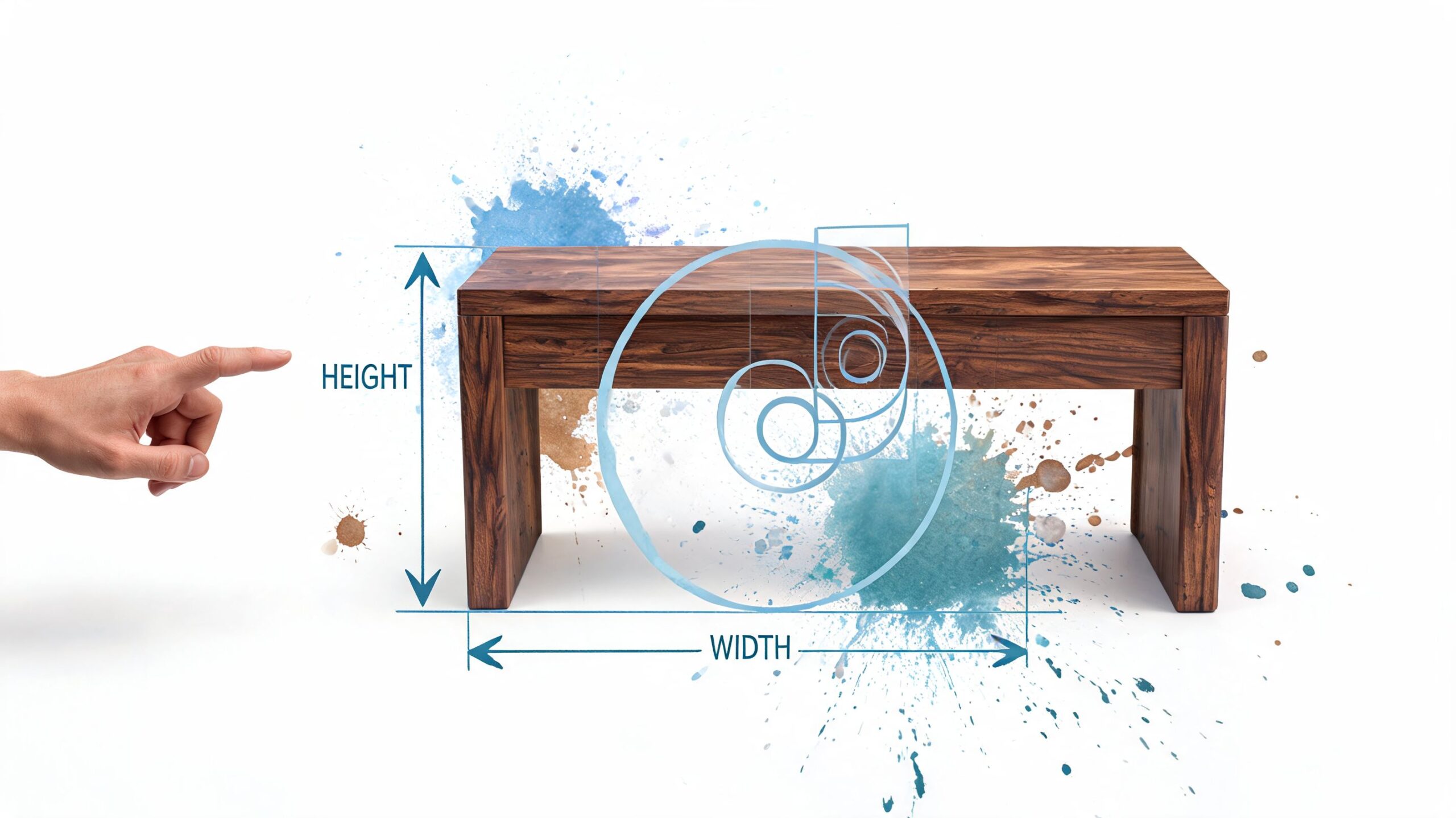
The fix is usually simple. Measure first, then buy for circulation, sightlines, and daily use. In Bay Area Interior Design, the homes vary widely. A compact city living room needs different proportions than an open suburban family room, even if both owners like the same table.
Start with the footprint, not the finish
Before choosing style, work through these practical checks:
- Walk the room. Make sure people can move comfortably around the coffee table, sofa, and chairs.
- Check visual weight. Thick legs, broad tops, and dark finishes all make a piece feel larger.
- Match height to function. Coffee tables should serve the seating, not fight it. Media pieces should support viewing without dominating the wall.
How solid wood fits different styles
One of the biggest misconceptions is that solid wood only suits rustic or traditional rooms. That's outdated. The same material can look warm and classic in one space, or quiet and architectural in another.
- Modern rooms benefit from cleaner silhouettes, thinner tops, and restrained grain patterns.
- Transitional spaces often do well with oak or walnut paired with soft upholstery and simple hardware.
- Collected interiors welcome visible grain, mixed textures, and pieces that look like they'll stay a while.
A living room also softens beautifully when wood is balanced with natural elements. If you want greenery that can handle indoor life without becoming a chore, this guide to hardy houseplants from The Cactus Outlet is a useful companion when you're finishing the room.
A room feels bigger when every piece has breathing room. Solid wood doesn't need help commanding attention.
Use custom sizing when standard dimensions miss the mark
Custom Furniture stops being a luxury idea and becomes a practical one at this stage. If your room has an odd wall length, a narrow walkway, or a fireplace that shifts the layout, standard sizes may force compromise. A slightly narrower console or a longer, lower media cabinet can solve the room cleanly.
For homeowners who want help balancing scale, finish, upholstery, and traffic flow, interior design consultation services can make the process more precise and less stressful.
The Lifetime Value and Sustainability of Solid Wood
A living room table in the Bay Area has a harder job than many buyers realize. Our coastal humidity shifts through the year, and lower-quality construction often shows it first. Veneers can lift, joints can loosen, and thin factory finishes can cloud or wear unevenly. Solid wood, built well and finished properly, handles those seasonal changes with more grace and gives you real options if the surface ever needs attention.
That matters because the true price of furniture shows up over time, not just on the receipt.
A cheaper piece can serve for a few years, then fail in ways that are expensive or impossible to correct cleanly. A solid wood coffee table, console, or media cabinet usually costs more upfront, but the long-term math is often better for homeowners who plan to stay put and use the room every day. You can repair a dent, refinish a top, tighten joinery, or replace a hardware component. You are maintaining an asset rather than disposing of a problem.
Buy-for-life value is practical, not sentimental
Well-made solid wood earns its keep in plain, measurable ways:
- The surface can be renewed instead of hidden under throws or replaced outright.
- Structural repairs are usually possible because the material has substance, not a thin decorative layer.
- Natural wood tends to age with dignity and stay relevant longer than trend-driven finishes that date a room quickly.
- Better construction holds up to Bay Area humidity swings with fewer surprises, especially when the piece is made with proper joinery and room for seasonal movement.
Sustainability starts there. Fewer replacements mean less waste, fewer delivery cycles, and less money spent buying the same function twice.
That same preference for durable, meaningful goods shows up outside furniture as well. The Ecuadane guide to strategic gifting makes a similar point. People keep and value well-made pieces longer than novelty items, and the same principle applies in the living room.
Why craftsmanship and origin matter over decades
Domestic hardwood furniture often gives buyers a clearer picture of what they are getting. Wood species are usually identified accurately. Finish systems are easier to understand. Replacement parts, touch-up work, and future refinishing are more realistic options when the maker stands behind the piece and uses standard construction methods.
That is one reason many homeowners start by comparing American-made solid wood furniture brands instead of shopping by price tag alone. The meaningful differences usually come down to board selection, joinery, finish quality, and whether the piece was designed to be serviced years from now.
A sustainable purchase is often a durable purchase. In our trade, that has always been the plain truth. Buy one good piece that suits your room, your climate, and your daily use, and the cost of ownership usually looks better with every passing year.
The Customization Factor Getting Your Perfect Piece
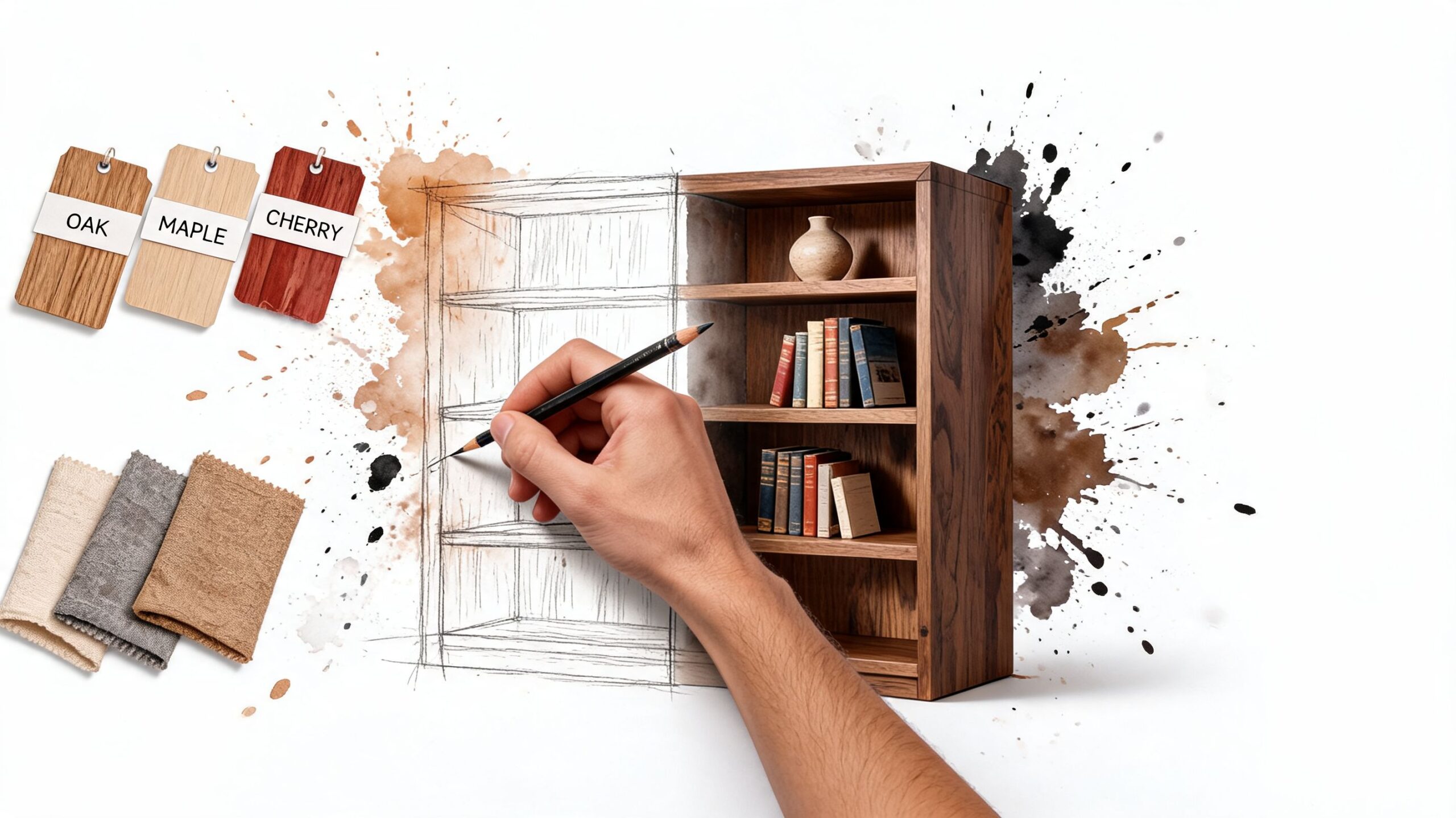
The best custom order is the one that solves a real problem. Maybe the wood tone needs to work with your floors. Maybe the room needs a narrower TV console than standard retail sizes offer. Maybe you want a wood species with more movement in the grain, or a finish that will age more softly with family use.
That's why customization should be understood as practical decision-making, not decoration for decoration's sake. You're removing compromises before they become regrets.
What custom changes for the long haul
A custom living room piece lets you align structure and style from the start.
- Wood species affects grain, color, and how the piece handles daily wear.
- Finish selection determines whether the surface feels formal, relaxed, matte, rich, or easy to touch up.
- Dimensions make the room work. This is often the most important choice of all.
- Material pairing matters on mixed pieces, especially where wood frames meet fabric or leather.
For homeowners shopping Amish Furniture or other bench-built lines, this flexibility is often the difference between “close enough” and “exactly right.” A room you use every day benefits from details you won't want to redo later.
Custom is often the smarter value
A standard piece can look less expensive at first, but it may cost more in compromise. If it's too deep for the room, too tall for the television, too dark for the light, or finished in a way that doesn't suit your climate, the lower ticket doesn't help much.
This is one place where customized TV stands make a good example. A media piece has to handle size, storage, cable management, and proportion all at once. A custom approach can solve those needs cleanly instead of asking you to work around them for years.
The right custom piece doesn't feel customized in a flashy way. It feels like it always belonged in the room.
One practical option many Bay Area homeowners consider is Giorgi Bros. Furniture, which offers custom-order access to wood species, finishes, fabrics, and leathers through American-made lines including Amish-built collections. That kind of flexibility is useful when you want a piece to last both structurally and stylistically.
Experience True Quality at Our South San Francisco Showroom
Research helps, but furniture still needs to be seen and touched. You can learn a lot from photos. You learn more when you open a drawer, feel the edge of a tabletop, sit with the scale of a piece, and compare wood finishes in real light.
That's especially true with solid wood furniture for living room spaces. Grain character, board selection, finish depth, and construction details rarely come through on a screen. In person, the differences are obvious.
Why a showroom visit changes the decision
A serious purchase deserves a setting where you can slow down and compare without pressure. That's where a long-established South San Francisco showroom has an advantage. You can see how oak differs from walnut, how a cleaner silhouette changes the room's mood, and how custom options affect the final result.
The other important part is guidance. Non-Commission Sales Staff create a different experience from the usual retail push. The conversation becomes about fit, materials, and long-term satisfaction, not about steering you toward whatever happens to be easiest to close that day.
Bring the real questions with you
When you visit, it helps to bring more than measurements.
- Bring photos of the room from several angles.
- Bring samples if you have flooring, paint, or fabric you need to coordinate.
- Bring your concerns about children, pets, humidity, sunlight, or layout.
- Ask about financing options are available if you'd rather invest in the right piece now and structure the purchase sensibly.
A full-home showroom also helps when the living room purchase connects to the rest of the house. It's easier to think cohesively when you can compare upholstery, case goods, and even furniture and mattress selections in one place rather than piecing the project together store by store.
Since 1933, families in the Bay Area have kept coming back to the same basic idea. Buy carefully. Choose quality you can feel. Let good furniture earn its keep over time.
If you're ready to see what lasting craftsmanship looks like in person, visit Giorgi Bros. Furniture in South San Francisco or book a Design Consultation. Our consultants offer no-pressure guidance, help with custom furniture options, and can walk you through wood species, finishes, fabrics, room scale, and practical investment pieces for the way you live.