You're standing in an empty room with a tape measure in one hand and far too many browser tabs open in the other. One sofa looks perfect online but seems too deep for your living room. One mattress promises support, another promises softness, and a third has a name so technical it sounds like lab equipment. If you're furnishing a Bay Area home, that confusion is normal.
Furniture and mattress shopping gets harder when you want your choices to last. A quick fix can fill a room. A thoughtful purchase can shape how you live for years. That difference matters in homes that work hard, from compact city spaces to larger family homes where the dining table, sofa, and bed all need to earn their keep.
A family business that's been helping Bay Area households since 1933 learns a few things. Trends come and go. Good construction still matters. Comfort still matters. And no-pressure guidance usually leads to better decisions than rushed buying ever does.
Investing in Your Home for a Lifetime
A lot of people start with style. I usually suggest starting with lifespan.
If you buy a chair, sofa, dining set, or mattress only for how it looks this season, you often end up shopping again sooner than expected. If you buy for how it will feel, wear, and function over time, your home becomes easier to live in and less wasteful to maintain. That's the heart of a buy-it-for-life mindset.

Why this mindset matters now
The furniture business changed dramatically over time. American manufacturers once dominated the market, but that balance shifted as imports grew. The turning point became especially clear when China entered the U.S. market in 1995, capturing 13% of U.S. imports that year and reaching a 48% market share by 2004, a change that put major pressure on domestic craftsmanship and custom work, as noted in this furniture industry history from Woodworking Network.
That history still shows up in the choices in front of shoppers today. Some pieces are made to sell fast. Others are built to stay useful, repairable, and relevant.
Practical rule: Buy the frame before you buy the fashion. Cushions, fabric, and finish matter, but structure decides whether a piece ages well.
What long-term value looks like
A lasting home doesn't have to look formal or old-fashioned. It just needs pieces that fit your life.
- A sofa should support daily use. If your family spends every evening there, construction matters more than trend color.
- A dining table should survive real meals. Homework, holidays, and spills tell you more than a showroom vignette ever will.
- A mattress should help you recover. Sleep is not decor. It's part of your health routine.
For many Bay Area homeowners, the smartest furniture and mattress purchases aren't the flashiest ones. They're the ones that still feel right after years of use, a move across town, or a remodel that changes everything around them.
How to Choose Your Perfect Premium Mattress
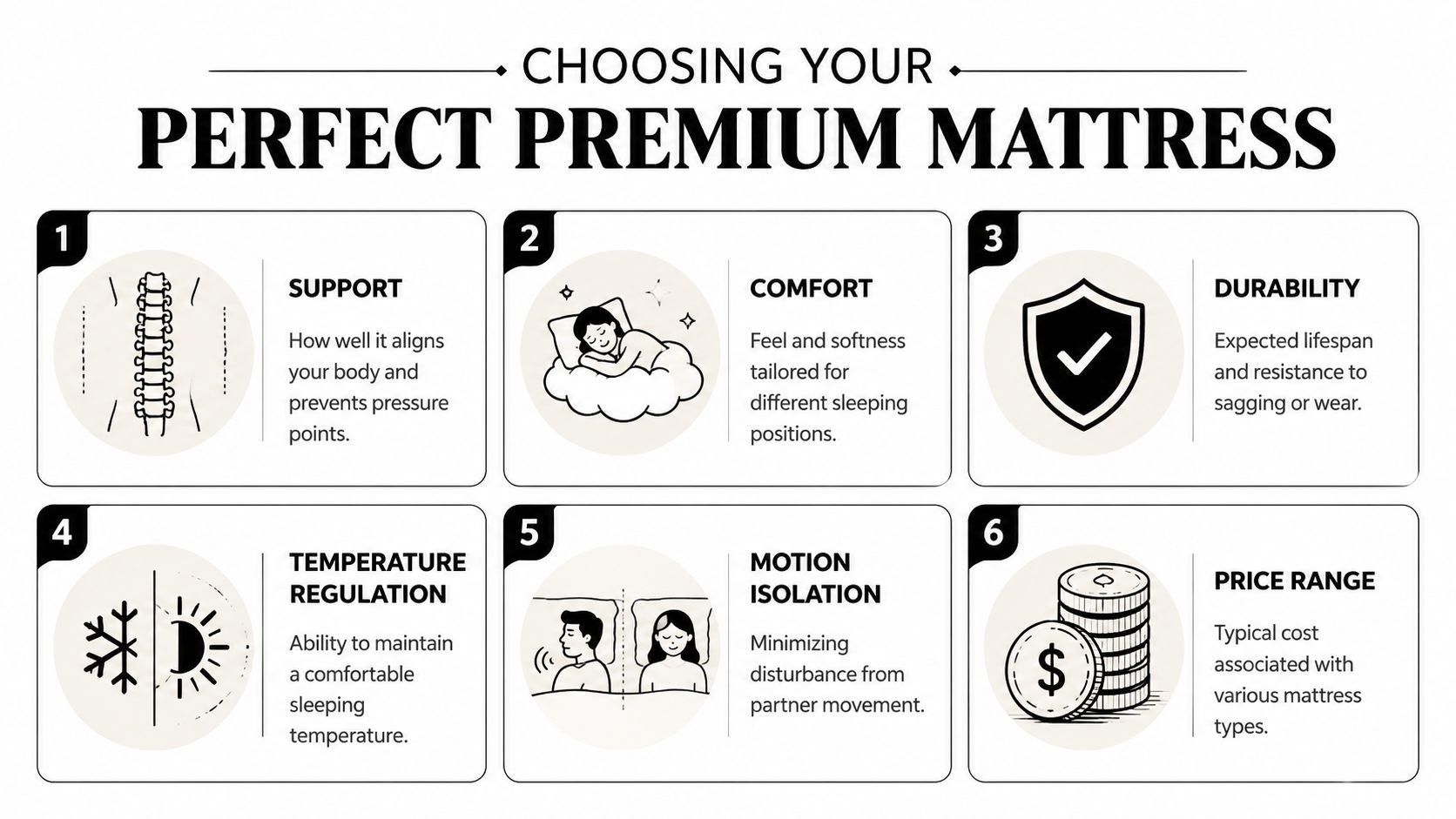
Mattress shopping gets confusing because people often mix up support and firmness. They aren't the same thing. Support is how well the mattress keeps your body aligned. Firmness is how the surface feels when you lie down.
A mattress can feel plush on top and still support your back well. Another can feel hard and still not be the right fit for your body.
Start with the mattress type
The broad categories help, but simple language helps more.
| Mattress Type | Key Benefit | Feels Like | Best For |
|---|---|---|---|
| Spring or coil | Strong support and structure | Buoyant, lifted, easier to move on | Shoppers who want a classic feel and long-term support |
| Memory foam | Pressure relief | A supportive hug | Side sleepers and people who like contouring |
| Latex | Responsive comfort | Springy but cushioned | Sleepers who want ease of movement and a balanced feel |
| Hybrid | Blends support and cushioning | A mix of lift and contour | People who want features from more than one category |
The spring or coil category remains the dominant technology. In 2026, the spring/coil segment accounts for 65.39% of the mattress market, reflecting its continued role in durability and support distribution according to Fortune Business Insights on the mattress market. For shoppers who want a mattress to buy for life, that's a useful place to begin.
Match feel to how you sleep
A mattress should suit your sleeping position, not just your first impression in the showroom.
- Side sleepers usually need enough surface give at the shoulder and hip.
- Back sleepers often do well with a balanced feel that keeps the hips from dipping too far.
- Stomach sleepers generally need a surface that helps keep the midsection from sinking.
If you share a bed, think about both people. One partner may want less motion transfer. The other may care more about easier movement or cooler sleep.
Don't judge a mattress in thirty seconds. Your body needs a few minutes to settle before you can tell whether pressure is building or support is holding.
Pay attention to the details buyers skip
Shoppers often focus on plush versus firm and miss the other half of the decision.
Consider these questions:
- Do you sleep warm? Some materials hold heat differently from others.
- Do you change position often? A mattress with significant contouring may feel great, but some sleepers find it harder to turn.
- Do you sit on the bed edge often? Edge support matters more than many think.
- Will you use an adjustable base later? Not every mattress works the same way with one.
If you want a second opinion beyond the usual marketing language, the NZ guide to choosing a mattress offers a helpful outside perspective on comfort preferences and mattress basics.
You can also compare those ideas with a more detailed local resource like this mattress buying guide, which walks through common decision points in practical terms.
What a good test feels like
A good mattress test should answer three things quickly:
- Alignment: Does your back feel supported?
- Pressure relief: Do your shoulders, hips, or lower back start complaining?
- Ease of movement: Can you change position without fighting the bed?
The right premium mattress doesn't just feel comfortable in the moment. It makes sense for how you sleep night after night.
Matching Furniture to Your Bay Area Home's Scale
A beautiful sofa can still be wrong for the room. So can a dining table, bed, or sectional. In Bay Area homes, scale matters because layouts vary so much. A San Francisco condo needs a different approach than a wider suburban floor plan, even when the decorating style is similar.
Most sizing mistakes happen because people shop with their eyes first and their floor plan second.

Measure the room, then measure the path
A piece has to fit your home in two ways. It must fit the room, and it must get there.
Before you commit, check:
- Room dimensions. Measure wall lengths, window placement, and where doors swing.
- Walking space. Leave enough room to move naturally around the furniture.
- Entry access. Hallways, stair turns, elevators, and door openings can decide what's realistic.
- Visual weight. A leggy sofa often feels lighter in a small room than a bulky skirted one, even if their dimensions are close.
Use one anchor piece
Every room needs a starting point. In a living room, it's often the sofa. In a bedroom, it's the bed. In a dining room, it's the table.
Once that anchor is right, the rest becomes easier.
If the biggest piece is too large, everything else feels squeezed. If it's too small, the room feels unfinished no matter how much you add.
A compact apartment may benefit from a sofa with slimmer arms and a shallower depth. A larger family room can handle a sectional, but only if the shape still allows conversation, lighting access, and movement.
For more room-specific ideas, this guide to choosing living room furniture is useful for thinking through seating, tables, and layout choices.
Think in function, not just categories
A lot of Bay Area homes need furniture to do more than one job. That's not a compromise. It's good planning.
- Ottomans can soften a room and provide flexible seating.
- Round dining tables can improve flow in tighter spaces.
- Beds with a lighter visual profile can keep smaller bedrooms from feeling heavy.
- Storage pieces should fit your habits. A handsome cabinet is less helpful if the shelves don't match what you need to store.
The best-scaled room usually feels calm before it feels impressive. You walk in and nothing fights you. That's a better sign than dramatic styling.
The Value of Custom Amish and American-Made Furniture
One of the biggest misunderstandings in furniture shopping is the belief that what you see on the floor is all you can have. In better furniture, that's rarely true.
Custom furniture gives you control over the parts that matter most in daily life. Fabric that suits your household. Leather that will age the way you want. Wood species and finishes that work with the architecture of your home instead of competing with it.

Why customization is practical
Custom doesn't only mean personal taste. It also means better fit.
A Bay Area homeowner might love a sofa style but need a different fabric for sunlight, pets, or everyday wear. A dining set may need a different finish tone to sit comfortably next to existing floors. A bedroom may need a bed with a certain scale, wood character, or upholstery texture to feel settled rather than pieced together.
That's where Custom Furniture earns its value. It reduces the chance that you'll replace something because one detail was wrong from the start.
Why American-made still matters
Domestic craftsmanship remains important for buyers who care how furniture is built. Regions like North Carolina still supply approximately 60% of the furniture found in American homes today, underscoring the staying power of U.S. manufacturing traditions, as referenced in the earlier industry discussion.
Amish Furniture often stands out in this conversation because the materials and joinery tend to reflect a slower, more deliberate building process. You can feel that in a table top, drawer, chair back, or bed rail. These pieces are usually meant to be used hard and kept long.
- Solid wood offers repair potential. Scratches and wear can often be addressed instead of hidden.
- Custom finishes make integration easier. Your new piece doesn't have to fight with what you already own.
- Timeless forms age better. They survive remodels and changing tastes more gracefully than trend-driven shapes.
A practical overview of brands and construction styles appears in this American-made furniture guide, especially for shoppers comparing craftsmanship across categories.
The sustainability side of buying well
Fast replacement creates a hidden cost. You spend again, dispose again, and often settle again.
Well-made American and Amish pieces approach sustainability in a more grounded way. You buy fewer things. You keep them longer. You repair or reupholster instead of replacing when the bones are still strong.
That's one of the quiet advantages of investment pieces. Their value doesn't come from being flashy. It comes from staying useful.
Creating a Complete and Personalized Sleep System
Most mattress advice stops too early. It talks about firmness and materials, then sends you on your way. Real comfort is broader than that.
A bed works best as a sleep system. The mattress is the center, but the base, pillow, protector, bedding choices, and room conditions all shape the final result.
Why personalization matters
There's a real content gap around true mattress personalization. Many guides stay generic and don't explain how adjustable bases, frame choices, and local climate factors can affect sleep quality, a gap highlighted in this discussion of personalization in mattress guidance.
That gap matters in the Bay Area because “local climate” isn't one thing. Coastal conditions can feel very different from inland warmth. A sleep setup that feels cozy in one home may feel stuffy in another.
Build the system around your habits
A few examples make this easier to picture.
If you read in bed, an adjustable base may matter as much as the mattress itself. If you deal with snoring, reflux, or just want a more supported lounging position, adjustability can change how useful the bed feels outside of sleeping hours. If your shoulders bother you, pillow height becomes part of alignment, not just comfort.
This adjustable base guide is a practical reference if you're trying to understand compatibility and everyday use.
The mattress you choose should work with the way you live at night and the way you recover by morning.
Don't treat accessories like afterthoughts
These details often decide whether a good mattress becomes a great sleep setup:
- Pillows: The right loft helps keep your neck aligned with your sleep position.
- Mattress protectors: Protection matters, but breathability matters too.
- Bed frames and foundations: The mattress performs better when the support underneath is appropriate.
- Layering choices: Heavy bedding can change how warm a mattress feels.
That's why Premium Mattresses should never be judged in isolation. The full system is what your body experiences.
Budgeting and Testing Tips for a Confident Purchase
Furniture and mattress buying gets easier when you stop asking, “What's cheapest today?” and start asking, “What will still serve me well years from now?” Those are different questions, and they lead to different decisions.
That perspective matters because this is a major category of home spending. The global furniture market is projected to reach USD 1.09 trillion by 2034, a sign of how significant these purchases are within home renovation and lifestyle spending, according to Statista's overview of the worldwide furniture market.
Build a budget around lifespan
A smart budget should include more than the ticket price.
Think about:
- How long you expect to keep it. A lower upfront cost can become expensive if replacement comes sooner.
- How heavily it will be used. The family sofa and the guest room chair do not need the same level of investment.
- Whether customization will prevent regret. The right fabric, finish, or size can save you from replacing an otherwise good piece.
- Cash flow comfort. Financing options are available, which can help align quality purchases with practical budgeting.
Test in person like you mean it
A showroom visit should answer questions, not create pressure. Wear comfortable clothes. Bring room measurements. Save photos of your space. Sit, lie down, and pay attention to what your body tells you.
For mattresses, stay on the bed long enough to notice pressure points and support. For seating, don't just perch on the edge. Sit the way you'd sit at home.
Ask consultants questions like these:
- What can be customized?
- How will this material wear with pets or children?
- Does this seat depth suit how I sit?
- Will this mattress work with an adjustable base later?
If pets are part of the household, practical care matters too. The pet-friendly couch cover guide from The Sofa Cover Crafter is a useful read for thinking through everyday protection and maintenance.
One more helpful planning resource is this guide to shopping for furniture smartly, especially if you want a more organized way to compare quality, scale, and function before you buy.
Good testing is slow. If you feel rushed, you probably won't notice the details that matter most.
Your Partner in Bay Area Interior Design Since 1933
A Bay Area home often asks more of furniture than a catalog photo can show. A compact city condo needs pieces that earn every inch. A hillside house may call for different scale, traffic flow, and lighting. A family in the Peninsula might want one room to handle homework, hosting, and quiet evenings without wearing out in three years.
That is why experienced guidance still matters.
Good design help is less about chasing trends and more about making sound decisions you can live with for decades. The strongest rooms are built the same way a good retirement portfolio is built. One careful choice at a time, with attention to durability, fit, and what will still serve you well years from now. In the Bay Area, where homes vary widely and every square foot carries real value, that long-view mindset protects both comfort and budget.
If you are refining the final layers of a room, lighting deserves the same care as upholstery and scale. These expert interior wall sconce lighting tips can help you balance mood, function, and proportion so the room feels settled instead of pieced together.
For shoppers looking for Furniture South San Francisco and broader Bay Area Interior Design guidance, Giorgi Bros. Furniture offers a family-owned showroom experience with non-commission consultants, custom order options in fabrics, leathers, wood species, and finishes, plus sleep products and delivery support. That kind of support helps when you want to compare furniture and mattress choices in person, ask better questions, and buy with the confidence that comes from seeing how things are made and how they will live in your home.
The homes that age well are rarely furnished all at once. They are built patiently, adjusted thoughtfully, and filled with pieces worth keeping.