
You’re probably starting where most dining chair searches begin. You’ve found a table you like, opened a dozen tabs, and now every chair starts to blur together. Some look sleek but uncomfortable. Some seem sturdy but heavy. Others are labeled “modern” when they’re really just trendy for the moment.
That’s where a little patience helps.
A dining chair does more than fill space around a table. It supports weeknight dinners, coffee with a neighbor, homework spread across the tabletop, and the long holiday meals where nobody wants to get up. Since 1933, our family has helped Bay Area homeowners think past the quick purchase and toward the right investment piece. The goal isn’t pressure. It’s clarity.
Your Guide to Finding the Perfect Dining Chairs
The struggle isn’t because there are too few options. It's because there are too many, and the differences that matter aren’t always visible in a photo. A chair can look beautiful online and still feel wrong once you sit in it. The seat may be too shallow. The back may hit at an awkward height. The finish may clash with your floors, even though it looked perfect on a screen.
That’s why it helps to start with the room, not the chair.
Look at your table shape, your flooring, the amount of daylight in the space, and how you live. If you host often, comfort needs to rank high. If your dining area opens into the kitchen and family room, the chairs need to connect with the rest of the home instead of acting like a separate design language. If you’re still deciding on the overall look, studying virtually staged dining rooms can help you compare silhouettes, finishes, and mixed-chair layouts before you commit.
A few priorities usually bring the decision into focus:
- Comfort first: A chair that looks sculptural but feels rigid won’t invite anyone to stay.
- Style second: Modern dining room chairs should fit your home’s architecture, not fight it.
- Construction always: Good materials and joinery matter more than a clever product name.
- Customization when possible: The right finish, fabric, or wood species often makes the chair feel meant for your home.
If you’re still shaping the whole room, our guide to how to furnish a dining room is a useful next step because it helps you see the chairs as part of a complete setting, not an isolated purchase.
Practical rule: If a chair only wins in the photo, keep looking. The right chair needs to work in the room, at the table, and under real daily use.
What Exactly Is a Modern Dining Chair
“Modern” gets used loosely in furniture. Sometimes it means mid-century. Sometimes it means minimal. Sometimes it just means new. In a showroom, that can confuse people quickly.
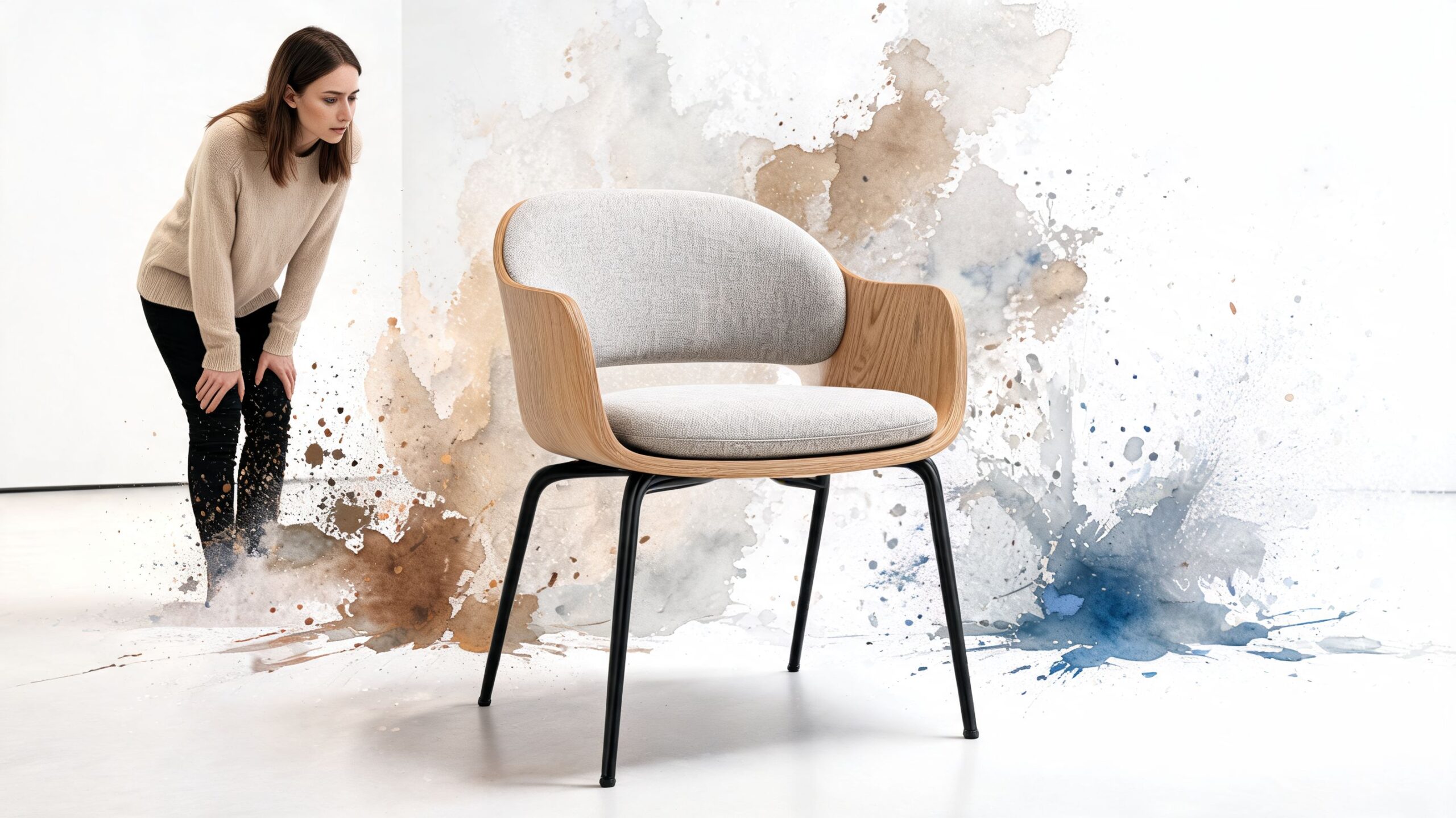
A better definition is this. A modern dining chair values clean lines, useful form, and honest materials. It doesn’t need to be cold or stark. It just needs to feel purposeful.
Modern style has a long history
Dining chairs didn’t begin as casual household pieces. Their origins stretch back to ancient Egypt, where they served as ceremonial seating for nobles. Over time, chairs moved from symbols of status to everyday household furniture, and each period changed the form. Medieval chairs were ornate and formal. Renaissance designs became more comfortable and refined. Later production methods made chairs more accessible to ordinary homes.
The big leap into the modern aesthetic came in the twentieth century. According to the history of the chair overview, designers embraced tubular chrome-plated steel and bent plywood in the 1920s and 1930s. After World War II, Charles and Ray Eames used wartime plywood research to create molded plywood dining chairs in the 1940s and 1950s, shaping the mid-century modern look with forms that were functional and adaptable to everyday life.
That history matters because it explains why modern chairs often look simple. The simplicity is intentional. It comes from solving practical problems with better design.
Modern doesn’t mean one look
Many shoppers think modern dining room chairs must be slim walnut frames with angled legs. That’s one version, but it’s far from the only one.
A modern chair can lean in several directions:
| Style direction | What it tends to look like | Where it works well |
|---|---|---|
| Mid-century inspired | Tapered legs, curved wood, molded seats | Ranch homes, classic Bay Area remodels |
| Scandinavian | Light woods, soft curves, visual calm | Bright kitchens, casual family spaces |
| Industrial modern | Mixed wood and metal, sharper lines | Lofts, urban condos, open-plan homes |
| Soft contemporary | Upholstered seats, rounded edges, quieter silhouettes | Transitional interiors, homes that want warmth |
If you want a visual reference point for these forms, our collection of modern furniture classics shows how different modern silhouettes can still feel timeless.
A good modern chair doesn’t ask for attention in the room. It earns it quietly through proportion, comfort, and finish.
The Foundation of Quality Materials and Construction
A dining chair gets tested more than people expect. It’s pulled across the floor, leaned back on, moved from room to room, and used by guests of every age. If the frame is weak or the upholstery is poor, those problems show up quickly.
That’s why the conversation should start with what the chair is made of and how it’s built.
Why the frame matters
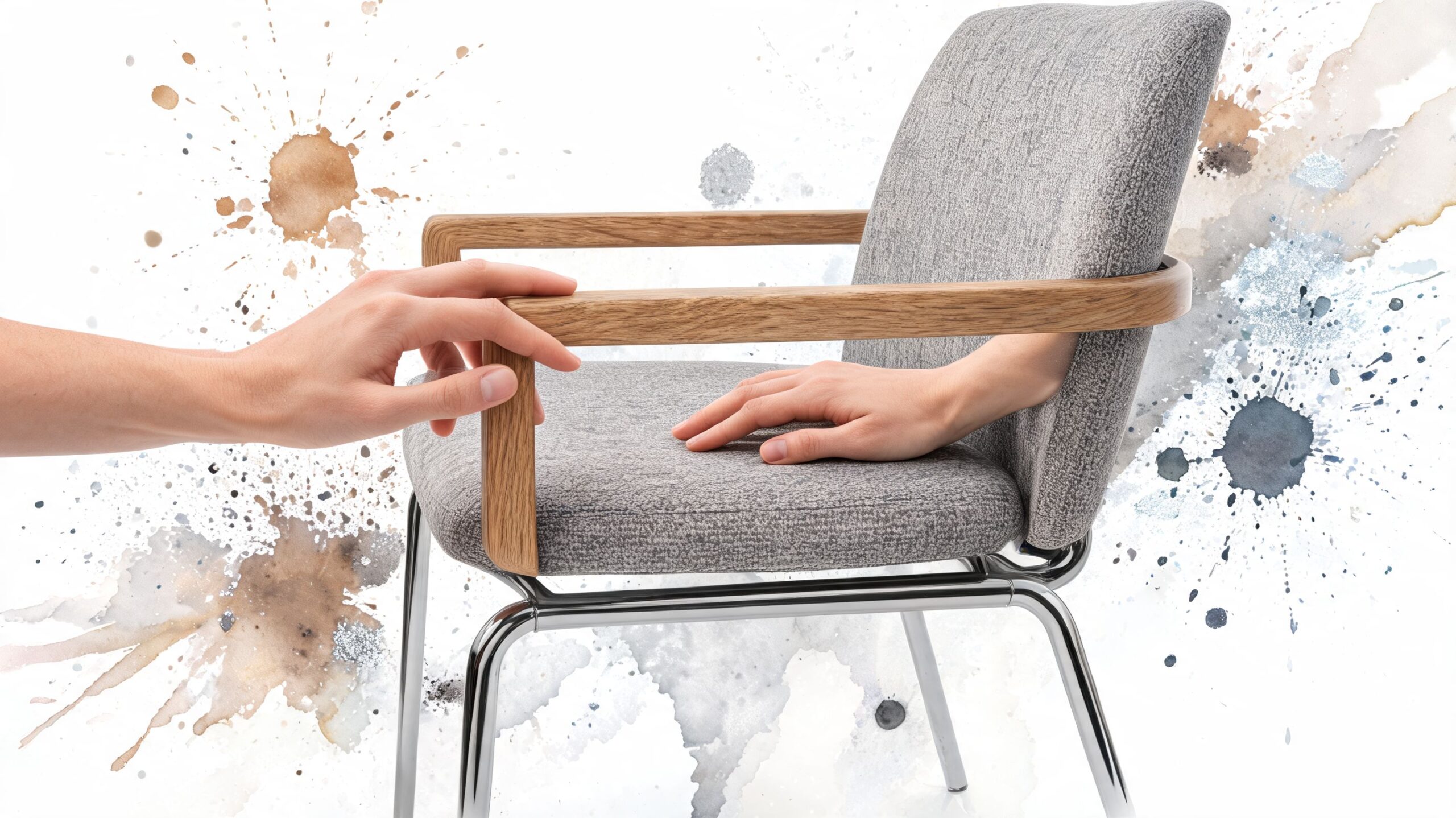
Mass-market chairs often rely on shortcuts you can’t see at first glance. Thin components, simplified joinery, and glued assembly can keep prices low, but they also reduce stability over time. That’s why one chair develops a wobble while another stays solid year after year.
Solid hardwood changes the equation. Maple, oak, and walnut each bring a different personality to a chair, but they all offer the kind of strength that supports daily use well. This is one reason Amish-made dining furniture continues to appeal to homeowners who want a modern look without disposable construction. The silhouette can feel current, but the build quality remains grounded in traditional craftsmanship.
For shoppers comparing options, maple dining room chairs are a good example of how a lighter American hardwood can look clean and contemporary without giving up durability.
Comfort comes from engineering, not guesswork
Many people judge comfort in the first thirty seconds. That’s understandable, but short sits can be misleading. Real comfort shows up after the meal has started, when people relax back into the chair.
The backrest plays a major role. The dining chair guidance from ZM Home’s chair selection article notes that an optimal backrest height is 12 to 20 inches from the seat with a 10 to 15 degree recline angle. That combination supports the lower back and can reduce paraspinal muscle fatigue by 25 to 40% during longer meals. The same source also notes that high-performance fabrics rated for 50,000+ double rubs on the Wyzenbeek test and frames built with mortise-and-tenon joints can deliver a lifespan 2 to 3 times longer than glued imports.
That sounds technical, but the takeaway is simple. A good chair supports you in a natural position and keeps doing it for years.
Upholstery should fit your life
Not every dining room needs the same seat surface. A formal room might call for leather. A busy household may be better served by performance fabric. An all-wood chair can be beautiful in the right setting, but upholstery often adds the softness people want in an open-plan home.
Use this quick comparison when you narrow your choices:
- Leather: Ages beautifully, wipes clean easily, and suits both sleek and rustic-modern rooms.
- Performance fabric: Practical for frequent use and available in textures that soften a modern silhouette.
- Wood seat: Crisp and architectural, often best when comfort is supported by good shaping.
A smart chair purchase is sustainable because it avoids replacement. You buy once, live with it well, and keep it in the home instead of sending it out after a few seasons.
Sizing and Ergonomics for Lasting Comfort
A chair can be beautifully made and still feel wrong if the proportions don’t match your table or your body. This situation often frustrates many shoppers. They assume comfort is subjective, when some of it is a matter of sizing.
The good news is that the main measurements are easy to understand once you know what to check.
The numbers that matter most
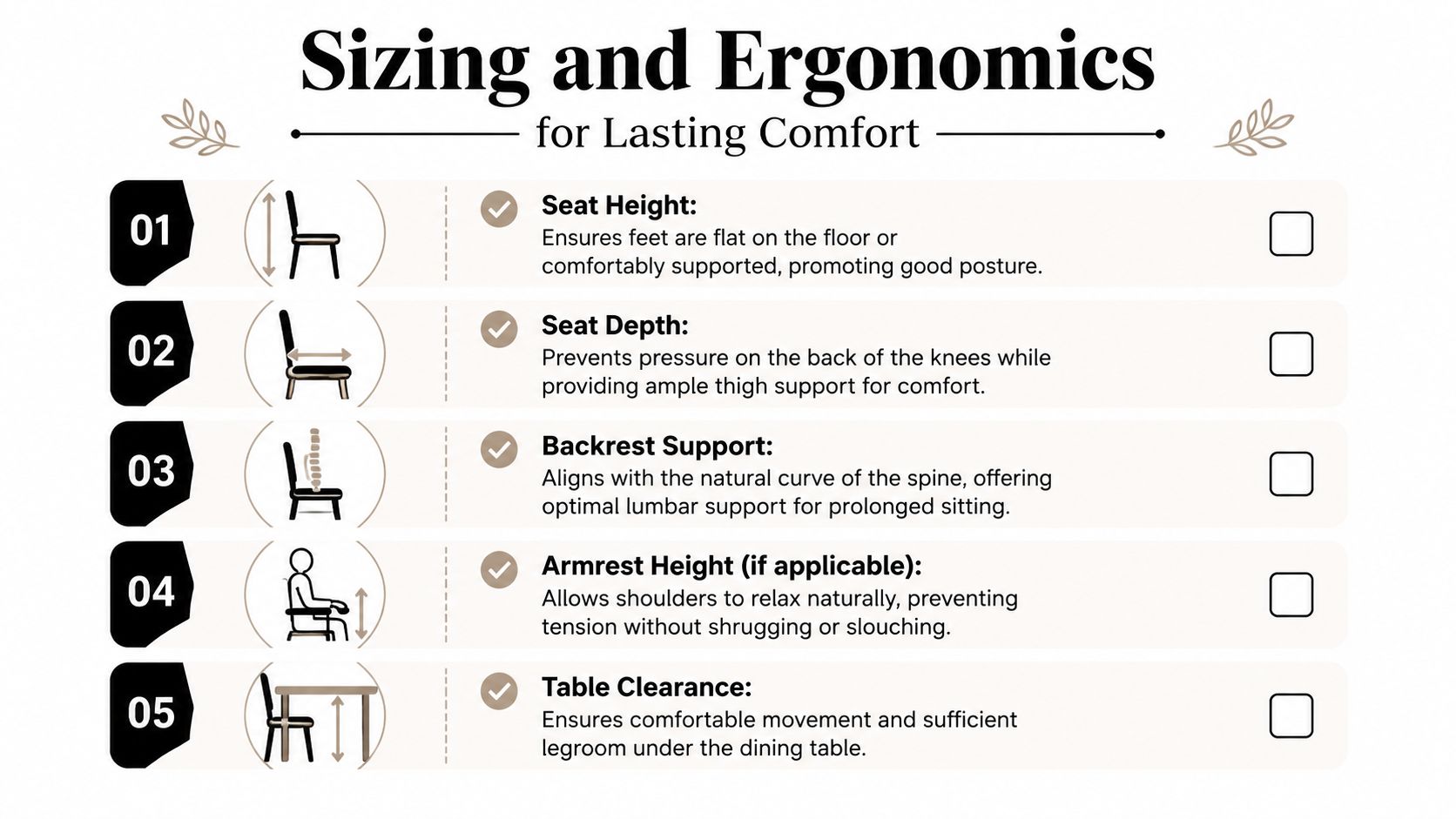
The sizing guidance from AllModern’s dining chair dimensions article gives a reliable baseline. Standard modern dining chair seat height is 17 to 20 inches, which is designed to leave 10 to 12 inches of clearance under a standard 28 to 30 inch dining table. Typical seat width is 16 to 20 inches. For spacing, a helpful rule is to allow 24 to 26 inches of table length per chair and leave 6 inches between chairs for comfort.
Those measurements are useful because they solve common problems before they start.
- Seat height: Too high, and knees feel crowded under the apron. Too low, and the table feels awkwardly tall.
- Seat width: Too narrow, and the chair feels restrictive. Too wide, and you lose valuable room around the table.
- Spacing: If chairs are squeezed together, even a beautiful dining room feels tense.
How to measure your room like a consultant
Bring a tape measure to the table before you shop. Measure the distance between table legs, not just the tabletop edge. That gives you the usable span for seating.
Then ask these questions:
- Will the chair tuck in cleanly? This matters most with arms.
- Can guests sit down without bumping elbows? That’s where spacing rules help.
- Does the chair back suit the room? A visually heavy back can overwhelm a smaller dining area even if the dimensions technically fit.
Here’s a simple checklist you can use at home:
| Checkpoint | What to look for |
|---|---|
| Under-table clearance | Enough room for legs and apron space |
| Chair width | Comfortable seat without crowding neighbors |
| Overall depth | Enough room to pull the chair out and walk behind it |
| Arm height if applicable | Arms that don’t collide with the tabletop |
| Visual scale | A silhouette that matches the table and room size |
If you’re choosing between two sizes, the one that leaves easier movement around the table usually ages better in real life.
The Art of Customization for Your Perfect Chair
You find a chair with the clean lines you want, then the finish fights the floor, the fabric feels too formal, or the scale looks a little off once it sits beside your table. That is usually the moment clients realize that a modern shape alone is not enough. The chair also has to belong to the room.
A custom approach gives you that fit. Instead of accepting a fixed set of options from a mass-market collection, you can adjust the details that make a chair feel settled and intentional in your home.
Why homeowners are looking beyond off-the-floor options
For years, many shoppers associated modern dining chairs with imported pieces in preset finishes and limited fabrics. That model works if your room matches the showroom exactly. Many dining rooms do not.
Real homes have warm or cool light, wood floors with undertones, nearby cabinetry, and family routines that affect how a chair should look and wear over time. A customizable chair lets you respond to those conditions instead of forcing the room to adapt to a boxed set.
That is also where the gap between mass-market modern and American-made craftsmanship starts to close. A chair can have a simple, current silhouette and still be built with the care, material depth, and made-to-order flexibility people often associate with Amish or bench-made furniture.
What customization actually changes
Customization sounds complicated until you break it into parts. It works like tailoring a jacket. The overall style may already be right, but the final choices determine whether it feels merely acceptable or made for you.
You might adjust:
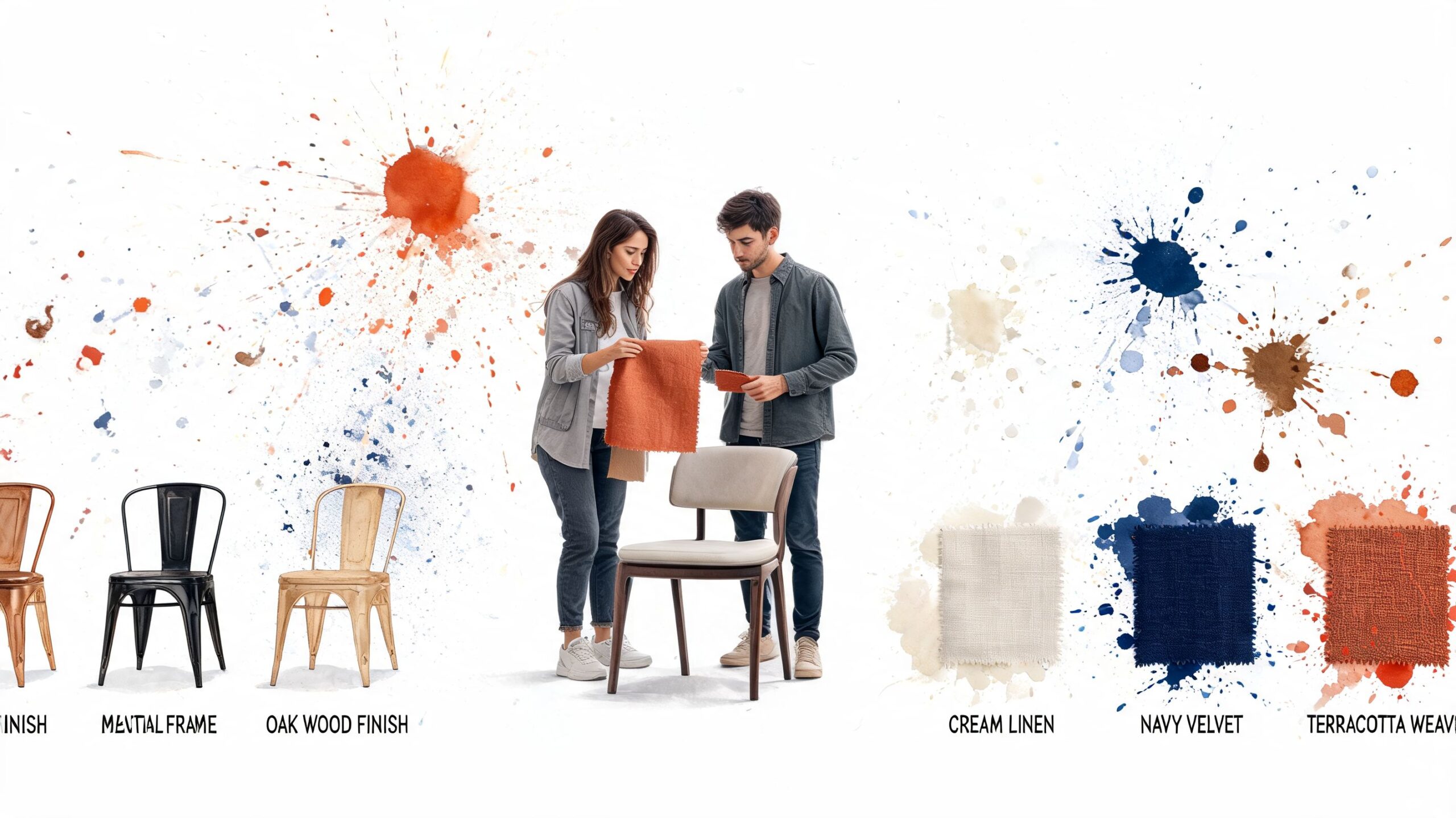
- Wood species to relate to existing cabinetry, flooring, or the table base
- Finish color to keep the room light, grounded, warm, or more architectural
- Seat material based on how you live, such as leather for easier wipe-downs or fabric for softness
- Fabric texture to add depth to a clean-lined frame
- Details in the silhouette that keep the chair looking modern without feeling cold
Small changes carry a lot of visual weight. A white oak frame can read calm and airy. The same chair in walnut can feel richer and more sculptural. A textured neutral fabric softens a crisp profile in much the same way a rug softens a room with hard flooring.
If you want a clearer picture of how those decisions come together, this guide to custom furniture made simple explains the process in practical terms.
Why this matters for a long-term purchase
The best custom dining chair is not the one with the most options. It is the one with the right options.
That distinction matters because dining chairs get used up close and often. You see the finish in daylight and lamplight. You feel the seat at quick breakfasts and long holiday dinners. A chair that is only "close enough" tends to show its compromises over time. A chair chosen with care usually grows more convincing as the room around it evolves.
This is one reason modern dining room chairs with Amish craftsmanship appeal to so many thoughtful buyers. You can get the clean, uncluttered look people want today, while still investing in joinery, materials, and customization that support decades of use.
Personalization is often the difference between “nice” and “right”
Giorgi Bros. Furniture offers custom order programs across wood species, finishes, leathers, and fabrics through American-made brands. For homes where the dining area connects visually to the kitchen, living room, or a recent remodel, that flexibility helps the chair feel integrated rather than approximate.
The most successful modern dining rooms rarely depend on a trendy chair. They depend on well-chosen materials, clear proportions, and details that feel at home for years.
Mixing and Matching Chairs With Confidence
A perfectly matched dining set can still work, but many of the most interesting dining rooms feel a little more collected. Mixing chairs adds personality. It also lets you solve practical issues, like giving the heads of the table more presence or softening a room with upholstered end chairs.
The trick is to mix with intention.
Three ways to keep the look cohesive
The safest method is to keep one element consistent while changing another. You might vary the chair shape but hold the wood tone steady. Or keep the silhouette related while changing the fabric.
Here are three combinations that work well:
- Same finish, different forms: Side chairs and armchairs in the same wood create variety without looking random.
- Same shape, different upholstery: This works especially well if you want subtle contrast.
- Feature chairs at the ends: Use armchairs or slightly taller backs at the heads of the table while side chairs stay simpler.
If you like the idea of softer seating in the mix, a bench can also help break up repetition. A resource such as slipcovered bench dining ideas can be helpful if you want to add texture on one side of the table while keeping chairs on the others.
What usually goes wrong
Most mixed-chair mistakes come from changing too many variables at once. If the wood tone, seat height, back height, and style language all differ, the arrangement starts to feel accidental.
A better approach is to ask one question. What should tie this group together?
It might be color. It might be line. It might be scale.
Keep at least one common thread between every chair at the table. That thread is what makes the room feel designed instead of assembled.
This is also where non-commission Design Experts are useful. Sometimes a pairing looks uncertain on paper but feels balanced once you see the pieces side by side.
Choose for Today and for a Lifetime
A dining chair earns its place slowly. It has to feel right on an ordinary Tuesday night, still look at home after a paint color changes, and keep its structure after years of meals, homework, and holiday gatherings.
That is why the smartest modern choice is rarely the quickest one.
Many mass-market chairs are designed to catch your eye in a photo and hit a price point. Investment pieces are built differently. They are made to be lived with, repaired, refinished, and adapted for the room you have. That distinction matters if you want a modern dining space that feels current now but never disposable.
A good way to judge value is to ask a simple question: will this chair still make sense in ten or twenty years? Solid hardwood, replaceable upholstery, and bench-made construction usually age with more grace than lightweight materials and fixed finishes. American-made pieces, including Amish-crafted options, often appeal for exactly this reason. They bring clean lines and updated proportions, but they are grounded in old-world joinery and long-term use rather than short product cycles.
That approach also supports a more thoughtful home. Buying fewer, better pieces reduces the need for constant replacement. If you already have a well-made dining table with good bones, services that restore your home's wood can help you refresh the table and pair it with new chairs, instead of starting over. The result usually feels more personal, and far more enduring.
For Bay Area families, this is often the difference between furnishing a room and building one. A dining room should adapt as your life changes, whether that means new upholstery, a different finish, or a fresh table surface years from now. Chairs chosen with that kind of foresight do more than match today's style. They become part of the home.