
An empty dining room can feel deceptively simple. Four walls, a light fixture, maybe a window, maybe an old table you’ve already decided needs to go. Then the questions start. What size table fits? Do you buy the chairs first or the rug first? Should everything match? What’s worth spending on, and what will only need replacing a few years from now?
That’s where most costly mistakes begin. Not with bad taste, but with rushed decisions.
A well-furnished dining room does more than look finished. It supports weekday dinners, holiday meals, school projects, long conversations, and the kind of everyday use that reveals very quickly whether a piece was built well or only looked good in a photo. If you’re learning how to furnish a dining room, the best place to start isn’t color or style. It’s planning, scale, and construction.
That practical approach matters even more now. The global living and dining room market is projected to reach USD 241.61 billion by 2033, a reflection of how strongly homeowners continue to invest in spaces that support organization, comfort, and interior style, according to Grand View Research’s living and dining room market report.
Excellent dining rooms are rarely the result of luck. They emerge from precise measurements, selecting a single dominant centerpiece, and layering in items that suit the space and the way your household lives. These thoughtful results also tend to endure. This longevity benefits your budget and supports sustainability. Choosing quality pieces once creates far less waste than replacing fragile furniture every several years.
Introduction
The dining room asks a lot from furniture. It needs to feel welcoming, but it also has to work hard. Chairs get dragged. Tabletops get wiped constantly. Storage pieces take the brunt of servingware, linens, and all the little things that need a home.
That’s why the first rule is simple. Measure twice, buy once. Most dining room frustration comes from one of three issues: a table that’s too large for the circulation around it, chairs chosen for looks instead of comfort, or finishing pieces added without considering scale.
Practical rule: If the room doesn’t function easily when fully occupied, it isn’t furnished well, no matter how attractive the pieces are.
There’s also an emotional side to this room that people sometimes overlook at the start. Dining furniture often becomes part of family memory. Children grow up around it. Holidays repeat around it. A solid wood table with a finish you chose carefully can age with grace and still look right years from now.
That’s a very different mindset from buying whatever is available for quick delivery. It shifts the question from “What can I get today?” to “What will still serve this home beautifully years from now?”
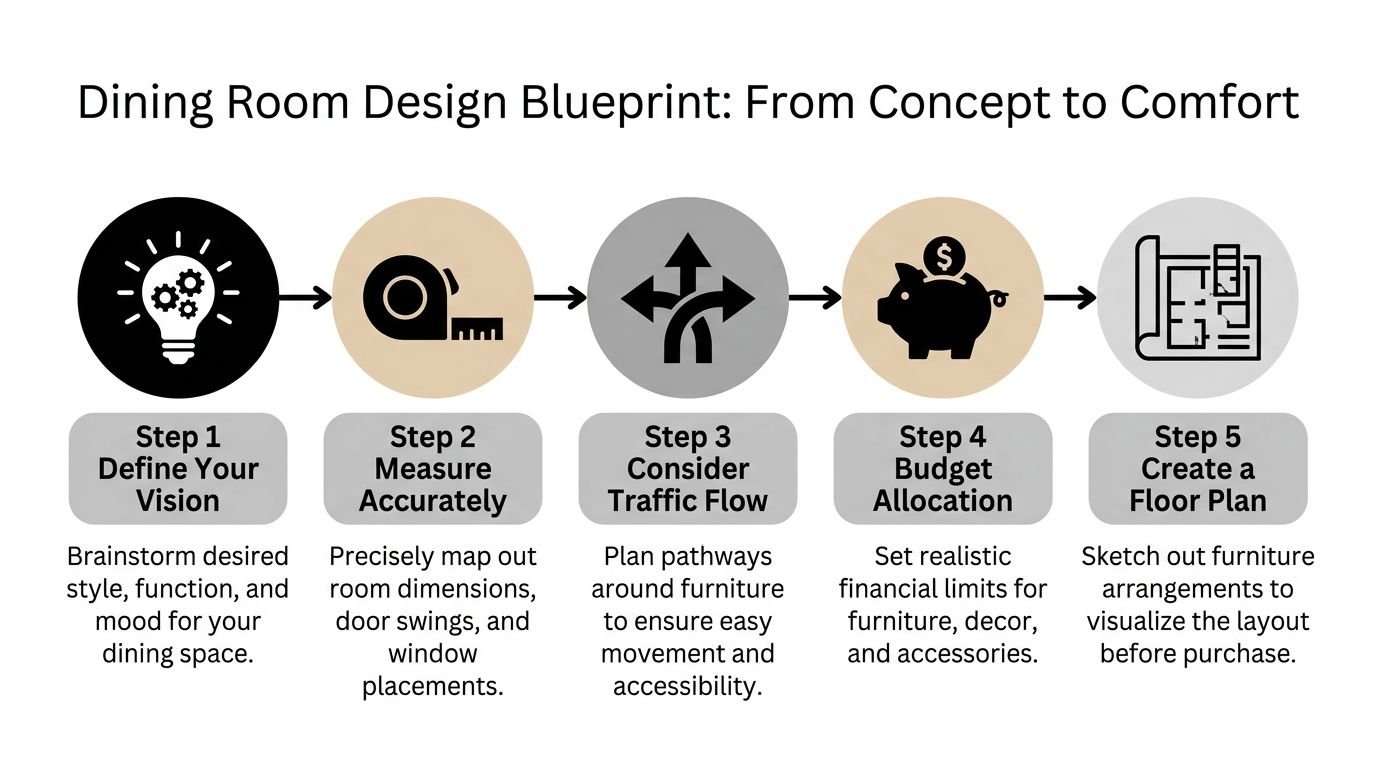
Laying the Foundation with Planning and Measurement
A well-furnished dining room usually looks calm because the hard decisions were made before anyone fell in love with a table. I have seen Bay Area families bring in beautiful pieces that never quite worked because the room itself was never measured with daily life in mind. Good planning prevents that expensive mistake.
Start with the room, not the furniture
Record the full length and width of the room first. Then measure the parts that affect use, including door swings, window placement, radiators, alcoves, floor vents, and any case pieces you plan to keep.
The key measurement is the space around the table once chairs are occupied and pushed back. The National Center for Biotechnology Information’s anthropometric seating guidance supports leaving generous clearance for seated movement and passage, which aligns with the standard planning range designers use in dining rooms. In practice, aim for about 36 to 44 inches from the table edge to the wall or the next piece of furniture so people can sit down, stand up, and move around the room without squeezing.
If you want a reliable way to record those dimensions before shopping, this guide to measuring furniture for your home is worth keeping nearby with a tape measure and notepad.
Read the room like a traffic pattern
A dining room is rarely used by seated guests alone. Someone is carrying platters from the kitchen. Someone else is stepping away to refill glasses. Children cut through the room on their way to another part of the house. Those patterns matter as much as the footprint on paper.
Start with three questions:
- Is the room enclosed or does it connect two active areas? Pass-through rooms need cleaner, more protected walkways.
- How many people use it on a normal weeknight? Daily use should guide the size more than a once-a-year holiday crowd.
- Will the room handle more than meals? Homework, puzzles, and laptop time all change the amount of working surface and storage you need.
I often advise clients to test the layout with painter’s tape on the floor. Mark the table, then pull out each chair position. It is one of the fastest ways to catch a plan that looks fine on paper and feels tight in real life.
Plan for the room at full use. Chairs pulled back, guests standing, dishes in hand, and a clear path to move through without bumping wood corners or upholstery.
Know the trade-offs before you buy
The best layouts come from choosing what matters most. A larger table may seat more guests, but it can make every ordinary dinner feel cramped. A substantial buffet gives welcome storage, but if it narrows the room too much, the convenience is lost every time someone walks behind a chair.
| Decision | What tends to work well | What creates problems later |
|---|---|---|
| Table size | Sized for regular use with enough space around every chair | Buying for peak occasions and crowding the room the other 360 days |
| Layout | Positioned around real traffic flow | Forcing strict symmetry when the room wants an offset plan |
| Storage | Narrow, hardworking pieces that fit the remaining wall space | Deep case goods that block circulation |
| Surface material | Finishes suited to daily wiping, serving, and family wear | Delicate tops that make owners afraid to use the room |
Surface choice deserves more attention than many buyers give it. Households with young children, frequent entertaining, or heavy daily use should compare durability, repairability, and maintenance before committing. If you are weighing practical options for busy settings, this overview of selecting commercial table surfaces is a useful reference point.
The goal is not to fill the room. The goal is to furnish it well enough that it serves your family easily now and still feels right years from now. That is the beginning of a buy-it-for-life dining room.
Choosing Your Centerpiece The Perfect Dining Table
A dining room usually settles into place the moment the right table is chosen. Get that piece right, and the rest of the room has direction. Get it wrong, and even beautiful chairs and lighting won’t quite fix the feeling.
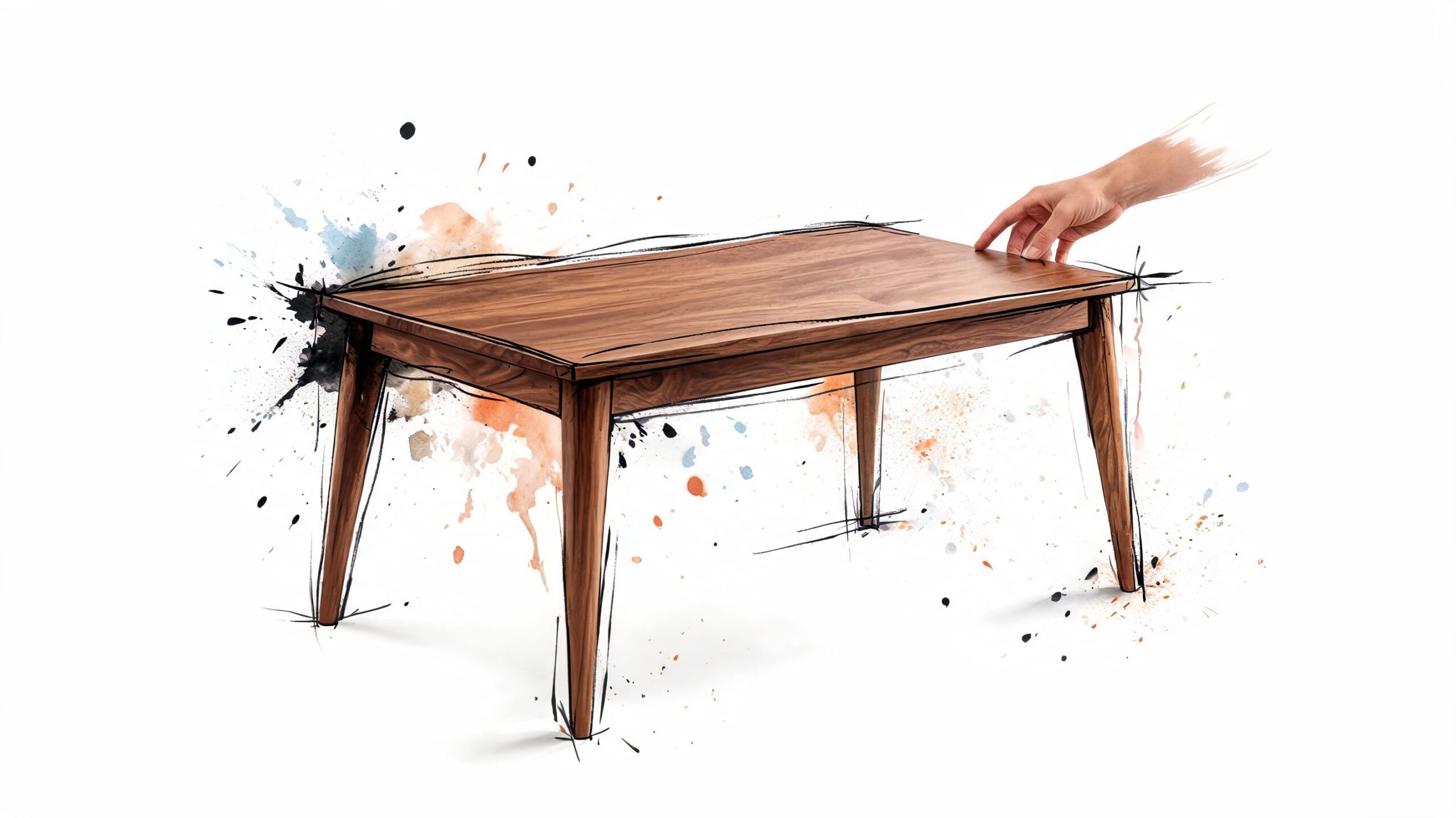
Pick the shape that suits the room
Shape affects more than appearance. It changes how people move, how conversation flows, and how comfortably the table lives in the room year after year.
Rectangular tables are often the safest long-term choice in traditional dining rooms and open layouts alike. They suit longer spaces, allow flexible seating, and tend to work well with leaves if holiday hosting matters. I often recommend them for families who want one table to handle both everyday meals and larger gatherings without looking undersized the rest of the year.
Round tables earn their place in square rooms, breakfast areas, and homes where conversation matters as much as capacity. They remove sharp corners, soften the room visually, and make it easier for everyone to engage with one another. In tighter footprints, they also make circulation easier because there are no corners pushing into the walkway.
Oval tables offer a smart middle ground. They keep some of the friendliness of a round table while giving you more usable length. For many Bay Area homes where square footage is limited but clients still want a table with presence, an oval can solve the problem elegantly.
If you want a more detailed framework for weighing shape, scale, and extension options, our guide to picking the perfect dining table is a practical next step.
Material matters more than trend
The best dining tables earn their keep over decades.
Solid wood remains the standard for clients who want furniture they can live with, not just look at. It wears in. It can often be repaired. It develops character through use, which is very different from surfaces that break down. That distinction matters in a room built for real meals, celebrations, homework, and long conversations.
Lower-grade construction has a way of revealing itself later. Thin veneers can chip at edges. Lightweight bases can loosen. Delicate finishes can make owners hesitant to use the room freely, which defeats the point of a dining table in the first place.
This is one of the clearest buy-it-for-life decisions in the room. American-made tables with good hardwood construction cost more upfront, but they usually outlast several cheaper replacements. In my experience, families rarely regret buying one excellent table. They do regret buying twice.
For a durability-focused look at how different tops handle frequent use, moisture, and maintenance, this overview of selecting commercial table surfaces is a useful reference.
Choose for the dinners you have every week, not only the holiday meal you host once a year.
A practical size guide
A table should fill the room without controlling it. People need enough space to pull out chairs, pass behind seated guests, and carry serving pieces without turning every meal into a tight squeeze.
Use this as a starting point.
| Table Shape | Common Dimensions | Typical Seating | Planning Note |
|---|---|---|---|
| Rectangular | 36 x 72 inches | 6 | Works well in many medium-size dining rooms |
| Round | 42 to 48 inches diameter | 4 | Good for square rooms and tighter layouts |
| Round | 60 inches diameter | 6 to 8 | Best where you can maintain clear circulation all around |
| Oval | 42 x 72 inches | 6 | Adds softness without giving up length |
The true measure of a dining table is its feel in daily use. A slightly smaller table with better construction, better proportions, and room to move around it will serve a family longer than an oversized table chosen only for maximum seat count.
That is usually the wiser investment.
The Art of Seating Finishes and Custom Fabrics
Chairs are where good intentions often go off course. People sit in them longer than they expect, shift them constantly, and notice every wobble. A pretty chair that isn’t comfortable or well built becomes a regret quickly.
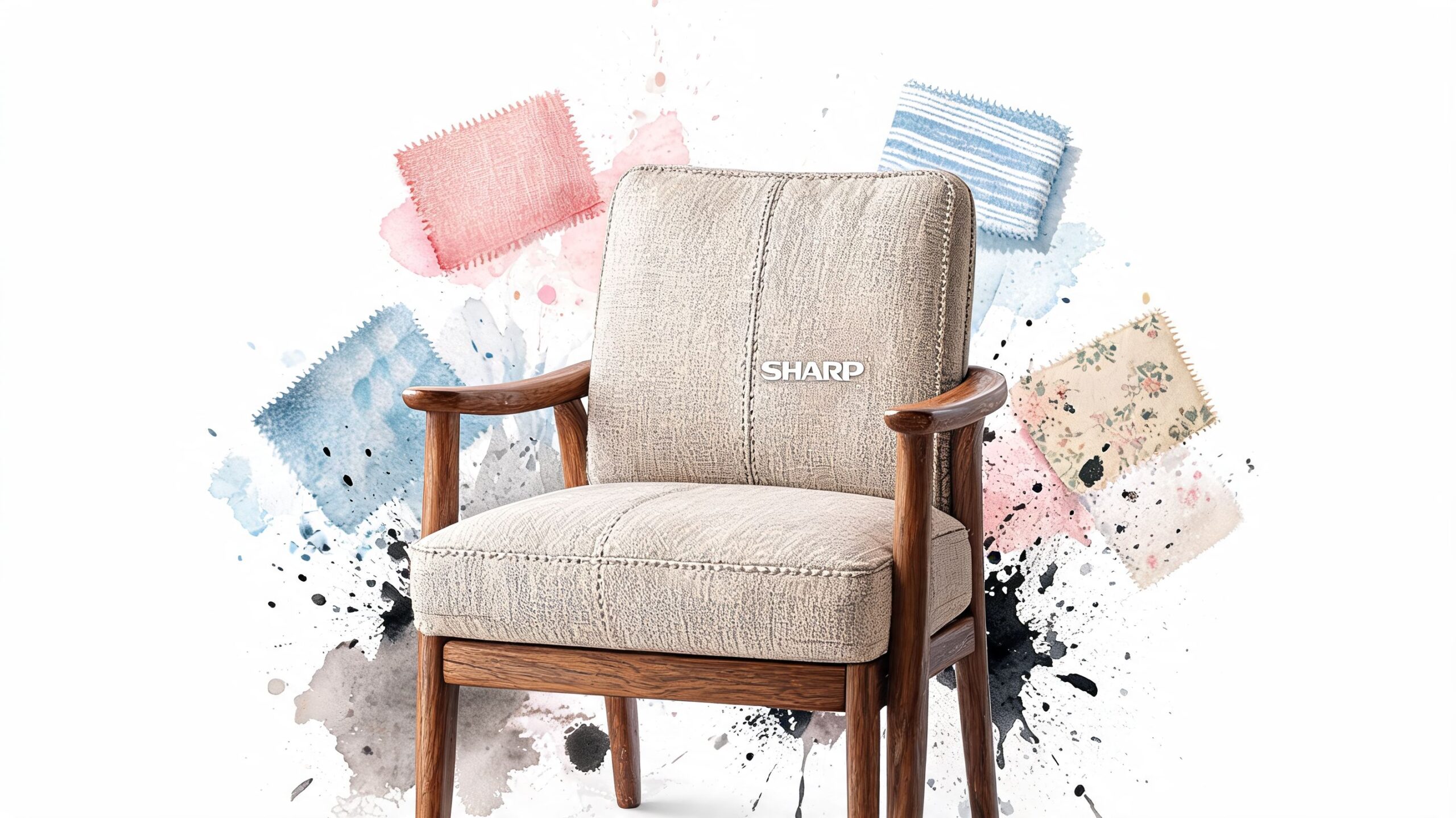
What to inspect in a dining chair
When evaluating dining chairs, prioritize solid hardwoods and proven joinery such as mortise-and-tenon, which is rated 9/10 for durability. That matters because material and joinery failures account for 65% of returns in the mid-tier market, according to this dining chair quality guide.
That one statistic lines up with what anyone sees on a showroom floor over time. The chairs that fail early usually show the same warning signs:
- Lightweight frames that feel insubstantial when lifted
- Visible fasteners doing work that proper joinery should handle
- Thin finishes that scuff too easily
- Seats with little support, especially in lower-quality foam builds
Good chairs feel composed. They don’t rack when handled. They don’t creak under normal movement. The back support feels intentional, not decorative.
Don’t force a matching set
One of the easiest ways to make a dining room feel flat is to buy every piece from the same collection and stop there. Rooms with some contrast usually feel more personal and more finished.
That might mean a substantial wood table paired with upholstered end chairs. It might mean a simpler side chair silhouette next to a more sculptural host chair. It might mean mixing a rustic wood tone with a cleaner fabric story.
A room doesn’t need random pieces. It needs balance.
The best dining rooms coordinate. They don’t look as if they were copied from one page of a catalog.
Customize for use, not just appearance
Thoughtful customization demonstrates its worth. Fabric, leather, wood species, and finish options aren’t just decorative choices. They let you solve specific problems.
Consider the lifestyle side of the decision:
- If children use the room daily, forgiving fabrics or easier-care leathers can save a lot of stress.
- If the room is formal but often empty, you may choose a more refined textile because the wear pattern is gentler.
- If your table has strong grain or a darker finish, lighter upholstery can keep the room from feeling too heavy.
- If your room is compact, chairs with a slimmer profile usually preserve openness better than heavily skirted or bulky forms.
Material education matters here. This article on upholstery materials for furniture is useful if you’re weighing leather against fabric or trying to understand what will age best in your home.
Bring in rugs and lighting with the same discipline
Chairs never live alone. Their comfort and usability are tied to what sits under and above them.
For rugs, the rule is functional before decorative. The rug should extend far enough beyond the table that chairs stay grounded when pulled out. For lighting, the fixture should define the table area and support conversation without becoming a visual obstacle.
A common mistake is treating chairs as a separate purchase. In reality, they’re part of a system. Their width affects table spacing. Their legs affect rug wear. Their upholstery affects maintenance. Their silhouette changes how heavy or airy the room feels.
That’s why seating deserves time. A good chair doesn’t just complete the table. It determines whether people want to stay there.
Illuminating Your Design with Rugs and Lighting
Rugs and lighting do more than decorate the room. They establish boundaries, improve comfort, and help the dining area feel intentional. When they’re off, even good furniture can look unsettled.
Get the rug size right first
Interior design experts identify rug sizing as the most common mistake in over 70% of initial client designs. The fix is simple. Choose a rug that is 2 to 3 feet larger than the table’s footprint so all chair legs remain on the rug when the chairs are pulled out, according to Havenly’s dining room design mistakes guide.
That rule solves two problems at once. It keeps chairs from snagging at the rug edge, and it prevents the awkward half-on, half-off look that makes a room feel undersized.
When choosing the actual rug material, think beyond color. Dining rooms need fibers and constructions that can tolerate chair movement, crumbs, and regular cleaning. For households with heavy daily use, this practical advice for homeowners on durable rugs for high traffic areas is a worthwhile read.
If you want help thinking through scale and placement, this guide to choosing an area rug for your room offers a strong starting point.
Let lighting define the table
A good dining light should visually center the table, not just the room. That matters most in older homes and remodeled spaces where junction boxes don’t always land exactly where you’d want them.
In practical terms, successful lighting usually follows a few principles:
- Center it to the table if possible, because that’s what the eye reads
- Keep sightlines open so people can see one another comfortably
- Match visual weight to the table, not just the ceiling height
- Use dimming whenever possible so the room can shift from everyday meals to entertaining
If a chandelier feels too formal for the room, a pendant or linear fixture can often do the job more subtly. The fixture should support the furniture, not compete with it.
A rug anchors the chairs. A light anchors the table. When both are sized correctly, the room starts to feel settled.
Storage and style should follow those anchors
Once the rug and lighting are right, the rest of the room usually gets easier. You can read how much visual pattern the room already has. You can see whether a sideboard should be simple or expressive. You can tell whether the chairs need to be softer, lighter, darker, or more sculptural.
That’s why these pieces matter so much. They’re not accessories. They’re the frame around daily life in the room.
Completing the Room with Storage and Expert Styling
Storage finishes the room functionally and visually. A dining room without some form of case goods can work, but it often feels incomplete, especially if you entertain or keep serving pieces nearby.
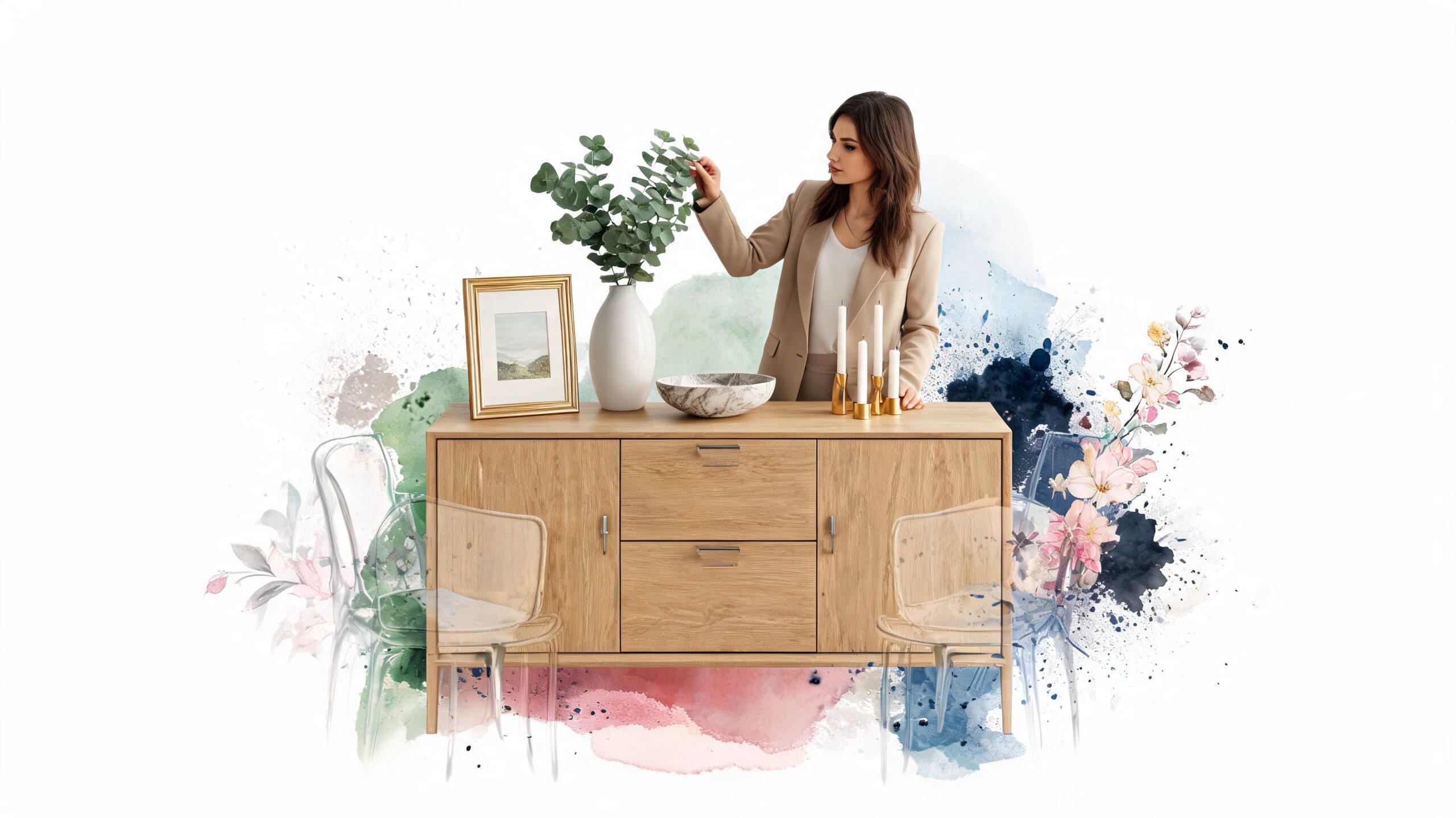
Choose storage that earns its footprint
A sideboard, buffet, or display cabinet should solve a need. Linens, platters, candles, and barware all benefit from being close to the table. The mistake is choosing a piece so deep or long that it squeezes circulation.
In a pass-through room, slim storage usually performs better than bulky furniture. In a more formal room, a larger case piece can ground the wall and give the room a sense of permanence. Styling should be restrained. A lamp, a vessel, a framed piece, or a low arrangement often does more than over-layering accessories.
For homeowners who entertain and want to think more intentionally about drink service or bar-adjacent storage, this complete home wet bar guide can help clarify what’s worth storing nearby and what can live elsewhere.
Work with the room you actually have
Not every dining room is rectangular and straightforward. Bay Area homes often include quirky footprints, sloped lines, or walls that narrow unexpectedly.
For angled-wall layouts, a useful strategy is to stop fighting the geometry. In 15 to 20% of urban remodels, angled walls create furnishing challenges, and positioning furniture diagonally can free up up to 15% more walkway space than a standard centered setup, according to House Beautiful’s small dining room ideas coverage.
That approach won’t suit every room, but it points to an important principle. Symmetry isn’t always the answer. Sometimes the room works better when the furniture acknowledges the architecture instead of trying to correct it.
Professional delivery and placement matter more than people think here. Large dining pieces are heavy, often delicate at corners, and difficult to position precisely. A room feels finished when every piece lands in the right place the first time.
Your Partner in Crafting Timeless Spaces
A dining room should feel good on an ordinary night, not just when it’s styled for guests. That comes from good proportions, honest materials, comfortable seating, and a layout that respects the way people move through the home.
It also comes from patience. The best rooms usually aren’t built from impulse purchases. They’re shaped piece by piece, with a clear sense of what should last and what should adapt over time.
For Bay Area homeowners who want guidance without pressure, that kind of process matters. Since 1933, families have looked for help they can trust, especially when they’re choosing investment pieces they expect to live with for years. A large showroom matters because you can sit, compare, test finishes, and see scale in person. A non-commission environment matters because the conversation stays focused on fit, not urgency.
If you’d like one-on-one help thinking through layout, materials, and custom options, the team’s interior design consultation services in San Francisco make that process much easier. Financing options are available, and the goal is simple. Help you make good decisions once.
If you’re ready to furnish a dining room with lasting quality in mind, visit Giorgi Bros. Furniture in South San Francisco. Explore 50,000 square feet of inspiration, work with Non-Commission Sales Staff and Design Experts, and compare Custom Furniture, Amish Furniture, and American-made options in person. Since 1933, Giorgi Bros. has helped Bay Area families choose pieces built for real homes and long use. Stop by the showroom or book a Design Consultation to get no-pressure guidance, custom fabric and finish help, full-service delivery support, and financing options that make investment pieces easier to bring home.