A reclaimed wood dining table often starts with a mark that no factory can fake. A filled nail hole, a softened saw line, a patch of weathering. Those details tell readers the board lived a full life before it ever reached a dining room.
Table of Contents
- More Than Furniture It's a Piece of History
- What Is True Reclaimed Wood Furniture
- Comparing Wood Types Reclaimed vs New
- How to Judge Quality and Authenticity
- Styling Reclaimed Wood in Your Bay Area Home
- Creating Your Custom Piece The Giorgi Bros Advantage
- Caring For Your Lifetime Investment Piece
- Your Reclaimed Wood Questions Answered
More Than Furniture It's a Piece of History
Reclaimed wood furniture has a different kind of presence. It doesn't just fill a room. It carries evidence of where it came from, whether that was an old barn, a factory floor, or structural lumber rescued from a building that had reached the end of its first life.
That history is part of the appeal, but it isn't the whole story. Buyers also respond to the idea that a strong material can keep serving a purpose instead of being discarded. The category has moved well beyond a passing style. In fact, the global reclaimed lumber market reached USD 54.34 billion in 2022, and the furniture segment made up over 31% of that market, according to Grand View Research's reclaimed lumber market analysis.
That matters because it changes the conversation. Reclaimed wood furniture isn't just rustic décor for a cabin or a novelty for a loft. It's a serious material choice for homeowners who want warmth, character, and a sustainability story tied to real material reuse.
Reclaimed wood often appeals to the same buyer who values furniture that should last for decades, not just until the next redesign.
That long-view mindset is familiar in South San Francisco. Since 1933, family furniture businesses in the Bay Area have built trust the old-fashioned way. They help people compare materials, understand construction, and choose pieces that still make sense years later. That approach fits reclaimed wood well because this material rewards patience, careful sourcing, and thoughtful craftsmanship.
Why history adds value
A new board can be handsome. A reclaimed board can be handsome in a way that's harder to duplicate. The grain may be uneven. The color may shift from plank to plank. The edges may reveal earlier milling methods. Those aren't flaws when the piece is made well. They're part of what gives the furniture depth.
Why buyers keep coming back to it
Reclaimed wood furniture often suits people who want more than a trendy silhouette:
- They want permanence. The piece should feel grounded and substantial.
- They want individuality. Minor variations make the furniture feel personal.
- They want a reason for the choice. Reuse and longevity matter when furnishing a home with intention.
For Bay Area homeowners, that's a practical combination. Good reclaimed wood furniture brings story, but it also brings staying power.
What Is True Reclaimed Wood Furniture
True reclaimed wood furniture starts with wood that has already served a previous purpose. The lumber is salvaged from older structures, then cleaned, milled, and repurposed into a finished piece. Common sources include barns, factories, construction sites, and other buildings where sound wood can be recovered rather than wasted.

That origin is what separates reclaimed wood from new wood that's been distressed to look old. Distressed furniture may have dents, wire brushing, or darkened edges added at the factory. Reclaimed wood furniture has actual age in the material itself. The wear isn't decorative theater. It's part of the board's history.
The easiest way to understand the difference
A simple analogy helps. Distressed wood is like a reproduction map printed to look aged. Reclaimed wood is the original map, complete with folds, fading, and signs of use. Both can be attractive, but they aren't the same object and they don't carry the same value.
This is why buyers should ask whether the piece uses salvaged lumber or merely an aged finish. The answer affects the story, the texture, and often the price.
Where readers often get confused
Many shoppers assume reclaimed wood has one look. It doesn't. Some pieces are rugged and full of visible marks. Others are milled smooth and refined, with only subtle patina and color variation left behind. The wood's source, species, and finishing approach shape the final result.
A consumer-attitudes study found that among people who had purchased reclaimed wood products, furniture was the top category at 16%, ahead of shelving at 9%, according to the Mississippi State University study on reclaimed wood consumer attitudes. That helps explain why the category has become so visible in dining rooms, bedrooms, and living spaces.
Practical rule: If a piece claims to be reclaimed, a buyer should be able to learn where the wood came from and what preparation happened before fabrication.
Authenticity also lives in the details. One board may show old peg holes. Another may carry mineral staining or tight grain from slow growth. Those variations are part of the appeal. They also remind buyers that reclaimed wood furniture is a material story first, and a style choice second.
Comparing Wood Types Reclaimed vs New
Choosing between reclaimed wood, new solid wood, and engineered wood isn't just a style decision. Each option behaves differently, ages differently, and asks different things from the maker.
The point that often surprises buyers is this: reclaimed wood isn't automatically stronger just because it's old. A university study on reclaimed wood for furniture found that reclaimed samples can show lower bending strength and hardness than recent wood. The authors still concluded the material has clear potential for furniture production, but the implication is important. Good makers need to engineer around that variability with thicker sections and better stress distribution in the joinery, as discussed in the university study on reclaimed wood properties for furniture.
Reclaimed vs New Wood at a Glance
| Attribute | Reclaimed Wood | New Solid Wood | Engineered Wood |
|---|---|---|---|
| Visual character | Naturally varied, often with patina and marks from prior use | More uniform, cleaner grain and color | Usually the most uniform surface |
| Structural predictability | More variable, depends on prior life and preparation | More predictable when properly selected | Predictable in panel form for many applications |
| Sustainability story | Strong when sourced and processed responsibly | Depends on forestry, transport, and longevity | Depends on materials, adhesives, and lifespan |
| Repair potential | Often repairable and worth refinishing | Often repairable and worth refinishing | Varies widely by construction and surface |
| Best use case | Statement pieces with character | Long-term staple furniture in many styles | Budget-conscious or highly uniform applications |
What the comparison means in real homes
Reclaimed wood wins on individuality. No one expects every board to match perfectly, and that's exactly why many buyers love it. A dining table made from reclaimed planks can soften a room full of glass, metal, and white walls.
New solid wood wins on predictability. When a family wants clean lines, consistent stain, and dependable structural behavior, new solid wood is often easier to specify. It's also simpler when matching several pieces in the same room.
Engineered wood has its place, especially where budget or very specific design requirements drive the decision. But buyers looking for heirloom feel usually notice the difference in weight, edge treatment, refinishing potential, and long-term repairability.
For readers comparing furniture categories, solid wood living room furniture options can help clarify what full wood construction looks like in finished pieces.
A reclaimed piece becomes the best investment when the buyer wants all three of these things at once:
- Distinctive surface character that doesn't look mass-produced
- Long-term usefulness with construction that respects the material's limits
- A thoughtful sustainability story rooted in reuse, not just marketing language
Buyers shouldn't ask whether reclaimed wood is better than new wood in every case. They should ask whether the piece was designed honestly for the wood it uses.
That's the right comparison. Not romance versus practicality. Good reclaimed wood furniture should offer both.
How to Judge Quality and Authenticity
Reclaimed wood furniture can be beautiful and badly made at the same time. That's where buyers get into trouble. Surface charm is easy to see. Proper preparation is not.

The first test is authenticity. The second is safety. Both matter if the piece is headed into a family home.
Signs of the real thing
Authentic reclaimed wood usually shows irregularity that doesn't repeat in neat patterns. The marks should feel incidental, not staged. Buyers can look for:
- Uneven wear: Natural patina tends to vary from board to board.
- Old fastening evidence: Nail holes, plugged repairs, or minor scars can indicate prior use.
- Color shifts: Salvaged boards often differ slightly in tone because they aged in different conditions.
- Non-uniform milling clues: Some surfaces reveal old saw marks or subtle hand-worked texture.
That said, authenticity isn't permission for poor workmanship. A quality maker edits the material. The best pieces preserve character without leaving splinters, unstable cracks, or obvious structural weak points.
Questions worth asking in the showroom
Many articles stop too early. Buyers need to ask what happened before the boards became furniture.
The EPA warns that lead-based paint is common in structures built before 1978, which makes contamination a real concern with older reclaimed wood. Reputable makers test for contaminants and kiln-dry lumber to a moisture content of 6% to 8% for indoor furniture stability, as noted in guidance discussing reclaimed wood safety and moisture targets.
A short checklist helps:
- Was the wood tested or screened for old finishes? This matters if the original source may have had paint or varnish.
- Was metal removed before milling? Hidden fasteners can damage tools and leave problems behind.
- Was the lumber kiln-dried or properly conditioned? Stable moisture content reduces the risk of warping and cracking indoors.
- How were active defects handled? Character marks are fine. Structural weakness isn't.
For buyers exploring handcrafted options, simple Amish furniture collections are a useful reference point for construction honesty and straightforward design.
A buyer shouldn't be shy about asking what happened before finishing. Preparation is where reclaimed wood furniture either becomes dependable or stays risky.
Another concern is insect history. Old exit holes don't always mean a current problem, but a maker should be able to explain whether the lumber was cleaned and dried in a way that addressed it. The same goes for odor, residue, and uneven movement in the wood.
If the answers are vague, the buyer has learned something important. With reclaimed wood furniture, the hidden steps often matter more than the visible ones.
Styling Reclaimed Wood in Your Bay Area Home
Reclaimed wood furniture works best when the room gives it space to speak. It already has variation, texture, and visual history. A thoughtful interior doesn't fight that. It balances it.
Modern rooms need texture
A modern San Francisco condo can feel crisp to the point of being sterile. In that setting, a reclaimed wood dining table adds relief. The grain and patina break up hard surfaces like stone counters, metal fixtures, and broad glass.
A strong pairing often looks like this:
- A clean-lined table base with a character-rich top
- Simple upholstered chairs that don't compete with the surface
- Soft lighting and restrained accessories so the wood remains the focal point
Even scent can support that layered feeling. Readers interested in sensory details that complement natural materials may enjoy ideas on how to enhance your space with wood diffusers, especially in rooms where wood, linen, and stone work together.
For homeowners leaning into warmth and texture, rustic design style ideas can show how reclaimed pieces fit without making the room feel heavy.
Traditional homes benefit from restraint
In Palo Alto, Marin, or the Peninsula, more traditional homes often already include crown molding, paneled walls, or richer flooring. In those rooms, reclaimed wood furniture should anchor the design, not crowd it.
A few practical examples help:
A reclaimed media console can ground a family room with painted built-ins. The contrast keeps the room from looking too polished.
A live-edge or plank-style headboard can warm up a bedroom with neutral bedding and smooth plaster walls. It adds texture without requiring a full rustic theme.
A reclaimed wood coffee table can also bridge styles. It looks at home with structured seating, soft rugs, and quiet artwork. That mix tends to feel collected rather than themed.
The best Bay Area interiors often combine old and new. Reclaimed wood furniture gives the room one honest, tactile note that keeps the whole space from feeling generic.
The key is moderation. One substantial piece often does more than several smaller ones. Let the table, bed, or console carry the story.
Creating Your Custom Piece The Giorgi Bros Advantage
Custom ordering makes special sense with reclaimed wood furniture because no two homes need the same answer. Room scale, daily use, finish preference, and the amount of visible character all affect whether a piece feels right once it arrives.
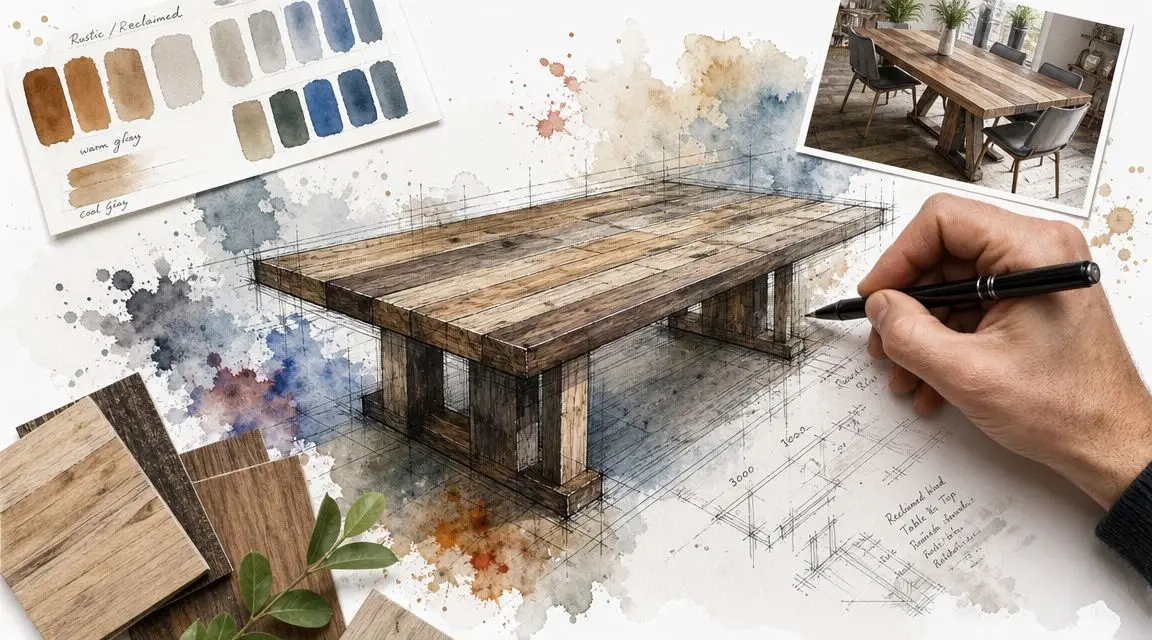
Some buyers want a smoother, more refined surface with only hints of age. Others want deeper variation, saw marks, and the full visual history of salvaged lumber. Custom work lets a household decide where on that spectrum the piece should land.
Why custom matters with reclaimed wood
The preparation process behind quality reclaimed furniture is technical. Suppliers clean, de-nail, and kiln-dry the lumber before it becomes a finished piece, and that careful preparation is what allows for durable custom furniture that still preserves historic character, according to this overview of how reclaimed wood is prepared for furniture and decor.
That preparation only gets a maker to the starting line. After that, the design still has to suit the material.
A custom order helps buyers decide:
- Proportion: A broad tabletop may need different board selection than a smaller accent piece.
- Finish level: Some homes suit a matte, natural look. Others need more protection for daily family use.
- Species and stain direction: Reclaimed wood can be left closer to its found appearance or guided toward a more polished palette.
- Hardware and edge profile: Those details can make the same wood feel farmhouse, transitional, or subtly modern.
How the custom process should work
A good custom experience shouldn't feel like pressure. It should feel like problem-solving. That's especially important in a family showroom environment where buyers want clarity, not a pitch.
Giorgi Bros. Furniture has served South San Francisco since 1933, and its custom order process includes choices in wood species, finishes, fabrics, leathers, and other details that help tailor furniture to the home. The practical advantage is guidance from non-commission consultants who can help a buyer think through dimensions, finish durability, and overall room fit.
Readers planning a piece from scratch may also find value in this guide to furniture design decisions, especially when balancing form, material character, and daily use.
Custom reclaimed wood furniture works best when the buyer chooses the right level of character for the room, not simply the most dramatic board in the stack.
That buy-it-for-life mindset matters. A well-made custom piece may cost more upfront than a short-term substitute, but it often saves money and waste over time because it stays useful, repairable, and relevant. That's the quieter side of sustainability. Keeping one good piece for years often matters more than replacing several lesser ones.
Caring For Your Lifetime Investment Piece
Good reclaimed wood furniture shouldn't feel fragile. If it's properly made and properly finished, it should handle everyday living with a little common sense.
Simple habits that protect the finish
The best routine is simple:
- Dust with a soft cloth: Fine dust can act like a mild abrasive if it builds up.
- Wipe spills promptly: Moisture left sitting on any wood surface can work against the finish.
- Use basic protection: Pads under lamps, ceramics, and serving pieces help prevent wear at pressure points.
- Be mindful of sun exposure: Strong direct light can shift the look of many wood finishes over time.
Cleaning should stay gentle. Harsh chemical products often do more harm than good, especially on hand-finished surfaces. For broader wood-surface care principles, this Buff & Coat hardwood care information offers useful maintenance habits that overlap with furniture care, even though floors and tables don't take the same kind of use.
A reclaimed dining table in active daily service may eventually need a light refresh or professional refinishing. That's not failure. That's one reason many buyers prefer investment pieces in the first place. They can often be maintained instead of discarded.
For more furniture-specific maintenance guidance, this guide to protecting wood furniture from scratches and stains is a helpful next step.
Well-finished reclaimed wood furniture is meant to be lived with. Regular care preserves its character. It doesn't erase it.
The goal isn't perfection. It's stewardship. A piece with history should keep gathering life, not sit untouched.
Your Reclaimed Wood Questions Answered
Is reclaimed wood furniture only for rustic homes
No. It works especially well in modern, transitional, and traditional interiors because it adds texture and visual depth. The shape of the piece, the finish, and the surrounding materials determine the style more than the word reclaimed does.
Does every reclaimed piece look rough
Not at all. Some pieces keep pronounced marks and patina. Others are milled and finished for a smoother, more refined look. Buyers should decide how much visible history they want.
Is custom ordering worth it
Often, yes. Reclaimed wood varies by nature, so custom ordering can help buyers control scale, finish, and how much character appears on the final piece. That usually leads to a better long-term fit for the room.
What should a buyer ask before purchasing
Ask where the wood came from, how it was cleaned and prepared, whether the lumber was dried for indoor stability, and what finish was applied. Clear answers are a good sign.
Is reclaimed wood furniture a long-term investment
It can be, if the construction is sound and the piece fits the home well. Buy-it-for-life furniture tends to reward careful selection. It stays in service longer, often ages better, and can make replacement less frequent.
Are financing options available for quality furniture
Many homeowners use financing when they're furnishing several rooms or choosing custom furniture. That can make investment pieces more manageable while keeping the focus on quality rather than settling for short-term solutions.
For Bay Area homeowners looking for Furniture South San Francisco, Custom Furniture, and thoughtful Bay Area Interior Design guidance, Giorgi Bros. Furniture offers a no-pressure place to compare materials, explore customization, and plan pieces built for daily life and long-term value. Readers are welcome to visit the South San Francisco showroom or book a Design Consultation to speak with non-commission consultants, see craftsmanship up close, and furnish with confidence.