You're probably in the same spot many Bay Area homeowners reach sooner or later. One room is half finished, another is filled with pieces that never quite worked together, and now you're staring at floor plans, fabric swatches, and browser tabs full of “free design help” from furniture retailers.
That offer can be useful. It can also be misleading if you don't know what kind of help you're getting.
After decades in the furniture business in South San Francisco, I can tell you this much. Free design service isn't the true value. Good design service is. The right guidance helps you avoid scale mistakes, poor fabric choices, and short-term purchases that you'll replace far sooner than you hoped. The wrong guidance can leave you with a room that looks like a showroom vignette for someone else's life.
If you're comparing furniture stores with free design services, it helps to know what's standard, what's limited, and what's worth your time when you're choosing pieces meant to last.
Understanding Free Furniture Design Services
A couple walks into the store with a floor plan, a few phone photos, and one simple question: can someone help pull the room together? That is usually what "free design service" means in furniture retail. It is guidance offered during the buying process to help you choose pieces that fit your space, your needs, and the store's assortment.
Many retailers now include design help as part of the shopping experience instead of treating it like a separate luxury service. You may be able to meet in store, online, or at home, depending on the brand. The format is convenient. The quality depends on how the store handles the consultation.

What you usually receive
At its best, free design help solves practical problems before you place an order. Havertys outlines a process that includes measurements, product recommendations, and visual planning through free design service tools like 2D and 3D floor plans.
That often includes:
- Scaled layout guidance: A room plan can show whether a sectional pinches a walkway, whether a dining table leaves enough chair clearance, or whether a bed is too large for the wall.
- Mood boards and finish direction: These narrow the field so you can make consistent choices instead of mixing styles, woods, and fabrics that fight each other.
- Curated product recommendations: You get a shorter list based on size, function, and overall look, which saves time and cuts down on expensive guesswork.
Why this matters before you buy
Large furniture changes how a room works every day. A sofa affects traffic flow. A dining set changes how people move around the kitchen. A bed can make a room feel restful or cramped, depending on scale.
Here is the practical test I use. If a store offers design help but never asks for measurements, photos, storage needs, or how your family uses the room, that is not true design guidance. It is product selection.
The reason this is important before you buy is simple. Good advice can keep you from ordering a beautiful piece that looks right on a website and feels wrong in your house for the next ten years.
Shoppers comparing national retailers should also compare the depth of a local, consultative process. A service like interior design consultation services in South San Francisco can reveal the difference between help that supports a sale and help that supports the home you are building for the long run.
The Two Realities of Free Design Help
A couple walks into a showroom with room photos, a rough floor plan, and a sofa that looked perfect online. Twenty minutes later, they leave with three fabric swatches and a quote. That can be useful. It is not the same as a design consultation built around how the room needs to live for the next ten or fifteen years.
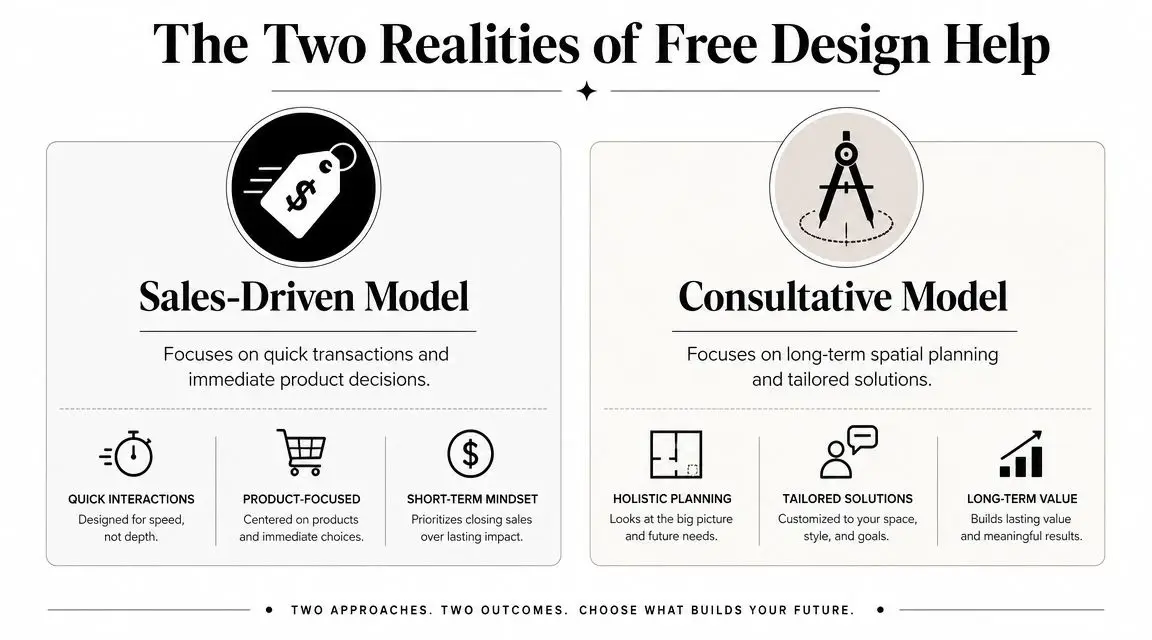
Free design help usually falls into two categories. One is store-centric and tied to a retailer's existing assortment. The other is consultative and starts with the household, the room, and the long-term use of the furniture before anyone talks about specific pieces.
The retailer-centric model
This is the version many national chains offer. It often includes room layouts, finish suggestions, and product recommendations drawn from that store's catalog. For a simple project, that may be enough.
Crate & Barrel explains that its Design Desk creates 3D renderings and shopping lists through its interior design service. Room & Board also focuses its guidance on planning and material selection within its own assortment, as noted in the verified research behind this article.
That structure creates a clear trade-off. You get speed and convenience, but the advice has to end where the catalog ends.
A store-centric service tends to work best in a few situations:
- You already like the brand's look: Their proportions, finishes, and upholstery options match your taste.
- The room is straightforward: A guest room, condo dining area, or secondary living space can often be furnished successfully from one line.
- You want a quicker decision: In-stock or standard-order pieces matter more to you than tailoring every detail.
The consultative showroom model
A consultative service starts in a different place. The room is the project. The furniture is the solution.
That changes the conversation. Instead of pushing toward the nearest match on the floor, a good designer asks whether the seat depth fits the people using it, whether the wood finish needs to coordinate with pieces you are keeping, whether a custom size would solve the layout better, and whether the budget should go into construction, upholstery, or storage features. Those are the questions that protect a buyer from expensive regret.
In my experience, this is the point where serious shoppers begin to see the difference between “free help” and real guidance. One helps you choose from inventory. The other helps you choose well.
Good consultation starts with the life of the room, not the SKU.
How to tell which one you're getting
You can usually tell in the first meeting, and sometimes in the first five minutes.
| Model | What it sounds like | What it usually leads to |
|---|---|---|
| Sales-driven | “Here are our best options for that wall.” | Faster choices from a limited selection |
| Consultative | “Tell me how you use the room, what stays, what wears hard, and what needs to last.” | Recommendations shaped by layout, use, construction, and customization |
Another tell is how the designer handles limits. If they acknowledge that a standard size may not solve the room and discuss custom upholstery, Amish dining, or finish changes, you are dealing with a more client-focused process. If every answer returns to what is currently stocked, the service is serving the inventory first.
That distinction matters for investment purchases. A family room sofa, a dining table you expect to keep for decades, or a bedroom set built around awkward dimensions deserves more than surface-level styling. Homeowners comparing Bay Area options can see that difference in a more consultative San Francisco interior design service, where the goal is to fit the home rather than force the home to fit the floor sample.
Even smaller choices can reveal the gap. A stylist may suggest quick accessories or even sofa cover ideas to freshen a room. A seasoned furniture consultant looks further ahead and asks whether the underlying piece is the right scale, comfort, and construction to keep at all.
The Lasting Value of Expert Design Guidance
The word “free” gets attention, but value is what changes the outcome.
That's why so many large retailers now offer some form of guidance. Furniture Academy highlights brands such as La-Z-Boy, Ethan Allen, Pottery Barn, and West Elm among stores with complimentary design help, showing in its roundup of furniture stores with free design services that this has become a standard part of furniture shopping rather than a niche perk.
What expert guidance actually protects you from
A skilled design expert doesn't just help you make a room prettier. They help you avoid a chain of expensive small mistakes.
One wrong scale decision can force another. A sofa that's too deep pushes the rug out of proportion. The oversized rug then crowds the hearth or media cabinet. The coffee table gets downsized to compensate, and suddenly the room feels off even though every item looked good on its own.
That's where professional judgment pays for itself in practical ways:
- Scale mistakes are caught early: You avoid buying a piece that dominates the room or looks undersized once delivered.
- Materials match your life: Family rooms, pet households, and formal spaces rarely need the same fabric or finish.
- Rooms age better: You're less likely to replace pieces because they were trendy, poorly sized, or built for a shorter ownership horizon.
Buy for life, not just for move-in day
The smartest furniture purchases usually feel calm, not exciting. They fit. They wear well. They still make sense years later.
That buy-it-for-life approach is also more sustainable. Keeping a well-made bed, dining table, or sofa in your home longer reduces the cycle of replacing disposable furniture. If you're refreshing an existing piece rather than replacing it outright, practical resources like these sofa cover ideas can help you think more creatively about extending the life of what already works.
Worth remembering: A design consultation earns its keep when it helps you buy once instead of buying twice.
If you're weighing comfort, scale, and longevity in a primary living space, this guide on how to choose living room furniture is a useful next step before you commit.
The Giorgi Bros. Approach A Bay Area Tradition
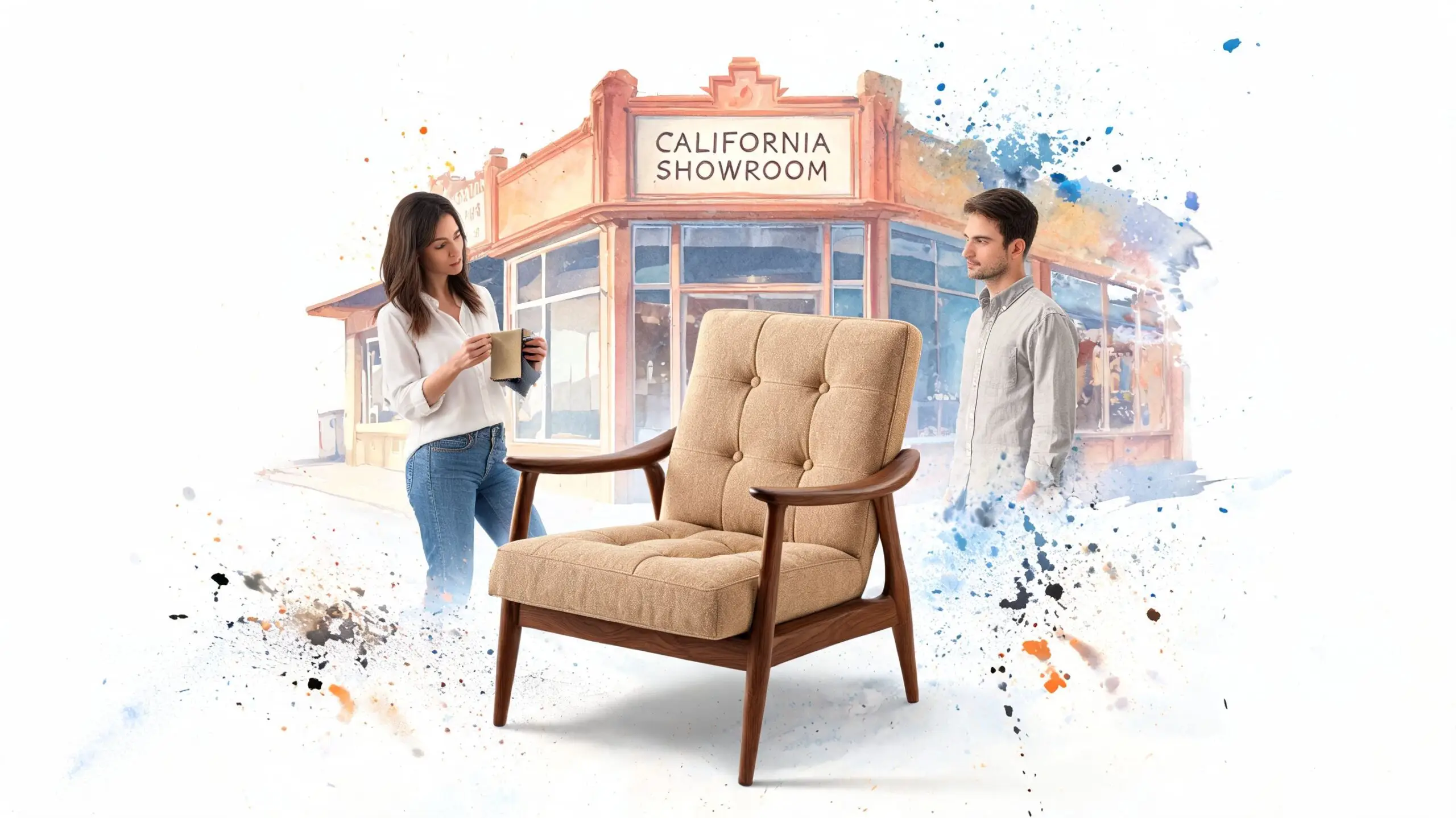
A Bay Area family walks into the showroom with three photos on a phone, a rough floor plan, and a sofa mistake they do not want to make twice. That is a common starting point. The room needs more than a product. It needs informed choices, honest feedback, and options that fit the house and the people living in it.
Since 1933, Giorgi Bros. has served Bay Area homes with a service model built around conversation, measurement, and product knowledge. In a large showroom, shoppers can sit in different seat depths, compare wood tones in person, feel the difference between leathers, and see how fabrics perform under real light. For investment pieces, that hands-on process matters. A screen can show style. It cannot tell you how a cushion sits after twenty minutes or whether a finish will fight with your floors.
Why non-commission guidance changes the conversation
Non-commission guidance usually leads to better questions.
Instead of pushing what needs to sell this month, a consultant can spend time on the decisions that affect daily use and long-term satisfaction. That includes how deep a seat should be for the people who use it, whether a leather will soften in a way you like, and which wood finish belongs with the architecture you already have.
The difference shows up fast in categories like custom furniture design options for your home. Store-based free design help often starts with what is available in that retailer's line. A consultative showroom can start with the room, the constraints, and the ownership horizon, then work backward to the right build, fabric, leather, wood species, or finish. That is a better fit for clients who are furnishing around odd room dimensions, existing heirloom pieces, or a house they plan to keep for many years.
A different fit for Bay Area projects
Bay Area homes ask for judgment. Older houses may have tight stairwells and narrow entries. Newer remodels often need warmth so they do not feel flat. Many households are mixing inherited pieces with new upholstery and want the room to feel settled, not patched together.
That is why shoppers in South San Francisco are often looking for more than a sofa or dining set. They are trying to solve for comfort, scale, durability, and character at the same time. Giorgi Bros. Furniture addresses that with non-commission consultants, custom order capability, and a showroom where upholstery, bedroom, dining, home office, and mattress options can be compared in one visit.
There is a practical side to that model too. Families can make decisions at a steadier pace, compare quality across categories, and phase larger projects if needed with available financing options. For anyone weighing Amish furniture, American-made pieces, or other long-horizon purchases, that kind of guidance solves a different problem than a catalog appointment.
Some rooms do not need more choices. They need better judgment behind the choices.
How to Prepare for Your Design Consultation
A good consultation starts before you walk into the showroom or log onto a virtual call. The more clearly you show the room, the better the advice will be.
Room & Board says its free service is available for “any project, any size, any budget” through its free design services page, but the size of the project still affects what kind of preparation helps most. A lamp-and-chair refresh is one thing. A whole-home renovation with custom pieces is another.
What to bring with you
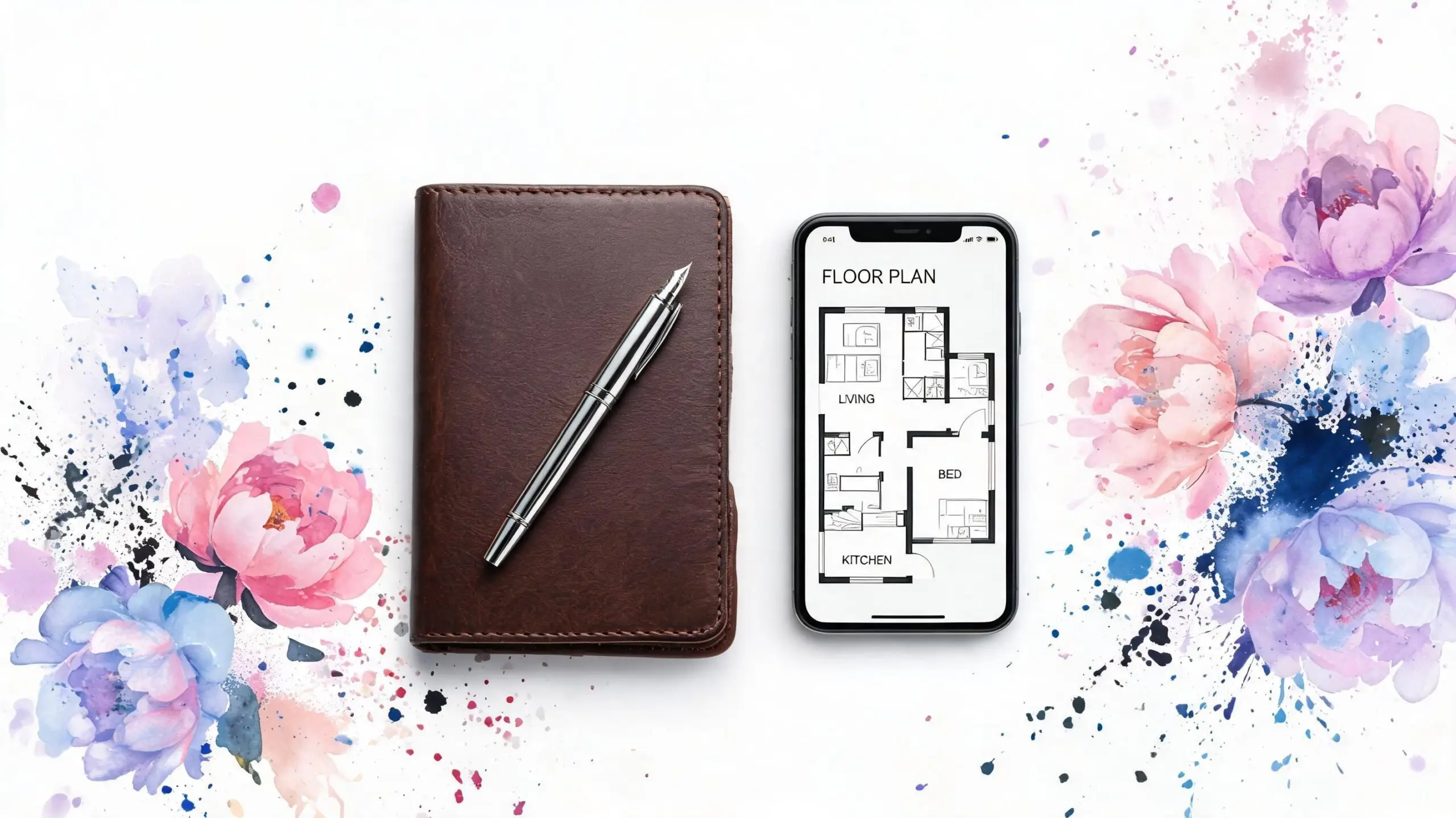
Bring the room in with you as clearly as possible.
Photos from every angle
Take wide shots, corners, doorways, fireplaces, and anything that affects placement. Include nearby rooms if sight lines matter.Basic measurements
You don't need an architectural set, but you do need wall lengths, ceiling height if it's unusual, and the sizes of existing pieces you plan to keep.Inspiration that shows pattern, not just style
A few saved images are enough if they reveal what you keep gravitating toward. Maybe you prefer lighter woods, tighter backs, or classic silhouettes with cleaner lines.A real list of needs
Write down how the room is used on a Tuesday night, not just how you want it to look on holidays.
Questions worth asking any consultant
The quality of the service often shows up in the questions they answer well.
Ask things like:
- How do you handle room scale and traffic flow?
- Can you suggest custom options if the standard size doesn't fit?
- Are recommendations limited to what's on the floor, or can you special order fabrics, leathers, and finishes?
- How do you help narrow choices when I'm furnishing multiple rooms?
A simple test: If the consultant talks more about promotions than proportions, keep looking.
For homeowners who want a clearer sense of how designers think through room planning, comfort, and layout, this article on how furniture design shapes a space is a helpful primer before your appointment.
Common Pitfalls of Free Services and How to Avoid Them
A family comes in after spending two weekends on a retailer's free design plan. They have pretty renderings, a cart full of items, and one problem that never got solved. The sectional blocks the walkway, the dining chairs are too bulky for the room, and no one asked about the heirloom cabinet they planned to keep. That happens more than people expect.
Free design help varies widely in quality because the goal varies. Some stores use it to make shopping easier inside their own catalog. A true consultation starts with the home, the people using it, and the years ahead. If you know that difference, you can avoid the common traps.
Pitfall one: personalization that stays at the surface
A nice presentation can hide thin thinking.
If the plan begins and ends with color palette, trend language, or a quick furniture grouping, press for the logic underneath it. Good advice should explain scale, comfort, durability, and how each piece relates to the room you live in. If the answers stay vague, you are getting styling help, not design guidance.
Ask direct questions. Why this depth instead of a shallower sofa? Why this finish in a room with warm flooring? Why this fabric for a house with kids, dogs, or frequent guests? Clear answers separate a consultant from a salesperson with design software.
Pitfall two: help that narrows into a closing tactic
This problem shows up fast. You ask about three options and hear about one promotion. You mention custom sizing and get redirected to what is sitting in the warehouse. You ask for time to think and the conversation turns to urgency.
Store-centered services often work that way because the design session supports a sale from a limited assortment. Client-centered service leaves room for better decisions, including special orders, custom upholstery, and finishes that take longer but fit the home properly. Delivery also matters more than shoppers think. A well-planned room can still go sideways if access, placement, and setup are handled poorly, which is why many homeowners ask about furniture stores with white glove delivery before they commit.
Pitfall three: digital convenience replacing experienced judgment
Virtual appointments are useful. So are floor-plan tools and room mockups. They save time and help people compare options.
They do not replace judgment built from years on a showroom floor and inside real homes. A screen may show that a chair fits on paper. It cannot tell you whether the arm height feels awkward at your dining table, whether a recliner will crowd a passage once it is open, or whether a fabric with heavy texture will wear well in your household.
That is one reason I tell people to pay attention to what the consultant notices without being prompted. Do they catch sight-line issues? Do they ask what pieces are staying? Do they raise concerns about delivery access, stairs, elevators, or tight entries before you buy? Those details protect you from expensive mistakes.
How to protect yourself
Use a short filter before you invest your time.
- Ask what the service is designed to do: support purchases from a house line, or solve the room with broader options
- Request reasoning, not just recommendations: every major piece should come with a practical explanation
- Test for flexibility: if standard sizes fail, ask whether custom dimensions, fabrics, or finishes are available
- Bring up the pieces you already own: a serious consultant will work with them, not ignore them
- Ask about delivery and installation: planning does not end at checkout
- Keep records if you are furnishing in phases: this guide on how to catalog furniture for moving is also useful for tracking what you have, what you are keeping, and what still needs to be sourced
The safest free design service is the one that respects your home more than the transaction. That is the standard worth looking for.
Your Partner in Creating a Home for Life
By the time shoppers search for furniture stores with free design services, they're not really looking for “free.” They're looking for confidence.
They want to know the sofa will fit. The dining table will age well. The bedroom will feel restful rather than crowded. The materials will make sense for their household. And if they're investing in custom or American-made furniture, they want guidance that isn't boxed in by a single narrow catalog.
That's the dividing line. Some stores offer convenient, store-centered planning. Other showrooms offer a deeper, client-centered consultation built around long-term use, customization, and no-pressure decisions.
What a good partner helps you do
A serious design partner helps you think beyond the purchase date.
- Plan for longevity: Choose pieces you'll still want after trends move on.
- Coordinate across rooms: Keep one decision from creating three more problems elsewhere.
- Prepare for real life: Moves, remodels, blended households, and aging in place all change how furniture needs to function.
If you're planning a relocation while protecting the pieces you already own, a guide on how to catalog furniture for moving can help you organize what stays, what goes, and what still deserves a place in the new layout.
The Bay Area difference
In this part of the country, homes often ask more of furniture. Rooms multitask. Architecture varies wildly. People mix modern remodels with traditional pieces, and many households want quality that lasts instead of disposable furniture that looks tired too soon.
That's why the right service feels less like a promotion and more like a relationship. You're not just choosing a store. You're choosing whose judgment you trust with your home.
For shoppers who value delivery and setup as part of that full experience, it also helps to understand what white glove delivery service includes for furniture purchases. Good planning shouldn't fall apart at the last step.
If you'd like no-pressure guidance from a family-owned showroom that has served South San Francisco since 1933, visit Giorgi Bros. Furniture. You can explore quality craftsmanship in person, compare custom fabrics, leathers, wood species, and finishes, and speak with design experts who focus on what fits your home for the long run.