Holiday meals tend to reveal the problem. The roast comes out, someone needs a place for serving bowls, another person is looking for extra napkins, and suddenly the dining table is doing too many jobs at once. A room that looked fine on an ordinary Tuesday starts to feel undersized, cluttered, or completely unfinished.
That's usually the moment people start looking at dining room sets with buffet pieces a little differently. The buffet isn't just a matching extra. It's where the room starts working better. It gives serving dishes a home, keeps table linens close, and helps the dining space feel settled instead of improvised.
In a family business that's been helping Bay Area households furnish their homes since 1933, we've seen this pattern for generations. People rarely regret buying quality once. They do regret buying a quick bundle that fits a photo more than it fits real life. If you're weighing style, storage, layout, and long-term value, a little planning up front makes all the difference.
Your Guide to Choosing a Dining Set with a Buffet
A lot of dining rooms begin with the table alone. That makes sense. The table feels like the main event, so it gets the attention first. Then real life settles in, and the gaps show up fast. Platters land on kitchen counters, candles and seasonal pieces have no proper place, and the room never quite feels as useful as it should.
A buffet solves that problem when it's chosen as part of a system instead of an afterthought. It gives the set a working surface for serving, hidden storage for the pieces you don't use every day, and visual weight along the wall so the room feels complete. That matters just as much for quiet weeknight dinners as it does for Thanksgiving.
For many homeowners, the question isn't whether a buffet is useful. It's whether they should buy a package set, build a room piece by piece, or invest in something that will still feel right years from now. The answer depends on your room, your habits, and how long you want the furniture to last.
What usually works best
In practice, the strongest dining rooms balance three things:
- Daily function: You need storage for linens, serving pieces, candles, and the items that otherwise migrate into random cabinets.
- Comfortable flow: Chairs have to pull out easily, and guests need to move around the room without squeezing past furniture.
- Long-term fit: The style should still make sense after paint colors, rugs, and light fixtures change.
If you're still shaping the whole room, this guide on how to furnish a dining room is a useful companion to the more buffet-specific decisions covered here.
Practical rule: Buy the buffet for the way you live, not just for the way the set looks in a catalog photo.
That mindset keeps you from overbuying in a small room and underbuying in a house where the dining area carries a lot of the hosting load.
The Enduring Appeal of a Coordinated Dining Set
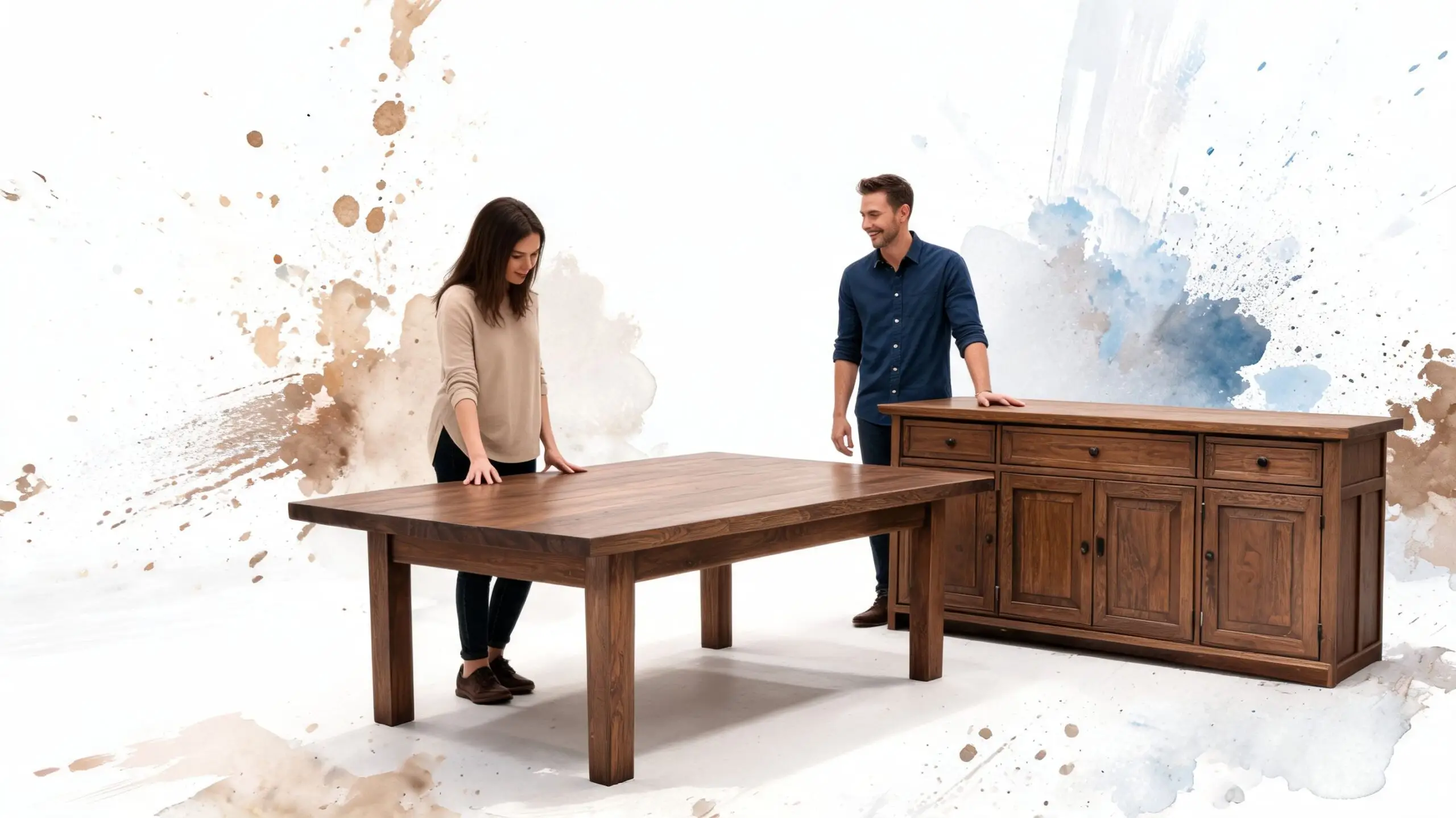
A coordinated set earns its place because it gives the room one clear visual language. The wood tone relates. The proportions make sense together. The hardware, edge detail, and overall silhouette stop the room from feeling pieced together by accident.
That's the design side. The practical side matters more.
A well-chosen buffet becomes the room's working partner. It holds serving ware, keeps fragile pieces out of the kitchen traffic lane, and gives you a surface for drinks, desserts, or dishes waiting to go to the table. During gatherings, that extra surface is often what keeps the table itself from becoming crowded.
Why the buffet has stayed relevant
The buffet isn't a new trend piece. Its role has deep roots in how people have used dining rooms for generations. Historically, the buffet table evolved from European service furniture, with roots in French and English traditions of displaying wares and the Swedish smorgasbord self-service concept. By the 18th century, it was a staple in American homes for both serving and storing fine china and glassware, as noted in this history of buffet table use and origin.
That history still shows up in modern homes. Even when the styling is contemporary, the job is the same. Serve. Store. Support the meal.
Coordinated doesn't have to mean rigid
Some people hear “set” and think overly matched. That's not the only way to do it. A coordinated dining room can still have personality.
Here's where a set usually helps most:
| Element | What a coordinated set does well | What can go wrong without planning |
|---|---|---|
| Table and buffet scale | Creates balance across the room | One piece can look too heavy or too slight |
| Finish and tone | Makes the room feel intentional | Wood tones can compete instead of complement |
| Hosting function | Adds a dedicated serving zone | The table ends up handling everything |
| Visual anchor | Grounds the dining room wall | Storage pieces can feel random |
If you're comparing other storage-forward dining arrangements, these dining room sets with china cabinet examples show how coordinated case pieces can shape the room in different ways.
A buffet works best when it supports the table instead of stealing attention from it.
That's the difference between a room that feels composed and one that feels furniture-heavy.
Planning Your Space Perfect Measurement and Layout
Most sizing mistakes happen because people measure the table and stop there. The room may technically hold the table and buffet, but that doesn't mean it will function well once chairs are in use and people are moving around.
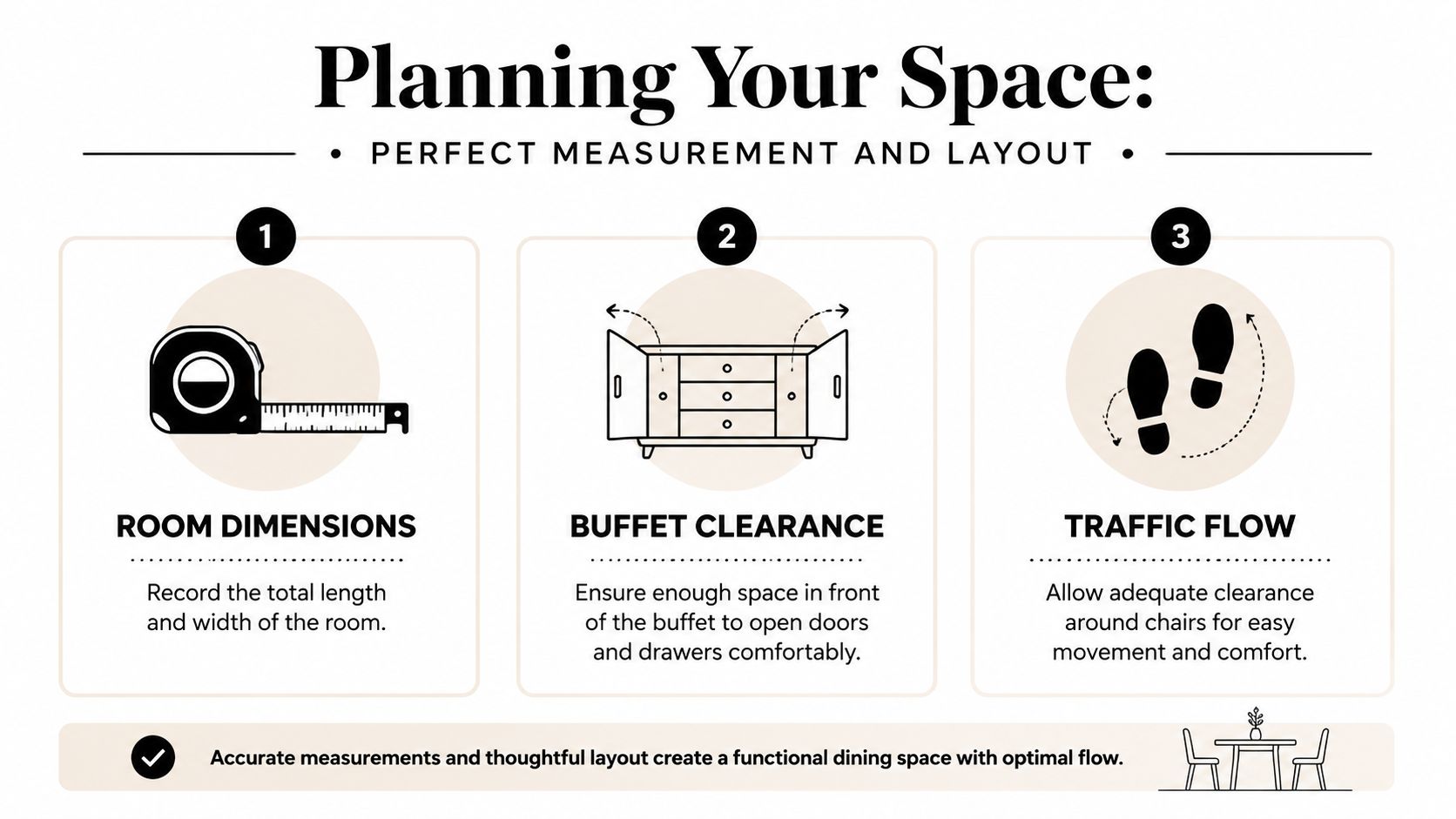
The right way to plan a dining room set with buffet is to think in layers. Start with the room. Add the table. Add the chairs in their pulled-out position. Then place the buffet and test the circulation.
Start with clearance, not furniture
Interior planning guidance recommends leaving at least 36 inches of clearance between the table edge and the wall or other furniture for chair pullback and passage, and 48 inches is ideal in busier traffic areas, according to this guidance on servers and dining room clearance.
That single rule answers a lot of layout questions before they become expensive ones.
Use this simple sequence:
Measure the full room
Record the room's length and width, but also note door swings, nearby openings, and any pathway people use to cross the space.Map the table with chairs in use
Don't measure the table alone. Include the space chairs need when someone is seated or getting up.Place the buffet last
The buffet usually sits against the wall, but its depth still affects how open the room feels.
Layout check: If the room only works when every chair is pushed in perfectly, it doesn't really work.
Keep the buffet in scale with the table
A buffet should support the table visually, not compete with it. If it's too long, too deep, or too bulky, the wall starts to feel crowded and the table loses its presence.
Shoppers often benefit from looking at adjacent table-planning questions too. If you're thinking about capacity and circulation from another angle, this article on choosing a 10 person round table is a helpful reference for how seating size changes room requirements.
The most common planning errors are easy to spot:
- Buffet too deep: It shortens the walkway and makes chair movement awkward.
- Buffet too long: It reads heavier than the table and flattens the room visually.
- No allowance for doors and drawers: Storage becomes frustrating because it can't open comfortably.
- Traffic path through chair backs: Guests end up weaving through seated diners.
A better way to test the room
Painter's tape on the floor is still one of the best tools you can use. Outline the table, chair pullback, and buffet footprint before ordering anything. Walk through the room as if guests were already there.
If your dining room is part of an open plan, stand in the adjoining space too. A buffet can help define the dining zone, but only if it doesn't create a visual or physical bottleneck.
A room should feel easy to move through when empty and just as comfortable when full. That's the standard worth using.
Matching Styles From Classic Amish to Contemporary

Style decisions get easier when you stop asking, “What's popular?” and start asking, “What belongs in this house?” A dining room set with buffet should relate to the architecture, the finishes already in the home, and the way you want the room to feel when people gather there.
Amish-made dining furniture remains a strong choice for buyers who want warmth, craftsmanship, and a piece that can age gracefully. It tends to favor solid construction, clear wood character, and details that feel grounded rather than flashy. In the right room, that kind of furniture doesn't need trends to carry it.
Read the visual cues
The look of a set comes from a handful of parts working together:
- Silhouette: A thick, substantial top feels different from a slim, tailored one.
- Leg style: Trestle, pedestal, and straight-leg tables each change the room's mood.
- Finish: Natural wood grain reads warmer; darker finishes feel more formal; painted finishes can soften a heavy case piece.
- Hardware: Knobs and pulls often determine whether a buffet leans classic, transitional, or modern.
Traditional rooms usually want more depth and detail. Clean-lined homes often need restraint. If your space already has formal trim, antique rugs, or heirloom accents, this Everti guide to traditional dining spaces offers a useful outside perspective on the role of mood, material, and proportion in a classic dining setting.
Avoid the over-matched look
A room can coordinate without looking stamped from one mold. That's especially true with transitional interiors, where too much matching can make the space feel flat.
Try thinking in terms of harmony instead:
| Design element | Classic direction | Contemporary direction |
|---|---|---|
| Table profile | Heavier top, shaped edge | Cleaner line, simpler edge |
| Buffet face | Framed doors, visible hardware | Smoother front, quieter detailing |
| Wood tone | Rich, warm, traditional stains | Lighter, muted, or lower-contrast finishes |
| Chair style | Upholstered host chairs, carved details | Streamlined forms, mixed materials |
For homeowners leaning modern, these examples of contemporary furniture styles show how cleaner silhouettes can still feel warm and livable.
The most successful rooms usually mix discipline with a little looseness. The pieces relate, but they don't look like they were chosen by a computer.
That's often the sweet spot for a home that feels personal and enduring.
Understanding Your Material Choices for a Lifetime Investment
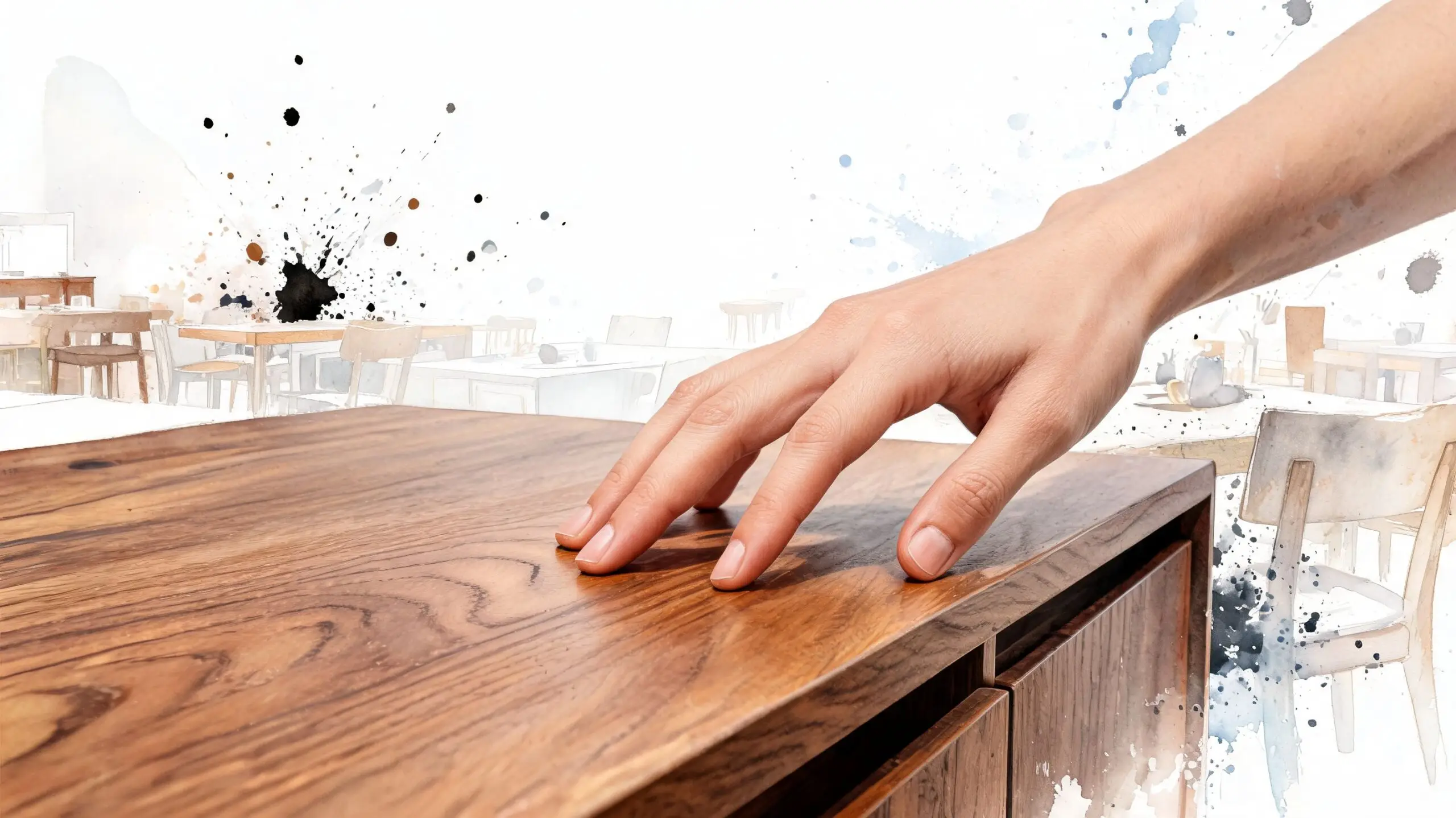
Material is where long-term value becomes visible. Two dining sets can look similar on a screen and perform very differently over time. The difference shows up in how the top wears, how the drawers move after years of use, and whether the piece can be maintained instead of replaced.
For many buyers, solid wood remains the benchmark because it can be repaired, refinished, and lived with for decades. Veneers and engineered materials can absolutely have a place, especially in specific constructions and styles, but they need to be judged on their own merits. The question isn't whether one category is always good or bad. It's whether the material fits your expectations for lifespan, maintenance, and use.
Judge the buffet as a working piece
People often inspect the table first and treat the buffet like secondary furniture. That's backwards. The buffet gets handled constantly. Doors open, drawers close, serving pieces move across the top, and seasonal items come in and out.
For serving use, expert guidance recommends a buffet be at least 30 inches tall and 18 to 20 inches deep, and for visual balance its length should be slightly shorter than the dining table. One example given is pairing a 72-inch table with a buffet between 54 and 66 inches long, according to this sizing guidance for buffets, sideboards, and servers.
Those proportions matter because they protect both function and appearance.
What to ask before you buy
Instead of focusing only on finish color, ask these questions:
- Can the top handle regular serving use? Hot dishes, serving trays, and repeated contact matter.
- Will the finish age gracefully? Some finishes hide wear better and are easier to maintain.
- Are the drawers and doors built for repetition? A buffet isn't decorative storage. It's active storage.
- Can chair upholstery handle your household? Leather, woven textures, and performance fabrics all bring different trade-offs.
Better furniture often costs more once and asks less from you later.
That's part of the sustainability case for buying well. A dining room doesn't need to be refurnished every few years if the materials were chosen with real life in mind. Over time, durable construction also tends to be the more economical path because you're maintaining investment pieces rather than cycling through replacements.
The Giorgi Bros Advantage Custom Furniture and Personal Service
Bundled sets are convenient, and sometimes they're perfectly appropriate. But convenience can hide compromises. The table may be the right size while the buffet is too bulky. The finish may look good under showroom lighting but not relate well to your floors. The chairs may coordinate visually yet not suit the way your household uses the room.
That's why more thoughtful buyers often separate the decision into parts. Premium and custom furniture shoppers often buy pieces separately to meet different needs, such as a durable table finish and a complementary but distinct buffet, reflecting a preference for personalization and long-term value, as discussed in this look at full dining room sets and custom buying behavior.
Where custom ordering helps most
Custom furniture isn't about making the process complicated. It's about solving the specific issues that package sets often ignore.
It helps when you need to balance:
- Wood species and finish choices that work with your floors, trim, and adjacent rooms
- Chair upholstery options that fit family use, entertaining habits, or a more formal setting
- Buffet dimensions that respect the room instead of forcing the room to adapt
- A coordinated look without locking every piece into a perfect match
One practical option for Bay Area shoppers is Giorgi Bros. Furniture, which offers free design services and custom order options across wood species, finishes, leathers, and fabrics through non-commission Consultants.
Why no-pressure guidance matters
Furniture decisions are easier when the person helping you isn't pushing you toward the fastest close. In a non-commission setting, the conversation can stay where it belongs. Room size. Construction quality. What you already own. What you'll wish you had chosen five years from now.
That's especially important with dining rooms because the mistakes last a long time. A buffet that's too deep or a finish that doesn't sit well with the house won't become more charming with age. Good guidance prevents expensive “good enough” decisions.
In a 50,000 square foot showroom in South San Francisco, being able to touch wood finishes, compare silhouettes, and sit in the chairs changes the process. Custom Furniture becomes much easier to judge when it's not reduced to a thumbnail on a screen.
Bringing Your Investment Home Care Delivery and Financing
Once the furniture is chosen, the ownership experience matters just as much as the purchase. A quality dining set should arrive correctly, fit the room as planned, and be easy to live with from the first meal forward.
Care starts with common sense. Use pads or protective layers under serving pieces when needed. Wipe spills promptly. Don't let dust and residue build up on buffet tops that double as serving stations. Most dining furniture lasts better when maintenance stays light and consistent rather than occasional and heavy-handed.
Delivery is part of the investment
Large case pieces can be deceptively difficult. A buffet has to come through the door, move through hallways cleanly, land level in the room, and sit where your earlier layout planning intended. That's one reason professional setup matters.
White-glove service removes a lot of avoidable risk. These white glove delivery services are designed to handle placement and setup so the room starts off correctly instead of becoming a weekend lifting project.
A buffet should arrive ready to serve the room, not become the room's first problem.
Financing can support better choices
A buy-it-for-life approach doesn't mean every household wants to pay for everything at once. Financing options are available, and for many people that makes it easier to choose the materials and construction they want instead of settling for the quickest bundle in budget reach.
That can be the smarter move when the goal is long-term value. Better construction, stronger materials, and a layout that works from day one usually serve a home longer than a short-term compromise. In the end, practicality and sustainability often point in the same direction. Buy fewer pieces. Buy them more carefully. Keep them longer.
If you're comparing dining room sets with buffet options and want no-pressure guidance, visit Giorgi Bros. Furniture in South San Francisco or book a Design Consultation. Our non-commission Consultants can help you sort through room measurements, Custom Furniture options, wood finishes, and delivery details so you can choose investment pieces that fit your home for the long run.