A lot of people start shopping for a dining room set when the room is already working against them. The table feels undersized for holidays or oversized for weeknights. Serving pieces live in three different places. The good dishes stay boxed because there's nowhere to store them safely and still enjoy seeing them.
That's usually when a dining room set with china cabinet starts to make sense. It solves two jobs at once. You get a table that anchors the room and a storage piece that gives the space purpose. Done well, it doesn't feel formal for the sake of formality. It feels settled, useful, and ready for real life.
Envisioning Your Forever Dining Room
A strong dining room rarely begins with furniture specs. It begins with how the room needs to live. For some households, that means a place where grandparents, kids, and friends can all gather without dragging in extra folding tables. For others, it means a room that finally looks complete instead of pieced together over time.

China cabinets have been doing that work for a long time. They originated in the 17th century as display furniture for fine porcelain imported from China, and by the early 20th century they were described as “the colonial housewife's essential.” They later became standard in 85% of new suburban homes during the postwar housing boom, which helps explain why they still feel familiar and rooted in the American home, as noted in this history of the china cabinet.
That history matters, but the practical appeal matters more. A matching cabinet keeps serving platters, glassware, seasonal pieces, and table linens close to where you use them. It also gives the room visual weight. Even a simple table can look intentional when it's paired with a cabinet that echoes the same wood, finish, and lines.
Why the room feels more finished
A dining room set with china cabinet works best when it creates both rhythm and order. The table handles the daily use. The cabinet supports everything around it.
A few design goals tend to hold up well over time:
- Keep daily items accessible: Don't reserve the cabinet for pieces you never touch.
- Let the cabinet carry some visual height: This helps the room feel complete, especially if the table profile is low.
- Choose a style that fits the house: A cabinet should look like it belongs there, not like it was inherited from another floor plan.
If you're planning the room with resale or presentation in mind, it can help to browse staging tips for interior designers. Good staging advice often overlaps with good furniture planning. Clear sightlines, balanced scale, and purposeful storage all matter.
A dining room becomes memorable when it's easy to use and pleasant to stay in.
For more foundational planning ideas, this guide on how to furnish a dining room is a helpful next step before narrowing down materials and dimensions.
Families in the Bay Area often want one more thing from the room. They want it to last. That's where the right cabinet stops being extra furniture and starts becoming an heirloom piece.
Finding Your Style From Classic to Contemporary
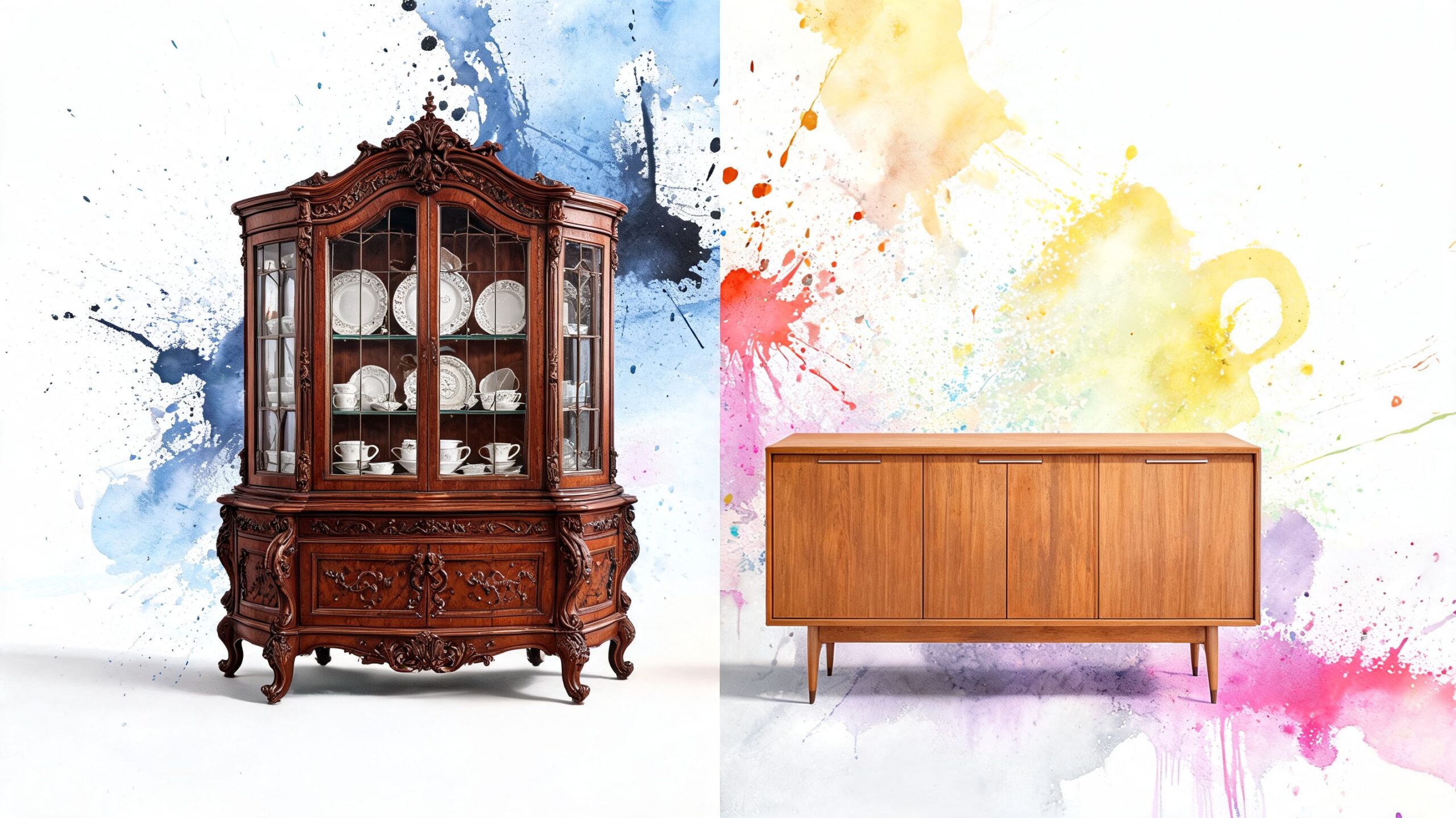
Some shoppers love dining room sets with china cabinet right away. Others like the function but worry the look will feel too traditional. In practice, the style range is wider than expected.
Integrated and built-in china cabinets can be especially useful because they may offer 20 to 30% more storage than freestanding models and can reduce kitchen clutter by up to 40% in homes with formal dining space. Their popularity also reached a clear high point when they were included in 65% of formal dining sets sold in the U.S. in the 1980s, according to the background summarized in this china cabinet overview.
Traditional style for formal rooms
Traditional sets usually have the strongest cabinet presence. You'll see crown molding, paneled doors, curved legs, and more decorative hardware. In a San Francisco Victorian or an older Peninsula home, this look can feel natural because the room already has detail around it.
This style works when you want the cabinet to be part display case, part architectural feature. It doesn't work as well if the room is small and already visually busy.
Mission and Shaker for quiet strength
Mission and Shaker styles are often the safest long-term choice. Straight lines, solid wood presence, and restrained detailing give them staying power. A cabinet in this family still feels substantial, but it won't overpower the room as quickly as a heavily carved traditional piece.
For buyers who want Amish Furniture or other American-made pieces, this is often where the best value lives. The style puts craftsmanship front and center because there isn't ornament hiding the build quality.
Practical rule: If you want the set to outlast trend cycles, simpler lines usually age better than highly themed details.
Contemporary style for cleaner homes
Contemporary dining room sets with china cabinet tend to use flatter planes, sleeker hardware, and a lighter visual touch. Glass becomes more important here. So do slimmer cases and cleaner bases.
In a newer Bay Area home, a contemporary cabinet can still deliver storage without making the room feel formal. If you lean this direction, it helps to study contemporary furniture styles so you can tell the difference between truly clean design and pieces that just look stripped down.
A quick way to identify your best fit
| Style | Best for | Watch out for |
|---|---|---|
| Traditional | Historic homes, formal entertaining, rich finishes | Too much detail in compact rooms |
| Mission | Warm wood tones, visible craftsmanship, everyday use | Can look heavy if the room lacks light |
| Shaker | Calm interiors, timeless planning, mixed decor | Needs excellent proportions to avoid looking plain |
| Contemporary | Open plans, cleaner architecture, lighter visual feel | Can feel cold if paired with harsh finishes |
The best style choice isn't the one that looks most dramatic on a showroom floor. It's the one that still feels right on an ordinary Tuesday night.
Measure Twice Buy Once Planning Your Dining Space
Bad fit ruins good furniture. A beautiful cabinet that blocks movement or a table that leaves no chair clearance will make the room feel wrong every day.
Start with the room itself, not the product page.
What to measure before you shop
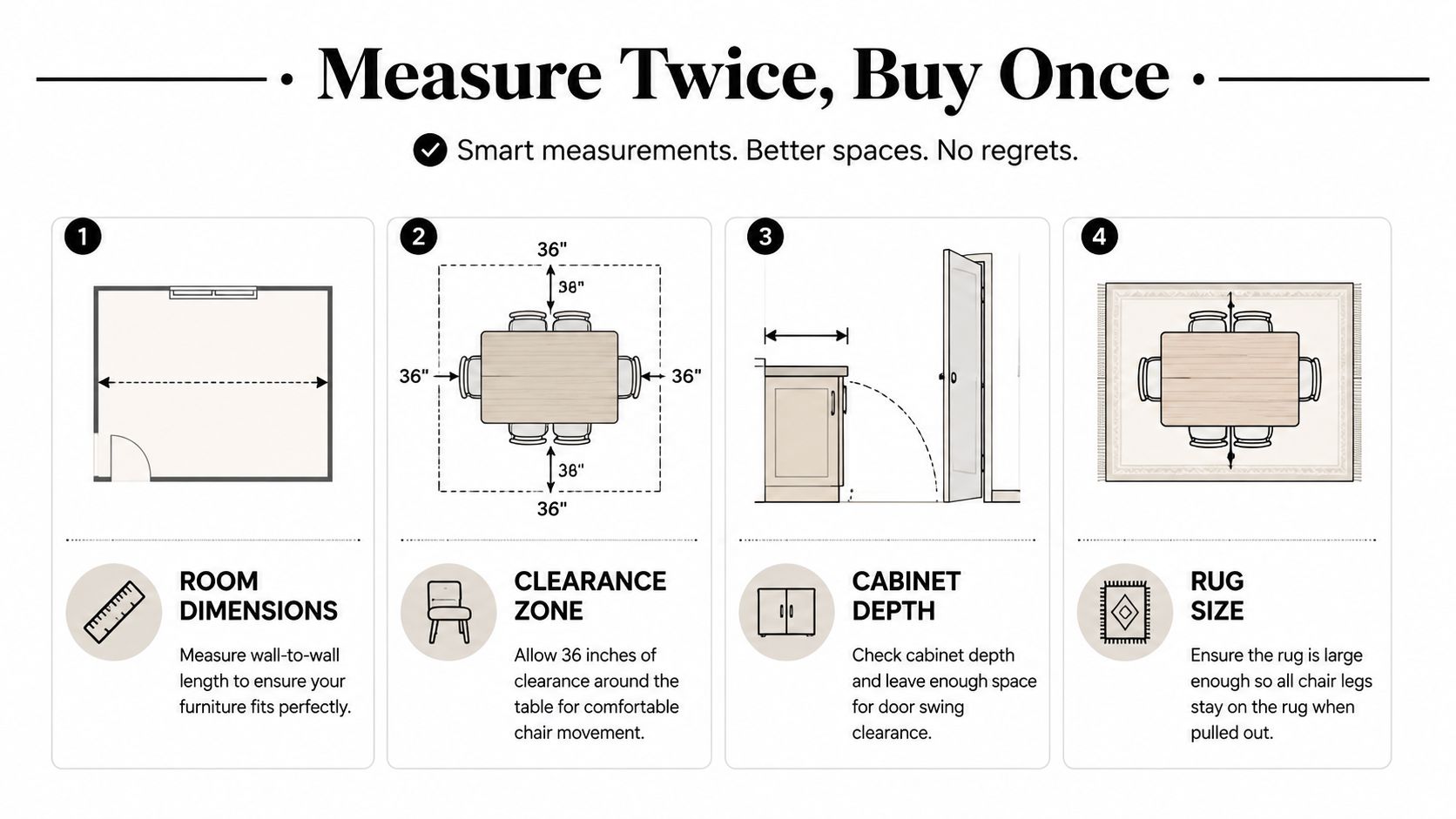
Take a tape measure, floor plan sketch, and painter's tape. Measure wall to wall, then note every interruption. Door swing, traffic paths, radiators, floor vents, and nearby case goods all matter.
Then measure the furniture zone, not just the room.
- Mark the table footprint on the floor.
- Add chair pull-back space around it.
- Map the china cabinet depth and any door or drawer swing.
- Check the walkway between the dining set and nearby kitchen or hallway routes.
Leave enough room for people to move naturally, not just enough room for the furniture to physically fit.
That distinction matters more than shoppers expect.
Dimensions that help in real rooms
For ergonomics, a base cabinet depth of 18 to 24 inches paired with a table height of 36 inches can reduce reach strain by 15%. That same standard configuration can improve accessorizing capacity by 40% and fit 48 to 72 dinner plates plus stemware, according to this dimensional guide for china cabinet dining sets.
Those numbers are useful because they point to a deeper truth. Better proportions make the room easier to live with. You reach less awkwardly, store more efficiently, and use the furniture the way it was intended.
Common planning mistakes
The most common mistakes aren't dramatic. They're ordinary oversights that become daily annoyances.
- Ignoring cabinet depth: A cabinet may fit the wall and still crowd the room.
- Buying by seat count alone: “Seats eight” doesn't tell you how the room will flow.
- Forgetting visual mass: A tall hutch can dominate a small room even if the measurements technically work.
- Skipping floor mockups: Painter's tape catches problems before delivery day.
A table base also affects usability more than people realize. Pedestal, trestle, and leg placement all change how chairs sit and how people move around corners. This overview of dining room table legs can help when you're balancing seat count with comfort.
A better way to judge scale
Instead of asking, “Can this set fit here?” ask, “Will this room still breathe with this set in it?”
That question leads to better choices. It pushes you to think about holidays, weeknight dinners, serving flow, and how the cabinet interacts with the rest of the house. Good planning doesn't make a room rigid. It makes it relaxed.
The Hallmarks of American-Made Craftsmanship
If you want a dining set to last, style alone won't carry it. Construction will. Two pieces can look similar from across the room and perform very differently after years of use.
That's why serious buyers should spend less time on broad marketing claims and more time looking at wood movement, joinery, drawer action, shelf strength, and finish quality.

What solid hardwood changes
Solid hardwood behaves differently than particleboard and thin veneers. It has more weight, more repair potential, and a different feel in the hand. Doors close with more substance. Shelves carry demanding loads more confidently. Edges wear in rather than wearing out.
That matters in a china cabinet because the cabinet doesn't just hold decorative pieces. It often carries dense stacks of dishes, serving bowls, stemware, and seasonal items that stay put for long stretches.
Amish-crafted china cabinets are a useful benchmark here. With traditional joinery and solid hardwood construction, they can have load-bearing capacity up to 50% higher than particleboard alternatives. Over 20+ years, those same techniques can reduce warp-induced door misalignment by 80% compared with standard glued methods, as described in this guide to choosing an Amish china cabinet.
Joinery tells you what the maker expects
Furniture makers reveal their intent through construction. If a builder uses strong traditional joints, they expect the piece to live a long life. If the piece relies heavily on shortcuts, they expect replacement.
Look for these signs:
- Mortise-and-tenon joinery: A strong signal that the frame was built for real use.
- Wooden drawer boxes and quality slides: These affect daily function more than most decorative details.
- Proper back panels: A weak back can undermine an otherwise decent cabinet.
- Stable shelving systems: Adjustable shelves should feel secure, not flimsy.
Well-built furniture doesn't ask for special treatment. It asks for reasonable care and rewards it with time.
What doesn't work as well
Mass-market sets often try to win on appearance from ten feet away. Up close, the compromises show. Thin veneers over lower-grade cores, lightweight backs, weak shelf supports, and doors that need constant adjustment all create maintenance that buyers never planned for.
For better-built pieces, the buy-it-for-life idea becomes practical, not sentimental. A better-built cabinet often costs more at the start, but it can save you from replacing a whole room because one key piece failed.
That also makes it a more sustainable choice. Keeping a well-made dining set in service for decades is a better outcome than cycling through trend-driven furniture that doesn't age well structurally or visually.
How to inspect quality in person
When you see a cabinet in person, test it like a piece of working furniture.
| What to check | What you want to feel |
|---|---|
| Door alignment | Even reveals and smooth closure |
| Shelf support | Firm, stable, confidence under hand pressure |
| Drawer travel | Consistent glide without wobble |
| Finish | Depth, clarity, and protection without plastic feel |
| Wood grain | Natural variation, not repetitive printed patterns |
For shoppers comparing builders, it helps to review best American-made furniture brands and notice which makers are known for lasting case goods, not just attractive catalog photography.
A dining room set with china cabinet earns its place over decades. Craftsmanship is what makes that possible.
Creating a Truly Custom Dining Set
Customization works best when it solves a real problem. It shouldn't be a maze of choices for the sake of choice. It should help you match the set to your home, your storage needs, and the way you use the room.
That's especially important in Bay Area homes, where one dining room may sit in a classic peninsula bungalow and another may open directly into a contemporary great room.
Start with wood and finish
Wood species sets the tone before stain ever enters the conversation. Oak feels grounded and architectural. Cherry reads warmer and more traditional. Maple can lean cleaner and more refined. Walnut brings depth and a richer mid-century sensibility.
Finish then shapes how the grain speaks. Some buyers want a lighter, natural look that keeps the room open. Others want a deeper finish that gives the cabinet presence and highlights glass, metal, and tableware.
A good custom process narrows these choices by asking better questions:
- What existing wood tones are staying in the home
- How much contrast the room can handle
- Whether the cabinet should blend in or stand out
- How formal the room should feel year-round
Then refine the functional details
A china cabinet isn't one decision. It's a series of small ones that affect daily use. Glass style, shelving layout, hardware shape, lighting, and lower storage configuration all matter.
Some households need more concealed storage for serving pieces and linens. Others want open visibility for heirloom china or barware. If you've ever wondered how designers transform product concepts into finished pieces, the same principle applies here. Good design choices begin with use, then move into form.
The best custom furniture feels obvious once it arrives. Every choice should seem like it belonged there all along.
Don't overlook the chairs
Chairs often get rushed because the cabinet and table feel more substantial. That's backwards. Chairs carry the comfort of the room.
Fabric, leather, wood tone, seat profile, and back shape all need to work together. If the cabinet has visual weight, lighter chair upholstery can keep the set balanced. If the room is already soft and neutral, a more defined wood frame can add needed structure.
For buyers new to the process, this guide on how to furniture design can make custom ordering feel much more approachable.
Done right, customization doesn't make a dining set fussy. It makes it personal, useful, and easier to live with for a long time.
Experience Quality Firsthand at Our Showroom
Online research is useful, but furniture still needs to be experienced in person. You can't judge wood character, chair comfort, or cabinet movement from a product thumbnail.
A dining room set with china cabinet reveals its quality through touch. Run your hand across a tabletop and you'll notice whether the finish has warmth or feels coated over. Open the cabinet doors and you'll feel whether the piece is staying in alignment. Sit in the chair and you'll learn quickly if the design supports a full meal or only a short look.
What an in-person visit tells you
A showroom visit answers the questions that specs can't.
- Is the wood color honest in natural light
- Do the drawers glide cleanly under real use
- Does the chair back support you comfortably
- Does the cabinet feel substantial or hollow
- Will the style still feel right outside a staged photo
That's where Furniture South San Francisco shoppers gain a real advantage. Seeing multiple styles, woods, and scales in one place helps you compare details side by side instead of guessing from isolated online images.
Why no-pressure guidance matters
Furniture is easier to buy when the advice isn't tied to a commission. A good consultant helps you eliminate the wrong fit, not just close the sale. That usually leads to better long-term choices, especially when you're balancing size, wood species, finish, and upholstery.
In a family business that's been serving South San Francisco since 1933, that patient approach still matters. The point isn't to rush anyone into a set. It's to help buyers understand what they're seeing, what will hold up, and where customization makes sense.
For homeowners working on broader Bay Area Interior Design projects, that kind of guidance also helps connect the dining room to the rest of the home. A cabinet shouldn't feel like a one-off purchase. It should feel integrated.
A well-planned showroom visit usually saves time. You leave with clearer instincts, better notes, and fewer costly surprises.
FAQs and Your Invitation to Timeless Design
A few practical questions come up in almost every dining room conversation. Most of them are less about style and more about how the furniture will function once it's in the house.
Frequently Asked Questions
| Question | Answer |
|---|---|
| Can I buy a china cabinet without buying the full set? | Yes, in many cases you can. Some people already own a table they want to keep. The key is matching scale, wood tone, and design language so the room still feels cohesive. |
| Is a china cabinet still worth it in a modern home? | It can be, especially if you want dining storage outside the kitchen. In a cleaner interior, look for a cabinet with restrained lines and a balanced mix of glass and closed storage. |
| What should I store in the cabinet? | Everyday dishes, serving ware, linens, stemware, and seasonal pieces all make sense. If you display delicate or collectible items, this advice on protecting valuable collections offers useful handling and storage considerations. |
| How do I prepare for delivery? | Measure doorways, stair turns, and the final wall location in advance. Remove obstacles, protect nearby flooring if needed, and confirm where the cabinet doors and drawers will open once the piece is placed. |
Final buying advice
If you're comparing options, keep your priorities in order. First fit, then construction, then style detail. Buyers often reverse that sequence and regret it later.
It also helps to think in terms of Custom Furniture rather than stock-only shopping. The right wood, finish, and chair upholstery can make the difference between a set that merely works and one that feels like it belongs to your home. And if you're making a larger purchase, it's worth knowing that Financing options are available through many established furniture retailers, which can make investment pieces easier to plan responsibly.
A good dining room set with china cabinet should serve the room every day, welcome guests comfortably, and still feel relevant years from now. That's the standard worth shopping for.
If you're ready to see dining room sets with china cabinet in person, Giorgi Bros. Furniture welcomes you to explore its South San Francisco showroom. You can compare American-made and Amish Furniture options, talk with Non-Commission Sales Staff and design experts, review custom wood species and finishes, and get no-pressure guidance shaped by more than 90 years in business. Visit the showroom for hands-on inspiration or book a Design Consultation to plan a dining room that fits your home for the long run.