Your front door does a surprising amount of work. It welcomes you home after a long day, greets friends before they ever reach the living room, and collects the evidence of real life. Shoes, keys, mail, bags, jackets. In many Bay Area homes, that small stretch of wall near the door has to be beautiful and hardworking at the same time.
That's why so many homeowners start their furnishing plans with the entryway. The category itself keeps growing. The global entryway furniture market was valued at US$ 4.8 billion in 2024 and is projected to reach US$ 7.4 billion by 2033, with demand driven by attractive, functional spaces and multifunctional solid wood pieces, according to entryway furniture market research from Reports and Insights.
After working with Bay Area homeowners for generations, one lesson stays constant. Material matters first. If you choose well at the beginning, the rest becomes easier. A good solid wood console, bench, or cabinet doesn't just solve clutter. It gives the home a sense of permanence.
Families who care about design often get pulled in two directions. They want something practical enough for daily use, but they also want warmth, character, and craftsmanship. Solid wood entryway furniture sits right in that sweet spot. It can be customized to fit a narrow hall, refined enough for a formal foyer, and durable enough to handle the rhythm of everyday coming and going.
For a family business that has served South San Francisco since 1933, that's never been a trend. It's the long view. Buy with care, choose pieces that can age gracefully, and you won't have to start over every few years.
Introduction The First Impression That Lasts a Lifetime
The entryway is often small, but it shapes how your home feels. If the first thing you see is a wobbly table, peeling veneer, or a pile of shoes with nowhere to go, the whole house feels less settled. When the space has a well-made solid wood piece, everything changes. The room feels calmer, more intentional, and easier to live with.
That's one reason solid wood entryway furniture has such staying power. It answers both the emotional and practical side of furnishing. You get warmth and natural texture, but you also get a surface that can hold a lamp, a bowl for keys, a bag set down in a hurry, and the daily wear that comes with family life.
Why the entryway deserves real furniture
A front hall isn't just a pass-through. It's a working zone. You use it in a rush on weekday mornings, when guests arrive on weekends, and every time you come home carrying groceries, backpacks, or dry cleaning.
A temporary piece rarely holds up there. The better choice is a piece designed to absorb use without looking tired.
A beautiful entryway isn't about decoration alone. It's about making daily routines easier.
What solid wood changes
Solid wood has presence. Grain variation gives it depth that printed surfaces can't imitate, and the material tends to look better as it settles into the home. Minor wear often reads as character rather than damage.
That's especially important if you're trying to create a home that feels collected rather than disposable. In entryways, where furniture gets touched constantly, that difference becomes obvious very quickly.
- For busy households: A bench or console in solid wood handles repeated use with more confidence than lightweight alternatives.
- For design-minded remodelers: Real wood anchors the space and connects well with flooring, trim, stair railings, and older architectural details.
- For long-term homeowners: You're investing in something that can stay through paint changes, rug swaps, and room updates.
Why Solid Wood is the Gold Standard for Entryway Furniture
On a foggy Bay Area morning, the entryway goes to work before the coffee is finished. A wet jacket brushes the side of the bench. A grocery bag lands on the console. Keys hit the top in the same corner they hit yesterday. Over time, that daily routine shows you exactly what a piece is made of.
Solid wood earns its reputation because it handles that kind of real life with more grace than many furniture materials. Analysts covering the console table market at Fortune Business Insights found that wood holds the largest share of the market, which reflects a steady preference for a material people trust to look good and hold up.
Why solid wood holds its value
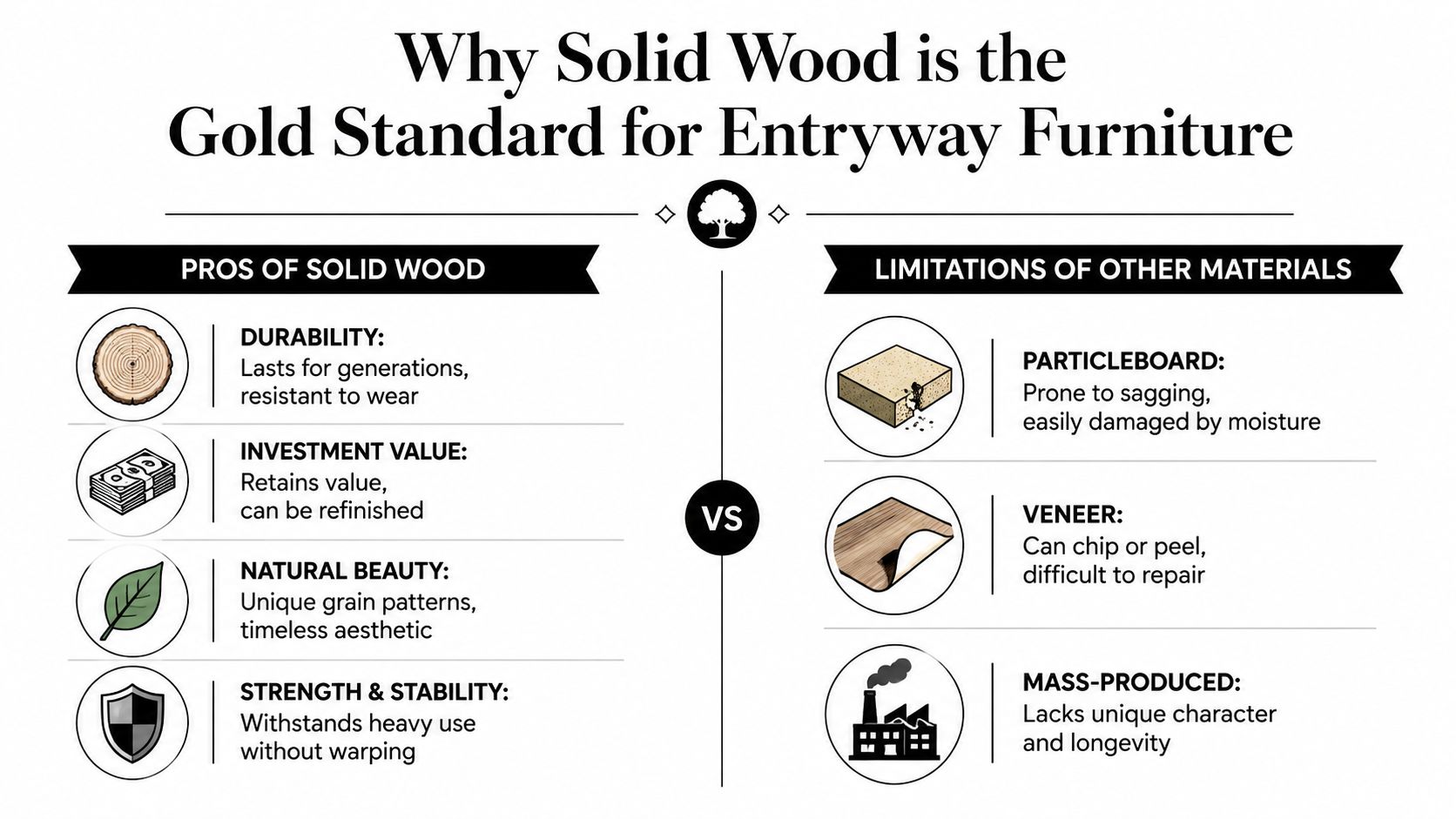
Entryway furniture has a tougher job than many people expect. It must stay steady on hard flooring, resist small impacts, and live near outside air that can swing from dry inland heat to cool coastal moisture. In Bay Area homes, that matters. A piece that is merely inexpensive at the start can become expensive if it needs replacing in a few years.
Solid wood works like a well-built front door. The material itself carries the strength. MDF, particleboard, and veneer-covered composites can look appealing on day one, but they do not age in the same way once corners swell, surfaces chip, or fasteners loosen.
Here is the practical difference:
| Material | What it's like in daily use | Long-term outlook |
|---|---|---|
| Solid wood | Feels weighty, stays more stable, and can often be repaired or refinished | Suited to decades of use |
| Veneer | Attractive surface, but scratches and edge wear are harder to correct | Better for lighter-duty areas |
| Particleboard or MDF | Lower upfront cost, but more vulnerable to impact and moisture exposure | Replacement is more common |
That is the heart of the buy it once, buy it for life approach. You are not only paying for how a piece looks in the showroom. You are paying for how it behaves after ten thousand arrivals home.
A better fit for Bay Area homes
Bay Area entryways are often compact. A narrow Edwardian hall in San Francisco, a condo landing in Oakland, or a smaller foyer in San Mateo leaves very little room for furniture that wobbles, flakes, or feels temporary. In tighter spaces, every piece gets touched more often, seen more closely, and asked to do more than one job.
That is one reason custom, American-made solid wood furniture makes financial sense over time. A well-sized console or bench can fit the wall properly, clear the door swing, and still leave a comfortable path through the room. Instead of replacing a too-deep, mass-produced piece that never quite worked, you invest once in something built for your home and your habits.
The sustainability case follows the same logic. Furniture kept for decades creates less waste than furniture replaced every few years.
Material quality shows up in every room
This principle is not limited to the entry. Families comparing children's furniture often reach the same conclusion with heavy-duty triple bunk beds. Different use, same lesson. Construction quality matters most in the places that see repeated daily wear.
Solid wood also helps the entryway feel connected to the rest of the house. Grain, tone, and finish have a relationship with nearby floors, stair parts, and trim. If you want that connection to feel natural rather than accidental, this guide on how to choose hardwood flooring offers a helpful foundation for matching undertones and wood character across adjoining spaces.
Choosing the Right Pieces for Your Entryway
Most entryway problems aren't style problems. They're function problems dressed up as style problems. Before choosing a finish or shape, start with a basic question. What needs to happen here every day?
If you measure first and answer that accurately, the right furniture becomes much easier to identify.
Four entryway pieces that solve different problems
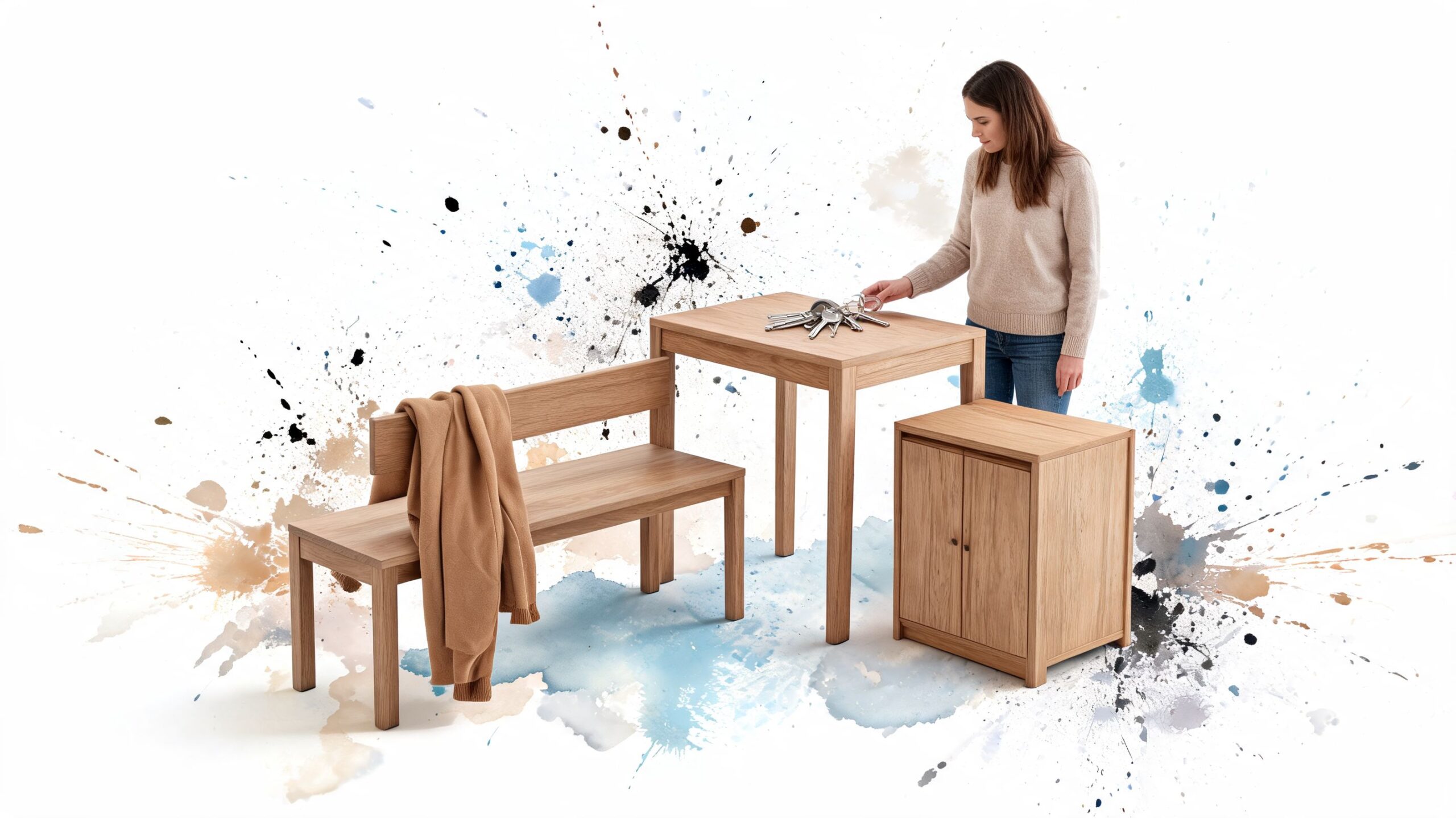
A narrow wall near the front door usually calls for one of these approaches:
Console table for a simple landing zone
This works well in apartments, condos, and narrow halls. It gives you a place for keys, sunglasses, and mail without crowding the walkway.Bench for seating and softening the space
A bench makes sense when people regularly remove shoes at the door. It also makes the entryway feel more welcoming, especially if the rest of the space is hard surfaces.Storage cabinet for visual calm
If you dislike seeing shoes, dog leashes, or reusable shopping bags, choose enclosed storage. Cabinets keep the entry from feeling busy.Hall tree or rack when closet space is limited
In older homes, coat storage near the front door can be scarce. A vertical piece helps use wall space instead of floor space.
A simple way to decide
Use this quick framework:
| If your entryway problem is… | The better furniture choice is… |
|---|---|
| No place to drop essentials | Console table |
| Shoes pile up near the door | Bench with storage |
| Bags and outerwear collect everywhere | Hall tree or cabinet |
| The space feels empty and unfinished | Console with mirror or art above |
Bay Area homes often need combinations rather than single pieces. A slim console plus a small bench across from it can do more than one oversized cabinet. In a tight Victorian hall, a shallow profile usually matters more than adding every possible feature.
If you need more inspiration for storage-oriented pieces that bridge hallway and entry use, hall chest furniture ideas can help clarify what belongs out in the open and what should stay tucked away.
Measure the width of the wall, the door swing, and the path people actually take. Good layout starts with movement, not decoration.
Common mistakes people make
The first is choosing a piece that's too deep. The second is forcing a decorative table into a storage problem it can't solve. The third is buying something because it looks good in a staged photo, even though their household needs drawers, shelving, or seating.
That's why solid wood entryway furniture works best when you match the form to the routine. A beautiful piece should reduce friction in your day, not create it.
Mastering Scale and Layout in Bay Area Homes
Bay Area homes have personality. They also come with quirks. Narrow vestibules, offset doors, shared walls, compact foyers, and open-plan entries all ask for different decisions. Good entryway design isn't about filling space. It's about shaping movement.
In older San Francisco and Peninsula homes, the challenge is often width. In newer builds, the issue may be that the front door opens into a larger room with no clear visual boundary. Both situations benefit from custom thinking.
How to make a small entry feel usable
A compact entryway needs restraint. Choose fewer pieces, but make each one count. A shallow console can define the zone without interrupting flow. A bench under a mirror can add function without making the wall feel heavy.
If you're working with a particularly tight footprint, ideas from RBA Home Plans small space design are helpful because they focus on circulation, visual openness, and multi-use planning.
Try these layout habits:
- Keep the passage clear: Leave enough open walkway that no one has to turn sideways to pass.
- Use wall height: Hooks, mirrors, and art can carry visual weight upward when floor space is scarce.
- Avoid bulky legs and aprons: Lighter-looking silhouettes help small foyers feel less crowded.
Why customization matters more here
In Bay Area Interior Design, customization is often less about luxury and more about fit. A console that's slightly narrower, a bench with the right seat height, or a cabinet designed around an awkward wall can make the difference between a useful entry and a frustrating one.
Wood species, finish depth, and hardware all affect scale visually. Lighter finishes can make a compact space feel more open. Darker woods can be beautiful too, especially when the room has strong natural light or crisp wall color to balance them.
In small homes, precision matters more than excess. One well-sized piece will always outperform two that almost fit.
That's where working with design experts can save time and prevent expensive mistakes. If you're refining the layout of an entry, hall, and adjoining living area together, interior design consultation services can help tie those decisions into the rest of the home rather than treating the front door as an isolated corner.
Customizing Your Furniture for a Perfect Fit
A good custom piece solves a specific problem. In a Bay Area entryway, that problem is often familiar. The wall is shorter than expected, the front door swing steals usable inches, shoes collect faster than planned, and the piece still needs to look calm and settled every time you come home.
That is why customization matters here. It helps a room work the way an older, well-planned house works. Nothing wasted. Nothing forced. Just the right depth, the right height, and storage where your daily routine needs it.

What makes a piece heirloom quality
The term only means something if the construction supports it. Joinery, wood movement, and finish quality all have to be handled correctly, especially in a hardworking spot like the entry.
Earlier research in this article noted the strength advantage of well-made mortise-and-tenon joinery over simpler fastener-based construction. In everyday terms, that means a console or bench is more likely to stay square, steady, and dependable after years of dropped bags, hurried seating, and constant use.
Solid wood also gives you choices that factory-made substitutes rarely offer. You can choose a species for the way it looks, yes, but also for the way it will live with your home over time. Oak feels grounded and versatile. Walnut has more depth and formality. Maple suits cleaner, lighter interiors. Those differences may sound subtle on paper, but in a small foyer they read the way fabric does in a well-made jacket. The material sets the tone before anyone says a word.
Why customization can save money over time
Bay Area homeowners usually understand the cost of buying twice. A piece that is slightly too deep, too short, or poorly built often gets replaced long before it should. What looked cheaper at the start becomes the expensive option once you count replacement, delivery, disposal, and the frustration of living around a bad fit.
A well-sized solid wood piece tends to stay useful through paint changes, flooring updates, and even moves within the home. That is the heart of the buy it once, buy it for life approach. You are not paying for novelty. You are paying for fit, service life, and fewer compromises.
There can also be value at resale. The NAR 2025 Home Staging Report supports a point seasoned homeowners already recognize. Well-chosen wood furnishings help a home feel finished, cared for, and more memorable to buyers.
The customization choices that matter most
A few decisions do most of the work:
- Width and depth: These measurements determine whether the piece supports traffic or interrupts it. In narrow Bay Area entries, a few inches can decide that.
- Height: Consoles, benches, and cabinets should relate to how you use them. A drop zone for keys needs different height logic than a bench for putting on shoes.
- Wood species: Oak often feels grounded and versatile. Walnut reads more polished and formal. Maple can suit cleaner, lighter interiors.
- Finish tone: Match undertones with nearby floors, trim, or stair railings. An exact match is less important than visual harmony.
- Storage design: One drawer may cover keys and mail. Open shelving may be better for baskets, shoes, or items children need to grab on the way out.
- Hardware: Pulls and knobs should relate to nearby fixtures and door hardware without copying every detail.
For readers planning renovations or new construction alongside their furniture decisions, this guide to finding a high-end custom home builder is a useful reminder that lasting rooms come together best when scale, materials, and craftsmanship are considered early.
If you want to see how measurements, proportions, and practical details are worked out before an order is placed, this guide to furniture design decisions is a helpful starting point. Giorgi Bros. Furniture also offers custom-order solid wood furniture with choices in wood species and finishes for Bay Area homeowners from South San Francisco.
Ensuring a Lifetime of Beauty and Use
On a wet Daly City morning, the entryway works hard. Shoes come off quickly. A tote slides onto the console. Keys land in the same spot they did yesterday. Furniture that lasts for decades is built with that kind of daily repetition in mind.
What to look for in long-term durability
The first thing to judge is the part you usually cannot see. Joinery is the skeleton of the piece. If that skeleton is weak, a handsome bench or console can start to wobble long before the wood itself wears out.
That is one reason well-made Amish furniture has earned such a strong reputation over time. Traditional joinery, including mortise-and-tenon construction as noted earlier, is valued because it stays stable under years of opening, sitting, shifting weight, and everyday household traffic. In an entryway, that matters more than a showroom finish or a trendy silhouette.
Then look at the wear points. Drawers should glide without scraping. Shelves should feel planted, not bouncy. A bench should sit firmly on the floor without rocking. Good furniture behaves the way a well-hung front door does. Quiet, steady, and dependable every single day.
For Bay Area homeowners, this long-view matters financially as much as aesthetically. A custom, American-made solid wood piece often costs more at the beginning, but it usually avoids the cycle of replacing loose, chipped, short-lived furniture every few years. Buy it once, buy it for life is not a slogan here. It is often the lower-cost choice over a long stretch of ownership, especially in homes where square footage is limited and every piece needs to earn its place.
Caring for solid wood in the Bay Area
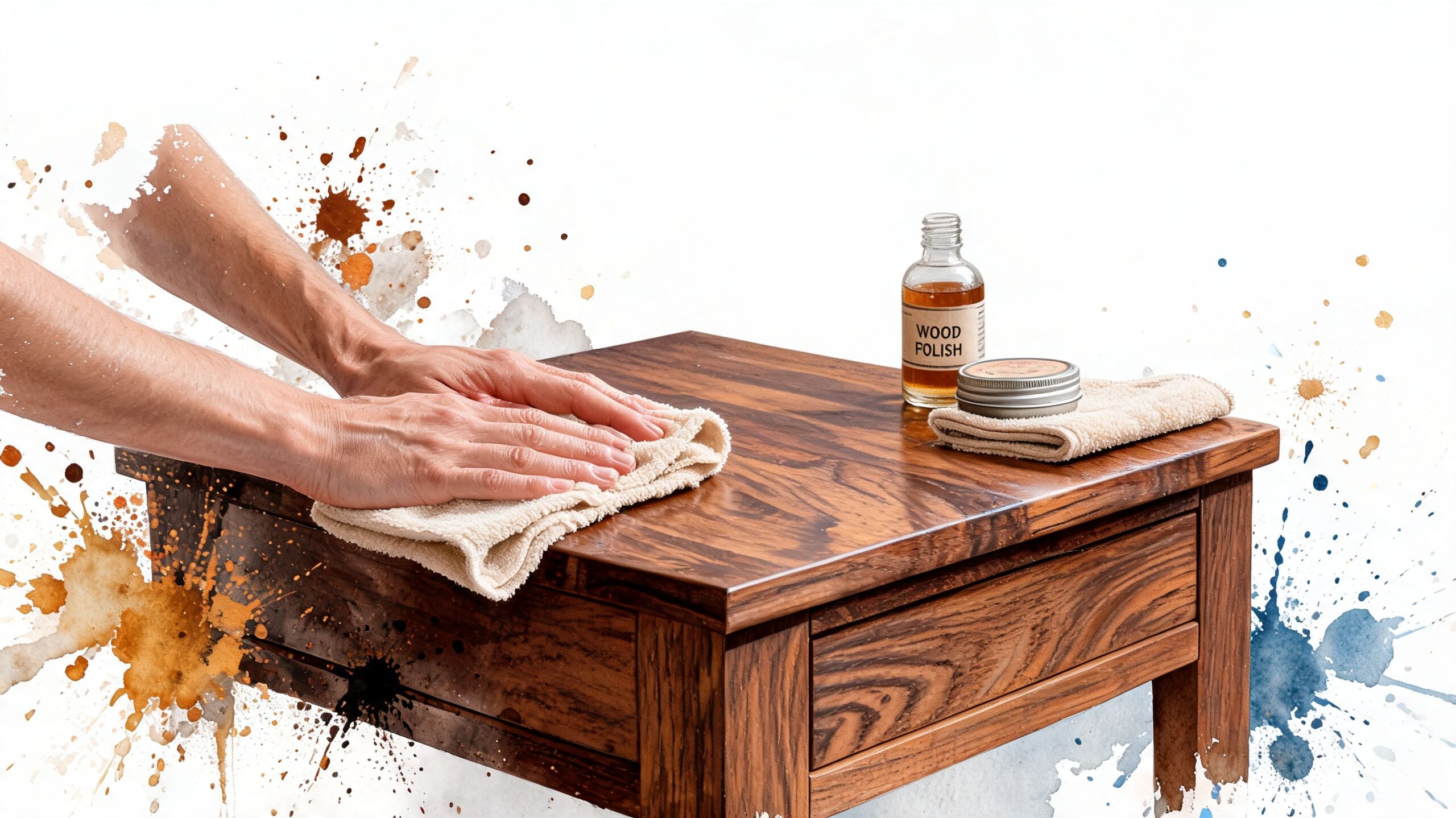
Our local climate asks for sensible care, not fussy care. Fog, coastal moisture, afternoon sun, and seasonal shifts can all affect natural wood, especially near entry doors, sidelights, and front windows. A properly built and finished piece is prepared for that, but a few habits help it age gracefully.
- Wipe up moisture quickly: Water rings and raised grain usually start when moisture sits longer than it should.
- Use a soft cloth for routine cleaning: Gentle care protects the finish better than abrasive pads or aggressive sprays.
- Watch direct sun: Strong light can deepen or lighten color over time, so it helps to rotate lamps, trays, or decorative objects now and then.
- Keep cleaning simple: Dusting and occasional wiping are usually enough. Over-treating wood often causes more trouble than under-treating it.
One principle has held up through generations of furniture making. The most sustainable piece is usually the one that stays in service for decades.
If you want the front hall to relate naturally to the rooms beyond it, it helps to compare materials and finishes across the home, not piece by piece in isolation. This look at solid wood furniture for living room spaces can help you build that continuity with the same long-term mindset.
Experience the Giorgi Bros Difference Firsthand
Buying furniture online can answer some questions, but not the important ones. You can't feel the weight of a drawer, run your hand over a finish, or compare wood tones properly through a screen. For investment pieces, that in-person step still matters.
That's one reason a long-established showroom remains valuable. In South San Francisco, families can compare construction methods, wood character, scale, and finish options side by side instead of guessing. You can see what reads too red, too dark, too formal, or just right for your home.
The experience matters too. Non-Commission Sales Staff create a different pace. You get guidance without being pushed toward a quick decision, which is exactly how furniture should be chosen when you hope to live with it for decades. If the project stretches beyond the entryway, it also helps to work with consultants who can think about adjoining rooms, Custom Furniture options, and the overall rhythm of the house.
After more than 90 years in business, that steady approach still makes sense. Good furniture isn't only about what looks appealing on the floor today. It's about what will still feel right after years of use, changing routines, and future remodels. If you're building a home that feels settled, solid wood entryway furniture is a strong place to begin.
Visit Giorgi Bros. Furniture in South San Francisco to explore solid wood entryway furniture in person, compare custom options in wood species and finishes, and speak with design consultants in a no-pressure setting. If you'd prefer to start with guidance customized for your home, book a Design Consultation and get help choosing investment pieces that fit your space, your style, and the way you live.