
You've found the right sofa, the dining table with the finish you wanted, or the custom bed that will likely stay with your family for years. Then delivery day comes, and what should feel exciting suddenly feels risky.
A large carton gets left at the curb. You're staring at a heavy box, narrow hallways, stair turns, packing debris, and hardware bags that all look the same. If the piece is upholstered, you worry about scuffed walls or torn fabric while trying to force it through a doorway. If it's wood, you worry about nicking a corner before the furniture even reaches the room where it belongs.
That's why white glove delivery matters. For investment pieces, delivery isn't the final errand. It's the last craft step in the purchase itself.
In a family business that's served South San Francisco since 1933, we've seen this again and again. People spend weeks choosing the right scale, material, comfort level, and finish. They compare fabrics. They think about how a piece will age. They ask whether it's worth buying better once instead of replacing something cheaper later. It usually is. Furniture purchases are high-consideration decisions, and delivery deserves that same level of care.
Protecting Your Investment from the Very Start
A sofa can look simple on a showroom floor. In real life, getting it into a home is rarely simple.
The trouble usually starts after the truck leaves. A sectional may arrive in multiple pieces. A dining table may need careful handling to protect the finish during assembly. A bed may have rails, slats, hardware, and upholstered components that need to be fitted correctly. Premium mattresses can be awkward to maneuver, especially through tight entries or upstairs.
Where delivery problems usually happen
Most damage and frustration don't happen when the piece is crossing the country. They happen in the final stretch. That means the driveway, the doorway, the hallway turn, the staircase landing, the unboxing, and the setup.
Customers often assume “delivery” means the hard part is over. Sometimes it means the hard part has just been handed to them.
A well-made piece can last for years. A rushed final delivery can shorten that value in a single afternoon.
That's the heart of the issue with furniture stores with white glove delivery. The service isn't a luxury add-on for appearances. It's a practical way to protect craftsmanship, finishes, and proper setup from the moment the item reaches your home.
Why this matters more for better furniture
The better the piece, the more careful the handoff should be.
That's especially true for Custom Furniture, customized upholstery, wood finishes, and larger casegoods. If you've chosen a specific leather, wood species, or stain, the whole point is to receive that piece in the condition it was built to achieve. A careless corner bump, improper assembly, or packing mess left for the homeowner to manage can take the shine off the entire purchase.
For Bay Area homeowners furnishing a remodel or replacing temporary pieces with long-term ones, that last step matters just as much as what happened in the showroom.
What White Glove Delivery Actually Means
The phrase gets used loosely, which is why many shoppers feel confused. Some stores say “white glove” and mean little more than bringing the item inside. Others mean a complete in-home setup service.
This image captures the difference better than most descriptions:

A practical definition comes from retailer descriptions summarized by Willis Furniture's explanation of white glove delivery service. The operational difference between standard and white glove service is a bundled final-mile workflow: the carrier brings items into the room of choice, performs assembly, removes all packaging, and often inspects the item on-site. That source also notes why this matters for custom or made-to-order furniture. A final-mile error can undo the value of higher-end materials and finishes.
The four parts customers should look for
When white glove delivery is done properly, it usually includes these core elements:
- Room-of-choice placement means the crew doesn't stop at the curb or front step. They bring the piece to the room where it will live.
- Unboxing and inspection means the item is opened carefully and checked during the appointment, not left wrapped for the homeowner to discover later.
- Assembly and setup means the piece is put together as intended, whether that's a bed, dining table, sectional configuration, or adjustable base.
- Packaging removal means the cartons, foam, plastic, and protective wrap leave with the crew instead of filling your garage.
What it is not
White glove delivery is not the same as standard shipping with a nicer name.
If someone leaves a boxed dresser in the driveway, that's not white glove. If a crew carries a sofa just inside the front door but doesn't place it, assemble anything, or remove packing materials, that still falls short of what most homeowners expect from the term.
Many people get caught off guard. They hear “delivery included” and assume setup is part of the service. Often, it isn't.
Practical rule: If the service doesn't include placement, setup, and cleanup, ask for the exact wording in writing before you buy.
For Amish Furniture, large dining sets, and carefully finished casegoods, that distinction matters even more. These pieces are often chosen because they're meant to last. The delivery method should support that goal, not undermine it.
Comparing Furniture Delivery Service Levels
Not every store offers the same level of help. Some only deliver to the curb. Some will cross the threshold. Some will place the item in a room but stop before setup. And some furniture stores with white glove delivery handle the full appointment from entry to cleanup.
This side-by-side view makes the tiers easier to understand.
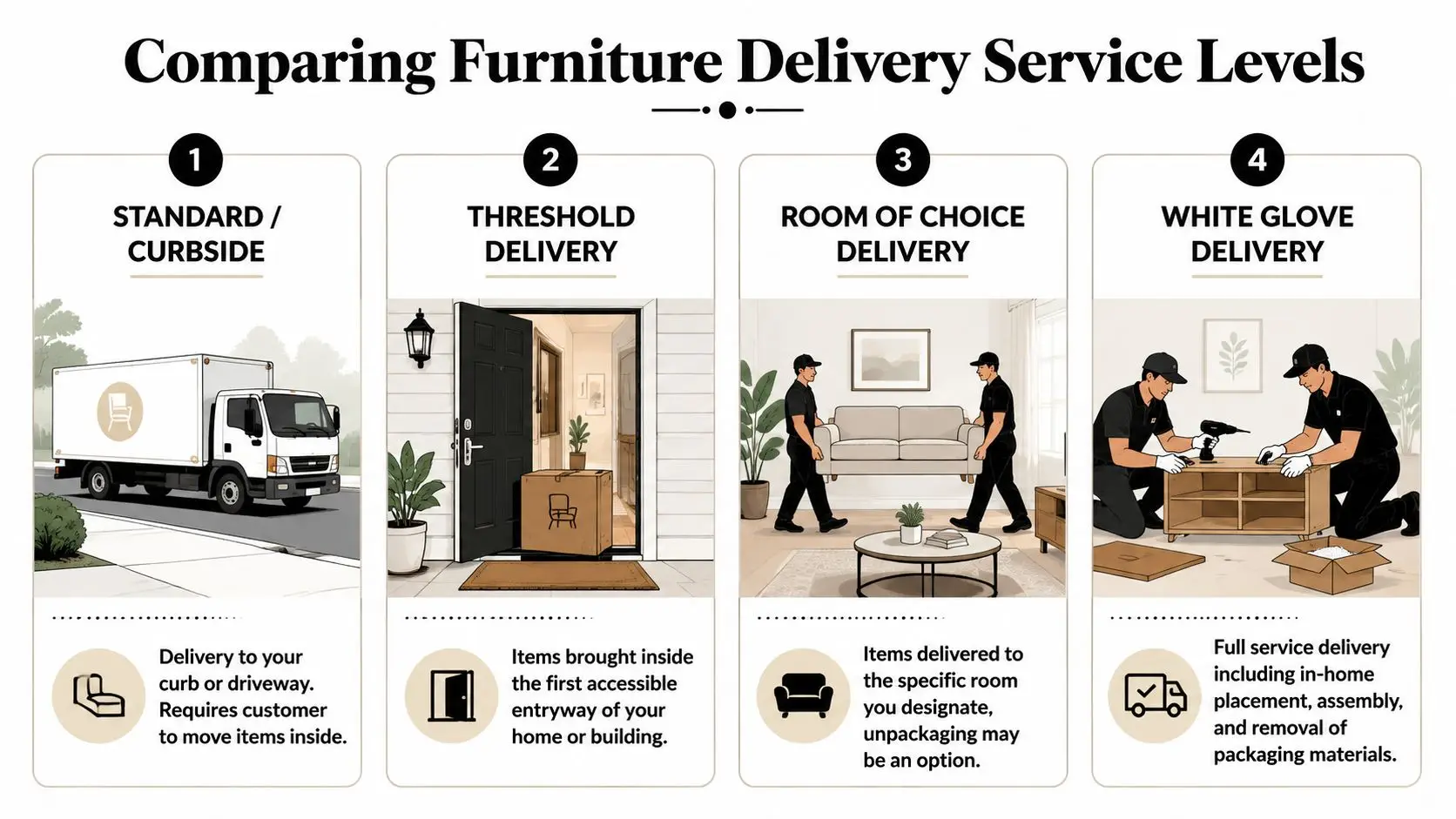
Furniture Delivery Service Comparison
| Feature | Curbside Delivery | Threshold Delivery | White Glove Delivery |
|---|---|---|---|
| Where the item is left | At the curb, driveway, or exterior drop point | Inside the first accessible entryway | In the room you designate |
| Who moves it through the home | You | Usually you after the initial placement | Delivery crew |
| Assembly included | Usually no | Usually no | Yes, when included in the service details |
| Packaging removal | No | Often no | Yes, when included in the service details |
| Best for | Small, manageable items | Simple deliveries with minimal setup | Large, fragile, complex, or custom pieces |
Which level fits which purchase
If you're buying a lamp table or a small accent chair, curbside may be manageable.
If you're buying a king bed, a large sectional, a solid wood dining table, or Premium Mattresses with adjustable components, the gap between service levels becomes much more important. These are the categories where handling, placement, and setup directly affect the customer experience.
Threshold delivery can sound helpful, but it often moves the problem just a few feet. The item is now inside, but you still have to manage corners, lift packaging, sort hardware, and dispose of debris.
White glove delivery makes the most sense when any of these are true:
- The piece is oversized and difficult to maneuver safely.
- The finish is delicate and you don't want to risk scratching wood, fabric, or leather during setup.
- Assembly is more than basic and correct installation affects long-term performance.
- You're furnishing a primary room and want the home functional the same day.
For shoppers trying to compare offers from different retailers, Giorgi Bros. delivery information is the kind of page worth reviewing because it helps clarify how service is handled rather than leaving “delivery” as a vague promise.
Why the wording matters
A phrase like “inside delivery available” can mean several different things.
It may mean room-of-choice placement. It may mean threshold only. It may mean assembly is extra. It may mean packaging removal isn't included. The safest approach is to compare the actual service steps, not the label.
The True Value of a Flawless Delivery
People often ask whether white glove service is worth the extra cost. That's a fair question. The better question is what you're protecting.
With a quality piece, the delivery charge isn't only paying for transportation. It's paying for trained handling, careful placement, correct assembly, and a cleaner handoff. In practical terms, it functions a lot like insurance for craftsmanship.

Why scheduling matters as much as handling
White glove delivery is also a service system. According to Crate & Barrel's white glove delivery overview, customers are notified when items are ready and can schedule a delivery date and time. That same source describes an appointment-based model, and the verified guidance for this article notes that a narrow delivery window reduces failed deliveries and lowers the probability of damage associated with repeated handling. For bulky or fragile categories like sofas, bedroom sets, and dining tables, that's important for preserving finish quality and warranty compliance.
That point gets overlooked. Every extra touch, move, re-route, or reschedule creates another opportunity for wear, dents, or setup mistakes.
Where the value shows up
A flawless delivery protects value in several ways:
- It reduces physical risk at home. You're not lifting a boxed headboard up stairs or pivoting a sectional through a hallway with a friend.
- It supports proper setup. Beds, tables, and motion pieces work better when assembled correctly from the start.
- It protects your home as well as the furniture. Floors, walls, trim, and doorways matter too. We've written separately about protecting your floors from furniture because the room should look better after delivery, not worse.
- It saves your time. You don't spend the rest of the day breaking down cartons and figuring out disposal.
The least visible part of good delivery is often the most valuable. Nothing goes wrong, and your home is ready to enjoy.
Why this fits a buy-it-for-life mindset
A piece that's made to last deserves a beginning that supports its lifespan.
That's part of the sustainability argument too. Buying better furniture less often only works if the item arrives, gets assembled, and starts its life in your home the right way. A strong frame, a premium finish, or a custom upholstery choice can't offset damage caused by poor final handling.
For homeowners investing in long-term furnishings instead of quick replacements, white glove service helps align the purchase with the purpose behind it.
How to Vet a Furniture Store's Delivery Service
The smartest shoppers don't ask only, “Do you offer white glove delivery?” They ask, “What exactly happens on delivery day?”
That matters because shoppers often compare white glove as if it were a standard promise, when in practice it's a bundle of different logistics, fees, and exclusions. That point is reflected in Macy's white glove delivery information, which supports a better comparison framework: what's included, what's excluded, whether delivery is by appointment, whether it goes to the room of choice, and whether the item is fully assembled.
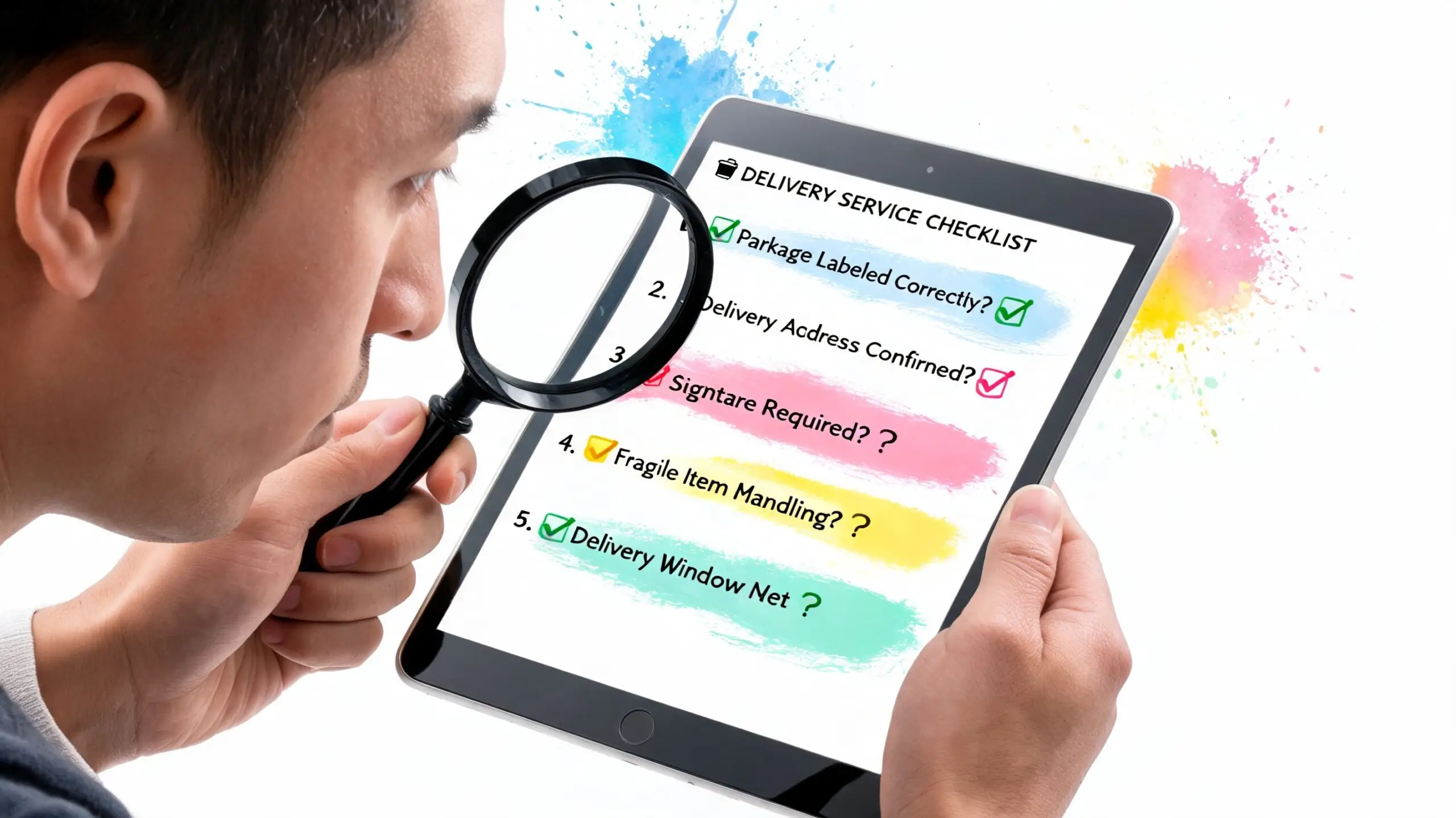
Questions worth asking before you buy
Bring this checklist into any showroom conversation:
- Who performs the delivery? Ask whether the service is handled by an in-house team or a third-party provider.
- What does “white glove” include for this exact item? A sofa may qualify for one level of service while a mirror, rug, or special-order piece follows another.
- Is assembly included? Don't assume. Ask whether the crew will fully assemble the product and place it where it belongs.
- Will they remove packaging? This sounds small until your garage is full of cardboard and foam.
- How is the appointment scheduled? Ask whether you'll receive a delivery window and advance notice before arrival.
- What happens if the piece doesn't fit? Tight stairs, elevators, and doorway clearances should be discussed before the truck arrives.
- How are delivery-day issues documented? If damage or a defect is noticed during setup, you want a clear next step.
Red flags that deserve a pause
Vagueness is the main warning sign.
If a retailer can't explain the service clearly, or if the answer changes depending on who you ask, slow down. Delivery terms should be stated as plainly as product specs. That's especially important with Custom Furniture and made-to-order pieces, where replacement timelines can be more involved.
Another useful habit is reading up on moving and access planning before delivery day. Even though it covers relocation more broadly, this guide on choosing a furniture removalist Central Coast is a helpful outside resource because it highlights the kind of practical questions homeowners should ask about handling, access, and service expectations.
Get the service details in writing. If a term matters to you, such as assembly, placement, or debris removal, it should appear on the order, not just in conversation.
Why product descriptions and delivery details belong together
Customers often study wood species, cushion construction, mattress comfort, or leather grades and spend only a minute on the delivery line. That's backwards.
The service terms should be read with the same care as the product listing. If you're comparing options, learning how to read furniture product descriptions and buy with confidence can help you match the product promise with the delivery promise before you commit.
The Giorgi Bros. White Glove Experience
A good white glove experience starts well before the truck is loaded.
In a family-owned showroom that has served South San Francisco since 1933, the process begins with conversation. You walk through the room needs, scale, materials, comfort, finish, and how the piece will be used over time. If you're ordering custom, that includes fabric, leather, wood species, and finish selections. The delivery plan should support those choices, not sit off to the side as an afterthought.
What a no-pressure process looks like
The most helpful delivery conversations happen when the person guiding you isn't trying to rush the sale.
That's where Non-Commission Sales Staff matters in practice. Consultants can slow down and ask the useful questions. Which room is the piece going to? Are there stairs? Is there a tight turn? Does the old piece need to be moved before placement? Will setup matter for immediate use? Those details protect the customer's outcome.
This is also where one retailer can differ from another in a meaningful way. Giorgi Bros. Furniture offers white glove delivery service for furniture purchases, uses its own delivery team for much of its service area, and also offers pickup and pickup or white glove options, based on the publisher information provided for this article.
Why end-to-end guidance matters
The delivery appointment should feel like the final step of a well-run project.
When the piece arrives, the ideal experience is simple. The crew places it where it belongs, assembles it correctly, removes the packing, and leaves the room ready to use. That's the standard customers should want, especially when buying pieces intended to stay in the home for years.
For Bay Area homeowners focused on longevity, craftsmanship, and thoughtful design, white glove service fits the same philosophy as buying better furniture in the first place. You're not chasing fast replacement cycles. You're choosing pieces with staying power and making sure they start their life in your home the right way.
If you'd like to understand the people and history behind that approach, you can learn more about Giorgi Bros. and its family-owned background.
If you're furnishing a home with long-term comfort, craftsmanship, and everyday use in mind, visit Giorgi Bros. Furniture in South San Francisco or book a Design Consultation. You can explore quality firsthand, compare custom options in fabrics, leathers, woods, and finishes, and get no-pressure guidance on the delivery service that best protects your investment pieces from day one.