You’re probably here because you’ve looked at a sofa, a dining table, or a whole room online and thought, “I know what I like, but I don’t know what to call it.”
That’s common. People often use modern, contemporary, and mid-century modern as if they mean the same thing. They don’t. And when you’re choosing furniture for a home you plan to live in for years, those differences matter.
After serving Bay Area homes since 1933, we’ve learned that good design advice starts by making things simpler, not more complicated. Contemporary furniture styles aren’t about memorizing design rules. They’re about understanding how a room should feel, how a piece should function, and whether it will still make sense in your home long after the first excitement wears off.
Defining Contemporary Furniture in 2026
Contemporary style changes with the present moment. That’s the easiest way to understand it. If modern design is tied to a specific design era, contemporary furniture styles reflect what people want in their homes right now.

In the early 2020s, contemporary furniture design became a dominant style, driven by a shift toward functional, efficient pieces that maximize open space and favor clean lines, natural materials, and neutral palettes, according to Rapport Furniture’s overview of furniture styles. That helps explain why so many current homes feel lighter, calmer, and less crowded than they did a decade ago.
What contemporary style usually looks like
Contemporary style is widely recognizable, even before it can be described. It often includes:
- Clean silhouettes that avoid heavy ornament
- Open visual space so rooms feel less packed
- Natural-looking materials such as wood, glass, and textured fabrics
- Neutral foundations with room for a few stronger accents
- Useful flexibility so furniture works with real life, not just photographs
That last point is where readers often get stuck. They think contemporary means cold or bare. It doesn’t. A contemporary room can feel warm, layered, and personal. The difference is that every piece has a purpose.
Practical rule: If a room feels calm, edited, and easy to live in, you’re probably looking at a contemporary approach.
Why the style keeps resonating
Bay Area homeowners often want rooms that do more than one job. A living room may need to host family time, reading, occasional guests, and remote work in the same week. Contemporary design supports that kind of living because it values space, flexibility, and comfort without visual clutter.
That’s also why art and accessories matter. In a restrained room, a few well-chosen pieces carry more weight. If you want a small example of how contemporary style shows up outside the main furniture pieces, this guide to styling contemporary bathroom art is useful because it shows how a simple, current aesthetic can still feel expressive.
For homeowners refining a whole-house look, our own notes on style trends for your home can help connect these ideas to everyday decisions.
The best definition to keep in mind
Contemporary doesn’t mean trendy in a disposable way. It means current, but it also means appropriate to how people live now. The strongest contemporary interiors don’t chase every new look. They take what’s current, filter it through comfort and practicality, and turn it into something that feels settled.
That’s why the style has staying power. It isn’t tied to decoration for decoration’s sake. It’s tied to living well.
Contemporary vs Modern vs Mid-Century Modern
This is the question we hear most often in the showroom. A customer points to a sofa and says, “I like modern furniture.” What they often mean is one of three things. They may mean contemporary. They may mean true modern design. Or they may mean mid-century modern.
Those are related, but they aren’t interchangeable.
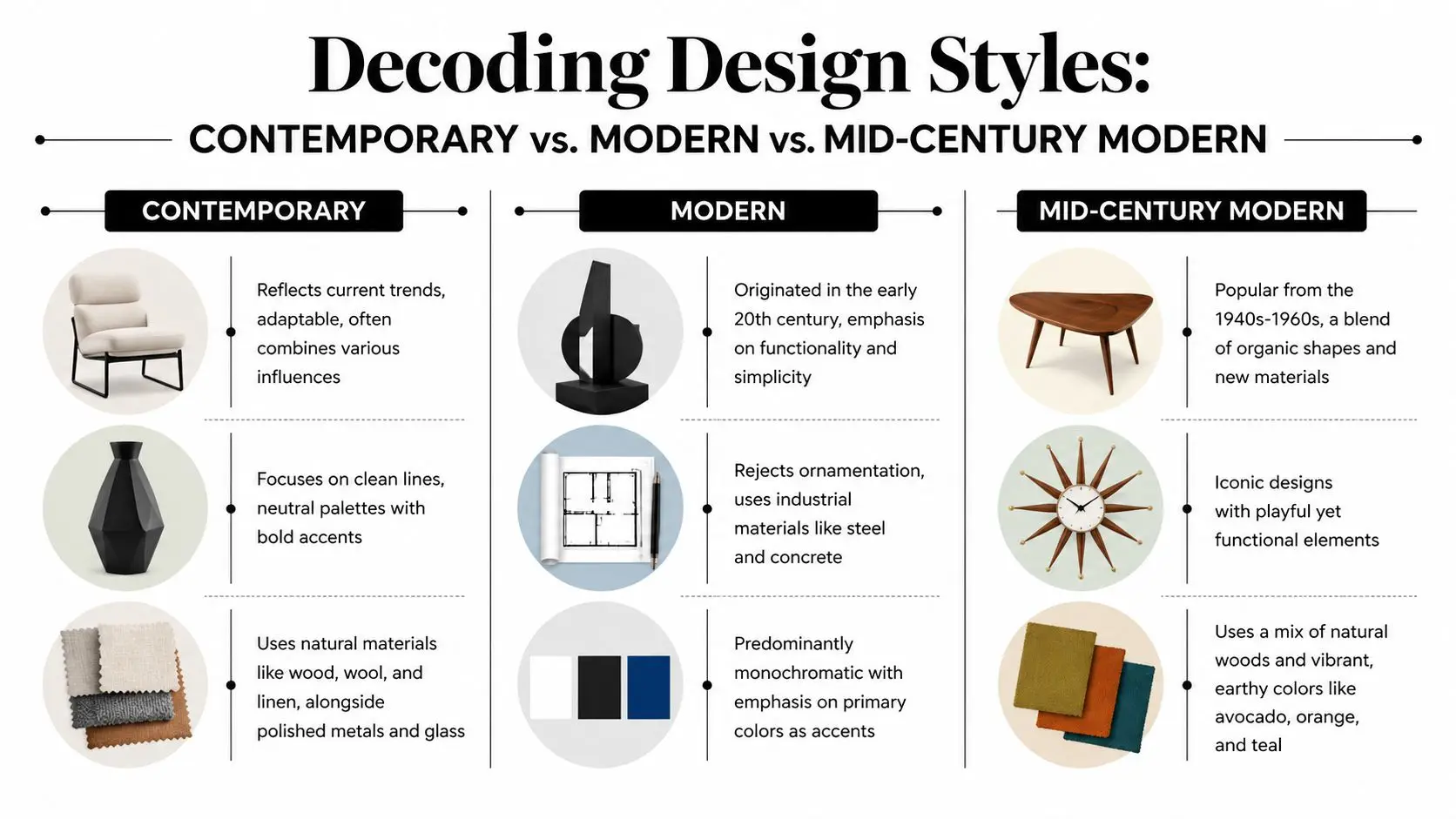
A simple side-by-side view
| Style | Best way to think about it | Usual look | Common materials and mood |
|---|---|---|---|
| Contemporary | Of the present moment | Clean lines, adaptable forms, often softened with texture | Wood, wool, linen, glass, polished metal. Calm but flexible |
| Modern | A defined historical design language | Simplicity, strong function, little ornament | Industrial and natural materials, structured forms, disciplined look |
| Mid-century modern | A classic branch of modern design from the mid-1900s | Tapered legs, organic curves, lighter visual weight | Warm woods, playful shapes, earthy or lively accents |
Contemporary is flexible
Contemporary style borrows. It can take a modern shape, a vintage lamp, and a sculptural accent chair and make them feel current together. That’s why it’s often easier to live with if your home isn’t built around one strict historical look.
A contemporary room might include a sofa with clean lines, a stone-topped table, and a curved lounge chair in a soft textile. The common thread is not era. It’s balance.
Modern is more fixed
Modern design belongs to a specific design tradition. It values simplicity, function, and clarity. It tends to reject extra ornament and lean into strong geometry.
Think of modern as a period piece with lasting influence. It has rules. It tends to feel more disciplined than contemporary. If contemporary is responsive, modern is more settled.
For readers who enjoy iconic designs and their roots, our look at modern furniture classics is a useful place to keep exploring.
Modern has a historical backbone. Contemporary has a current point of view.
Mid-century modern has its own personality
Mid-century modern is where many people land emotionally, even if they don’t know the term. It often feels approachable because it mixes clean lines with warmth. You see slimmer profiles, exposed legs, walnut tones, and shapes that feel both neat and friendly.
It’s still a subset of modern design, but it’s more recognizable to many homeowners because it has such a strong visual identity. A boomerang coffee table, a starburst clock, a chair with a molded silhouette. Those cues are memorable.
Where people get tripped up
The confusion usually comes from overlap. A contemporary room can include a mid-century piece. A modern sofa can work in a contemporary house. Retailers also blur the terms.
If you want a useful contrast point outside the contemporary family, this article on rustic design for Vancouver homeowners shows how differently another style speaks through material, texture, and mood. Seeing a strong contrast often makes the contemporary vocabulary easier to spot.
The easiest way to choose
Ask yourself three questions:
- Do I want a look tied to a design era or a look that feels current?
- Do I prefer stricter lines or a softer mix?
- Am I building a room around icons, or around how I live now?
If your answer centers on flexibility, openness, and a polished but livable feel, contemporary furniture styles are probably the right lane.
The Building Blocks of Quality Contemporary Pieces
You notice it after a few months of living with a piece. The sofa still feels supportive at the end of a long evening. The dining table picks up character instead of damage. Drawers close cleanly, corners stay tight, and nothing starts looking tired before its time.
That is the test of quality in contemporary furniture. A simple silhouette leaves very little to hide behind, so the materials, joinery, support, and finish all have to carry their weight. In a well-made piece, the quiet parts do the hard work.
Start with the visible materials
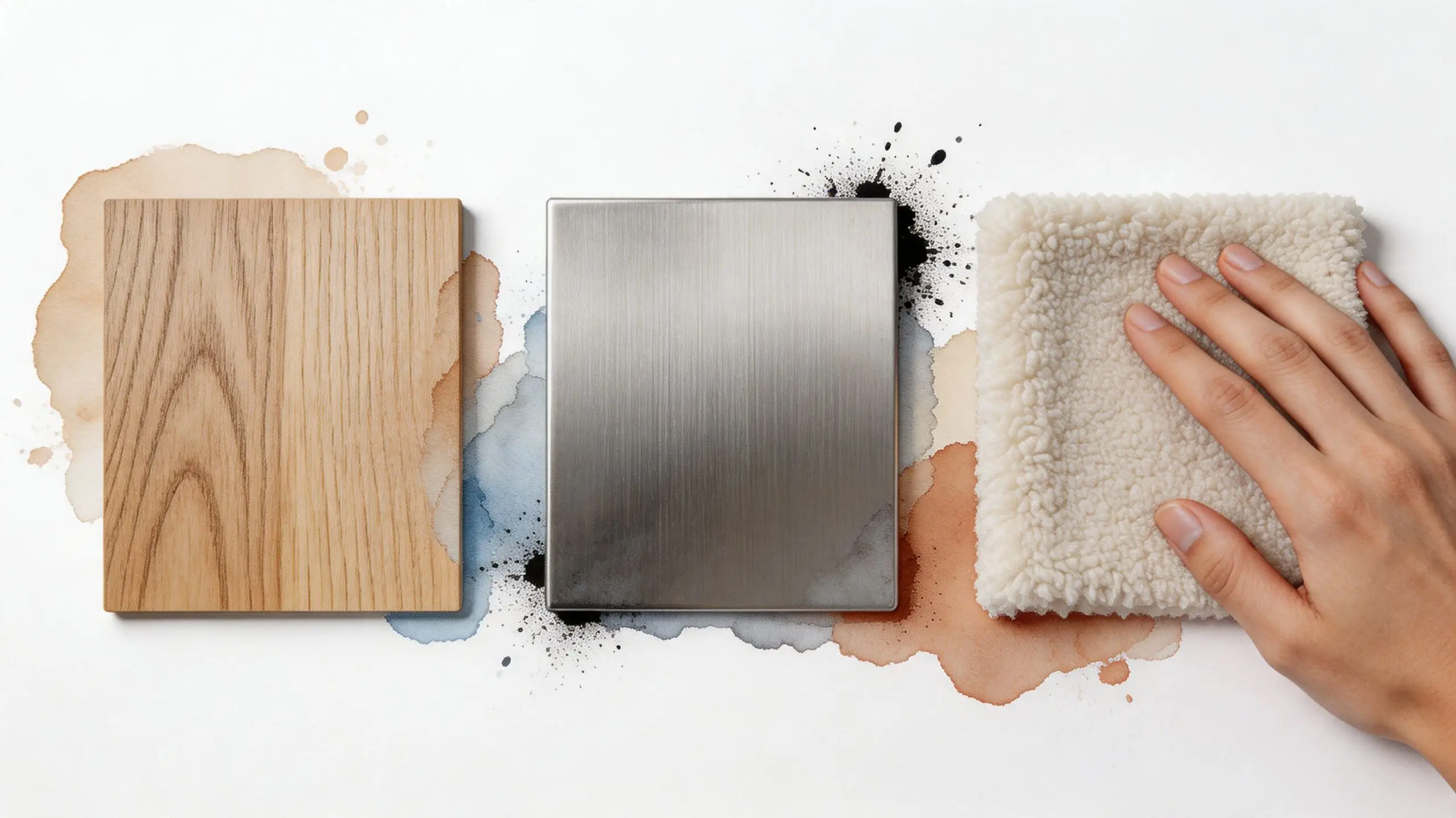
Contemporary furniture styles often use a focused palette. Wood, metal, glass, leather, wool, linen, and performance fabrics show up again and again. Because the forms are usually clean and restrained, each material has a larger job. It shapes the mood, signals the level of craftsmanship, and affects how the piece will age in daily life.
A good wood surface has depth and variation. It should look like a natural material, not a printed imitation trying to pass from across the room. Metal should feel solid in the hand and look intentional in its finish, whether that finish is brushed, matte, or polished. Leather should soften and develop patina with use. Quality textiles should hold their texture and color without feeling precious.
Material choice is also where style meets long-term value. A contemporary chair may look current because of its profile, but its staying power usually comes from the honesty of its materials.
Then examine the structure underneath
The frame is the skeleton. If it is weak, the whole piece pays for it later.
Start with the questions many shoppers skip. Is the frame hardwood, engineered wood, metal, or a mix? How are corners reinforced? Do cushions have support that will keep their shape, or will they flatten quickly? If the piece has moving parts, do they operate with control and consistency?
This matters even more in contemporary homes, where one piece often has to do more than one job. A sectional may need to fit a new floor plan in a few years. A dining table may need extension leaves for holidays but still feel refined on an ordinary Tuesday. Good construction gives furniture that kind of flexibility without turning it into a compromise.
Good contemporary design has to live well first. Its clean lines only matter if the piece keeps its comfort, balance, and shape over time.
A quick quality checklist
Use this short checklist when you are on a showroom floor or comparing pieces online:
Frame integrity
Ask what holds the piece together. A slim profile can still be strong, but it needs real structure behind it.Seat and back support
Sit longer than a minute or two. Comfort should hold up after the first impression.Surface honesty
Real wood, quality veneer, well-finished metal, full-grain or top-grain leather, and durable textiles tend to wear in more graceful ways than cheaper substitutes.Proportion and customization
The same silhouette can feel refined in one room and awkward in another. Size, finish, fabric, and cushion fill all affect the final result.
That last point deserves extra attention. Contemporary rooms often look effortless, but proportion is doing a great deal of the work. A sofa that is two inches too deep can crowd a walkway. A dining table in the wrong wood tone can make a fresh room feel flat. Custom options help you tune the piece to your home, which is one reason better furniture keeps its value longer, both practically and emotionally.
For a closer look at wood species and how they affect durability and appearance, see this guide to choosing the right hardwood for longevity and style.
Customization is part of the value
Custom furniture earns its place because it solves the right problem. It lets you choose dimensions that fit your room, finishes that work with your light, and materials that reflect how you live. That is especially helpful in contemporary design, where small shifts in scale or texture can change a piece from generic to very personal.
Giorgi Bros. Furniture offers custom order options across wood furniture, upholstery, and finishes. For homeowners who want a current silhouette without sacrificing craftsmanship, that kind of flexibility connects the look of contemporary style with the lasting value of a piece built for real use.
The best contemporary rooms do not chase novelty. They use clear design, honest materials, and careful construction to create spaces that still feel like home years later.
Styling Your Bay Area Home Room by Room
Most homeowners don’t furnish in abstract terms. They furnish one room at a time, often while juggling old favorites, new needs, and a floor plan that doesn’t behave quite the way they hoped.
That’s where contemporary furniture styles become practical. They’re easy to adapt room by room because they rely on clarity, proportion, and function rather than heavy matching sets.
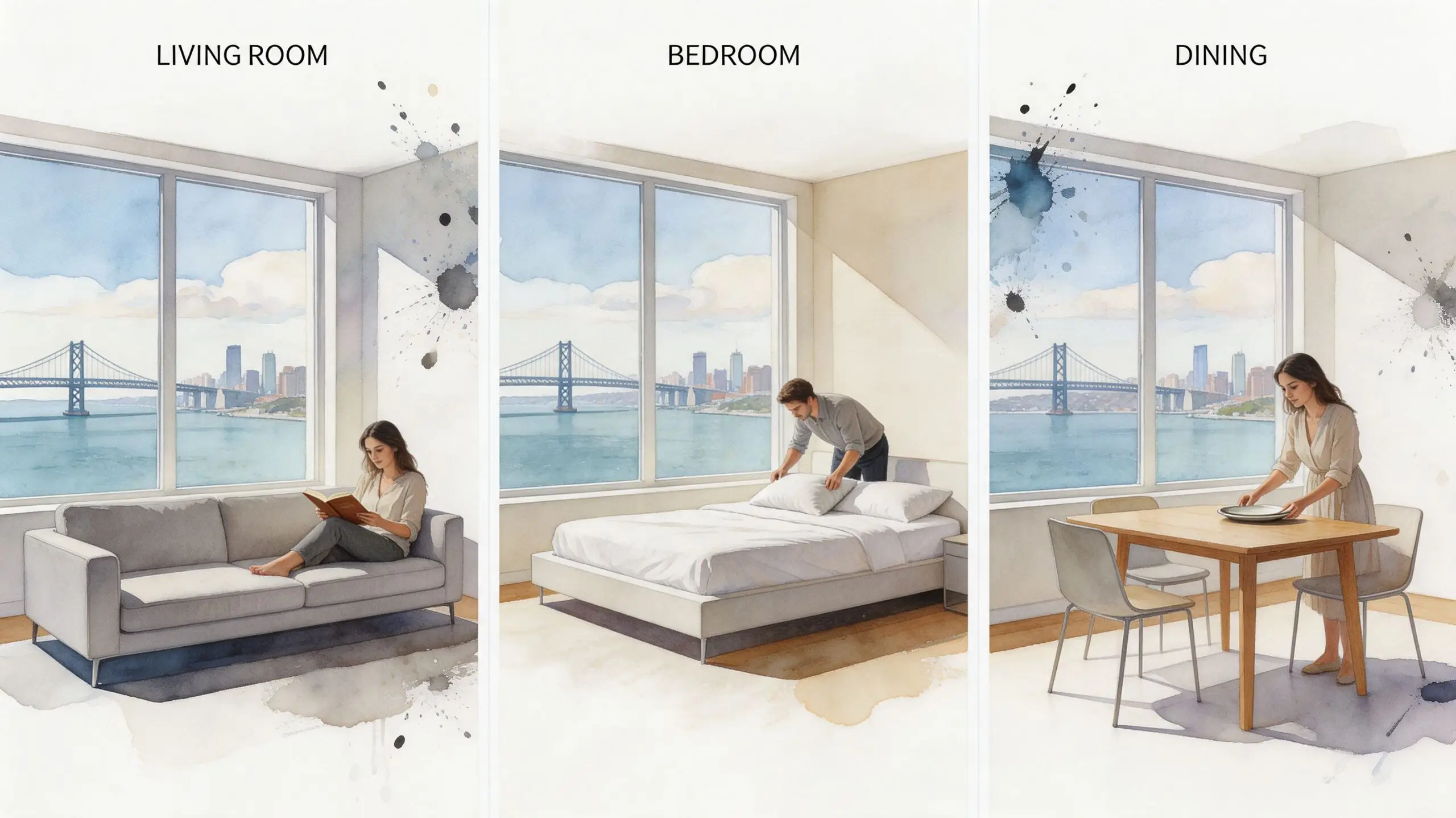
Living room
A Bay Area living room often needs to feel open even when square footage is modest. A low-profile sectional helps because it keeps sightlines cleaner. Pair it with one accent chair that has a distinct shape. That could be a curved swivel, a wood-framed lounge chair, or a crisply upholstered leather seat.
Then anchor the room with a table that has visual lightness. Glass, slim wood tops, or pedestal forms all help. If you’re sorting through layouts, our guide on how to choose living room furniture can help you think through scale and traffic flow.
A few good living room moves in this style:
- Keep the rug generous so the furniture feels grounded
- Use one bold note such as art, a sculptural lamp, or a textured chair
- Let negative space breathe so the room doesn’t feel overfurnished
Dining room
Contemporary dining rooms work well when the table shape supports movement. In tighter homes, a round or pedestal table often makes everyday life easier because there are fewer corners fighting the room.
Chairs don’t need to match the old formal model of “more wood, more bulk, more importance.” Upholstered seats with clean lines can make a dining room feel well-appointed without feeling stiff. If you want the room to feel more architectural, use a table with a strong base and keep the surrounding palette quiet.
A dining room feels contemporary when the furniture supports conversation and movement, not just symmetry.
Bedroom
Bedrooms benefit from contemporary restraint more than almost any other space. An upholstered platform bed, a simple wood dresser, and nightstands with enough function but not too much visual noise can make the room feel calm quickly.
This is also where comfort has to be real. A custom-fit bed frame paired with Premium Mattresses creates a sleep setup that looks clean and works hard. A beautiful bedroom that doesn’t help you rest misses the point.
If you’re integrating media into a bedroom or living area and want it to recede visually, this look at the design-first Samsung Frame TV 43 is a helpful example of technology chosen for appearance as much as function.
What online shopping can’t show you
Contemporary furniture is especially hard to judge from a screen. Texture reads differently in person. Seat depth is hard to guess. Finish color shifts with light. A table that seems airy online can feel heavy in a room.
That’s why showroom visits still matter. You can test the pitch of a chair, compare woods side by side, and notice whether a fabric feels crisp, soft, casual, or formal. Those quiet decisions shape the final result more than people expect.
The True Meaning of Sustainability in Furniture
Sustainability has become one of the biggest talking points in contemporary design. That’s a good development. People want to buy more thoughtfully. They want better materials, more responsible production, and fewer disposable purchases.
But one important part of the conversation often gets skipped. How long will the piece last?
Longevity is part of sustainability
The global furniture market is projected to reach US$757.33 billion in 2026, and a significant portion of that will replace poorly made items, according to Statista’s worldwide furniture market outlook. That tells us something important. A lot of furniture buying isn’t first-time buying. It’s replacement buying.
If a piece is marketed as eco-conscious but fails early, the environmental story gets weaker fast. Replacement means more manufacturing, more shipping, and more waste. A well-crafted piece that stays in use through changing homes, changing families, and changing tastes often does more good than a short-lived piece with fashionable sustainability language attached to it.
Material choice matters, but so does construction
Buyers can get confused. They hear terms like reclaimed, recycled, natural, or sustainable and assume the decision is made. Those terms may matter, but they don’t answer the whole question.
Ask better questions:
- Will this piece still be structurally sound years from now?
- Can it be repaired, reupholstered, or refinished?
- Will I still want to live with it when trends shift?
- Does the construction support daily use, not just showroom use?
Those questions bring style and ethics together. Furniture that transcends trend cycles is easier to keep. Furniture worth repairing is less likely to be discarded.
Buy-it-for-life is a practical environmental choice
Families who choose solid wood dining furniture, well-built upholstery, and customizable pieces often make a quieter but more meaningful sustainability decision. They buy less often. They keep pieces longer. They pass things on instead of replacing them.
That’s one reason simple Amish furniture continues to appeal to homeowners who value craftsmanship. Its strength is not flashy marketing. Its strength is that it’s made to stay relevant and useful.
Sustainability isn’t only about what a piece is made from. It’s also about how long you can keep loving and using it.
The contemporary lesson worth keeping
Contemporary style often gets associated with what’s new. The better lesson is this. A contemporary home should reflect current values, and one of the strongest current values is thoughtful permanence.
That means buying fewer, better pieces. It means resisting furniture that looks current but is built for a short life. It means understanding that long-term value is both economic and environmental.
A home furnished that way feels better too. Not because it’s full of labels or talking points, but because every piece has earned its place.
Begin Your Design Journey with Confidence
By the time many shoppers start shopping seriously, they’re already tired. They’ve saved photos, compared dimensions, second-guessed fabrics, and wondered if the room they’re imagining will ever come together the way they want.
That’s why clarity matters. Contemporary furniture styles work so well for many homes because they give you a flexible design language. Clean lines. useful comfort. room to personalize. They let you build a home that feels current without boxing you into something rigid.
What confidence usually looks like
Confident furniture decisions rarely come from buying fast. They come from knowing what you’re responding to.
Sometimes that means realizing you don’t want a strict period look. Sometimes it means seeing that a neutral room still needs texture. Sometimes it means understanding that the right custom finish or fabric is what turns a good piece into the right piece.
A few reminders help:
Style should support daily life
If a room looks good but doesn’t function well, it won’t feel satisfying for long.Quality protects your investment
Better construction, better materials, and better fit tend to reward patience.Personal expression doesn’t require clutter
Contemporary homes often feel most personal when they’re edited with care.
Why guidance still matters
A family business that has worked with homeowners since 1933 has usually seen every version of design uncertainty. New build. Remodel. Downsizing. Upsizing. One room at a time. Whole-home refresh.
The advantage of working with experienced Consultants is simple. You get perspective without pressure. Non-Commission Sales Staff can focus on fit, scale, comfort, and longevity instead of steering you toward the quickest close. That makes a difference when you’re choosing Custom Furniture, Amish Furniture, or a full bedroom setup with Premium Mattresses.
Financing options are available, which can also make it easier to choose the piece you’ll want to keep instead of settling for the piece that only solves today’s problem.
Your home doesn’t need a perfect label. It needs furniture that fits your life, your taste, and your timeline.
If you’re furnishing in South San Francisco or planning a broader Bay Area Interior Design update, take your time. Sit in the chairs. Open the drawers. Compare finishes. Ask what can be customized. The right room usually comes together one well-chosen piece at a time.
Visit Giorgi Bros. Furniture in South San Francisco to explore furniture in person, compare materials and comfort levels, and talk with Design Experts in a no-pressure setting. If you’d like help shaping a room or a whole-home plan, book a Design Consultation and start with guidance that’s focused on long-term value, personal style, and pieces you’ll be glad to live with for years.