
A lot of bedrooms look finished on paper and feel wrong in real life. The bed is too large for the walkway. The dresser blocks a window. The nightstands don’t line up with the mattress height. The wood tone looked warmer online, then landed cold and gray in the room.
That’s usually the moment people start thinking about whether they should customize bedroom set options instead of settling for what’s available in stock. They’re not chasing something fancy. They’re trying to stop living with “almost right.”
That instinct is well founded. A 2025 survey found that 55% of consumers prefer personalizing their furniture, including bedroom sets, over mass-produced options (Putnam Farmhouse). More homeowners want control over size, storage, wood species, finish, and upholstery because those details decide whether a bedroom feels restful or frustrating.
For Bay Area homes, that matters even more. Rooms are often compact, older homes come with quirks, and many families want pieces that will stay with them through remodels, moves, and changing needs. A well-planned custom bedroom isn’t about trend chasing. It’s about buying fewer things, buying better things, and keeping them longer.
That’s been the practical approach in South San Francisco since 1933. In a family business with that kind of history, you learn that the right bedroom set should fit your room, your routines, and your taste without asking you to compromise on all three.
Your Bedroom Deserves Better Than "Almost Right"
The biggest mistake people make is assuming a bedroom set should be chosen the way they’d choose a lamp or a throw pillow. It’s not a finishing touch. It’s the structure of the room. If the core pieces are off, everything else has to work around them.
A stock set can be perfectly fine when the room is simple and your needs are standard. But many bedrooms aren’t simple. You may need a lower-profile bed under a window line, deeper drawers on one wall but shallower case pieces on another, or a fabric bed instead of wood because the room already has enough hard surfaces. That’s where custom ordering starts to make sense.
Why mass-market sizing often falls short
Most ready-made sets are built around generalized dimensions and broad style categories. Real homes don’t cooperate that neatly.
A few common problems show up again and again:
- Scale mismatch: A handsome king bed can dominate a room that really needed a queen and better circulation.
- Storage imbalance: Tall chests solve one problem but can make a bedroom feel top-heavy and crowded.
- Finish disappointment: A stain that looks rich under showroom lighting may fight with your flooring at home.
- Forced coordination: Matching every piece can make a room feel flat instead of layered.
Practical rule: If you’re already planning compromises before you buy, you’re probably looking at the wrong set.
Customizing lets you keep what works and adjust what doesn’t. Sometimes that means changing only the finish and hardware. Sometimes it means selecting a different bed rail height, a storage base, or a narrower nightstand so the room breathes again.
What long-term value actually looks like
Quality furniture earns its keep slowly. It holds up to everyday use, survives layout changes, and still looks grounded years later. That’s why the “buy it for life” mindset matters. It’s not about buying the most ornate piece in the room. It’s about choosing construction, materials, and proportions you won’t regret.
In Bay Area Interior Design, the smartest bedrooms usually aren’t the ones with the most pieces. They’re the ones where every piece has a job and fits the room cleanly. That’s the heart of Custom Furniture. Not more furniture. Better decisions.
Planning Your Perfect Bedroom Oasis Before You Shop
The best custom projects start before anyone looks at stain samples. They start with a tape measure, a sketch, and a clear idea of how the room needs to function every day.
Most ordering mistakes happen because people shop by feel first and dimensions second. That’s backward. A beautiful bed that interrupts movement through the room will never feel calm once it’s in place.
Measure the room like it matters
Use a steel tape or laser measure and write everything down. Don’t trust listing photos, builder plans, or memory.
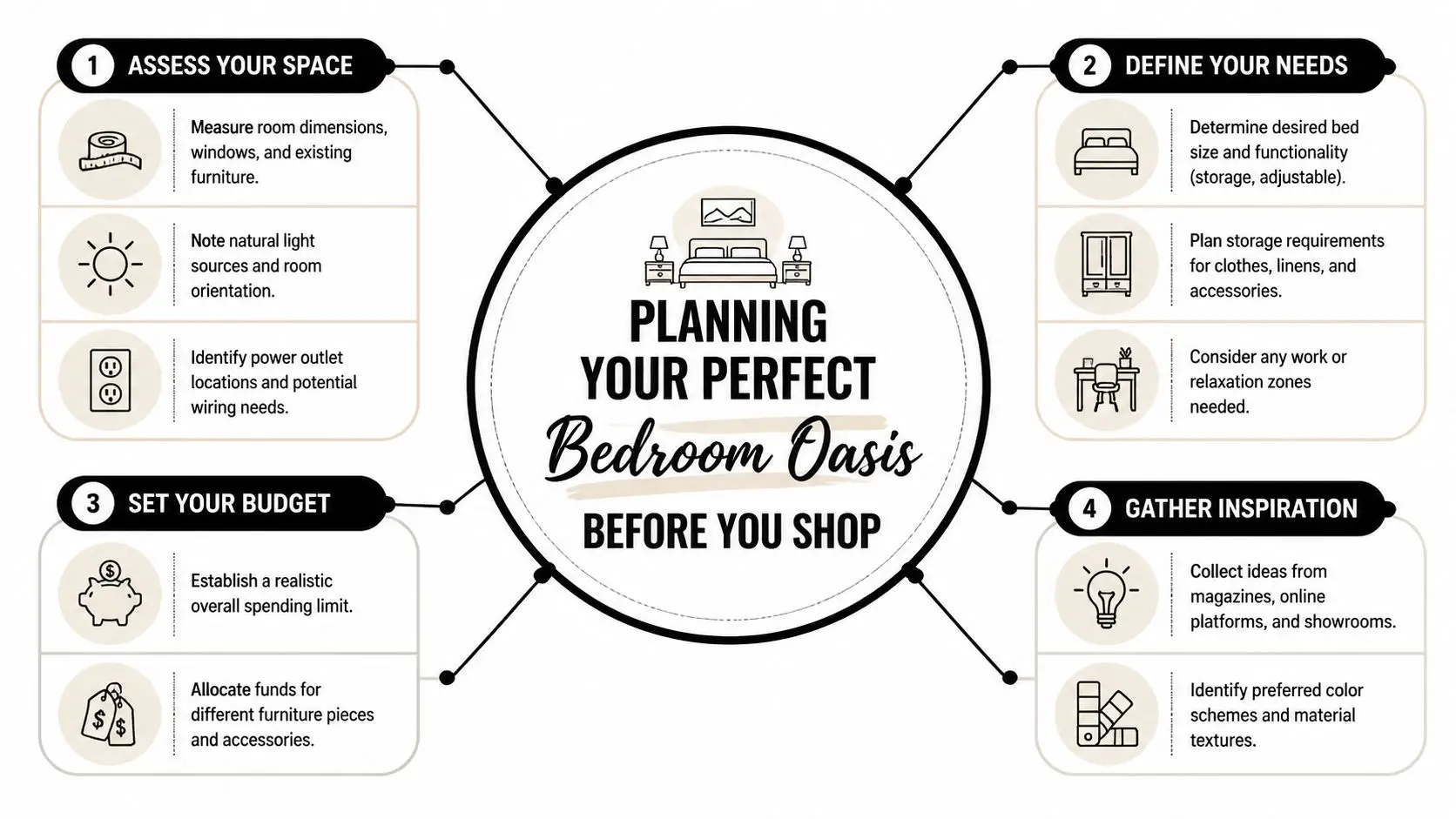
Start with the basics, then get more specific:
- Measure each wall from corner to corner.
- Mark openings such as doors, closet access, and windows.
- Note swing clearance for doors and drawers.
- Record fixed elements like outlets, vents, and baseboard heaters.
- Measure ceiling changes if the room has slopes, beams, or bulkheads.
A room plan should maintain 30 to 36 inches of traffic flow around the bed and major furniture pieces, which helps avoid the cramped feeling associated with poorly scaled layouts (Serving San Diego County).
That clearance number is one of the most useful filters in bedroom planning. It tells you very quickly whether a room can comfortably handle a king bed, whether a bench belongs at the foot of the bed, and whether two full-size nightstands are realistic.
Sketch the room before you visit a showroom
You don’t need design software to make good decisions. A simple hand sketch works if the measurements are accurate.
Include these on your plan:
- Bed wall options: Show more than one possible bed location.
- Window placement: Natural light changes how wood stains and fabrics read.
- Outlet locations: This matters if you want lamps, reading lights, or an adjustable base.
- Sightlines: Notice what you see first when you enter the room.
Leave some floor empty on purpose. A bedroom should feel settled, not packed.
If you want a deeper planning checklist before selecting finishing details, this guide on choosing bedroom window blinds is useful because it helps you think through privacy, light control, and how the room functions at different times of day.
Define what the room needs to do
A primary bedroom, guest room, and multipurpose room should not be furnished the same way. The right custom order starts with the room’s job.
Here’s a simple way to sort priorities:
| Need | What to decide |
|---|---|
| Sleeping | Bed size, headboard height, mattress support |
| Storage | Dresser capacity, chest vs. double dresser, under-bed storage |
| Dressing | Mirror placement, drawer access, lighting near storage |
| Seating | Bench, chair, or none at all |
| Flex use | Reading corner, compact workspace, extra linen storage |
One practical example. If you’re considering a footboard bench, size it in relation to the bed and the aisle around it. This article on finding the perfect bench for the end of a king-size bed helps narrow that decision so the bench supports the room instead of crowding it.
Know where to spend and where to simplify
Not every piece needs the same level of customization. Individuals often find greater satisfaction when they invest in the pieces they touch and use most, then simplify elsewhere.
That often means:
- Spend more on the bed: It anchors the room visually and physically.
- Be selective with case goods: Customize dimensions where the room demands it.
- Choose durable surfaces: Bedrooms are gentler than kitchens, but drawer fronts, tops, and rails still take daily wear.
- Keep accessories flexible: Rugs, lamps, and bedding can evolve over time.
If financing helps you make a durable choice instead of a temporary one, that can be a sensible path too. The goal isn’t to stretch for the sake of stretching. It’s to avoid replacing “good enough” furniture twice.
Defining Your Style From Wood Species to Overall Aesthetic
Style gets easier once you stop thinking in labels and start thinking in visual signals. The shape of the bed, the thickness of the rails, the grain of the wood, and the finish sheen all communicate more than the category tag on the price card.
A large analysis of bedroom interiors found that Contemporary (27.01%), Traditional (22.03%), and Transitional (15.06%) are the top three styles among more than 582,000 bedroom designs (Home Stratosphere). That’s useful not because you need to fit into one of those buckets, but because most custom bedroom decisions land somewhere inside or between them.

Start with the silhouette, not the stain
People often begin by asking for a dark finish or a light finish. That’s understandable, but the form should come first.
A few quick style reads:
- Contemporary: Cleaner lines, lower visual weight, less ornament, often a quieter hardware story.
- Traditional: More shaping, more visible craftsmanship details, a warmer and more familiar presence.
- Transitional: The middle ground. It softens modern edges without becoming formal.
If you’re unsure where you land, transitional is often the easiest place to begin. It adapts well over time, especially if you expect your bedding, wall color, or flooring to change later.
What each wood species brings to a bedroom
The same bed design can feel entirely different in oak, maple, cherry, or walnut. Wood isn’t just a color source. It changes the mood.
| Wood species | Typical character in a bedroom |
|---|---|
| Oak | Visible grain, grounded, excellent for both classic and cleaner forms |
| Maple | Smoother look, quieter grain, useful when you want the shape to lead |
| Cherry | Rich warmth that suits more traditional or refined settings |
| Walnut | Deep tone and strong personality, often chosen for contrast and depth |
That’s why custom ordering is so helpful. You can pair a timeless silhouette with the wood that fits your home rather than taking whatever the floor sample happens to be. For a detailed look at how hardwood choice affects durability and appearance, this guide on choosing the right hardwood for longevity and style is worth reading.
The right wood doesn’t shout. It steadies the room.
Finish, texture, and the room’s emotional tone
A finish can either sharpen a design or soften it. Light natural stains can make a room feel airy. Medium browns tend to feel balanced and forgiving. Very dark finishes bring drama, but they need enough light and space around them.
Then come the companion materials. Upholstered beds, leather benches, woven rugs, and layered bedding keep a bedroom from feeling too hard. If you’re building a tactile, cozy look, resources like Pandemonium's ethical home textiles can help you think about texture in a more intentional way.
One note from years on the showroom floor. Matching every wood tone exactly rarely produces the most comfortable room. Close coordination works better than rigid sameness. Bedrooms feel more lived-in when the pieces relate instead of marching in lockstep.
For anyone shopping Furniture South San Francisco showrooms, touching real materials matters. Photos flatten grain, mute sheen, and hide the difference between a finish you’ll love for years and one you’ll tire of quickly.
The Art of Material Selection Fabrics Leathers and Finishes
A bedroom can look right on delivery day and still disappoint six months later. That usually comes down to materials.
I’ve seen it often in Bay Area homes. A family falls in love with a bed silhouette, chooses a fabric from a tiny memo sample, and only later realizes the headboard shows every touch, the bench seat softens too quickly, or the finish looks different on the window side of the room than it does by the closet. Good customization closes that gap before the order is written.
Upholstery that fits how the room is actually used
Bedrooms get quieter use than living rooms, but they are not low-contact spaces. Headboards pick up oils from hair and skincare. Benches carry the full weight of getting dressed every morning. Side chairs become real seating only if the fabric feels good and the seat holds its shape.
Durability matters, but so does hand feel. A fabric can test well and still be the wrong choice if it feels scratchy against bare skin or reads too formal for the room. That is why swatches alone are never the whole answer. We look at texture, cleaning expectations, color shift in daylight, and how tightly the upholstery will be fitted on the frame.
A practical starting point:
- Performance fabrics suit households that want easier cleanup and less fuss over everyday contact.
- Textured weaves add warmth and depth, but they need to feel comfortable if used on a headboard.
- Velvets bring richness and softness, though they can show shading and pressure marks.
- Leather works especially well on benches and chairs where you want a cleaner line and a surface that wears in rather than frays.
If you want a clearer side-by-side comparison, this guide to upholstery materials for custom furniture lays out how common options perform over time.
Fabric and leather solve different problems
The better choice depends on the job the piece has to do.
Fabric usually makes an upholstered bed feel quieter and more relaxed. It absorbs light, softens the room, and gives you more freedom with color. Leather is often stronger visually. It defines the shape of a bench or chair, wipes down easily, and develops character with use, but it can also feel cooler and more formal.
Here are the questions that help clients choose well:
- Do you sit up in bed regularly and rest against the headboard?
- Does the room get strong afternoon sun?
- Is this piece supposed to disappear into the room or provide contrast?
- Will you be comfortable maintaining a lighter fabric over the years?
Those answers matter more than trend photos.
For smaller bedrooms, finish and upholstery should also work with the room’s scale. Matte fabrics, lighter tones, and low-gloss surfaces usually keep a compact space feeling calmer. These small room decorating ideas are helpful for thinking through that balance.
Finishes do more than set the color
A wood finish is part appearance, part protection. Buyers often focus on stain color first, but the topcoat determines how the piece responds to daily life.
In homes with strong natural light, that matters a great deal. The American Coatings Association notes that UV-curable wood coatings are valued for their durability, chemical resistance, and fast curing in furniture manufacturing, which is one reason many well-made case goods use them for long-term surface performance (American Coatings Association). That does not mean every lacquered piece will age the same way. Application quality, wood species, stain depth, and room exposure all play a part. But a stronger finish system gives you a better starting point.
Here is the practical checklist I use with clients:
| Finish concern | What to look for |
|---|---|
| Sun exposure | UV-resistant finish system |
| Everyday wear | Topcoat that resists scuffs and light abrasion |
| Cleaning ease | Smooth, sealed surface without heavy texture |
| Long-term appearance | Finish that keeps color and sheen more consistent |
The best material package is the one that still makes sense after years of use. It should feel good to the touch, suit the room’s light, and ask for a level of maintenance you can live with. That is where custom work earns its keep. It turns inspiration into a room that performs well in real life, not just in a showroom.
Solving for Awkward Spaces Customizing for Bay Area Homes
Bay Area bedrooms rarely come in a perfect rectangle with ideal wall space and standard proportions. There are alcoves, sloped ceilings, off-center windows, shallow walls, and older architectural details that make standard furniture sizing feel blunt.
That’s one reason custom ordering is so useful here. About 35% of home remodels involve oddly shaped rooms, while less than 5% of online furniture content explains in detail how custom orders can address sloped ceilings or alcoves (Michael Helwig Interiors).
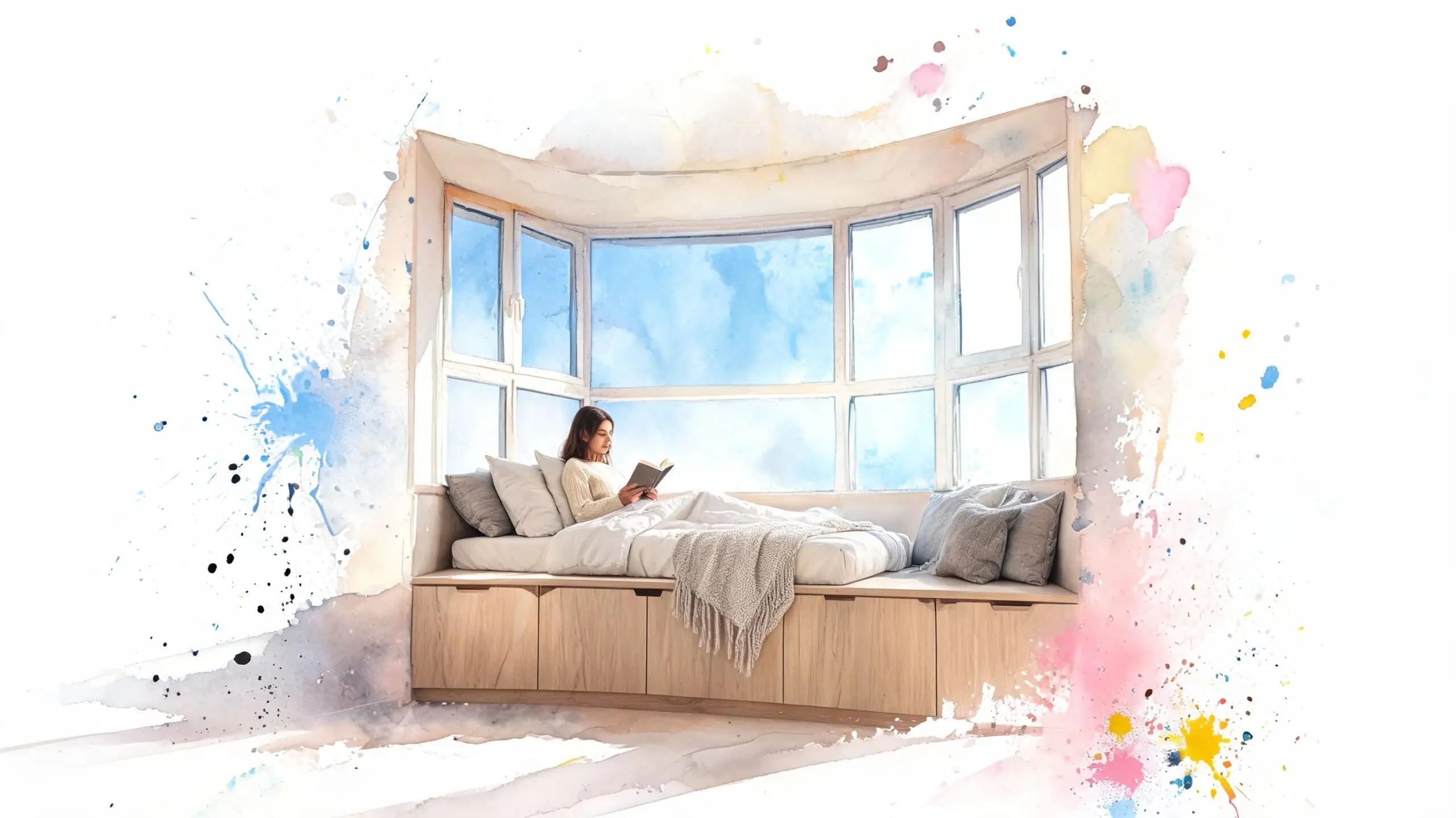
Slopes, alcoves, and narrow walls can be assets
The usual advice is to place low furniture under a slope and move on. Sometimes that works. Often it wastes the opportunity.
Better custom solutions include:
- Lower-profile beds that sit comfortably below a descending ceiling line
- Built-in-feeling dressers sized to an alcove so no dead gap is left on either side
- Headboards shaped for the architecture when a straight rectangle would look disconnected
- Compact nightstands with usable drawer depth, even when wall space is tight
Under-bed storage can also solve a surprising amount in a small or irregular bedroom. If you need more concealed capacity without adding another case piece, this guide to under-bed wooden storage offers practical ideas.
What works in small rooms and what usually doesn’t
Not every challenge requires a made-to-measure piece. Sometimes the answer is restraint.
Here’s the trade-off:
| Works well | Usually backfires |
|---|---|
| Fewer, better-scaled pieces | Full matching sets in a tight room |
| Open floor area around the bed | Overfilling every wall |
| Tailored storage where architecture allows | Forcing standard dimensions into odd corners |
| Balanced visual weight | One oversized hero piece that dominates everything |
If you’re trying to make a compact room feel easier to live in, these small room decorating ideas are a good companion to furniture planning because they address visual openness, layering, and scale.
Odd rooms don’t need clever tricks as much as they need accurate furniture.
Real customization means specification
Many homeowners often become frustrated. They’re told a piece is “custom,” but the only choices are fabric and color. Real customization involves dimensions, proportion, storage layout, wood species, and finish.
One practical option for Bay Area homeowners is Giorgi Bros. Furniture, which offers custom order services with choices in wood species, finishes, leathers, and fabrics, along with a non-commission consultation process that helps translate room constraints into a workable furniture specification.
That matters in awkward spaces because small changes can solve large problems. A few inches off a dresser width. A lower footboard. A different base style. A shallower profile. Those aren’t glamorous decisions. They’re the ones that make the room work.
The Giorgi Bros Process Your No-Pressure Customization Journey
Custom furniture feels intimidating until you’ve been through the process once. Then you realize it’s mostly a series of clear decisions made in the right order.
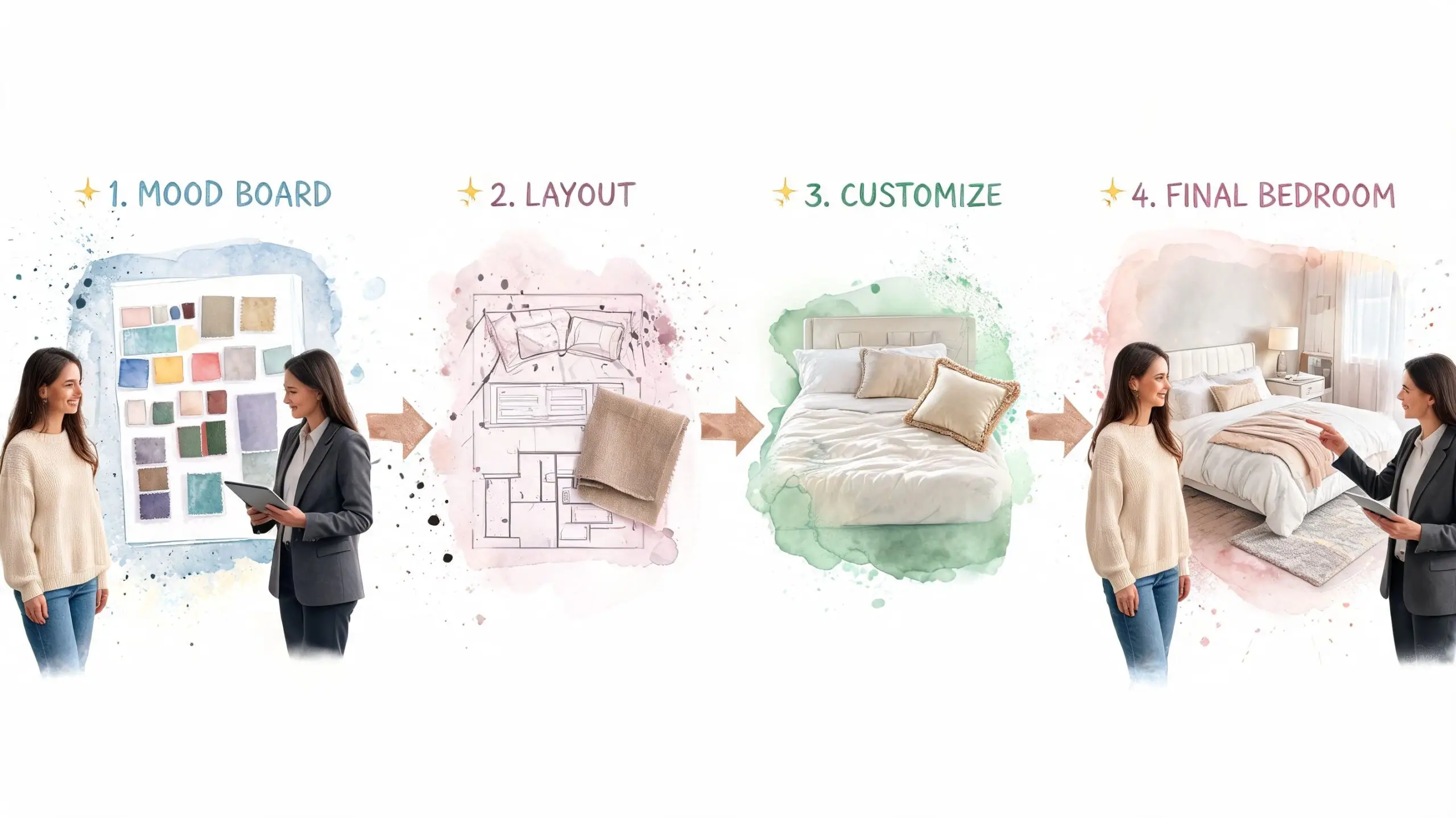
The experience starts with the room, not the price tag. Bring measurements, photos, and any inspiration you’ve saved. A consultant can help sort what belongs to style, what belongs to function, and what’s not going to serve the space well.
What the conversation usually looks like
In a non-commission environment, the discussion tends to be calmer and more useful. Instead of pushing toward a quick close, the consultant can stay with the practical questions.
Those questions usually sound like this:
- How do you use the room now?
- What frustrates you about the current setup?
- Which pieces need to be custom and which can stay simpler?
- Do you want the set to blend with existing furniture or replace it over time?
That’s also the point where materials come out. Wood samples. Finish chips. Fabric and leather swatches. Hardware options. The value of a large showroom is that you can touch, compare, and eliminate quickly.
From inspiration to specification
A good custom order moves from broad ideas to precise decisions. Bed size and style first. Then storage needs. Then material selections. Then the dimensions that make the room function.
If you want a straightforward preview of how that workflow typically unfolds, this guide on getting started with a custom order lays it out clearly.
One of the quiet advantages of shopping this way is that you can also coordinate the sleep side of the room at the same time. That matters. A bed isn’t just a frame. It works with the mattress, foundation, and in some cases an adjustable base. In a full-service showroom with Premium Mattresses, those choices can be made together instead of in isolation.
Why no-pressure guidance matters
Bedrooms are personal. People tend to second-guess themselves more here than in other rooms. They worry about making an expensive mistake, choosing a finish that won’t age well, or ordering a scale that looked better in theory than it will in the room.
That’s where Non-Commission Sales Staff becomes more than a talking point. It changes the pace of the conversation. You can ask whether a king is too ambitious for the room. You can admit that two wood tones are fighting each other. You can decide that the right answer is a simpler bed and better case goods.
For many households, Financing options are available, which can make it easier to choose durable materials and construction rather than replacing a lesser set later. Used carefully, that supports the buy-for-life approach instead of working against it.
Creating a Bedroom That’s Truly Yours
A Bay Area couple once came in with a saved photo of a clean, custom-fit bedroom they loved. Their room in San Mateo had one long wall broken by an off-center window, a shallow closet swing, and barely enough depth for standard nightstands. The inspiration was clear. The room was not. We adjusted the bed width, changed the headboard shape to keep the sightlines open, and specified a taller, narrower chest so everyday storage moved vertical instead of eating up floor space.
That kind of project is where a custom plan earns its keep. The goal is not to copy a showroom setup. The goal is to build a room that works when you are making the bed, opening drawers, charging a phone at night, and walking through the space half awake at 6 a.m.
One practical tip I give clients near the end of the process is to test the room on paper before the order is placed. Mark the bed footprint, drawer clearance, and walking paths with painter's tape on the floor. Open the closet. Stand where the nightstand will go. If the layout feels tight in tape, it will feel tighter in wood.
That final check closes the gap between inspiration and execution. It also helps you use expert guidance well. In a no-pressure showroom, the conversation can stay honest. A non-commission consultant can tell you the bench is one piece too many, the higher dresser will serve you better than a wider one, or the fabric you love needs a finish that will hold up to daily use.
Families in South San Francisco have come to Giorgi Bros. Furniture for that kind of careful decision-making since 1933. The pieces should look right, of course. They should also fit the room, support your routines, and keep earning their place year after year.
If you’re ready to create a bedroom that fits your space instead of forcing your space to fit the furniture, visit Giorgi Bros. Furniture in South San Francisco or book a Design Consultation. You can explore real wood samples, compare fabrics and leathers, try Premium Mattresses, and work with Design Experts in a no-pressure setting built around thoughtful, lasting choices.