
A shopper stands in a furniture showroom, runs a hand across two dressers, and sees the same first impression on both. Rich grain. Clean lines. Beautiful finish. Then comes the question that stops a lot of buying decisions cold. One is solid wood. The other is veneer. Which one is the smarter choice for a home that's meant to be lived in for years?
That question matters because furniture isn't only about appearance on the sales floor. It's about how a piece behaves after seasons change, after children lean on drawers, after a dining table becomes a homework station, a holiday gathering place, and eventually something the next generation still wants.
A family business that has served South San Francisco since 1933 has seen this decision play out across decades. Some customers want the lasting repairability of solid lumber. Others need the stability and clean panel performance that veneer can offer. Both can belong in a well-furnished home. Both can be part of a buy-it-for-life mindset when used well.
For readers weighing reclaimed looks and natural character, this guide to reclaimed wood furniture can also help frame what makes wood furniture feel enduring over time.
Table of Contents
- The Enduring Question in Furniture Quality
- The Timeless Appeal of Solid Wood Furniture
- Debunking Myths About Wood Veneer
- A Detailed Comparison for Informed Buyers
- Choosing the Right Material for the Right Use
- How to Inspect Furniture in Our Showroom
- Your Lifetime Furniture Awaits at Giorgi Bros.
The Enduring Question in Furniture Quality
A lot of confusion starts with a false choice. People often assume solid wood is always “good” and veneer is always “cheap.” Real furniture doesn't work that way.
A well-made piece asks a more practical question. What is this furniture supposed to do, year after year, in a real home? A bedroom chest has different needs than a wide media cabinet. A formal dining table has different demands than a tall cabinet door or a broad desk return.
That's why the solid wood vs veneer conversation is worth slowing down for. Material affects repairability, stability, appearance, and long-term value. It also affects whether a piece becomes an heirloom, a practical daily workhorse, or both.
Furniture quality doesn't begin with a label. It begins with how honestly the materials are matched to the job.
In a no-pressure showroom setting, the most helpful approach is to take the romance out of the label and put the focus on use. A family buying a forever dining table may lean one way. A homeowner furnishing a built-in wall or large case piece may lean another. Neither choice is careless when the reasoning is sound.
For Bay Area households, that distinction matters even more. Homes often blend open layouts, natural light, remodel-driven design decisions, and a desire for investment pieces that won't feel disposable a few years from now. The smart purchase is usually the one that balances beauty with how the piece will age, move, and be maintained.
The Timeless Appeal of Solid Wood Furniture
What solid wood really means
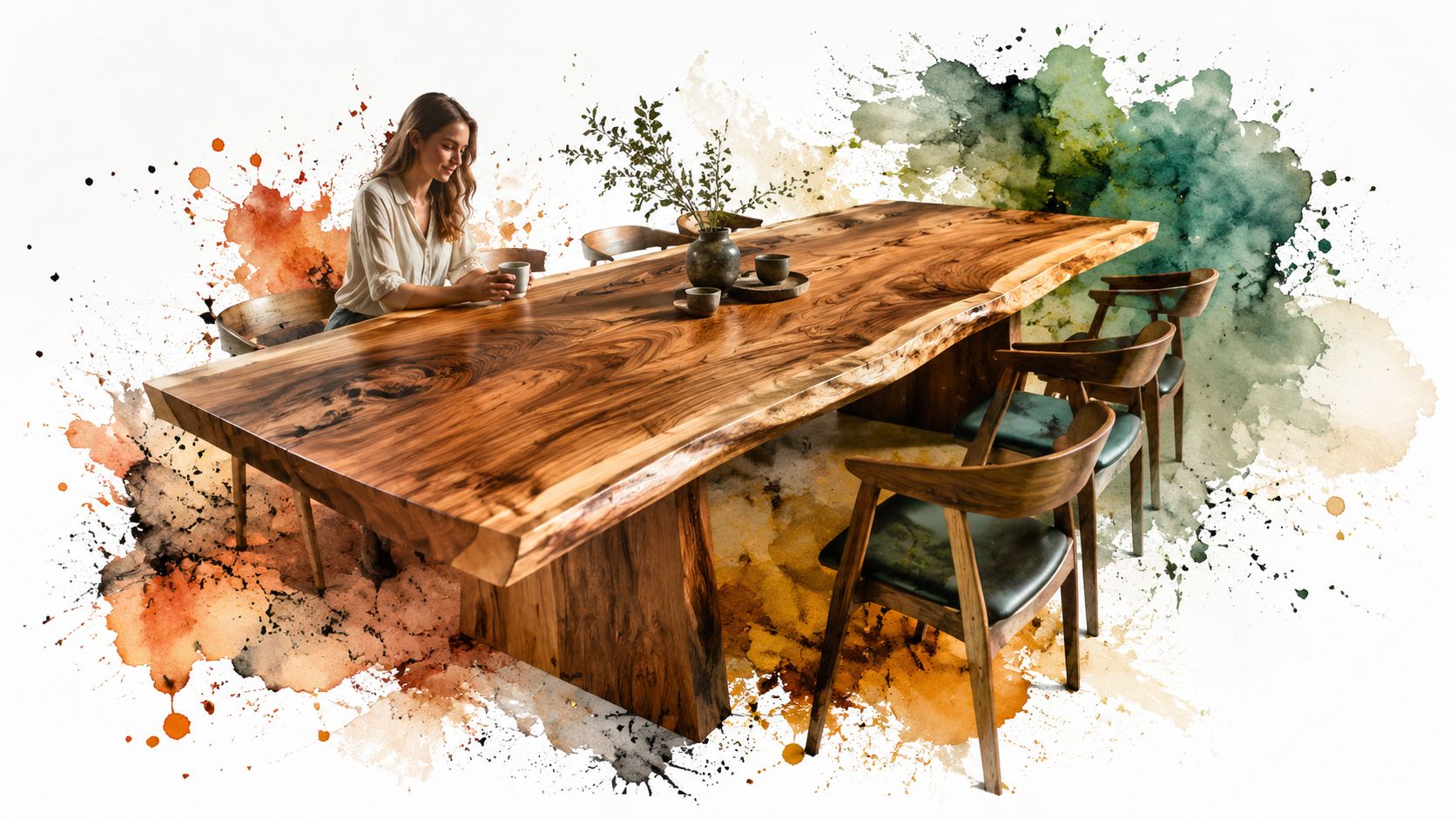
Solid wood furniture is built from boards of lumber rather than a thin wood face over an engineered core. That matters because the visible material is not just a surface treatment. It is the board itself.
This is one reason solid wood has long been the benchmark for heirloom furniture. According to guidance on solid wood vs veneer differences, solid wood remains the benchmark for longevity and refinishing because the visible material is the full thickness of the board, and it can usually be sanded and refinished repeatedly while veneer allows only limited surface repairs.
That repairability changes the entire ownership experience. A scratch on a table edge, wear around drawer pulls, or years of finish dulling don't automatically mean the piece is nearing the end of its life. In many cases, they mean the piece can be restored.
Why families keep solid wood for decades
Solid wood also has a kind of visual honesty that many buyers respond to immediately. Grain variation, subtle color shifts, knots, mineral streaks, and seasonal character marks don't make the piece imperfect. They make it specific.
For that reason, solid wood often makes the most sense for pieces that carry emotional weight as well as physical use:
- Dining tables become gathering places and often benefit from the ability to be refinished over time.
- Bed frames and posts tend to feel more substantial when the structure and visible material are one and the same.
- Entry pieces and benches see bumps, bags, keys, and daily traffic, which makes repairability valuable.
- Desks and heirloom storage pieces often justify a higher upfront investment because they stay relevant for decades.
Readers considering a statement piece for a foyer can see how this works in practice with solid wood entryway furniture.
Practical rule: If a family wants a piece that may be repaired, refreshed, and handed down, solid wood usually deserves serious consideration.
There is a trade-off, and it shouldn't be glossed over. Solid wood typically costs more because it uses more raw timber and more labor. It can also respond more noticeably to environmental changes than a veneered panel. That isn't a flaw. It's part of the material's nature.
A useful parallel appears outdoors as well. The thinking behind choosing high-quality outdoor teak reflects the same principle buyers apply indoors. Better raw material often earns its keep over time when durability and longevity matter more than a quick first impression.
Debunking Myths About Wood Veneer
Veneer is real wood
The word “veneer” has suffered from years of bad assumptions. Many shoppers hear it and think of flimsy furniture, fake wood print, or peeling corners from low-grade imports. High-quality veneer is none of those things.
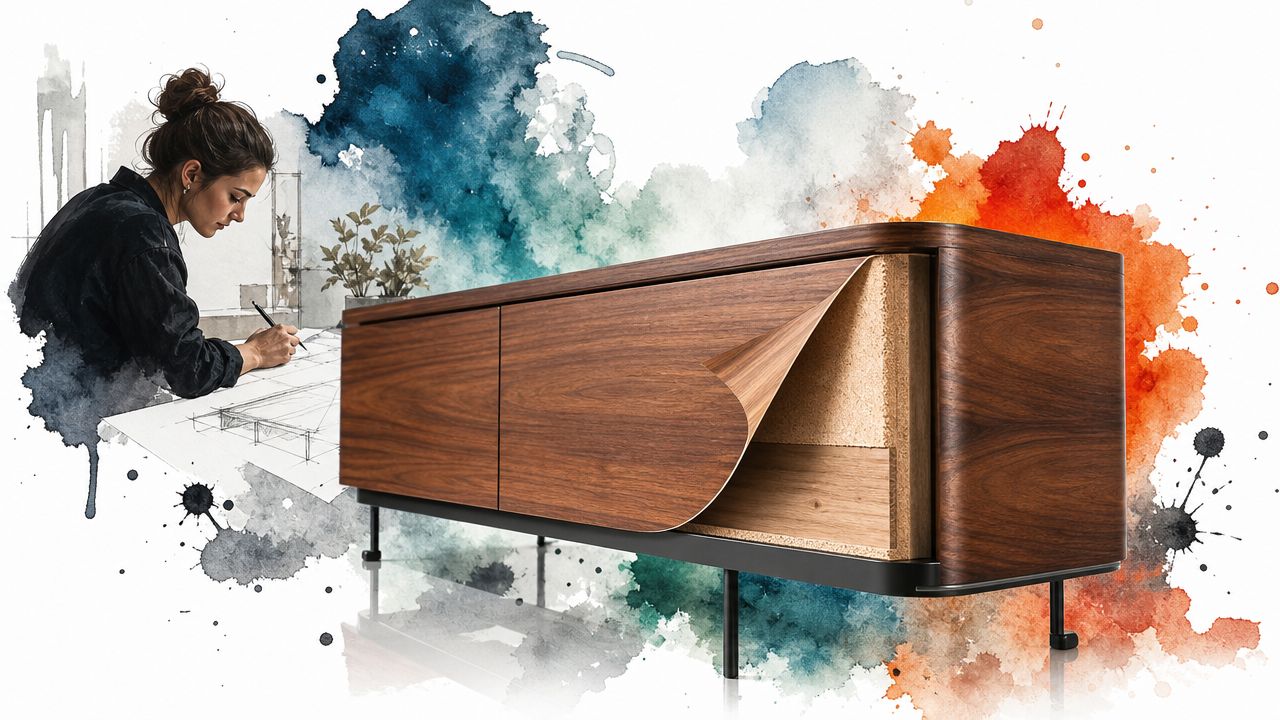
Wood veneer is real wood. It is made from thin slices of hardwood, typically about 0.6 mm thick, bonded to a substrate such as MDF or plywood, as explained in this wood veneer construction guide. That same guidance notes that one log can produce many panels, which makes veneer a material-efficient way to use beautiful lumber.
That point matters because veneer is not merely a shortcut. In good furniture, it is a deliberate construction method.
Why good veneer exists at all
Veneer solves a problem that solid lumber doesn't always solve as well. Large, flat surfaces have to stay flat. Wide doors, dresser sides, cabinet fronts, and broad tops can be difficult places for solid boards if visual consistency and dimensional stability are the priority.
High-quality veneer helps in several ways:
- It uses real hardwood efficiently. One log can be sliced into many leaves, allowing more surface coverage from the same tree.
- It often lowers cost. That efficiency can make a well-designed piece more attainable.
- It supports visual consistency. Panels can show a carefully matched grain pattern across a broader surface.
- It performs well on large flat areas. Veneer over a stable core is often chosen specifically to resist warping on cabinet doors and drawer fronts.
A shopper looking at a long credenza may assume “solid wood everywhere” is automatically better. In practice, a furniture maker may choose veneer on the broad case sides and top panel because the piece needs to stay flatter and more visually controlled over time.
Good veneer isn't fake wood. It's a real wood surface used in a different engineering approach.
The confusion usually comes from lumping all veneered furniture together. Poor construction deserves criticism. Careful veneering does not. In modern casegoods, veneer is often selected because the design calls for stable large panels, repeatable grain, and a cleaner final presentation than wide solid boards might deliver.
That's especially relevant in Bay Area homes, where homeowners often want sleek storage pieces, media cabinets, and built-ins with long uninterrupted faces. In those applications, veneer can be a smart, high-quality answer rather than a compromise.
A Detailed Comparison for Informed Buyers
The clearest way to understand solid wood vs veneer is to compare them by what owners notice after purchase. The table below gives the quick version, and the sections that follow add the nuance.
Solid Wood vs. Veneer At a Glance
| Attribute | Solid Wood | Wood Veneer |
|---|---|---|
| Construction | Made from full wood boards | Thin slice of real wood bonded to a core |
| Best-known strength | Longevity and deep repairability | Stability on large flat surfaces |
| Surface repair potential | Usually can be sanded and refinished repeatedly | Allows only limited surface repairs |
| Grain look | Naturally varied and individual | More controlled and visually consistent |
| Typical cost position | Usually higher | Usually more affordable |
| Large panel behavior | Can move with seasonal conditions | Often stays flatter on engineered cores |
| Ideal use cases | Heirloom tables, frames, visible edges, structural parts | Cabinet doors, drawer fronts, wide panels, matched grain surfaces |
For buyers comparing shelving, desk-height storage, or bookcases, solid wood bookshelf options often make these differences easier to see in person.
Durability and lifespan
Solid wood has a strong reputation for a reason. It holds up well over long ownership periods, especially when the piece is built for hard use and can be maintained rather than replaced. That's why people often choose it for dining tables, bed frames, and desks that are expected to stay in the family.
Veneer durability works differently. The face layer is thinner, so it doesn't offer the same margin for aggressive repair later. But a well-made veneered panel can still serve beautifully for years when used in the right application and protected from avoidable damage.
Repair and refinishing
The practical aspects of the difference become evident quickly. If a tabletop gets scratched or a dresser top dulls after years of use, solid wood usually gives a restorer more room to work. Sanding and refinishing are part of the long-term value proposition.
Veneer asks for more caution. Light surface work may be possible, but the thin face layer limits how far repair can go before the wood surface is compromised.
Buyers who expect a piece to be restored more than once should usually keep solid wood high on the list.
Visuals and consistency
Some homeowners love the natural variation of solid boards. They want each panel to look a little different. They enjoy the sense that no one else owns the exact same grain pattern.
Other buyers want a quieter visual rhythm. Veneer can help deliver that, especially on broad contemporary forms where a balanced grain match matters as much as the species itself. A long dresser front with consistent grain flow often owes that appearance to veneering techniques rather than oversized solid boards.
Cost and value
Solid wood usually carries a higher upfront price. More raw timber is used, and more labor often goes into the finished piece. That doesn't automatically mean every buyer should choose it. A good purchase matches the budget, the room, and the intended lifespan.
Veneer is usually more affordable, and that lower cost can be sensible. If the piece is intended for a large panel application where stability matters most, veneer can deliver strong value rather than just a lower price.
A useful way to think about value is this:
- Choose solid wood when long-term refinishing and heirloom potential are central.
- Choose veneer when dimensional stability, matched grain, and budget discipline matter more.
- Choose a combination when the furniture maker uses each material where it performs best.
Weight and movement
Solid wood often feels heavier and more substantial. Many buyers like that. It can make a table or case piece feel anchored and permanent.
But weight is only part of the story. Wood movement matters too. Solid lumber naturally responds to environmental changes. Veneer over an engineered core often reduces that movement on wide surfaces, which is one reason good furniture makers use it strategically instead of treating it as second best.
Choosing the Right Material for the Right Use
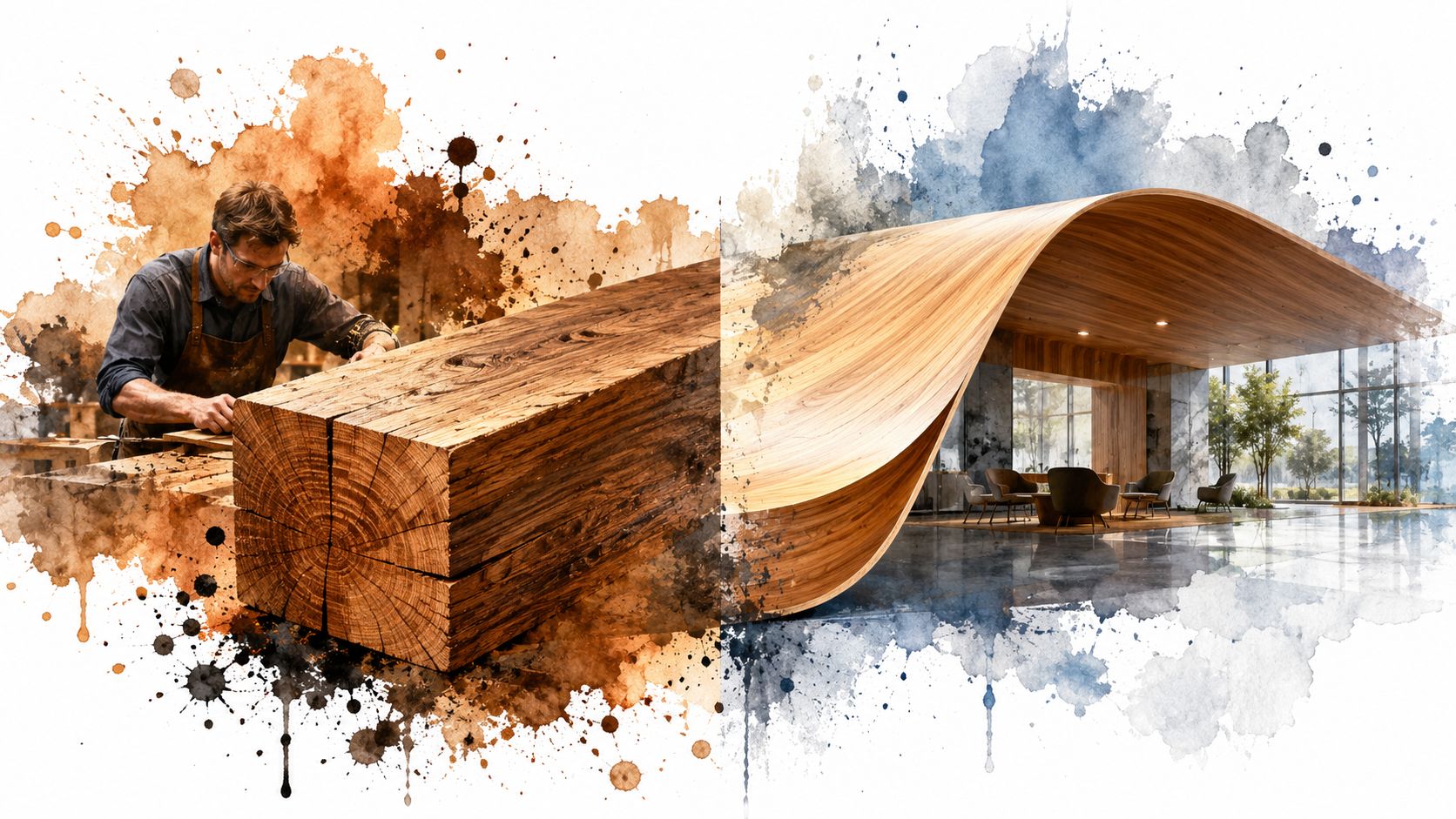
The best furniture often stops arguing about materials and starts assigning them jobs. A thoughtful piece may use solid wood where strength and repairability matter most, then use veneer where flatness and panel control are more important.
Where solid wood shines
Solid wood usually earns its place in structural areas and touchpoints that take repeated wear.
Consider these parts of a piece:
- Table legs and bases need strength and often benefit from solid stock.
- Chair frames are better served by strong structural members.
- Bedposts and rails are easier to value as long-term investment pieces when the construction is substantial.
- Visible edges often appeal more to buyers when they show full wood thickness rather than a thin face layer.
These are the places where furniture gets grabbed, bumped, tightened, and lived with. Material depth matters there.
Where veneer often makes more sense
For broad surfaces, veneer can be the more practical choice. According to guidance on veneer performance over engineered cores, veneer on an engineered core is less prone to seasonal shrink and swell movement than solid wood, which makes it especially practical for wide panels, cabinet doors, and tabletops where dimensional stability is the top priority.
That leads to a common high-quality formula in furniture making:
Solid wood for the skeleton
Legs, frames, and supporting parts benefit from strength and long-term repairability.Veneer for the broad face
Side panels, tops, and doors often benefit from staying flatter and looking more visually uniform.Custom selection for the home
Species, finish, and sheen should fit the room, light, and daily use.
Homeowners planning built-ins or customized storage can see this principle at work with custom shelving in wood, where panel behavior matters just as much as appearance.
A good furniture maker doesn't ask one material to do every job. Good construction assigns each material where it performs best.
This is also where lifetime value becomes more interesting than material purity. A table with a solid wood base and a carefully designed top may serve a family better than a piece chosen only for a label. The cherished heirloom is often the one that still works beautifully years later, not the one that sounded more impressive on day one.
How to Inspect Furniture in Our Showroom
Buying wood furniture gets easier when the shopper knows where to look. Labels matter, but construction tells the fuller story.
What to look at first
Start with the edges and underside. A table or case piece often reveals its construction where the eye doesn't normally linger.
A practical showroom checklist helps:
- Study the edge grain. On many pieces, the edge can hint at whether the visible surface is a full board or a faced panel.
- Open drawers and doors. Interior workmanship says a lot about overall quality.
- Check for steadiness. Gently test whether the piece feels planted or flimsy.
- Look at the finish in light. A smooth, even finish should feel intentional, not heavy or plastic-looking.
- Notice grain behavior across wide surfaces. Ask whether the look is meant to be highly matched and consistent or naturally varied.
Readers who want extra help decoding labels and construction details can use this guide on how to read furniture product descriptions and buy with confidence.
Questions worth asking a Design Expert
A non-commission setting changes the tone of the conversation. The goal isn't to steer every customer toward the highest ticket. The goal is to match the piece to the household.
Useful questions include:
- What parts are solid wood, and what parts are veneered?
- Why was that material choice made for this design?
- What kind of wear will this surface tolerate well?
- Can this piece be refinished later?
- Is this a better fit for a formal room or daily use?
- What custom options are available in wood species or finish?
The best question in a showroom is often, “How will this age in a busy home?”
That question quickly moves the discussion away from buzzwords and toward ownership. It also helps buyers compare pieces fairly. Two dressers can look similar from the aisle and behave very differently over the next decade.
For shoppers interested in Bay Area interior design, this hands-on step matters. Photos online can't replace opening a drawer, feeling the finish, or checking whether the back panel and joinery reflect the same care as the front.
Your Lifetime Furniture Awaits at Giorgi Bros.

The choice that fits real life
The right answer in solid wood vs veneer depends on what the piece needs to do. A family that wants a dining table to age, gather stories, and accept refinishing over the years may favor solid wood. A homeowner designing a sleek wall of storage may prefer the clean consistency and stable panel performance of veneer.
That's why thoughtful guidance matters more than pressure. A long-standing showroom in South San Francisco has watched generations of buyers make this decision, and the most satisfied ones tend to be the people who understood the trade-offs before they bought.
A buy-it-for-life mindset also supports a more sustainable way to furnish a home. Keeping a well-made piece for decades usually creates less waste than cycling through disposable replacements. Whether the piece is solid wood, veneer, or a combination of both, longevity starts with honest construction and appropriate use.
Customization changes the conversation
Customization is often what turns a good furniture decision into the right one. Wood species, finish tone, sheen, scale, hardware, fabrics, and leathers all affect how a piece fits the room and how long the owner will want to keep it.
That's one reason many shoppers exploring Custom Furniture, Amish Furniture, and broader Furniture South San Francisco options prefer a showroom conversation over guessing online. Giorgi Bros. Furniture offers custom order services with choices in wood species and finishes, along with non-commission Design Experts who help buyers compare materials without pressure. Financing options are available, which can help when the goal is to invest in fewer, better pieces over time.
For households that already own quality wood furniture and want to care for it properly, this practical guide on how to clean teak furniture is a helpful example of the kind of maintenance thinking that supports long-term ownership.
For homeowners planning a remodel, furnishing a dining room, or selecting investment pieces for a Bay Area home, Giorgi Bros. Furniture invites visitors to the South San Francisco showroom for no-pressure guidance. Shoppers can explore custom furniture options, compare solid wood and veneer in person, work with non-commission Design Experts, and schedule a Design Consultation to create a home that's built for daily life and meant to last.