A lot of people notice ergonomic problems only after the body starts complaining. It might be a stiff neck after answering emails at the dining table, a sore lower back after a movie on a too-deep sofa, or a restless night on a mattress that no longer supports the spine evenly. Those moments feel separate, but they often point to the same issue. The furniture isn't fitted to the person using it.
That's why ergonomic furniture design matters. It isn't just about office productivity or trendy task chairs. It's about how a chair, sofa, dining seat, desk, or mattress supports daily life over many years. The broader market reflects that shift. The ergonomic furniture category was valued at USD 22.2 billion in 2025 and is projected to reach USD 45.8 billion by 2036, according to Future Market Insights' ergonomic furniture market analysis. People aren't treating comfort as a luxury add-on anymore. They're treating it as part of health.
For a family furniture business that has served South San Francisco since 1933, that change makes sense. Good furniture has never been just decoration. It shapes how people sit, rest, recover, read, gather, and sleep. A beautiful room that leaves the body tired isn't doing its job.
Table of Contents
- Why Your Furniture Might Be Working Against You
- Understanding the Core Principles of Ergonomic Design
- Applying Ergonomics Beyond the Home Office
- How to Measure for Your Perfect Ergonomic Fit
- Features That Matter in Long-Lasting Ergonomic Furniture
- Creating Your Ideal Fit with Custom Furniture Design
- Invest in Your Comfort for a Lifetime
Why Your Furniture Might Be Working Against You
Poor fit rarely announces itself on day one. It tends to show up subtly. A seat that's too deep makes a person perch forward instead of resting against the back cushion. A desk that's too shallow pushes the screen too close. A mattress that has softened unevenly asks the spine to compensate all night.
At home, those small mismatches add up because the same body moves from one surface to another all day. Breakfast happens at a dining chair. Work happens at a desk or kitchen table. Evening happens on the sofa. Sleep happens on the mattress. If each piece asks the body to adapt, the body spends the day correcting instead of relaxing.
Good furniture should reduce effort, not create it.
That's one reason so many homeowners start researching back support after they've already been uncomfortable for months. A practical starting point is this guide to choosing the best sofa for back support, because the living room is often where hidden ergonomic problems show up first.
The encouraging part is that discomfort doesn't always call for a dramatic redesign. Often, it starts with understanding what the furniture is asking the body to do. Once that becomes clear, shopping gets simpler. The question stops being “Does this look good in the room?” and becomes “Will this shape support daily life for years?”
Understanding the Core Principles of Ergonomic Design
Ergonomics means fitting furniture to people
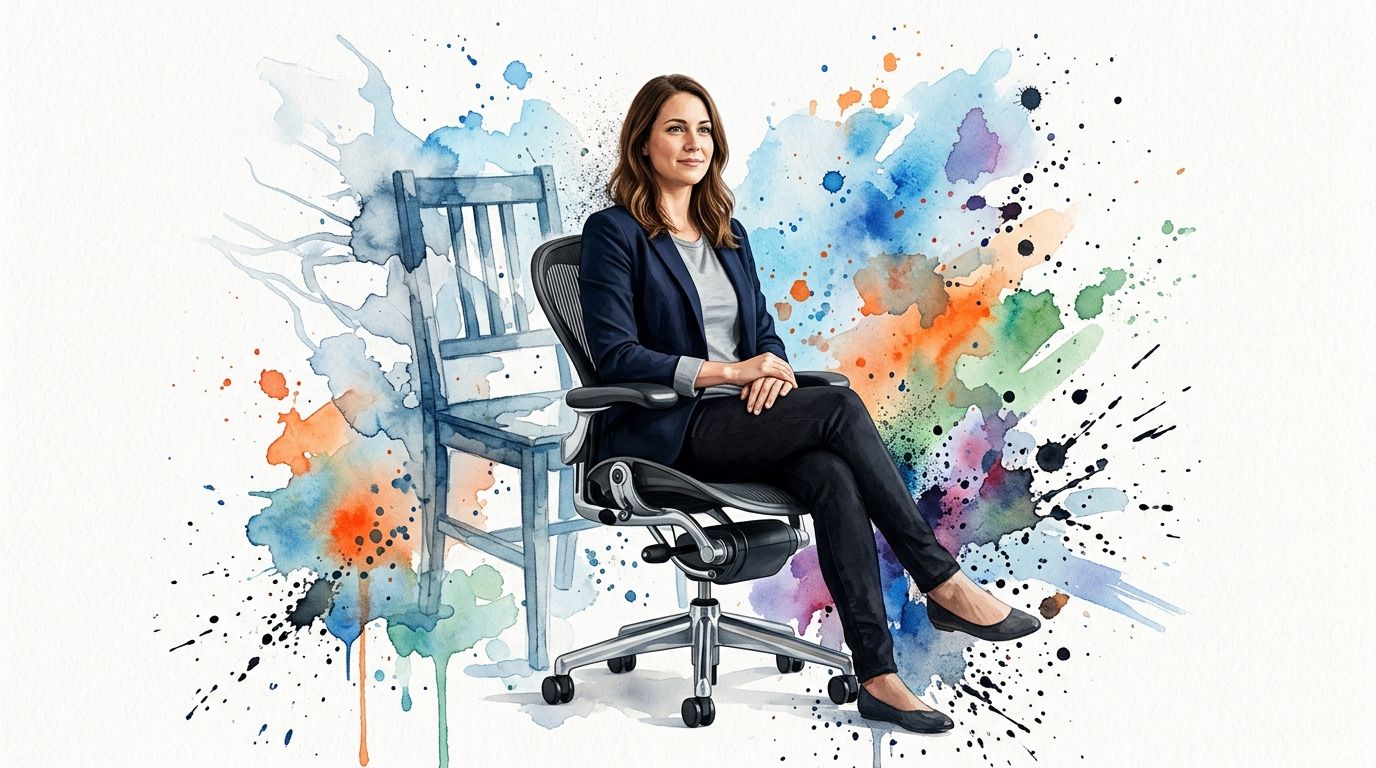
The simplest way to understand ergonomics is to think about shoes. A well-made shoe supports the foot where it needs support, bends where it should bend, and matches the wearer's size and movement. A poorly fitted shoe may still look fine on a shelf, but after an hour, the body knows the truth.
Furniture works the same way. Ergonomic furniture design means the piece is shaped and sized for the human body instead of asking the body to conform to a fixed, uncomfortable form. That idea became formalized after World War II, when designers began using scientific data to fit products to people. Modern guidance such as ISO 9241 also reflects this measurement-based approach, and one review notes that the common 5th-percentile female to 95th-percentile male range is used to accommodate about 90% of users, as described in this ergonomics and furniture design review.
That shift mattered. Furniture stopped being only about style and started becoming a matter of fit, support, and human use.
The three principles that guide better comfort
Most ergonomic questions come back to three ideas.
Support for natural posture. A good chair or mattress helps the body stay close to its natural alignment. It shouldn't force slumping, twisting, or constant bracing.
Freedom to move. Ergonomics isn't about locking someone into a perfect frozen pose. It should allow small shifts, changing tasks, and healthy circulation through the day.
Fit to body size. A tall person and a shorter person don't meet furniture in the same way. Seat depth, arm height, back height, and cushion firmness all feel different depending on build.
These principles help explain why one person loves a chair that another person can't wait to leave. The issue isn't always quality. Sometimes it's mismatch.
Practical rule: Comfort that comes from proper support lasts longer than comfort that comes only from softness.
That's also why high-quality furniture tends to age better in daily use. When the frame, suspension, cushions, and proportions are thoughtfully designed, the body feels supported without having to think about it.
Applying Ergonomics Beyond the Home Office

When "ergonomic" is mentioned, it often brings to mind a task chair with adjustable arms and lumbar support. That's too narrow. Ergonomics also applies to the places where people unwind, host family, stream a movie, read before bed, or recover after a long day. A broader view of the subject notes that furniture should support the spine, circulation, and posture during rest and recovery, not just work tasks, as explained in this discussion of ergonomics in furniture design across the home.
Hybrid living has made that even more obvious. A room may serve as a workspace by morning and a lounge area by evening. One piece of furniture can carry several jobs in a single day.
The living room shapes posture more than many people expect
A sofa can look inviting and still be wrong for everyday use. If the seat is too deep, many people lose contact with the back cushion and round forward. If the cushions are too soft, the hips sink and the lower back loses support. If the arms are too high or too low, shoulders tense without anyone noticing.
A better living-room fit often comes down to a few practical questions:
- How does the seat depth feel when sitting all the way back? Knees shouldn't be forced into a perched position, and the lower back shouldn't lose support.
- Do the cushions hold shape? The body needs support beneath the surface, not just plushness on top.
- Does the back height match how the piece will be used? Conversation seating, reading, and long lounging ask for different kinds of support.
Homeowners refining a workspace that blends into a stylish room often appreciate outside ideas on layout and atmosphere. Articles such as Blu Monaco decor for professionals can be useful for balancing function with a polished look, especially when a home office shares space with living areas.
The bedroom is part of the ergonomic system
People sometimes treat sleep comfort as separate from ergonomic comfort. It isn't. The mattress and base influence spinal alignment for hours at a time, which means the bedroom may be the most important ergonomic room in the house.
A supportive sleep setup doesn't have to feel hard or clinical. It should keep the body evenly supported while allowing muscles to settle instead of brace. For some sleepers, that means a firmer feel. For others, it means pressure relief combined with better underlying support. Adjustable bases can also change how the body rests, especially when someone reads in bed or wants a different upper-body or leg position.
The body doesn't stop needing support when the workday ends.
This whole-home approach is where ergonomic furniture design becomes more meaningful. It stops being a checklist of office features and starts becoming a way to choose seating, dining, lounging, and sleep surfaces that help the body feel better year after year.
How to Measure for Your Perfect Ergonomic Fit
A lot of confusion starts in the showroom because shoppers look at the furniture before they look at themselves. The smarter approach is the reverse. Body measurements give useful guardrails, especially when comparing several chairs, desks, or sofas that all look good at first glance.
Seat geometry offers a clear example. Office chair guidance summarized by EWI Works calls for a minimum seat-pan width of 19.2 inches and recommends a rearward angle of 0° to 4°. The same overview notes that steeper positioning can increase strain on the spine and back muscles, according to this chair standards overview from EWI Works. Those numbers don't choose a chair for someone, but they do help separate supportive design from guesswork.
Start with the body, not the product tag
A tape measure and a dining chair are enough for a basic fit check.
- Measure floor to the back of the knee while seated with feet flat. This helps estimate comfortable seat height.
- Measure from the back of the body to the back of the knee. That gives a practical seat-depth target.
- Measure elbow height from the seat surface. This helps with arm support and desk pairing.
- Notice where pressure builds after sitting for a few minutes. Behind the knees, at the hips, and through the lower back are common problem areas.
A few fit cues help in real shopping situations:
- Behind-the-knee clearance matters. There should be a little space behind the knees rather than cushion pressure pressing into the leg.
- A waterfall edge helps reduce sharp pressure at the front of the seat. It means the front edge slopes gently instead of ending abruptly.
- Back contact is a good sign. If a person has to slide forward to feel comfortable, the seat is probably too deep.
For room planning, it also helps to know whether the space itself supports movement. This guide on how to measure furniture before buying is useful for checking both the piece and the room it has to live in.
Key Ergonomic Measurement Guide
| Furniture Piece | Ergonomic Measurement | What to Look For |
|---|---|---|
| Office chair | Seat-pan width | Look for a seat that feels broad enough to support the body without crowding the hips. Published guidance includes a minimum width of 19.2 inches in office chair standards. |
| Office chair | Seat angle | A gentle rearward angle can support neutral sitting. Guidance recommends 0° to 4° rearward rather than a steeper tilt. |
| Sofa | Seat depth | Sit fully back. The lower back should stay supported without hard pressure behind the knees. |
| Dining chair | Seat height | Feet should rest comfortably on the floor, with the thighs supported rather than sharply angled up or down. |
| Desk and chair together | Elbow height | Forearms should rest comfortably without forcing the shoulders to hike upward. |
Small measurement mistakes can feel much bigger after a few hours of sitting.
Features That Matter in Long-Lasting Ergonomic Furniture
Marketing often makes ergonomic furniture sound like a long list of knobs, levers, and labels. Some features help. Some only add complexity. The difference usually comes down to whether the feature improves fit and support in daily use, or just sounds impressive on a showroom card.
What supports the body over time
Long-term comfort starts under the upholstery.
- Stable internal support keeps a seat from collapsing into a hammock shape.
- Resilient cushioning should recover its form and continue supporting the body instead of flattening quickly.
- Well-balanced proportions matter as much as softness. A beautifully padded chair can still be uncomfortable if the depth, pitch, or back shape is off.
Material quality matters here for another reason too. Buy-it-for-life furniture is a sustainability choice. When a frame lasts, the upholstery wears well, and the structure keeps its shape, a household replaces fewer pieces over time. For shoppers thinking ahead to delivery, relocation, or preservation, this guide to safely packing and wrapping furniture is a useful reminder that durable furniture still deserves careful handling.
Surface materials matter as well. People comparing construction details often benefit from understanding solid wood and veneer differences, because lasting performance depends on what's happening beneath the finish, not just on top of it.
When less adjustability can be the smarter choice
More adjustability isn't always better. That's one of the most misunderstood parts of ergonomic buying. A review of chair ergonomics points out the tradeoff between adjustability, long-term maintenance, and whether a well-designed fixed piece may already suit the user's body and tasks, as discussed in this article on chair design, comfort, and health.
That idea surprises people because feature lists are easy to compare. Real comfort is harder to reduce to a checklist.
A useful way to think about it is this:
- If several people use the same chair, adjustability may be valuable.
- If one person uses the piece daily and the proportions are already right, a fixed design can feel simpler and more dependable.
- If a mechanism adds parts but not meaningful comfort, it may become one more thing to maintain.
The best feature is the one that gets used regularly and still works well years later.
That's where quality earns its keep. Durable furniture doesn't just survive longer. It keeps performing the job it was built to do.
Creating Your Ideal Fit with Custom Furniture Design
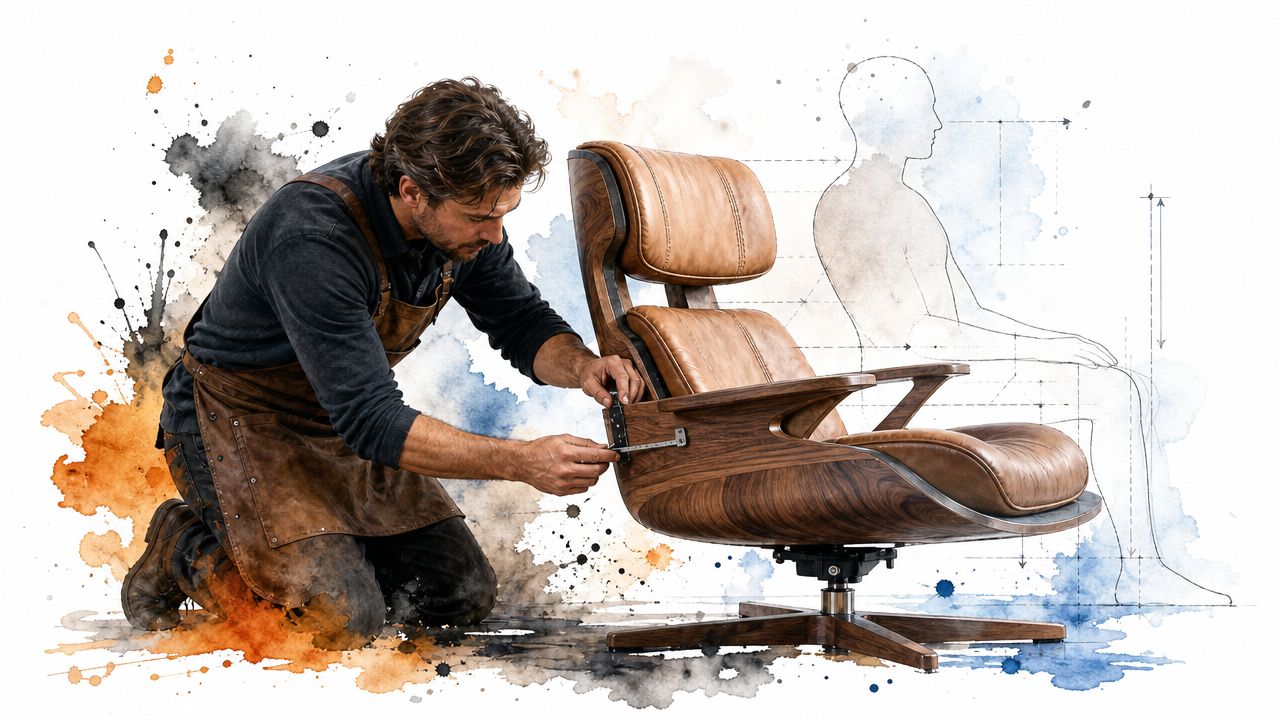
For many households, the biggest ergonomic challenge isn't finding attractive furniture. It's finding attractive furniture that fits the body, the room, and the way the piece will be used. That's where custom options become especially valuable.
Custom dimensions solve common fit problems
A standard-size piece may miss the mark in several ways. The seat may be too deep for a smaller-framed person. The back height may be too low for someone who wants head support while reading. The dining chair may feel right visually but sit awkwardly at the table.
Custom furniture helps solve those fit issues by letting a household look beyond what happens to be on the floor that day. Fabric, leather, wood species, and finish matter, but so do proportion and feel. A made-to-order piece can better align comfort, appearance, and long-term use.
For Bay Area homeowners exploring Custom Furniture and Amish Furniture, that approach often makes more sense than settling for a close-enough option that never feels quite right. One practical resource is custom furniture made simple, which shows how the ordering process can be easier than many people expect.
No-pressure guidance makes better decisions easier
This is also where the shopping environment matters. In a non-commission setting, consultants can spend more time discussing seat depth, room scale, daily habits, and material durability without rushing toward a quick close. That leads to better decisions, especially when someone is balancing ergonomics with design preferences.
Giorgi Bros. Furniture offers that kind of guided custom-order process in South San Francisco, including access to made-to-order upholstery, wood furniture, and premium sleep options. For shoppers interested in Furniture South San Francisco, Bay Area Interior Design, and a buy-for-life approach, that combination of customization and no-pressure guidance can be especially helpful.
Quality custom furniture also supports a more sustainable home. Instead of replacing a poor fit after a short period, people can invest once in a piece designed to suit their space and routine for the long haul.
Invest in Your Comfort for a Lifetime
Ergonomic furniture design is really about respect for the body. A supportive desk chair matters, but so does the sofa where someone unwinds, the dining chair used every evening, and the mattress that carries the body through the night. When furniture fits well, daily life asks less of the spine, shoulders, and hips.
That's why quality matters so much. Better materials, better proportions, and better construction usually cost more upfront, but they often save money and waste over time because they don't need to be replaced as quickly. They become investment pieces, not disposable purchases.
South San Francisco families have been making those choices for generations. A business that has been helping customers since 1933 sees the same lesson over and over. Good furniture isn't only something a room looks at. It's something a person lives with every day.
For shoppers who want to focus on lasting craftsmanship, this guide to American-made furniture brands worth knowing is a useful next step, especially for those thinking about durability, construction, and long-term value.
For anyone ready to create a more comfortable home, Giorgi Bros. Furniture welcomes visitors to the South San Francisco showroom to test seating, explore premium mattresses, and review custom options in person. Design experts are available for a no-pressure Design Consultation, and financing options are available for households planning thoughtful, long-term purchases.