A small dining area can feel like a puzzle. The table has to fit the room, leave space to move, work for everyday meals, and still look like it belongs. That challenge feels especially familiar in Bay Area homes, where breakfast nooks, apartment corners, and combined living-dining rooms often have to do more with less space.
Many households start in the same place. They find a table they love online, check the tabletop size, and assume it will work. Then the chairs hit the wall, the walkway disappears, and the room feels tighter than before. The problem usually isn't style. It's planning.
Since 1933, families in South San Francisco have turned to Giorgi Bros. for the kind of guidance that takes the stress out of buying furniture. In a non-commission setting, the conversation stays focused on fit, function, and long-term value. That matters even more when shopping for the best dining room tables for small spaces, because the right choice isn't just compact. It has to support daily life for years.

Table of Contents
- The Heart of the Home No Matter the Size
- Measure Twice Buy Once Laying Out Your Space
- Finding Your Shape The Best Table Designs for Tight Corners
- The Power of Versatility Extendable and Multi-Function Tables
- More Than Just Wood Choosing Materials for Longevity and Style
- Completing the Look Chairs Lighting and Styling Tips
- Your Lifetime Investment Begins at Giorgi Bros.
The Heart of the Home No Matter the Size
A dining area doesn't need a large footprint to feel meaningful. In many homes, it's where coffee starts the morning, homework lands in the afternoon, and dinner brings everyone back together at night. Even a compact corner can become one of the most useful spots in the house when the furniture is chosen with care.
Small spaces often push people toward quick fixes. A flimsy drop-leaf table, undersized chairs, or a piece chosen only because it was narrow enough can solve today's problem while creating tomorrow's. That approach rarely holds up. A dining table gets used hard, and in a small home it often has to do more than one job.
Why thoughtful design matters more in a compact room
The smartest tables for small homes don't just take up less room. They respect how people live. They let someone walk through the space without turning sideways. They give chairs enough room to move. They feel inviting instead of temporary.
Practical rule: In a small dining area, comfort comes from circulation as much as seating.
That idea sits at the center of good Bay Area interior design. When space is limited, every inch has a purpose. A table becomes an investment piece when it solves that spatial problem beautifully and keeps doing so through moves, remodels, and family changes.
A lasting purchase beats a disposable one
A buy-it-for-life mindset is especially relevant. A well-made dining table can adapt to different homes, different chair styles, and different routines over time. A lesser piece may fit the room today but show wear quickly, wobble under regular use, or feel dated the moment the layout changes.
That long view also supports sustainability. Buying one table that can be refinished, repaired, or customized later often makes more sense than cycling through short-term replacements. In the end, small-space furniture works best when it isn't treated as a compromise. It should be chosen with the same care as any larger investment piece.
Measure Twice Buy Once Laying Out Your Space
The most common mistake isn't buying a table that's ugly. It's buying one that technically fits but doesn't function. A dining space has to support chairs, walking paths, and the daily habits around it.
Start with the real dining zone
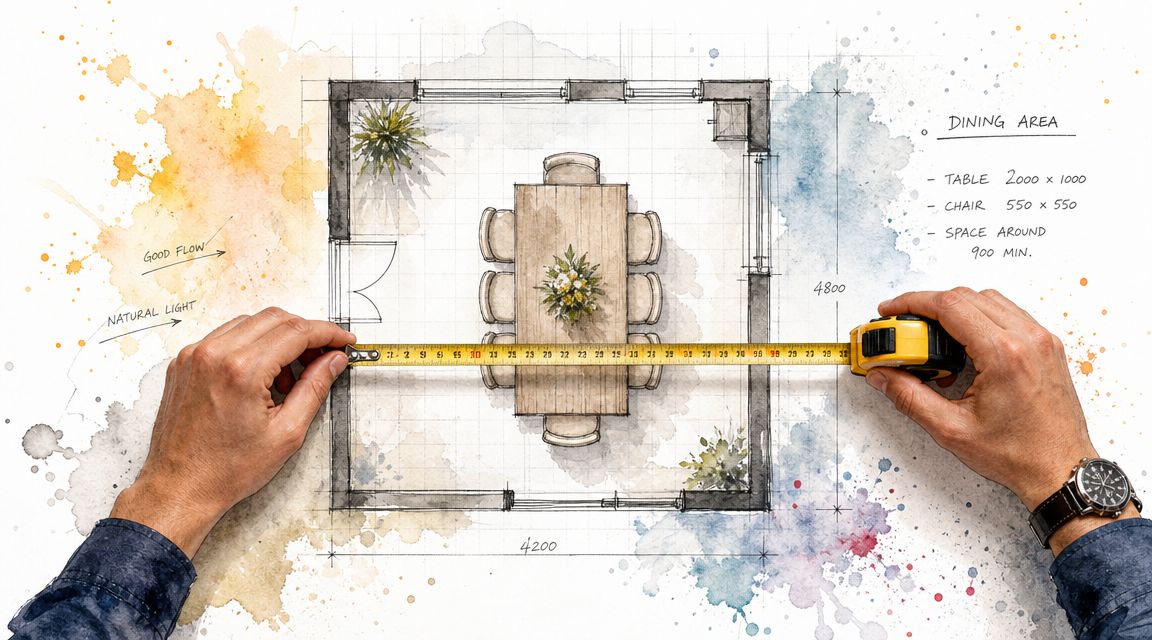
Measure the usable area, not the whole room. In many homes, the dining zone shares space with a kitchen path, an entry route, or a living room seating group. Those paths count.
A practical approach looks like this:
- Mark fixed obstacles. Note walls, case goods, doors, and anything else that can't move.
- Map the chair zone. The table isn't the whole footprint. Chairs need room to slide out.
- Protect traffic lanes. The room should still feel easy to move through after the table arrives.
For households also trying to improve flow in nearby kitchens, these kitchen storage solutions for small spaces can help free up valuable circulation room around the dining area.
Use measurements that protect movement
Widely cited interior design guidance recommends a dining table 24 to 36 inches wide and 30 to 48 inches long for a small area, with 36 inches of clearance between the table edge and nearby walls or furniture where possible. If the table sits against a wall, 18 inches behind the chairs may be enough. The same guidance notes that a compact round table around 30 to 36 inches wide often suits 2 people, while a 36 to 44 inch round top or 36 x 48 inch rectangular top can work for 4 people in a small room, as explained in this small-area dining size guide.
That guidance matters because a small dining room isn't only a seating problem. It's a circulation problem. The table, the chairs, and the pathway all have to work at once.
A table that leaves enough room to sit but not enough room to move isn't the right size.
A simple floor plan sketch helps. Painter's tape on the floor helps even more. Outline the table size, then pull a chair into place. That quick test usually reveals whether the room will feel comfortable or crowded.
Some shoppers also benefit from looking at small space furniture ideas before they commit to a table shape or size. Seeing how scale works across an entire room often makes the dining decision much easier.
Finding Your Shape The Best Table Designs for Tight Corners
Shape changes how a room feels. In a compact home, that decision affects movement, comfort, and even how often the table gets used. A beautiful top with the wrong shape can make a small room feel awkward every day.
How each shape solves a different problem
Round tables often work well in tighter layouts because they soften movement. Without corners, they reduce those little collisions that happen in narrow spaces. In irregular rooms, that can make the whole area feel calmer.
Rectangular tables tend to shine in long, narrow rooms. A slim profile aligns with the room's shape and helps preserve the main walking lane. Square tables can work nicely in defined corners or nearly square rooms, especially for households that don't need a large daily surface. Oval tables sit somewhere in the middle, giving some of the softness of a round top with a more elongated footprint.
According to this guide to small dining table layouts, round tops reduce corner collisions and improve movement in tight spaces, while trestle or pedestal bases often create more usable legroom than four corner legs. The same guidance recommends a slim rectangular table with a narrow-depth profile for long, narrow rooms.
Dining Table Shape Guide for Small Spaces
| Shape | Best For | Pros | Cons |
|---|---|---|---|
| Round | Tight corners, breakfast nooks, open compact areas | Easy flow, softer edges, good conversation | Less efficient against a wall |
| Oval | Small rooms that need softness with a little length | Gentler traffic pattern, elegant profile | Can be harder to place in very tight corners |
| Rectangular | Long narrow rooms, wall-adjacent layouts | Efficient use of room length, easy to anchor | Corners can interrupt movement |
| Square | Defined dining corners, smaller households | Balanced footprint, tidy look | Can feel tight if seating needs grow |
A round table with expansion built in can also bridge daily use and guest seating. For shoppers considering that route, a circular table with leaf options shows how one silhouette can stay compact most days and still adapt.
Why the base matters more than many shoppers expect
Many people focus on the tabletop and forget the base. In a small dining area, that can be a costly oversight.
Corner legs can limit where chairs fit and where feet land. Pedestal bases usually make it easier to shift seating around. Trestle bases can also improve legroom, especially when the proportions stay slim.
A good way to judge a base is simple. Look at where knees, ankles, and chair legs will go. If the base interrupts all three, the table may feel more cramped than its size suggests.
The Power of Versatility Extendable and Multi-Function Tables
A fixed table asks a small room to stay the same every day. Real homes don't work like that. Some days the table holds breakfast for one person. Other days it becomes a work surface, a homework station, or dinner for guests.
Why adaptable tables keep earning their place
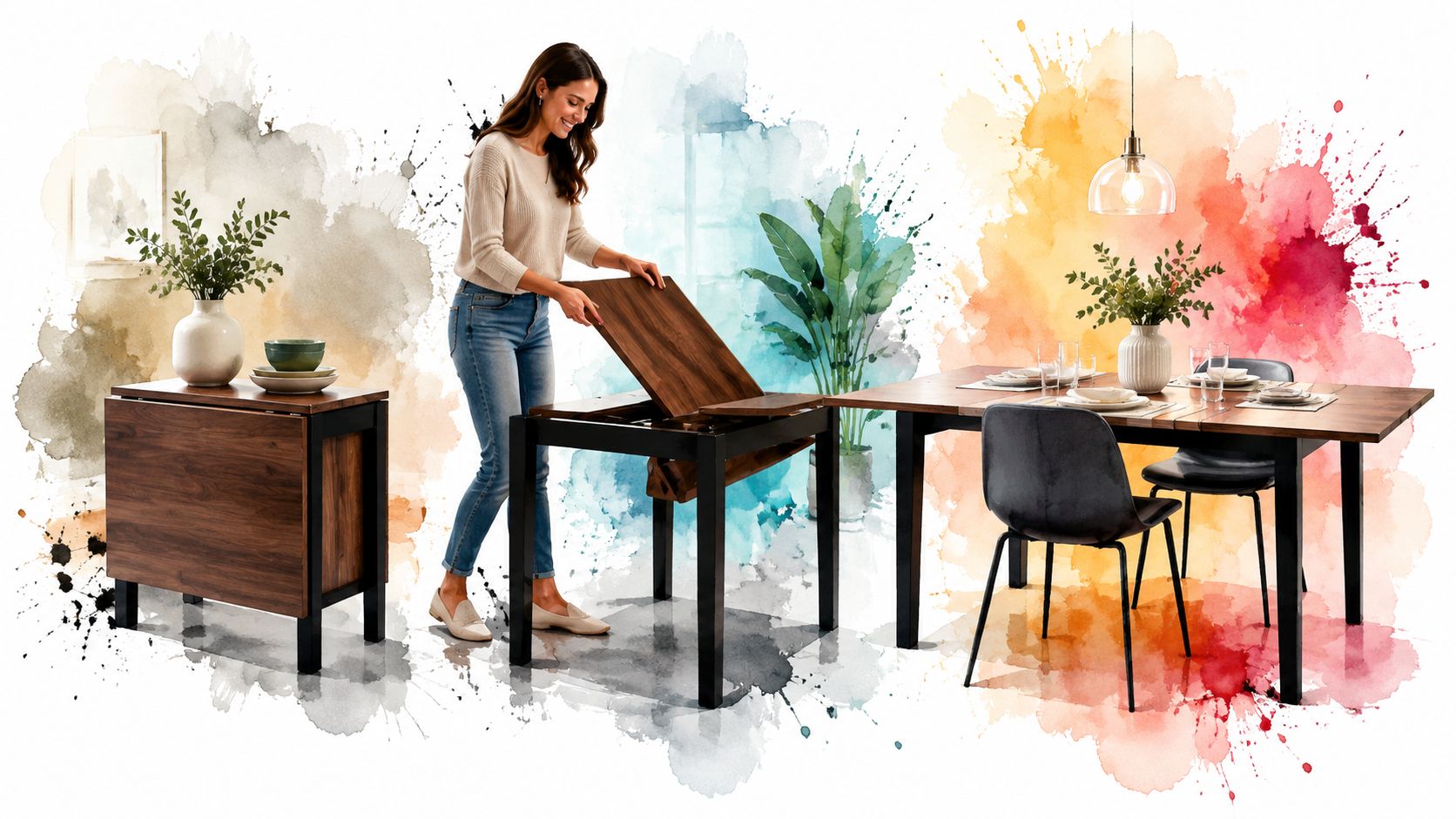
The rise of convertible and extendable dining tables reflects a long response to smaller urban homes and the need for furniture that handles more than one task. Modern guidance highlights them as effective because they stay compact for everyday use and expand when guests arrive, combining space efficiency with versatility, as described in this modern overview of small-space table shapes.
That history matters because it changes how these tables should be viewed. They aren't a gimmick. They're a practical answer to the way many people live now.
A few formats are especially useful:
- Drop-leaf tables fold down when the extra surface isn't needed.
- Extendable tables stay modest in size, then open for company.
- Gateleg designs can work well where floor space has to stay flexible.
- Dining-desk hybrids help one room serve multiple purposes.
For households thinking through broader room flexibility, this guide to multi-functional furniture for modern homes offers a helpful way to evaluate pieces that need to do double duty.
What to check before choosing a mechanism
Versatility only matters if the table is pleasant to use. If the leaves are awkward, the hardware feels flimsy, or the open size blocks the room, the feature won't help much.
The best expandable table is the one a household will actually open without dread.
Shoppers should check a few practical details:
- Open and closed footprint: Both sizes need to work in the room.
- Ease of operation: Leaves should move smoothly and predictably.
- Stability: The table should feel solid in every configuration.
- Storage reality: If leaves come out, there needs to be a place to keep them.
No-pressure guidance can make a real difference. A thoughtful consultant can help match the mechanism to the household's routine, rather than pushing the feature that sounds most impressive on paper.
More Than Just Wood Choosing Materials for Longevity and Style
A small dining table still gets daily wear. Plates slide across it. Keys get dropped on it. People lean on it while talking, working, and unpacking groceries. Material choice matters just as much as size.
A small table still needs big durability
Many compact dining guides stop at dimensions and folding features. That's only part of the story. A more useful question is whether the table will still be worth owning years from now.
A thoughtful view of small-space furniture points out that extendable and convertible tables can be excellent because they preserve floor space and scale for hosting, but they also introduce hardware, moving parts, and wear points that shoppers often overlook. By contrast, solid-wood and custom-made tables can better support repairability, refinishing, and multi-decade use, as discussed in this small dining set durability perspective.
That difference matters for anyone choosing investment pieces rather than short-term furniture. A solid wood top can age gracefully. It can often be refreshed instead of replaced. That supports both long-term value and a more sustainable approach to furnishing a home.
Material changes how a room feels
Durability is one side of the decision. Visual weight is the other.
Lighter wood finishes can help a room feel more open. Darker finishes bring warmth and definition. Glass can feel airy in the right setting, though some households prefer the tactile warmth and repair potential of wood. The best choice depends on how the dining space connects to the rest of the room.
Customization becomes especially valuable here. Wood species, stain color, sheen, and base style can all change how large or light a table feels. That's one reason custom furniture remains so relevant in Bay Area homes with unusual footprints. A piece can be made for the room instead of forcing the room to adapt to a standard size and finish.
For buyers comparing construction options, solid wood vs veneer is a useful place to sort out what supports repairability, everyday wear, and long-term ownership.
A buy-it-for-life table isn't only one that's strong. It's one that can move with a household, hold up under daily use, and still feel right after the next remodel or move.
Completing the Look Chairs Lighting and Styling Tips
The table may be the anchor, but the room succeeds or fails on the supporting details. In small dining areas, chairs, lighting, and decor have to do their job without adding clutter.
Choose seating that disappears when not in use
Bulky chairs can make a well-sized table feel too large. Cleaner profiles usually work better.
A few reliable options include:
- Armless dining chairs: They tuck in more easily and reduce visual crowding.
- Benches: They can slide under one side of a rectangular table and free up the walkway.
- Lighter-looking silhouettes: Open backs or slimmer frames keep the area from feeling heavy.
For anyone comparing silhouettes and proportions, these modern dining room chairs can help clarify what works well with a compact table.
Use lighting and decor to define the zone
A dining area in a small home often needs help feeling intentional. Lighting does that beautifully. A pendant centered over the table creates a destination and visually separates the dining zone from the rest of the room.
Wall decor can help too, as long as it doesn't overwhelm the space. Curated pieces such as Jessie's Home wall art can add warmth and personality without taking up floor area.
Keep the centerpiece low and the surrounding decor edited. Small dining spaces feel better when the eye can move easily across the room.
A mirror nearby can also help bounce light and add a sense of depth. The key is restraint. One strong lighting choice, seating that tucks in neatly, and a few thoughtful accents usually create a more polished result than filling every available surface.
Your Lifetime Investment Begins at Giorgi Bros.
Choosing among the best dining room tables for small spaces comes down to a few lasting principles. Measure for movement, not just tabletop size. Match the shape to the room. Choose flexibility when daily life calls for it. Pay close attention to materials, because compact furniture still carries a heavy workload.
The final step is seeing those differences in person. Scale, finish, joinery, and comfort are much easier to judge when a household can touch the wood, pull out the chairs, and walk around the table. That hands-on process often reveals more than a product photo ever could.
In South San Francisco, Giorgi Bros. has served Bay Area families since 1933 with exactly that kind of practical, no-pressure guidance. The showroom offers room to compare styles, test proportions, and explore Custom Furniture options in wood species, finishes, fabrics, and leathers. That matters for buyers looking for Amish Furniture, American-made craftsmanship, or investment pieces that can evolve with the home.
The experience is different when the guidance comes from Non-Commission Sales Staff focused on fit rather than urgency. For households furnishing more than the dining room, the same approach extends across the home, including living spaces, bedrooms, and even Premium Mattresses. And when timing matters, Financing options are available to help make a long-term purchase more manageable.
A small dining room doesn't need a placeholder table. It deserves a piece built for daily life, future changes, and years of use.
For Bay Area homeowners ready to find a dining table that fits beautifully now and lasts for years, Giorgi Bros. Furniture offers no-pressure guidance, custom order options, and a South San Francisco showroom where every detail can be seen in person. Visit the showroom or book a Design Consultation to explore investment pieces suited for the home, the layout, and the way the household really lives.