
A small home can feel either calm and capable, or crowded and frustrating. This lesson is often learned the hard way. A sofa looks perfect online, arrives with bulky arms, blocks the walkway, and suddenly the whole room works worse than it did before.
That's why small space furniture deserves a more serious approach than the usual decorating shortcuts. Mirrors and light colors can help, but they won't fix a chair that's uncomfortable after an hour, a table that can't handle daily use, or a bed frame that wastes valuable storage. The better approach is simple: choose pieces with the right proportion, real function, and the kind of construction worth living with for years.
That mindset isn't new. In South San Francisco, families have been furnishing Bay Area homes since 1933, and one lesson keeps proving itself. Small rooms don't need flimsy fixes. They need thoughtful choices that work hard, wear well, and still look right a decade from now.
Table of Contents
- The Smart Start to Furnishing a Small Space
- First Step Always Measure Your Room and Its Pathways
- Prioritizing Function to Maximize Every Square Foot
- Choosing Proportional Pieces for Living and Dining
- Why Custom Furniture Is the Ultimate Small Space Solution
- Finding the Perfect Sleep Solution for Compact Bedrooms
- Your Lifetime Furniture Investment Starts Here
The Smart Start to Furnishing a Small Space
A compact Bay Area apartment or bungalow doesn't need less ambition. It needs a better plan. The mistake most buyers make is assuming a smaller room calls for smaller everything. That sounds logical, but it often leads to stiff seating, undersized tables, and layouts that look tidy yet don't support real life.
Expert guidance on small spaces consistently lands on the same point. Proportion and multi-functionality matter more than sheer downsizing, and many small-space guides still miss the harder question of whether a piece will hold up to daily use over time, as discussed in this expert small-space discussion. That's the true buying question. Not “Will it fit?” but “Will it fit and still serve the household well next year?”
Practical rule: Buy for the room's daily habits, not for the listing photos.
A good start begins with honest priorities. If the living room doubles as a guest room, that changes the sofa decision. If the dining area also handles work hours, that changes the table decision. If closets are tight, outside storage can also support a more disciplined furnishing plan. For households sorting through overflow before buying, these smart storage solutions for small apartments offer useful ideas for deciding what should stay in the room and what shouldn't.
Start with use, not style
Small space furniture works best when each item answers a specific need. A room should support sitting, walking, storing, relaxing, and sometimes sleeping, without asking one oversized piece to do all the work badly.
That means starting with three questions:
- What happens here every day: lounging, dining, working, hosting, sleeping?
- What gets in the way now: poor traffic flow, lack of storage, crowding?
- What should last: sofa frame, dining surface, bed support, storage pieces?
Style still matters. It just comes after the room's job is clear.
First Step Always Measure Your Room and Its Pathways
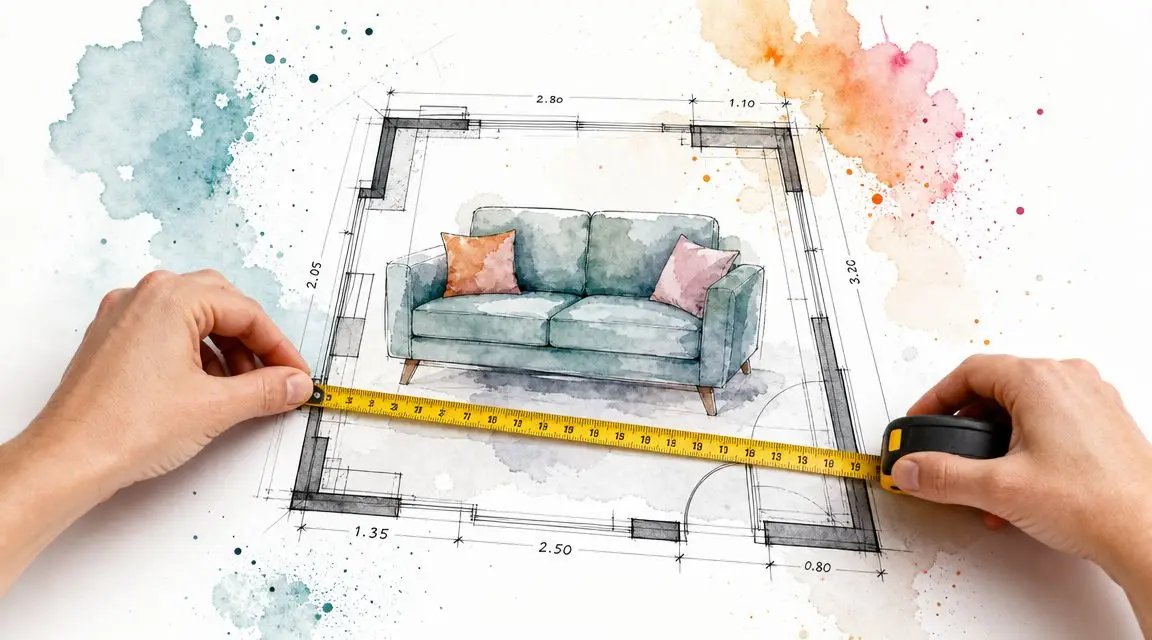
Buying without measuring is how good furniture becomes an expensive problem. A piece can fit the room on paper and still fail in real life because it blocks a doorway, clips a hallway turn, or leaves no comfortable path around it.
For small space furniture, room dimensions are only half the job. A reliable measuring process starts with length, width, and ceiling height, then moves to entry doors, stairwells, hallways, corners, and any tight turns the furniture must clear. For buyers who want a solid checklist, this guide on how to measure furniture is the right place to begin.
Measure the room before the furniture
One industry guide recommends beginning with the room itself, then choosing pieces with slimmer profiles, visible legs, and narrower depths. It also notes that a sofa depth under about 38 inches is a useful starting threshold for compact rooms because it helps preserve usable walkways, according to this small-space furniture sizing guide.
That number isn't a rule for every home. It's a filter. If a room is narrow, deep seating can make it feel boxed in fast.
A practical measuring list should include:
- Room shell: full length, width, and ceiling height
- Entry path: front door, apartment door, elevator if relevant, interior doors, stair landings
- Fixed obstacles: radiators, vents, built-ins, low windowsills, wall projections
- Anchor locations: outlets, lighting, media placement, rug boundaries
Map the way people actually move
Rooms don't fail because of furniture alone. They fail because people can't live around the furniture comfortably. A home office that becomes a guest room needs open movement near the sleeper mechanism. A dining nook needs chairs that can slide out without trapping the walkway. A bedroom needs drawers that can open fully.
Tape the footprint on the floor before buying. A few strips of painter's tape will reveal problems faster than a product photo ever will.
That simple test changes decisions quickly. The taped outline shows whether a coffee table crowds the knees, whether a chair cuts into circulation, and whether a bed leaves enough breathing room to feel restful instead of cramped.
A room should have clear purpose and clear passage. If a piece fits but forces people to sidestep around it every day, it doesn't fit.
Prioritizing Function to Maximize Every Square Foot
Some furniture looks neat in a catalog and does almost nothing for the household. In a small home, that kind of piece is a luxury the room can't afford. Every item should earn its place.
Expert guidance on compact living points to the same conclusion. Multi-functionality is the most valuable feature in small-space furniture because one footprint can serve several needs at once. Recommended examples include sleeper sofas, storage ottomans, nesting tables, and beds with integrated drawers, as outlined in this small-space multifunction furniture guide. For a deeper look at versatile layouts and product categories, this article on how to choose multi-functional furniture for modern homes is also useful.
Choose furniture that earns its footprint
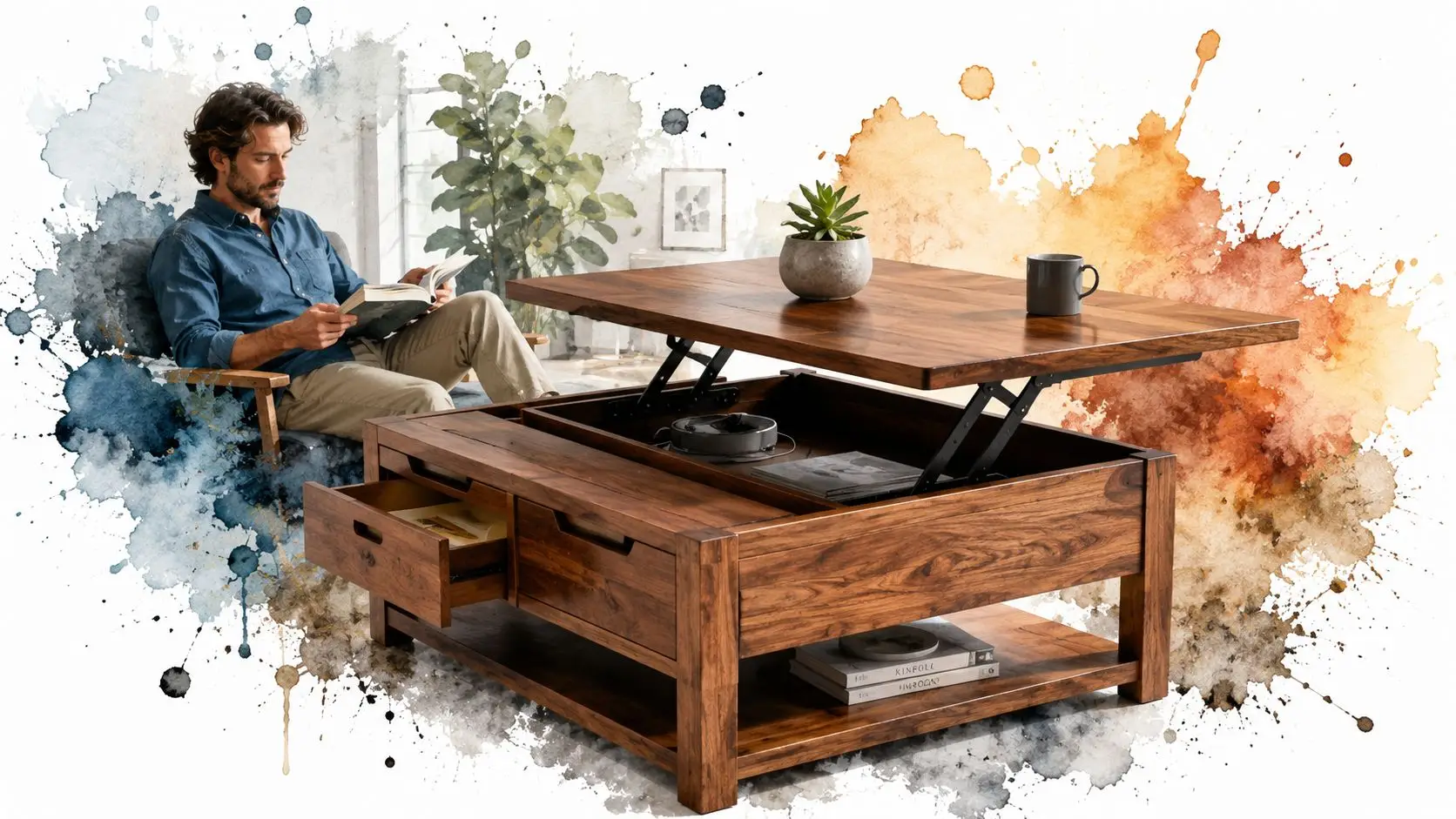
A storage ottoman usually beats a standard coffee table in a tight room. It can hold blankets, soften the layout, act as a footrest, and serve as extra seating when guests stop by. That's smart use of floor area.
The same logic applies across the room:
- Sleeper seating: supports everyday lounging and overnight guests
- Nesting surfaces: expand when needed, tuck away when not
- Drawer-integrated beds: reduce the need for extra case goods
- Drop-leaf or extendable dining pieces: stay compact most days
This isn't about turning a home into a machine. It's about removing wasted furniture.
Look for flexibility, not gimmicks
Not every transforming piece is worth buying. The best multifunction furniture still needs to feel substantial, comfortable, and easy to use. If a mechanism is awkward, if cushions feel thin, or if storage only works for tiny items, the novelty fades fast.
The best small-space piece doesn't ask for patience. It works cleanly on an ordinary Tuesday.
Visual choices still matter, and finishing the room well helps everything feel lighter. Households also thinking about daylight, softness, and privacy may find these small space window treatment ideas helpful when balancing function with openness.
A compact room usually improves when it has fewer pieces with better jobs. One strong sleeper, one useful ottoman, and one adaptable side table will outperform a collection of single-purpose furniture almost every time.
Choosing Proportional Pieces for Living and Dining
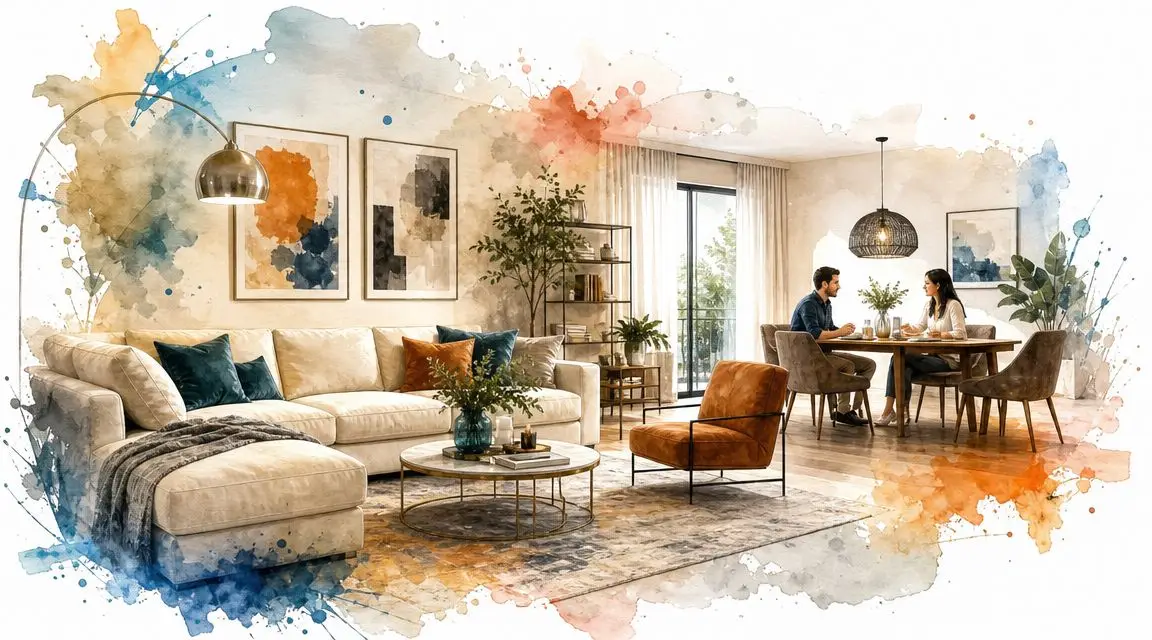
Scale is what people notice first, even when they can't name it. A room feels off when a sofa sits too deep, a chair has heavy rolled arms, or a dining table fills every corner inch but leaves no grace around it. Good proportion is what makes a compact room feel intentional instead of improvised.
For living rooms especially, layout matters as much as the furniture itself. This guide on how to layout living room furniture helps clarify how piece size and placement should work together.
What makes a piece feel right in scale
Small space furniture shouldn't look tiny. It should look balanced. The difference matters. Balanced furniture often has cleaner lines, slimmer arms, tighter backs, visible legs, and a lighter visual profile.
A quick comparison helps:
| Furniture choice | Usually works better in a small room | Usually creates problems |
|---|---|---|
| Sofa | Slim arms, visible legs, moderate depth | Overstuffed arms, deep seat, skirted base |
| Dining table | Round or lightly scaled top | Thick pedestal or oversized rectangular top |
| Side chair | Open frame or tighter silhouette | Bulky club-style form |
| Coffee table | Glass, open base, or soft corners | Heavy wood block with thick base |
Round dining tables often improve circulation because they soften corners and make movement easier. Glass or acrylic-style surfaces can also reduce visual weight, which helps a room feel less crowded without sacrificing usefulness.
Why custom sizing often beats compromise
Many buyers settle for “close enough,” and that's usually the wrong move. Awkward floor plans, narrow dining areas, and open-plan rooms often need exact dimensions, not standard ones. A sofa that's nearly right can still dominate the room if its arms are too thick or its depth is too generous.
Custom sizing isn't indulgent in a small home. It's practical. A slightly narrower arm, a cleaner leg, a precise seat depth, or a more refined table base can make the difference between a room that merely contains furniture and a room that functions well every day.
A compact room doesn't need less comfort. It needs comfort designed with restraint.
Living and dining spaces should support real use. Meals, reading, conversation, work sessions, and guests all place demands on the same square footage. The right proportional choices let that happen without visual clutter or physical frustration.
Why Custom Furniture Is the Ultimate Small Space Solution
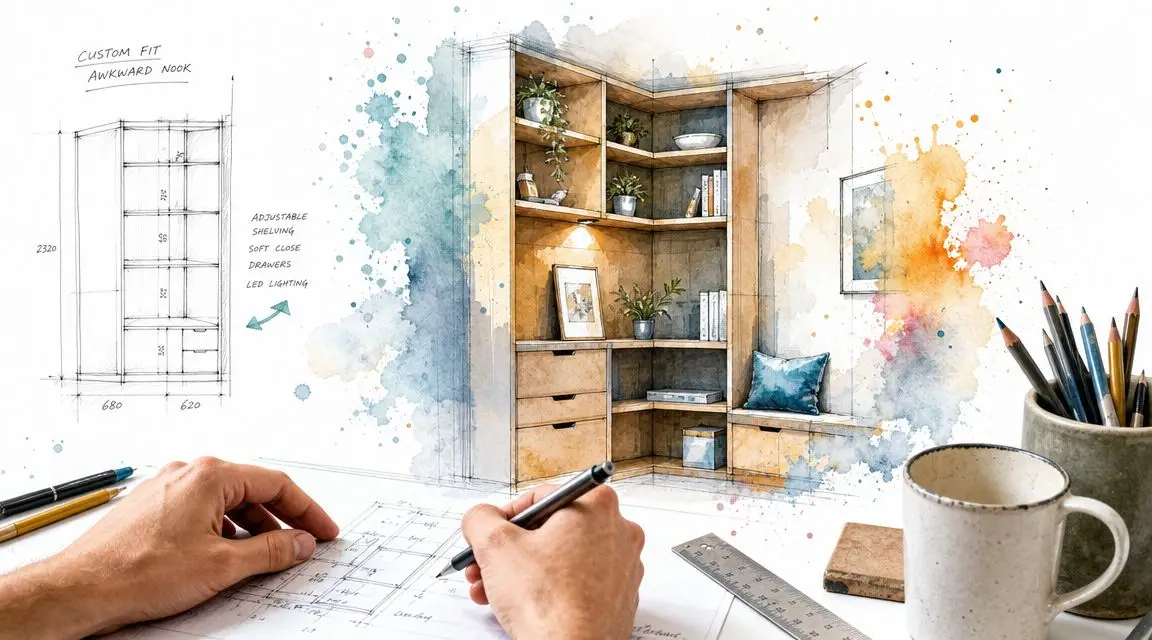
Standard furniture sizes assume standard rooms. Many homes don't cooperate. Bay Area spaces are often narrow, angled, older, renovated in stages, or built around constraints that make off-the-floor sizing a poor match. That's why custom furniture is often the cleanest answer.
For buyers considering that route, this overview of custom furniture made simple shows how the process can stay straightforward instead of overwhelming.
Custom solves problems standard sizes create
Custom furniture allows a room to be furnished to its actual dimensions and habits. A sofa can be ordered with a more disciplined depth. A sectional can be configured to protect the walkway. A bookcase can fit beneath a window line instead of overpowering it. Dining chairs can be selected with slimmer arms or no arms at all to keep the table usable.
That flexibility matters even more in rentals and awkward layouts. Recent coverage on renter-friendly design points to growing interest in movable, tool-free, and custom-fit solutions for households that can't treat the room like a permanent showroom, as discussed in this guide to awkward living room ideas.
Practical custom decisions often include:
- Depth adjustments: especially useful for seating in narrow rooms
- Fabric or leather selection: lighter tones can brighten the room, performance matters for everyday life
- Wood species and finish: important when matching existing pieces or creating warmth without heaviness
- Storage integration: shelves, drawers, lift tops, or concealed compartments where clutter tends to gather
The details that matter over time
Custom only pays off when the underlying quality is there. A made-to-order piece should also be built to last. That means sturdy joinery, durable upholstery choices, repairable components, and finishes that age well rather than chip or peel at the first hard use.
A buy-it-for-life mindset proves practical. Fewer replacement cycles mean less waste, less frustration, and often better long-term value. A well-built custom piece can save a household from buying the same category twice, first in a compromise version and later in the one that should've been chosen from the start.
The best custom small space furniture doesn't announce itself as custom. It looks like it belongs there.
Finding the Perfect Sleep Solution for Compact Bedrooms
A small bedroom becomes calmer fast when the bed frame does more than hold a mattress. Too many bedrooms lose valuable storage to a bulky dresser because the bed contributes nothing beyond sleep. That's a missed opportunity.
A bedroom works better when the bed works harder
Storage beds are one of the smartest choices for compact bedrooms. Integrated drawers can absorb extra linens, off-season clothing, or everyday overflow that would otherwise claim floor space elsewhere. That often allows the room to use fewer case pieces and feel less crowded.
For rooms that need added flexibility, a well-designed daybed can also pull double duty in a guest room or office. This example of a daybed with headboard shows why that format can work so well when a room needs to serve more than one purpose.
A good compact-bedroom setup usually favors:
- Integrated storage: drawers under the bed instead of extra furniture beside it
- Lighter visual lines: a frame that feels clean rather than imposing
- Thoughtful nightstands: scaled to the bed, not oversized by habit
Support and scale belong in the same decision
People often separate sleep quality from room planning. They shouldn't. A bedroom can look uncluttered and still fail if the mattress doesn't provide proper comfort and support. The smartest choice is a mattress and frame combination that gives the sleeper what's needed without adding unnecessary bulk.
That's one reason premium mattresses matter in a small room. Better support can often be paired with cleaner bed designs that don't rely on old-fashioned bulk for comfort. The room feels lighter, and the sleep setup still performs at a high level.
A compact bedroom shouldn't feel like a compromise. It should feel edited, restful, and easy to maintain.
Your Lifetime Furniture Investment Starts Here
Small space furniture isn't a niche concern anymore. Demand for it is broad and durable. One market forecast identifies North America as the largest market, with over 35% of global market share in 2023, reflecting ongoing demand tied to urban density and apartment living, according to this small space furniture market forecast.
That bigger market reality doesn't change the buying standard. If anything, it raises it. More options make it easier to buy fast and buy poorly. The right approach is slower, more selective, and far more rewarding over time.
Buy less, choose better
The strongest small-space results usually come from four decisions:
- Measure first so the room and its access points are working from facts, not guesses.
- Prioritize function so each piece earns its floor area.
- Choose proportion carefully so the room feels open, not underfurnished or overcrowded.
- Use customization where needed so awkward spaces stop dictating bad compromises.
That's the buy-it-for-life version of furnishing a smaller home. It values craftsmanship, serviceability, and daily comfort over quick fixes. It also supports a more sustainable way to live. Keeping well-made investment pieces in the home longer means less turnover, less waste, and fewer regrettable purchases.
A small home still deserves lasting furniture
Compact living doesn't call for disposable furniture. It calls for disciplined furniture. The household that chooses one well-built sleeper instead of two lesser pieces, or one properly scaled dining table instead of a placeholder that never quite works, usually ends up with a better home and lower long-term replacement cost.
A smaller footprint often sharpens judgment. Every piece is more visible. Every mistake is easier to feel. That makes quality even more important, not less.
For anyone looking for Furniture South San Francisco shoppers can count on for lasting quality, Giorgi Bros. Furniture offers a rare combination of heritage, selection, and no-pressure guidance. Since 1933, this family-owned showroom has helped Bay Area households choose investment pieces that suit real homes and real routines. Visitors can explore 50,000 square feet of inspiration, including Custom Furniture, Amish Furniture, and Premium Mattresses, with help from Non-Commission Sales Staff and Design Experts who focus on fit, function, and long-term value. Financing options are available for households ready to invest thoughtfully. Visit the South San Francisco showroom or book a Design Consultation to create a small-space plan that's built for comfort, craftsmanship, and everyday life.