A lot of mattress shopping starts the same way. Someone wakes up stiff, flips the pillow, stretches the lower back, and wonders whether the problem is age, stress, or the bed. Then the search begins, and within minutes there are dozens of mattresses, each calling itself plush, supportive, luxury firm, or orthopedic.
That confusion is normal. Mattress firmness sounds simple, but most shoppers use the word to mean several different things at once. Some mean softness. Some mean support. Some mean pressure relief. Others just mean, “Will this stop the morning aches?”
For Bay Area families furnishing a primary bedroom, guest room, or a full remodel, this choice matters because a mattress isn't a short-term purchase. It's part of daily health, long-term comfort, and the quality of rest that shapes every following day. Since 1933, families have come to South San Francisco looking for patient guidance, not pressure, and that's still the right approach. A mattress should fit the sleeper, the room, and the way that household lives.
A good mattress firmness guide gives shoppers a common language. A better one helps them connect that language to their own sleep habits, body type, and comfort needs. For anyone also working on broader sleep habits, Giorgi Bros. offers practical ideas on how to improve sleep quality.
Table of Contents
- The First Step to Better Sleep Starts with Firmness
- Decoding the Mattress Firmness Scale
- How Your Sleep Position Dictates Firmness Needs
- The Role of Body Weight and Pain Relief
- How Mattress Construction Affects Firmness
- Your Action Plan for Choosing the Right Mattress
- An Investment in a Lifetime of Good Sleep
The First Step to Better Sleep Starts with Firmness
Most shoppers don't begin by asking for a mattress firmness number. They say the shoulder falls asleep on one side. The hips feel jammed by morning. One partner likes a cushioned feel, while the other wants something flatter and steadier. Those are comfort complaints, but they're often firmness problems in disguise.
Firmness is usually the first lever to adjust because it changes how the body settles into the mattress. If that feel is wrong, almost everything else feels wrong too. A mattress can look well made, use quality materials, and still feel uncomfortable if the sleeper sinks too far or not far enough.
A common showroom pattern
A side sleeper may arrive convinced that a harder bed will solve back pain. Then that sleeper lies down on a very firm surface, and the shoulders don't sink enough. Pressure builds. The body twists slightly to compensate. After a few minutes, the mattress feels “supportive,” but not comfortable in any lasting way.
Another shopper may choose something very soft because it feels cozy for the first minute. But once the hips drop too much, the lower back starts doing extra work. The mattress feels pleasant at first contact and tiring after a full night.
The right firmness doesn't chase a trend. It helps the body rest in a neutral, comfortable position for hours at a time.
That's why firmness deserves careful attention before fabric feel, cooling stories, or marketing names. It's the foundation of the decision.
Why this choice deserves patience
A mattress is one of the most personal investment pieces in a home. Unlike a decorative accent, it works every night. It also affects how the rest of a bedroom performs, especially when paired with an adjustable base, layered bedding, and the sleeper's preferred posture.
At a family-owned showroom with non-commission consultants, the conversation can stay where it belongs. On fit, use, and long-term value. That slower, more thoughtful process is often what turns an overwhelming search into a clear decision.
Decoding the Mattress Firmness Scale
The mattress industry needed a shared language, so most guides use a 1 to 10 scale, with 1 as the softest and 10 as the firmest. Many guides also treat 6.5 out of 10 as medium-firm, which gives shoppers a practical benchmark when comparing models across brands, even though firmness is still a convention rather than a rigid technical standard, as noted in Casper's explanation of the firmness scale. Shoppers who want a simple starting point can also use Giorgi Bros.’ mattress guide.

Why the scale exists
A good way to think about the scale is shoe sizing. It doesn't tell the whole story about fit, shape, or materials, but it gives people a useful reference point. In mattress shopping, that means one bed may be described as a 4, another as a 6.5, and another as an 8. The shopper can at least compare the intended feel.
Here's the plain-language version:
| Firmness range | What it usually feels like |
|---|---|
| Soft end | More sink, more contour, more body-hugging feel |
| Middle range | A blend of cushioning and pushback |
| Firm end | Less sink, flatter surface feel, more sleeping “on” than “in” the bed |
Many find mattress firmness ratings a point of confusion. A mattress rated near the middle may still feel very different depending on its materials. One medium-firm mattress can feel springy and lifted. Another can feel dense and slow to respond.
Firmness and support are not the same thing
This is the single most useful correction in any mattress firmness guide. Firmness is feel. Support is function.
A mattress can feel soft at the surface and still support the spine well. Another mattress can feel very hard but fail to keep the body aligned. Support comes from how the mattress holds the heavier parts of the body in relation to the lighter parts. Firmness is the sensation the sleeper notices first.
Practical rule: Don't ask only, “How firm is it?” Ask, “Where do the shoulders, hips, and lower back settle once the body relaxes?”
That question leads to better decisions. It also explains why one person's perfect mattress feels too hard or too plush to someone else. The number is helpful, but the body's response matters more.
How Your Sleep Position Dictates Firmness Needs
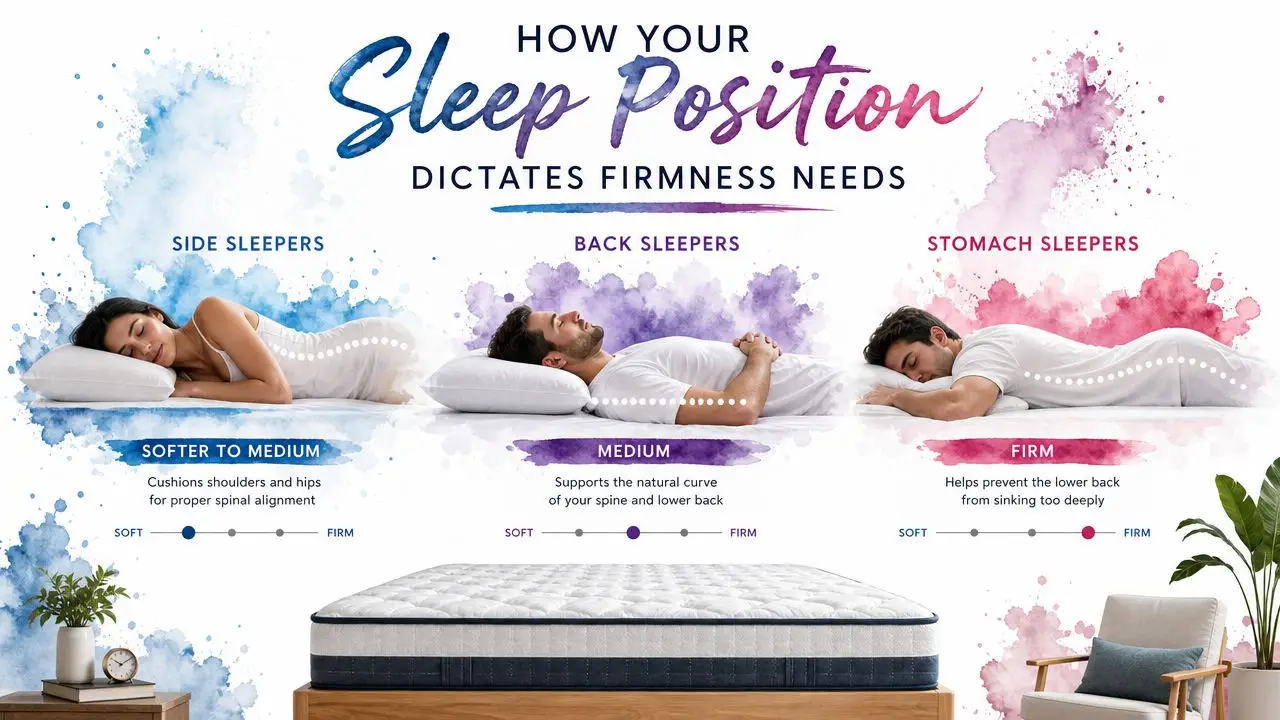
Sleep position shapes the kind of surface the body needs. According to Sleepopolis' firmness guide, side sleepers are commonly guided toward 3 to 6 out of 10, back sleepers toward 5 to 7, and stomach sleepers toward 7 or higher. That framework exists for a simple reason. Different positions place pressure and weight in different places.
For readers shopping specifically by posture, Giorgi Bros. also offers guidance on the best mattress for side sleepers.
Side sleepers need pressure relief first
A side sleeper puts more direct pressure on the shoulders and hips. If the mattress is too firm, those areas can't settle enough, and the spine may bend out of alignment. The sleeper may also toss and turn because the surface pushes back too strongly at the joints.
That's why side sleepers are often more comfortable in the softer to medium part of the scale.
Key signs that a side sleeper may need a softer feel:
- Shoulder numbness: The upper shoulder feels compressed rather than cushioned.
- Hip pressure: The mattress feels hard under the outer hip.
- Twisting through the night: The sleeper keeps adjusting to escape pressure points.
Back sleepers need balanced lift
Back sleeping asks for a more even kind of support. The surface has to let the hips settle a little, while still supporting the lumbar area and keeping the torso from sinking unevenly. If the bed is too soft, the pelvis can drop too much. If it's too hard, the lower back may feel unsupported because the mattress doesn't contour enough.
That's why the middle range often works well for back sleepers. It gives enough shape without allowing too much sag.
A useful showroom test for back sleepers is simple. The sleeper should lie flat, relax the legs, and notice whether the midsection feels cradled or dropped. A cradled feeling can be good. A dropped feeling usually isn't.
Stomach sleepers need a steadier surface
Stomach sleeping is less forgiving. The midsection carries a lot of weight, and if it sinks too far, the spine can arch uncomfortably. That's why stomach sleepers are usually directed to firmer surfaces.
The goal isn't harshness. It's steadiness. The mattress should help hold the hips up so the body doesn't bow into the bed.
A stomach sleeper usually benefits from a surface that feels flatter and more stable through the center third of the mattress.
Combination sleepers need flexibility
Many people don't stay in one position all night. They start on the side, roll to the back, then settle somewhere between the two. For those sleepers, the “perfect” firmness often sits near the middle because it has to accommodate movement, not just one static posture.
A combination sleeper should pay attention to two things in the showroom:
- Ease of movement: The body shouldn't feel stuck.
- Comfort in the main position: The position used most often should still feel natural.
Labels alone stop being useful at this stage. A mattress can sound ideal on paper and still feel awkward once a real sleeper changes position a few times.
The Role of Body Weight and Pain Relief
Two people can lie on the same mattress and give completely different reviews because their bodies interact with the materials differently. That's why a mattress firmness guide that only talks about sleep position leaves out a major part of the decision.
According to NapLab's mattress firmness guidance, body weight is one of the most important factors in choosing a mattress. The same guidance also notes that for people dealing with back pain, mattresses in the 5 to 8 range often offer a good balance of cushioning and structural support. Readers comparing options for pain-related sleep issues can also review Giorgi Bros.’ page on the best mattress for chronic back pain.
Why weight changes mattress feel
The physics are straightforward. A lighter sleeper usually compresses the comfort layers less. A heavier sleeper compresses them more. That means the same mattress can feel firmer to one person and softer to another.
That difference matters in several common situations:
- Petite sleepers: They may need a little more surface give to experience pressure relief at all.
- Heavier sleepers: They often need a stronger sense of pushback so the body doesn't sink too far.
- Couples with different builds: One partner may describe a mattress as plush while the other calls it firm.
This is one reason online mattress labels can be misleading. “Medium-firm” doesn't land the same way on every body.
What back pain shoppers should keep in mind
Back pain doesn't automatically mean “choose the firmest mattress.” In practice, many back pain shoppers do better with balance rather than extremity. Too soft can allow the hips or torso to sag. Too hard can create pressure and keep the body from settling naturally.
For people working on daytime habits as well as nighttime comfort, these effective pain relief strategies offer useful general context around movement and back care.
A better question is this. Does the mattress allow the body to relax without collapsing through the heaviest areas? That's the line a shopper wants to find.
Some pain comes from pressure. Some comes from poor alignment. The right mattress has to address both at the same time.
For couples, this often turns into a fit problem, not a simple firmness problem. One person may need more contouring while the other needs a steadier feel. That's exactly where an in-showroom conversation becomes valuable because the goal shifts from choosing a label to choosing a workable solution.
How Mattress Construction Affects Firmness
A firmness number tells only part of the story. Construction tells the rest. Two mattresses can both feel “firm” in a showroom, but one may feel buoyant and easy to move on while the other feels dense and contouring.
That difference matters because shoppers don't sleep on a number. They sleep on materials.
For readers comparing common build types in more detail, Giorgi Bros. offers a helpful look at memory foam vs innerspring.
Innerspring and hybrid feel more buoyant
An innerspring mattress usually feels more lifted at the surface. The sleeper often notices some bounce and a quicker response when changing position. A hybrid, which combines coils with comfort layers, often keeps some of that buoyancy while adding more contour at the top.
That means a firm innerspring and a firm hybrid often feel supportive in a very active way. They tend to hold the body up more obviously.
A shopper who says, “This feels easier to turn on,” is often responding to that underlying coil structure.
Memory foam and latex express firmness differently
Memory foam tends to compress more slowly and contour more closely. Even when it's firm, it can feel quieter and more enveloping than a coil-based mattress. The firmness shows up as controlled sink rather than bounce.
Latex usually feels more responsive than memory foam. It can contour, but it tends to push back faster. Many sleepers describe it as buoyant without feeling springy in the same way as coils.
Here's a useful comparison:
| Construction | How firmness often feels |
|---|---|
| Innerspring | Flatter, buoyant, lifted |
| Hybrid | Balanced, supportive, lightly contouring |
| Memory foam | Close-conforming, slower response, deeper cradle |
| Latex | Responsive, resilient, gently buoyant |
For some readers managing discomfort, Boston PTs' guide to back pain can be a helpful companion resource when thinking about posture, movement, and daily strain patterns alongside mattress choice.
The key takeaway is simple. Construction changes how firmness is delivered. That's why one “firm” mattress can feel comfortably supportive and another can feel uncomfortably rigid.
Your Action Plan for Choosing the Right Mattress
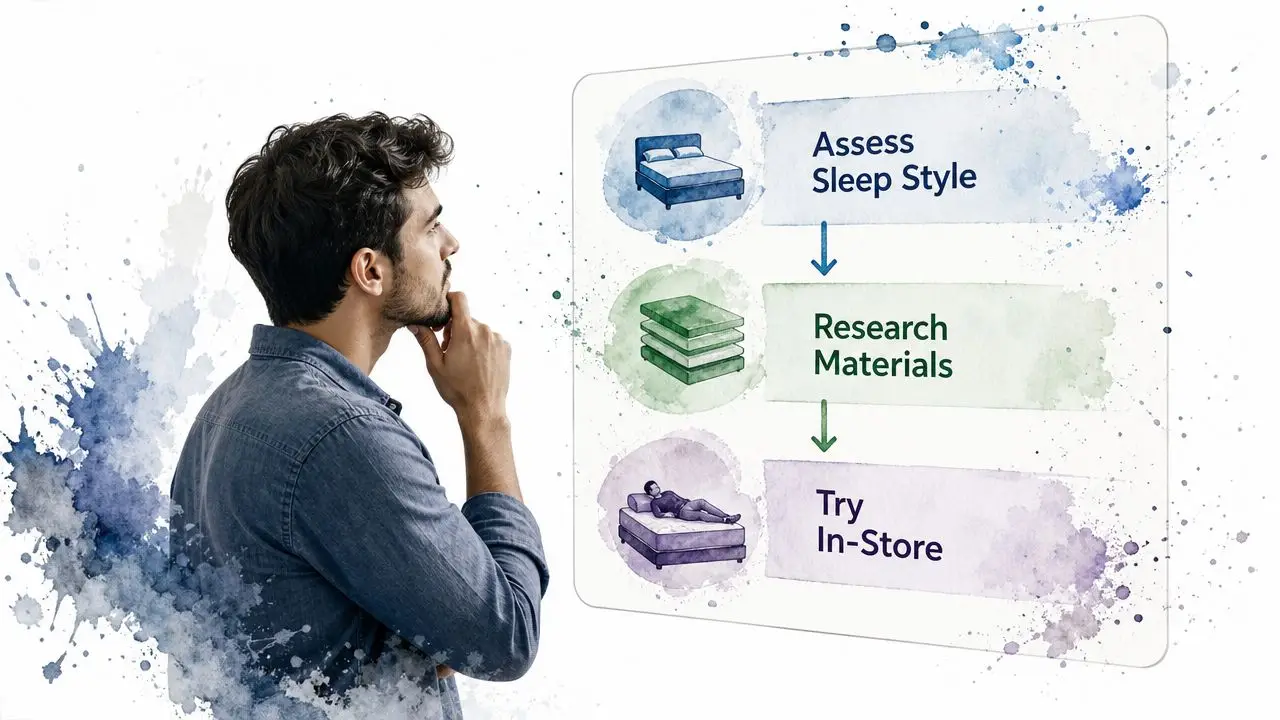
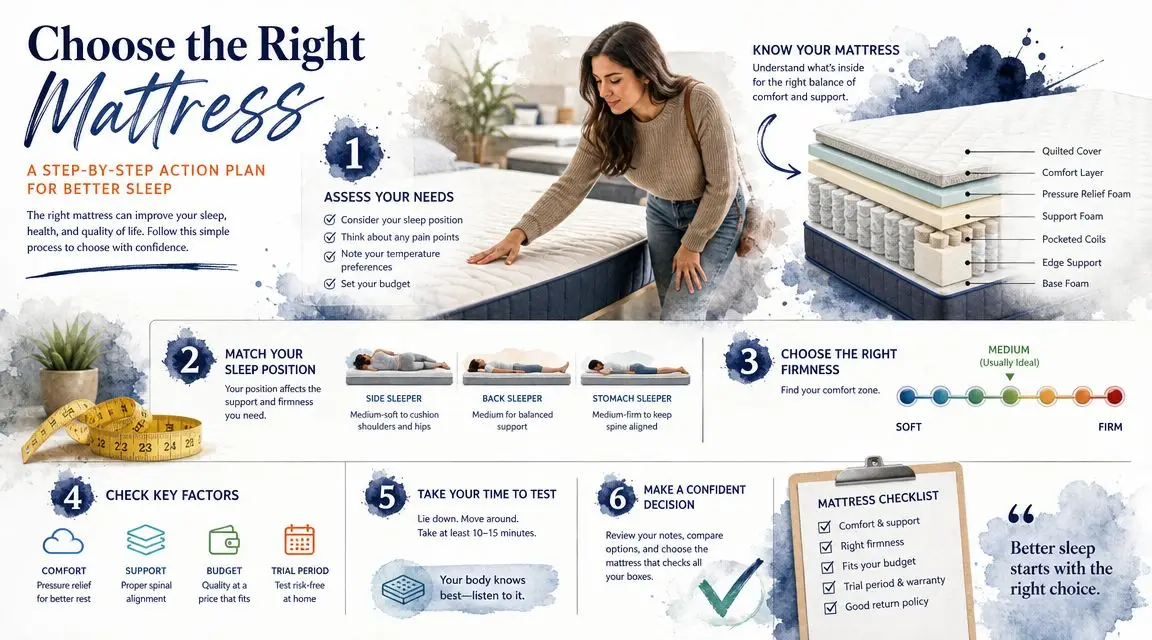
A shopper doesn't need perfect technical knowledge to choose well. A short, honest evaluation usually works better than overthinking. The goal is to narrow the field before stepping into a showroom, then test the finalists with enough patience to notice alignment, pressure, and movement.
Start with the body not the label
The strongest mattress decisions usually begin with a short checklist:
- Primary sleep position: Side, back, stomach, or a mix.
- Body profile: Lighter, average, or heavier build, plus shoulder and hip shape.
- Main complaint: Pressure points, lower back strain, overheating, or motion disturbance.
- Shared sleep needs: Different preferences between partners, pets on the bed, or adjustable base use.
That process keeps the shopper from getting distracted by naming language that varies from model to model.
A useful next step is testing a filtering tool before visiting in person. Giorgi Bros. Furniture offers a mattress guide quiz that helps sort options by sleep habits, comfort, and support preferences. It's one way to organize the search before lying on anything in the showroom.
Test a mattress like it will be used at home
Many people make the same mistake. They sit on the edge, bounce once, lie down for half a minute, and make a snap judgment. That doesn't tell much.
A better test looks like this:
- Lie in your usual sleep position: If the sleeper is mostly on the side, test on the side.
- Stay there long enough: Give the body time to relax instead of evaluating first contact only.
- Notice pressure points: Shoulders, hips, and lower back usually reveal the problem first.
- Change positions naturally: A mattress should allow movement without strain.
- Test with a partner if possible: Shared comfort changes the decision.
A mattress should be tested like an overnight tool, not a showroom prop.
A large South San Francisco showroom can help. Families can compare premium mattresses side by side, ask questions without commission pressure, and look beyond the floor sample to related solutions like adjustable bases, toppers, and coordinated bedroom investment pieces. Customization also matters across the home, and that same design mindset applies here. Fit comes first, not speed.
An Investment in a Lifetime of Good Sleep
A mattress purchase isn't just about tonight's comfort. It's about how the body feels next month, next season, and for years to come. That's why the right mattress firmness guide shouldn't push shoppers toward a one-size-fits-all answer. It should help them buy with clarity.
That long-view approach fits a buy-it-for-life mindset. Better-made home furnishings tend to reward patience. They last longer, support daily living better, and create less waste than repeated replacement buying. The same thinking applies to premium mattresses and bedroom design. Quality is rarely the cheapest line item in the moment, but it often becomes the wiser value over time.
Care matters too. Regular protection, rotation when appropriate, and occasional deep cleaning help preserve comfort and hygiene. For readers looking for a practical example of professional mattress care, this guide on how to deep clean your mattress in London offers useful maintenance ideas.
Since 1933, South San Francisco families have trusted careful guidance over rushed decisions. That's still the right way to choose a mattress.
For anyone ready to move from research to real testing, Giorgi Bros. Furniture welcomes shoppers to the South San Francisco showroom for no-pressure guidance from non-commission Design Experts. Visitors can explore premium mattresses, adjustable bases, and custom home solutions, then compare comfort in person and book a Design Consultation built around long-term fit, function, and value.