
A mattress search often starts the same way. A Bay Area homeowner walks into a showroom or opens a dozen browser tabs, sees memory foam, innerspring, hybrid, plush, firm, pillow top, cooling gel, and quickly feels less certain than before.
That confusion makes sense. A mattress is one of the few furniture purchases that affects daily life every single night, yet most shoppers only replace one after years of use. The core question usually isn't just which mattress sounds better on paper. It's which one will still feel right after months and years of sleeping in the same position, with the same aches, habits, and temperature preferences.
Since 1933, families in South San Francisco have looked for the same kind of guidance from a trusted showroom. They want clear answers, no-pressure help, and a better way to think about long-term value. That matters with premium mattresses because a lower opening price doesn't always mean a better investment, and a mattress with a longer average lifespan isn't always the one that stays comfortable for a specific sleeper.
A strong sleep setup also goes beyond the mattress itself. Practical habits from PSCharlotte natural sleep advice can help people improve rest through routine, environment, and recovery, while Giorgi Bros. also shares useful sleep quality improvement tips for building a better bedroom around healthy sleep.
This guide starts with the foundation of the decision. Memory foam vs innerspring. From there, the focus shifts to something many articles skip: comfort longevity, or how long a mattress keeps matching the sleeper who uses it.
Table of Contents
- Finding Your Perfect Sleep an Introduction
- Understanding the Core Construction
- The Feel Factor A Side-by-Side Comparison
- Beyond the First Night Durability and Lifespan
- The Hybrid Solution Getting the Best of Both Worlds
- Making the Right Choice for Your Sleep Style
- Your Investment in Better Sleep How to Buy with Confidence
Finding Your Perfect Sleep an Introduction
A mattress choice usually feels personal because it is. One person wants relief at the shoulders and hips. Another wants a flatter, easier-to-move-on surface. A couple may need both at once, plus less motion from a partner who shifts during the night.
That's why the memory foam vs innerspring question remains the most useful place to start. It cuts through marketing language and gets back to the basic experience of sleep. One type is built around contouring and pressure relief. The other is built around springs, lift, airflow, and a more traditional feel.
A mattress is less like a gadget and more like a pair of shoes worn every day. The right choice depends on fit, not just features.
For families thinking long term, the decision also connects to value. A mattress isn't a quick purchase to get through the week. It's an investment piece for daily well-being, and in a buy-it-for-life mindset, value comes from how well that product serves the household over time. A mattress that supports better sleep for years can reduce the need for early replacement and keep a room functioning the way it should.
There's another reason this topic matters. Mattress materials shape the whole feel of the bedroom. They affect how easily someone settles in, how warm the bed feels, how much movement transfers across the surface, and whether the sleeper feels “on” the mattress or “in” it.
The rest of this guide keeps the language simple. It doesn't chase trends or push a quick sale. It explains what each mattress type is made of, how each one feels, how comfort changes over time, and why many shoppers now land on a hybrid once they understand the tradeoffs.
Understanding the Core Construction

Start with what is doing the heavy lifting under your body.
A mattress has two main jobs. The support core holds your spine up over time. The comfort layers shape the first few inches of feel at the surface. If you understand those two parts, memory foam and innerspring stop sounding like marketing labels and start making practical sense.
An innerspring uses coils as its support engine. A memory foam mattress uses stacked foam layers instead. That one difference changes how the bed responds on night one and, just as important, how that comfort tends to age for different body types over the years. If you want a buy-it-for-life mindset, construction matters because the materials underneath the cover decide whether the mattress keeps feeling supportive or starts feeling tired.
What sits inside an innerspring mattress
An innerspring works like a grid of small steel supports. Weight presses the coils down, and the coils push back quickly. That quick return is why many sleepers describe innersprings as buoyant, easier to move on, and more familiar if they grew up on a traditional mattress.
The layers above the coils are usually thinner than what you find in an all-foam bed. Because of that, the sleeper often notices more of the support system below instead of a deep body cradle. For a person who dislikes the feeling of being held in one spot, that can be a real advantage.
That construction usually leads to three everyday traits:
- Better airflow through the center of the mattress
- Faster response when turning or getting out of bed
- A more lifted sensation across the surface
For some bodies, especially heavier builds or combination sleepers who change positions often, that upward support can hold its character longer than softer comfort materials at the top. For readers comparing fit by build, this mattress guide by body type can help connect construction to real-world sleep habits.
What makes memory foam different
Memory foam replaces coils with foam layers that compress and contour under pressure. Instead of pushing back right away, the material yields first, then gradually adjusts around the body. A good family analogy is the difference between sitting on a padded bench and settling into a well-cushioned armchair. Both can be comfortable, but they support you in very different ways.
That contouring changes who tends to feel at home on the bed. Side sleepers, people with sharper pressure points at the shoulders or hips, and sleepers who want less motion from a partner often prefer the closer, quieter feel of foam. The mattress spreads weight across more surface area, which can feel gentler during long hours in one position.
The tradeoff is simple. Materials that contour more closely can also feel slower to move on, and the upper foam layers do more of the comfort work every night. Over the long run, that is worth paying attention to because comfort longevity is not only about whether the mattress is still standing. It is about whether it still feels right for your shape and sleep style after years of use.
Practical rule: Choose foam if body contouring and pressure relief matter most. Choose coils if easy movement, airflow, and a lifted feel matter most.
For readers who want a plain-language industry overview of common build types, this mattress construction guide for professionals is a helpful companion. It can make showroom terms easier to decode before a visit.
One more point often surprises shoppers. These two constructions are not the only path anymore. Once you understand that coils handle support well and foam handles contouring well, the logic behind hybrids becomes much clearer.
The Feel Factor A Side-by-Side Comparison
Construction explains the mechanics. Feel explains the lived experience. This is the point where many shoppers stop comparing labels and start thinking about how they sleep.
Memory Foam vs. Innerspring at a Glance
| Feature | Memory Foam | Innerspring |
|---|---|---|
| Feel | Close contouring, body-hugging | Lifted, springy, traditional |
| Bounce | Lower bounce | Higher bounce |
| Motion transfer | Lower | More noticeable |
| Edge feel | Usually less sturdy than innerspring | Better edge support |
| Repositioning | Slower response under the body | Faster response and easier movement |
| Temperature tendency | Can retain more heat | Better airflow |
| Best fit for | Pressure relief and movement isolation | Responsiveness and cooler sleep |
A shopper trying to narrow the field by body profile can also use this mattress guide by body type to connect mattress feel with personal build and sleep habits.
Comfort and pressure relief
Memory foam usually wins this category for sleepers who feel pressure at the shoulders, hips, or lower back. The material compresses where the body is heavier and fills in where the body curves away from the bed. That creates a more wrapped, cushioned sensation.
Innerspring mattresses can still feel comfortable, but the comfort often comes from surface softness layered over a firmer, more noticeable support system. Some people love that because it feels cleaner and less enveloping. Others find it less forgiving when sleeping on one side for long periods.
For side sleepers, pressure relief often matters more than softness alone. A mattress can feel soft in the showroom and still not cushion the shoulders and hips the right way through the night.
Support and responsiveness
Many readers often get mixed up on these points. Support doesn't mean hard. It means the mattress helps keep the body from dropping out of alignment. Responsiveness means how quickly the surface adjusts when the sleeper moves.
Innerspring beds usually feel more responsive because coils rebound quickly. That matters for people who turn often, sit on the edge to get dressed, or dislike the slower, deeper compression of foam. The bed feels ready for the next movement.
Memory foam responds differently. It supports by contouring and distributing weight, but it doesn't snap back with the same speed. Some sleepers interpret that as stable and calming. Others interpret it as harder to reposition on.
Motion isolation for couples
Independent testing summarized by NapLab's memory foam vs. spring mattress guide found that memory foam mattresses consistently show lower motion transfer and less bounce, while innerspring mattresses show faster response time, higher bounce, and better edge support. For couples, that makes memory foam the stronger choice for movement isolation, while innerspring is typically the better fit for ease of repositioning.
That single difference can shape nightly sleep quality. If one partner gets up early, changes position often, or has a lighter sleep schedule than the other, lower motion transfer can matter more than almost any showroom first impression.
A simple way to think about it:
- Memory foam suits couples who wake easily from movement
- Innerspring suits couples who prioritize mobility and a more buoyant surface
- Edge support matters if both sleepers use the full width of the mattress
Temperature regulation
Temperature is one of the most common reasons shoppers second-guess an all-foam bed. Foam's close contouring can feel comfortable at first, but sleepers who naturally run warm often focus more on airflow after a few weeks of use.
Innerspring beds generally have the advantage here because coils leave more open space inside the mattress. That design tends to help heat move away from the body more easily. A sleeper in a warmer room, or someone who dislikes a close cradle, often notices that difference quickly.
Cooler sleep and softer pressure relief often pull in opposite directions. That tension is one reason hybrid mattresses have become such an important middle ground.
Beyond the First Night Durability and Lifespan
A mattress can still be standing long after it stops being the right fit. That's the key distinction many shoppers miss. Structural lifespan and comfort lifespan are related, but they are not the same.
Structural life and comfort life are not the same
The more useful question isn't only “How long does this mattress last?” It's “How long does this mattress keep working for this sleeper?” That is comfort longevity.
A BedInABox discussion of memory foam vs. innerspring durability and fit makes this point clearly. Many comparisons discuss durability in broad averages, but the practical question is when pressure relief fades for side sleepers versus when coil support starts to feel uneven for heavier sleepers. In that framing, the better bed may be the one that keeps matching the sleeper's position over time, not merely the one with the longest broad average lifespan.
That shift in thinking matters for households trying to buy wisely. A mattress may still look fine from across the room while feeling very different at the shoulder, hip, or lower back. Comfort loss often shows up before complete structural failure.
How different sleepers notice wear
Different bodies notice mattress aging in different ways.
- Side sleepers: They often detect comfort change when the surface no longer cushions the shoulder and hip as evenly as it once did.
- Back sleepers: They may notice it when the midsection starts feeling less supported and alignment feels less steady.
- Heavier sleepers: They often notice changes earlier if support begins to feel uneven or if compression becomes more obvious in the areas that carry the most weight.
- Combination sleepers: They tend to notice response issues fast. A mattress that once felt easy to move on can begin to feel sluggish or less balanced.
A mattress care routine can help preserve feel longer. Rotating when appropriate, keeping the sleep surface clean, and managing heat and moisture all play a part. Giorgi Bros. shares several practical habits in this summer mattress care guide, and those habits fit well with a buy-it-for-life mindset.
A smart mattress purchase isn't only about the day it arrives. It's about how the bed performs after the novelty wears off and regular sleep patterns take over.
That's also where quality becomes a sustainability issue. Replacing a mattress too soon creates waste and extra cost. Choosing a mattress that continues to fit the sleeper's body and sleep style can support both long-term comfort and more responsible consumption.
The Hybrid Solution Getting the Best of Both Worlds
The classic memory foam vs innerspring debate can make the choice sound narrower than it really is. For many shoppers, the answer sits between the two.
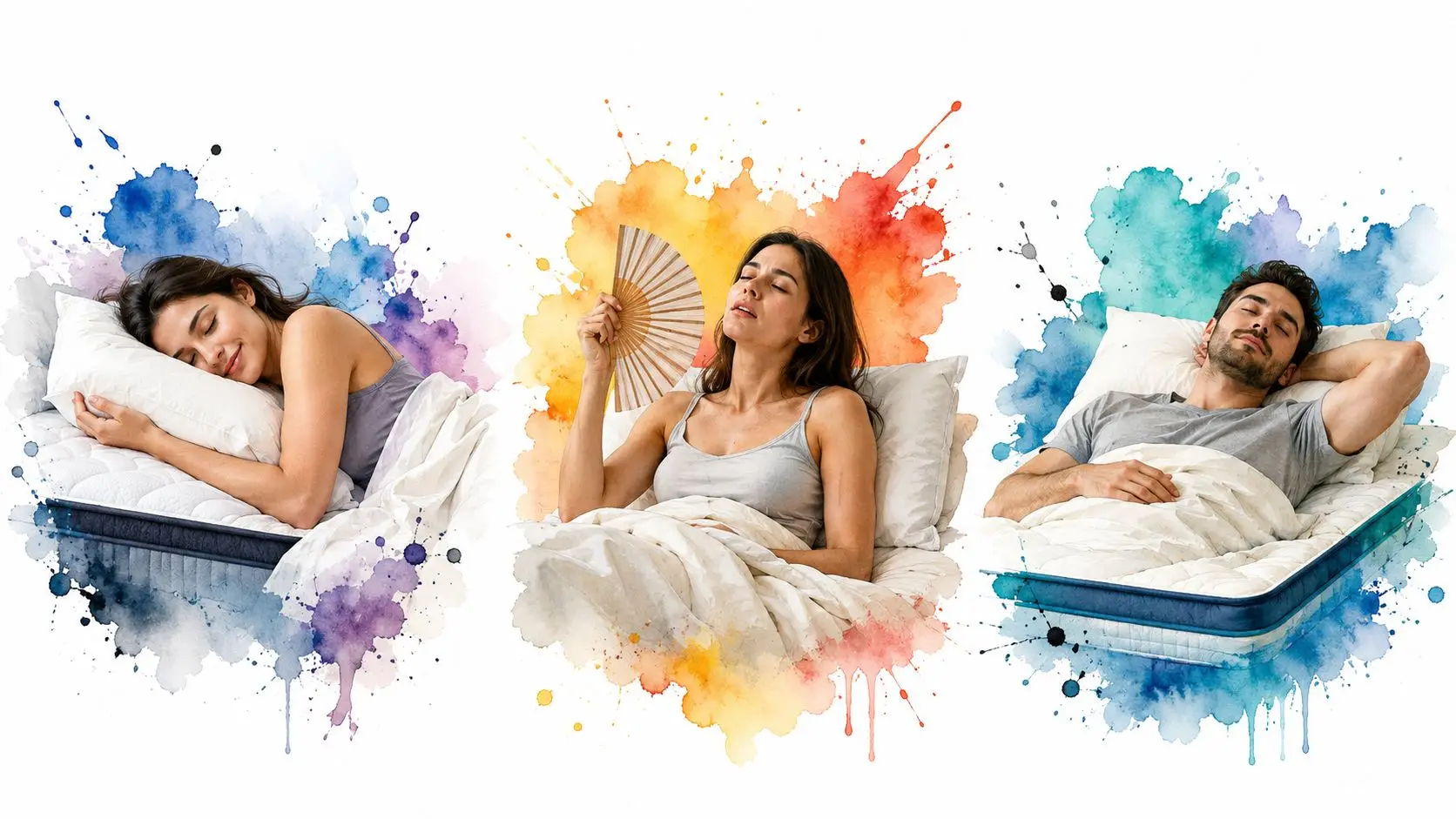
Why hybrids changed the conversation
A hybrid mattress combines a coil support system with thicker foam comfort layers. That gives the bed more contouring than a traditional innerspring while keeping more lift and airflow than a pure foam design.
Many shoppers want two things at once. They want pressure relief at the shoulders and hips, but they don't want to feel stuck in the bed or overheated by morning. According to Shop Bed Mart's discussion of innerspring, memory foam, and hybrid positioning, shoppers increasingly want a cooler sleep surface without giving up pressure relief, and hybrid construction is often positioned as the compromise that solves the biggest memory-foam complaint while preserving some contouring. Industry guidance increasingly treats hybrids as the default middle ground.
That middle-ground role makes sense. A hybrid doesn't erase every tradeoff, but it often softens the sharpest ones.
Who should look closely at a hybrid
A hybrid is often worth serious attention when a shopper says any of the following:
- “Foam feels good, but too closed-in.” A hybrid can keep some contouring while adding more lift.
- “Spring beds feel supportive, but too firm at the shoulders.” Foam layers can add cushioning where pressure builds up.
- “One partner wants motion control and the other wants bounce.” A hybrid often balances those priorities better than either extreme.
- “The sleeper runs warm but still wants softness.” Coils usually improve airflow compared with all-foam construction.
For Bay Area shoppers comparing categories in person, Giorgi Bros. includes hybrid mattress in a box options as one available path alongside more traditional constructions. That's useful because testing a hybrid after trying pure foam and pure innerspring often helps shoppers identify what they prefer, not just what they assumed they would prefer.
Making the Right Choice for Your Sleep Style
Broad mattress advice only goes so far. Sleep style usually tells the clearer story.
For the side sleeper
A side sleeper usually does best with stronger pressure relief. The shoulder and hip carry more concentrated weight in this position, so a surface that contours can feel more natural and less sharp. Memory foam often fits this need well. A hybrid can also work nicely when the sleeper wants that cushioning without the fuller sink of all-foam.
For the hot sleeper
A hot sleeper often prefers innerspring first, hybrid second. Coils usually create the airflow advantage that matters most here. If a sleeper already knows that heat is the issue, chasing a pronounced contouring feel may create frustration later.
For the couple
A couple needs to decide which problem matters more. If one partner wakes from movement, memory foam usually makes the stronger case because of its lower motion transfer. If both partners change position often, share the edge, or want an easier time getting in and out of bed, innerspring or hybrid may feel more practical.
Couples usually get the best result when they choose for the lighter sleeper first. The person who wakes most easily often notices the mattress mismatch sooner.
For the heavier individual
A heavier sleeper often needs a mattress that keeps support feeling even over time. An innerspring can offer a buoyant, lifted feel, while a hybrid may add pressure relief without giving up too much structure. The key isn't merely firmness. It's whether the mattress continues to feel level, stable, and consistent across the main sleep zones.
For many households, the final choice looks something like this:
- Choose memory foam when pressure relief and motion control are the top priorities.
- Choose innerspring when responsiveness, edge feel, and cooler sleep matter most.
- Choose hybrid when the sleeper wants balance and doesn't want the strongest traits of either category pushed too far.
Your Investment in Better Sleep How to Buy with Confidence
The most reliable mattress decision still happens in person. A spec sheet can explain construction, but it can't tell a shopper how quickly the bed responds under the knees, whether the shoulder sinks enough on one side, or whether the edge feels steady while sitting.
That's why testing matters. A shopper should lie down in the normal sleep position, roll once or twice, sit on the side, and pay attention to the first signs of tension. Those cues usually reveal more than a long list of feature names.
A strong showroom experience also removes pressure from the process. Non-Commission Sales Staff can focus on fit instead of pushing a specific model. That kind of guidance is especially useful when the choice includes memory foam, innerspring, and hybrid options that may all seem good for different reasons.
For anyone comparing constructions, comfort levels, and long-term value, browsing a range of premium mattress brands can help narrow the field before a visit. Financing options are available, which can make it easier to invest in quality rather than settling for a short-term fix.
A good mattress purchase should feel calm, informed, and durable. That's what turns a simple replacement into a lasting improvement in daily life.
For Bay Area homeowners who want no-pressure guidance, Giorgi Bros. Furniture offers a South San Francisco showroom experience shaped by more than 90 years of helping families furnish their homes thoughtfully. Visitors can test Premium Mattresses in person, speak with non-commission Consultants, and explore long-term investment pieces with practical support instead of sales pressure. Those planning a full bedroom update can also ask about custom order services for coordinating furniture in different wood species, finishes, fabrics, and leathers. A visit to the showroom or a Design Consultation is a smart next step for anyone ready to choose a mattress with confidence.