
Shopping for a mattress often starts the same way. You wake up stiff, your partner is sleeping fine, and suddenly every ad online promises cooling, pressure relief, luxury comfort, hotel feel, orthopedic support, and life-changing sleep.
That flood of claims makes smart people second-guess themselves. One premium mattress brand talks about handcrafted natural fibers. Another leans on foam science. A third offers a long trial and calls that proof of quality. After a while, it all blurs together.
For families who want to buy well and buy once, the better question isn't which brand sounds most impressive. It's which mattress will still feel supportive, breathable, and comfortable years from now. In a family business that has served South San Francisco since 1933, that distinction matters. A mattress isn't just another household purchase. It's part of your health, your routine, and the quality of every morning that follows.
Finding Rest in a Crowded Market
Mattress shopping typically begins only after something has already gone wrong. The bed sleeps hot. The middle starts dipping. Your shoulder falls asleep. One partner tosses and the other wakes up. That's when the search begins, usually with far too many tabs open and far too little clarity.
The confusion makes sense. Premium mattress brands often use the same language, but they don't always mean the same thing. “Luxury” can describe appearance, price, feel, materials, or construction. Those are not interchangeable.
What shoppers usually get wrong
The most common mistake is treating mattress shopping like a quick comparison of brand names. In practice, the right fit comes from a smaller set of real-world factors:
- How you sleep: Side sleepers usually need more pressure relief at the shoulders and hips.
- How warm you sleep: Dense foam and breathable natural fibers don't handle heat the same way.
- How long you want it to last: Surface softness can feel wonderful in a showroom and still break down too quickly at home.
- How you share the bed: Motion control and edge support matter more when two people use the same mattress every night.
The best mattress decision usually sounds less glamorous than the marketing. It's the one that matches your body, your habits, and your tolerance for trade-offs.
A premium mattress should make sleep easier, not the buying process harder. If you're trying to improve rest overall, not just replace a bed, it helps to look at the broader habits that shape sleep quality too. Giorgi Bros. offers practical guidance in this sleep quality resource.
The buy-it-for-life mindset
A mattress may not last for life, but the mindset still applies. Buy with the long view. That means looking past launch-day promotions and asking what the bed is built to do over time.
In our business, the strongest purchases are rarely impulse buys. They're the ones made with patience, testing, and honest guidance. That approach saves frustration, reduces replacement cycles, and keeps people from paying twice for what should have been chosen correctly the first time.
What Truly Defines a Premium Mattress
A premium mattress isn't defined by branding, embroidery, or a long list of comfort buzzwords. It's defined by materials, construction, and long-term performance. If one of those three is weak, the product may feel premium at first touch but not in daily use.
A practical benchmark also helps. According to Bryte's luxury mattress category guide, queen-size luxury pricing generally starts around $2,000+ and premium models often use more advanced construction to address pressure relief, durability, and temperature regulation (Bryte luxury mattress breakdown).
Materials that earn their price
The first layer of quality is literal. Better inputs usually create a better sleep surface and a better aging pattern.
Luxury mattress guides point to materials such as GOTS-certified organic wool for temperature regulation, pure cotton for breathability, and natural Talalay latex for buoyant pressure relief. They also note that hand-tufting can stabilize internal layers without relying as heavily on chemical glues, which helps extend usable lifespan (Goldendreams guide to luxury mattress brands).
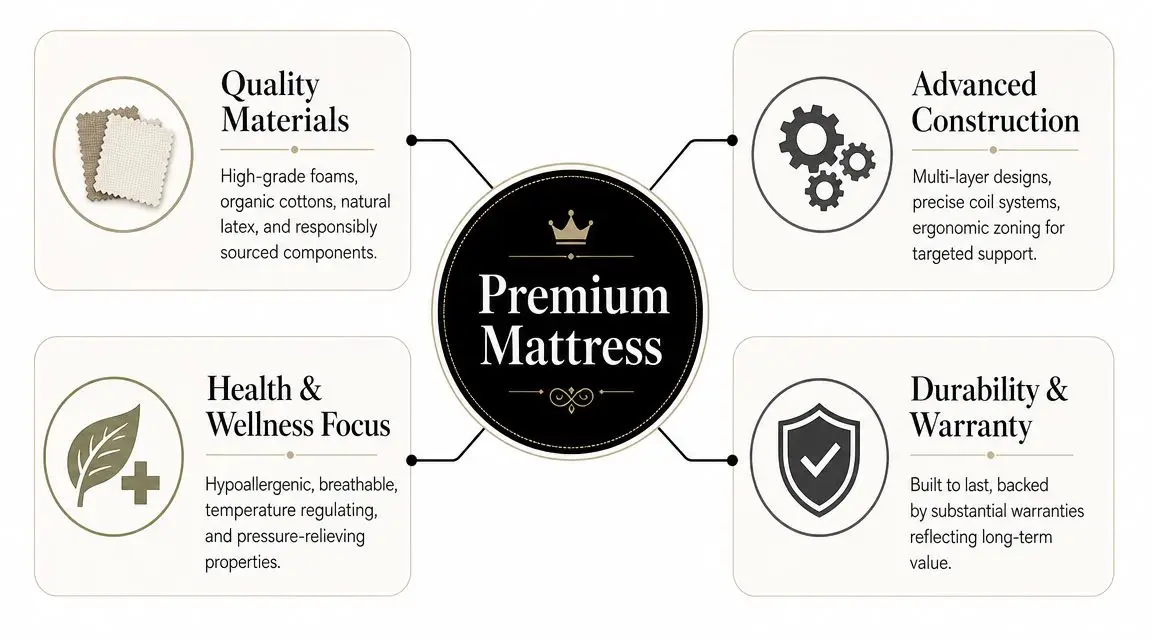
Those details matter because they solve real problems. Breathable fibers can help reduce the trapped-heat feeling some people get from foam-heavy builds. Natural latex has a more lifted, resilient response than slow-moving memory foam. Cotton and wool can improve airflow and surface comfort without adding a synthetic feel.
Construction that supports the body over time
A premium mattress also needs structure. Good materials won't perform well if the build underneath them is weak.
Here's where premium models separate themselves:
| Construction feature | What it does in practice |
|---|---|
| Higher-density comfort layers | Hold shape better and resist early body impressions |
| Reinforced support core | Keeps the mattress stable under regular nightly use |
| Hand-tufting or stabilized layering | Reduces shifting and material migration |
| Zoned design | Gives different parts of the body different levels of support |
| Flippable or two-sided design | Spreads wear across both sleep surfaces |
Not every mattress needs every feature. But when a brand asks premium pricing, the build should explain the cost clearly.
Performance, not prestige
Some mattresses feel soft and impressive in the first five minutes, then show their limits after several months of use. Others feel a bit more balanced at first and become the better long-term choice because they keep your body aligned and their materials intact.
Practical rule: If a mattress can't explain how it handles heat, weight distribution, and wear, it's not premium in the ways that matter.
That's why in-store education still matters. A thoughtful mattress buying guide should help you connect those construction details to how you sleep, not just to how the bed is marketed.
Decoding Materials and Comfort Technologies
Once you strip away the branding, most premium mattress brands are making choices around the same core problems. Heat retention. Pressure points. Motion transfer. Edge collapse. Sagging. The right mattress is the one that solves the problems you have.
Foam, latex, and hybrids
Premium foam beds often use denser comfort layers. That usually improves contouring and can help the mattress keep its feel longer. The trade-off is response time. Some sleepers love the deep, body-hugging sensation. Others feel stuck, especially if they change positions often.
Latex has a different personality. It's more buoyant and springy. You sleep more “on” it than “in” it. For sleepers who want pressure relief without the slow sink of traditional memory foam, latex often feels easier to move on and easier to keep cooler through the night.
Hybrid construction aims for balance. It combines a comfort layer, often foam or latex, with a coil support unit. That design can work well for shoppers who want contouring at the top and stronger pushback underneath.
Why support systems matter
Premium models often use higher-density foams and reinforced, tempered steel coil units to improve load distribution and long-term sag resistance. Features like zoning can reduce pressure concentration at the shoulders and hips, which helps maintain spinal alignment for side and combination sleepers.
That sounds technical, but the test is simple. When you lie on the mattress, does your shoulder sink enough without your waist collapsing? Does your lower back feel supported without the bed feeling hard? Good support doesn't force the body flat. It keeps the heavier parts from dropping too far.
For shoppers dealing with more specific mobility, circulation, or pressure-relief concerns, resources on medical mattresses for seniors can be useful because they frame support in terms of comfort over long periods of rest, not just showroom softness.
Matching technology to your sleep habits
A premium mattress should fit the sleeper, not the other way around. Use this lens when comparing models:
- If you sleep hot: Look closely at breathable fibers, coil airflow, and whether the comfort system relies heavily on dense foams.
- If you sleep on your side: Pressure relief at the shoulder and hip matters more than a firm feel on first contact.
- If you shift positions often: Latex and responsive hybrids usually make movement easier than slower foams.
- If your partner wakes easily: Motion isolation deserves more attention than edge design or brand prestige.
- If you sit on the side of the bed often: Edge support becomes part of daily use, not a minor extra.
Cooling features only matter if the mattress still supports you correctly. A cool bed that throws your alignment off isn't a better bed.
Heat is one of the most common complaints we hear. If that's part of your search, this guide on how to sleep cooler at night can help you sort out whether the issue is your mattress, bedding, room environment, or all three together.
A Smart Shopper's Checklist for Evaluating Brands
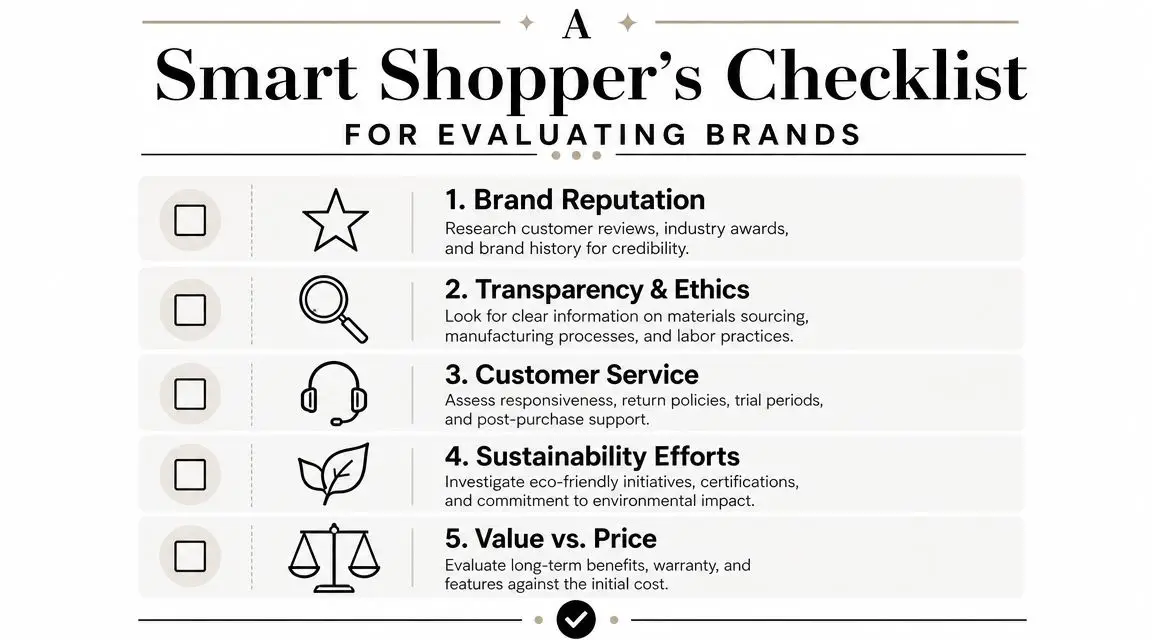
When buyers compare premium mattress brands, they often focus on names first and policies second. That's backwards. A strong brand matters, but a mattress is still a high-consideration product that has to perform in your home, with your body, night after night.
Expert guidance increasingly points shoppers toward sleep-position matching, motion isolation, edge support, and risk-free trials of 100 nights or longer, while stressing that “premium” does not mean “best for everyone” (PlushBeds luxury mattress selection guide). That's the right framework.
Check the parts of the offer that outlast the sale
A polished website and a comfortable first impression don't tell you much about long-term value. These questions do.
Does the mattress fit your sleep style?
A mattress can be beautifully made and still wrong for your body. Side sleepers, back sleepers, combination sleepers, and couples often need different things from the same brand lineup.What happens after delivery?
Look for a trial that gives your body time to adjust. If the policy is difficult to understand, difficult to use, or packed with exclusions, treat that as part of the product.How transparent is the brand about materials?
Vague phrases like “luxury foam” or “advanced support system” don't help much. You want clear descriptions of what's inside and why it was chosen.What kind of edge support and motion control does it have?
These details often separate a good solo-sleeper mattress from a good couples mattress.
A quick comparison lens
| What to compare | Strong sign | Weak sign |
|---|---|---|
| Trial period | Clear, usable, and long enough to judge comfort | Confusing terms or restrictive return process |
| Materials disclosure | Specific materials and build details | Mostly marketing phrases |
| Support profile | Describes who the mattress suits | Tries to be everything for everyone |
| Brand accountability | Easy-to-reach support and consistent policies | Hard-to-find details after checkout |
Certifications are helpful, but not the whole story
Many shoppers look for certifications such as CertiPUR-US® or GOTS, and that can be a sensible screening step. Still, a certification doesn't replace proper fit. It tells you something about materials or standards. It doesn't tell you whether the mattress holds your spine in a healthy position or keeps your partner asleep when you turn over.
That's why policy and fit should carry more weight than prestige.
The right way to shop premium is to act less like a trend buyer and more like an investor. You're not paying for buzz. You're paying for years of use.
Price alone is a poor filter
A higher price can reflect better materials, more labor-intensive construction, or more specialized design. It can also reflect branding, distribution costs, or extras you may not need. The smartest shoppers don't ask, “Which one costs more?” They ask, “What am I getting for the money, and will it still matter after the honeymoon period ends?”
That's the mindset that keeps premium mattress brands in perspective. Some are worth the step up. Some package ordinary performance in upscale language.
The In-Store Advantage Testing for True Comfort
Online research helps narrow the field. It doesn't replace lying down on the mattress. That part still matters, especially in a category where subtle differences in support can change your sleep more than any product description.
The mattress business has long been shaped by a relatively small group of major manufacturers. Data cited by Mattress Underground, referencing industry sources, says the top 15 to 20 mattress manufacturers accounted for 66.7% of market bedding dollar-shipments in 2020. The same discussion also reflects why established showrooms still matter for shoppers who want to physically compare these investment pieces before buying (Mattress Underground manufacturer overview).
How to test a mattress properly
A rushed showroom visit leads to rushed decisions. A useful one looks more like this:
- Wear comfortable clothing: You want to feel pressure points and support changes, not fight stiff jeans or a belt.
- Lie in your real sleep position: Don't just sit on the edge and bounce once. Spend time on your side, back, or usual combination.
- Stay put long enough to notice pressure: Early softness can hide poor support. Give your shoulders, hips, and lower back a few minutes to respond.
- Bring your partner if you share the bed: Motion transfer and comfort preference can change the decision quickly.
- Check the edge with purpose: Sit, lie near the side, and see whether the perimeter feels secure or collapses.
What experienced guidance looks like
To earn its keep, a good showroom relies on a trained consultant who should ask how you sleep, where you feel discomfort, whether you sleep warm, and what your current mattress gets wrong. They shouldn't steer you toward the highest ticket.
In South San Francisco, Giorgi Bros. offers a sleep gallery environment where shoppers can compare different constructions in person and work with non-commission staff. That matters because premium mattresses involve trade-offs. A no-pressure conversation usually produces a better long-term match than a fast close.
If a mattress feels great for two minutes and questionable after ten, trust the ten-minute feeling.
Small observations that reveal a lot
Watch how your body settles. If your shoulder jams upward, the comfort layer may be too firm. If your hips drop and your torso twists, the support core may be too soft. If turning over feels like climbing out of sand, the material may be too slow for your sleep style.
Those small signals are hard to read online. In person, they become obvious.
Your Lifetime Sleep Investment with Giorgi Bros
A premium mattress makes sense when it gives you something durable in return for the higher upfront spend. Better alignment. Better temperature control. Better materials. Better resistance to the sagging and softening that send people back into the market too soon.
That's one reason the category continues to matter at scale. One market report projects the global mattress market will grow from USD 49.24 billion in 2025 to over USD 83.36 billion by 2033, while also identifying a meaningful luxury segment within that broader demand (global luxury mattress market outlook). The takeaway isn't that everyone needs a luxury bed. It's that investing in sleep quality has become a mainstream priority for buyers who value long-term performance.
Why the long view matters
A mattress touches daily life more than almost any other investment piece in the home. You use it every night. You feel the difference when it's wrong. You rarely regret buying better quality when that quality is tied to real construction and proper fit.
That buy-it-for-life mentality has guided smart furniture shopping for generations. It's practical, not romantic. Choose well, maintain what you own, and avoid the cycle of replacing underbuilt products before their time.
What support should feel like
Since 1933, families in South San Francisco have turned to experienced showroom guidance for exactly this reason. They don't just want more options. They want a calmer way to choose. Non-commission Design Experts can help you compare materials impartially, think through your sleep habits, and weigh comfort against longevity without pressure.
The same long-view thinking applies after the purchase. Delivery, setup, and follow-through are part of the experience, especially with premium mattresses and adjustable sleep systems. Services like white-glove delivery from Giorgi Bros. help remove the friction from bringing a major sleep upgrade into your home.
A well-chosen mattress isn't a splurge. It's a durable investment in rest, recovery, and the way you live every day.
Visit Giorgi Bros. Furniture in South San Francisco to test premium mattresses in person, compare materials side by side, and get no-pressure guidance from non-commission Design Experts. If you're planning a bedroom upgrade or a full-home refresh, you can also ask about custom order options, financing options are available, and schedule a Design Consultation to make your investment pieces fit the way you live.