You notice it the moment the light hits the arm of the sofa. A pale set of claw marks. Maybe a rough patch on the corner cushion. Maybe the cat is still standing there, perfectly calm, as if nothing happened.
If you own leather furniture, that moment lands hard. Leather isn't just upholstery. It's one of those investment pieces people choose because it can last for years, age beautifully, and anchor a room. When a cat starts scratching it, the problem feels personal.
The good news is that this usually is solvable. The better news is that you don't have to choose between a well-loved pet and a well-made home. In a family furniture business that's been serving South San Francisco since 1933, we've seen the same pattern again and again. The lasting fix comes from treating this as both a behavior issue and a material issue. Protect the leather now, give the cat a better option, and make choices that fit the type of leather you own.
Why Cats Are Drawn to Scratching Leather Furniture
Cats don't scratch leather because they're being spiteful. They scratch because scratching is part of being a cat. It helps them stretch, work their claws, and mark a place as meaningful to them. That's why punishment usually backfires. It addresses your frustration, not the cat's need.
Leather often becomes the target because it offers resistance. Many cats like the feel of a surface that pushes back under their paws. A sofa arm, chair side, or front rail can also sit in a high-traffic part of the room, which makes it even more appealing as a marking spot.
Why one piece gets singled out
When a cat chooses one specific leather sofa over everything else in the house, pay attention. That piece may be near a window, in the main family zone, or along a route the cat uses every day. In homes with beautiful seating grouped around a focal point, the furniture often becomes part of the cat's territory map, much like the rooms built around solid wood living room furniture tend to become the center of daily traffic and routine.
A sudden change matters too. Behavior experts note that inappropriate scratching can be driven by boredom, stress, or environmental change, which means covering the sofa alone may not solve it if the cat's routine and enrichment stay the same, as discussed in this behavior-focused guide on why cats scratch leather furniture.
Scratching is often communication. If the behavior started recently, ask what changed in the room, the household, or the cat's daily rhythm.
Leather can reward the habit
Once a cat scratches the same area a few times, that spot tends to stay in rotation. The surface is familiar. The habit is established. If the leather shows slight roughness, the cat may find it even more satisfying next time.
That's why owners get stuck. They try to stop the act in the moment, but the cat keeps returning to the same panel or arm. The habit has already attached itself to that location.
A few common reasons this gets worse:
- The cat has no nearby alternative. A scratching post across the house won't compete with a sofa arm the cat already uses.
- The scratching is tied to routine. Some cats scratch after waking, after meals, or when people come home.
- The issue is larger than the furniture. Stress, boredom, and disruption can keep the behavior active even if you make the leather less convenient.
The right mindset
If you're trying to figure out how to stop cats scratching leather furniture, start with this idea. You're not erasing a natural instinct. You're redirecting it to a better surface in a better spot.
That shift matters. It protects the furniture, and it's kinder to the animal.
Immediate Deterrents to Protect Your Investment Pieces
You walk into the room, and your cat is back on the same leather arm. One more session can turn a light surface scuff into a gouge that needs repair. On premium leather, speed matters.
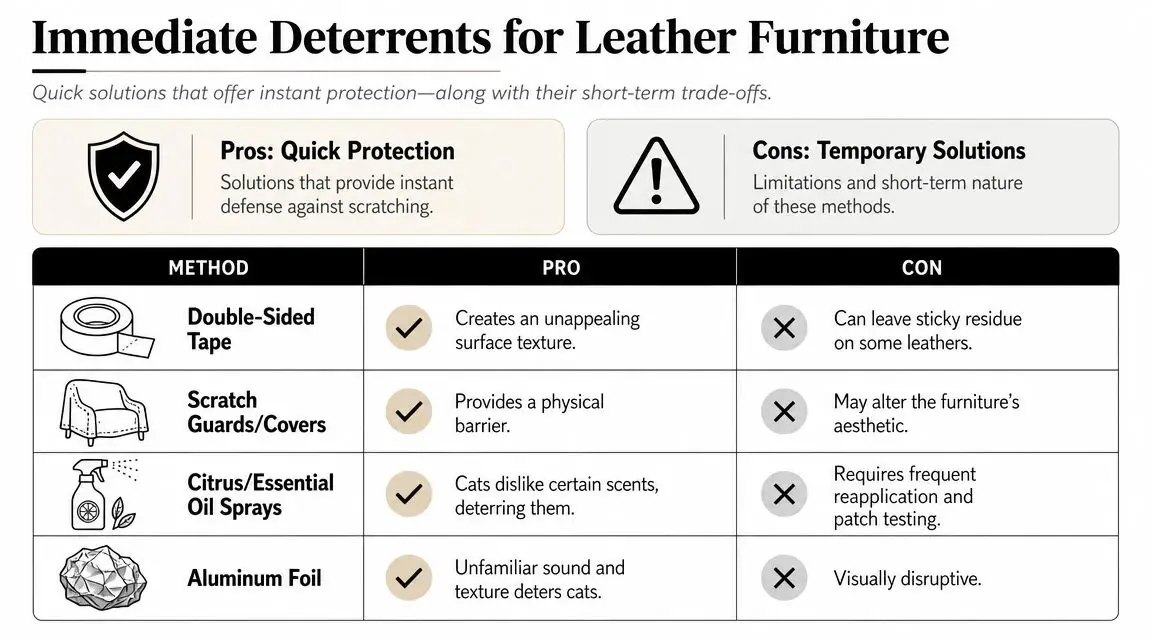
The first job is simple. Block access to the target area with something safe for the leather and unpleasant for claws. The goal is not to scare the cat or create a battle in the living room. The goal is to stop fresh damage while you protect a piece that may have taken years to choose and budget for.
What works right away
In homes with leather furniture, physical barriers usually outperform sprays and scolding.
- Throw blankets or slipcovers are the safest first response for many leather pieces. They protect arms, seat edges, and corners without putting adhesive or chemicals against the finish.
- Double-sided sticky tape can discourage repeat scratching on some surfaces, but test carefully first. On delicate finishes or high-end aniline leather, residue and finish disruption are real risks.
- Plastic sheeting changes the feel of the panel and often stops a cat from settling into the same routine.
- An upside-down vinyl carpet runner works best on the floor near a sofa arm or landing spot, especially if the cat approaches the furniture from the same direction each time.
If you want another owner-friendly overview of barrier options, you can learn to protect furniture from cats.
The leather-specific trade-off
Generic cat advice often misses the material itself. Leather is not one surface. Protected leather, pigmented leather, semi-aniline, and full aniline all react differently to adhesives, moisture, and friction.
In our family business, the safest first move on investment pieces is usually a well-secured cover, not a sticky product. A tape that works on a synthetic chair can leave you with cleanup, discoloration, or a finish issue on premium leather. That is an expensive way to solve a cat problem.
Room appearance matters too. Few owners want their main seating wrapped in plastic for weeks. A fitted throw, furniture cover, or strategically placed protector often gives better day-to-day protection without making the room feel temporary. The same practical thinking used in choosing living room furniture that fits daily life applies here. Protect the leather in a way you can live with.
Practical rule: If a deterrent could stain, dry out, mark, or bond to the leather, do not use it as your first option.
A quick comparison
| Method | Best use | Main caution |
|---|---|---|
| Throw blanket or slipcover | Fast protection for arms, cushions, and corners | Can shift if not tucked or secured |
| Double-sided tape | Small targeted areas on less delicate finishes | May leave residue or affect sensitive leather surfaces |
| Plastic sheeting | Active scratching zones that need immediate interruption | Looks intrusive in formal spaces |
| Upside-down vinyl runner | Floor-level approach paths or jump-off points | Less useful on visible upholstery panels |
Sprays can help at the margins, but they rarely stop a cat that has already claimed one sofa arm. For leather, that is good news in a way. The safest short-term solutions are usually physical, reversible, and much kinder to both the cat and the furniture.
The Art of Redirection to an Appropriate Scratching Post
You walk into the living room and see fresh claw marks on the arm of a leather chair you planned to keep for decades. At that point, the goal is not to scold the cat. The goal is to give that scratching impulse a better place to land, fast, and in a way that protects both the animal and the upholstery.
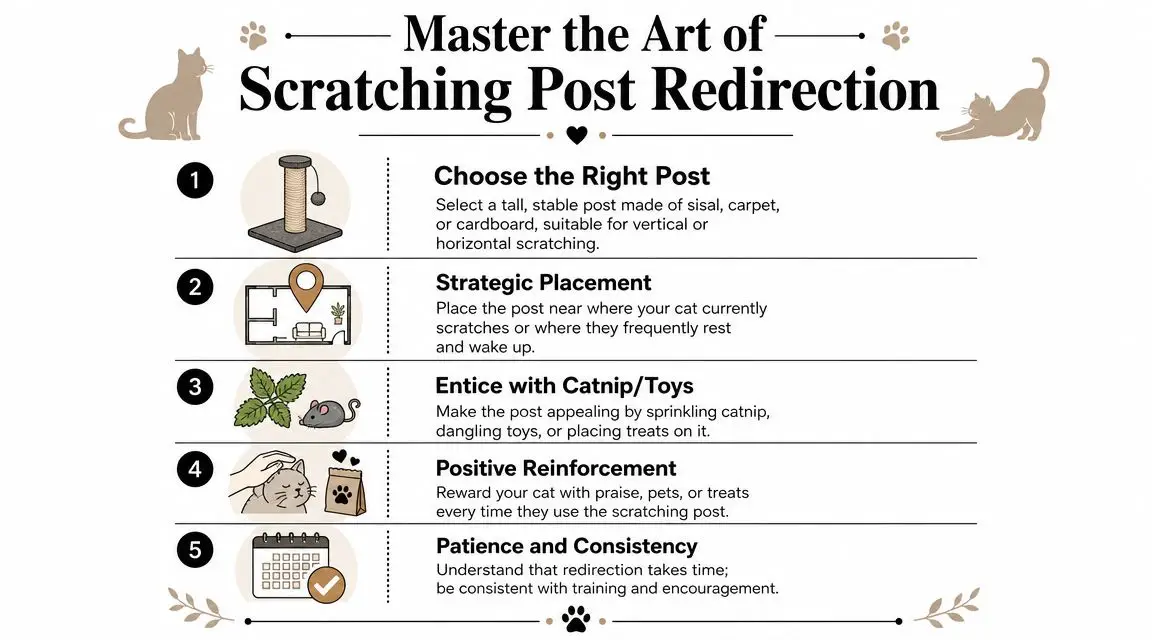
Redirection works because it deals with the habit itself. Cats scratch to stretch, mark territory, and condition their claws. If the leather has become the preferred surface, a replacement has to match the appeal closely enough that the cat chooses it without a fight.
One post is rarely enough
A single bargain post in the corner usually fails, especially in rooms with premium seating placed near windows, walkways, or favorite nap spots. Cats form location habits as much as texture habits.
Watch what the cat is doing on the furniture. A cat that reaches up the sofa arm needs a tall, stable vertical post. A cat that works along the front rail or seat edge may prefer a horizontal scratcher or a low angled lounger. Material matters too. Sisal works for many cats, but some clearly prefer cardboard, rough fabric, or wood.
What makes a post worth using
The best scratching post is not the prettiest one in the pet aisle. It is the one your cat trusts and enjoys enough to use every day.
A good setup usually includes:
- Real stability. If the post shifts under weight, many cats abandon it.
- Correct height or length. The cat should be able to fully stretch.
- A surface that feels satisfying. Match the resistance and direction your cat already prefers.
- Placement beside the damaged piece. Across the room is too far at first.
- A reward attached to the new habit. Catnip, play, treats, or calm praise all help.
In homes with carefully planned seating, the post should live where the behavior happens, not where it is easiest to hide. That same practical logic applies when arranging living room accent chairs for everyday use. If the cat scratches after waking on a chair near the window, the post belongs there first.
A scratching post succeeds when it feels better, sits closer, and gets used at the exact moment the urge hits.
For owners who want a few more examples of training setups and product styles, this guide can help you learn to protect furniture from cats without relying on punishment.
A practical redirection routine
In our experience, the cleanest results come from a short routine repeated consistently for a couple of weeks.
- Set the post next to the targeted leather piece.
- Guide the cat to it at predictable times, especially after naps or bursts of activity.
- Encourage contact with the post using catnip, a toy, or a treat placed nearby.
- Reward the moment the cat uses it. Keep the response calm and immediate.
- Keep the furniture protected until the new habit looks reliable.
Do not drag the cat's paws over the post or punish a miss. That often creates avoidance, and then you are left with a stressed cat and an expensive repair problem. Calm repetition works better. Once the cat is choosing the post on its own, you can gradually pull back the temporary barriers and keep the room looking like a home again, not a training zone.
Choosing Cat-Resistant Leathers and Protective Finishes
Some of the best prevention happens before the cat ever tests the furniture. If you're buying new upholstery, the leather choice itself can make day-to-day ownership much easier.
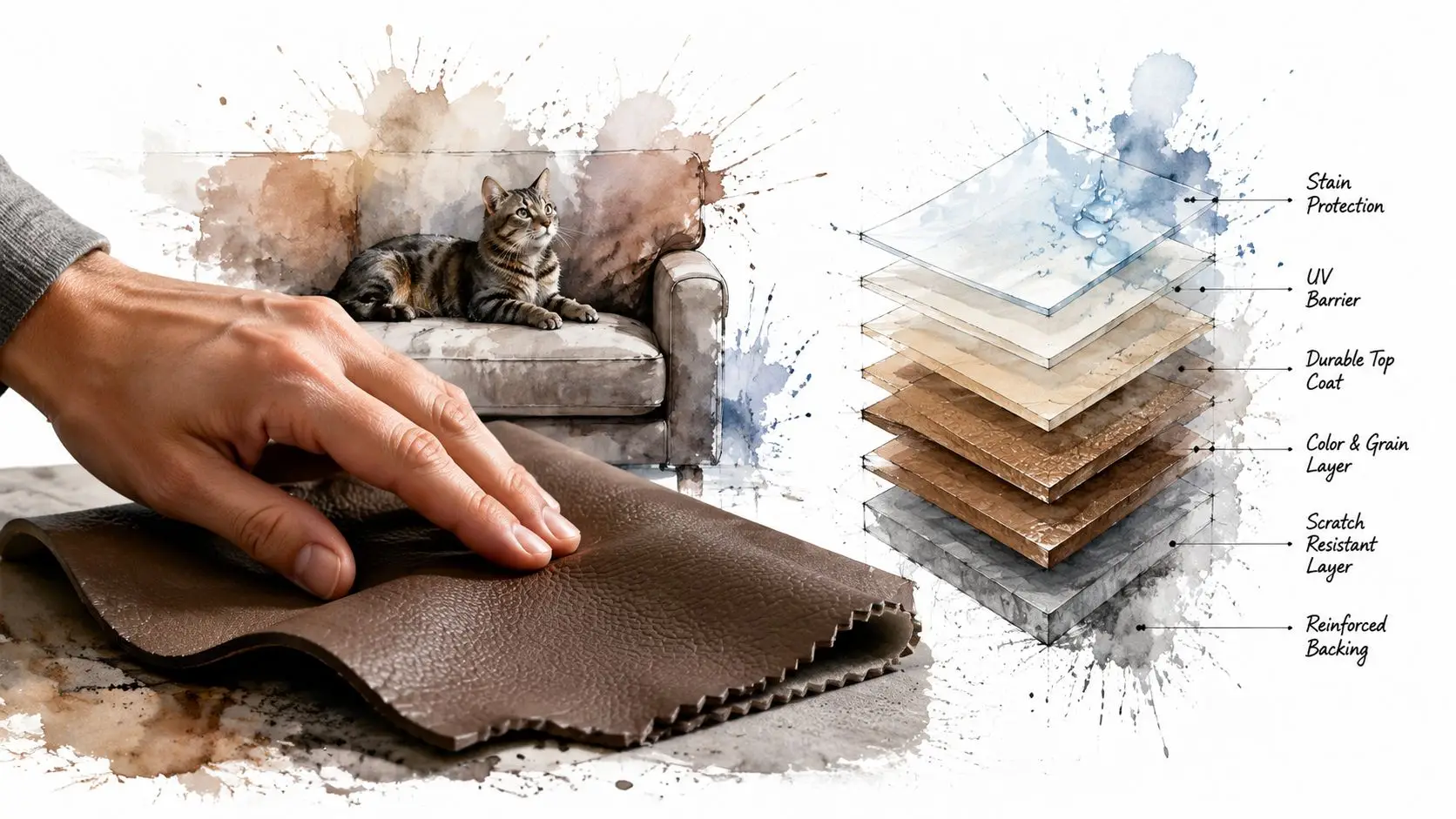
Generic advice tends to treat all leather as one category. It isn't. Protection strategies for durable pigmented leather differ greatly from those for delicate aniline finishes, and sticky barriers that may work on one surface can be a poor choice for another, as noted in this leather-specific discussion of stopping couch scratching.
Not all leather behaves the same way
If you live with cats, the finish matters almost as much as the frame beneath it.
| Leather type | General trade-off in cat homes |
|---|---|
| Pigmented or protected leather | More practical for daily wear and easier to shield with temporary barriers |
| Semi-aniline leather | Balances softness and finish protection, but still needs care with adhesives |
| Aniline leather | Beautiful and natural-looking, but less forgiving when scratched or covered with the wrong product |
That doesn't mean delicate leather is off the table. It means you should treat it as a material that needs a more careful protection plan.
Matching the leather to the household
In a pet home, durability often wins over purity of finish. Many buyers love the look of full- or top-grain leather, and for good reason, but the smartest choice depends on how the room is used, how active the cat is, and how much maintenance you're willing to accept.
For some families, a more protected leather is the easiest path to harmony. For others, a premium leather still makes sense, but only with a realistic plan for covers, claw care, and early habit training.
Custom ordering is beneficial. In a showroom setting, people can compare textures, finishes, and color depth in person instead of guessing from a screen. At Giorgi Bros. Furniture, custom order options can include different leathers, fabrics, wood species, and finishes, which gives households with pets more flexibility than an in-stock, one-material-only purchase. If you're weighing upholstery choices broadly, this guide on kid-friendly and pet-friendly furniture is a practical place to start.
Be careful with coatings and protectors
Owners sometimes assume any leather protector is automatically a good idea. It isn't. The wrong product can change sheen, alter feel, or interact poorly with the finish. That's one reason many people test with a throw or slipcover first instead of jumping straight to adhesive guards.
For readers who like understanding how protective treatments behave on leather in another context, this guide for detailing car leather is useful for thinking through coating compatibility, finish changes, and why surface type matters before applying any product.
High-end leather rewards patience. Test first, protect gently, and avoid anything you can't remove cleanly.
Long-Term Care Claw Trims, Minor Repairs, and Expert Help
Even after the scratching stops, maintenance still matters. The goal isn't only to stop new damage. It's to reduce the severity of any future slip-ups and respond correctly if the leather has already been marked.
Claw trims help, but they don't solve the behavior
Keeping claws trimmed can reduce the severity of damage to leather. That's worth doing. It's simple, humane, and often overlooked.
But trimming isn't a stand-alone answer. If the cat still wants to scratch the sofa, shorter claws just mean shallower marks. The behavior itself still needs an outlet.
If you need a practical overview of tools and handling basics, these recommendations on nail clippers for cats are a helpful starting point for choosing a clipper style and building a calmer routine.
A few trimming habits make life easier:
- Go slowly. A rushed trim usually turns the next session into a battle.
- Use routine to your advantage. Many cats tolerate handling better after meals or during a calm part of the day.
- Reward immediately. Treats, praise, or a favorite toy help reduce resistance over time.
Minor marks versus real damage
Light surface scuffs sometimes look worse than they are. Deep scratches are different. Once the leather surface is broken, repair becomes much more technical than often assumed.
Repairing scratched leather is a multi-step process involving cleaning, trimming loose fibers, applying leather binding glue in repeated coats, sanding with very fine grit at about 1200 grit, then sealing and finishing in thin layers, as described in this Chewy guide to fixing cat scratches on leather. That process is exactly why prevention is usually the wiser investment.
A scratched leather panel rarely responds well to shortcuts. The more valuable the piece, the less sense it makes to experiment aggressively.
When to call in help
If the cat keeps returning to the same spot despite barriers and proper post placement, step back and look at the whole picture. The scratching may be tied to stress, territory, or boredom rather than a simple preference for leather.
You should consider outside help when:
- The behavior escalates suddenly after a move, schedule change, or household disruption.
- The cat ignores multiple appropriate scratchers placed close to the target area.
- The scratching appears compulsive or anxious rather than routine.
- The leather damage is visible enough that repair quality matters and you don't want to risk making it worse.
For the furniture itself, some owners eventually face a second decision. Repair, reupholster, or replace. If that question is on the table, it helps to compare the condition of the frame, the extent of the damage, and the value of the original piece. This overview on whether it's worth reupholstering a sofa can help clarify that choice.
A beautiful home with pets is absolutely possible. The formula is practical, not magical. Protect the leather right away. Give the cat a nearby, rewarding alternative. Match your deterrents to the type of leather you own. Stay consistent long enough for the new habit to stick.
If you're furnishing a pet-friendly home and want no-pressure guidance on leather, custom upholstery, and long-term investment pieces, visit Giorgi Bros. Furniture in South San Francisco or book a Design Consultation. Our non-commission Consultants help Bay Area homeowners compare materials, finishes, and custom options in person so you can create a home that works for your lifestyle, your pets, and the years ahead.