
You know the pattern. A coffee table looks good on the showroom floor, works fine for a few years, then the corners chip, the top starts to show every mug ring, and one drawer begins to stick. Before long, you’re shopping again for the same piece of furniture you already bought once.
That cycle gets expensive, and it’s wasteful.
Families who’ve furnished their homes thoughtfully tend to reach the same conclusion. The pieces you use every day should be built for daily life, not for a short retail season. A coffee table sits at the center of the room. It takes feet, books, trays, games, remote controls, and the occasional hard bump from a vacuum or moving chair. If that piece is going to earn its place, it needs more than a nice finish. It needs structure.
At our family showroom in South San Francisco, we’ve been helping Bay Area homeowners buy better since 1933. Over the years, one lesson has held up: when you invest in solid construction, you usually spend less over time. That’s especially true with coffee tables amish craftsmen build by hand, because the value isn’t just in how they look on day one. It’s in how they hold up year after year.
An Introduction to Buying Furniture for Life
Individuals typically don’t set out to buy disposable furniture. They buy what fits the room, fits the budget, and seems good enough. The problem shows up later, when “good enough” starts to wobble, peel, or sag under normal use.
A buy-it-for-life mindset starts with one simple question. Will this piece still make sense in your home years from now, after a move, a remodel, or a different sofa? If the answer is yes, the purchase works differently. You’re not chasing a short-term trend. You’re choosing a piece with staying power.
That’s why solid wood coffee tables deserve more attention than they usually get. They aren’t just accent pieces. They’re daily-use furniture that should be sturdy, repairable, and adaptable to changing rooms. If you’ve ever worked through the usual decision process of style, budget, measurements, and long-term use, our guide to understanding the furniture buying journey from first research to final decision lays that out clearly.
What buying for life looks like in practice
A lifelong purchase usually has four traits:
- Solid materials that can be refinished or maintained instead of discarded.
- Joinery that carries weight well so the frame stays tight over time.
- Timeless proportions that won’t feel tied to one decorating phase.
- Customization options so the piece fits your room instead of forcing your room to fit it.
That last point matters in Bay Area homes. Rooms vary widely. Some living spaces need a compact table with clean lines. Others need storage, a heavier visual presence, or a finish that works with existing cabinetry and floors.
Practical rule: If a coffee table is built to be replaced, it usually looks dated before it wears out. If it’s built to last, it usually settles into the home more naturally over time.
Amish coffee tables stand out because they follow that philosophy from the start. They’re not made to hit a low opening price. They’re made to serve a home for the long haul.
What Truly Defines an Amish Coffee Table
The term “Amish furniture” gets used as if it describes a look. It doesn’t. It describes a standard.
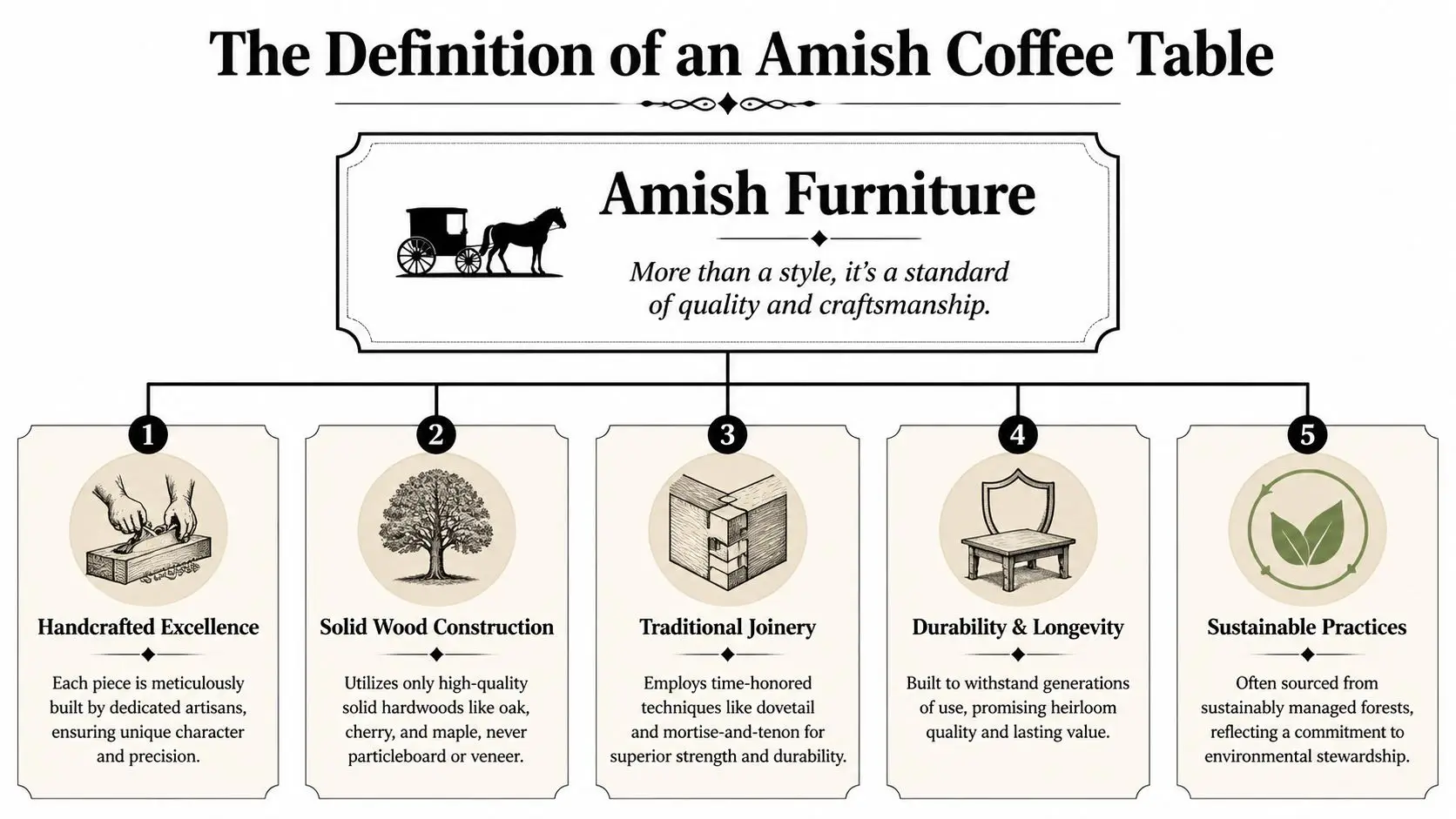
An Amish coffee table is defined first by how it’s made. These tables are handcrafted from solid hardwoods such as oak, cherry, and quartersawn white oak, not particleboard or veneer, and they’re built for long service. Many families report heirloom pieces that are over 100 years old and still in daily use, as noted by DutchCrafters’ Amish coffee table overview.
It’s a construction standard, not a decorating style
A Shaker coffee table and a Mission coffee table can look very different, yet both can be authentically Amish-made. The common thread is craftsmanship.
Three qualities matter most:
- Material honesty. Real hardwood all the way through.
- Traditional woodworking. Joinery is chosen for strength, not speed.
- Hand finishing. The final surface is treated as part of the build, not an afterthought.
That’s why coffee tables amish builders produce often feel different the first time you touch them. The edges are more deliberate. The grain has depth. The weight tells you there’s substance inside the form.
Why that difference shows up in everyday use
Mass-market furniture often hides shortcuts where you can’t easily see them. A surface may look like wood but only be wood-patterned. A drawer may glide fine when new but bind after repeated use. A frame may hold at first because fasteners are tight, then loosen as the material around them gives way.
Traditional Amish construction works more like good house framing than flat-pack assembly. Each part supports the next. Instead of asking glue and hardware to do all the work, the wood is shaped to meet wood in a way that resists stress naturally.
If you want to see how that approach translates into real pieces and styles, our collection of Simply Amish furniture shows how broad the category can be. It isn’t limited to rustic rooms or country homes.
A well-made Amish coffee table doesn’t ask you to be careful with it every minute. It’s built with the expectation that real life will happen around it.
That’s the difference people remember years later.
A Deeper Look at Wood Species and Traditional Joinery
The wood species you choose affects more than color. It shapes how a coffee table feels, how much grain movement you notice, and how the piece settles visually into the room over time.
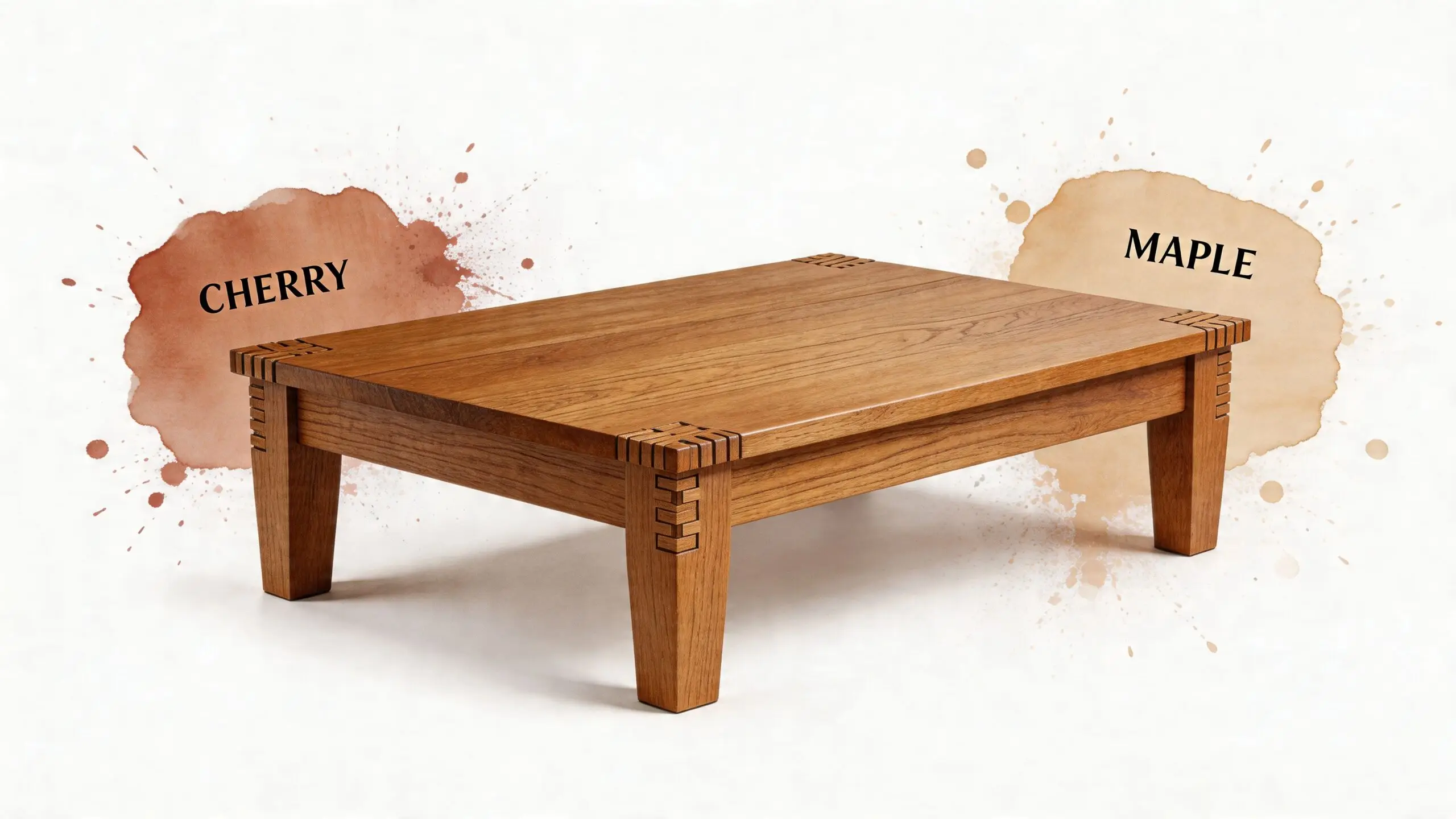
Oak tends to read with more visible grain and a grounded, architectural feel. Cherry usually develops richer character as it ages. Walnut often looks more refined and distinguished. Brown maple can bridge traditional and contemporary settings very comfortably. In California homes, where temperature and humidity can shift through the year, species choice also matters because some woods hold their shape with more ease than others.
How to think about wood without getting too technical
A simple way to evaluate species is to match the wood to the room’s visual weight.
| Wood species | Tends to suit | What it brings to the room |
|---|---|---|
| Oak | Mission, transitional, grounded interiors | Strong grain and a sturdy visual presence |
| Cherry | Warmer, more classic spaces | Smooth texture and a richer look with age |
| Walnut | Contemporary and tailored rooms | Depth, elegance, and a cleaner visual statement |
| Maple or brown maple | Flexible mixed-style homes | Softer grain and broad finish versatility |
For a deeper explanation of how these hardwoods behave in real furniture, our guide to choosing the right hardwood for longevity and style is a helpful companion.
Joinery is where the long-term value lives
Most buyers notice the top first. Woodworkers notice the joints.
A dovetail joint works like interlocking hands. Once fitted correctly, it resists being pulled apart in a way a simple nailed drawer box can’t. A mortise-and-tenon joint works more like a peg-in-socket connection. One component is shaped to fit directly into another, which spreads stress through the structure instead of concentrating it at a few hardware points.
That matters most in moving parts. Amish tables often use premium undermount drawer slides with full-extension ball bearings and dovetailed drawer boxes, which helps drawers keep performing smoothly through years of everyday use, as described in this Barn Furniture Mart product specification.
Good joinery is quiet. You don’t notice it when a table is new. You appreciate it after years of opening drawers, shifting the piece, and living with it.
Amish doesn’t mean rustic only
Many shoppers get stuck. They hear “Amish” and picture only heavy Mission slats or log-style furniture. That’s too narrow.
The construction may be traditional, but the final look can be clean-lined, understated, and current. A simple rectangular top in walnut with restrained hardware can sit comfortably in a room with a low-profile sofa, metal lighting, and large glass openings. The craftsmanship remains the same. The expression changes.
That flexibility is one reason these tables work so well in Bay Area interiors.
Customizing Amish Furniture for Your Bay Area Home
A coffee table should fit the room physically, but it also needs to fit the way the room is used. That’s where customization changes the conversation. Instead of asking, “What do they have in stock?” you start asking, “What dimensions, storage, finish, and profile make sense here?”
That shift is important in Bay Area homes. Some living rooms need a compact table that preserves open walkways. Others need a broader top that can anchor a sectional and still leave enough clearance around seating. Custom sizing helps solve both problems.
The dimensions matter more than people expect
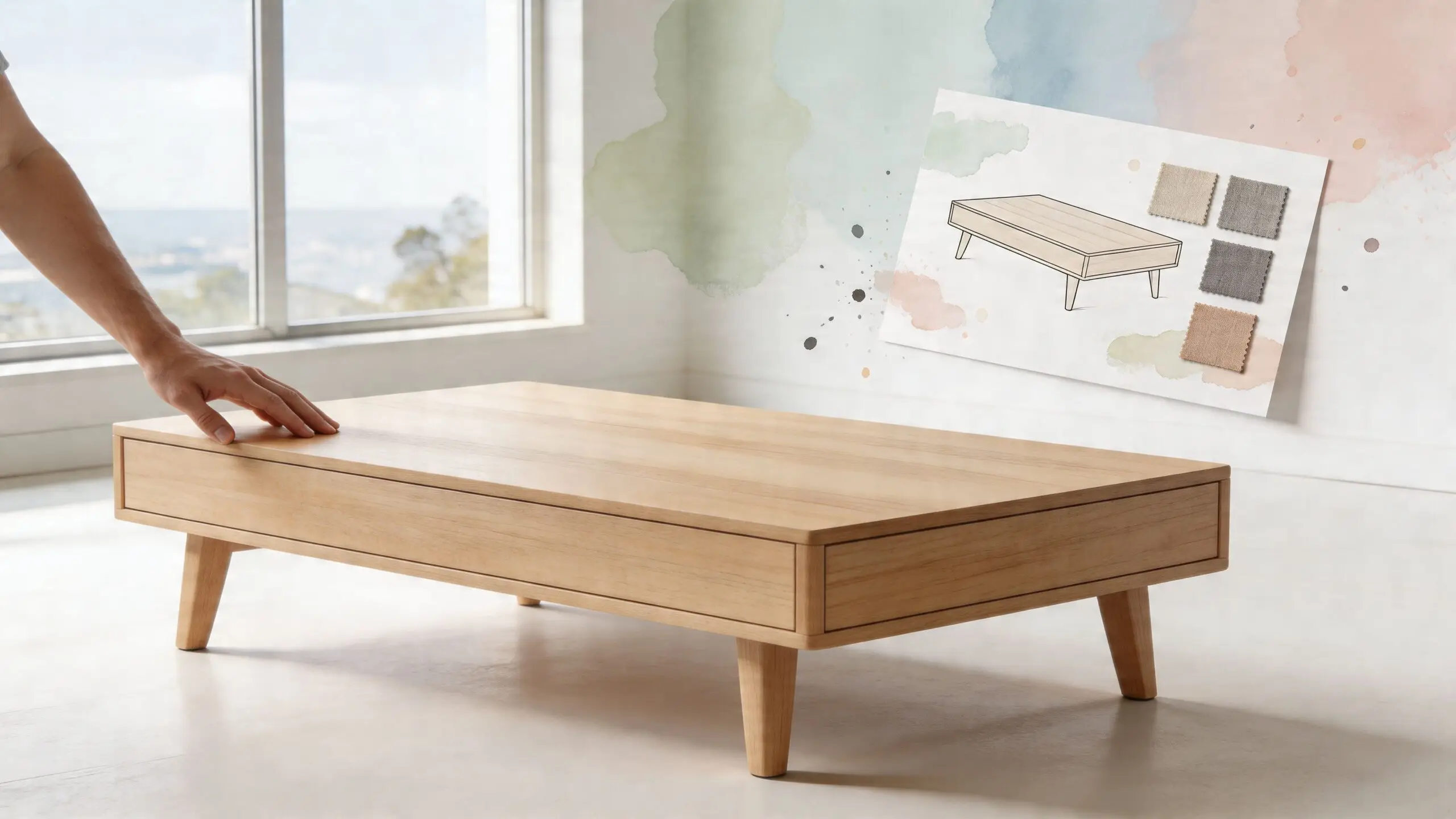
Customization options often include a 1-inch thick top for rigidity and sizing from compact 36-inch widths to larger 48-inch models, which makes it easier to fit a table to a specific layout, according to The Porch Swing Company product details.
That’s not a small detail. A table that’s too narrow looks lost. One that’s too deep interrupts circulation and makes the room feel crowded.
Three decisions usually have the biggest impact:
- Size and scale. The right width and depth keep the room comfortable to move through.
- Style language. Shaker lines feel cleaner and quieter. Mission details read more structural and pronounced.
- Finish direction. The same table can feel traditional, transitional, or more modern depending on stain and sheen.
If you’re comparing layouts or trying to coordinate with seating, our article on how to choose living room furniture can help you think through those relationships.
Matching timeless craft to modern rooms
One of the most common concerns I hear is whether a handcrafted solid wood piece will feel too heavy for a lighter Bay Area interior. Sometimes it will, if the design is wrong for the setting. A thick, dark Mission table in a bright room with airy upholstery can feel over-assertive. But a simpler form with tapered legs, a lighter stain, or a more refined species can solve that immediately.
Here’s what tends to work well:
- For contemporary rooms. Choose a quieter grain, cleaner edges, and less visible ornament.
- For mixed interiors. Let the coffee table provide warmth while other pieces stay sleek.
- For family spaces. Storage drawers and shelves help the room stay usable without sacrificing quality.
Custom also means the piece can be adapted to its surroundings. If your sofa has a lighter visual footprint, the table can echo that. If your room needs one grounding element, the table can take on that role.
That’s the advantage of made-to-order furniture. It doesn’t force a compromise between durability and design fit.
Why Amish Furniture is a Sustainable Lifetime Investment
The strongest argument for an Amish coffee table isn’t trend resistance. It’s replacement resistance.
When a table is built from solid hardwood and assembled with long-term performance in mind, you’re much less likely to cycle through repeated purchases. That changes the economics of the room. The up-front spend may be higher, but the cost over years of use often works in your favor because you’re not paying again for the same function.
There’s also an environmental side to that decision. Buying one strong piece and keeping it in use is usually a more responsible path than replacing a weaker one several times.
Where the sustainability comes from
Many Amish workshops source wood from well-managed North American forests and use up to 95% of each log, keeping waste under 5%, which is well below the 30% to 50% industry average noted by Modern Bungalow’s Amish coffee table collection information.
That matters because sustainability isn’t just about the species of wood. It’s also about how efficiently the material is used and how long the finished piece stays in service.
A sustainable furniture purchase usually includes all of these:
- Responsible sourcing of hardwoods
- Efficient material use during milling and building
- Repairable construction instead of throwaway assembly
- Long ownership cycles that reduce repeat consumption
The greenest coffee table is often the one you buy once and keep.
How to protect the investment
Owning solid wood furniture doesn’t require complicated upkeep. A few habits make a real difference:
- Use coasters and trays for routine drinks and serving pieces.
- Keep heat off the finish. Mugs, takeout containers, and candles should have a barrier.
- Clean with a soft cloth rather than harsh household sprays.
- Avoid prolonged direct sun if one side of the room gets strong exposure.
- Address small issues early. Minor scratches and finish concerns are easier to manage before they deepen.
These are simple stewardship habits, not chores. They’re part of what makes a buy-it-for-life piece practical rather than precious.
Caring For Your Solid Wood Coffee Table
A solid wood coffee table is durable, but it isn’t indestructible. The finish and the wood underneath respond best to regular, calm care. That’s good news, because most maintenance is simple.
Start with routine cleaning. Use a soft cloth for dust and gentle wipe-downs. Don’t soak the surface, and don’t reach for aggressive cleaners meant for tile, glass, or kitchen degreasers. They can dull a finish faster than normal wear ever would.
Daily habits that preserve the finish
The easiest way to keep a table looking right is to prevent the common stress points.
- Use coasters consistently so moisture doesn’t sit on the same area.
- Set down protective pads under ceramics, metal decor, or serving trays with rough bottoms.
- Lift rather than drag heavy objects across the top.
- Rotate decorative items occasionally so one spot doesn’t age differently from the rest.
Most small surface marks happen through repetition, not one dramatic event.
What owners should watch for
Sunlight is a bigger factor than many people realize. If one side of the top gets bright afternoon exposure every day, the surface can age unevenly. Area rugs, windows, and upholstery usually get this attention first, but wood should too.
Humidity swings matter as well. Solid wood naturally responds to the environment. That doesn’t mean something is wrong. It means the material is alive in a way manufactured panels aren’t. Consistent indoor conditions help the piece remain stable and attractive.
For more practical care techniques, our guide to protecting wood furniture from scratches and stains goes deeper into daily prevention.
A good coffee table shouldn’t make you nervous. It should make you mindful. There’s a difference.
The nice part about owning handcrafted wood furniture is that wear doesn’t usually mean failure. Minor signs of use often become part of the piece’s character, and more serious issues can often be addressed because the table was built from real material, not a printed surface over composite.
Experience True Craftsmanship at Giorgi Bros
For many people, the decision becomes easier once they stop looking at photos and start interacting with the furniture in person. Wood species read differently under real light. Finish tones change next to your upholstery sample. Drawer action, edge profile, and scale all make more sense when you can touch the piece.
That’s one reason our family has kept a showroom presence in South San Francisco since 1933. Good furniture rewards close inspection. You can feel the density of the wood, study the grain, and compare how different styles sit in a room.
What the process looks like
The custom-order process doesn’t need to be intimidating. It usually comes down to a few practical choices:
- Choose the overall style that fits your room, whether that’s more Shaker, Mission, or transitional.
- Review wood species and finishes with guidance from a consultant.
- Confirm dimensions based on your seating plan and room clearances.
- Discuss features such as storage drawers or updated functionality.
For homeowners blending traditional craft with current living habits, there are also newer options worth asking about. Amish Outlet Store’s overview of Amish coffee tables notes that brands carried by select retailers, including Simply Amish, have piloted modular inserts for wireless chargers since 2025. That’s a useful example of how handcrafted furniture can adapt to modern Bay Area living rather than resist it.
Why the buying experience matters too
Furniture is personal. You live with it every day. That’s why pressure has no place in the process.
Our design consultants work in a non-commission environment, which keeps the conversation focused on fit, construction, and long-term value rather than urgency. Some customers arrive with exact dimensions and finish ideas. Others just know they’re tired of replacing furniture and want something that will last. Both approaches are fine.
Because we offer custom order services, the conversation can extend beyond what’s on the floor. Wood species, finish choices, and other details can be customized for the room you’re building. Financing options are available as well, which can help when you’re investing in larger pieces or furnishing multiple spaces at once.
The same visit can also help if you’re coordinating beyond the coffee table. Many Bay Area clients are planning a full living room, a remodel, or a broader Bay Area Interior Design update that includes seating, case pieces, and even premium mattresses for other rooms in the home. Seeing materials together makes those decisions more coherent.
If you’re ready to stop replacing furniture and start choosing investment pieces with staying power, visit Giorgi Bros. Furniture in South San Francisco or book a Design Consultation. You’ll find no-pressure guidance from non-commission consultants, custom furniture options built around your space, and the chance to see real craftsmanship up close before you decide.