You’re probably in one of two places right now. Either you’ve got a king mattress and an empty wall behind it, or you’re remodeling a primary bedroom and realizing the bed sets the tone for the whole room.
That’s where a king bed metal headboard earns its keep. It can be quiet and simple. It can be ornate and architectural. Most importantly, it can stay relevant for years while other trend-driven pieces come and go. In a family furniture business, you learn that people rarely regret buying the better-made bed piece. They regret buying the one that looked fine online but never fit the room, the climate, or the way they actually live.
For Bay Area homeowners, that matters even more. Homes here often have challenging layouts, mixed design styles, and in many neighborhoods, coastal air that asks more of every finish. A metal headboard can be a long-term answer, but only if you understand the details behind the look.
The Enduring Appeal of a Metal Headboard
A bed can feel strangely unfinished without a headboard. The room has a mattress, bedding, maybe even lovely nightstands, but nothing is anchoring the wall. Once a metal headboard goes in, the room usually settles down. It starts to feel designed instead of assembled.
That lasting appeal isn’t new. Metal beds have been pulling their weight for a very long time.

Iron bed frames, which led to today’s metal headboards, became popular during the 19th century. By 1870, their ornate styling and pest-resistant surfaces made them common in up to 80% of urban middle-class homes, according to this history of iron bed frames.
Why that history still matters
People sometimes assume a metal headboard is only right for one look. They picture either a spare industrial frame or a very traditional iron bed with scrolls. In practice, metal is far more flexible than that.
A simple black metal headboard can look sleek and modern. A warm brass-toned finish can soften a room with layered neutrals. An aged iron finish can give a remodeled home a sense of character that brand-new case goods sometimes lack.
Metal stays in style because it doesn’t depend on trend alone. It depends on line, proportion, and finish.
A buy-it-for-life mindset
Since 1933, family furniture businesses have seen the same pattern over and over. Better materials age with dignity. Flimsier materials ask to be replaced.
That’s one reason metal headboards continue to appeal to people who are furnishing carefully. They’re not just shopping for something that looks good for move-in day. They’re choosing a piece that can stay through mattress upgrades, paint changes, rug swaps, and even a full bedroom redesign later on.
When the bones are right, the room has room to evolve.
Why a Metal Headboard is a Smart Investment
A headboard isn’t only decorative. It’s part of the structure around where you sleep every night. When you think of it that way, metal starts to make a lot of sense.
Modern metal headboards are built for real strength. According to this headboard history and design overview, they can support over 1,000 pounds without sagging. That matters with a king bed, where width alone puts more demand on every connection point.
Strength you notice over time
You may not notice structural quality on day one. You’ll notice it months later if the headboard starts to wobble, flex, or creak every time someone sits up in bed.
Metal has an advantage here because it resists that tired, overworked feeling that some lower-grade materials develop. With a king setup, especially one paired with premium mattresses or an adjustable base, stable support matters. A headboard should feel planted, not decorative-only.
A cleaner option for many homes
There’s also a practical health angle. The same source notes that metal’s non-porous surface can reduce bedroom allergens by up to 70% compared to fabric headboards. If you live with dust sensitivity, pets, or seasonal allergies, that’s not a small benefit.
A fabric headboard can be beautiful, but it can also hold onto dust and dander. Metal is easier to wipe down, easier to maintain, and often easier to live with in the long run.
A smart furniture investment usually does three things well:
- It lasts: It doesn’t ask for replacement just because daily use catches up with it.
- It stays versatile: It can work with changing bedding, rugs, paint, and décor.
- It supports your routine: It’s easier to keep clean and easier to live with.
That’s the difference between buying a headboard and buying an investment piece.
Getting the Scale Right A Sizing and Measurement Guide
Sizing is where many shoppers get tripped up. They find a metal headboard they love, then discover it looks undersized on the wall, sits awkwardly above the mattress, or doesn’t line up well with the frame.
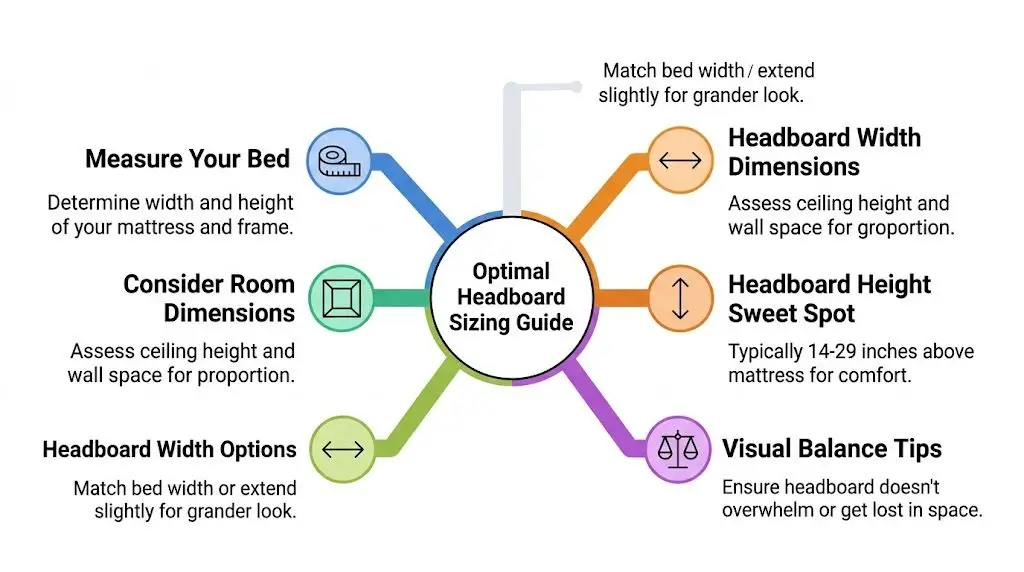
For a standard king bed metal headboard, the target is straightforward. It should be 80 inches wide for a 76-inch mattress, giving you a 2-inch overhang on each side, and a typical height is 58 inches. Premium models may offer 7 or more mounting positions for better alignment, as explained in this headboard sizing chart.
Why the extra width matters
That small overhang isn’t just for looks. It helps frame the mattress visually, and it helps prevent the mattress from feeling like it’s floating without definition at the edges.
If a king headboard is too narrow, the whole bed can look pinched. If it’s too wide for the room, it can dominate the wall and make the space feel crowded. The sweet spot is usually a headboard that clearly belongs to the mattress without overwhelming the room around it.
Practical rule: Measure the mattress, the frame, and the wall. Don’t assume “king” means every dimension will play nicely together.
How to measure before you buy
A simple measuring routine can save a lot of frustration:
Measure the mattress width
Confirm that you have a standard king mattress and not another king variation.Measure from floor to top of mattress
This tells you how much headboard will show once the mattress and foundation are in place.Measure the wall behind the bed
Include the space taken by nightstands, sconces, windows, or trim.Check the bed frame connection points
If the headboard mounts to a frame, bolt placement matters.
If you want a room-by-room checklist, Giorgi Bros. has a helpful guide on how to measure furniture.
Proportion matters as much as fit
Here’s a quick way to think about scale:
| Consideration | What to look for |
|---|---|
| Headboard width | Should frame the king mattress cleanly |
| Visible height | Should still show well above pillows |
| Wall presence | Should feel centered and intentional |
| Nightstand relationship | Should work with, not crowd, adjacent pieces |
In Bay Area homes, I’d add one more thought. Rooms can be compact, and older homes sometimes have unusual wall conditions or trim details. A perfectly good headboard on paper can feel wrong in the space if you skip the measuring step.
Good scale makes the room feel calm. Bad scale nags at you every time you walk in.
Exploring Materials and Finishes for Your Style
Shoppers often prioritize style first. They see matte black, antique brass, or distressed iron and respond to the look. That’s normal. But with a king bed metal headboard, finish also affects how the piece wears over time.
For Bay Area homes, that’s especially important because moisture and coastal air can be tough on lesser coatings.
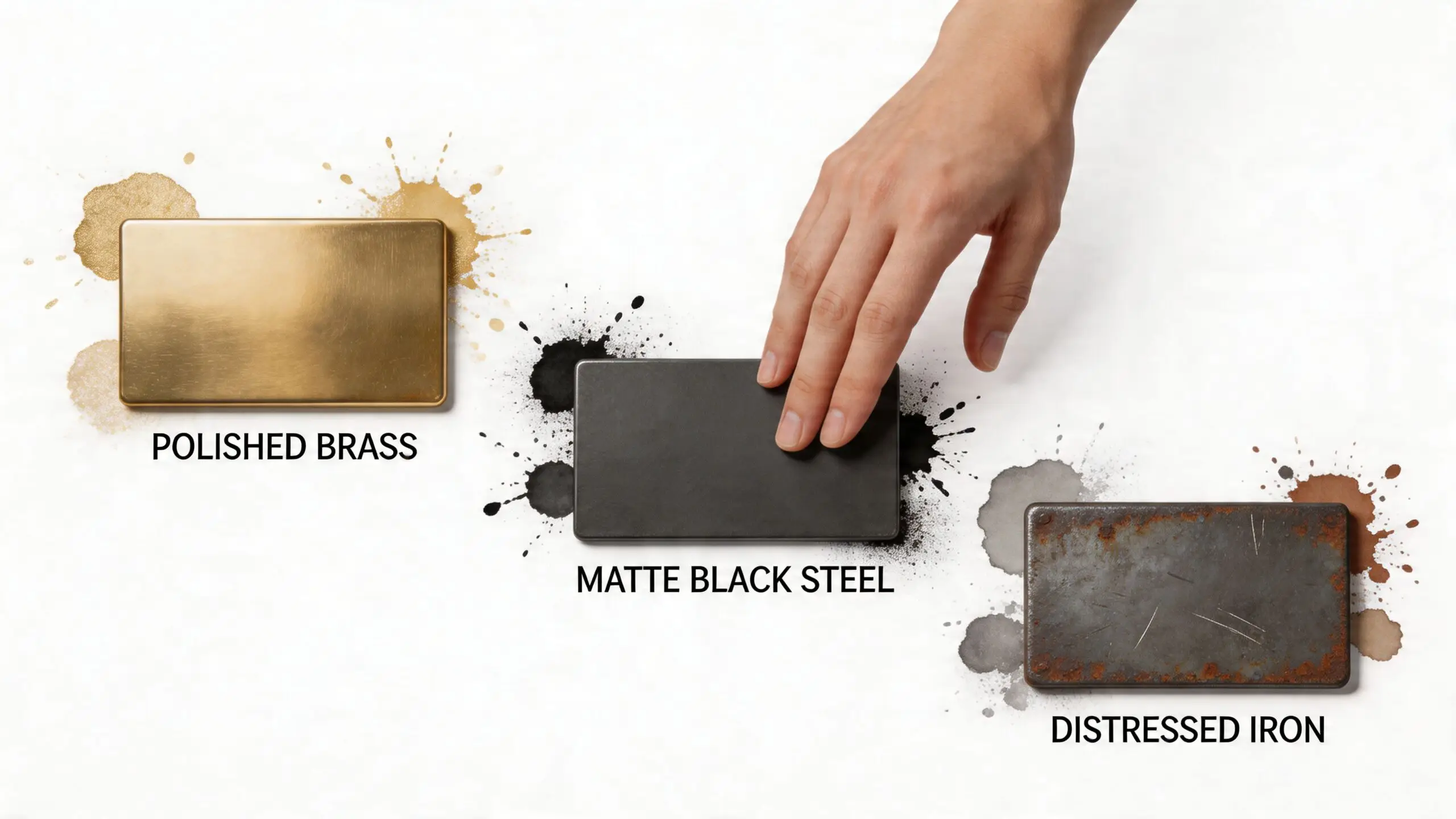
A quality powder coating forms a 50 to 100 micron protective layer and is rated for over 1,000 hours in salt spray testing, while high humidity can cause improperly treated metal to oxidize five times faster, according to this product materials reference.
Common looks and what they mean
Different finishes create very different moods:
- Matte black: Clean, current, and easy to pair with wood tones, white bedding, or layered neutrals.
- Aged iron: More relaxed and storied. Good in traditional, farmhouse, or transitional spaces.
- Brass-toned finishes: Warmer and dressier. Useful when you want softness without upholstery.
- Distressed or wear-through finishes: Better for homes that want character rather than a factory-perfect look.
The finish also changes how scratches, fingerprints, and dust show. That’s one of those details shoppers don’t always think about until after delivery.
Materials and finish should work together
Some headboards lean into smooth, slender steel lines. Others use heavier iron styling with more visual heft. Neither is automatically better. The right choice depends on your room, your bed linens, and how formal or relaxed you want the bedroom to feel.
If you’re still narrowing down textures and tones across the whole room, this guide to upholstery materials and how they affect comfort and performance can help you coordinate bedding, benches, and accent pieces with the metal finish you choose.
What Bay Area homeowners should ask
When you’re comparing options, ask these questions:
- What coating protects the metal? A good finish isn’t just decorative.
- Will this finish suit a coastal or humid environment? Some will hold up better than others.
- Can I order a custom finish? This matters if you want a warmer metal tone or extra protection.
- How will this finish age? Some finishes patina gracefully. Others just look worn.
Custom furniture proves especially useful. You’re not stuck picking between a few standard finishes that were chosen for mass appeal. You can match the piece to your home, your climate, and your taste.
Mounting and Installation Considerations
A sturdy headboard can still disappoint if it’s installed poorly. Most complaints about rattling, shifting, or awkward height come down to mounting, not appearance.
There are two common approaches. One attaches the headboard to the bed frame. The other mounts it to the wall behind the bed. Both can work well. The better option depends on your frame, your wall, and how permanent you want the setup to feel.
Frame-mounted vs wall-mounted
Here’s the quick comparison:
| Mounting type | Why people choose it | Watch for |
|---|---|---|
| Frame-mounted | Cleaner all-in-one setup tied directly to the bed | Hole alignment and bolt tightness matter |
| Wall-mounted | Flexible height placement and fewer frame compatibility issues | Wall structure and secure anchoring matter |
Frame-mounted headboards are common because they move with the bed. That’s practical if you rearrange often or expect to replace the mattress foundation later.
Wall-mounted designs can look more polished. They also help when a bed frame doesn’t match the headboard hardware well. The tradeoff is that installation needs to be exact.
Small mistakes become big annoyances
The most common problems are simple:
- Loose bolts: These often cause squeaks and motion over time.
- Poor height alignment: A headboard can disappear behind pillows if it’s mounted too low.
- Hardware mismatch: The frame and headboard may both be “king,” but still not align well.
- Ignoring adjustable bases: Some bed systems need more clearance and smarter positioning.
If you use an adjustable base, confirm compatibility before delivery day. It’s much easier to solve on paper than after assembly starts.
For shoppers considering padded add-ons or mixed-material bed components, Giorgi Bros. carries options such as the Contour Cushion king headboard cushion, which shows how some headboard systems can be adapted for comfort as well as structure.
Professional setup isn’t about convenience alone. It’s about getting a silent, secure bed that feels right every night.
Styling Your Bedroom Around a Metal Headboard
A metal headboard can take the room in very different directions. That’s part of its charm. The same basic material can feel crisp, romantic, rustic, or refined depending on the lines and the layers around it.

Four looks that work well
Modern and minimal
Choose a headboard with clean verticals or a simple rectangular outline. Pair it with white or oat bedding, quiet lamps, and little visual clutter. This works especially well when the room already has strong architecture.
Modern farmhouse
A black or softened white finish works nicely here. Add layered bedding, a natural fiber rug, and wood nightstands with a bit of warmth. The contrast keeps the room from feeling overly sweet.
Vintage-inspired For this style, scrolling metalwork shines. If you’ve inherited old case pieces or love collected interiors, an ornate metal headboard can bridge old and new better than many upholstered styles.
Industrial or urban
A darker finish, restrained bedding, and fewer accessories create a leaner, sharper bedroom. This look benefits from discipline. Too many soft decorative pieces and it loses clarity.
Use the headboard as the room’s anchor
A king bed takes up visual space. That’s why the headboard should lead the room rather than compete with everything else. Once you choose it, let other elements support it.
A bench at the foot of the bed is one of the easiest ways to finish the room. If you’re considering that layout, this example of a bench for the end of a king size bed shows how the bed can feel more complete without adding clutter.
A simple styling formula
If you’re unsure where to start, keep it to three layers:
- Structure: the headboard and bed silhouette
- Softness: bedding, pillows, and maybe a bench
- Warmth: wood, lighting, and a rug
That formula works because metal already brings line and definition. The rest of the room only needs to soften and balance it.
Care and Maintenance for Lasting Beauty
One of the biggest myths in furniture is that metal is automatically maintenance-free. It isn’t. It’s durable, yes. But in a coastal climate, finish quality and upkeep still matter.
That’s the part many big-box listings skip. They’ll call a headboard durable and move on. Bay Area homeowners need better guidance than that.
A 2025 study found that 28% of standard powder-coated models showed corrosion after 18 months in coastal climate simulations, as noted in this retail category reference discussing coastal durability concerns. That’s a useful reminder that not every coated headboard is ready for humid air.
What daily care actually looks like
The good news is that maintenance is simple when the finish is solid.
- Dust regularly: A soft dry cloth keeps buildup from sitting on the finish.
- Wipe spills promptly: Moisture left in seams or small chips can become a problem later.
- Avoid abrasive cleaners: They can wear down protective coatings.
- Check hardware occasionally: A quick tightening can prevent movement and noise.
Watch the finish, not just the frame
A headboard usually doesn’t fail because metal itself is weak. It fails because the protective finish gets compromised and no one notices early warning signs.
Look closely at joints, edges, and areas that get bumped during sheet changes. If you see chipping, scratches, or rough spots, address them early. That’s especially important in homes closer to the coast.
A “buy it for life” piece still needs the right finish for the life you live around it.
Why customization matters here
Custom ordering offers significant value. Bay Area homes don’t all ask the same thing from furniture. A bedroom near the coast, in an older home, or in a room that stays cooler and damper may benefit from a more climate-conscious finish than a standard floor sample offers.
That’s also why Amish Furniture and other American-made custom pieces appeal to so many long-term homeowners. The discussion shifts from “What’s available right now?” to “What finish and build will still make sense years from now?”
That’s a better question.
Your Lifetime Investment The Giorgi Bros Difference
A good king bed metal headboard solves several problems at once. It gives the room structure. It supports the bed visually and physically. It stays flexible enough to outlast style changes. And if it’s chosen well, it can become one of those rare furniture purchases you don’t revisit because you got it right the first time.
That’s where the shopping experience matters as much as the product. Since 1933, families in South San Francisco have come to furniture stores not only for selection, but for judgment. They want someone to tell them when a piece is too small, too lightly finished, or wrong for the room. That kind of honesty saves money in the long run.
What thoughtful guidance looks like
In a non-commission environment, the conversation can stay focused on fit, scale, finish, and long-term value. That’s especially helpful when you’re juggling several decisions at once, such as bed height, mattress type, room size, and whether you want custom details.
Customization is often the difference between “good enough” and “exactly right.” Through services like custom furniture made simple, shoppers can explore made-to-order options in wood species, finishes, leathers, and fabrics for surrounding pieces, so the headboard doesn’t have to work alone. In one room, that might mean pairing metal with custom-designed case goods. In another, it may mean softening the look with textiles and an upholstered bench.
The long view pays off
A family business learns to value furniture that earns its place year after year. That’s the core of the buy-it-for-life mindset. You spend more attention upfront so you spend less time replacing, regretting, or re-buying later.
That’s also the more sustainable path. Fewer throwaway pieces. Better materials. Smarter customization. Less waste.
And if you’re furnishing a full bedroom, that thinking tends to spread. Once people feel the difference in one investment piece, they usually want the rest of the room to live up to it.
Whether your style leans clean and modern or warm and traditional, a well-made metal headboard can be one of the most dependable choices in the bedroom.
If you’d like no-pressure guidance on a king bed metal headboard, bedroom layout, Custom Furniture, or coordinating pieces for a full remodel, visit Giorgi Bros. Furniture in South San Francisco or schedule a Design Consultation. You can explore the showroom, compare finishes in person, test options with your premium mattresses or adjustable base, and work with Consultants who are there to help, not push. Financing options are available if you’re planning a larger bedroom or whole-home project.