
A Bay Area homeowner can spend weeks looking for a chair that feels right, fits a particular corner, and complements the rest of the room. The showroom sample may have the right silhouette, but the wrong fabric. Another chair may look beautiful, yet offer little guidance about the frame, cushion core, or future repairs. Custom upholstery chairs solve that problem by treating seating as a complete system rather than a surface treatment.
A well-made chair can change fabrics, cushions, or finishes over its useful life while the underlying frame continues serving the home. That buy-it-for-life approach supports long-term comfort, reduces avoidable replacement, and makes quality furniture an investment rather than a short-term purchase. For homeowners exploring Furniture South San Francisco, the process works best as a conversation with design experts who can explain each choice without pressure.
Understanding the Custom Upholstery Process
A homeowner remodeling a dining room in the Bay Area might begin with a simple request: a chair that feels comfortable for long meals, fits beneath the table, and introduces a richer material than anything already in the room. The decision quickly becomes more detailed. Seat height, depth, arm shape, wood species, finish, cushion construction, fabric direction, and maintenance all affect the finished piece.
That doesn't make custom ordering complicated. It means the chair should be specified around the way people live. A design consultant can ask whether the chair will serve formal dining, daily reading, a desk, or relaxed conversation. The answers guide the build instead of leaving comfort to chance.
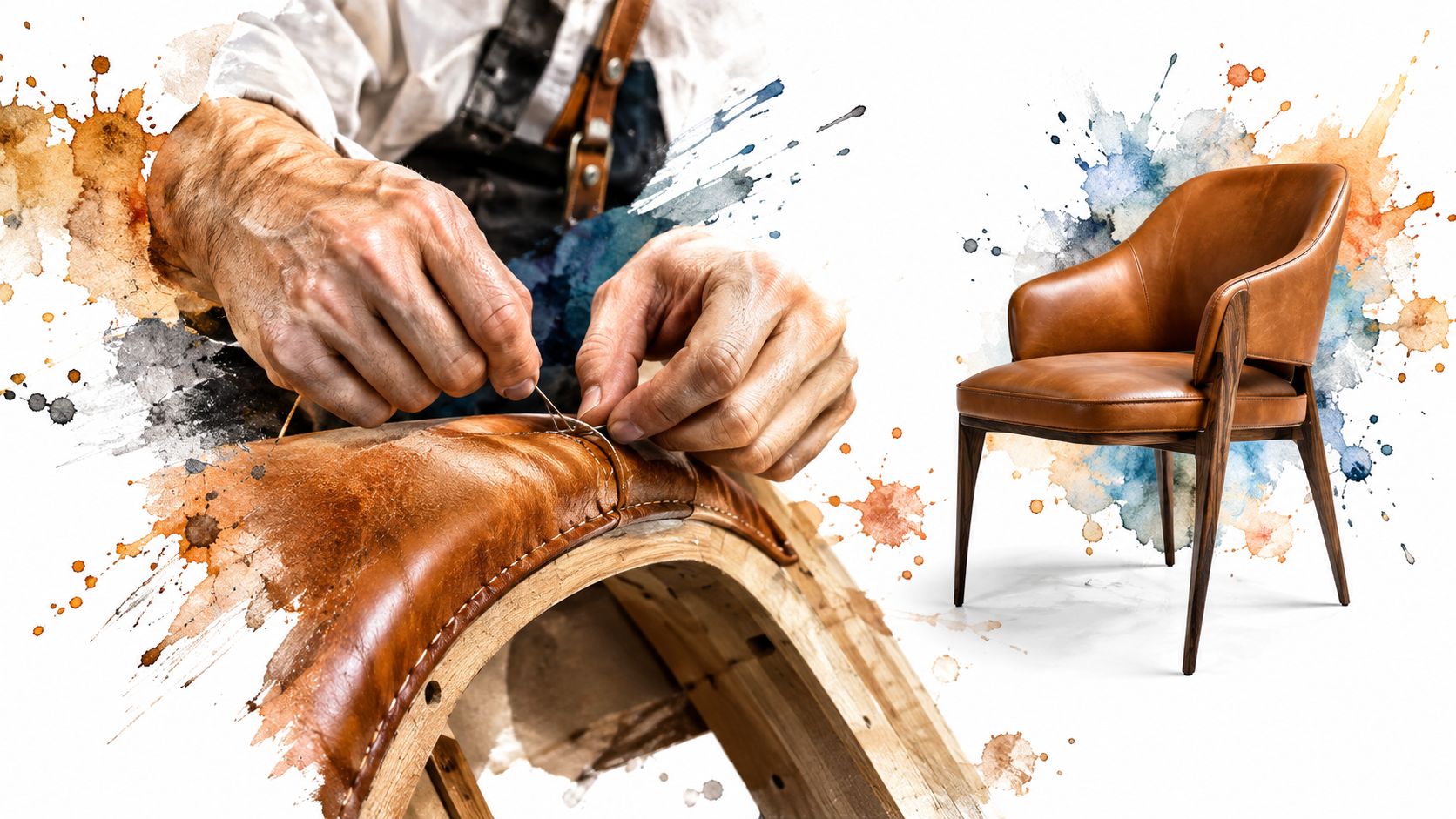
From visual idea to usable specification
The homeowner's inspiration might be a warm brown leather, a patterned textile, or a traditional chair with visible wood. The useful next step is to translate that preference into construction decisions:
- Use: Daily seating needs a different support strategy from occasional decorative seating.
- Proportion: The chair must relate to the table, desk, room, and the people using it.
- Material: Fabric, leather, wood, and finish should suit both the desired appearance and the maintenance routine.
- Serviceability: Covers, cushions, trim, and other accessible components should have a clear future repair path.
The same thinking applies when a sound older chair needs renewed life. Giorgi Bros. Furniture provides custom upholstered furniture guidance alongside custom order services, so a homeowner can consider new seating and reupholstery as related decisions rather than treating worn upholstery as an automatic reason to replace the chair.
Why local guidance matters
Custom work is a partnership. A homeowner brings the room, habits, and aesthetic direction. The design expert brings knowledge of proportions, material behavior, finish coordination, and construction details. That exchange is especially useful in Bay Area Interior Design projects, where a chair may need to coordinate with an entire home rather than stand alone.
Giorgi Bros. Furniture has served South San Francisco for more than 90 years, beginning in 1933. Its family-owned, non-commission environment supports a slower decision process, with Consultants helping customers compare options without tying advice to a commission. The result should be a chair that feels personal on delivery day and remains useful as the room and household change.
Frame Construction and Cushioning Choices
The visible upholstery gets attention, but the hidden structure determines whether a chair stays supportive. A durable specification starts with three questions: What is the frame made from? How does the frame carry movement? What sits between the suspension and the upholstery?
Start with the frame
A hardwood frame can provide a strong foundation, but the species alone doesn't guarantee quality. Joinery, corner blocks, alignment, drying, and glue work all affect how the frame responds to repeated loading. A chair that uses sound material with weak connections may loosen, while a carefully joined frame can remain stable through years of use.
Mortise-and-tenon construction is one useful example because it creates a substantial mechanical connection between components. Readers interested in the underlying technique can review this explanation of mortise-and-tenon joints. The practical question for a custom order is not whether a frame is described as hardwood. It is whether the construction gives the chair a serviceable, stable foundation.
Match suspension to use
Suspension distributes the sitter's weight and influences the chair's feel. Traditional eight-way hand-tied springs can create a responsive, structured seat when installed and tied correctly. Elastic webbing offers a different seating character and can work well when the webbing, attachment points, and tension are appropriate for the design.
Neither label should replace inspection. Ask how the suspension is attached, whether it can be serviced, and how it supports the intended cushion. A daily reading chair, dining chair, and occasional accent chair may reasonably use different solutions.
Practical rule: A material name isn't a durability verdict. Ask how the parts connect, carry force, and can be repaired.
Specify the cushion core
Cushion construction controls both comfort and maintenance. A resilient foam core can provide consistent shape and easier upkeep. A down or feather blend can create a softer, more relaxed surface but may need regular adjustment. A layered build can balance structure and softness, provided the supplier explains the core, wrap, and expected care.
The right choice depends on the sitter and the setting. A chair used for upright dining may benefit from a more structured cushion, while a reading chair may call for a softer envelope. The important detail is to document the cushion core and replacement path at purchase. A chair becomes more valuable when a future cushion rebuild can occur without discarding the frame.
Comparing Leather and Fabric Durability
Leather and fabric can both serve well on custom upholstery chairs. The better choice depends less on a universal ranking and more on the room, the sitter, the maintenance routine, and the construction beneath the covering.
Leather often develops a changing surface as it is used. Its character can become part of the chair's appeal, but the selection still needs to account for finish, texture, flexibility, and exposure to the room's conditions. Different leather types don't respond identically to abrasion, spills, sunlight, or cleaning products.
Fabric offers broader control over color, pattern, weave, texture, and visual softness. Performance-oriented textiles can be useful in active households, but the phrase performance fabric doesn't describe a complete specification. Fiber content, backing, finish, seam behavior, cleanability, and cushion movement all matter.
Look beyond the rub count
Abrasion testing can help compare fabrics, but results from Wyzenbeek double-rubs and Martindale cycles aren't directly interchangeable. A headline score also doesn't predict the full life of a chair if the seams slip, the cushion compresses unevenly, or the fabric is cleaned with an unsuitable chemical.
A sound selection process asks the supplier for the test method, fiber content, finish, care code, and exclusions. The buyer should inspect a generous sample in the intended room, checking pattern scale, directional nap, seam slippage, and how the material looks in changing light.
Evaluate the complete seating system
Durability depends on the interaction of:
- Covering: Leather or textile construction, finish, weave, and cleanability.
- Seams: Stitching, reinforcement, welt placement, and stress at corners.
- Cushion: Core resilience, wrap, compression, and the ability to be rebuilt.
- Suspension: Spring or webbing support and its connection to the frame.
- Frame: Joinery, alignment, material, and access for future service.
- Use: Frequency of seating, body weight, movement, and household routines.
That list explains why a lower-rated fabric on a well-specified chair can be a more sensible choice than a high-rated fabric placed on weak construction. The material needs to match the use, not win a contest on one laboratory number.
For a side-by-side discussion of appearance, care, and everyday practicality, homeowners can review leather and fabric upholstery choices. The decision should leave a clear record of the selected material, care requirements, and components available for later replacement.
Evaluating Quality Standards and Compliance
Comfort is important, but it doesn't provide enough evidence by itself. A chair can feel excellent in a showroom and still leave unanswered questions about structural testing, component compatibility, labeling, and fire-safety requirements.
Separate structure from upholstery
ISO 7173:2023 specifies test methods for assessing the strength and durability of chairs and stools across seating types, materials, designs, construction methods, and manufacturing processes. The standard evaluates the chair's structure. It doesn't measure the abrasion life of the upholstery fabric, so structural durability and covering durability should remain separate questions.
That distinction helps buyers assess an investment piece more clearly. A chair may have a durable frame that remains useful after its fabric, leather, foam, or trim needs renewal. A custom order should therefore record both the structural specification and the upholstery specification.
Quality control also benefits from a documented process, including inspection of materials, joinery, seams, cushioning, finish, and final fit. Retailers and manufacturers looking to formalize those checks can consult this quality control resource for retailers, while homeowners can use the same principle by asking what gets inspected before delivery.
Understand TB 117-2013
For upholstered furniture manufactured, imported, or reupholstered in the United States on or after June 25, 2021, federal rules require compliance with the smolder-resistance method in California TB 117-2013 under 16 C.F.R. part 1640. The requirement applies to custom upholstered chairs sold in California and should be verified for the proposed component assembly, not inferred from the face fabric alone. The Consumer Product Safety Commission explains the upholstered-furniture requirement.
TB 117-2013 evaluates four potential layers:
- Cover fabric
- Resilient filling
- Barrier material
- Decking material
The applicable components are assessed for char length, continued smoldering, and transition to open flaming. A chair may comply through a passing barrier that completely surrounds the filling, or through a passing combination of cover fabric and filling. Decking must pass when present.
Safety clarification: TB 117-2013 is principally a smolder-resistance protocol. It isn't a guarantee that a chair will resist every larger ignition source or prevent fire spread throughout a furnished room.
Changing the fabric, foam, batting, barrier, or deck can change the tested assembly. Before production, the manufacturer or upholsterer should confirm the proposed combination, labeling, and documentation.
The Sustainability of Reupholstery vs. Replacement
A chair's appearance can age faster than its structure. Fabric may wear at the seat edge, leather may need conditioning or repair, and cushion support may soften while the frame remains sound. Reupholstery makes it possible to renew those components without sending the entire chair into the replacement cycle.
The environmental case is concrete. The U.S. Environmental Protection Agency reported that furniture and furnishings generated 12.1 million tons of municipal solid waste in 2018, equal to 4.1% of total municipal solid waste generation. In that same year, 80.1% of discarded furniture and furnishings went to landfills, while 19.5% was combusted for energy recovery, according to the EPA durable-goods data.
Treat the frame as a long-term asset
Retaining a usable frame can avoid the material demand and disposal associated with replacing a complete chair. That doesn't mean every chair should be reupholstered. The frame must be stable, the proportions should still suit the room, and the cost and labor of rebuilding should make sense.
A professional assessment should examine:
- Frame condition: Loose joints, cracks, distortion, or previous repairs.
- Suspension: Sagging springs, tired webbing, and attachment points.
- Cushioning: Compressed cores, degraded filling, and recoverability.
- Covering: Wear, staining, seam failure, and material compatibility.
- Design value: Whether the chair still fits the household and room.
Circular-economy guidance from the European Environment Agency emphasizes reuse, repair, refurbishment, repurposing, redistribution, and remanufacturing as ways to extend product life. Its circular-economy guidance also supports a component-level mindset. Renewing a cover or cushion keeps more of the original product in service.
Plan the next repair before the first order
Repairability should be discussed while the chair is being selected, not only after damage appears. Ask whether the cover can be removed, whether cushions can be rebuilt, whether the frame remains accessible, and whether matching or compatible materials can be sourced later.
A similar principle appears in other restoration work, where the surface is renewed while the underlying object remains useful. This guide to refelting a pool table offers a useful parallel in thinking about surface renewal rather than automatic replacement. For upholstered seating, the same logic applies to fabric, leather, foam, and trim.
Homeowners considering an older piece can also review whether reupholstering a sofa is worthwhile. The central question is simple: can the existing structure support another useful chapter?
Working with Giorgi Bros. Furniture Design Experts
A custom chair consultation works best when the homeowner arrives with practical information rather than a fixed answer. The room's measurements, the intended use, preferred comfort, existing wood tones, and tolerance for maintenance all help a Design Expert narrow the choices.
At Giorgi Bros. Furniture's South San Francisco showroom, customers can sit in different chair styles, handle material samples, and compare wood species and finishes in person. The family-owned business has operated for more than 90 years, and its non-commission Consultants can focus on fit and construction without turning the conversation into a race to close an order.
A useful consultation sequence
The process can begin with comfort. A customer can test seat height, depth, arm position, and back support before selecting a silhouette. From there, the conversation can move to:
- Room and use: Identify where the chair will sit and how often it will be used.
- Construction: Review frame, joinery, suspension, and cushion options.
- Covering: Compare leather and fabric samples with care requirements in mind.
- Finish: Coordinate wood species, stain, trim, and surrounding furnishings.
- Future service: Record replaceable components and maintenance expectations.
Giorgi Bros. Furniture offers custom order services for fabrics, leathers, wood species, and finishes, along with custom reupholstery. The showroom also carries Amish Furniture and other quality-focused furnishings, while flexible financing options are available for qualifying purchases. Customers seeking broader Bay Area Interior Design support can discuss whole-home coordination with the design team, including related flooring and decor decisions.
From showroom selection to home
The delivery plan deserves attention before the order is finalized. Giorgi Bros. Furniture operates its own white-glove delivery service across much of the Western United States, with flat rates based on location rather than per-piece charges. The team unpacks, places, and sets up furniture in the home, then removes packaging materials. For locations outside its direct reach, a trusted deluxe nationwide carrier network provides another delivery route.
The most valuable outcome isn't just a chair in a selected fabric. It's a clear understanding of why the chair fits, how its components work together, what documentation accompanies the order, and how the piece can be maintained over time. That is the practical meaning of buying for life.
Giorgi Bros. Furniture offers custom upholstery chairs, reupholstery, curated fabrics and leathers, wood species, and finish selections through a non-commission design consultation in South San Francisco. Visit Giorgi Bros. Furniture to explore the showroom or book a Design Consultation for a chair planned around lasting comfort, repairability, and Bay Area living.