
A Bay Area homeowner often reaches the same moment. The paint is dry, the rug is in place, and the room finally feels close. Then the sofa search begins, and the easy part ends. One sofa has the right color but overwhelms the room. Another fits the floor plan but feels hard after twenty minutes. A third looks promising online, yet it does not seem built for real life with kids, pets, guests, and everyday use.
That's when a custom upholstered sofa starts to make sense. A sofa is the working heart of a living room. It handles naps, movie nights, visiting family, and the ordinary wear that adds up over years. Choosing one made around your room, your comfort, and your household habits often leads to something more valuable than a quick retail win. It leads to a piece you can keep, enjoy, and repair rather than replace. For many homeowners, that buy-it-for-life mindset is also the more sustainable and more economical path. If you have wondered whether an older piece deserves new life instead of a trip out the door, this guide on whether a sofa is worth reupholstering helps clarify the tradeoffs.
In Furniture South San Francisco, that conversation has been part of family homes for generations. Giorgi Bros. Furniture has been continuously family-owned and operated since 1933, serving the Greater Bay Area and Western United States for over 90 years. That kind of history matters because furniture quality reveals itself slowly, much like a well-built house or a dependable car. Good materials, careful construction, and honest guidance usually cost more at the start, but they often spare a homeowner from the cycle of replacing a sofa every few years.
For Bay Area interior design projects, a custom sofa is less about adding another option and more about getting the foundation right. The right piece can make a room feel settled for a long time.
Table of Contents
- Finding the Perfect Sofa Is an Investment Not Just a Purchase
- Beyond the Catalog What Makes a Sofa Truly Custom
- The Anatomy of a Lifetime Sofa What's Inside Matters
- A Guide to Cushions The Secret to Lasting Comfort
- Dressing Your Sofa From Performance Fabrics to Premium Leathers
- Budgeting and Planning for Your Custom Furniture
- Your Custom Sofa Journey with Giorgi Bros
- Your Custom Sofa Questions Answered
Finding the Perfect Sofa Is an Investment Not Just a Purchase
A sofa tends to be the most used seat in the house. It handles movie nights, naps, visiting family, late work emails, and everyday wear that no showroom floor can fully simulate. That's why a custom upholstered sofa shouldn't be treated like a quick purchase. It's closer to choosing an investment piece that shapes how a home feels for years.
A common Bay Area scenario goes like this. A homeowner finds a sofa that fits the style of the room but not the scale. The arms feel too bulky for a city space. The seat depth looks inviting but doesn't support upright conversation. The fabric feels risky in a sunny room. Every option is close, but not close enough.
Custom Furniture changes that conversation. Instead of asking, “What can this sofa become?” the better question is, “What does this room need?” The answer may be a narrower arm, a firmer cushion, a higher back, a stain-resistant fabric, or a different wood finish on the legs.
A well-made sofa should fit the room, the body, and the rhythm of the home.
There's also a practical side to this decision. Households often wonder whether to restore an existing piece or start fresh. That's why it helps to review thoughtful guidance on whether it's worth reupholstering a sofa before committing. The right path depends on the frame, the sentimental value, and whether the original piece can still serve the home well.
For buyers who care about sustainability, this investment mindset matters. A better sofa usually means fewer replacements, less waste, and more satisfaction over time. Buying for life isn't just about durability. It's about buying once, buying well, and enjoying the piece instead of second-guessing it.
Beyond the Catalog What Makes a Sofa Truly Custom
Many shoppers hear “custom” and think it means picking a fabric from a wall of swatches. That's part of it, but it's only the surface.
A custom upholstered sofa can be as simple as changing the cover material on an existing frame, or as detailed as adjusting seat depth, back height, arm shape, cushion style, wood species, and finish. The easiest way to understand it is to compare it to clothing. Off-the-rack can work. Customized usually fits better.
Custom can happen at different levels
Some sofas are semi-custom. That usually means the basic silhouette stays the same, but the buyer can choose from a range of fabrics, leathers, leg finishes, and cushion options. For many homes, that level of flexibility is enough.
Other pieces move into deeper customization. That might include:
- Changing dimensions so the sofa fits a narrow wall, open floor plan, or smaller family room.
- Adjusting seat depth for households that prefer upright support or a more relaxed lounge feel.
- Refining details such as welt, skirt, tufting, bench seats, multiple cushions, or custom-designed arms.
- Selecting materials including designer fabrics, high-grade leathers, wood species, and finishes.
For sectional shoppers, those choices become even more important because shape affects traffic flow and comfort. A practical overview of what to know before buying a sectional often helps buyers sort through corner pieces, chaise layouts, and room proportions before they commit.
The best custom choices start with use, not looks
A family that hosts often may want firmer seating and durable fabric. A retired couple furnishing a quiet reading room may want a softer sit and a more refined textile. A young family may need easy-care materials and forgiving cushion construction.
That's why a helpful consultant asks lifestyle questions first. Who uses the sofa every day? Does anyone nap on it? Are there pets? Does the room get strong afternoon sun? Does the household prefer sitting “on” the cushion or “in” the cushion?
Practical rule: If a sofa looks right but doesn't support the way the home lives, it isn't the right custom choice.
That's also where Non-Commission Sales Staff, or more accurately non-commission consultants, make a real difference. The conversation stays focused on fit and function, not pressure. In Bay Area Interior Design, that often leads to calmer decisions and fewer regrets.
The Anatomy of a Lifetime Sofa What's Inside Matters
The outside of a sofa gets attention. The inside determines whether the piece still feels solid years later.
A custom upholstered sofa can wear beautiful fabric and still disappoint if the frame and support system aren't built well. That's why experienced furniture buyers often start with what can't be seen. They look at the bones first.
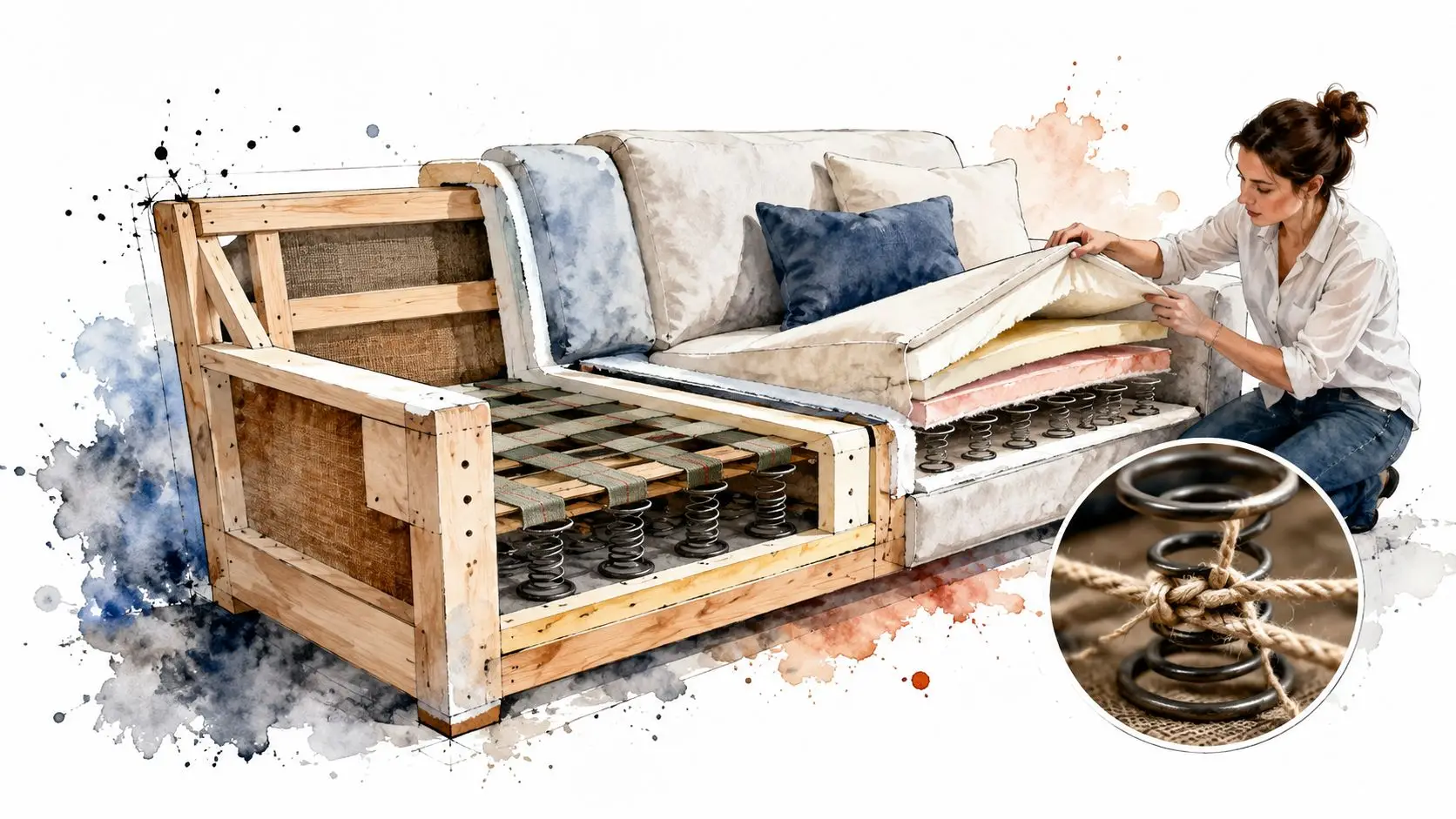
The frame does the heavy lifting
The frame is the sofa's skeleton. If that structure flexes, warps, or weakens, the upholstery above it won't save the piece.
High-quality custom upholstered sofa frames should use solid hardwood and a dependable webbing system. Material choice matters because webbing ages differently over time. In one upholstery construction review, rubber bands were noted to have a shorter service life of 5 to 7 years, while synthetic elastic bands were described as maintaining tension for 10 to 15 years (frame and webbing durability details). That difference can affect sagging, seat support, and how quickly a sofa starts to feel tired.
Buyers don't need to become furniture engineers. They do need to ask good questions. What is the frame made from? What supports the seat? What happens to that support system after years of daily use?
Support systems change how a sofa ages
A sofa may feel comfortable in the showroom and still age poorly if the support underneath the cushion loses strength. That's why the support layer deserves attention. It influences both immediate comfort and the way the seat holds up with repeated use.
A useful way to think about it is a bridge. The visible road surface matters, but the structure underneath carries the weight. Sofas work the same way.
A few signs of stronger construction include:
- Solid frame materials that resist wobble and looseness over time.
- Reliable support systems that hold tension instead of collapsing early.
- Stable seating feel that doesn't dip unevenly after regular use.
Indoor comfort also depends on the environment around the sofa. For households trying to keep seating cleaner and healthier over time, it can help to learn how to reduce allergens with dust mite control, especially in rooms where upholstered furniture gets heavy daily use.
The buyer may never see the inner webbing again after delivery, but the body will notice it every time the seat gives proper support.
When a sofa is meant to be a buy-it-for-life piece, craftsmanship and material selection aren't small details. They are the reason the piece keeps earning its place in the room.
A Guide to Cushions The Secret to Lasting Comfort
Two sofas can look nearly identical and feel completely different. The cushion fill is often the reason.
Some households want a crisp, supportive sit that looks neat all day. Others want a softer seat that invites lounging. Neither preference is wrong. Comfort is personal. The mistake is choosing cushion fill based only on a quick showroom sit without thinking about maintenance and long-term shape.
Comfort means different things to different households
A foam-based seat usually feels more structured. It helps the sofa keep a neat appearance and often asks for less daily attention.
A down-and-feather feel is softer and more relaxed. It can be wonderfully cozy, but it often needs fluffing and reshaping. Households who love a casual, sink-in seat may be happy with that tradeoff. Households who want a tidier appearance may not be.
Hybrid cushions often land in the middle. They pair a supportive core with a softer wrap, which gives the sofa some plushness without losing all its shape.
Some people want a sofa that says “sit upright and visit.” Others want one that says “cancel the afternoon and stay awhile.”
Cushion Fill Comparison
| Fill Type | Feel & Support | Maintenance Level | Best For |
|---|---|---|---|
| High-resiliency foam | Supportive, structured, more tailored | Low | Everyday seating, cleaner lines, households that want less fuss |
| Down and feather blend | Soft, relaxed, sink-in comfort | High | Casual rooms, buyers who don't mind regular fluffing |
| Hybrid core with soft wrap | Balanced, supportive with some plushness | Moderate | Homes that want softness and shape retention together |
A simple test helps. Sit down normally, then shift sideways the way someone would during a long conversation or movie. Does the cushion recover well? Does it hold the body comfortably? Does it match how the sofa will be used?
For households that already own a sofa and want to make the seat feel better before replacing it, a practical resource on ways to improve your sofa's comfort can clarify what support changes are possible and when it makes more sense to invest in a new piece.
A smart cushion choice balances comfort and upkeep
The “best” cushion is usually the one that matches a home's habits. A formal sitting room can tolerate more maintenance. A busy family room often can't.
That's why buyers should ask three plain questions before ordering:
- How should the sofa feel after an hour, not after a minute?
- How much upkeep is realistic each week?
- Should the sofa look crisp or relaxed most of the time?
Those answers usually lead to the right fill faster than any trend does.
Dressing Your Sofa From Performance Fabrics to Premium Leathers
Upholstery is where style meets real life. The fabric or leather has to look right in the room, feel pleasant to the touch, and stand up to the way the home functions every day.
That's especially important in bright Bay Area homes, where sunlight, daily traffic, and open-plan living can put a lot of strain on a sofa surface.
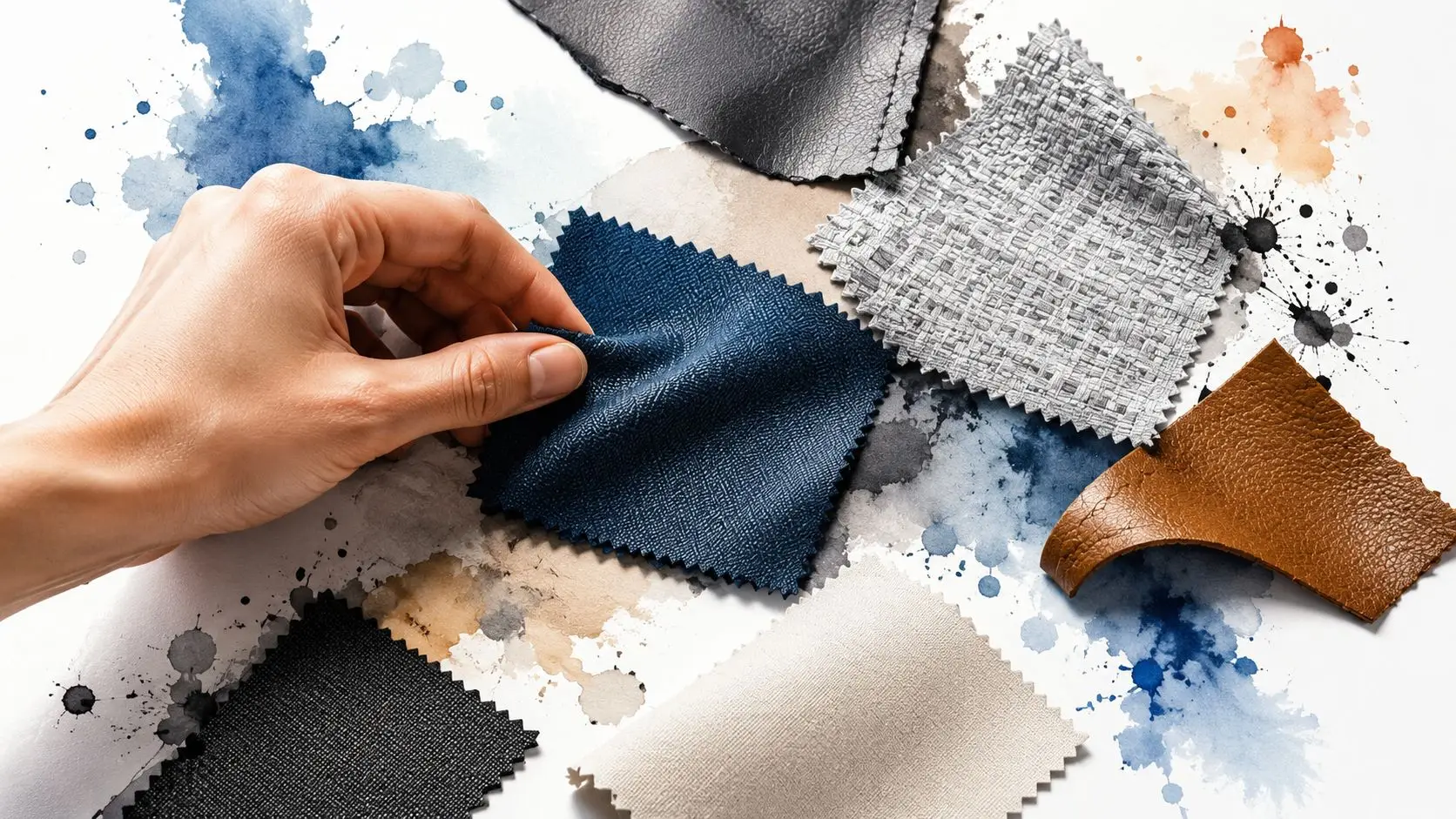
Fabric choice is about lifestyle first
Some buyers start with color. A better starting point is behavior. Does the household have pets? Is the room used every day? Does the sofa sit near strong windows? Will people eat on it, nap on it, and pile onto it after school?
Fabric durability is often measured through abrasion testing. Upholstery guidance notes that fabrics with over 30,000 double rubs are considered heavy-duty and suitable for everyday use (fabric abrasion and durability guidance). That number helps buyers move beyond vague labels like “durable” and ask better questions about real wear.
A few useful categories to consider:
- Performance-oriented fabrics for busy households that need easier cleanup and stronger day-to-day resilience.
- Natural fibers for softness, character, and a relaxed look, while keeping sunlight and maintenance in mind.
- Tighter weaves for homes where abrasion resistance matters more than a delicate hand feel.
Shoppers who want a fuller overview of fabric families, wear expectations, and practical tradeoffs can review upholstery material guidance for everyday living.
Leather asks different questions
Leather selection works differently. The buyer should think about hand feel, natural markings, expected patina, and how much variation feels appealing. Some leathers look more uniform. Others show more character and age in a more organic way.
That's part of the appeal of Custom Furniture. A buyer can pair a classic frame with premium leather for a refined look, or choose a textured fabric that softens the room. The right answer depends on how formal or relaxed the space should feel.
Material note: The most beautiful upholstery choice is the one that still looks right after daily use, not just on delivery day.
After the sofa is in place, finishing touches matter too. For readers interested in layering softness without overwhelming the silhouette, guidance on styling luxury faux fur throws can help with drape, balance, and seasonal texture.
Budgeting and Planning for Your Custom Furniture
A family picks a sofa they love, chooses a beautiful fabric, and can already see movie nights and holiday gatherings around it. Then the questions start. Will it fit through the front door? Does the room have enough space to walk around it comfortably? Is the lower price on a mass-produced piece really cheaper if it needs replacing years sooner?
That is why planning matters so much with a custom upholstered sofa. Good planning protects the budget, the room layout, and the long-term value of the piece.
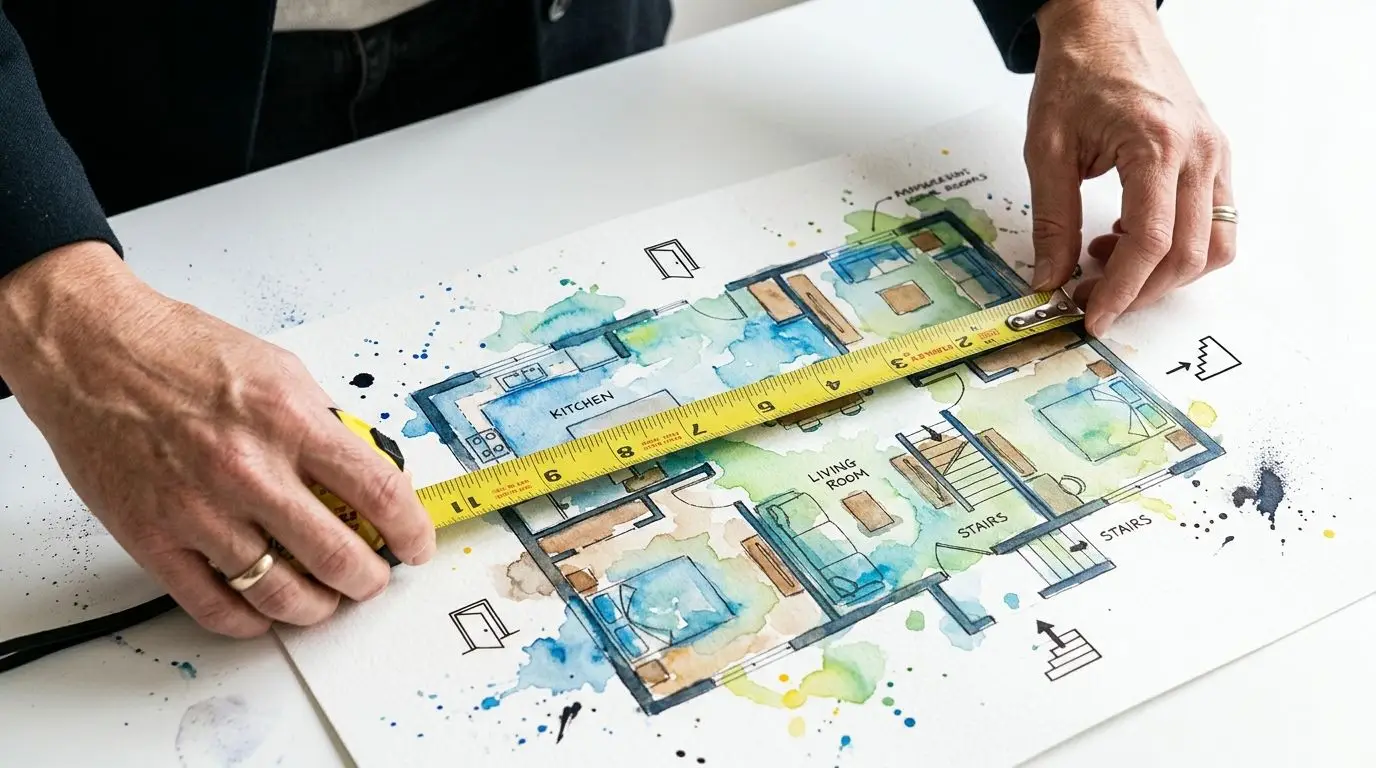
Measure the room before choosing the final design
Custom furniture works like tailoring. A well-made suit still needs the right measurements. A well-built sofa does too.
A tape measure, a rough sketch, and a few careful notes are usually enough to avoid expensive mistakes. Start with the room itself, then measure the path the sofa will take to get there.
Focus on these dimensions:
- Wall width: Leave space on each side so the sofa feels settled, not squeezed in.
- Room depth: Deep seats can feel wonderful, but they also change how much open floor remains.
- Doorways and stairwells: The sofa has to enter the home as comfortably as it fits the room.
- Walk paths: People should be able to move around coffee tables, side chairs, and entry points without turning sideways.
Painter's tape on the floor can help more than a drawing on paper. It shows the footprint at full size, which makes scale easier to judge.
Budget for the years ahead, not just delivery day
The smartest custom furniture budget is not built around the opening price alone. It is built around how long the sofa will serve the household well.
A better frame, better suspension, better cushion construction, and skilled American workmanship often cost more at the start. In return, the owner usually gets a piece that stays comfortable longer, fits the room better, and avoids the cycle of replacing a disappointing sofa every few years. That buy-it-for-life mindset supports sustainability too. Keeping one well-made sofa in use is often a wiser use of money and materials than buying several short-lived replacements.
Giorgi Bros. offers handcrafted, Made in America furniture for shoppers who want that longer view. For many families, lasting savings show up later. Fewer replacements. Less waste. More years of daily comfort from a piece that still feels right.
A custom sofa often asks for more patience upfront and gives back more value over time.
Plan the budget in layers
It helps to treat the budget like a house plan, with the structure first and the finish materials second.
Start with the frame size and overall construction. Then account for cushion upgrades, fabric or leather grade, trim details, and delivery considerations. That approach keeps the important decisions in the right order. If the frame and comfort are right, the sofa has a strong foundation. Decorative upgrades can then be chosen with a clear understanding of their cost.
Some buyers also prefer to spread out the investment. Financing options can make a higher-quality sofa more realistic without pushing the decision toward a lower-quality piece that may not hold up as well.
For shoppers who want a clearer picture of timing, approvals, and what to prepare before ordering, this guide to getting started with a custom furniture order is a helpful next step.
A well-planned custom sofa feels good in more than one way. It fits the room, fits the household, and fits the kind of long-term thinking that turns furniture from a short-term purchase into a lasting part of the home.
Your Custom Sofa Journey with Giorgi Bros
The custom process feels less intimidating when the buyer can see materials in person, test comfort directly, and talk through choices without pressure.
That's one reason a large showroom still matters. Touch changes decisions. A fabric that looked perfect on a screen may feel too stiff. A seat that seemed ideal on paper may feel too deep in person. Seeing scale, texture, and support firsthand helps buyers avoid costly guesswork.
A calmer way to make a big decision
Giorgi Bros employs non-commission design consultants who provide a stress-free experience with “best price first” transparency, keeping the consultation free of sales pressure. That matters because custom decisions involve many moving parts. Dimensions, fabrics, leathers, finishes, and cushion comfort all affect the final outcome.
In a no-pressure setting, buyers can slow down and make those decisions more thoughtfully. That approach aligns well with the needs of homeowners shopping for living room furniture, dining pieces, Premium Mattresses, or whole-home updates in South San Francisco.
A useful first step is reviewing how to get started with a custom order, especially for buyers who want to gather measurements, inspiration, and material preferences before visiting the showroom.
From selection to delivery
The process usually works best when it follows a simple rhythm:
- Test comfort in person. Sit on different silhouettes and note what feels supportive or too soft.
- Refine the specification. Narrow dimensions, upholstery, leather, wood species, and finishes.
- Confirm practical details. Review room access, household needs, and how the sofa will be used.
- Prepare for delivery. Clear pathways and make sure placement is planned in advance.
For many Bay Area households, that kind of guided process lowers stress. It turns a complicated purchase into a series of manageable choices.
Good custom furniture doesn't come from guessing. It comes from asking the right questions in the right order.
Your Custom Sofa Questions Answered
Even after choosing the frame, cushion, and upholstery, a few practical questions usually remain. Those last questions matter because they affect daily ownership, not just purchase day.
How should new upholstery be cleaned
The safest approach is to follow the care guidance for the specific material and address spills quickly. Blot, don't scrub. Test any cleaner in a hidden spot first. For routine upkeep and professional help when needed, many buyers find it useful to review upholstery cleaning services and care support.
Can a customer use their own fabric
Sometimes, yes. That option is often called customer's own material. It can work well when a buyer has a very specific textile in mind, but the fabric still needs to be appropriate for upholstery use. A consultant should confirm suitability, repeat needs, durability, and whether the material fits the sofa's shape and construction.
What if the sofa doesn't fit on delivery day
That risk is reduced with careful measuring before the order is placed. Room size is only part of the equation. Entry doors, stair turns, elevator dimensions, and interior hallways matter just as much. A custom order should always begin with clear access measurements and a realistic delivery path.
Is custom furniture worth the extra planning
For many households, yes, because the buyer gains control over comfort, scale, and durability. That often leads to fewer compromises and more satisfaction over time. A custom upholstered sofa can also support a more sustainable home by reducing the cycle of replacing pieces that wore out too quickly or never fit properly.
How should a buyer prepare for a showroom visit
A simple folder helps. Bring room measurements, a few photos, notes about seat comfort preferences, and any inspiration images that reflect the home's style. That makes the conversation more productive and helps the consultant translate taste into specifics.
For homeowners exploring Furniture South San Francisco, Bay Area Interior Design, and long-lasting Custom Furniture, a showroom visit can turn abstract ideas into a clear plan. Giorgi Bros. Furniture welcomes visitors to the South San Francisco showroom for no-pressure guidance, hands-on comfort testing, and Design Consultation support. Whether the goal is a custom upholstered sofa, Amish Furniture, or a whole-home update that includes Premium Mattresses, the process starts with seeing, touching, and measuring what will work for real life.