A Bay Area homeowner often reaches the same point. The remodel is nearly done, the walls are painted, the light feels right, and the old furniture suddenly looks temporary. What's wanted isn't a room that looks staged for a weekend. It's a home that feels calm on a Tuesday night, welcoming on a rainy afternoon, and durable enough to live with for years.
That's where organic modern furniture makes sense. It answers a practical question as much as a style question. How does a home feel current without becoming trendy, warm without becoming heavy, and refined without feeling fragile?
For families who are tired of replacing pieces that looked good online but disappoint in daily life, the appeal is straightforward. Organic modern style favors honest materials, comfortable forms, and lasting finishes. It supports a buy-it-for-life mindset that fits how many Bay Area homeowners want to live now: fewer throwaway purchases, more thoughtful investment pieces, and a home that works hard without looking busy.
Table of Contents
- Your Home as a Sanctuary Not a Showroom
- What Exactly Is Organic Modern Style
- The Signature Materials and Finishes
- Bringing Organic Modern Into Your Home Room by Room
- Why Custom Furniture Is a Lifetime Investment
- Budgeting and Caring for Your Investment Pieces
- Your Timeless Home Starts in South San Francisco
Your Home as a Sanctuary Not a Showroom
On a Tuesday evening in the Bay Area, the true test of a room begins. Someone sets a laptop on the dining table after work. A child drops a backpack by the sofa. Dinner happens, dishes wait, and the dog claims the best corner of the rug. In a well-furnished home, the room still feels settled through all of it.
That is the appeal of organic modern furniture. It brings order to a space without making daily life feel fragile. The lines stay clean, the materials feel natural in your hands, and the room holds together even when life is busy.
Many homeowners run into the same problem. They buy one piece for its shape, another for its finish, and a third because it looked good under bright store lighting. Each item may be attractive on its own, yet the room ends up feeling disconnected. Organic modern offers a clearer framework. It helps you choose furniture the way a good architect plans a house, with proportion, material, and daily use working together from the start.
For Bay Area buyers, that approach has practical value. Homes here often need to do several jobs at once. A living room may host conversation, quiet reading, work calls, and weekend guests in the same week. Furniture that earns its place has to be beautiful, comfortable, and durable enough to justify the investment over many years.
A good room supports real life. It stays comfortable during ordinary days and still feels refined when friends come over.
That is one reason families often prefer guidance from a business that has helped homeowners through moves, remodels, and changing tastes over generations. Giorgi Bros. Furniture, family-owned and operated since 1933, represents the kind of steady perspective buyers look for when they want fewer mistakes and better long-term choices. For readers comparing silhouettes and materials across related looks, contemporary furniture styles can help clarify where modern design stays crisp and where organic modern adds warmth.
The investment side matters too. A solid wood dining table that wears in gracefully usually gives better value than replacing a cheaper one every few years. The same is true for a well-built sofa with a durable frame and upholstery that suits the household. Lifetime cost often comes down to what you buy once, care for well, and continue to enjoy long after trends pass.
Three ideas guide the style:
- Calm over clutter: Rooms feel open, settled, and easier to live in every day.
- Natural character over artificial shine: Wood, linen, leather, wool, and stone bring depth that manufactured surfaces rarely match.
- Longevity over impulse: The goal is to choose pieces with enough quality and staying power to serve your home for years.
What Exactly Is Organic Modern Style
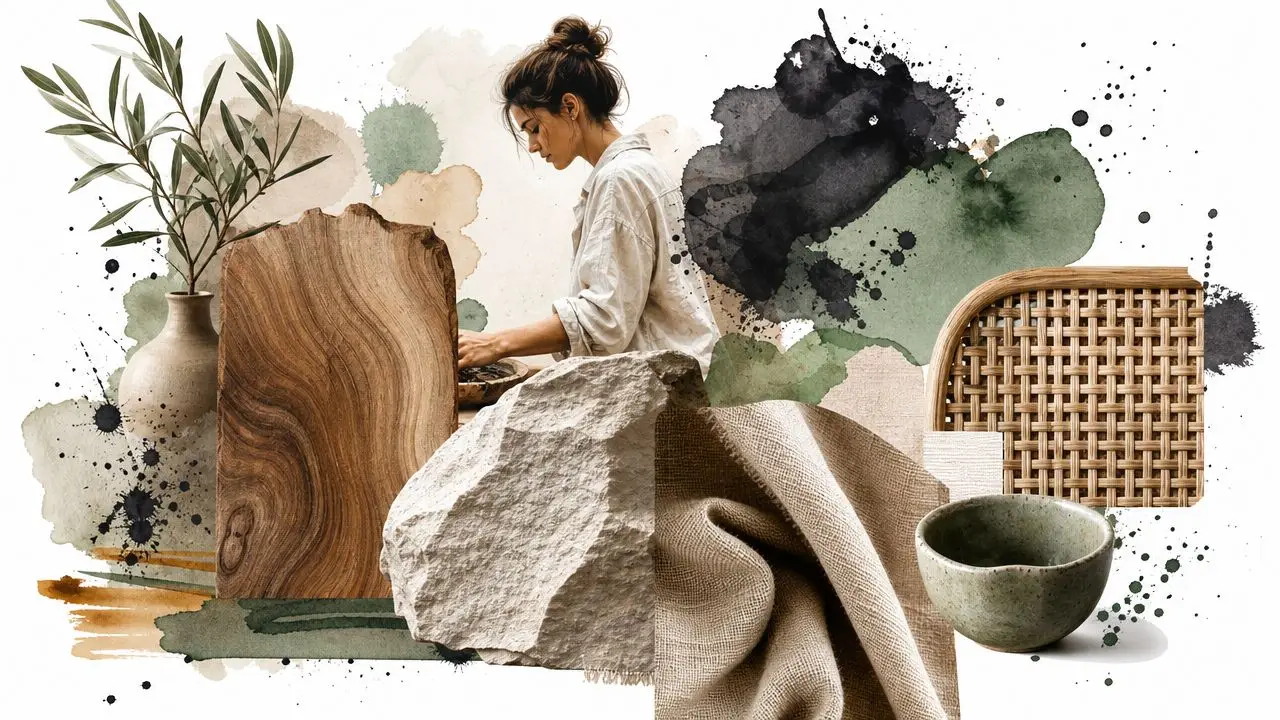
Organic modern style combines two ideas that seem opposite until they're handled well. The first is modern design: clean lines, open space, and restraint. The second is organic warmth: natural texture, soft forms, and materials that show their age gracefully.
A simple way to recognize it is this. If a room feels uncluttered but not stark, natural but not rustic, it's probably moving in an organic modern direction. Readers looking at related silhouettes and forms can also explore contemporary furniture styles to better understand where the overlap begins and where the feel changes.
Modern structure with natural softness
Modern design gives the room discipline. It keeps furniture shapes clear and prevents the space from becoming visually noisy. Organic elements soften that structure.
That often shows up in a few consistent ways:
- Neutral foundations: Cream, sand, taupe, warm gray, and brown create a quiet base.
- Natural materials: Wood, linen, leather, wool, stone, and cane keep the room grounded.
- Curved forms: Rounded arms, softened corners, and sculpted shapes make a room feel more human.
- Breathing room: Furniture placement matters as much as the furniture itself.
The larger design direction isn't small. The Global Organic Modern Interior & Designs market is projected to grow from USD 32 billion in 2025 to USD 60 billion by 2033 at a 6.00% CAGR, which shows that this look isn't a passing niche. It reflects a broader shift toward durable, timeless interiors.
What people often get wrong
The most common mistake is assuming organic modern means empty. It doesn't. A room can be full of comfort and still feel quiet. A textured sofa, a substantial wood table, and layered bedding can all belong in the style when each piece earns its place.
Another mistake is confusing it with farmhouse, bohemian, or strict minimalism. Organic modern furniture doesn't rely on distressed finishes, busy pattern mixing, or severe austerity. It wants balance.
Practical rule: If every piece is trying to make a statement, the room stops feeling restful.
This style works especially well for Bay Area Interior Design because homes here often need flexibility. One room may host work calls, casual meals, reading, and entertaining in the same week. Organic modern spaces support that kind of use because they're uncluttered, tactile, and adaptable.
The Signature Materials and Finishes
The materials carry this style. Without them, the room may look modern, but it won't feel organic. That distinction matters. A clean shape in the wrong finish can read flat or synthetic. The same shape in the right wood or fabric feels grounded and lasting.
Why solid wood matters
Solid wood gives organic modern furniture its depth. Grain variation, touchable texture, and visual warmth can't be faked well for long. It also changes the way a room ages. Instead of looking worn out, quality wood often develops character.
One useful benchmark comes from this look at organic modern furniture materials. It notes that solid wood construction in species such as ash and oak has an average density of 0.6 to 0.8 g/cm³, and hand-rubbed low-VOC finishes preserve the natural texture. That combination reduces surface cracking by 30% over 10 years compared with high-gloss synthetic coatings.
For buyers comparing construction, a guide to solid wood vs. veneer can help clarify where each material belongs and when one is the better long-term choice.
A few signs of a strong wood finish include:
- Open grain visibility: The finish protects the wood without burying its character.
- Low sheen: Matte and soft-satin surfaces suit the style better than heavy gloss.
- Touch that feels natural: The surface should feel substantial, not plastic-coated.
How fabrics and accents complete the room
Upholstery does a lot of work in an organic modern room. It softens the architecture, absorbs light, and makes the room usable. Linen, wool, textured weaves, and high-grade leathers are especially effective because they add richness without loud pattern.
Sustainability often enters the conversation here too. According to benchmark data summarized in this organic modern furniture overview, pieces made with FSC-certified reclaimed wood or bamboo can reduce carbon emissions by 45% per unit compared to conventional modern furniture, with a lifecycle footprint of 120 kg CO₂e versus 270 kg CO₂e. The same source notes that naturally sourced, non-synthetic materials can require 60% less energy in processing than PU-laminated alternatives, and certified organic textiles can support a longer fabric lifespan.
Those details matter because buyers often hear broad claims like “eco-friendly” or “non-toxic” without much explanation. Better questions are more practical:
- What is the frame made from?
- What kind of finish is on the wood?
- Is the textile chosen for real wear, or only for appearance?
- Will the material still look good when the room gets daily use?
Small accents matter too. Stone, metal, and woven details can sharpen the room, but restraint helps. Organic modern furniture relies on contrast, not clutter.
Wood should bring warmth, fabric should bring comfort, and accent materials should bring definition. If one category dominates, the room loses balance.
Bringing Organic Modern Into Your Home Room by Room
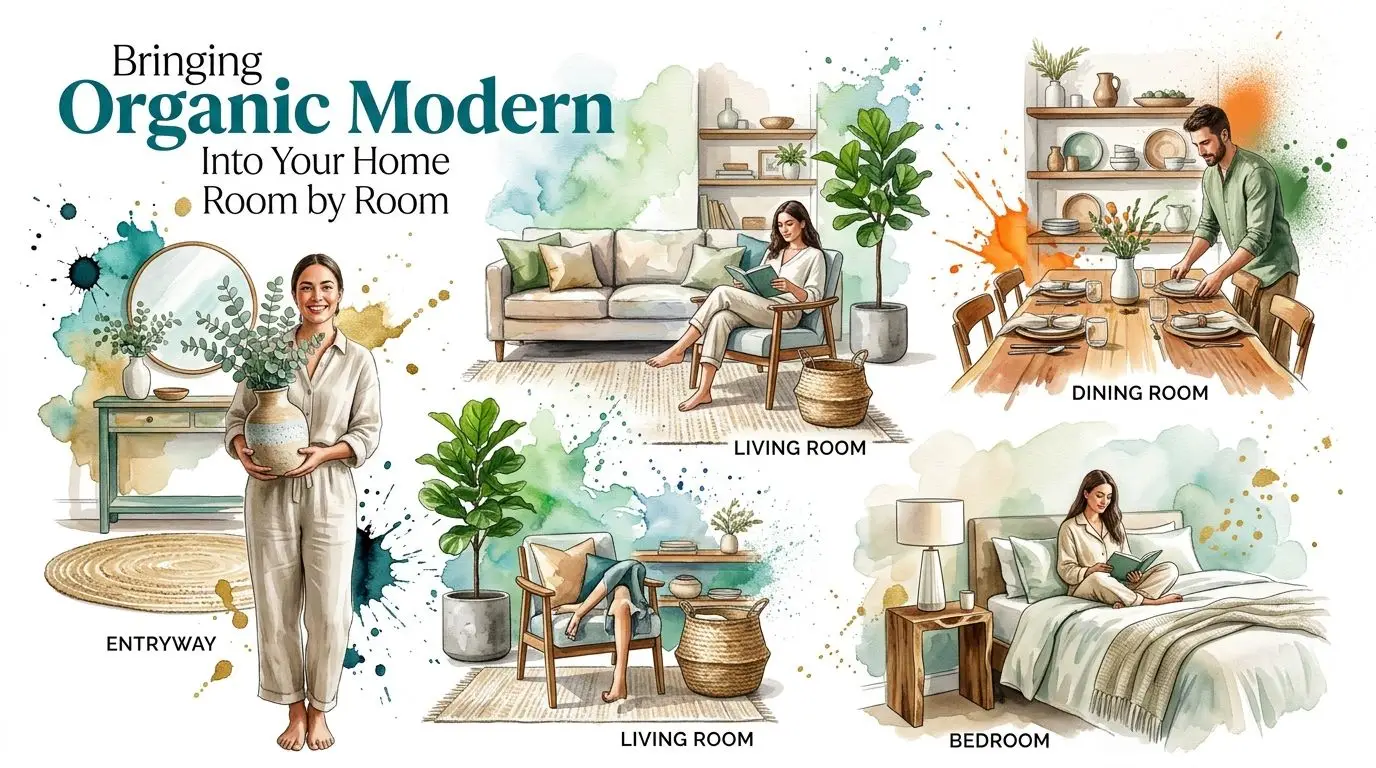
A whole home doesn't need to change overnight. Most successful rooms evolve one decision at a time. The key is choosing anchor pieces first, then letting supporting pieces follow the same language of shape, texture, and tone.
For anyone planning the main seating area, this guide on how to choose living room furniture is a helpful companion to the ideas below.
Living room choices that calm the space
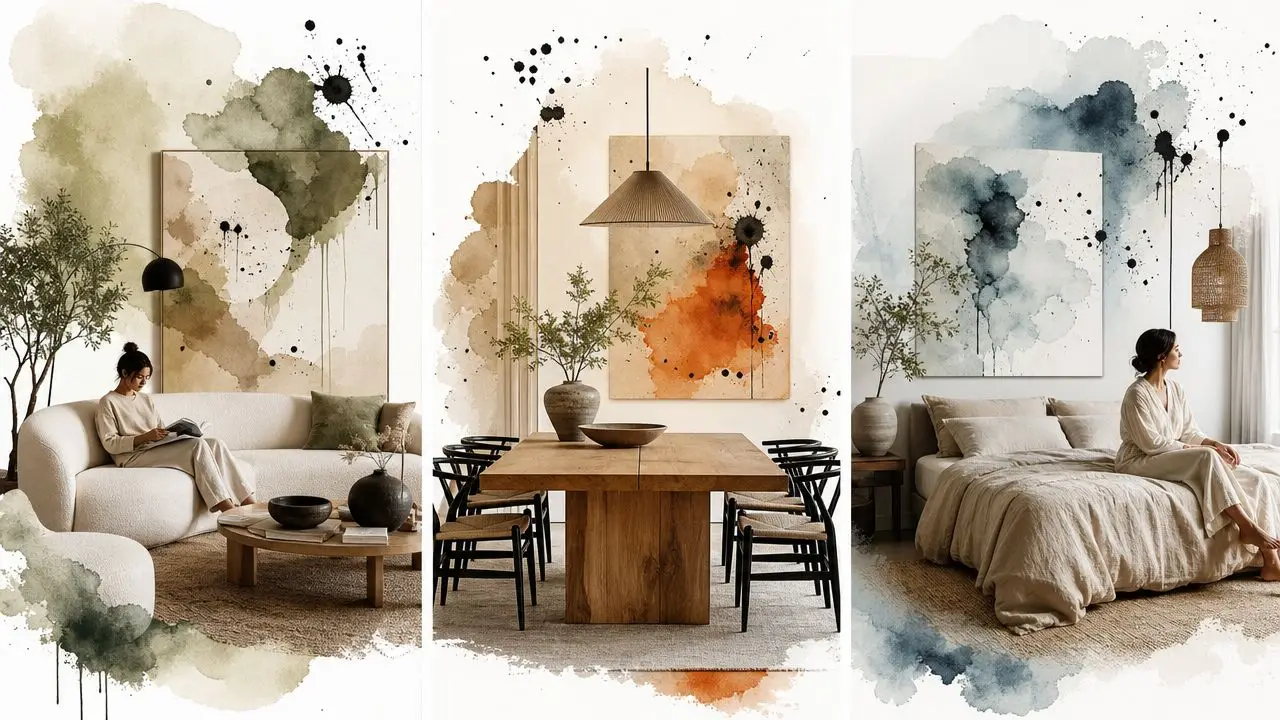
The living room usually sets the tone. A deep sofa in a textured neutral fabric can carry the room without feeling oversized. A solid wood coffee table adds weight and warmth. A soft rug underfoot reduces visual harshness and makes the room feel finished.
This style works best when each piece has a job. A console shouldn't just fill a wall. It should provide storage, visual grounding, or display space for a few meaningful objects.
A practical living room combination might include:
- A structured sofa: Clean lines keep it current. A woven fabric keeps it approachable.
- A wood table with visible grain: This becomes the room's natural focal point.
- One sculptural chair: Curved form adds contrast to the sofa's straighter profile.
- Layered lighting: Soft, indirect light supports the calm mood the style depends on.
The global category behind this look keeps gaining momentum. The organic furniture market was valued at about USD 12.5 billion in 2024 and is projected to reach USD 22.8 billion by 2033, with living room furniture holding over 35% market share and North America accounting for about 42% of global revenue. That concentration helps explain why so many Bay Area buyers are encountering more options in this style.
Dining and bedroom ideas that age well
The dining room benefits from contrast. A substantial wood table creates presence, while chairs with simpler frames keep the room from feeling heavy. If the home has an open plan, the dining area often needs to relate to the living room without copying it. Shared tones help. Repetition doesn't.
The bedroom should feel quieter than the rest of the house. A low-profile bed in linen or another soft textile usually fits the style well. Nightstands in natural wood, understated lamps, and a restrained palette keep the room restful.
A room-by-room approach also prevents common mistakes:
- In the dining room: Don't choose a table based only on trend. The top should suit daily use and future wear.
- In the bedroom: Don't overload the space with decorative pieces. Texture does more than quantity here.
- Across open spaces: Repeat materials softly. A similar wood tone or fabric texture creates continuity without making the home feel matched set.
The result should feel collected, not crowded. Organic modern furniture doesn't ask every room to look identical. It asks them to feel related.
Why Custom Furniture Is a Lifetime Investment
Fast furniture usually creates delayed costs. The initial price may feel manageable, but the compromises show up later in comfort, wear, fit, and replacement. That's why Custom Furniture often makes more sense for buyers who already know what they want their home to become.
Customization changes the outcome
Custom work starts with a simple advantage. The piece can be built for the room instead of forcing the room to adapt to the piece. Scale, finish, fabric, and feel all matter more than often anticipated once the furniture arrives at home.
That's also where long-term value becomes visible. As noted by the business itself, custom order services can include wood species, finishes, high-grade leathers, and designer fabrics. Those choices aren't cosmetic extras. They determine whether a piece suits a busy family room, a formal dining space, or a quieter primary bedroom.
Custom ordering is especially useful when a buyer wants:
- A specific wood tone: Not too orange, not too gray, and appropriate for the flooring.
- A fabric that fits real life: Texture, softness, and cleanability all matter.
- A better proportion: A sofa that fits the wall properly changes the whole room.
- A piece worth keeping: A custom dining table or bed often becomes part of the household for many years.
A well-chosen custom piece doesn't just match the room. It fixes problems the wrong standard piece would create.
For many Bay Area households, Amish Furniture and other American-made styles appeal for exactly this reason. Buyers want craftsmanship that feels steady, not disposable. They want drawers that operate smoothly, finishes that age with dignity, and joinery that supports daily use.
Choosing Your Wood for Custom Organic Modern Furniture
Wood choice affects the mood of the room as much as the construction. Some species look cleaner and lighter. Others feel richer or more formal. The table below gives a practical way to think about selection.
| Wood Species | Key Characteristics | Best For | Giorgi Bros. Customization Note |
|---|---|---|---|
| Oak | Visible grain, grounded look, versatile with many finish directions | Dining tables, bedroom case pieces, statement storage | Works well when buyers want a natural, classic organic modern feel |
| Ash | Cleaner grain, lighter visual weight, modern character | Chairs, tables, and rooms that need an airy feel | A strong option for homes aiming for a lighter palette |
| Walnut | Deeper tone, refined presence, smooth richness | Executive-style pieces, dining rooms, accent pieces | Often chosen when the room needs warmth and contrast |
| Maple | Subtle grain, bright appearance, adaptable finish behavior | Bedrooms, media pieces, casual dining | Useful when a simpler, quieter wood expression is preferred |
The exact right answer depends on the home. Floor color, light exposure, wall tone, and upholstery all influence the decision. That's where Non-Commission Sales Staff and design consultants matter. In a no-pressure environment, the conversation can stay focused on fit, durability, and long-term satisfaction instead of quick turnover.
Organic modern furniture rewards that slower, smarter process. When the wood, finish, and upholstery are chosen with care, the result usually costs less over time than replacing a compromise piece later.
Budgeting and Caring for Your Investment Pieces
Sticker price is only one part of the budget. A better question is how long the piece will serve the household well. A dining table used for years has a different value than one replaced after a short stretch because the finish failed or the scale was wrong.
Think in cost per year
This mindset helps buyers avoid false economy. A lower initial price can be the most expensive choice if the piece wears poorly, feels uncomfortable, or needs replacing long before the room itself changes.
Financing can also make quality more reachable for households that want to buy well instead of buying twice. Financing options are available, which gives buyers more flexibility when they're choosing lasting pieces for a larger home update.
Simple care habits that protect quality
Maintenance doesn't need to be complicated. It needs to be consistent. A few basic habits can preserve the look and feel of organic modern furniture for a long time.
For wood care, this guide to protecting wood furniture from scratches and stains offers practical help. The same principle applies across the home: gentle use and routine attention protect the investment better than occasional heavy intervention.
- For solid wood: Dust with a soft cloth and use coasters or placemats where wear is predictable.
- For upholstery: Vacuum gently with the proper attachment and address spills promptly according to fabric guidance.
- For leather: Keep it away from harsh direct sun when possible and use care products intended for finished leather.
- For bedroom comfort: Rotate and maintain sleep products regularly, especially in rooms furnished with Premium Mattresses and upholstered bed frames.
Stewardship is part of the value. The best furniture still needs a homeowner who treats it like it's meant to last.
Your Timeless Home Starts in South San Francisco
A well-made organic modern home usually begins the same way. A Bay Area family walks into a showroom with saved photos, a rough floor plan, and one practical question beneath all the style inspiration: what will still look right and feel good ten or fifteen years from now?
That is the right question to ask.
Organic modern style earns its place because it solves two problems at once. It gives a room the quiet, refined look many homeowners want, and it stands up to real life when the pieces are chosen with care. The difference is not in the label. It is in the construction, the wood species, the finish, the upholstery, and the scale of each piece in the room.
A beautiful oak dining table can feel very different from a walnut one. A textured performance fabric may suit a home with children far better than a delicate weave that photographs well but wears poorly. Organic modern works much like good architecture. The lines may look simple, but every decision underneath them matters.
For Bay Area buyers, seeing those differences in person often prevents expensive mistakes. Sitting on a sofa for ten minutes tells you more than a product description. Opening drawers, studying joinery, and comparing finishes under real light helps you judge whether a piece offers lasting value or only a polished first impression. That kind of hands-on comparison is especially useful when you are furnishing a home for the long term rather than refreshing a room for a season.
A timeless home comes together through steady choices, clear guidance, and furniture made to age with dignity.
For Bay Area homeowners exploring Furniture South San Francisco, planning a full interior update, or looking for lasting Custom Furniture with thoughtful, no-pressure help, Giorgi Bros. Furniture offers a welcoming next step. Visit the South San Francisco showroom to compare craftsmanship in person and work with a non-commission consultant who can help you choose pieces that fit your home, your budget, and the way your family lives.