
A front door does more work than most rooms get credit for. It catches shoes, bags, jackets, mail, and the first mood of the day. When that area feels scattered, the whole home can feel one step behind. When it feels calm, the house starts to support daily life instead of interrupting it.
That's why front entry benches matter more than they may seem at first glance. They aren't just a place to sit while pulling on shoes. A well-chosen bench gives the entry a job, a rhythm, and a sense of permanence. It can become one of those rare investment pieces that earns its keep every single day.
Table of Contents
- Your Homes First Impression Starts Here
- Exploring Types and Styles of Entry Benches
- The Perfect Fit Finding the Right Size Bench
- Materials Matter Durability for a Lifetime Investment
- More Than a Seat: Storage and Multifunctionality
- Styling Your Entryway Bench and Layout Tips
- The Giorgi Bros Difference Custom Furniture and Expert Guidance
Your Homes First Impression Starts Here
The front door opens after a long day. Someone shifts grocery bags to one arm, toes off wet shoes, drops keys wherever there is space, and keeps moving. By the time the week is over, that small strip of floor by the door is doing too many jobs badly.
A well-chosen front entry bench brings that moment back under control. It gives arriving home a place and a rhythm. Sit. Set things down. Take off shoes. Pause for a second. Guests read that order right away, and so does the rest of the house.
That is why an entry bench deserves more respect than it usually gets. It is not just another piece to fill a wall. It works like the home's handshake. Before anyone sees the living room, the kitchen, or the artwork, they meet the entry. A bench helps that first meeting feel calm, cared for, and ready for real life.
The best benches also earn their place over many years. An entry gets steady traffic in every season, often from people who are tired, distracted, carrying too much, or in a hurry. Furniture in that spot needs to do more than look nice in a photo. It needs to hold up, fit the household's habits, and still feel right after trends have come and gone.
That long view has guided Giorgi Bros. Furniture since 1933 in South San Francisco. In a family business with that kind of history, the conversation is different. The goal is to help homeowners choose a piece they will be glad to live with for decades, whether that means a custom storage bench, a simple wood seat, or a design that reflects clean-lined contemporary furniture styles.
Why the entry deserves real attention
- It gets used every day. Few spots in the home see as much repeated sitting, setting down, and passing through.
- It shapes the mood fast. A settled entry makes the whole home feel more thoughtful within seconds of walking in.
- It rewards craftsmanship. In a hard-working location, sound joinery, durable materials, and a good fit pay back year after year.
For Bay Area homeowners thinking about Furniture South San Francisco, Bay Area Interior Design, or Custom Furniture, the entry is often the smartest place to begin. It is a small area with an outsized effect. Choose the bench well, and you improve both the home's first impression and one of its most repeated daily routines.
Exploring Types and Styles of Entry Benches
Some shoppers know they need a bench, but they aren't sure which kind. That confusion usually comes from treating all benches as if they do the same job. They don't. The right one depends on how the household moves through the door.
A useful way to sort front entry benches is by function first, style second. Once the job is clear, the look becomes much easier to choose. Households drawn to clean-lined contemporary furniture styles often benefit from this approach because it keeps the decision grounded in real use, not just appearance.
What each bench style does best
A standard bench is the simplest option. It offers open seating and a lighter visual footprint. This style suits smaller foyers, homes that already have nearby storage, or entryways where a bench needs to keep the room feeling airy.
A storage bench does more. It may include drawers, cubbies, shelves, or a lift-top compartment. This style works well for families who need a place for everyday shoes, dog leashes, scarves, reusable bags, or sports gear. It often gives the highest day-to-day return because it reduces clutter and seating needs at the same time.
A hall tree combines a bench with a taller back structure, often including hooks, shelving, or a mirror. It can act like a complete entry station. In a home without a coat closet near the door, this style can solve several problems in one piece.
Choosing by routine, not just by look
Material changes the feel as much as the structure does. A wood bench usually feels more timeless and easier to maintain in a hard-working entry. It pairs especially well with homes looking for lasting character, including those drawn to Amish Furniture and other craftsmanship-driven styles.
An upholstered bench softens the room and can feel more refined. It's often a better fit when the entry opens directly into a formal living area and the goal is to make the transition feel gentle and polished. Still, upholstery needs thoughtful fabric selection in a busy doorway.
A quick matching guide helps:
| Household need | Bench style that often fits |
|---|---|
| Minimal clutter, narrow space | Standard bench |
| Shoes and daily gear need a home | Storage bench |
| No nearby hooks or drop zone | Hall tree |
| Warm, classic character | Wood bench |
| Softer, tailored appearance | Upholstered bench |
Selection tip: Start by asking what lands by the door every day. The answer usually points to the right bench faster than any style label will.
The strongest choice isn't always the one with the most features. It's the one that matches the household's habits without making the room feel crowded. That's where good Bay Area Interior Design thinking begins. Not with trend chasing, but with furniture that supports real life.
The Perfect Fit Finding the Right Size Bench
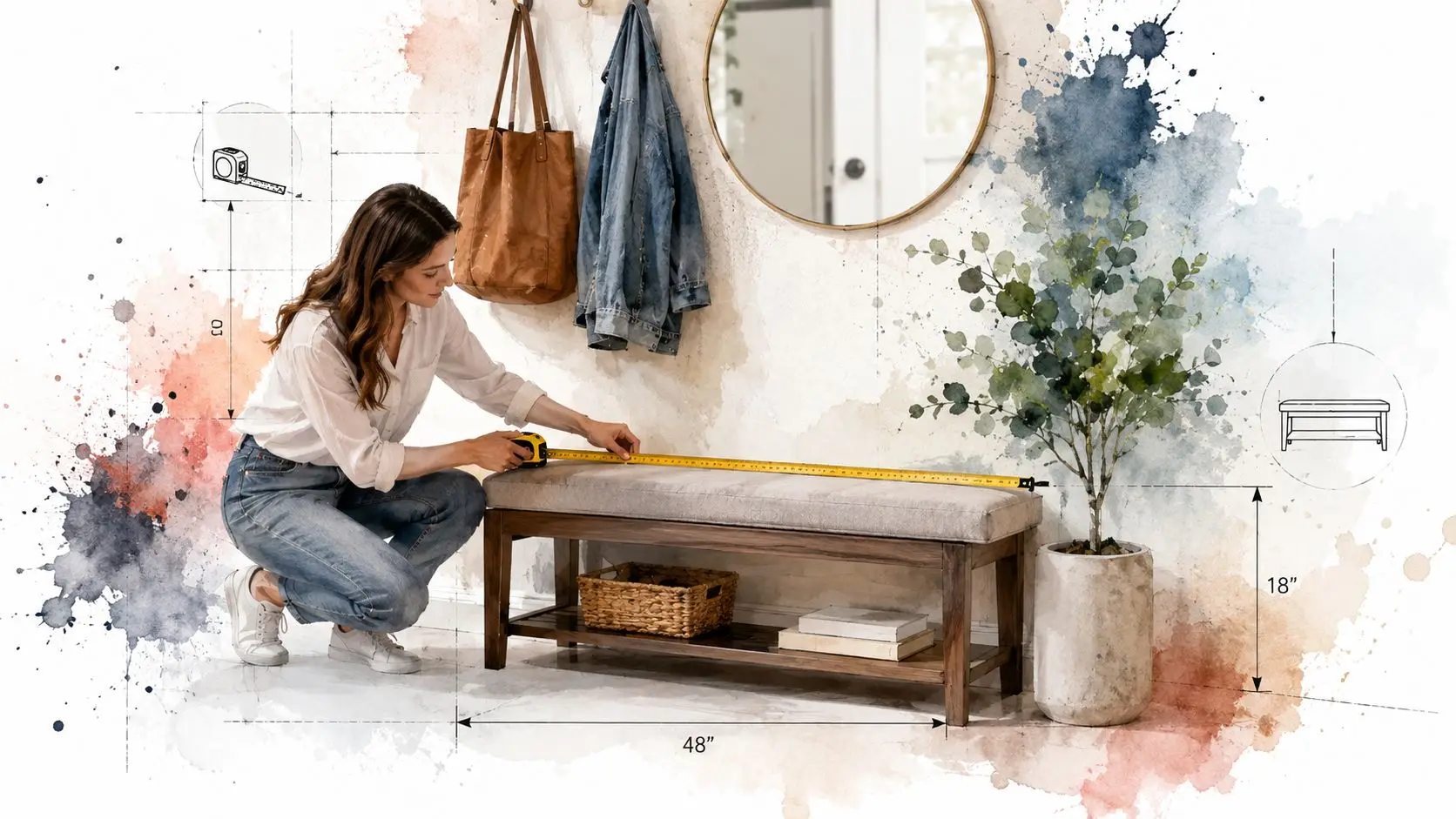
A beautiful bench can still be wrong for the room if it blocks movement or feels awkward to sit on. Scale is where many entryway plans succeed or fail. Fortunately, the basics are straightforward once the right measurements are in hand.
The two measurements that matter most
The first is clearance. Entryways should keep at least 36 inches of clear walking space in front of the bench, and a comfortable seat height is about 17 to 19 inches from the floor. That one guideline prevents a common mistake. A bench may fit on paper, yet still make the room feel pinched once the door swings, people pass through, and shoes collect around it.
The second is bench proportion. In compact homes, smaller benches often work best when they stay visually light and don't push too far into the pathway. For readers who want a practical comparison of how seat depth affects comfort and traffic flow, this Woodstock Furniture bench guide is a helpful companion resource.
Those dimensions become easier to judge when paired with a room-specific guide like Giorgi Bros.’ bench depth seat advice, which focuses on keeping entry seating useful without overwhelming the space.
A simple measuring method
A tape measure and a notepad are enough. The key is to measure for how the room functions, not just for where the bench can physically sit.
- Mark the wall space. Measure the width available for the bench itself.
- Check the traffic path. Measure from the front edge of the future bench to the nearest obstacle across from it.
- Notice door swing and corners. Make sure the bench won't interfere with opening the front door or turning into another room.
- Test seat height mentally. Picture sitting down to remove shoes. If the seat is too low or too high, the bench won't feel natural.
Practical rule: A bench should make the entry easier to move through, not harder.
Many readers get stuck on bench length and forget that depth often causes the primary problem. A piece can look narrow in a showroom photo but still take too much space in a shallow foyer. That's why measurements matter more than guesswork.
When the size is right, the bench almost disappears into the architecture. It feels like it belongs there, which is exactly what a buy-it-for-life piece should do.
Materials Matter Durability for a Lifetime Investment
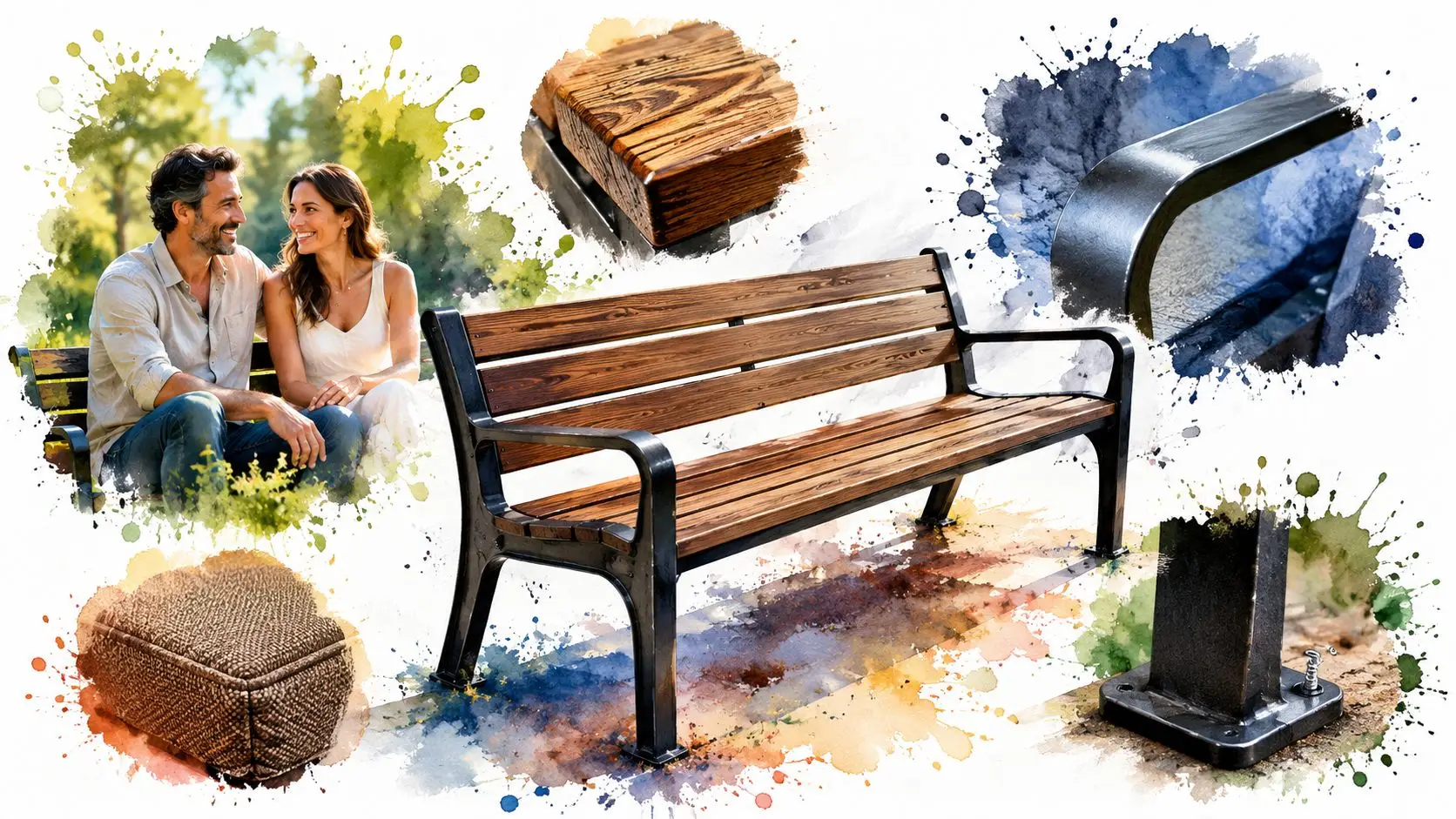
An entry bench lives a harder life than most occasional furniture. People drop bags onto it, slide across it with denim seams, sit on it with damp coats, and brush against it while carrying groceries. If the materials aren't right, wear shows up quickly.

That's why a bench should be judged by more than silhouette and stain color. Surface beauty matters, but structure and finish decide whether the piece ages gracefully or starts looking tired too soon. The idea of “buy it for life” thus becomes practical, not sentimental.
What holds up in a hard-working entry
Solid wood remains one of the strongest choices for front entry benches. It carries visual warmth, can handle repeated daily use, and often looks better as the years pass. Households interested in Custom Furniture or Amish Furniture tend to appreciate this for the same reason. The material has integrity, repair potential, and a sense of permanence.
For readers comparing construction approaches, this guide on solid wood vs veneer helps clarify what each material does well and where each makes sense. In an entry, the answer often depends on how much abuse the bench will take and whether the household wants a piece that can stay in service for decades.
Metal can also play a useful role, especially in frames or accents, but the bench still needs a seat surface that feels substantial and comfortable. Upholstery adds softness, though it works best when the fabric choice is practical and the room isn't constantly exposed to dirt or moisture.
Construction details worth checking
For long-term durability, a front entry bench's top surface should be 1–1.25 inch-thick solid wood, and the finish should be a high-quality water-based polyurethane or acrylic enamel for abrasion resistance and scrubability in high-traffic zones. That detail tells shoppers what quality looks like in plain terms.
A few checkpoints help separate a lasting piece from a short-term one:
- Look at thickness. A thin top can feel insubstantial and may not wear as well over time.
- Ask about finish. Entry furniture needs a finish that can handle repeated wiping and friction.
- Check edges and corners. Softer eased edges usually feel better in daily use than sharp profiles.
- Study the joinery. A bench should feel steady when weight shifts on and off it.
Materials aren't just about appearance. They determine whether the bench still feels dependable years after the newness wears off.
This is also where long-term value becomes a sustainability issue. A well-made bench that stays useful for many years keeps one more disposable piece out of the replacement cycle. It may cost more up front, but repeated replacement usually costs more in the long run. Quality furniture isn't just a style preference. It's a smarter use of resources.
More Than a Seat: Storage and Multifunctionality
A front entry bench earns its keep in the first five minutes of the day. Someone sits to tie a shoe. A wet umbrella needs a home. Keys need to land somewhere other than the nearest countertop. The right bench handles those small moments, and over time, that steady usefulness shapes how the whole entry feels.
That is why storage should follow real household habits, not a feature checklist. A bench can look clever on paper and still be awkward in daily use. Homeowners reading about multi-functional furniture for modern homes often discover that the most satisfying pieces are the ones that fit routines naturally.
A good entry bench works like a well-planned mudroom in smaller form. It gives every frequent item a logical place, so the doorway stops collecting loose belongings by default.
Storage types that solve real problems
Open cubbies suit the pairs of shoes that come on and off every day. They keep everything visible, which helps busy households stick with the habit because no one has to hunt.
Drawers are better for the little things that make an entry look untidy fast. Gloves, dog leashes, flashlights, shopping bags, and spare chargers all fit out of sight while staying close at hand.
A lift-top bench is useful for bulkier items or things used less often. Extra scarves, seasonal accessories, reusable totes, or a small throw can stay tucked away without crowding the room.
How to match storage to daily life
Start by paying attention to what gathers near the door. The floor and nearby surfaces usually tell the truth faster than any wish list does.
- Notice what appears every day. Shoes, backpacks, pet gear, and mail need the easiest access.
- Separate quick-grab items from occasional items. Daily essentials belong in open or top-level storage. Seasonal pieces can go deeper inside.
- Be honest about visibility. Some families do well when everything is in sight. Others need closed storage to keep the entry calm.
This is the part many shoppers miss. More compartments do not always mean a better bench. If the storage is too fussy, people stop using it. The best design feels almost obvious, like a staircase with the right tread depth. You do not think about it because it works.
A multifunction bench can also replace the extra basket, shelf, or small cabinet that often sneaks into the entry later. That saves floor space and helps the room hold its shape over time. For homes that welcome guests through the front door regularly, even nearby accents should support that same sense of order. A restrained decorative touch, such as ideas that enhance your decor with hurricane holders, works best when it complements function instead of competing with it.
The lasting value is simple. A well-chosen bench is not just a seat with storage. It is a hardworking piece of the home's daily routine and first impression, built to serve for years rather than solve clutter for a season.
Styling Your Entryway Bench and Layout Tips
Once the bench is in place, styling should support function, not bury it. An entry looks better when it feels lightly finished, not over-decorated. The best arrangements keep the seat usable and the pathway clear.
How to make the bench feel finished
A few carefully chosen elements can make a bench feel settled into the room. A small pillow or cushion can soften a wood seat. A folded throw can add warmth if the entry opens into a living area. A tray nearby can corral keys and mail so the bench itself doesn't become a dumping ground.
The most successful styling usually mixes comfort with restraint:
- Add softness sparingly. One cushion often looks more polished than several.
- Keep surfaces useful. If people can't sit down without moving décor, there's too much on or around the bench.
- Repeat nearby finishes. Wood tone, metal accents, or fabric color should connect to the adjacent rooms.
For homeowners who like candlelight as part of the entry mood, this guide to enhance your decor with hurricane holders offers ideas that work well when used with restraint and placed safely on a nearby surface rather than crowding the bench.
Placement choices that improve flow
Placement affects both beauty and usability. A bench should feel grounded by the wall or architectural niche around it. If there's room, a mirror above can brighten the area visually, and a small side surface nearby can help with keys or mail. But the bench should remain the working piece, not just background décor.
A few layout habits usually produce better results:
- Let the bench breathe. Avoid squeezing it between oversized pieces.
- Keep access natural. A person should be able to sit and stand without twisting around obstacles.
- Balance height nearby. Wall art, a mirror, or hooks can give the bench visual presence without adding floor clutter.
A styled entry should still feel ready for muddy shoes, grocery bags, and rushed mornings.
Often, Bay Area Interior Design achieves its strongest results this way. Not by filling every inch, but by letting a practical investment piece carry the room with confidence. The bench sets the foundation. Styling should help it belong.
The Giorgi Bros Difference Custom Furniture and Expert Guidance
A front entry bench can look simple on a showroom floor. Then real life steps in. The wall is narrower than expected, the floor has a strong undertone, and the bench that looked right online suddenly feels too deep, too cool, or too formal for how your household comes through the door.
That is usually the moment people realize they are not just choosing a seat. They are choosing a piece that will shape the first five minutes of every day and the first impression of the home for years to come. A well-made bench works like a good front porch. It welcomes, supports, and holds up through daily use without asking for attention.
Custom furniture often makes sense for that reason. In an entry, small decisions have a big effect. An extra few inches in depth can tighten the walkway. The wrong wood tone can fight with nearby trim. A seat surface that looks beautiful but wears poorly can become a frustration fast.
A custom order helps solve those practical problems with care:
- Material coordination. The bench can sit comfortably with nearby flooring, millwork, and casegoods instead of looking like it came from another room.
- Everyday comfort. Seat height, cushion feel, upholstery, or exposed wood can reflect how the household puts on shoes, drops bags, and moves through the space.
- Long-term value. A bench chosen with patience is more likely to stay through paint changes, remodels, and changing tastes.
For homeowners who want the process explained clearly, this guide to custom furniture made simple shows how a personalized piece comes together without making the experience feel complicated.
Good advice matters too.
Buying a lasting bench should feel like sitting down with someone who knows furniture construction, understands room flow, and is willing to answer plainspoken questions. Scale, finish, joinery, cushion density, and wear over time all matter more here than they do with a quick purchase meant to last a few seasons.
That is why an in-person visit still helps. Photos flatten proportion. Finish color shifts from screen to daylight. A bench that seems substantial in a picture may feel slight in person, while one that looks heavy online may suit the room beautifully. When you can touch the wood, study the craftsmanship, and sit on the piece yourself, the decision gets clearer.
A no-pressure setting makes that easier. People choose better when they have room to compare options, ask honest questions, and think about how the piece will live in the home ten years from now, not just how it looks this weekend.
Flexible payment can help as well, especially for households trying to choose between a short-term substitute and a piece worth keeping. The better investment is often the one that belongs to the house, serves the routine well, and still looks right after years of use.
For homeowners ready to choose front entry benches with care, Giorgi Bros. Furniture offers a place to compare materials in person, discuss dimensions and finishes, and work with Design Consultants in a calm, informative setting. If you are furnishing a new home, updating an entry, or planning a bench built for daily life, a design consultation can help you choose a piece that fits your space, your style, and the story your home tells from the moment the door opens.