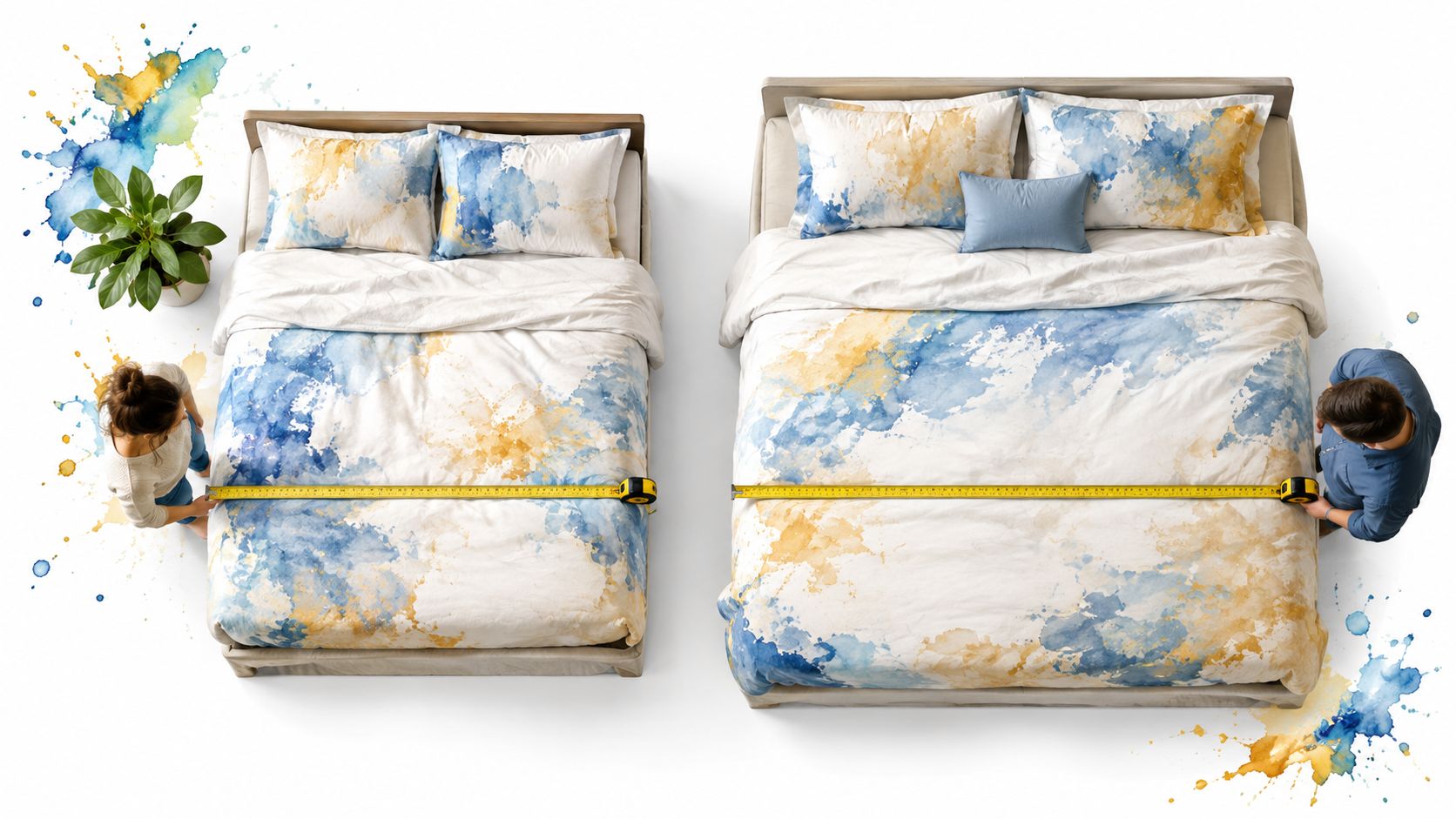
A king mattress is 16 inches wider than a queen, adding 1,280 square inches of sleeping area while keeping the same 80-inch length. That extra width can improve a couple's comfort, but it can also take away the floor space that makes a bedroom useful.
The choice usually appears after a familiar moment. A couple stands in the bedroom with a tape measure, wondering whether a larger bed will finally solve restless nights, or whether it will leave no sensible place for nightstands, drawers, or a dresser. The right answer isn't just “buy the biggest mattress that fits.” It depends on sleep style, room geometry, furniture placement, and long-term value.
For decades, queen and king have remained the two dominant standard mattress sizes in North America. Queen was introduced in 1958 and king followed in 1960, with dimensions that have stayed stable since that era. The standard size comparison from Tuck confirms the essential distinction: queen measures 60 by 80 inches, while king measures 76 by 80 inches.
| Feature | Queen mattress | King mattress |
|---|---|---|
| Width | 60 inches | 76 inches |
| Length | 80 inches | 80 inches |
| Sleeping surface | 4,800 square inches | 6,080 square inches |
| Main advantage | Easier room planning | More personal sleeping space |
| Best fit | Singles, couples, compact bedrooms | Couples, shared sleeping, larger bedrooms |
Understanding Queen and King Dimensions
Standing in an empty bedroom makes mattress dimensions harder to judge than expected. A paper outline on the floor helps, but the important point comes first: the king is not longer than the queen. Both mattresses measure 80 inches from head to foot. The entire difference is the king's additional width.
The 16-inch decision
A standard queen measures 60 by 80 inches, while a standard king measures 76 by 80 inches. The king therefore adds 16 inches of width, increasing the sleeping surface from 4,800 square inches to 6,080 square inches, or roughly 26.7% more area. These figures are documented in Tuck's queen versus king mattress guide.
That width changes the room more than the length does. A queen can leave enough space for a substantial nightstand on each side and still preserve a comfortable route around the bed. A king may give two sleepers a noticeably more generous personal zone, yet force the dresser closer to a doorway or reduce the usable space at the foot of the bed.
The dimensions also explain why height rarely settles this particular debate. The National Council on Aging's mattress size guide identifies both queen and king as 80 inches long, with maximum sleeper height guidance of about 6'2". For most buyers, the choice is therefore about side-to-side room, not extra legroom.
Why these sizes remain standards
Queen and king proportions have held steady since the late 1950s and early 1960s. That stability matters because it supports a broad ecosystem of compatible frames, foundations, bedding, and bedroom furniture. Buyers aren't choosing an unusual format that may create replacement headaches later.
Market demand also reflects this practical balance. Queen held 48.35% of the global mattress market in 2025, according to Mordor Intelligence's mattress market report. The same source reports that queen accounted for 44.65% of the U.S. mattress market and 47.61% of North American market share in 2025, while king was projected to grow at an 8.64% CAGR globally through 2031. Queen is the mainstream volume choice, but king demand remains strong among shoppers willing to give the bed more room.
Comparing Sleep Comfort and Space Needs
The king's extra width matters most after the lights go out. Two adults can sleep on a queen comfortably, but the 60-inch width gives the pair less room to separate, turn, or spread out. A king changes the experience by providing 16 additional inches across the mattress, not by creating more length.
Match the size to the sleepers
A queen usually suits a single sleeper who wants room without allowing the bed to dominate the bedroom. It also works well for couples who sleep close together, remain fairly still, or prioritize open floor space. For a guest bedroom, the queen is often the more balanced choice because it welcomes two adults without demanding a large furniture arrangement.
A king earns its place when personal space has a direct effect on sleep. Restless sleepers, couples with different bedtime schedules, and people who prefer to stretch across the bed will generally appreciate the wider surface. The same applies when a child or pet regularly joins the sleeping arrangement. The recommendation becomes especially clear when a couple already feels crowded on a queen and has a bedroom that can preserve usable circulation.
The king doesn't automatically improve comfort for everyone. A single sleeper in a compact room may gain surface area but lose a comfortable path to the closet, a useful reading chair, or accessible storage. That trade-off can make the queen the better overall investment.
| Scenario | Queen preference | King preference |
|---|---|---|
| Single sleeper | More practical floor space and easier furnishing | Worth considering for expansive sleeping habits |
| Couple who sleeps close | Efficient and comfortable | Extra width may be unnecessary |
| Restless sleepers | Can feel restrictive | More room to limit accidental contact |
| Child or pet sharing | More likely to feel crowded | Better accommodation for shared sleep |
| Compact primary bedroom | Preserves circulation and furniture options | May make the room feel overfilled |
| Large bedroom | Leaves room for additional furnishings | Fills the room with a substantial focal point |
For readers furnishing a smaller bedroom without sacrificing character, this guide to furnishing a small space without losing style offers useful layout context. The practical conclusion is simple: choose the king for sleeping space, not for status. Choose the queen when room function matters just as much as mattress width.
How to Measure Your Bedroom for the Right Fit
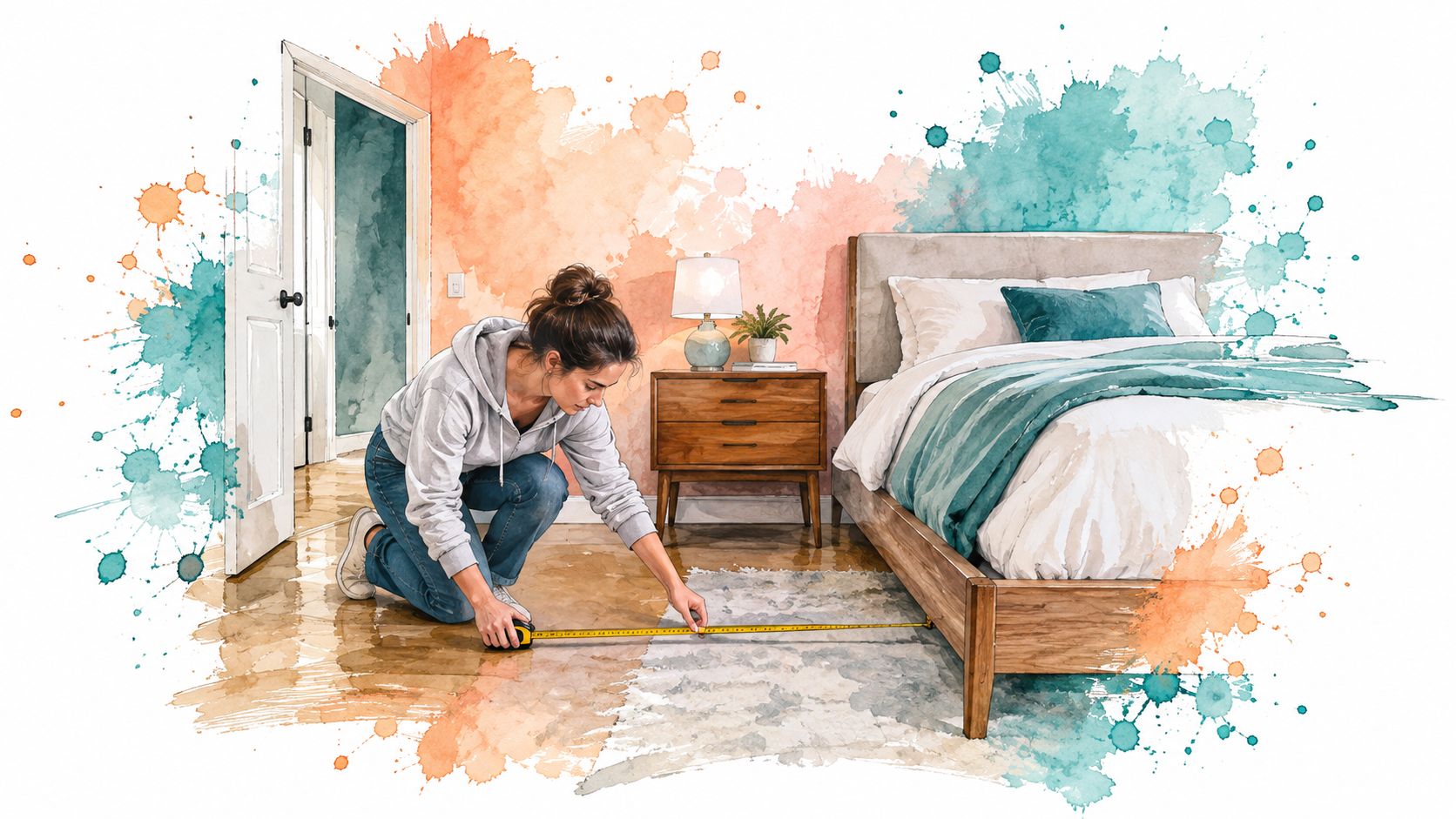
A mattress can physically fit in a room and still make the room fail. Buyers often measure the open rectangle, place the bed in the middle, and discover later that a drawer won't open fully or that walking from the door to the closet requires an awkward detour.
Neutral mattress guidance commonly recommends a room of roughly 10 by 10 feet for a queen and 12 by 12 feet or larger for a king. Sleep Foundation's queen versus king comparison uses those room guidelines while emphasizing the more important test, the usable floor left after the bed and supporting furniture are placed.
Start with the complete footprint
Measure the mattress location from wall to wall, then account for the bed frame. A platform, upholstered rail, or substantial headboard can extend beyond the mattress dimensions. Don't draw only a 60-by-80-inch or 76-by-80-inch rectangle. Mark the actual bed frame footprint on the floor with painter's tape.
Next, place the furniture that the room needs:
- Nightstands: Mark their full width and depth beside the headboard.
- Dresser access: Open every drawer in the planned position, not just the top drawer.
- Closet doors: Test both hinged and sliding doors if the room has them.
- Walking routes: Trace the path from the entrance to the bed, closet, bathroom, and windows.
- Future flexibility: Leave enough room for furniture changes rather than designing a layout that works only on paper.
A king can fit in a room that falls short of the commonly recommended footprint, but the result may feel compromised. The question isn't whether the mattress crosses the threshold. It's whether the bedroom remains easy to use every day.
Let geometry decide
Room shape matters as much as room area. A long, narrow bedroom may handle a queen with a dresser at the foot, while a squarer room may accommodate a king more naturally. Door swings, radiators, windows, built-in storage, and sloped ceilings can change the answer before furniture enters the room.
Practical rule: The largest mattress isn't the best choice if it blocks the room's most important functions.
Sleep style should enter the measurement process before the purchase. A couple who needs extra separation should test a king outline, then check whether the remaining paths feel natural. A couple who sleeps close may prefer a queen and use the recovered space for a better dresser, reading chair, or custom storage piece.
For a more deliberate furniture arrangement, Giorgi Bros. Furniture's room layout planning service can help connect mattress dimensions with the rest of the bedroom. Measure twice, tape the footprint once, and walk through the room before choosing based on showroom appearance alone.
Bedding, Frames, and Hidden Cost Differences
The mattress tag is only one part of the decision. A king affects the foundation, frame, bedding, delivery process, and the amount of physical effort required to position the bed. A queen usually offers more buying flexibility because it serves a larger mainstream market, while a king often requires a more deliberate plan.
Build the ownership picture
King bedding typically costs more and can offer fewer low-cost choices than queen bedding. That doesn't make king bedding poor value. It means the larger sleep surface creates a larger replacement commitment whenever sheets, blankets, or other accessories need updating.
The frame deserves close attention. A king's wider span calls for a properly engineered support system, and some setups use a center-support foundation or split construction. A split king can also make sense for couples who want separate adjustable positioning or different firmness preferences. Before ordering, the mattress, foundation, frame, and adjustable base should be checked as one compatible system.
Giorgi Bros. Furniture's custom bed set options are relevant for shoppers who want the sleep system and surrounding furniture to work together. Custom order services can address fabrics, leathers, wood species, and finishes, which matters when a bed is intended to remain part of a room for years rather than be replaced with each design change.
Consider handling and delivery
A wider mattress is more demanding to move through hallways, stairways, elevators, and tight turns. Apartment layouts deserve special attention because the route into the bedroom may be more restrictive than the room itself. Buyers should measure entry doors, corridors, stair landings, and the bedroom door before committing to a large, rigid setup.
The same thinking applies to future moves. A queen provides more flexibility if a household may relocate to a smaller home. A king makes more sense when the bedroom is stable and the household intends to keep the bed in place for the long term.
A lower purchase commitment isn't the same as lower value. A queen that preserves the room's function can be a wiser investment than a king that forces years of awkward compromises.
A buy-it-for-life approach also changes how cost should be judged. Quality furniture and sleep products cost more upfront in some cases, but durable construction, compatible components, and a finish that continues to suit the home can reduce replacement decisions over time. That is a sustainability choice as much as a financial one. Buying fewer, better investment pieces keeps usable materials in service longer and avoids short-term upgrades that solve the wrong problem.
Why Testing at a Showroom Changes Everything
Measurements narrow the decision, but they can't tell a sleeper how a mattress feels after several minutes in a natural position. A queen and a king can use the same mattress construction while creating different sensations because the available personal space changes how each person lies, turns, and settles.
Test the mattress and the room together
A useful showroom visit should include more than a brief sit on the edge. Each sleeper should lie down in the preferred position, change positions, and notice whether the shoulders, hips, and lower back feel supported. Couples should test the mattress together, because a surface that feels comfortable alone can feel different when both sleepers move.
The surrounding bedroom arrangement matters too. A king bed may feel luxurious in isolation but oversized once nightstands and a dresser are added. Comparing bed frames, mattress heights, and bedside furniture in person gives the buyer a clearer view of the finished room.

Giorgi Bros. Furniture has served South San Francisco and the Bay Area for over 90 years, with a 50,000-square-foot showroom that includes a dedicated sleep gallery. The family-owned business uses non-commission Consultants, so the conversation can stay focused on fit, comfort, design, and long-term use rather than an aggressive upgrade.
Connect comfort with customization
The showroom includes premium brands such as American Leather, Hancock & Moore, and Simply Amish. More to the point for a bedroom renovation, Giorgi Bros. Furniture offers custom order services rather than limiting shoppers to what is already on the floor. Buyers can discuss designer fabrics, high-grade leathers, wood species, and finishes while coordinating the mattress with the rest of the room.
That approach supports Bay Area Interior Design projects where the bed needs to work with existing furniture, flooring, and architectural details. The team also provides white-glove delivery across the Western United States with flat per-location pricing, while a nationwide carrier network supports areas outside the direct delivery zone.
For the furniture around the mattress, this comparison of a nightstand and an end table helps clarify which bedside piece serves the room better. A good consultation doesn't push the largest size. It identifies the size that lets the entire bedroom work.
Your Final Decision Checklist
A couple choosing between queen and king often knows the answer once the decision is reduced to the room and the night. If the bedroom feels tight with a taped king outline, the queen is the sensible choice. If the room remains open and one sleeper repeatedly wakes from the other's movement, the king earns its space.
Use this checklist before placing an order:
- Confirm the mattress footprint. Queen is 60 by 80 inches, and king is 76 by 80 inches. Both preserve the same length, so the decision turns on width.
- Test the actual room. Mark the bed and frame on the floor, then check doors, drawers, nightstands, and walking paths.
- Name the sleep problem. Is the issue crowding, movement, shared sleep, or a preference for more open space? The answer should guide the upgrade.
- Calculate the complete setup. Include the foundation, frame, bedding, adjustable base, delivery route, and future replacement needs.
- Plan for the home's future. A queen suits households that may move or repurpose the room. A king suits a stable bedroom where personal sleep space is the priority.
- Test before committing. A showroom consultation can reveal comfort and layout issues that measurements alone won't show.
Buyers comparing materials and construction can also use The Sleep Consultant mattress guide as a general educational resource before visiting a showroom. For a direct side-by-side reference, the Giorgi Bros. mattress comparison chart can help organize the final discussion.
Giorgi Bros. Furniture brings a family-owned, non-commission approach to the decision, along with flexible financing options, premium mattresses, adjustable bases, Amish Furniture, and custom bedroom furnishings. The point isn't to sell a larger bed. It's to help a buyer choose an investment piece that supports comfortable sleep, sensible room design, and long-term value.
Giorgi Bros. Furniture offers premium mattresses, adjustable bases, custom bed frames, and design guidance in a non-commission showroom in South San Francisco. Visit the showroom to test queen and king options side by side, or book a Design Consultation for help planning a bedroom that fits both the sleepers and the room.