A nightstand is a bedroom piece typically 24–28 inches tall, with enclosed storage for bedtime essentials. An end table is a living-room piece usually 22–26 inches tall, designed as an open surface beside a sofa arm. The same compact table can often serve both roles when its height and storage align with the furniture around it.
A homeowner can still feel uncertain while standing in a showroom with a lamp in one hand and a tape measure in the other. The table looks right beside a bed, but its open shelf suggests a living room. Another piece has a drawer and a polished finish, yet its proportions could work beside a reading chair. The label helps, but it shouldn't make the decision for you.
The practical question is simpler: what furniture will the table serve, what must it hold, and where should its surface sit for comfortable reach? Those answers matter more than whether a product tag says “nightstand” or “end table.”
The Bedroom-Living Room Dilemma Homeowners Face
A Bay Area homeowner might enter a furniture showroom searching for a nightstand and leave considering a small end table instead. Perhaps the bedroom has a tall platform bed, limited floor space, and a preference for lighter furniture. A traditional nightstand may feel too bulky, while a slim end table could provide the needed surface without crowding the room.
The reverse happens in a living room. A homeowner may find a compact table with a drawer that fits beside a sofa, even though the piece was designed for a bedroom. The drawer could be useful for remotes, reading glasses, or charging cables, provided the tabletop sits at a comfortable level beside the sofa arm.
Why the labels create confusion
Furniture categories developed from room-specific habits, but contemporary homes use rooms more flexibly. Open-plan layouts, reading corners, compact apartments, and multipurpose guest rooms have encouraged homeowners to judge pieces by scale and function rather than by category alone.
The distinction still provides a useful starting point. A nightstand usually supports a sleep routine, while an end table supports seated activities. Yet modern tables often share materials, silhouettes, finishes, and compact footprints. A round wood table can look natural beside an armchair or a bed. A narrow cabinet can support either setting when its proportions work.
Homeowners planning a larger room may also find useful context in this guide to choosing living room furniture, especially when a side table must relate to seating, lighting, and circulation.
The question to ask before shopping
Before focusing on the name, identify the furniture beside which the table will live. Then consider the routine around that furniture.
- Reach point: Will someone use the table while lying in bed, sitting on a sofa, or sitting in a chair?
- Storage need: Do personal items need to disappear behind a drawer or door, or is an open surface enough?
- Room footprint: How much width and depth can the space accept without blocking movement or opening drawers?
- Visual role: Should the piece blend with a bedroom collection, or act as a lighter accent in a seating area?
This approach prevents a common mistake. A table can look attractive in the showroom and still feel awkward at home if its surface is too high, too low, too deep, or too open for the way the room is used.
Historical Origins and Modern Convergence of Bedside and Side Tables
The modern nightstand grew from a practical need. In 17th-century Europe, simple stands and small cabinets sat beside beds to hold candles, books, or chamber pots, as documented in this history of bedside tables. These early forms weren't primarily decorative. They supported nighttime routines and private necessities.
By the 18th and 19th centuries, bedside furniture had developed into purpose-built cabinets with drawers or shelves. The changing design reflected indoor plumbing and evolving bedroom habits. An especially notable form appeared in 18th-century France, where the night table or commode often concealed a chamber pot before gradually becoming a more decorative storage cabinet.
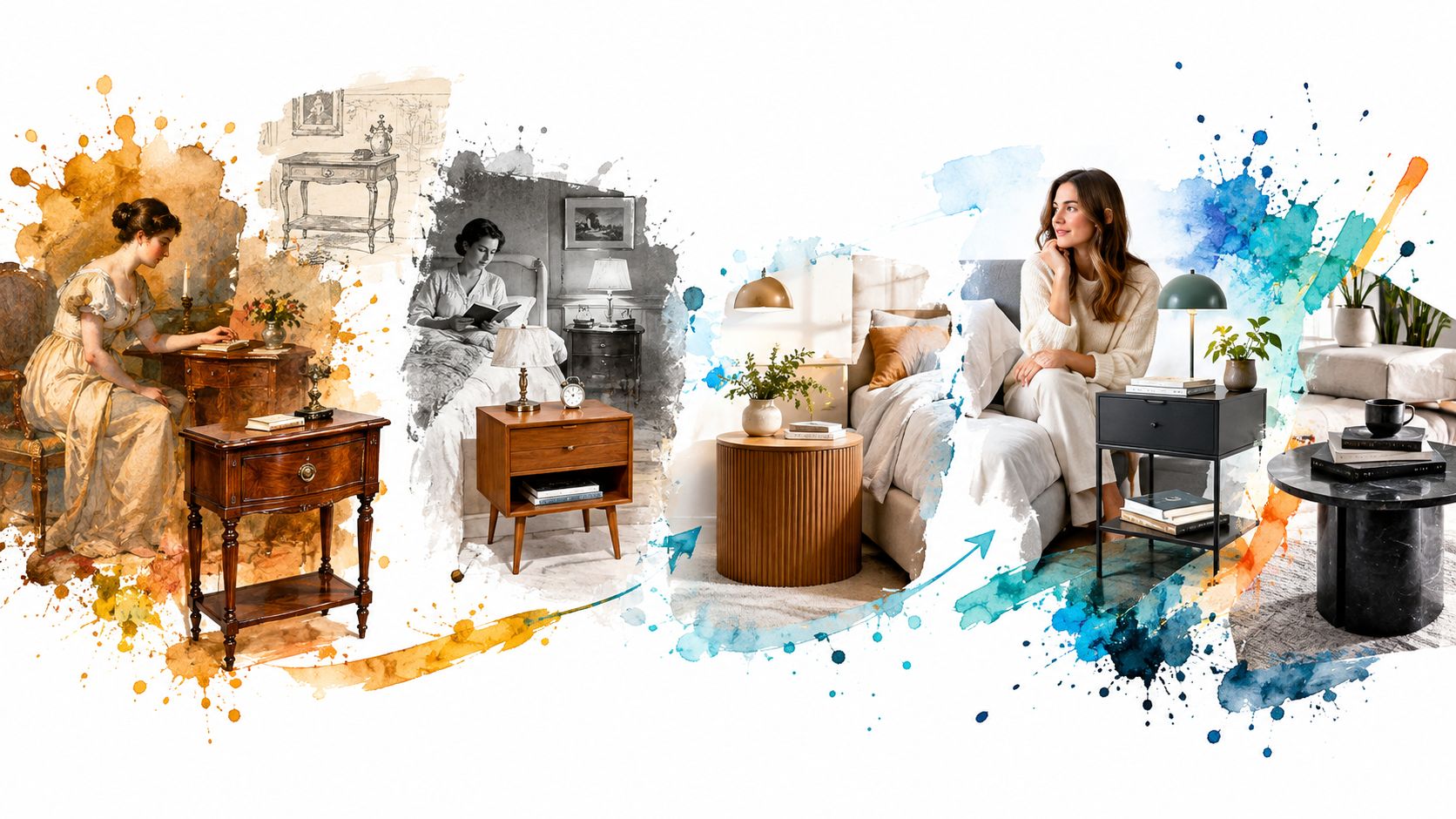
Two different domestic traditions
End tables followed another path. They developed as companions to sofas, armchairs, and later conversational furniture arrangements in domestic interiors. Their primary role involved keeping a lamp, drink, book, or small object within reach while someone sat.
That distinction explains the traditional room rule. A nightstand belongs beside a bed, while an end table belongs beside seating. The furniture label reflects a historical relationship between the piece and the activity taking place around it.
The broader furniture category also includes side tables and occasional tables, which can serve several purposes. Modern terminology has blurred the boundaries because compact tables now move between bedrooms, living rooms, reading areas, and home offices. The historical use patterns remain helpful, but they no longer determine every successful placement.
Why modern homes encourage crossover
Contemporary Bay Area homes often ask furniture to do more with less space. A side table may need to function beside a sofa during the day and beside a guest bed later. A bedroom may include a lounge chair where an end table feels more appropriate than a matching nightstand.
The convergence doesn't make the categories meaningless. It makes context more important than the label. The table must still meet the height, storage, footprint, and style requirements of its new setting. A piece with an open base may work beautifully beside a chair but leave a bedside area visually cluttered. A cabinet-style nightstand may offer excellent bedside organization but feel heavy beside a delicate sofa.
History gives homeowners the reason for the distinction. Daily use determines whether the distinction matters in a particular room.
Key Differences Between Nightstands and End Tables Explained
A table can look right in a showroom and still feel awkward at home. The useful comparison rests on height alignment, storage functionality, and visual style, with charging access and mixed-room styling now shaping many decisions. These criteria explain how a piece will work after it leaves the showroom.
| Criterion | Nightstand | End table |
|---|---|---|
| Primary setting | Beside a bed | Beside a sofa or armchair |
| Typical height | 24–28 inches | 22–26 inches |
| Height reference | Mattress top | Sofa or chair arm |
| Common storage | Drawers or enclosed compartments | Open shelf or tabletop |
| Typical use | Lamp, phone, book, charging devices, and personal essentials | Drinks, books, remote controls, lamp, and decor |
| Visual character | Often coordinated with bedroom furniture | Often used as an accent or occasional piece |
Height follows the furniture beside it
A nightstand should generally sit level with the mattress or 2–6 inches below it. That relationship keeps a phone, reading light, or glass of water within reach without forcing the shoulder upward or the arm downward, as described in this comparison of end tables and nightstands.
An end table uses the sofa or chair arm as its reference point. Its surface should usually sit within about 2 inches of the arm, allowing a seated person to reach across without bending awkwardly. A table that suits a low armchair may be too short beside a tall sofa, even when both pieces look similar in photographs.
Ergonomic height matters more than the category printed on the tag.
Practical rule: Match the table to the furniture beside it, not to the product category printed on the tag.
Charging needs also affect height and placement. A bedside table may need a lamp, phone, charging cable, and water within easy reach, while an end table may only support a drink, book, or lamp. Plan for those actions before choosing a surface or storage layout.
Storage changes the daily experience
Nightstands commonly include drawers, doors, or enclosed compartments. This construction keeps charging cables, reading glasses, and personal accessories close without leaving them visible. An end table often gives priority to an accessible top and a lighter lower structure. An open shelf can hold books or a basket, while a tabletop-only design keeps the living room visually simple.
Storage changes visual weight as well. A closed cabinet creates a grounded, substantial appearance. An open table leaves more floor visible, which can help a compact room feel less crowded.
Style should support the room's rhythm
Bedroom furniture often works as a coordinated system. A nightstand may echo the bed, dresser, hardware, wood tone, or finish. End tables can act more independently, bringing a different shape or material beside seating. This mixed styling works when scale and finish create a clear relationship rather than an accidental mismatch.
A homeowner considering oak end tables for a living room can apply the same design logic in a bedroom by checking wood tone, scale, and visual balance. Complementary furniture usually creates more character than forced uniformity, especially when the table supports the room's actual charging, storage, and seating needs.
How to Measure and Plan Your Space Before Buying
A table can look right in a showroom and still feel awkward at home. Measure the furniture it will serve first, then check the surrounding floor area, clearances, storage access, and charging path.
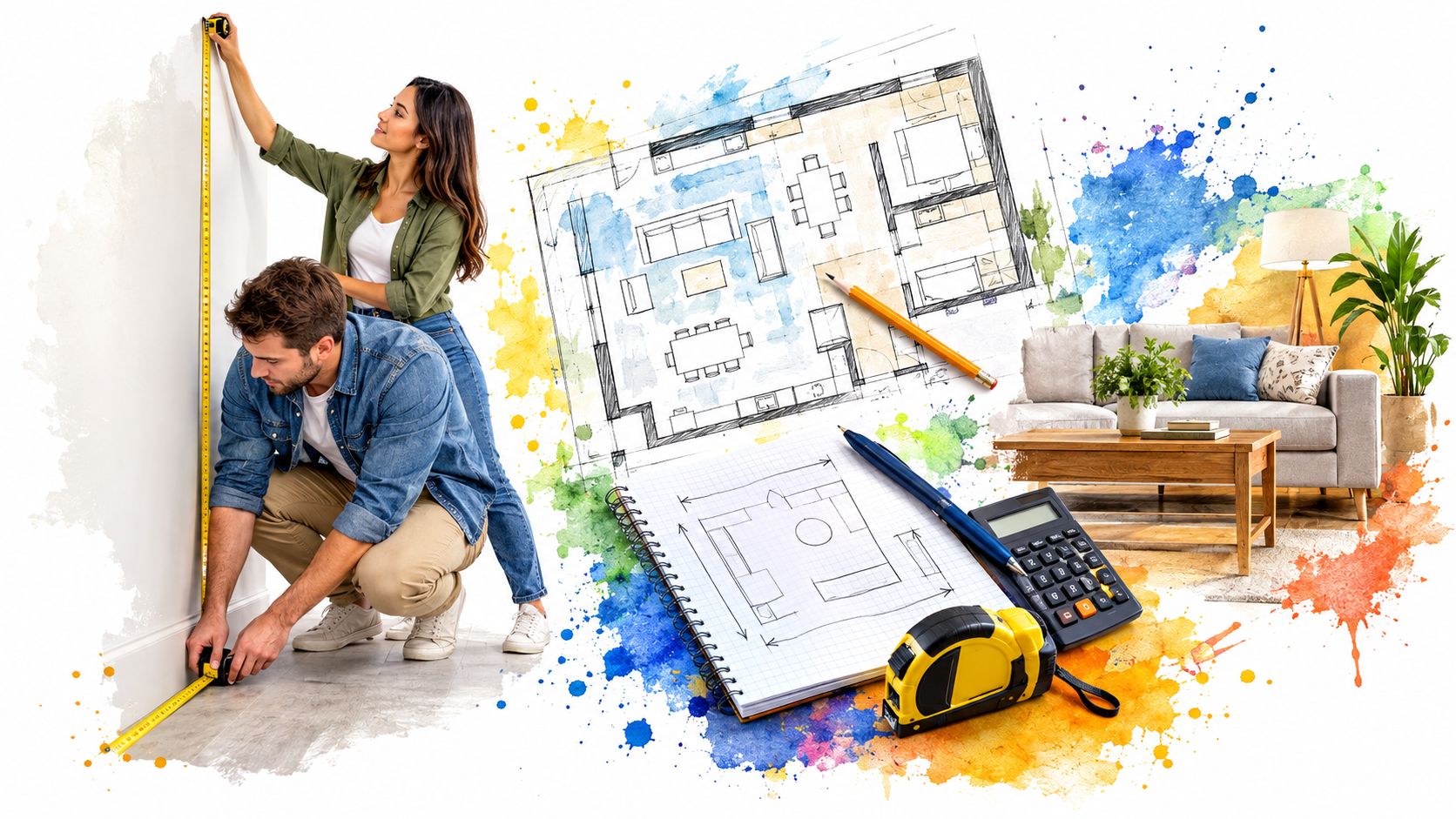
Start with height
For a bedside table, measure from the floor to the top of the mattress, not just to the bed frame. Standard beds with mattress heights of 23–26 inches typically pair well with tables in the 24–28 inch range, as explained in this guide to bedside-table height. A table near mattress height keeps a lamp, phone, or book within a comfortable reach. It also supports a cleaner charging setup because the cable does not need to stretch upward or across the bed.
For an end table, measure from the floor to the top of the sofa or chair arm. A surface close to that height usually makes drinks, books, and controls easier to reach. A small difference may work, but a noticeable mismatch can make everyday items feel inconveniently low or high.
Check the footprint and clearances
Measure the available width and depth beside the bed or seating. Mark the proposed footprint on the floor with removable tape. This quick test shows whether the table blocks a walkway, crowds a drawer, or interrupts a door swing.
Check five details before choosing:
- Width: Confirm that the table fits between nearby furniture and walls.
- Depth: Keep the front edge out of the walking path.
- Opening space: Make sure drawers and cabinet doors can open fully.
- Lamp clearance: Reserve usable surface for the lamp base and daily items.
- Outlet access: Trace where the charging cable must travel.
Apply the measurements to real rooms
A platform bed with a thick mattress may need a taller bedside piece than a low-profile bed. Likewise, an end table that suits a low sofa may sit too far below a higher mattress or chair arm. Height alignment works like setting a countertop to the task. The correct level reduces repeated reaching and makes the furniture easier to live with.
In a small apartment bedroom, a narrow table, floating shelf, or compact end table may provide enough storage without narrowing circulation. Depth often matters as much as width, since a shallow piece preserves movement through the room.
A table can work in more than one room when its geometry, storage, styling, and charging access suit each setting. Homeowners can also compare their measurements with this guide to normal nightstand height before making a long-term furniture investment.
2026 Trends Shaping Nightstand and End Table Choices
A homeowner may begin with a simple question, nightstand or end table, then discover that the better choice depends on charging habits, storage, styling, and height. In 2026, these functional criteria matter more than assigning one table to the bedroom and the other to the living room.
Current trends emphasize built-in USB and USB-C charging, concealed storage, and wireless charging surfaces across contemporary side tables. A table may need to keep a phone powered overnight, control cable clutter, and hide reading glasses or other small belongings. A compact end table with well-placed charging access can serve that routine better than a conventional nightstand with an awkward outlet position.
Choose the routine before the room
Start with the sequence of actions the table must support.
- Charging: Decide whether a device belongs on the surface, inside a drawer, or near a discreet cable opening.
- Containment: Separate items that should remain visible from those that belong behind a door or drawer.
- Reach: Align the surface with the mattress, sofa arm, or chair arm.
- Mobility: Consider whether the piece may move to another room later.
Technology should support the furniture rather than dictate its proportions. A convenient port cannot correct a tabletop at the wrong height, unstable construction, or storage that interferes with everyday use.
Mixed styling can solve practical problems
Matching pairs still provide symmetry, yet mixed forms can address differences in ergonomics and storage. One side of a bed may need a closed nightstand for personal items, while the other may work better with an open-shelf side table for a lamp or display piece. This arrangement is especially useful when bed frames, mattress heights, or available floor areas differ.
The pieces should share at least one visual connection, such as wood species, finish, hardware tone, or overall scale. Exact matching is unnecessary. The goal is a deliberate relationship between different forms, with each table performing its job comfortably.
Integrate technology into the design
A charging port should be reachable without making the table resemble a workstation. Wireless charging can reduce visible cables, while concealed compartments keep the surface calmer. Cable exits must also align with nearby outlets, so the table's internal layout and placement need to work together.
The broader direction of interiors also favors adaptable pieces, layered materials, and furniture that combines practical features with personal character. Homeowners can explore these furniture design trends while considering how a table will relate to existing furnishings.
The lasting principle is practical: select features that support the room's routine, then choose the label that best describes the result. A nightstand and an end table can share the same role when their height, storage, charging access, and styling fit the person using them.
Why Quality Custom Furniture Is a Lifetime Investment
A small table still deserves the same care as any other investment piece. It receives daily contact, supports lighting and personal items, and contributes to the visual balance of the room. A well-made piece can remain useful through changing rooms and changing styles, while a poorly chosen table may need replacement when a bed, sofa, or household routine changes.
Giorgi Bros. Furniture has served South San Francisco and the Greater Bay Area for more than 90 years, with a family-owned showroom and a non-commission environment. That model supports no-pressure guidance. A Design Consultant can focus on measurements, construction, finish, storage, and long-term fit rather than pushing a particular category.
Customization protects the investment
Custom order services allow homeowners to consider wood species, finishes, high-grade leathers, and designer fabrics as part of a larger room plan. A custom piece can coordinate with existing furnishings without requiring every item to come from the same collection. That flexibility matters when a homeowner wants a closed nightstand on one side of the bed and a lighter end table on the other.
The same approach applies across a whole home. A finish selected for bedroom furniture may relate to dining or living room pieces, while proportions can adapt to an unusual bed height or a compact apartment footprint. More information about custom furniture design can help homeowners evaluate which choices deserve customization.
Buy for use, not replacement
The buy-it-for-life mentality supports sustainability because durable furniture stays in service longer and avoids the cycle of frequent replacement. It can also reduce long-term cost by making one considered purchase serve several homes, rooms, or life stages.
Giorgi Bros. Furniture offers custom furniture, premium mattresses, Amish Furniture, and flexible financing options within a broader design consultation experience. The showroom gives homeowners the chance to test scale, touch materials, compare finishes, and discuss how a table will function beside the furniture already owned.
Making Your Final Decision Nightstand, End Table, or Both
- Measure first. Compare the prospective tabletop with the mattress, sofa arm, or chair arm.
- List the essentials. Choose enclosed storage when personal items and charging accessories need containment.
- Test the footprint. Confirm that drawers open and pathways remain clear.
- Consider a mix. Pair a closed nightstand with an open side table when asymmetry improves reach, storage, or scale.
- Judge the investment. Select durable construction and a finish that can adapt to future rooms.
Visit the South San Francisco showroom or book a Design Consultation with Giorgi Bros. Furniture's non-commission Consultants before deciding.
Giorgi Bros. Furniture offers bedroom and living-room tables, custom order services, Amish Furniture, premium mattresses, and flexible financing options for Bay Area homeowners. Visit Giorgi Bros. Furniture in South San Francisco to compare proportions and finishes in person, or schedule a Design Consultation for no-pressure guidance on a nightstand, end table, or coordinated pair.