
A Bay Area homeowner can spend an afternoon comparing sofa silhouettes, wood samples, and fabric swatches, then still miss the decision that matters most: how long the piece will serve the home. A dining table that fits the room today may need to survive daily meals, holiday gatherings, moves, changing styles, and years of ordinary use. Custom furniture design deserves a longer view than color matching.
The right custom order isn't merely a more personal version of ready-made furniture. It can be an investment piece, built around the room, the household, and the way the furniture will be maintained. Giorgi Bros. Furniture has served South San Francisco and the Greater Bay Area for over 90 years, since 1933, with a family-owned, non-commission approach that favors clear guidance over pressure. The following framework helps a homeowner evaluate custom furniture with the same care used to evaluate a renovation.
Why Custom Furniture Design Is a Buy-for-Life Decision
A homeowner notices the sag first. A three-year-old sofa no longer supports the body evenly, the cushions have flattened, and the fabric shows wear where the household sits. The choice seems simple: replace it with another ready-made sofa or order a piece designed around the room. The better question is whether the next purchase will repeat the same cycle.
Buy-for-life furniture starts with construction, not decoration. A hardwood frame, dependable joinery, properly supported seating, and serviceable upholstery create a foundation that can remain useful long after a trend has passed. Mortise-and-tenon joinery can offer a more substantial structural connection than weak fastening alone. Eight-way hand-tied springs can support a carefully built upholstered seat, while replacement cushions, recovered fabric, or renewed leather can extend the useful life of the frame.
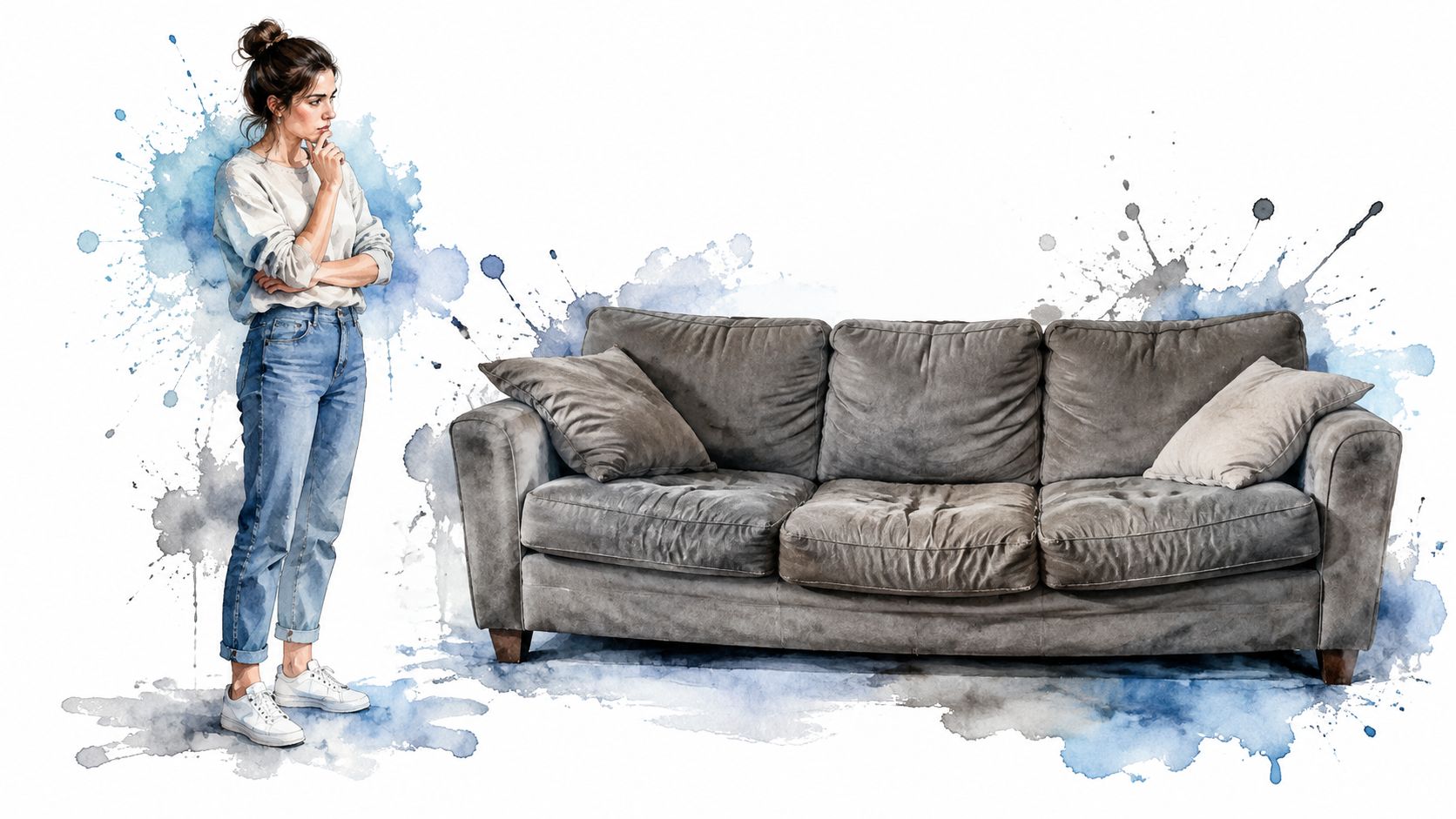
The useful test is service life
A ready-made sofa may look affordable at checkout, but repeated replacement adds cost, inconvenience, and discarded material. A custom piece carries a higher initial commitment, yet its value comes from fit, repairability, comfort, and staying power. A homeowner should ask:
- Frame: What material forms the load-bearing structure?
- Joinery: How are the rails, legs, and corners connected?
- Support: What sits beneath the cushions?
- Service: Can cushions, covers, or upholstery be renewed?
- Warranty: Which parts and workmanship does the maker stand behind?
Custom furniture also solves problems a catalog cannot see. A narrow San Francisco living room may need a shallower sofa. An older Bay Area home may require a dining table with exact clearance around a doorway. A family may want a cabinet sized for a particular wall, not a standard box that leaves awkward gaps.
That logic applies across Amish Furniture, American-made pieces, and custom upholstery. Giorgi Bros. Furniture offers custom order services for fabrics, leathers, wood species, and finishes, so the homeowner can make decisions around actual use rather than accept the nearest showroom configuration. A deeper look at construction and longevity is available in this guide to long-lasting furniture.
Practical rule: Choose custom furniture when the household expects to live with the piece for years, not merely until the next style change.
The Custom Order Process From First Visit to Final Delivery
A transparent custom order has identifiable milestones. Each one should end with a decision, a sample, or a written approval. The process should feel collaborative, not mysterious.
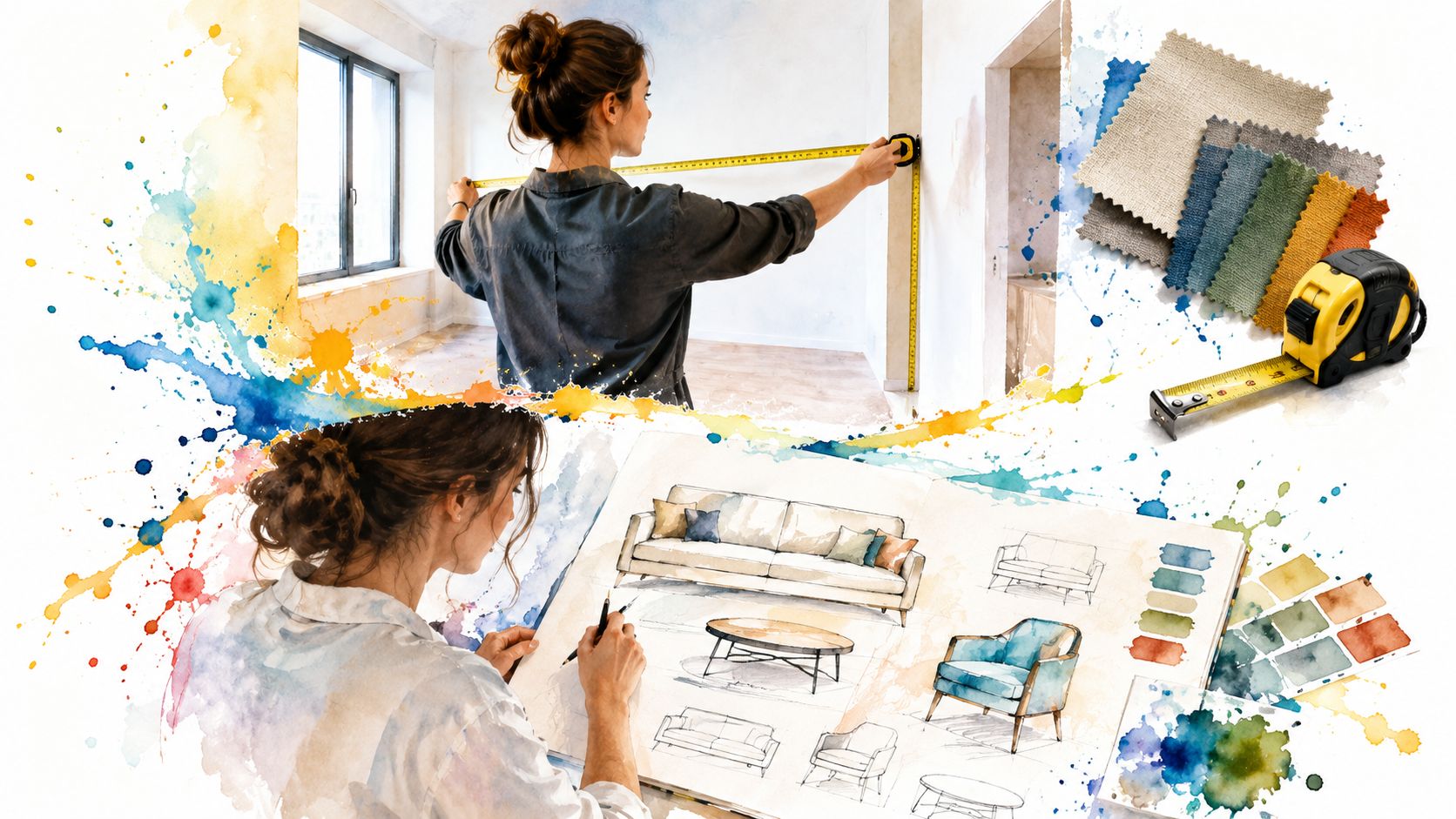
Seven approvals keep the project controlled
- Consultation: The homeowner discusses the room, intended use, preferred proportions, and practical concerns in the showroom or at home.
- Measurements and lifestyle brief: Dimensions, walk paths, door clearances, seating habits, children, pets, and entertaining patterns become part of the design record.
- Design proposal: Scaled drawings, sketches, or renderings show proportion before production begins. An oversized arm, narrow passage, or unsuitable seat depth should be corrected at this stage.
- Material selection: The buyer reviews wood species, finish samples, leathers, fabrics, hardware, and cushion choices. Physical samples matter because screens can't show texture or color accurately enough.
- Written quote and approval: The final specifications, price, expected timing, and delivery terms should appear in writing before the order moves forward.
- Production check-ins: The shop builds the piece away from the showroom floor. Progress photographs, questions, and, where practical, shop visits help maintain visibility.
- White-glove delivery: The finished piece is scheduled, transported, placed, assembled, and checked in the intended room.
Custom upholstery and fully built-to-order furniture follow different approval paths. Reupholstering an existing frame focuses on fabric, cushion configuration, and structural inspection. A new dining table or cabinet requires approval of dimensions, joinery details, edge profiles, wood character, and finish behavior.
A dedicated shop offers the equipment, workspace, and craftspeople required for careful construction. The showroom serves a different purpose. It lets a homeowner touch materials, test comfort, compare scale, and make informed decisions before production starts.
Homeowners managing a larger renovation should also understand how furniture decisions interact with cabinetry, circulation, and construction sequencing. A resource on planning a custom kitchen remodel can help clarify why early measurements, drawings, and approvals prevent expensive changes later.
The buyer should treat delivery as a scheduled project milestone, not an afterthought. The final inspection confirms that the approved dimensions, finish, upholstery, and placement all match the order.
Choosing Wood Species, Finishes, Leathers, and Fabrics
Material selection works best as a trade-off exercise. Every option changes appearance, touch, maintenance, and how the piece will age.
Wood species establish the visual character first. Cherry brings warmth and can deepen in tone as it ages. Walnut offers a richer, darker presence with distinctive grain. Quartersawn white oak emphasizes strong figure and stability. Hard maple suits a cleaner, lighter look, while mahogany brings a classic appearance and pronounced warmth. The right choice depends on surrounding floors, natural light, desired formality, and whether the homeowner wants visible change over time.
Finish selection follows the wood. A natural oil can emphasize grain and provide a tactile surface, but it may require more attentive care. Conversion varnish offers stronger resistance to common household marks and can suit busy dining areas. Catalyzed lacquer sits between those approaches, offering a refined film finish with practical durability. The homeowner should ask about repairability, sheen, cleaning instructions, and how the finish will respond to daily contact.
Upholstery choices should follow the room
Leather selection involves more than color. Aniline leather preserves a natural feel and visible hide character, while protected or pigmented leather offers a more uniform appearance and a practical surface for active households. Dye, pigment, hide quality, sunlight, and maintenance all affect the final experience.
Performance fabrics can bring similar distinctions. Solution-dyed weaves are often considered for demanding seating because color is integrated through the fiber. Treated cottons can provide softness with added protection. Leather and fabric combinations let a homeowner place a more resilient material on high-contact surfaces while keeping a softer textile elsewhere.
| Material Family | Common Options | Best Suited For | Maintenance Level |
|---|---|---|---|
| Wood species | Cherry, walnut, quartersawn white oak, hard maple, mahogany | Tables, case goods, heirloom furniture | Low to moderate, based on finish |
| Wood finishes | Natural oil, catalyzed lacquer, conversion varnish | Grain emphasis, refined interiors, busy households | Moderate |
| Leather | Aniline, protected, pigmented | Sofas, chairs, benches, high-contact seating | Low to moderate |
| Fabrics | Solution-dyed weaves, treated cottons, mixed upholstery | Family rooms, dining chairs, accent seating | Moderate to high, depending on treatment |
Bay Area homes also need climate-aware material planning. Guidance for interior furniture places continuously heated rooms around 8% to 12% moisture content, while climate-zone standards for cabinet and furniture timber in India range from 12% to 16% depending on humidity zone, as outlined in climate-zone moisture guidance. The principle matters everywhere: wood should be acclimated for its installed environment, or it may shrink, swell, affect drawer alignment, or open joints.
For a deeper explanation of sheen, protection, and grain presentation, homeowners can review wood finishes for furniture.
Sustainability, Craftsmanship, and the Cost-Per-Year Argument
Custom furniture makes the strongest sustainability argument when the construction supports continued use. Solid hardwood, sound joinery, repairable upholstery, and finishes selected for the room can keep a piece in service rather than sending it out during the next move or renovation.
A sustainability guide estimates that well-maintained bespoke pieces can last 30 to 80 or more years, while mass-produced flat-pack furniture averages 5 to 15 years before replacement, according to this bespoke furniture sustainability guide. Those figures don't guarantee the life of any individual piece. They do show why construction quality changes the environmental and financial calculation.
Cost-per-year exposes the real comparison
A custom dining table priced at $4,500 and used for 40 years works out to $112.50 per year, before considering maintenance or resale value. That simple calculation is more useful than comparing the table only with the lowest checkout price.
| Furniture Type | Avg. Custom Price | Custom Service Life | Custom Cost/Year | Ready-Made Cost/Year |
|---|---|---|---|---|
| Custom dining table | $4,500 | 40 years | $112.50 | Not calculated without verified purchase and replacement data |
The table deliberately leaves the ready-made column open. A fair comparison requires the actual purchase price, replacement interval, repair cost, and disposal cost for the specific alternative. Inventing a universal ready-made figure would make the analysis look precise while hiding the variables.
Buyers should also ask where load-bearing materials come from, whether the maker uses solid hardwood where appropriate, and whether damaged components can be repaired. Responsible sourcing and low-emission finishes can support a healthier material strategy, but the most durable sustainability decision is often straightforward: buy fewer pieces and keep them longer.
Custom Furniture Timelines and What Really Drives the Wait
The custom furniture industry has recently seen order-to-delivery cycles averaging 16.3 weeks, up from 11.8 weeks in late 2022, according to industry timeline reporting. That average doesn't describe every order, but it gives a Bay Area homeowner a realistic planning reference.
A useful schedule separates buyer-controlled decisions from shop-controlled processes:
- Design finalization: The homeowner confirms dimensions, proportions, and intended use.
- Drawing approval: Scaled shop drawings resolve details before materials are cut.
- Stock preparation: Wood is milled and acclimated for the application and environment.
- Assembly and finishing: Craftspeople build, sand, finish, cure, inspect, and prepare the piece.
- Delivery scheduling: The completed order is coordinated with the delivery route and home access.
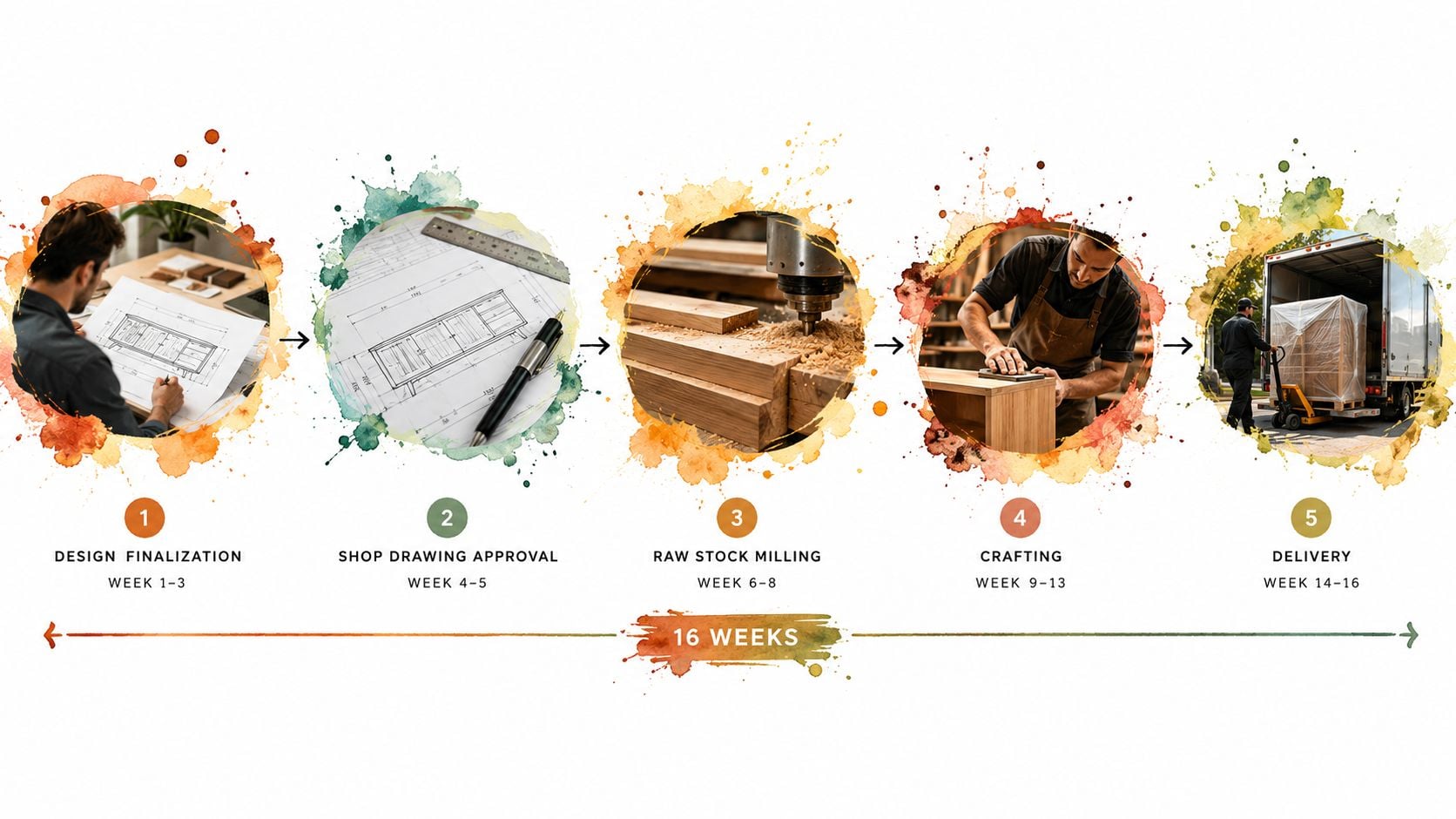
Moisture content is part of the schedule
Wood can't be rushed past the conditions required for reliable performance. Joinery guidance places interior furniture in regularly heated rooms around 8% moisture content, while broader production tolerances may apply only when individual boards remain within defined limits, as explained in the joinery handbook guidance. Stock that isn't appropriate for the installed environment can continue moving after delivery, affecting doors, drawer fronts, finishes, and alignment.
A buyer can compress the schedule by answering approval questions promptly, selecting available materials, and avoiding late design changes. The buyer can't responsibly compress acclimation, adhesive curing, finish hardening, or careful inspection. Fully custom, certified projects may also add 2 to 4 weeks for material sourcing and documentation, according to the same industry reporting linked above.
Homeowners ordering a dining table should plan meals, renovations, and temporary furniture around the written schedule. Giorgi Bros. Furniture provides a useful starting point for buyers considering custom wood dining tables, especially when exact dimensions and finish decisions affect room planning.
What a No-Pressure Design Consultation Actually Looks Like
A no-pressure consultation changes the purpose of the first meeting. The consultant isn't trying to steer a homeowner toward the fastest close. The consultant translates the room and lifestyle into practical recommendations, then gives the buyer enough information to decide.
A homeowner should bring more than inspiration photographs. Useful preparation includes:
- Room dimensions: Include wall lengths, ceiling height, doorway widths, stair access, and the location of outlets or architectural obstacles.
- Room photographs: Take images from several corners and at different times of day so the consultant can see light, circulation, and existing finishes.
- Material references: Bring flooring samples, paint cards, existing upholstery swatches, or photographs of nearby furniture.
- Lifestyle notes: Explain children, pets, entertaining, preferred seating posture, storage needs, and how often the piece will be used.
- Non-negotiables: State the required dimensions, delivery constraints, comfort preferences, and budget range early.
The meeting should end with clarity
The consultant may recommend a shallower depth for a narrow room, a more protected leather for active seating, or a finish that better suits frequent dining. Those recommendations should connect directly to the homeowner's stated needs. A good consultation also explains the compromises, such as the difference between a softer natural material and a more resilient protected surface.
For many projects, the first visit takes roughly 45 to 60 minutes, based on the consultation format described by the showroom. The important outcome isn't a deposit request. It's a clear next step, such as a measurement review, a material sample set, a scaled proposal, or a written quote.
A family-owned business with Non-Commission Sales Staff can make this structure easier because the consultant's role centers on fit and suitability rather than commission pressure. Homeowners comparing service models can also review furniture stores with free design services to understand what a consultation should include.
White-Glove Delivery and How Flat-Rate Pricing Protects the Piece
White-glove delivery isn't merely a convenient upgrade. For a custom piece, it is part of protecting the investment from the moment it leaves the shop until it reaches the correct room.
A basic freight service may deliver to a threshold. A true white-glove service should handle the piece with padded protection, bring it inside, place it where directed, complete necessary assembly, verify condition, and remove packaging. Homeowners who want to protect a delicate finish can also learn why padded moving blankets matter during handling and transport.
| Delivery Feature | Standard Freight | True White-Glove |
|---|---|---|
| Protective wrapping | Limited or variable | Blanket-wrapped handling |
| Indoor placement | Threshold or curb delivery | Placement in the room of choice |
| Assembly | Usually excluded | Assembly and verification |
| Packaging | Customer handles it | Debris and packaging removal |
| Access planning | Often limited | Doorways, stairs, and placement reviewed |
| Condition check | Basic handoff | Inspection with the homeowner |
Flat-rate pricing improves planning
Consumer Reports notes that typical white-glove charges range from about $60 to $400, depending on distance and total order value, as summarized by white-glove delivery information. Location-based flat rates can make budgeting easier because the buyer isn't charged separately for every piece. The exact policy still matters. A homeowner should ask whether upper-floor placement, difficult access, assembly, packaging removal, and remote delivery zones are included.
Red flags include threshold-only language, freight-class add-ons, separate staircase charges, or a delivery price that changes with each item. The delivery team should receive access information before the truck arrives, including narrow doors, elevators, stairs, and parking restrictions.
Giorgi Bros. Furniture describes its white-glove furniture delivery as a service that unpacks, places, sets up, and removes packaging, with location-based flat rates across much of the Western United States and carrier support outside its direct delivery area. That level of coordination protects both the furniture and the homeowner's time.
Bringing Custom Furniture Design Home to the Bay Area
Custom furniture design makes the most sense when the homeowner can evaluate the full chain, from material to delivery. A South San Francisco showroom gives Bay Area buyers a place to sit in different frames, compare wood character, handle leather grades, and view finish samples under real lighting. That physical review matters because comfort, sheen, texture, and scale are difficult to judge from a photograph.
Giorgi Bros. Furniture has operated as a family-owned business in South San Francisco since 1933, serving the Greater Bay Area and Western United States for over 90 years. The 50,000-square-foot showroom offers living, bedroom, dining, office, home entertainment, decor, and a dedicated sleep gallery with Premium Mattresses. For a homeowner furnishing an entire home, that range can make coordination easier without forcing every room into the same style.
A practical Bay Area standard
The strongest custom order combines four forms of accountability:
- Construction accountability: The maker explains frame materials, joinery, support, finish, and service options.
- Design accountability: The consultant documents dimensions, samples, and approvals before production.
- Business accountability: The family-owned team remains accessible when questions arise.
- Delivery accountability: The carrier places and checks the piece instead of leaving the homeowner to manage a heavy, finished object.
The team represents made-to-order furniture built by Amish craftspeople in the United States, with options for wood type, finish, dimensions, fabrics, and leathers. Flexible financing options are available for qualified purchases, but financing shouldn't replace a careful decision about construction, room fit, and long-term use.
A non-commission consultation also changes the tone of the showroom visit. The homeowner can ask whether a standard piece already solves the problem, whether custom dimensions are justified, and which material trade-offs matter most. Sometimes the right answer is custom furniture. Sometimes it is a well-built floor model. No-pressure guidance means both answers remain possible.
For Bay Area Interior Design projects, the buy-for-life approach is especially useful in rooms with unusual proportions, active households, or long renovation horizons. A custom order can reduce compromise, but only when the buyer approves every practical detail and accepts the time required to build it correctly.
Giorgi Bros. Furniture offers custom order services for Amish and American-made furniture, including custom wood species, finishes, leathers, and designer fabrics, supported by non-commission design consultants and white-glove delivery. Visit Giorgi Bros. Furniture in South San Francisco or book a Design Consultation to evaluate the piece as a long-term investment, not a short-term style purchase.