
A delivery truck reaches a South San Francisco home with a large sofa inside a wooden crate. The crew unloads it at the curb, and the homeowner immediately starts wondering whether the piece will fit through the entry, whether the walls will be marked, and who will handle the assembly. That moment captures the difference between basic freight service and white-glove furniture delivery.
A complete white-glove experience should leave the furniture inside the correct room, assembled, positioned, inspected, and free of leftover packaging. The detail that often determines whether the experience succeeds is the handoff between delivery and installation. If separate teams or systems handle those tasks, a promised room-ready appointment can become a frustrating series of delays.
What Is White-Glove Furniture Delivery
A boxed chair left at the curb has reached its destination only in the narrowest sense. White-glove furniture delivery carries the job into the home, bringing the piece to the selected room, removing its packaging, completing the assembly included in the agreement, placing it correctly, and documenting visible exceptions before the crew leaves.

The term grew from a specialized handling practice into a broad last-mile service category. Industry history places its early business use as early as 1979 and the modern North American model in 1985. Early work involved fewer than 50,000 deliveries annually, often for medical equipment and fine art. By 2023, the same market analysis reported more than 150 million specialized shipments per year globally, with premium installation and setup included in 98% of contracts. The evolution of white-glove services explains how careful handling developed into a defined delivery expectation.
Why furniture needs a higher-touch approach
Furniture has practical demands that ordinary parcel delivery does not address. A custom sofa can be heavy, wide, delicate, and difficult to turn through a stairwell. A dining table may need careful positioning to protect floors and walls. A finished wood case piece can arrive undamaged yet remain unusable if nobody assembles it or removes the protective materials.
Furniture represented 49% of white-glove applications in 2023, or 74 million shipments requiring in-home assembly and placement, according to that industry analysis. The figure reflects the central point: customers are purchasing more than transportation. They need a managed handoff from truck to finished room, with someone responsible for the space between delivery and installation.
That handoff is where fragmented service models often leave a gap. One crew may bring the furniture inside, while another appointment handles assembly. If neither provider clearly owns the transition, the customer can face waiting, repeated handling, or an item that occupies the room but is not ready to use.
Practical rule: A delivery appointment is complete when the furniture is in its intended place, ready for its agreed setup, and the remaining responsibilities are clear.
A detailed Emmanuel Transport delivery service offers useful background on how professional operations organize handling and handoff responsibilities. Actual inclusions still depend on the retailer, carrier, item, access conditions, and written service agreement.
Services Included in Premium Delivery
White-glove service works best when each stage has a clear owner. Customers should review the service description before purchase because “white glove” isn't a universal package. One provider may include assembly and cleanup, while another may limit the appointment to inside placement.
The delivery sequence
Inside delivery starts the process. The crew brings the furniture into the home rather than leaving it at the curb. The team should account for the selected room, access route, stairs, elevators, and protective handling requirements.
Room-of-choice placement removes guesswork. The furniture goes where the homeowner has decided it belongs. That sounds simple, but exact placement matters with sectionals, dining tables, beds, and large storage pieces. Moving a heavy item repeatedly can increase the chance of floor, wall, or furniture damage.
Unpacking reveals the actual condition. The crew removes cartons, wrapping, corner protection, and other materials so the buyer can inspect the piece. Packaging often hides dents, scratches, missing components, or finish problems until someone opens the shipment.
Assembly turns components into usable furniture. On-site assembly may include attaching legs, joining sectional pieces, installing hardware, or completing another item-specific setup. The contract should state whether the service covers full assembly, light assembly, or a limited amount of labor.
Cleanup finishes the appointment. A proper team removes the packaging materials instead of leaving the homeowner with a room full of cardboard, foam, and protective film. Some logistics providers also include signed proof of delivery and exception notes for damage, missing parts, or access problems. This white-glove delivery guide outlines those handoff details.
A retailer's published delivery description can make the promise more concrete. One major furniture service specifies a 2 to 4 hour delivery window, an arrival call, unloading into the home, room-of-choice placement, unboxing, assembly, packaging removal, and cleanup. The published furniture delivery service details also show why buyers should read the exact terms rather than rely on the label alone.
The handoff that customers often miss
The most important question may be, “Who installs the furniture after the delivery crew arrives?” An integrated operator can move directly from unloading to setup. A fragmented arrangement may involve one team delivering the item and another team returning later. That gap can leave the room disrupted and damage unresolved.
Customers considering professional furniture installation services should confirm whether delivery and installation happen during one coordinated appointment. The answer affects scheduling, inspection, assembly, and the condition in which the room gets left.
White-Glove vs Standard Delivery Benefits
A sofa arrives at the curb, still boxed, while the room is waiting upstairs. Standard delivery may complete its job at an accessible drop-off point. The homeowner then carries the furniture, removes packaging, assembles it, places it, and manages the risk of damage.
White-glove delivery transfers those steps to a trained crew and adds a more controlled inspection. That difference matters for furniture that is expensive, difficult to replace, or awkward to maneuver through a home. It also exposes a service gap that buyers often miss: delivery and installation may be treated as separate jobs.
A simple risk calculation
Standard carrier liability is often capped at $0.60 per pound, according to industry guidance. Consider a $3,000 sofa weighing 150 pounds. At that liability level, the default coverage would be about $90, not the sofa's purchase price. The white-glove delivery coverage explanation uses this example to show why buyers should ask about separate insurance protection and written damage procedures.
| Consideration | Standard delivery | White-glove furniture delivery |
|---|---|---|
| Arrival point | May end at a curb, lobby, garage, or accessible threshold | Extends into the selected room |
| Physical labor | Usually left to the homeowner | Crew handles in-home movement |
| Assembly | Often excluded or limited | May be included, subject to the service terms |
| Packaging | May remain with the buyer | Commonly removed as part of the appointment |
| Damage exposure | Basic carrier limits may apply | Higher-touch handling and separate protection may be available |
White-glove service commonly costs $100 to $250 per shipment, or roughly 20% to 50% more than inside delivery, according to industry summaries. The delivery FAQ on white-glove service costs and policies places the premium in context and explains that policies can vary. The charge may cover extra labor, careful maneuvering, room placement, assembly, inspection, and cleanup, rather than transportation alone.
When the upgrade earns its place
The service can suit investment pieces, large custom orders, narrow access routes, and households where moving heavy furniture is unsafe. It can also reduce the chance of scratching a hardwood floor when the crew uses suitable moving practices and floor protection. Guidance on furniture pads for hardwood floors shows why protecting the room deserves the same attention as protecting the furniture.
The handoff still depends on the written scope. Buyers should ask whether delivery includes stairs, elevators, long carries, assembly, old furniture removal, packaging removal, and inspection. They should also confirm whether the same appointment covers both unloading and installation. If one crew delivers the piece and another returns later, a damaged item, unfinished assembly, or disrupted room can become a scheduling problem.
A lower service tier may work for a small, lightweight piece with an easy route. For a substantial sofa or custom dining set, leaving final handling uncertain can cost more in time, risk, and coordination than the initial savings.
Cost Timing and Home Preparation
A smooth appointment starts before the truck arrives. Delivery windows may span 2 to 4 hours, so homeowners should plan to be available for the full window rather than assume the crew will arrive at an exact minute. Building rules, elevator access, parking limitations, and narrow streets can affect the day, especially in dense Bay Area neighborhoods.
Preparation also protects the handoff between delivery and installation. Industry commentary identifies that transition as a common failure point in fragmented models. If the crew delivers the furniture but can't complete the setup, the buyer may face a second appointment, an unsettled room, or uncertainty about who will document a problem.
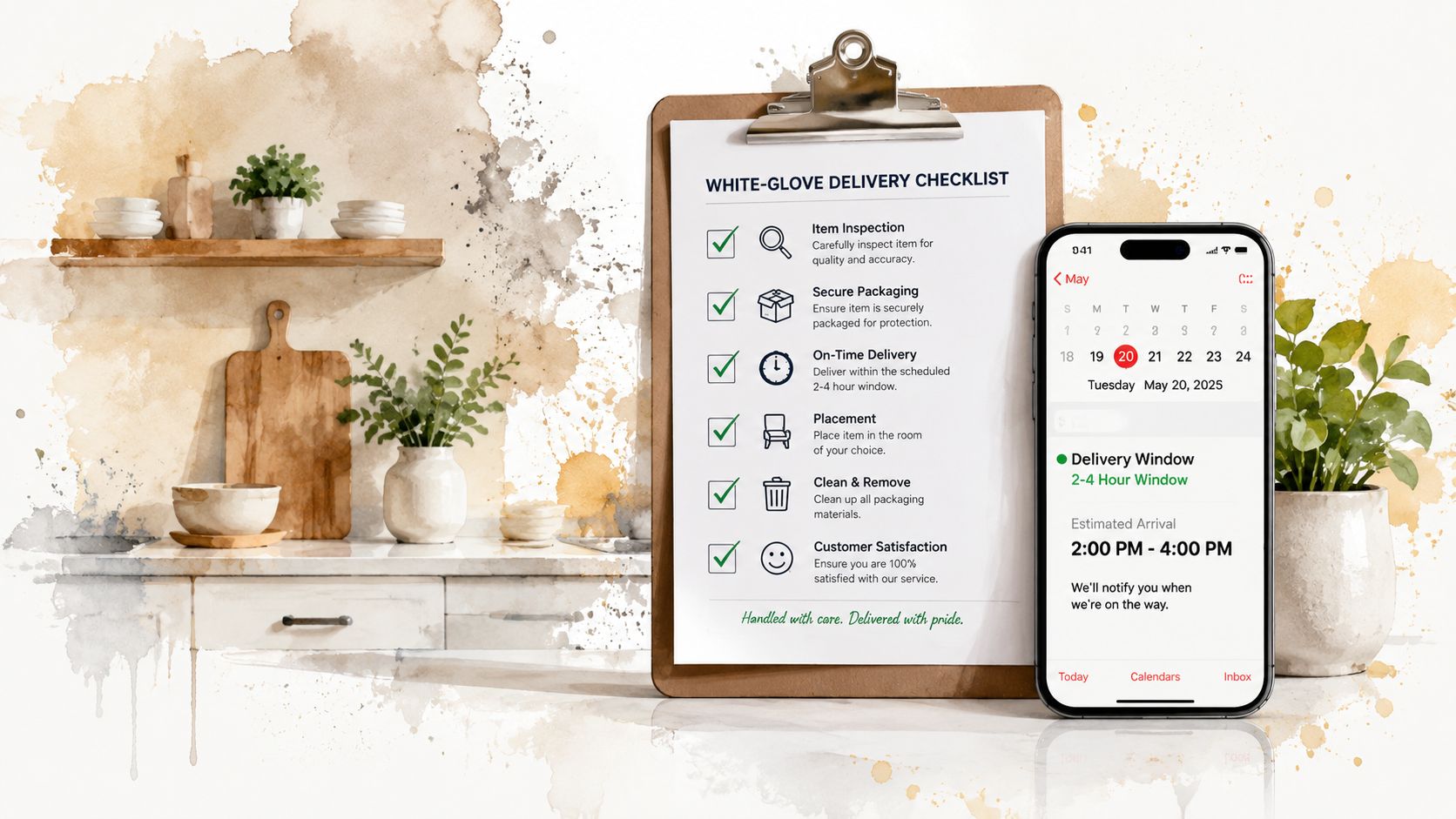
Measure the route, not just the room
Furniture dimensions tell only part of the story. Before scheduling, measure the complete path from the property entrance to the final room.
- Check doorways: Measure the clear opening, including the effect of hinges, trim, and door movement.
- Trace hallways and turns: Note narrow corners, railings, low ceilings, and places where the crew may need to rotate the piece.
- Measure stairwells and elevators: Record width, height, landing space, and elevator door clearance where relevant.
- Confirm the final position: Decide where each piece will sit before arrival, including orientation and clearance around it.
A route can accommodate a piece through the front door yet fail at a hallway turn. Measuring early gives the retailer and delivery team time to discuss alternatives instead of discovering the problem during the appointment.
Clear the work area
Remove rugs, fragile decor, small tables, toys, and other obstacles from the path. Protecting the route helps the crew work carefully and gives the furniture enough room to reach its intended position without repeated repositioning.
A renovation or furnishing project benefits from the same advance planning. The home renovation planning guide can help homeowners coordinate measurements, room layouts, and delivery timing before installation begins.
Before the appointment: Have the room ready, keep the route open, and write down the exact placement plan. Clear decisions reduce delays when the crew arrives.
The buyer should also confirm the appointment scope in writing. Questions about assembly time, old furniture removal, stairs, and packaging disposal belong before delivery day, not after the truck is parked.
Giorgi Bros White-Glove Service
White-glove furniture delivery has more value when it connects to the purchase from the beginning. A delivery team can place a standard piece correctly, but a coordinated furniture process also accounts for the chosen dimensions, materials, finish, room layout, and long-term use.
Giorgi Bros. Furniture is a family-owned showroom in South San Francisco with a 90+ year history dating to 1933. Its full-service approach combines furniture selection, custom ordering, delivery, and setup without relying on commission-driven recommendations. Non-commission design consultants can focus on fit, function, and the buyer's priorities rather than pushing a particular item.
Custom pieces deserve coordinated care
The showroom offers custom order services beyond what sits on the floor. Buyers can select fabrics, leathers, wood species, and finishes, which makes delivery planning especially important. A custom piece represents more than a short-term decoration. It can become an investment piece intended to serve the household for decades.
That buy-it-for-life mentality supports both sustainability and long-term value. Choosing durable construction and a finish that suits the home can reduce the need for replacement, limit waste, and spread the cost of the purchase across many years of use. Careful delivery protects that investment from the first day.
Giorgi Bros. Furniture's delivery service describes furniture being unpacked, set up with care in the home, and cleared of packaging materials. For a buyer ordering custom Amish Furniture, American-made pieces, or other custom furnishings, that final placement is part of the overall ownership experience.
The same showroom also provides Bay Area Interior Design support, Custom Furniture options, and Premium Mattresses within its broader home furnishings selection. Financing options are available, and the process is built around no-pressure guidance rather than a rushed transaction.
Common Questions About Delivery
What should happen if damage appears?
Inspect the furniture before signing the delivery paperwork. Record damage, missing parts, finish problems, or access-related exceptions on the receipt, and photograph them immediately. The signature marks the handoff, so this record helps separate a delivery issue from a later installation or use issue.
Retailer policies may set short reporting windows, require original packaging, limit returns for special-order pieces, or make white-glove delivery fees nonrefundable when an item is damaged or refused. Read the policy before the appointment and confirm where a claim should be sent.
Can custom furniture be returned?
Custom and made-to-order furniture may follow different return rules from stocked merchandise. Fabrics, leathers, wood species, finishes, and configurations can affect eligibility, so request the terms in writing before approving the order.
A return policy does not replace the inspection. Prompt documentation gives the retailer and delivery team a shared record of the piece's condition at handoff.
How many people arrive?
Crew size depends on the item and provider. One service example specifies a two-person minimum delivery crew. Ask whether the quoted labor covers the furniture's size and weight, stairs, tight turns, and entry conditions. A crew that can carry a piece into the room may still lack time or authority to complete its placement and setup.
Is assembly unlimited?
Assembly depends on the written service scope. One operational example limits included assembly time to 15 minutes, and item-for-item removal may apply when old-furniture pickup is offered. Confirm what the crew will assemble, where it will place the piece, and what removal includes before delivery.
For broader project planning, financing options can help customers consider the furniture purchase and related service costs together. Clear terms, home preparation, and a documented inspection make the handoff easier to manage.
Giorgi Bros. Furniture offers custom orders, non-commission design consultants, professional delivery and setup, Amish Furniture, Premium Mattresses, and flexible financing options at its South San Francisco showroom. Visit Giorgi Bros. Furniture to explore investment pieces or book a Design Consultation for a planned, no-pressure experience.