A homeowner sets a new dining chair down on freshly finished hardwood, then hesitates before sliding it into place. That moment is familiar. The furniture looks right, the room feels complete, and the next thought arrives almost instantly: what will those legs do to the floor over time?
That concern is justified, especially when the room holds custom, antique, or investment-grade furniture. A small protector under each leg can decide whether the floor keeps its clean finish or slowly collects scratches, scuffs, pressure marks, and dark stains that seem to appear without warning. For households that care about long-term value, furniture pads aren't an afterthought. They're part of the furnishing plan.
Protecting Your Foundation An Introduction
Beautiful hardwood floors change the feel of a home. They reflect light differently, warm up a room, and give even simple spaces a sense of permanence. They also ask for a little respect, especially once heavier pieces start moving in.
A new sideboard, a hand-finished dining table, or an heirloom accent chair can all become trouble spots if bare wood or metal meets the floor. Industry guidance consistently points homeowners toward high-density felt as the go-to protection for hardwood and engineered hardwood, with nail-on felt recommended for dining chairs and wide felt-bottom cups recommended for heavy pieces. It also stresses a practical truth: replacing worn pads costs far less than refinishing or repairing damaged hardwood later, which is why proactive replacement remains standard advice for homeowners according to this hardwood floor protection guidance.
That logic fits the same buy-it-for-life thinking that has shaped family furniture businesses in South San Francisco since 1933. A well-made piece should last. The floor beneath it should last too.
Protecting furniture without protecting the floor is only half the job.
For Bay Area homeowners comparing finishes, species, and room use, floor protection belongs in the same conversation as layout and material selection. Homes with children, pets, dinner parties, or frequent rearranging often need a more durable plan from the start. Readers thinking through those broader choices may also find this look at flooring for high-traffic areas useful when matching furniture to daily life.
Why this small detail matters so much
Furniture pads do quiet work. They sit out of sight, absorb friction, soften movement, and create a barrier between a valuable piece and a valuable surface. When they fail, the failure usually shows up slowly. A faint scratch line under a dining chair. A dull ring under a recliner. A pressure mark under a heavy cabinet.
By the time the damage is visible, the simple fix has passed. That's why the best furniture pads for hardwood floors deserve the same careful selection as the furniture itself.
Why Furniture Pads Are a Non-Negotiable Investment
Some homeowners treat pads like a minor accessory. That usually changes after the first scratched finish or the first chair that starts making a gritty scraping sound across the room.
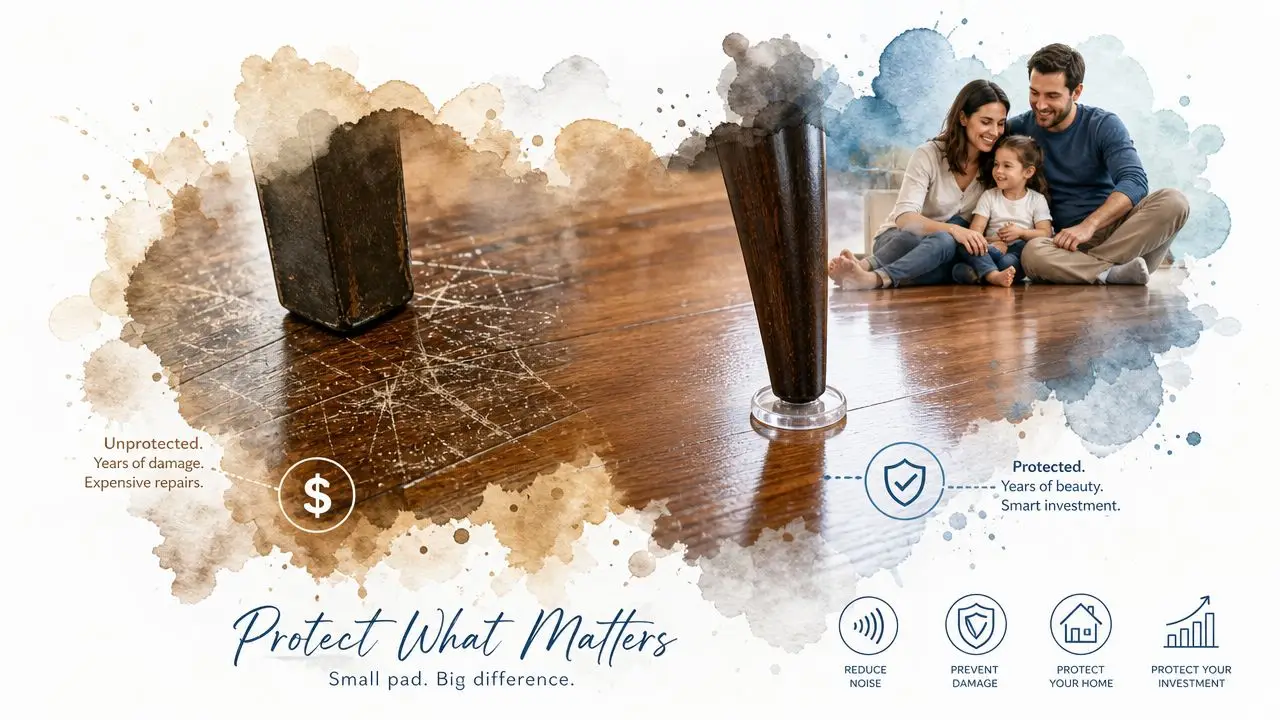
Furniture pads matter for three reasons. They reduce scratching, spread pressure, and soften movement noise. Those benefits work together. A chair that slides often needs protection from friction. A heavy table needs protection from concentrated weight. A frequently used recliner benefits from both.
More than scratch prevention
Scratches get the attention because they're easy to see. Indentation is quieter, but it can be just as frustrating. Heavy legs can leave pressure marks, especially when the weight rests on a small point and never moves. Then there's vibration. Every scoot, shift, and small drag sends a little force through the finish.
A good pad interrupts that chain.
- For moving chairs: Pads reduce friction between the leg and the floor.
- For stationary pieces: They help separate the furniture from the finish and reduce pressure concentration.
- For active rooms: They cut down on scraping sounds and the tiny jolts that wear finishes over time.
A small cost that protects a larger investment
The best comparison isn't decorative. It's practical. Furniture pads function like low-cost insurance for a floor that would be expensive and disruptive to repair. They won't make a poor furniture choice harmless, and they won't fix rough handling, but they do prevent many of the everyday problems that add up in dining rooms, bedrooms, and living spaces.
Practical rule: If a piece touches hardwood and can shift, rock, recline, pivot, or settle under weight, it needs deliberate protection under every contact point.
This is especially important in homes filled with Custom Furniture, Amish Furniture, and other investment pieces chosen for long service life. People willing to spend carefully on quality usually don't want to replace flooring or rush into refinishing because of preventable wear.
For readers looking at room-by-room prevention, this guide on how to protect floors from furniture adds a useful companion checklist.
In a business with Non-Commission Sales Staff, this is the sort of advice that matters most. No pressure. Just a straightforward reminder that the smallest protective detail often delivers the biggest long-term payoff.
Choosing Your Champion A Comparison of Pad Types
Not every furniture pad solves the same problem. Some are built for motion. Some are built for grip. Some are better for heavy, stationary pieces that need support rather than slide. The best furniture pads for hardwood floors depend on what the piece does all day, not just what it looks like.
Industry experts recommend nail-on high-density felt for dining chairs and wide furniture cups with felt bottoms for heavier pieces so no wood or metal touches the floor surface. That recommendation matters because dining chairs face repeated movement, while heavier pieces need broader support.
Furniture Pad Selector
| Pad Type | Best For | Pros | Cons |
|---|---|---|---|
| High-density felt adhesive pads | Light to medium pieces that don't move aggressively | Quiet, smooth glide, easy to apply | Can peel, collect grit, and wear faster on active chairs |
| Nail-on high-density felt | Dining chairs and other frequently moved wood furniture | More secure attachment, dependable for repeated use | Requires careful installation, not right for every leg style |
| Rubber or silicone pads | Pieces that need to stay put | Helps reduce slipping | Some materials may mark floors, and sensitive finishes need extra caution |
| Wide felt-bottom furniture cups | Heavy stationary furniture | Better load distribution, helps prevent direct hard contact | More visible, not ideal where easy sliding is needed |
| Slip-on booties | Temporary setups, delicate chair legs, seasonal use | Easy to remove, no adhesive | Can shift, stretch, or look casual in formal rooms |
Felt pads
Felt remains the default choice for a reason. It gives hardwood a soft contact surface and allows controlled movement instead of abrasive dragging. In most homes, high-density felt is the safest first option.
There are two common versions:
Nail-on felt
This style works well on dining chairs because the pad stays attached through repeated pulling and pushing. It suits solid wood legs with enough substance to accept a fastener. Households that entertain often usually appreciate the reliability.
Adhesive felt
Adhesive felt is easier to install and fine for lighter pieces, occasional chairs, and decorative furniture that doesn't move much. It becomes less dependable when grit gets trapped underneath or when the adhesive starts lifting at the edges.
Rubber and silicone pads
These work best when movement is the problem you don't want. A sofa that creeps, a console that shifts slightly, or a bench that slides on smooth flooring may benefit from a grippier material.
The caution is simple. Unknown rubber materials can mark certain floors, so they shouldn't go straight onto hardwood without confidence in material compatibility.
A pad that stops movement isn't always a pad that's safe for the finish.
Furniture cups
Cups are useful under heavier pieces because they support more area than a small stick-on disc. They help when the furniture has narrow feet but a lot of weight above them. Formal dining tables, substantial recliners, and large cabinets are common examples.
Slip-on booties
Booties can help in rentals, temporary arrangements, or homes where owners don't want adhesives or fasteners. They're convenient. They're also less precise. If appearance matters or the furniture moves hard every day, they're often a short-term answer rather than a lasting one.
The right choice starts with use. Ask one question first: does the piece need to glide, grip, or rest without concentrating weight?
The Perfect Fit Sizing and Thickness Explained
Many pad problems start with the wrong size, not the wrong material. A pad can be excellent on paper and still fail because it leaves part of the chair leg exposed or creates an unstable base.
The most reliable rule is straightforward. The pad should be slightly larger than the furniture leg footprint. That extra coverage helps ensure the actual leg material never meets the floor finish, which is where damage begins.
Size first, thickness second
Homeowners often focus on thickness because it seems like more material should equal more protection. That's not always how it works. A dining chair with an overly thick, soft pad can wobble slightly, lean under pressure, or compress unevenly. Once that happens, the edge of the leg may start doing the damaging work the pad was supposed to prevent.
A better approach:
- Measure the contact point at the floor, not the widest part of the leg higher up.
- Choose full coverage so the edge of the leg can't peek out after wear.
- Keep active seating lower and denser so the chair stays stable.
- Use broader support under heavy pieces where pressure matters more than glide.
Matching the pad to the furniture's behavior
Thin, dense felt usually suits chairs best. It gives enough cushion to protect the finish without making the chair feel spongy. Larger, heavier items often do better with wider pads or cups that spread weight over more surface area.
That distinction becomes easier to see with common room examples:
- Dining chair: Dense, low-profile felt that won't shift the chair's balance.
- Accent chair used occasionally: Adhesive felt can work if the leg base is broad and smooth.
- Large cabinet or table: Wider support matters more than extra softness.
- Recliner: The protection has to handle both weight and repeated motion.
Readers coordinating pads with rugs and layout changes may also want to review these tips on area rugs for hardwood floors, since rug placement often changes how furniture weight settles and moves.
The best pad disappears in daily use. It doesn't wobble, curl, bunch, or leave any part of the leg exposed.
What usually goes wrong
Most fitting mistakes come from one of three habits:
- Buying by package label alone: "Chair pads" can still be the wrong diameter or shape.
- Choosing the thickest option: More cushion can mean less stability.
- Matching the leg exactly: Exact matches leave no margin once the pad compresses or shifts.
Good floor protection isn't bulky. It's precise.
Critical Nuances for Investment-Grade Furniture
Generic advice usually assumes average furniture and average floors. Many homes don't fit that pattern. A custom Amish dining table, an antique cabinet, or a substantial American-made recliner can place very different demands on hardwood.
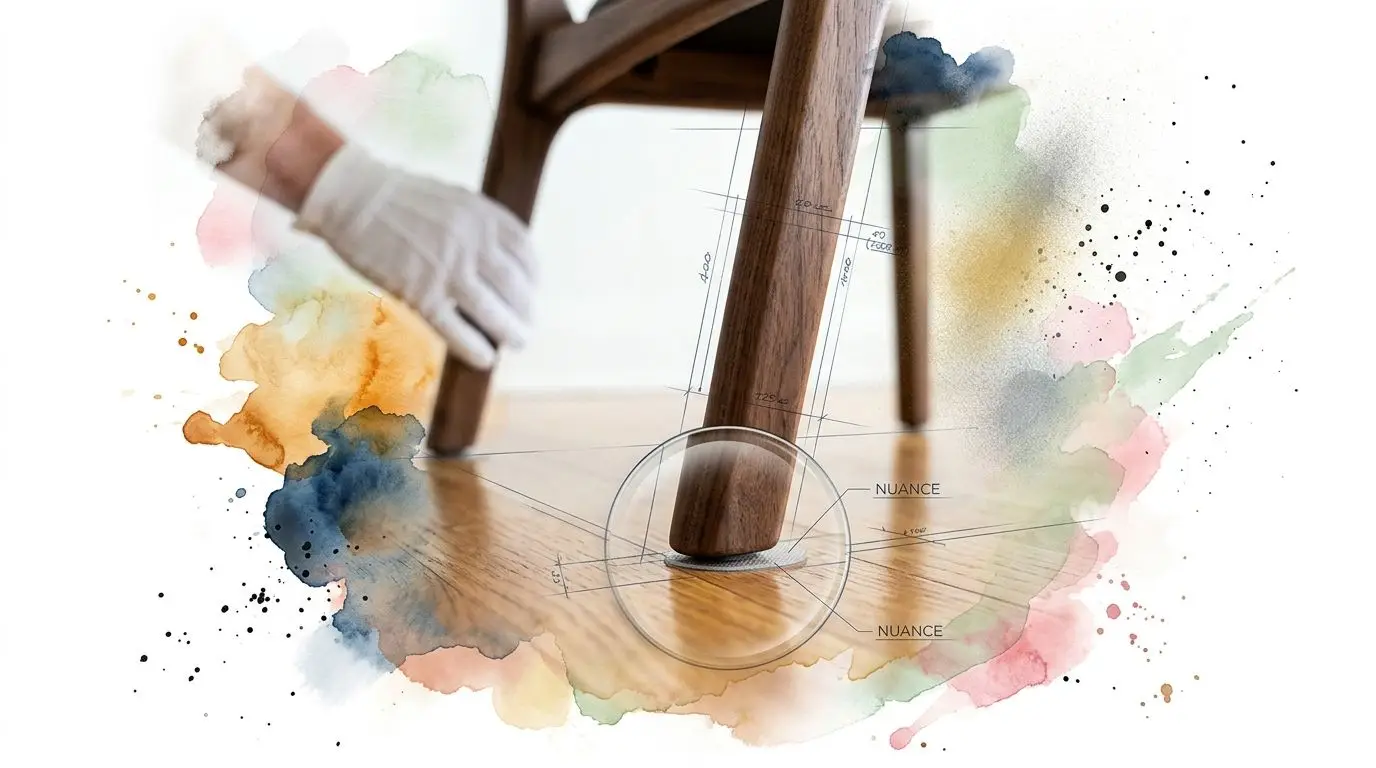
Some of the most expensive mistakes happen when homeowners follow generic pad advice on premium floors under heavy furniture. The usual recommendation to match pad size to the leg footprint often falls short here. Guidance specific to heavier furniture notes that many guides miss the need for broader support and wide furniture cups under stationary pieces such as custom Amish furniture, because a small contact point can create pressure marks and indentation as explained in this discussion of heavy furniture floor protection.
Heavy furniture needs load distribution
Weight doesn't just move downward. It concentrates. A narrow leg under a heavy table puts force into a very small area. If that furniture rarely moves, the floor doesn't get relief. It just carries the pressure day after day.
For premium pieces, the better question isn't "What fits the leg?" It's "What spreads the load safely?"
- Wide support helps under large dining tables, recliners, and storage pieces.
- Tiny stick-on pads often underperform when the furniture is unusually heavy.
- Stationary furniture needs a different strategy than a chair that's meant to glide.
This matters in homes that favor Custom Furniture with solid wood construction, thicker tops, carved bases, or dense frames. Those are excellent buy-it-for-life choices. They just need pad systems built for the same long horizon.
Sensitive finishes change the rules
Some hardwood floors require more caution than standard advice acknowledges. Floors with French-oil or Scandinavian-oil finishes can react poorly to the wrong backing or adhesive. In those cases, a pad that's harmless on another floor may chemically bond to the finish or stain it.
That detail gets missed too often, especially in homes with custom wood species and specialized finishes chosen through Bay Area Interior Design projects. For homeowners unsure how to handle a large move-in without risking either the furniture or the floor, a guide to specialized moving can help frame what careful handling should look like before pads ever touch the floor.
Expensive floor damage often starts with well-meant generic advice.
Antique and irregular legs need custom thinking
Older furniture introduces another challenge. Antique legs may be uneven, hand-shaped, tapered, or finished in ways that don't accept every pad type neatly. A round adhesive disc on an irregular foot can leave corners exposed. A poorly fitted cup can tilt the piece.
In those situations, homeowners should slow down and evaluate:
- Leg shape
- Weight concentration
- Finish sensitivity
- How often the piece moves
Those same questions matter when choosing flooring in the first place. This overview of how to choose hardwood flooring is helpful for anyone pairing premium furniture with premium wood floors.
When the furniture is exceptional, the pad choice can't be generic.
Installation and Lifetime Maintenance
A good pad still needs good installation. Dust, wax, oil, or old adhesive can undermine even the right product. Most failures blamed on the pad begin with rushed prep or a pad that stayed in service too long.
How to install pads properly
Start with a clean contact point on every leg or base. If an old pad is already there, remove it fully. Adhesive residue, embedded grit, and uneven remnants create a lopsided surface and shorten the life of the new protector.
Then follow a simple sequence:
- Turn or tilt the furniture safely so the contact point is fully visible.
- Clean the leg bottom and let it dry completely before applying anything.
- Center the pad carefully so coverage extends across the full contact area.
- Press firmly for adhesive styles or attach nail-on felt with care so the pad sits flat.
- Set the piece down gently and check that it doesn't rock.
For especially heavy pieces, careful lifting matters as much as pad choice. Homeowners planning to reposition substantial furniture can benefit from this practical look at Sydney removalist advice for heavy items, which reinforces safe handling habits that reduce strain on both floors and furniture.
A seasonal checkup prevents quiet damage
Pads aren't permanent. Felt compresses. Adhesive loosens. Grit gets trapped. A pad that began as protection can become the source of abrasion if no one checks it.
A seasonal routine works well because it's easy to remember and easy to pair with normal home care.
- Inspect for grit: If debris is embedded in felt, replace the pad.
- Check the edges: Peeling adhesive means the floor may soon contact the leg.
- Look for flattening: Compressed pads lose protective value.
- Watch for discoloration or sticking: Sensitive finishes need immediate attention.
Existing guidance also highlights an overlooked risk: rubber-backed or adhesive felt pads can chemically bond to and permanently stain French-oil or Scandinavian-oil finished hardwood floors because those finishes are chemically sensitive as noted in this floor-safe pad article.
Maintenance habit: If a chair starts sounding different when it moves, inspect the pad that day, not next month.
Homeowners arranging professional setup can also use furniture installation support to reduce the chance of early mistakes during delivery and placement.
Replace before failure
Waiting until a pad falls off or wears through is too late. The goal is replacement before the hard leg reaches the finish. That simple habit protects the room, supports the buy-it-for-life mindset, and keeps daily use from turning into repair work.
Find Your Perfect Match at Giorgi Bros
The best furniture pads for hardwood floors aren't always the thickest, cheapest, or most heavily marketed. The best choice is the one that matches the furniture's weight, movement, leg shape, and the floor's finish. That becomes even more important when a home includes antiques, Amish Furniture, custom orders, or other investment pieces built to stay for decades.
For families furnishing thoughtfully, floor protection belongs in the same conversation as fabric selection, wood species, finish choice, and room planning. That's especially true in Furniture South San Francisco and across the Bay Area, where many homeowners invest carefully in long-lasting pieces and want guidance without pressure.

A family business established in 1933 brings a helpful perspective to that process. The value isn't just in offering furniture. It's in helping people make durable choices, from Custom Furniture and specialized finishes to room planning that respects the floor beneath every piece. A Non-Commission Sales Staff approach supports that kind of decision-making because the focus stays on fit, longevity, and comfort. The same mindset often extends across the home, whether someone is selecting dining furniture, refining a Bay Area Interior Design plan, or comparing Premium Mattresses for a complete bedroom update. And when timing matters, financing options are available for households balancing immediate needs with long-term quality.
A well-furnished home should feel settled, not fragile. The right pads help protect that feeling.
For homeowners ready to choose lasting furniture with the same care they give their floors, Giorgi Bros. Furniture offers no-pressure guidance in a 50,000 square foot showroom in South San Francisco. Visitors can touch, feel, and test quality across living, dining, bedroom, office, and sleep collections, including custom options in fabrics, leathers, wood species, and finishes. Stop by the showroom or book a Design Consultation for thoughtful help from experienced Consultants who understand that when people invest in quality, they're buying for life.