Creating a modern living room that lasts takes more than a quick trip through trend photos. Most Bay Area homeowners are standing in the same spot right now, looking at a room that needs to work harder. It has to feel current, hold up to daily life, reflect personal taste, and still make sense years from now. That's a tall order if every decision is based on what looks new this season.
A better approach starts with investment pieces, not impulse pieces. Since 1933, Giorgi Bros. Furniture has helped families in South San Francisco and across the Bay Area furnish homes with that long view in mind. The goal isn't to copy a showroom vignette. It's to build a living room around quality, comfort, and customization so the room still feels right after trends shift.
That matters in a market this large. The global home decor market reached $133.62 billion in 2024, which helps explain why homeowners are flooded with options, styles, and fast-changing design advice. The challenge isn't finding something to buy. It's choosing what deserves a place in the home for the long term.
For homeowners gathering ideas, it also helps to blend comfort with warmth from the start, whether that comes from layered textures, natural materials, or small finishing touches like cozy space inspiration from That Blanket Co. The strongest modern living room ideas don't chase novelty. They create a room that works beautifully now and still feels grounded later.
1. Minimalist Modern Living Rooms for Long-Term Investment
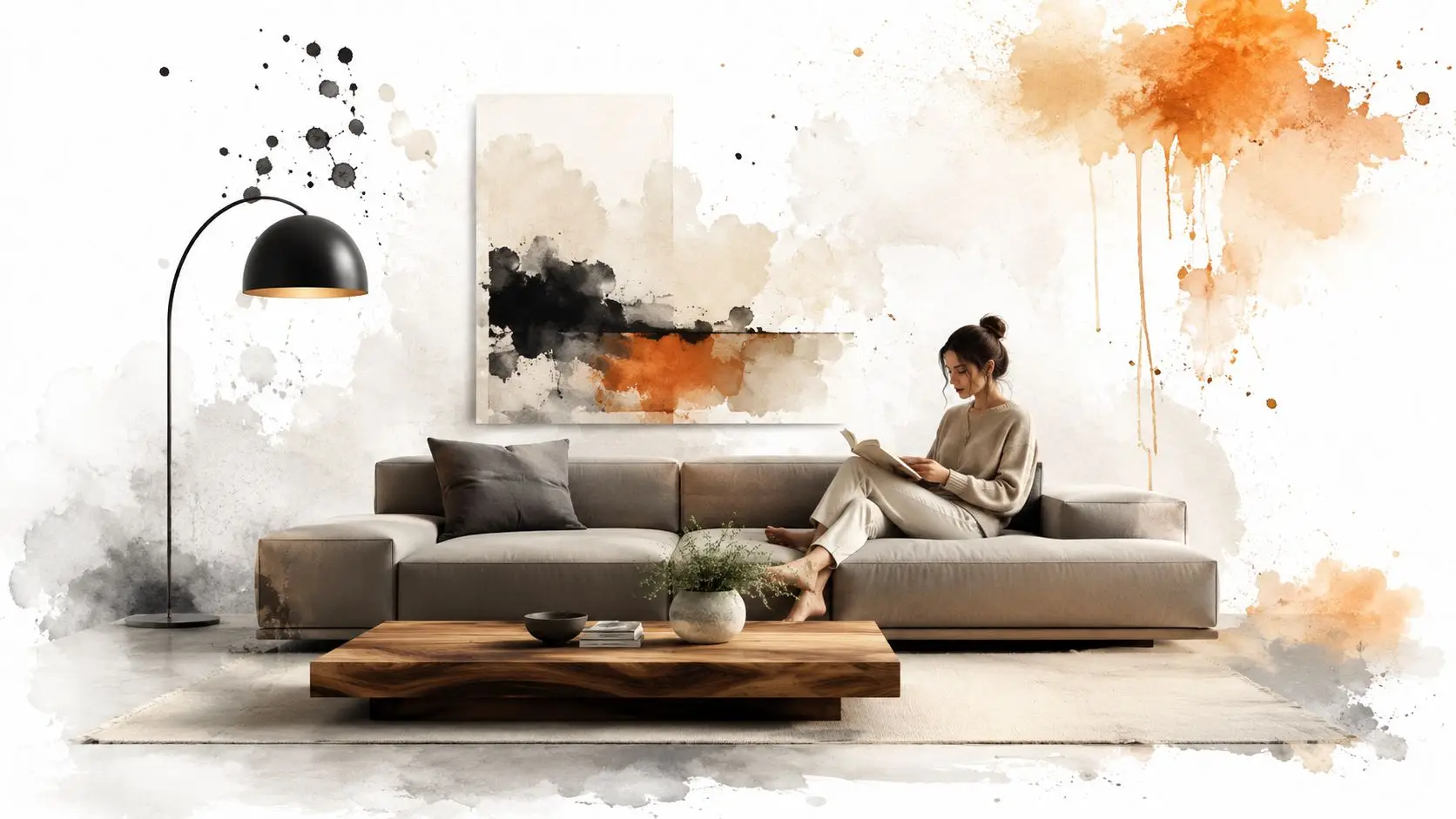
Minimalism works best when it feels calm, not cold. In a living room, that usually means fewer pieces, better materials, and cleaner sightlines. A custom American Leather sectional in a warm gray performance fabric, paired with a solid wood coffee table and a low-profile media console, creates a room that looks edited without feeling empty.
This style rewards restraint. One well-made sofa with a clean-lined silhouette will outlast a room packed with trendy accent furniture that never quite fits together.
What makes minimalist rooms last
The most successful minimalist spaces use customization to avoid looking generic. Fabric choice, wood finish, and leg style matter because there are fewer pieces competing for attention. A neutral sofa becomes much more personal when the scale fits the room and the upholstery suits the household.
The color palette should also be intentional. The 60-30-10 color rule remains a useful guide for visual balance, with the main color taking 60% of the room, a secondary color 30%, and an accent color 10%.
Practical rule: In minimalist rooms, the anchor sofa should do most of the visual work. If the sofa feels flimsy or temporary, the whole room does.
- Choose a strong anchor: A neutral custom sofa in a durable fabric gives the room staying power.
- Prefer honest materials: Solid wood, metal legs, and precisely fitted upholstery age better than ornate, overly specific detailing.
- Hide the clutter: Storage ottomans and media cabinets with concealed organization keep the room from looking busy.
Homeowners who want clean design without a sterile result often benefit from studying ways to personalize minimalism without clutter. That's where minimalist modern living room ideas become livable, not just photogenic.
2. Contemporary Comfort Meets Everyday Livability
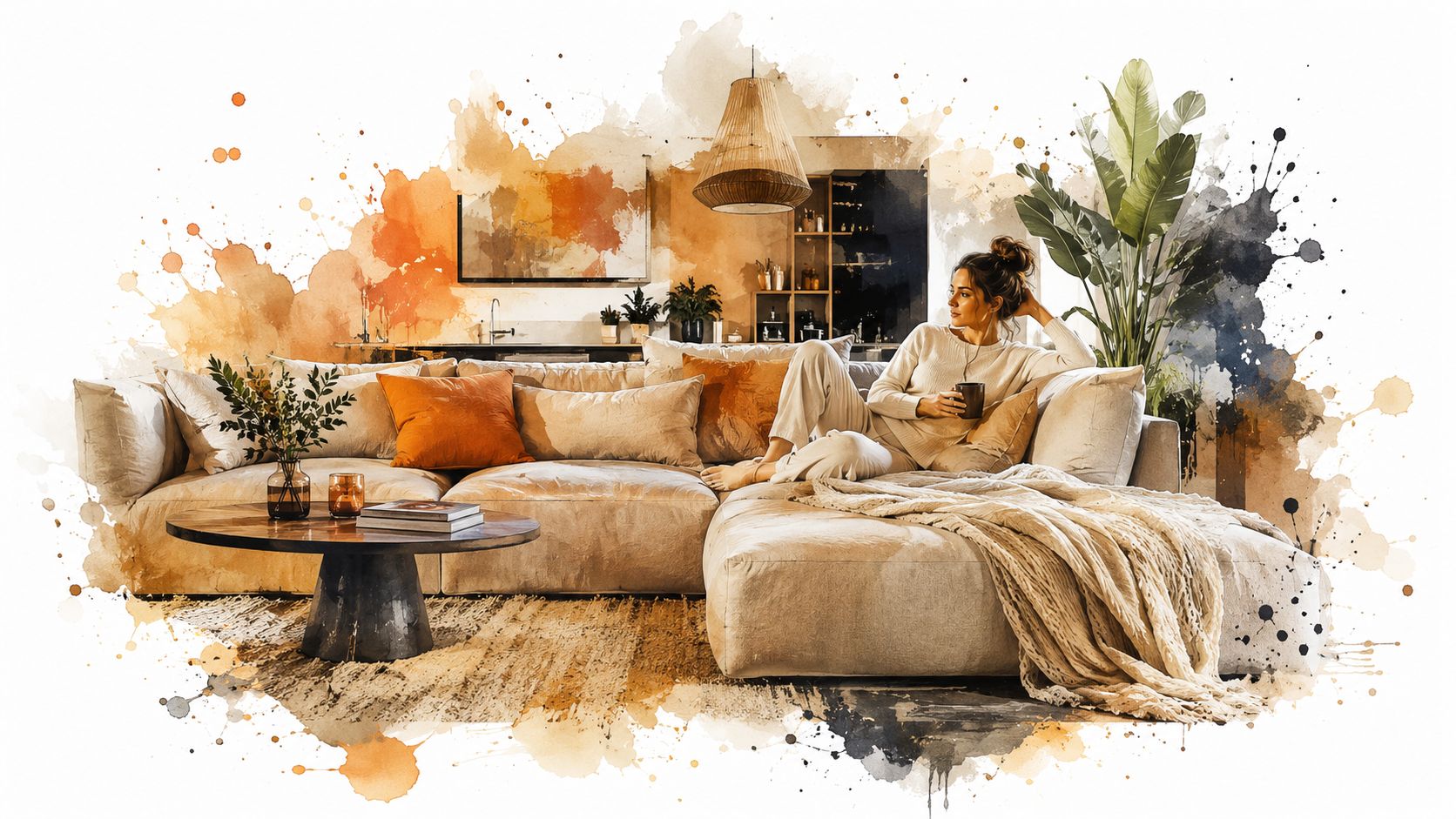
Some modern living rooms look sharp but never invite anyone to sit down. Contemporary comfort fixes that problem. It keeps the lines clean, but it allows room for deeper seats, power recline, and upholstery that can handle actual life.
A Hancock & Moore leather sectional with motorized recline, or a Stressless recliner paired with a contemporary sofa, turns the room into a place people use every day instead of saving for company.
Comfort has become part of modern design
Homeowners increasingly want furniture that supports work, entertainment, and daily relaxation in one space. In 2025, 68% of homeowners prioritizing multifunctional spaces included smart furniture with integrated technology such as built-in charging features.
That doesn't mean every room needs visible tech. It means furniture should solve problems quietly. A reclining sectional with charging capability, a well-made sleeper with a quality mattress, or an adjustable chair that supports the neck and back can all fit cleanly into a modern plan.
For Bay Area Interior Design projects, this is often where the non-commission guidance matters most. People need time to test the seat depth, recline angle, and upholstery feel before making a long-term choice.
- Test before deciding: Recline mechanisms, headrest positions, and cushion support should feel right in person.
- Mix materials smartly: Leather handles heavy traffic well, while fabric can soften the room.
- Think dual purpose: If guests stay over often, a sleeper with a quality mattress earns its space.
For more direction on blending clean lines with comfort-forward furniture, these contemporary furniture styles are a useful reference. Homes that lean into comfort also pair well with biophilic accents, including inspiring indoor cactus gardens, because the greenery softens the precise shapes.
3. Industrial Modern and the Beauty of Honest Materials
Industrial modern works when the materials carry the room. Wood grain, steel, leather, and stone do the heavy lifting. Instead of covering every surface, this style lets construction show.
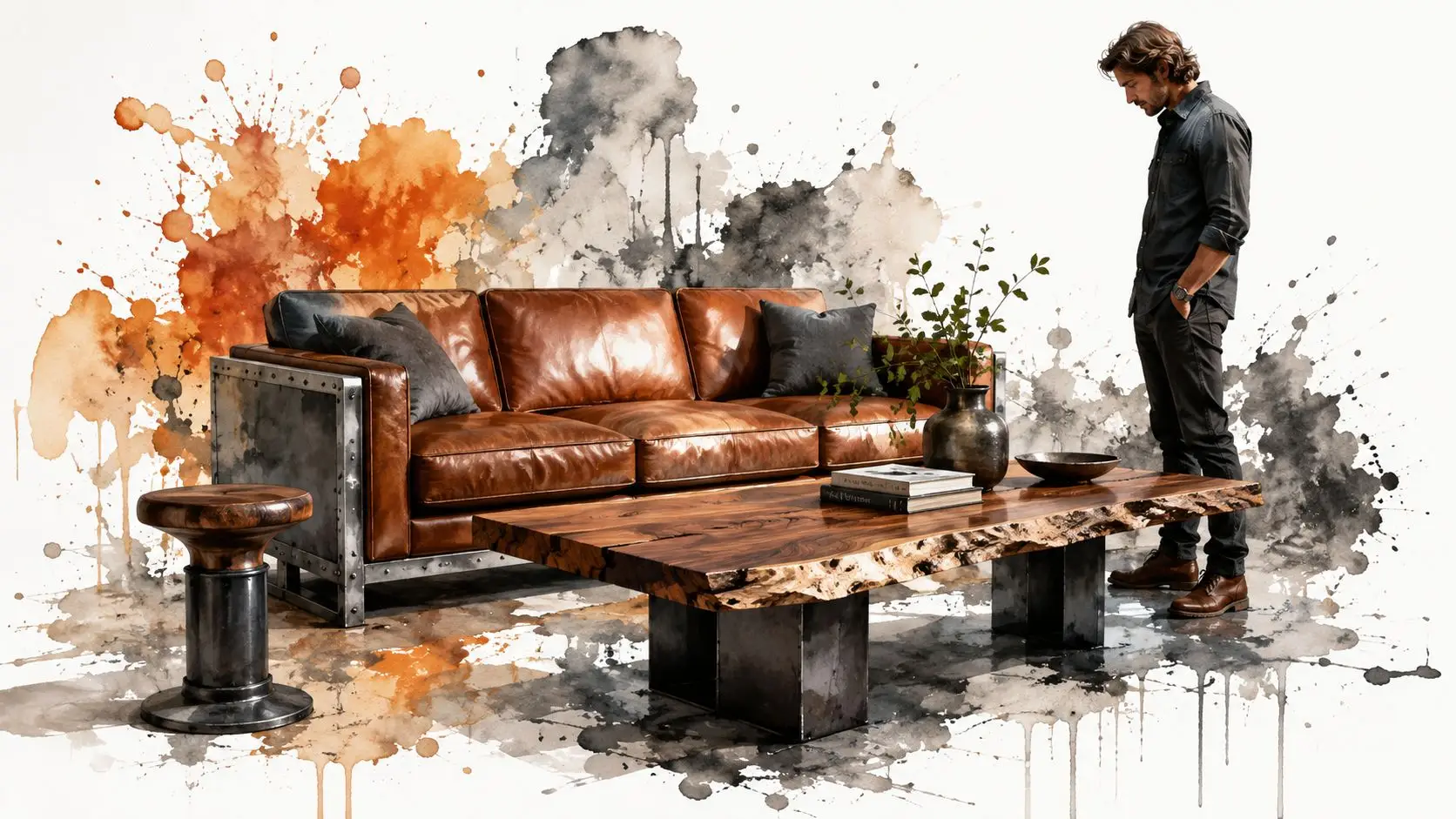
A live-edge coffee table, leather seating in cognac or chocolate, and a media console with visible joinery create a space with character right away. It's especially effective in Bay Area homes where owners want warmth without fussiness.
Why craftsmanship matters here
Industrial modern exposes quality instead of hiding it. If the wood veneer is thin or the frame is lightweight, the room tells on itself fast. That's why this style belongs with Custom Furniture and handcrafted case goods, especially Amish Furniture built with solid wood and strong joinery.
The trade-off is clear. True industrial pieces often cost more up front, but they tend to look better with age. Scratches, patina, and texture become part of the story rather than damage to disguise.
Good industrial design doesn't depend on roughness. It depends on materials that still look believable when the room is quiet.
- Choose wood that improves over time: Walnut, cherry, and oak all develop character with use.
- Let leather age naturally: Aniline and semi-aniline leathers often gain depth instead of looking worn out.
- Use metal as structure: Steel bases and hardware should feel intentional, not decorative add-ons.
Homeowners drawn to this look often appreciate the visual depth of reclaimed wood furniture, especially when the room needs one piece with real presence.
4. Mid-Century Modern Revival That Still Feels Fresh
Mid-century modern survives because the proportions are so dependable. Tapered legs, warm wood tones, and lean profiles still work in today's homes because they don't overstate themselves. A custom-upholstered sofa with a trim frame, a solid wood credenza, and a sculptural lounge chair can carry a room without making it feel themed.
This style also mixes well. That's one reason it remains one of the safest modern living room ideas for homeowners who want personality but not clutter.
How to avoid the showroom-set look
Mid-century rooms fail when every piece tries too hard to match the same decade. A better room uses the style as a base, then updates it with current fabrics, cleaner palettes, or one contemporary accent chair. Performance upholstery is often a smarter choice than trying to mimic every historic detail.
There's also a practical benefit. Mid-century shapes usually have smaller visual footprints, which can help a room feel open without sacrificing seating.
- Invest in the frame: Solid wood construction matters more than retro styling cues.
- Update the upholstery: A classic silhouette looks stronger in a fabric that suits present-day living.
- Mix, don't stage: Pair a credenza or sofa with newer textures so the room feels collected.
For Bay Area homeowners furnishing condos, bungalows, or remodeled ranch homes, mid-century often works because it respects scale. It's refined, but it doesn't dominate the room.
5. Transitional Living Rooms That Bridge Old and New
Some households don't want a room that feels sharply modern. They want a room that feels settled. Transitional design answers that by blending defined silhouettes with warmer materials and softer details.
A Hancock & Moore sofa with a classic arm profile, a wood accent chair, and linen or leather upholstery can create a modern room that still feels welcoming to every generation in the house.
Why transitional design ages well
Transitional rooms are forgiving. If tastes shift, they rarely need a full reset. New accent pieces, an updated rug, or a different coffee table can refresh the space without replacing the largest investments.
That flexibility matters for long-term furnishing. It also supports sustainability, because fewer major pieces get discarded because the room needs a refresh.
The safest long-term room usually isn't the most minimal or the most ornate. It's the one with good bones and enough flexibility to evolve.
The most effective version of this style balances shape and texture. A sofa may have a traditional influence in the arm or cushion, but the fabric, leg finish, and surrounding tables keep it current. Warm metal finishes and solid wood help the room feel grounded.
Homeowners comparing style directions often benefit from seeing contemporary vs traditional design styles side by side. Transitional living rooms sit comfortably between those two poles, which is exactly why they last.
6. Scandinavian Serenity with Function at the Center
Scandinavian-inspired rooms do something many modern spaces miss. They stay simple while still feeling soft. Light oak, wool, linen, and gentle forms make the room feel open, but never stark.
A cream sofa with wood legs, a pale wood coffee table, and functional storage pieces work especially well in Bay Area homes that need calm after a busy day. The style's restraint also makes quality easier to see.
Simplicity still needs substance
Scandinavian design isn't just about reducing visual weight. It depends on materials that feel natural and substantial. Thin, disposable furniture misses the point. Custom Furniture options are key, as the right wood species and upholstery can keep the room from feeling flat.
There's also a sustainability thread running through this style. 68% of homeowners in major markets prioritize furniture durability and eco-friendly materials over short-term style trends. That lines up well with Scandinavian principles and with a buy-it-for-life mindset.
- Use light woods carefully: Ash, birch, and light oak brighten the room without making it cold.
- Bring in natural fibers: Linen and wool add softness that modern rooms often need.
- Keep accents edited: A few textured pillows or a wool rug do more than a dozen decorative objects.
For homeowners exploring this look through seating first, a Scandinavian-style sofa guide can help narrow the options.
7. Warm Maximalism with a Curated Point of View
Not every modern living room needs to be spare. Warm maximalism welcomes pattern, layered texture, books, art, and meaningful collections, but it works best when the foundation is disciplined.
A jewel-toned sectional, patterned accent chairs, and solid wood tables of different heights can create a room with energy and depth. The key is choosing pieces with staying power, not merely adding more pieces.
Rich rooms still need structure
This style benefits from one clear framework. The sofa may carry the strongest color, while other pieces support it through quieter patterns and stronger materials. Solid wood side tables, well-fitted upholstery, and a consistent finish palette keep the room from drifting into clutter.
Curved seating can be especially effective here. In 2025, 74% of homeowners who chose curved sofas reported higher perceived comfort levels, often because the layout felt more social and inviting.
A maximalist room feels collected when each piece looks chosen. It feels crowded when pieces look accumulated.
Homeowners often make the same mistake here. They buy small decorative items before they settle the large pieces. A better sequence is to invest in the sectional, chairs, and tables first, then layer in art, books, and textiles that mean something.
For Bay Area Interior Design projects, this style often suits clients who entertain often or want their living room to feel personal rather than restrained.
8. Modern Luxury Through Materials and Engineering
Modern luxury isn't about making the room look formal. It's about choosing premium materials and comfort systems that improve daily life. A full-grain leather sectional, a hand-detailed sofa, or a recliner engineered for long sitting sessions can turn a living room into the most used room in the house.
American Leather, Hancock & Moore, and Stressless are strong examples of what that looks like in practice. Their value comes from construction, comfort, and customization, not surface flash.
Where luxury earns its keep
Luxury furniture has to perform, not just impress at first glance. Leather grade matters. Cushion construction matters. Recline systems matter. If those details are weak, the room won't age well no matter how polished it looks on day one.
The upside is flexibility. A homeowner can order high-grade leathers, designer fabrics, and custom finishes to fit the architecture and the household. That's one reason a Custom Furniture approach often makes more sense than settling for a close-enough version off the floor.
- Know the leather: Aniline develops more natural patina, while semi-aniline often adds practical protection.
- Match comfort to lifestyle: Deep seats and motorized motion can be worth it if the room gets heavy daily use.
- Plan maintenance: Quality leather care and fabric protection help preserve the investment.
Rooms with a luxury lens also benefit from one or two natural statement accents rather than over-accessorizing. Something sculptural, like a Quartz crystal bowl from Brazil, can add texture without cluttering the space.
9. Sustainable and Handcrafted with Amish Quality
If the goal is furniture that lasts for decades, handcrafted Amish Furniture belongs in the conversation. Solid wood construction, traditional joinery, and custom finishing make these pieces a practical choice for homeowners who want substance over speed.
A custom-built media console, a hand-upholstered sofa with a wood base, or a live-edge coffee table can anchor a room with real permanence. These aren't disposable pieces. They're made to live with.
Why handcrafted furniture supports long-term value
Mass-market furniture often asks homeowners to replace rather than repair, refresh, or refinish. Handcrafted wood furniture works differently. It can age gracefully, and in many cases it can be maintained over time rather than discarded.
That philosophy also aligns with current preferences. Most modern design coverage still focuses on trend cycles, yet craftsmanship remains under-discussed even though many homeowners now prioritize durability and eco-conscious materials, as noted earlier. The practical takeaway is simple. A room built on handcrafted pieces usually changes more slowly and costs less to redo over the long term.
For Bay Area families planning a long stay in their homes, this can be the smartest category for investment pieces. Customization in wood species, stain, scale, and finish helps the furniture fit the house instead of forcing the house to adapt to the furniture.
10. Multifunctional Modern for Real-World Living
The modern living room often has to do several jobs at once. It may be the movie room, the guest room, the reading room, and the informal office all in the same week. Multifunctional design responds to that reality with furniture that works harder without looking busy.
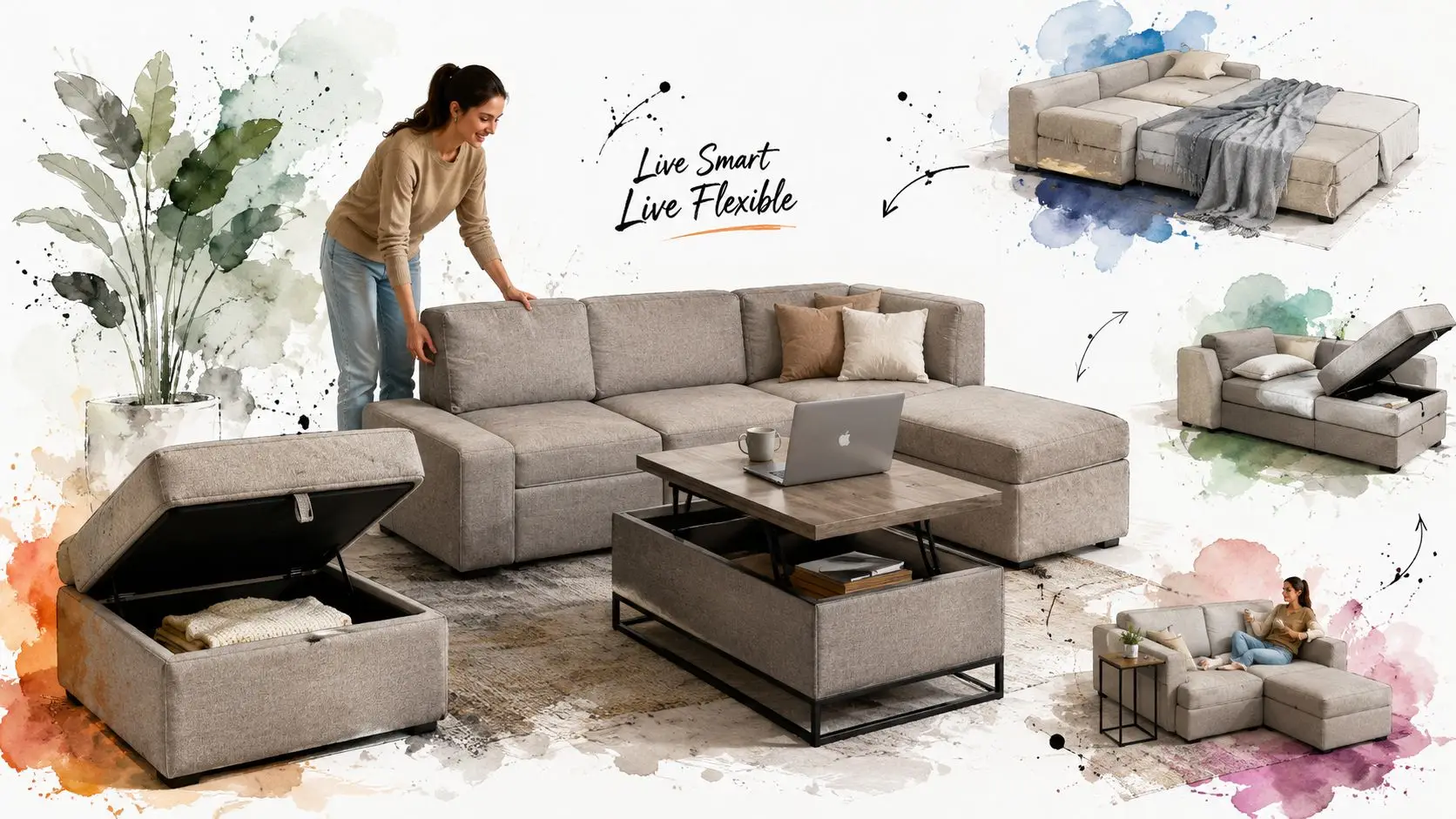
A sleeper sofa with a quality mattress, a custom media console with hidden storage, or a power-motion sectional with charging capability can keep the room flexible while preserving a clean profile.
Flexible rooms need smart layout choices
Function starts with furniture, but layout matters just as much. That's especially true in older Bay Area homes and converted spaces where the room shape isn't perfectly rectangular. Angled walls and awkward corners are often ignored in mainstream advice, even though they create very real furnishing problems.
One helpful strategy in those rooms is to use two smaller tables instead of one large rectangular coffee table and introduce curved forms, such as oval tables or arch mirrors, to improve flow in sharp-cornered spaces. That guidance becomes even more useful because most modern living room articles focus on rectangular spaces while only a small share address angled rooms.
- Test the mechanism: Recliners, sleepers, and motion seating should operate smoothly and feel intuitive.
- Build in storage: Ottomans and consoles should reduce visible clutter, not add to it.
- Respect odd architecture: Custom sizing often solves more problems than forcing standard dimensions into a difficult room.
Furniture South San Francisco shoppers often benefit from visiting a full showroom instead of buying sight unseen. Seeing the scale, opening the sleeper, testing the recline, and comparing storage solutions in person makes the final room better.
10 Modern Living Room Styles Compared
| Style | Implementation complexity | Resource requirements | Expected outcomes | Ideal use cases | Key advantages |
|---|---|---|---|---|---|
| Minimalist Modern Living Rooms | Moderate, careful selection required | Fewer high-quality pieces, moderate budget | Timeless, airy, low-clutter room with long-term durability | Buyers seeking calm, long-term investment, small–medium spaces | Low maintenance, flexible foundation, lasting style |
| Contemporary Comfort | Moderate–High, balance comfort and scale | Durable upholstery, larger pieces, mid–high budget | Inviting, family-friendly, highly usable living room | Families, high-use living rooms, casual entertaining | Comfort-first, durable, versatile styling |
| Industrial Modern | Moderate, material and lighting focus | Solid wood, metal, leather; mid–high budget | Raw, craft-forward interiors that develop character | Lofts, craft-appreciative homeowners, rustic modern spaces | Visible craftsmanship, durability, rich patina over time |
| Mid‑Century Modern Revival | Moderate, attention to proportions/authenticity | Quality wood frames or vetted reproductions; variable budget | Iconic, enduring aesthetic with good resale potential | Design enthusiasts, collectors, modernist homes | Recognizable timeless design, adaptable with modern elements |
| Transitional Living Rooms | High, curated balance of styles needed | Mixed materials and finishes, mid–high budget | Balanced, timeless space that adapts as tastes change | Broad-taste households, resale-focused owners, varied architecture | Broad appeal, flexible over time, blends modern and classic |
| Scandinavian Serenity | Low–Moderate, disciplined simplicity | Light woods, natural textiles, sustainable sourcing; moderate budget | Airy, functional, cozy spaces emphasizing natural light | Eco-conscious buyers, small/light-filled homes, hygge seekers | Sustainability, functional comfort, timeless minimalism |
| Warm Maximalism | High, careful curation to avoid clutter | Diverse quality pieces, art, textiles; mid–high budget | Rich, personal, visually layered environment | Collectors, creatives, expressive homeowners | Strong personalization, visual interest, curated displays |
| Modern Luxury | Moderate–High, detailed specification work | Premium leather/fabrics, custom options, high budget | Refined, highly comfortable, durable high-end interiors | Luxury homeowners, formal living rooms, investment buyers | Superior comfort, craftsmanship, extensive customization |
| Sustainable & Handcrafted (Amish) | Low design complexity but long production lead times | Solid wood, skilled labor, custom finishes; high budget | Heirloom-quality, durable, sustainably made pieces | Heirloom buyers, eco-conscious homeowners, long-term planners | Exceptional longevity, craftsmanship, sustainability, resale value |
| Multifunctional Modern | High, engineering and ergonomics required | Mechanisms, modular systems, quality upholstery; mid–high budget | Flexible, space-efficient rooms that serve multiple needs | Small-space living, multi-use homes, frequent guests | Space saving, adaptability, practical long-term value |
Your Lifetime Living Room Awaits in South San Francisco
The best modern living room ideas don't start with trends. They start with how the room needs to live. Some households need a minimalist layout with hidden storage and custom-fit upholstery. Others need reclining comfort, handcrafted wood, or a more layered look that reflects years of collecting and living. The right answer isn't one style. It's the combination of comfort, quality, and customization that still makes sense down the road.
That long-term view matters even more when furnishing a primary gathering space. The living room takes daily wear, changing routines, and evolving tastes. Investment Pieces handle that better than throwaway purchases because they're built with stronger frames, better materials, and more thoughtful proportions. Over time, that often means fewer replacements, less waste, and a home that feels more settled.
That's also why custom order service matters. A sofa isn't just a sofa when the scale can change, the leather can be upgraded, the wood species can be selected, and the finish can be matched to the rest of the home. Those details help Bay Area homeowners create rooms that feel personal rather than copied. They also make it easier to bridge styles, whether the room leans Scandinavian, transitional, industrial, or something more eclectic.
Giorgi Bros. Furniture has been family-owned and operated since 1933, and that history shapes the experience. The focus is no-pressure guidance from Non-Commission Sales Staff and Design Experts who help customers compare materials, test comfort, and think clearly about what will last. That kind of support is especially helpful when the purchase includes Custom Furniture, Amish Furniture, reclining seating, or one of the home's major anchor pieces.
The showroom itself gives homeowners room to make better decisions. With 50,000 square feet of furniture and Premium Mattresses to explore, customers can touch the leathers, sit in the sectionals, compare wood finishes, and understand what separates a short-term buy from a lasting one. Financing options are available, which can help when the goal is to invest in quality instead of settling for a temporary fix.
A living room built for life doesn't need to be flashy. It needs to be well chosen. For Bay Area Interior Design guidance grounded in craftsmanship, customization, and comfort, South San Francisco remains a smart place to start.
Visit Giorgi Bros. Furniture in South San Francisco to explore the showroom, test materials and comfort in person, and work with Design Experts who offer no-pressure guidance on Custom Furniture, Amish Furniture, living room seating, and Premium Mattresses. Homeowners who are planning a remodel or furnishing one room at a time can also book a Design Consultation and take the long view from the start.